2 January 2022
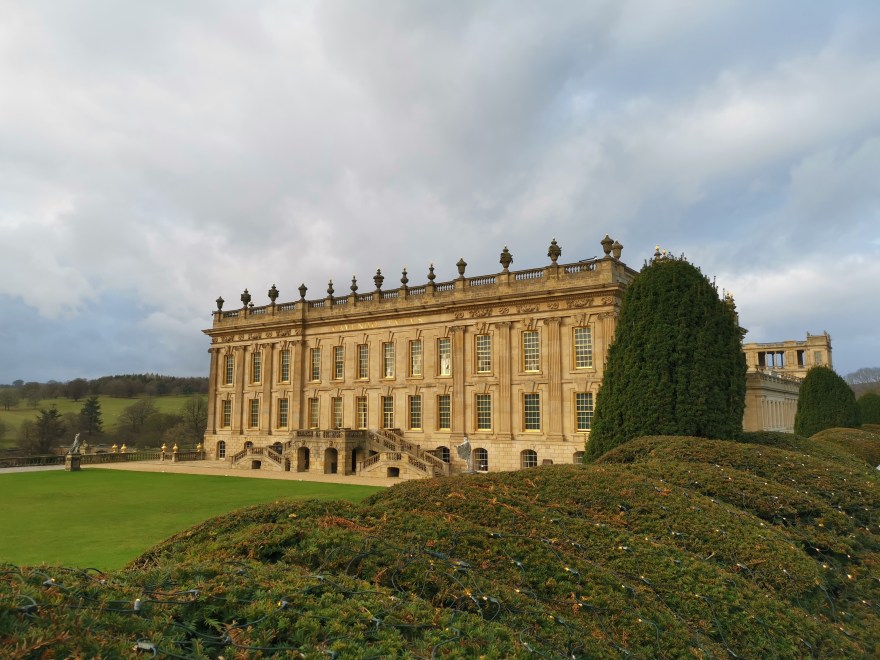
Following our recent visit to the Dunham Massey Estate for their Christmas Trail Event, we booked to visit Chatsworth House. This was to see the Christmas decorations in the house and explore the gardens. Chatsworth House is near the town of Bakewell in the English Peak District, so not far from Manchester.


Chatsworth House is home to Peregrine Andrew Morny Cavendish, the 12th Duke and Amanda Carmen, the Duchess of Devonshire. This home has been passed down through 16 generations of the Cavendish family and some sections of the house are open to tourists.
Our tickets to visit the house and garden included being able to explore a number of rooms in the house, being guided through these on a walking trail. These rooms had been decorated for Christmas celebrating the Christmasses of the past 20 years that the house has been open for visitors.
Due to COVID19, it was necessary to book online a time slot for our visit. We were required to arrive on time to assist in controlling the number of people in the house at any one time. We were also required to sanitize our hands and wear our masks the whole time inside the house.
The mansion is amazing, even forgetting the Christmas displays. Every room we visited was decorated grandly. From painted ceilings and walls, portraits of family members, artworks, sculptures and tapestries, Chatsworth contains works that span 4,000 years, from ancient Roman and Egyptian sculpture to painted masterpieces by Rembrandt. The house is full of the history of the Cavendish family and their love of fine things.
We started our visit in The Painted Hall which welcomes guests as the entrance to the house. It was built by the 1st Duke of Devonshire, William Cavendish in the 1600s. The ceiling is amazing, as is the very grand marble staircase.


From the top of the marble staircase, we were guided through different rooms that the current Duke and Dutchess had opened to the public. Anywhere that was off-limit, was roped off or the doors were closed. In each room, we could visit, there was a guide to tell you about it if you had any questions.
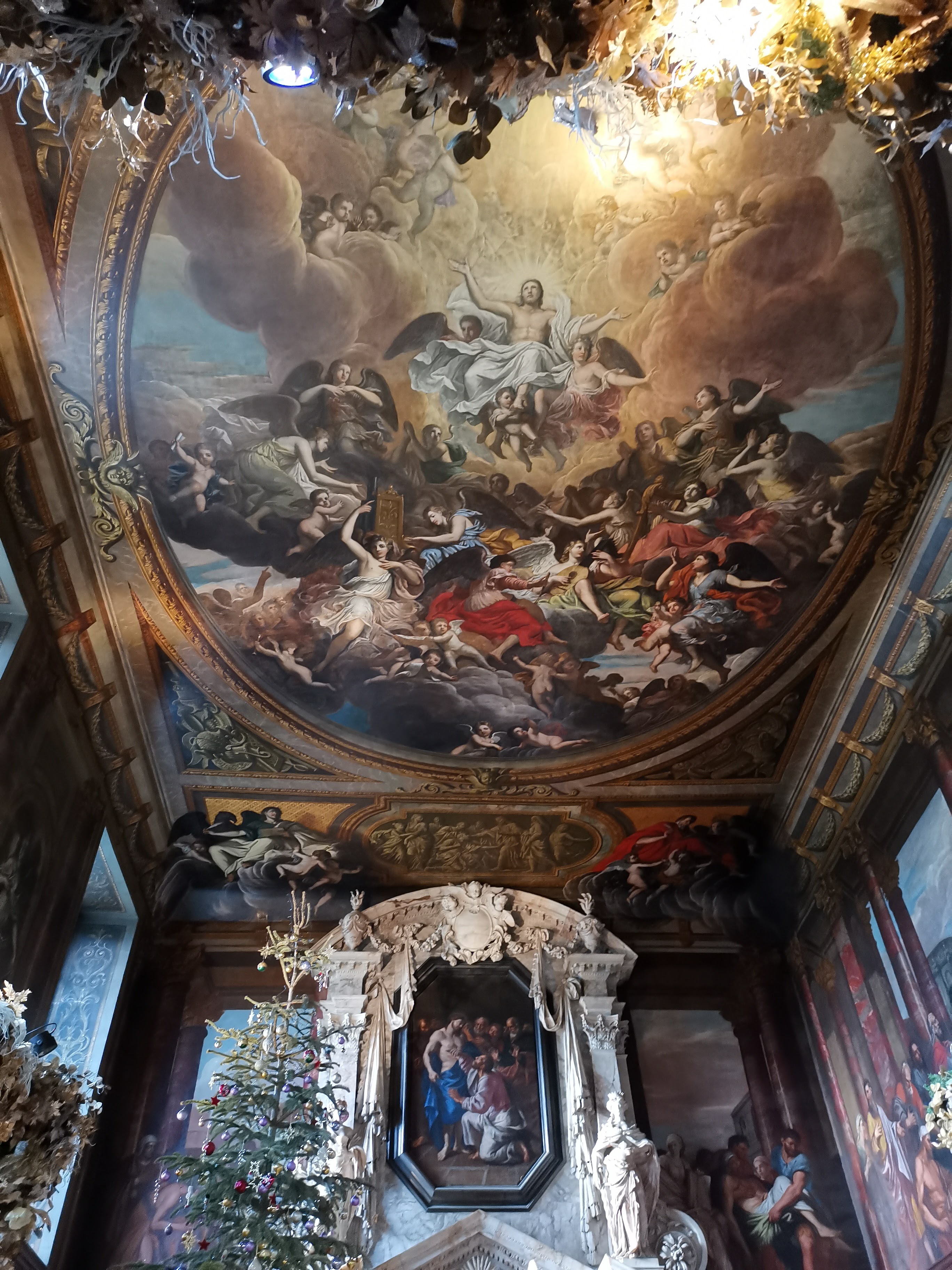
The next grand room was the Chapel, it was also designed by the 1st Duke and remains mostly unchanged since it was built in the 1600s. It was decorated for Christmas with a mechanical music box with a dancer from the Nutcracker and a very tall Christmas tree. The ceiling and walls have scenes from the bible.

Looking out the window it was possible to see the courtyard, which they had covered in “snow” – although I don’t think it was real, it certainly looked effective. There was also snow falling.

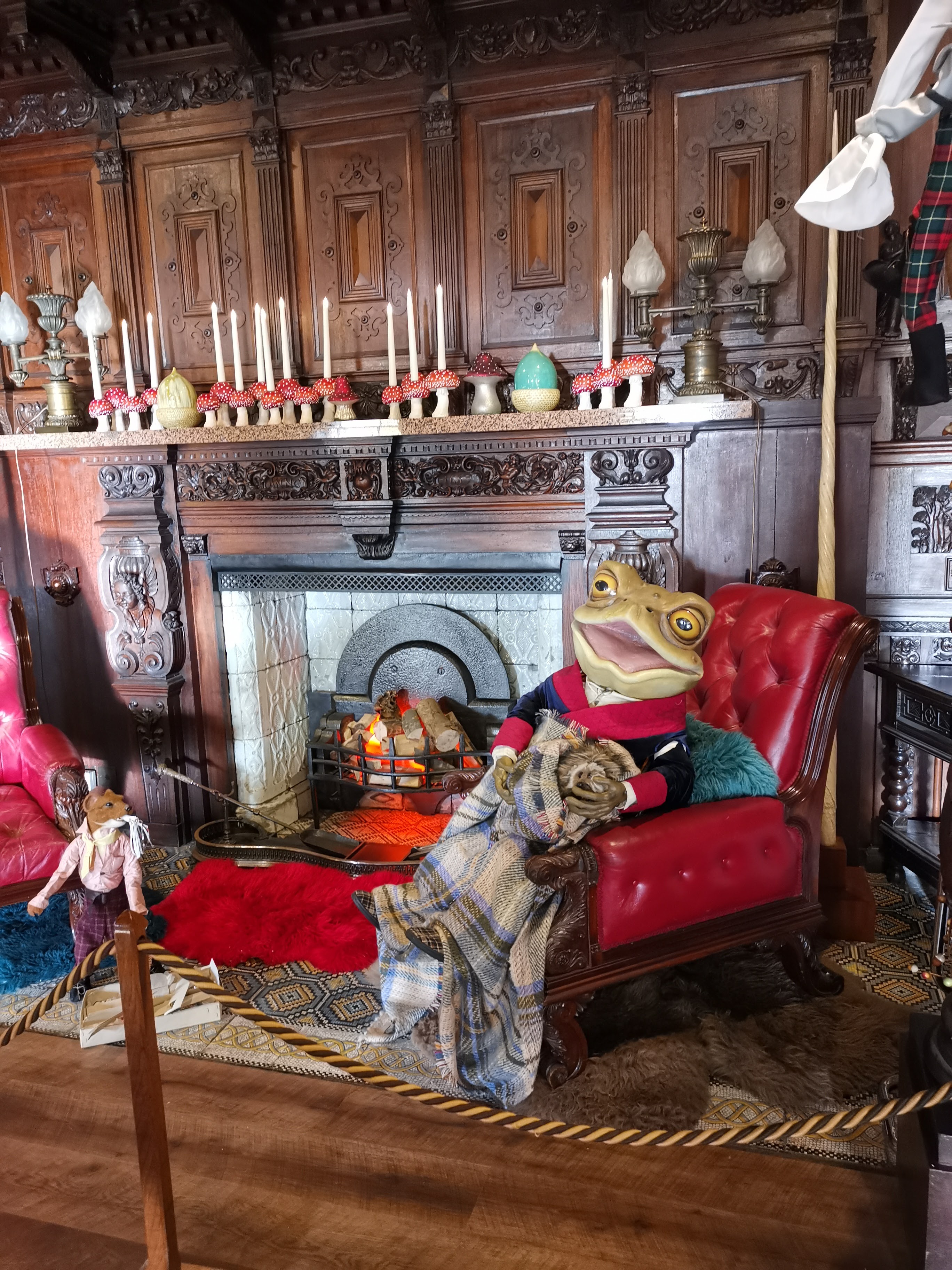
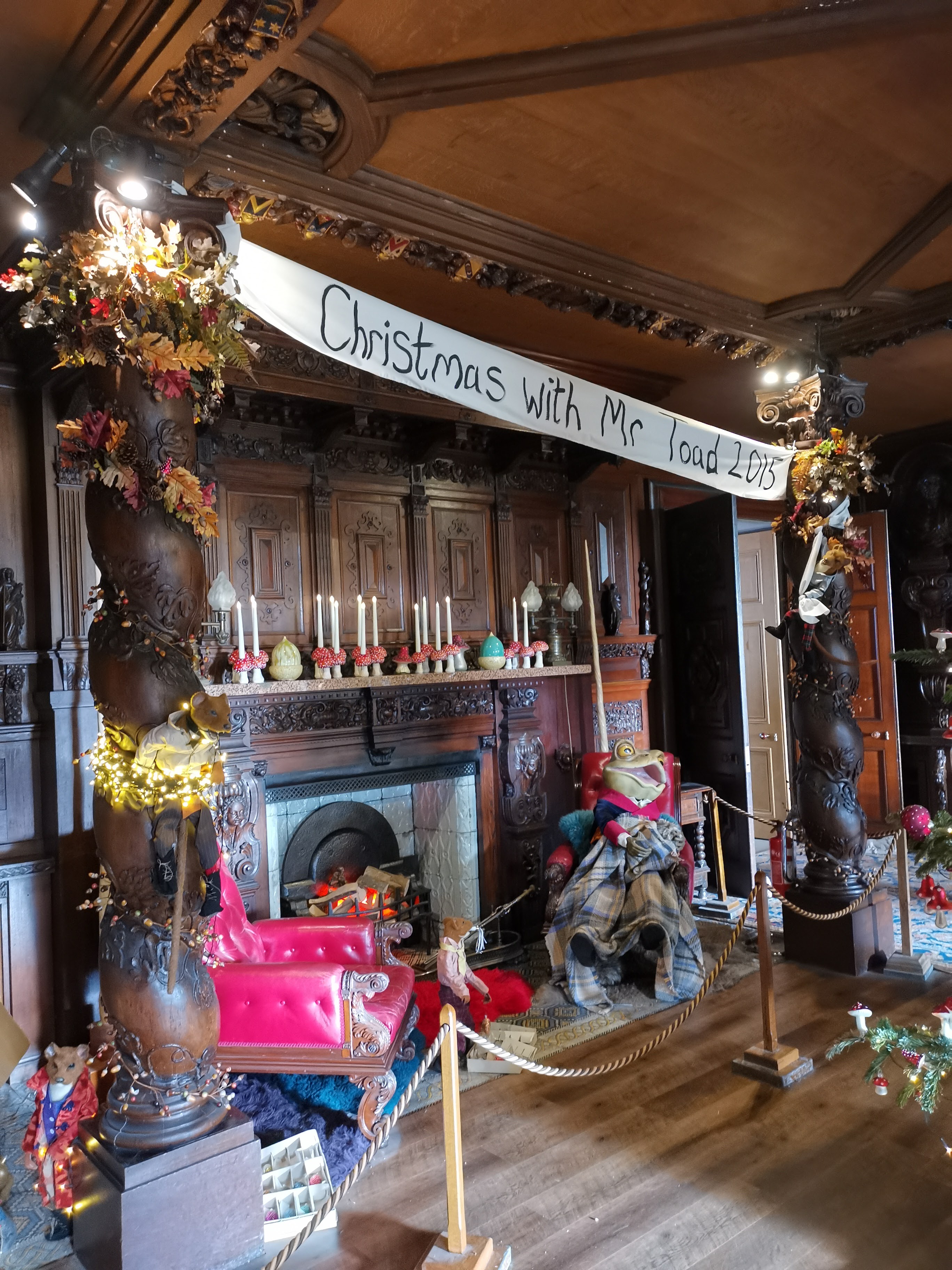
On a previous Christmas (2015), the next room was decorated with a Wind in The Willows theme, so they recreated it, including a very large Mr Toad.
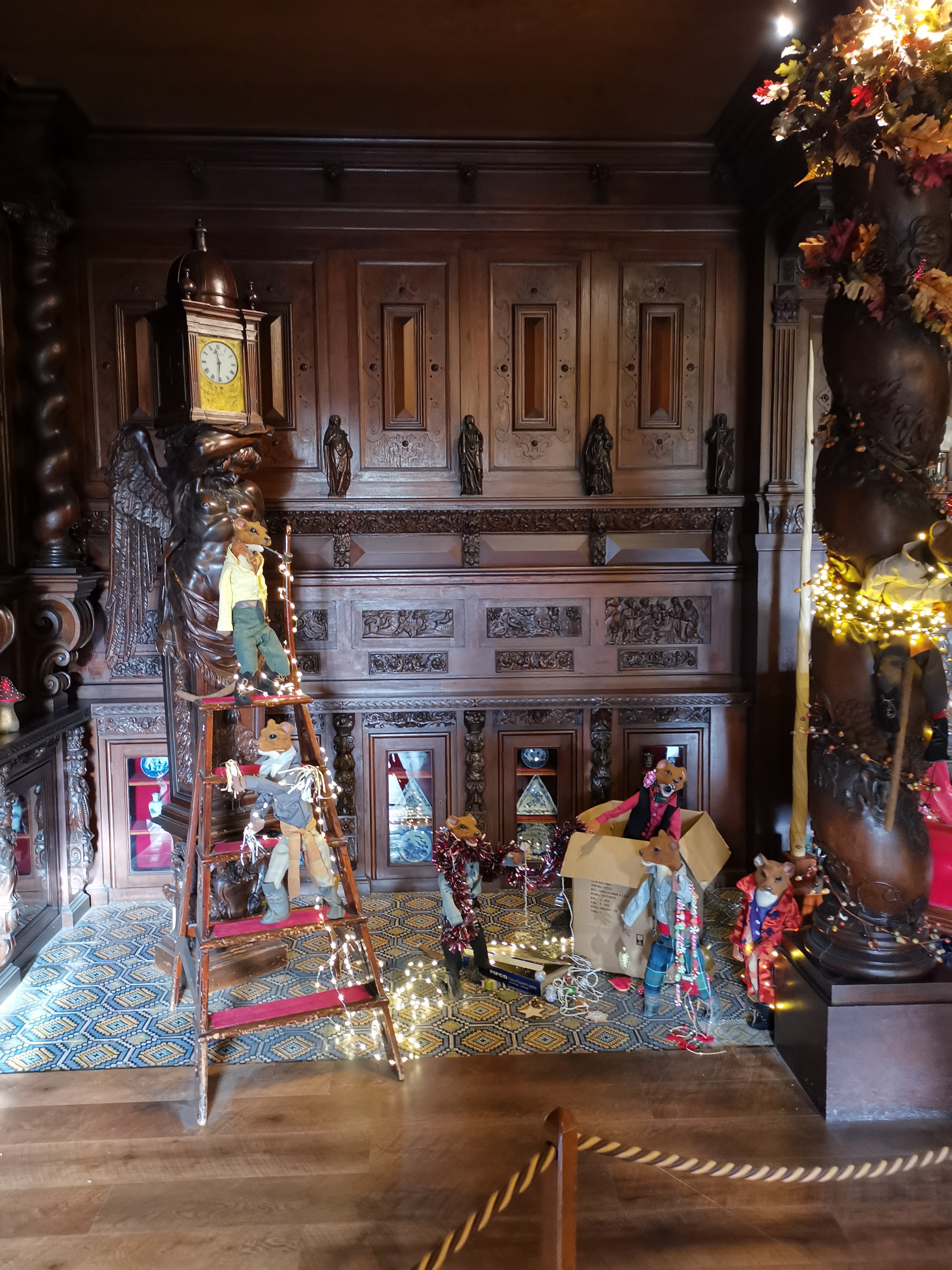

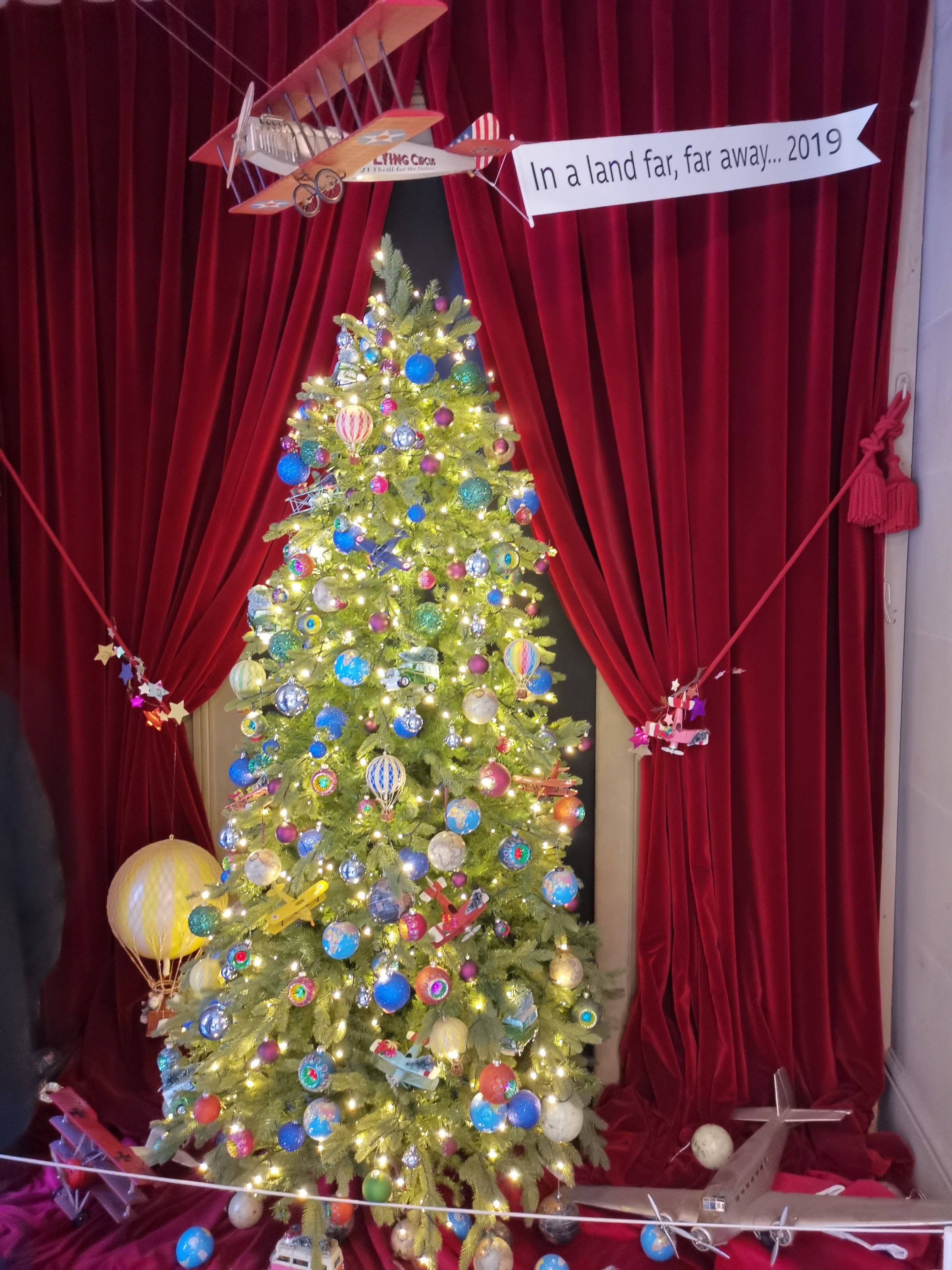
The passageways were also decorated beautifully, although some we weren’t able to go down to explore where they led.



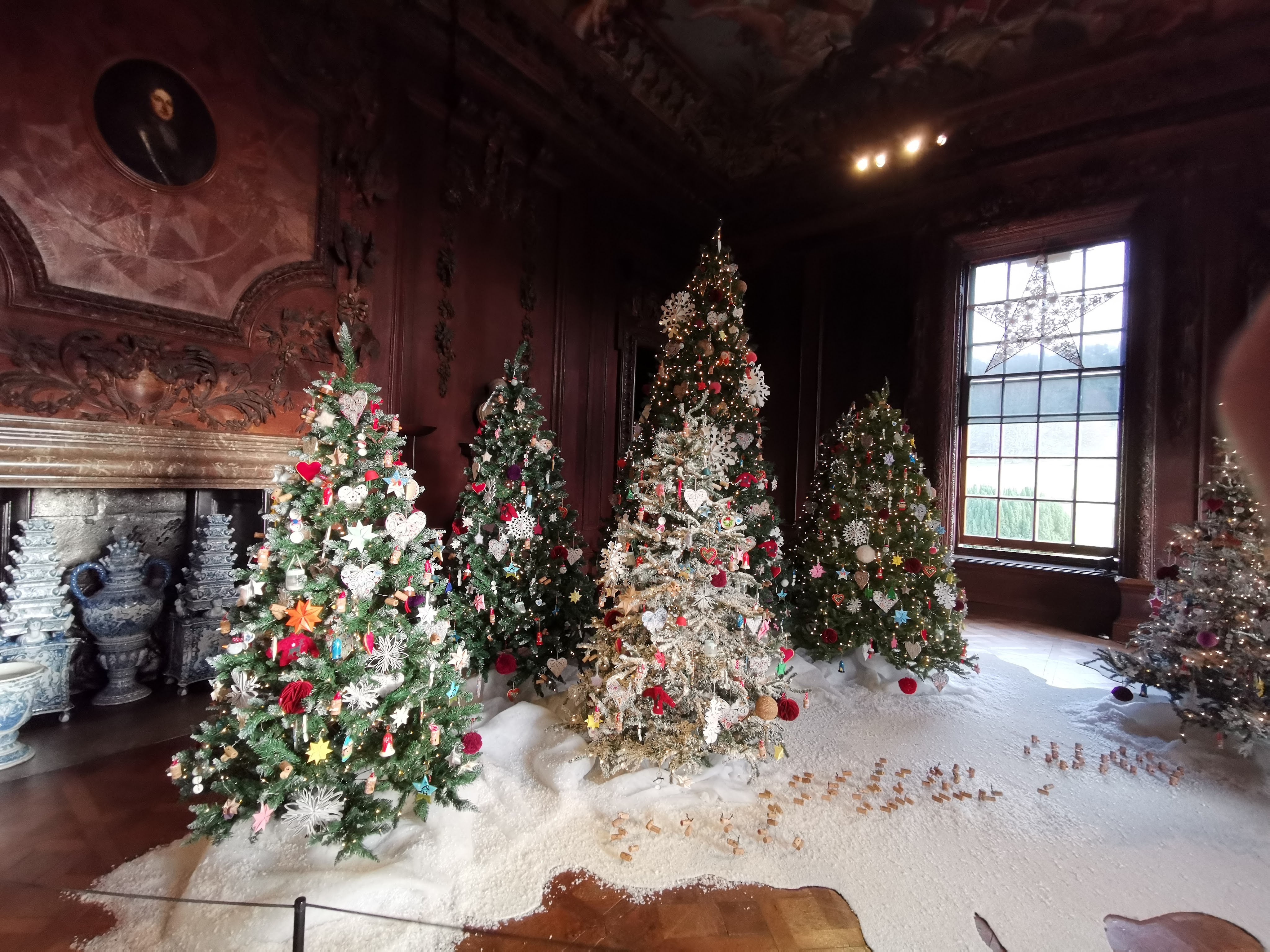
The Great Chamber is the first room of The State Apartment. There were a few Christmas trees differently decorated in this large open space. The little cork reindeer in the snow were a cute addition under the trees.


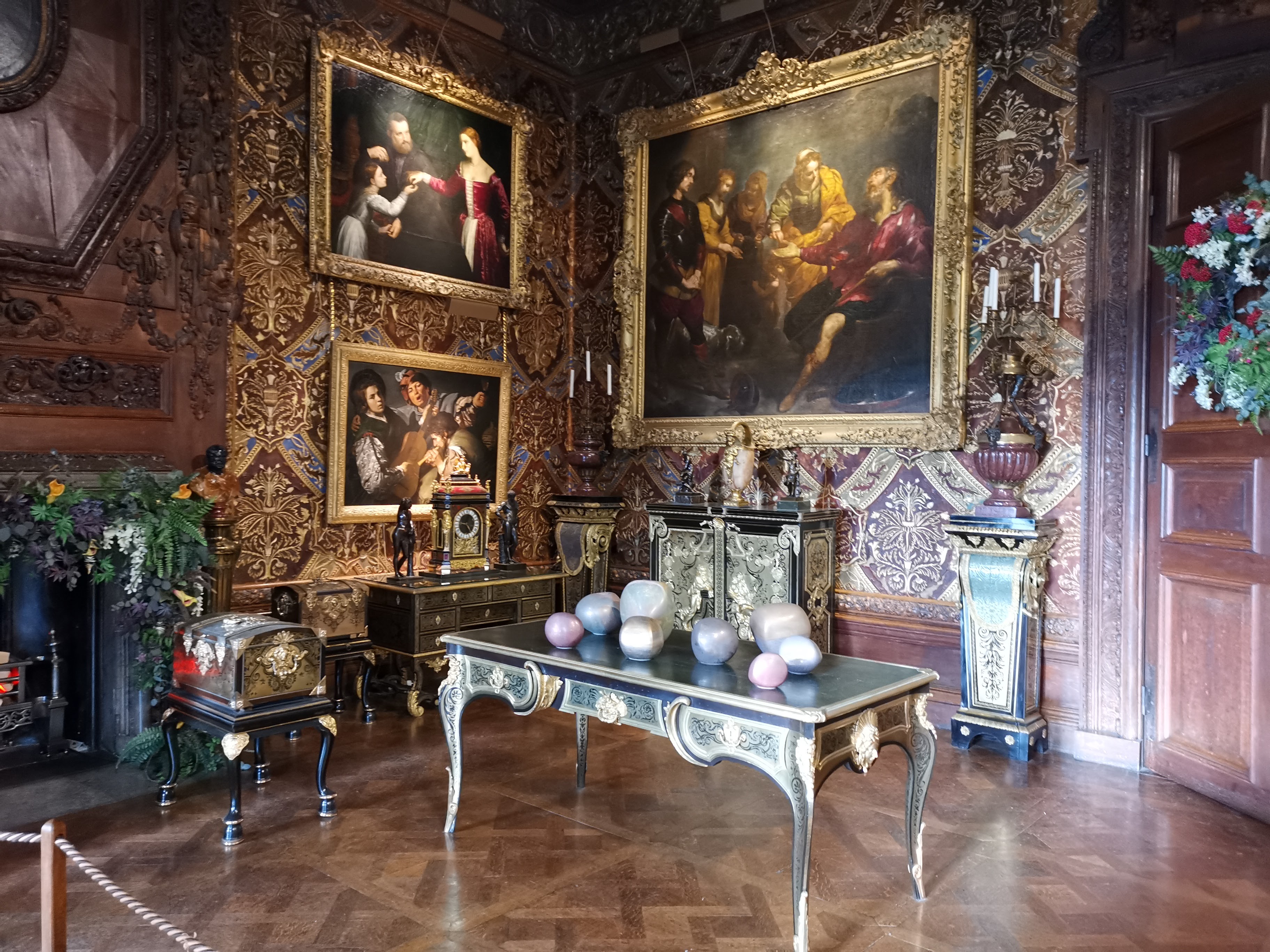
The State Apartment also includes a Drawing Room and Bed chamber and was intended to host a king. I thought it was interesting how small the bed was, compared with the height of the surround. In here, the ceilings were highly decorated too.
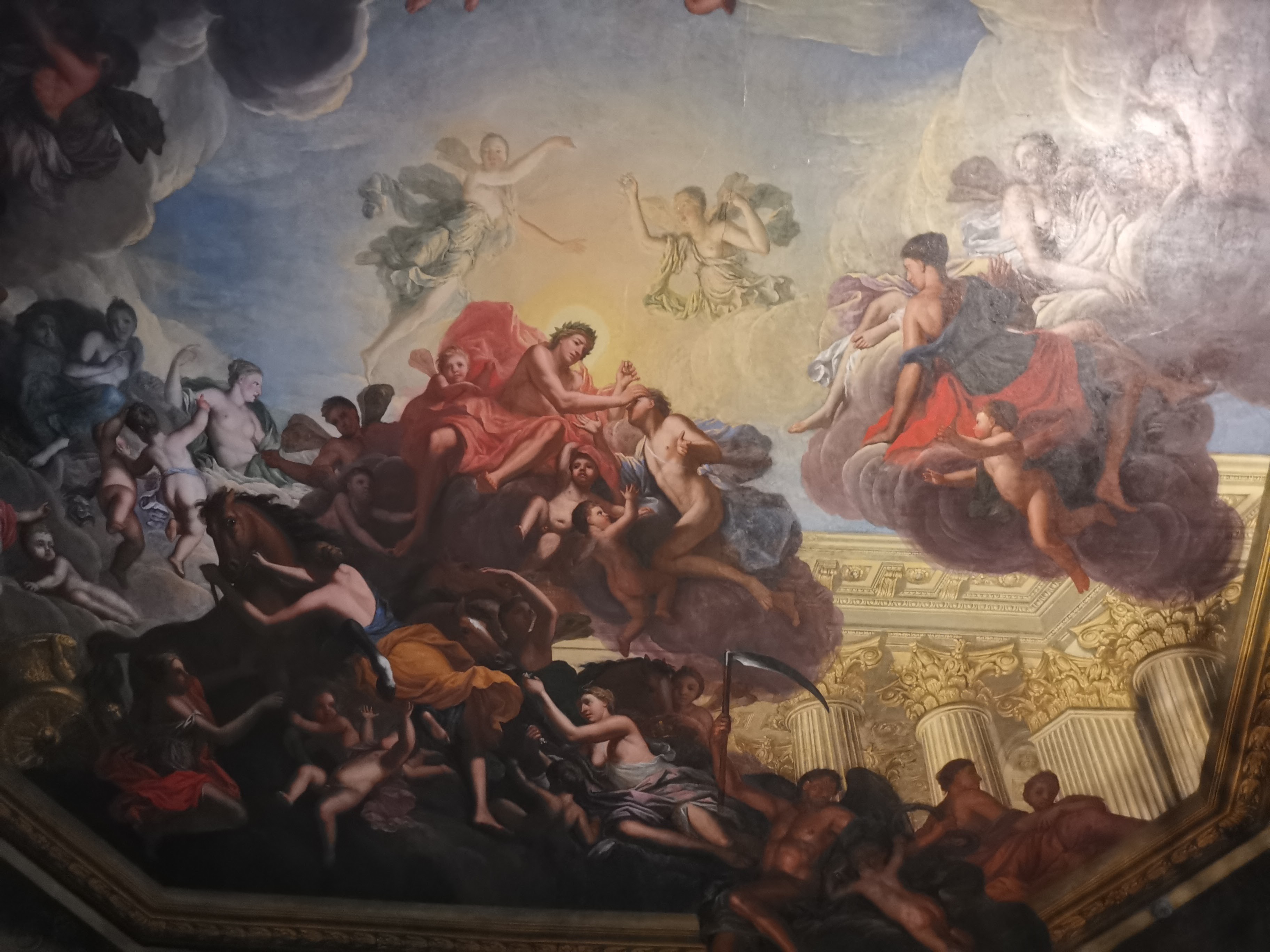
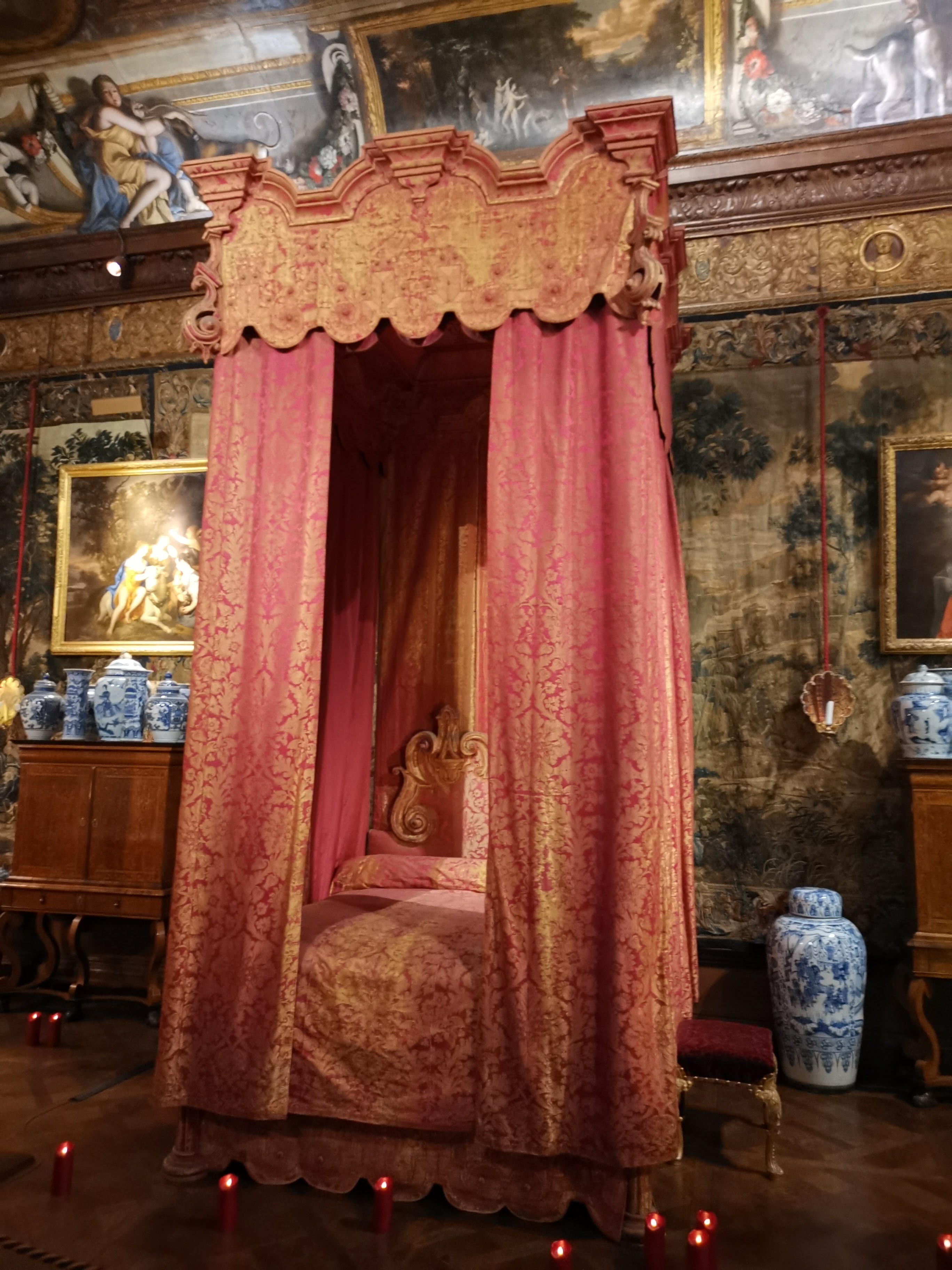
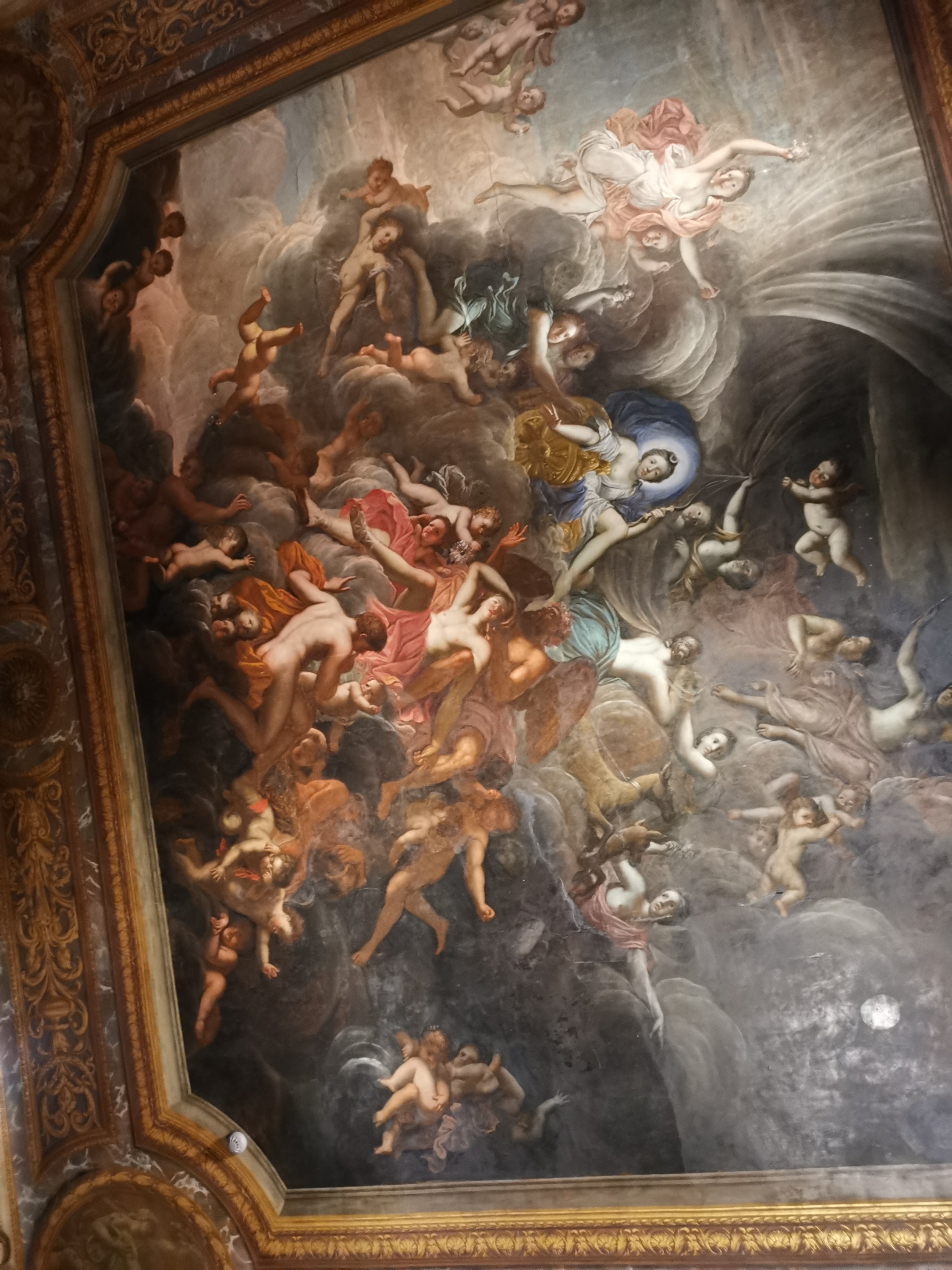


The Great Dining Room is still used to host formal dinners and was set up grandly for Christmas dinner. It was another room renovated by the 6th Duke, also named William Cavendish (c1800s).


The Oak staircase/Leicester landing, created by the 6th Duke to connect the old part of the house to the new. The beanstalk seems to have been from a Jack and the Beanstalk pantomime in 2012.

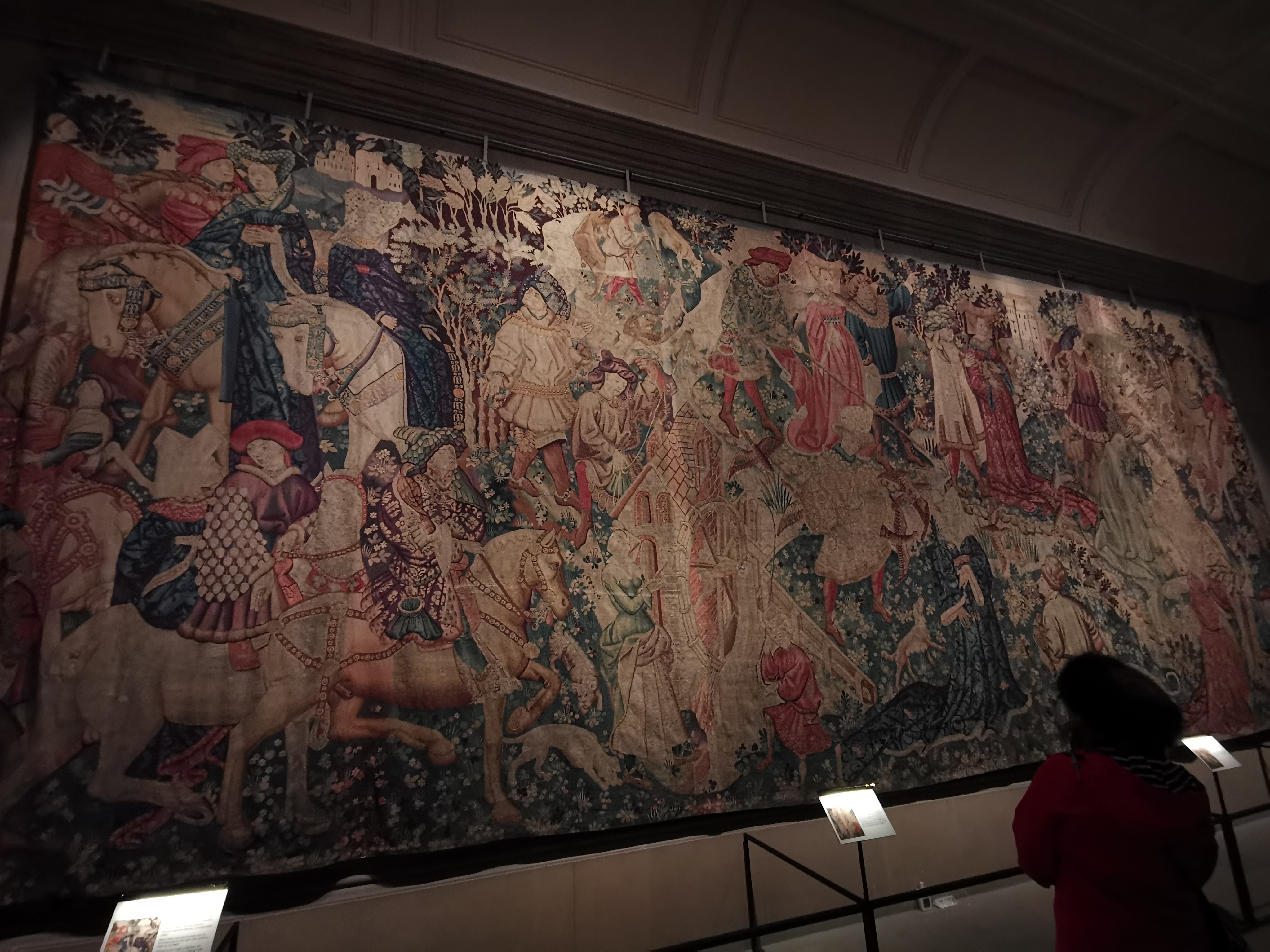
In the Sculpture Room, apart from sculptures were the Devonshire Hunting Tapestries. These are 500 years old and the only surviving tapestries in the UK depicting hunting from the medieval period (15th Century), it shows scenes of noble men and women who are engaged in hunting in imaginary landscapes.

Also in the Sculpture Room is the collection of sculptures. One of which is very prominent – a reclining young man. This I found out is Endymion. In Greek mythology, Endymion was a handsome shepherd boy of Asia Minor, the earthly lover of the moon goddess Selene, and each night he was kissed to sleep by her. She begged the god Zeus to grant him eternal life so she might be able to embrace him forever. Zeus granted her wish and put Endymion into eternal sleep.


There are several hallways that have been turned into galleries to display more works of art. This one has an entire wall covered in small ceramic rectangles. It is a representation of the DNA of the present Duke and Dutchess, their son and daughter-in-law. A very interesting way of capturing them for history.


It was lovely to see the house and how beautifully it is cared for. TI think you can certainly see, if historic houses interest you, just how lovely this one is.
If you would like to know more about the house and the family through the ages, the website has lots of interesting information https://www.chatsworth.org/
After we had finished looking through the house, we took time out to have lunch. The weather was threatening to rain, between times of bright winter sunshine, so we found a sheltered spot to eat our picnic sandwiches and packet chips. There are cafes and a restaurant on the grounds, but the food can be a bit expensive. With Covid19 restrictions in place, once you leave the house, you can’t re-enter. However, we were free to explore the gardens on our ticket.
Next, we ventured up to the Farmyard and Adventure Playground, so my grandson could see the animals. We followed the path up to the Stables, which houses various options for food, including their full-service restaurant, The Cavendish Restaurant and the Carriage House Cafe.
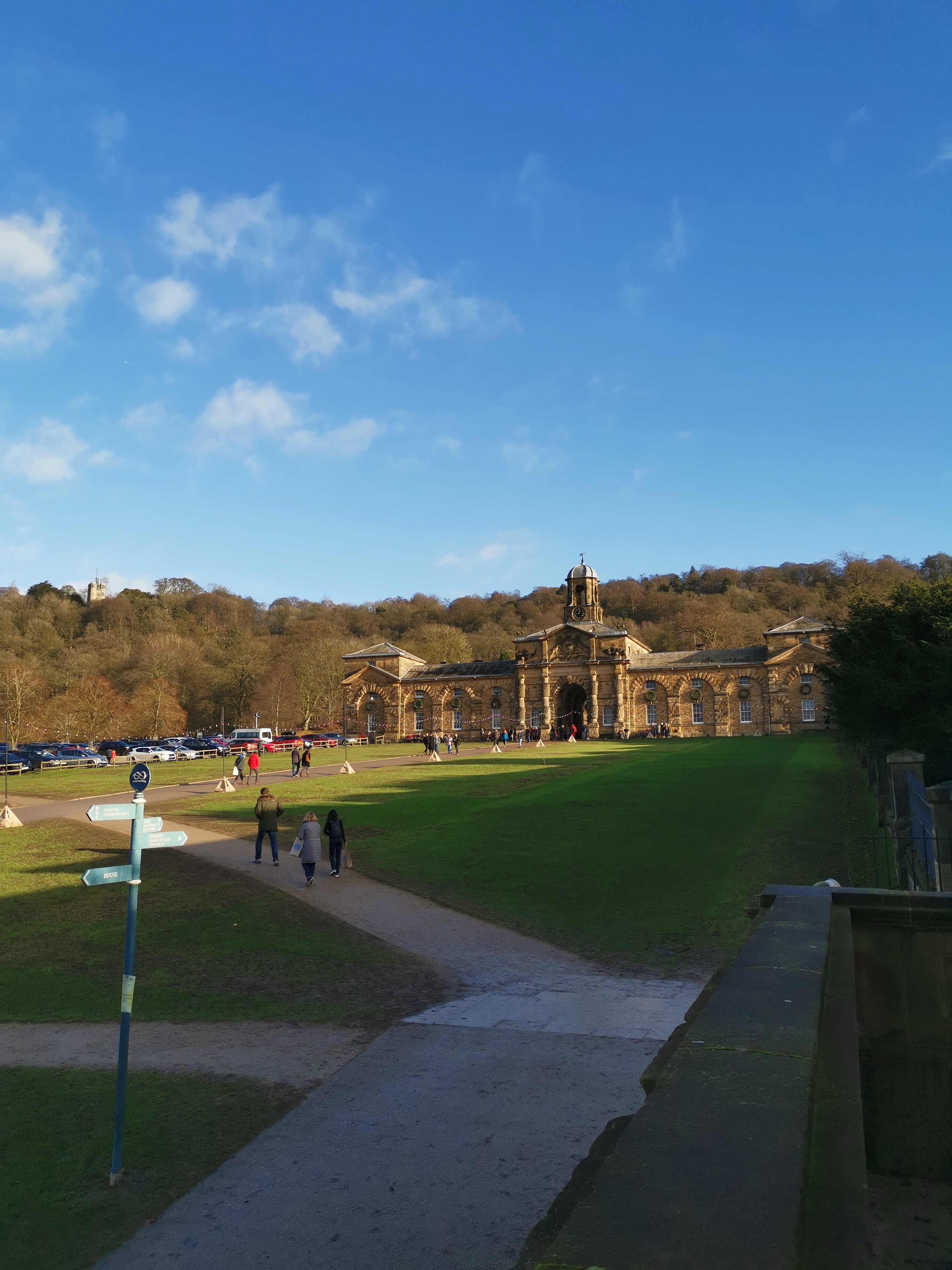

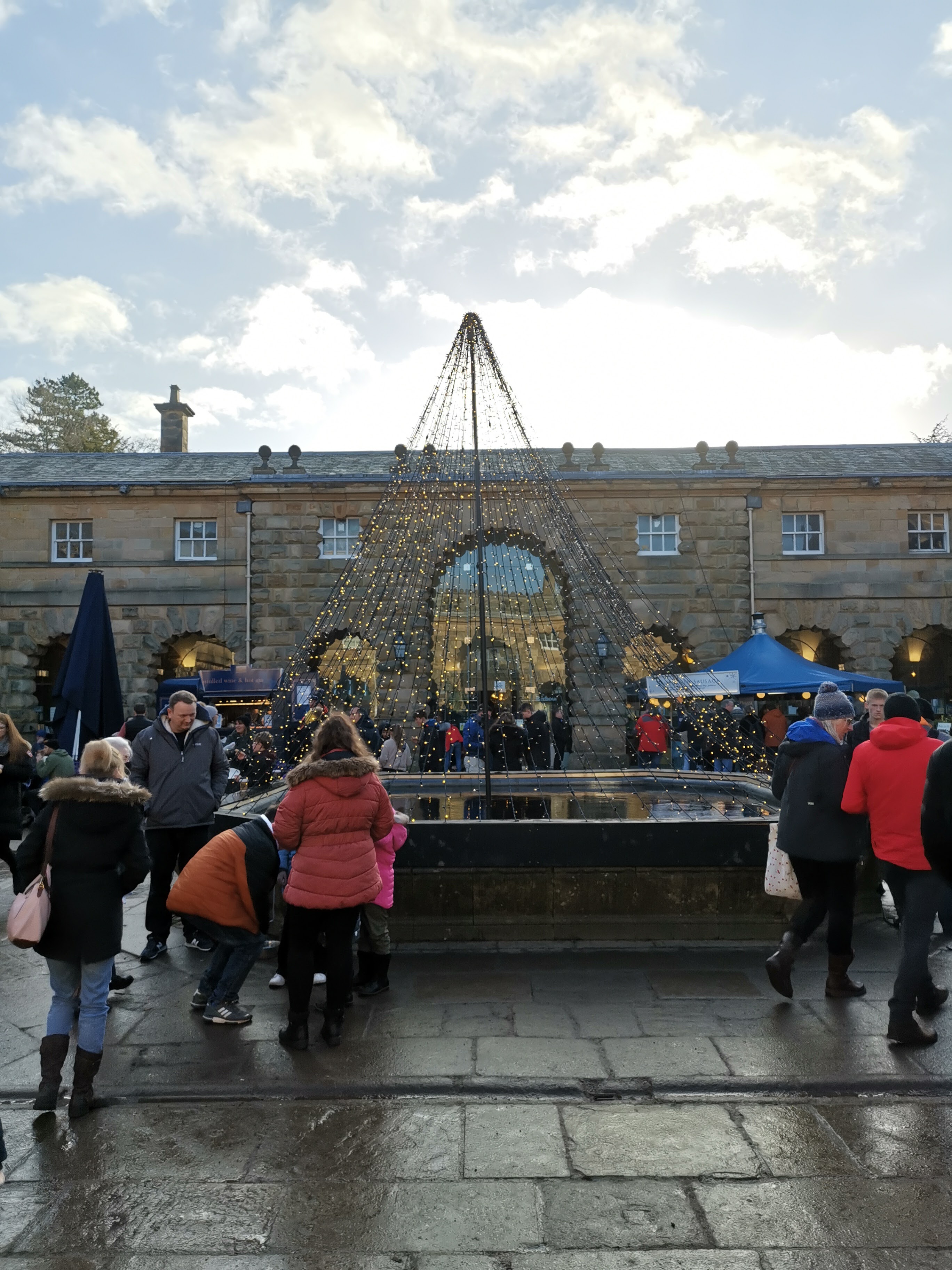
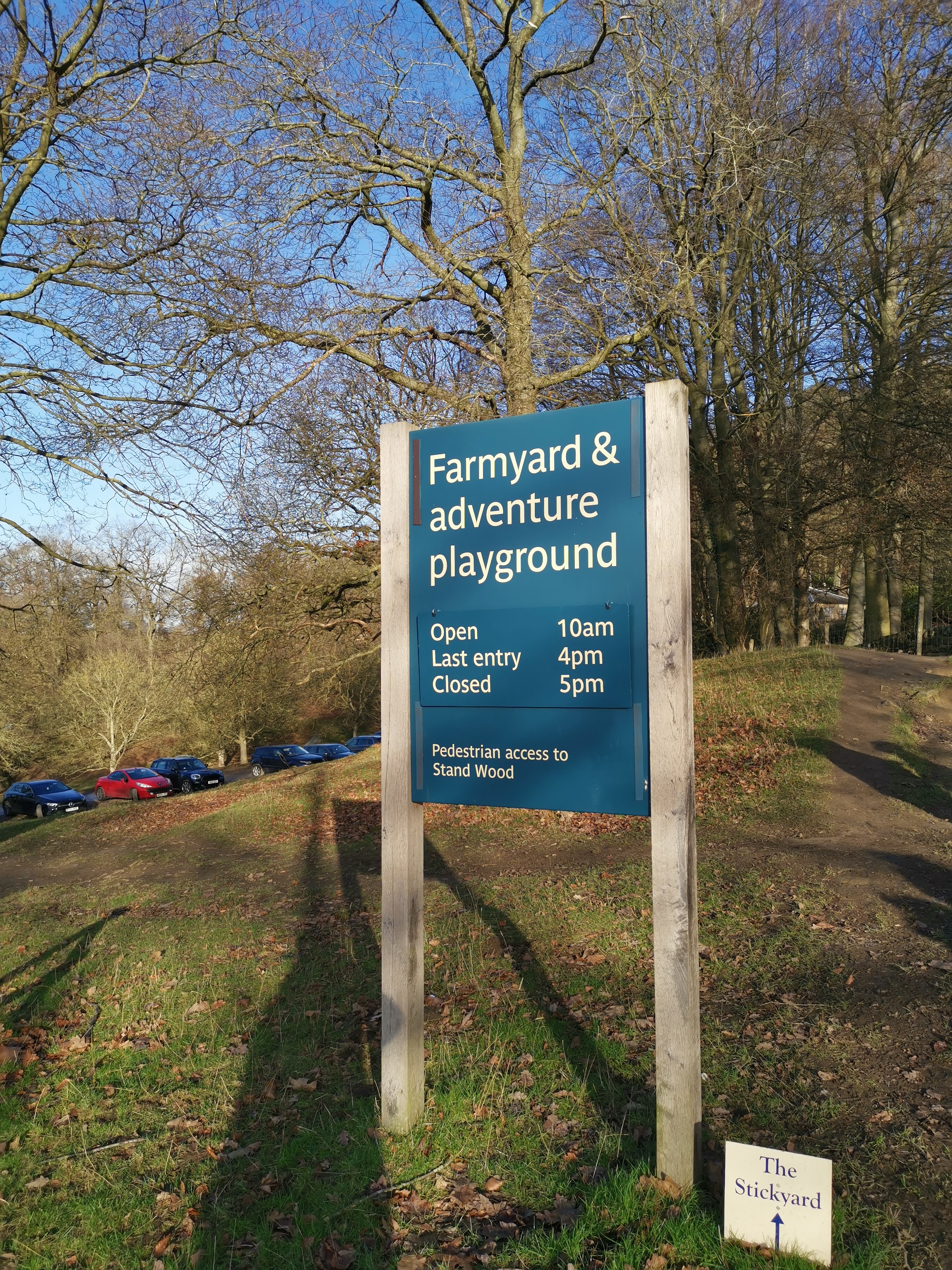
There were a variety of animals, including sheep, pigs, goats and donkeys in the farmyard. At various times during the day, it is possible to watch the cows being milked and pet the guinea pigs. We were able to buy a small bag of food for the animals, so we could hand feed some of them. That was very cute as sheep and goats have warm sticky tongues, so it was safe for little children to feed them.
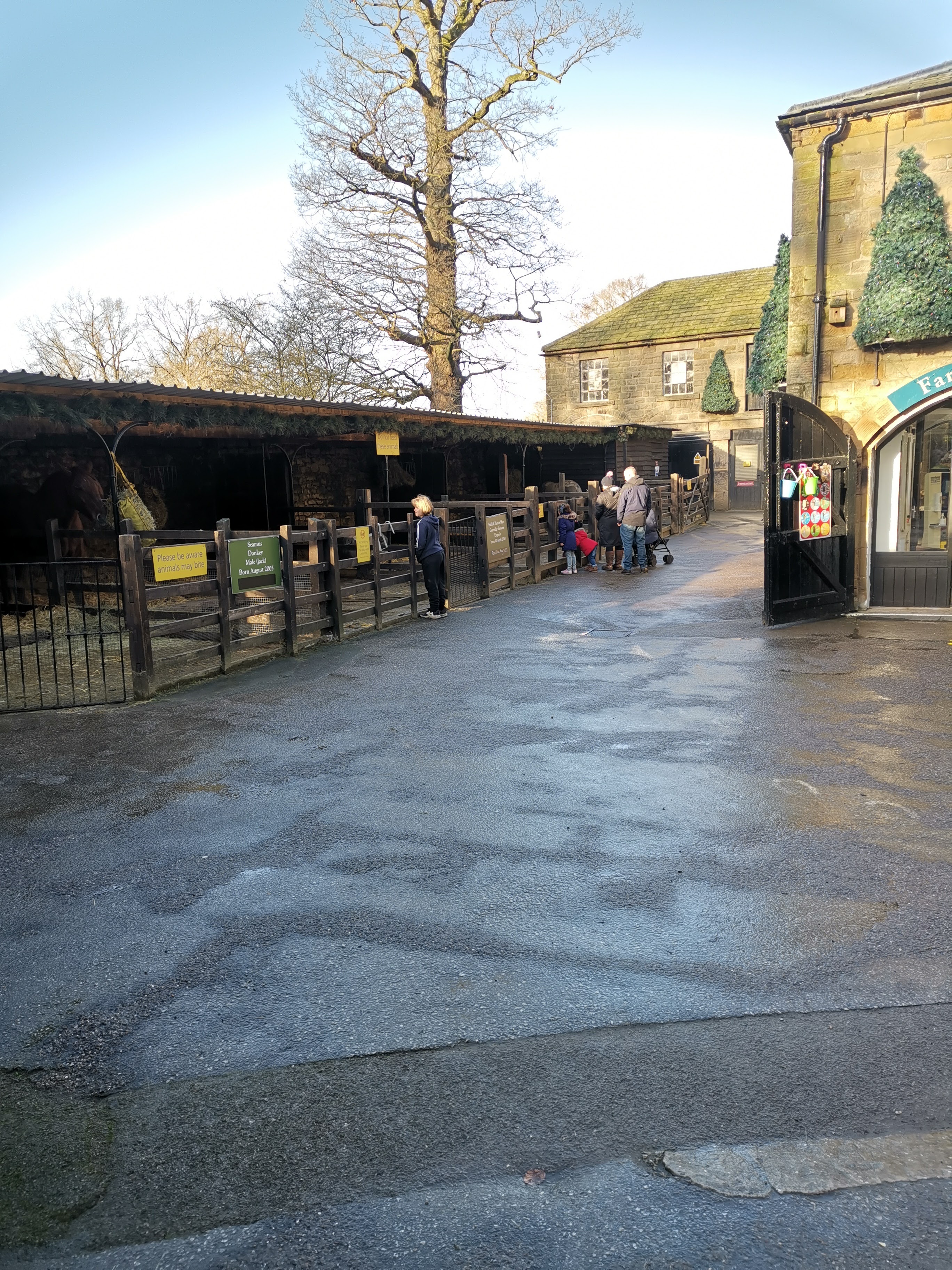


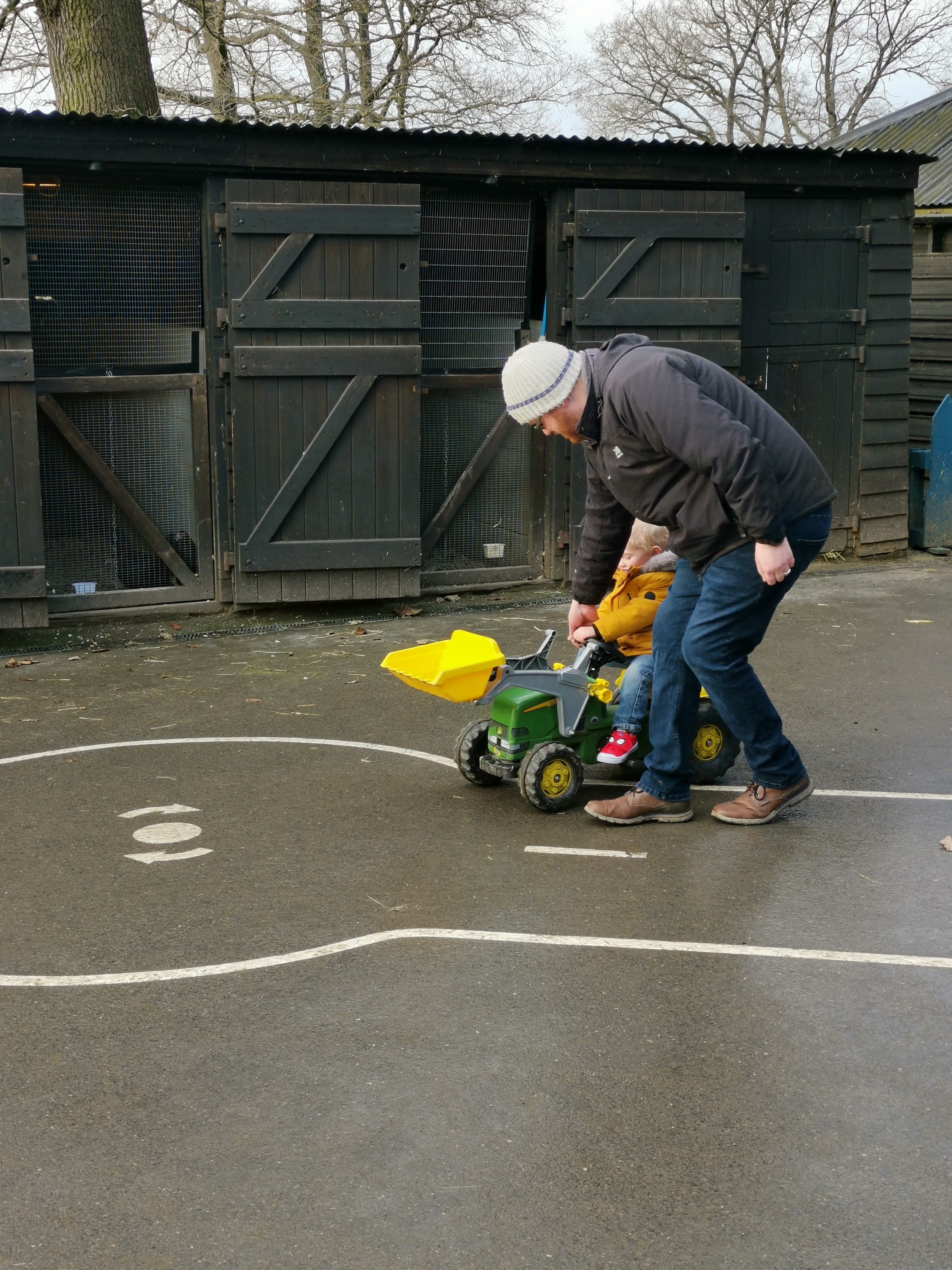
There was an old tractor set up for climbing on and also some little-people sized ride-on tractors, which the children were enjoying. My grandson is still a bit small for peddling, so Daddy power came in handy to propel him.

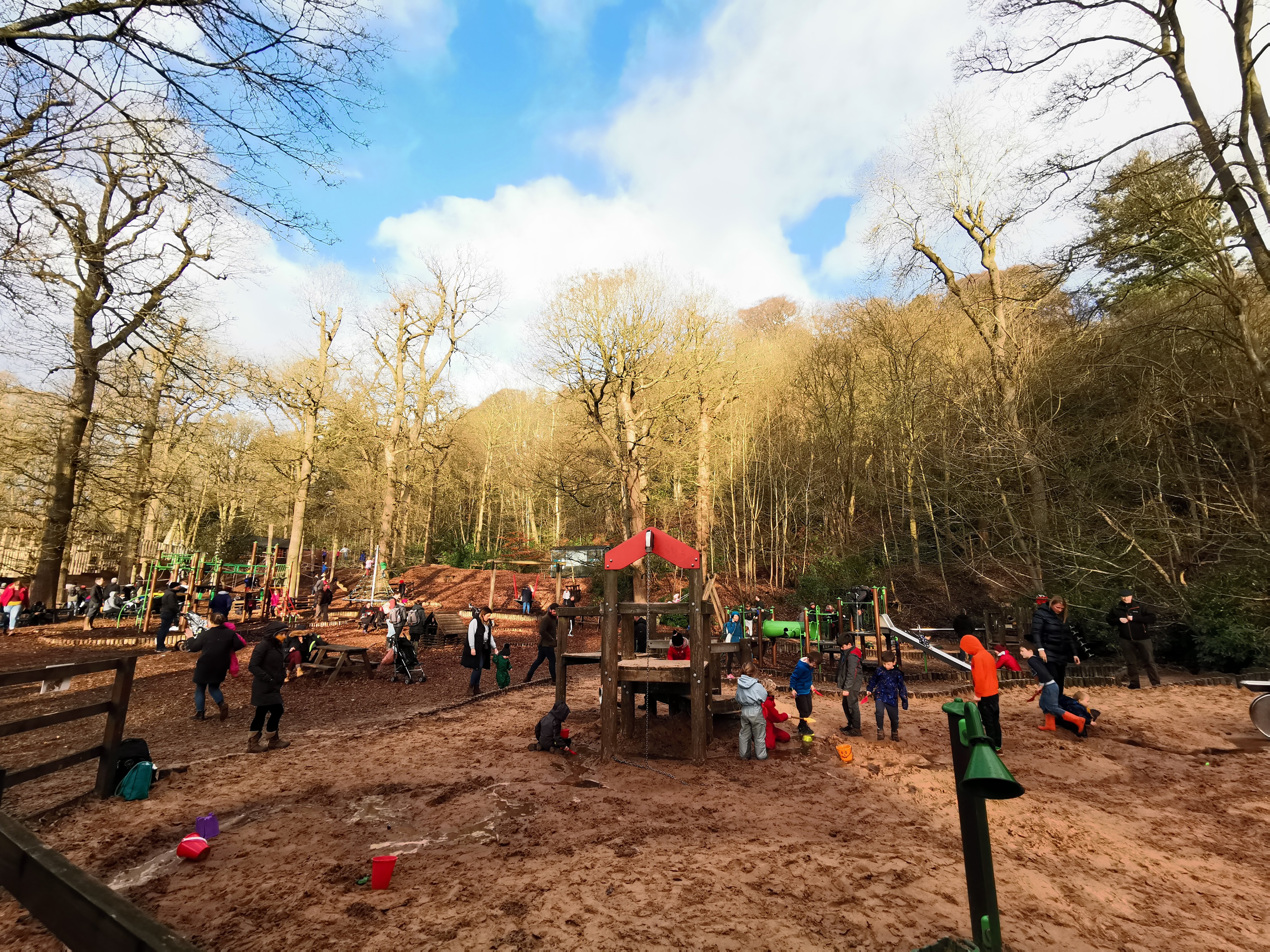
The Adventure Playground has large sandpit areas allowing the children to have water and sand play. There was also climbing play equipment for various ages. Up behind the playground is woodland for hiking through and in the valley below the house is open fields where it is possible to see deer.
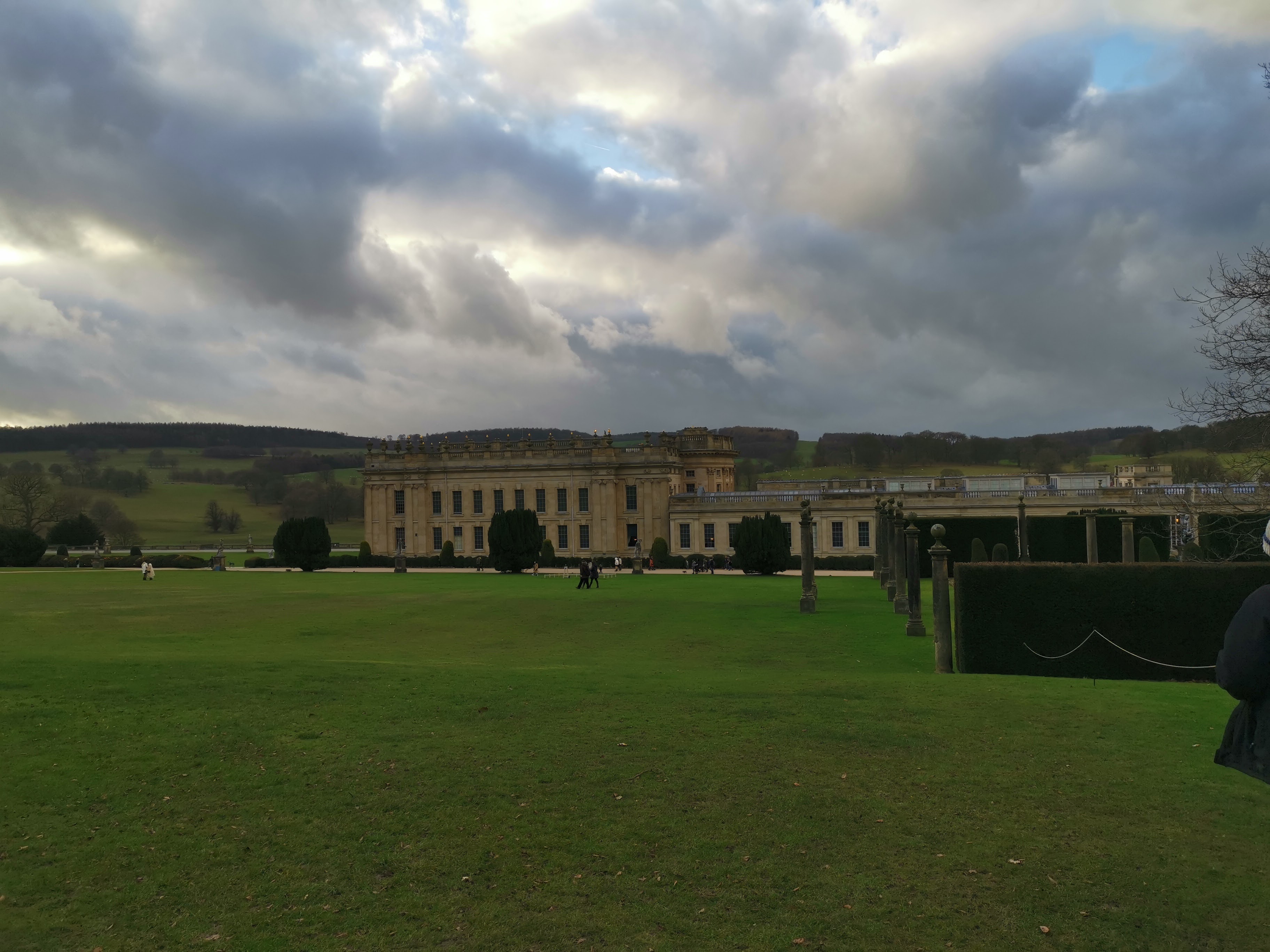
Once we had finished in the Adventure Playground, we returned back to the gardens of the House. There are extensive gardens and grounds surrounding the house to explore, including a hothouse of tropical plants and in the nicer spring/summer weather it would be lovely to spend more time exploring.

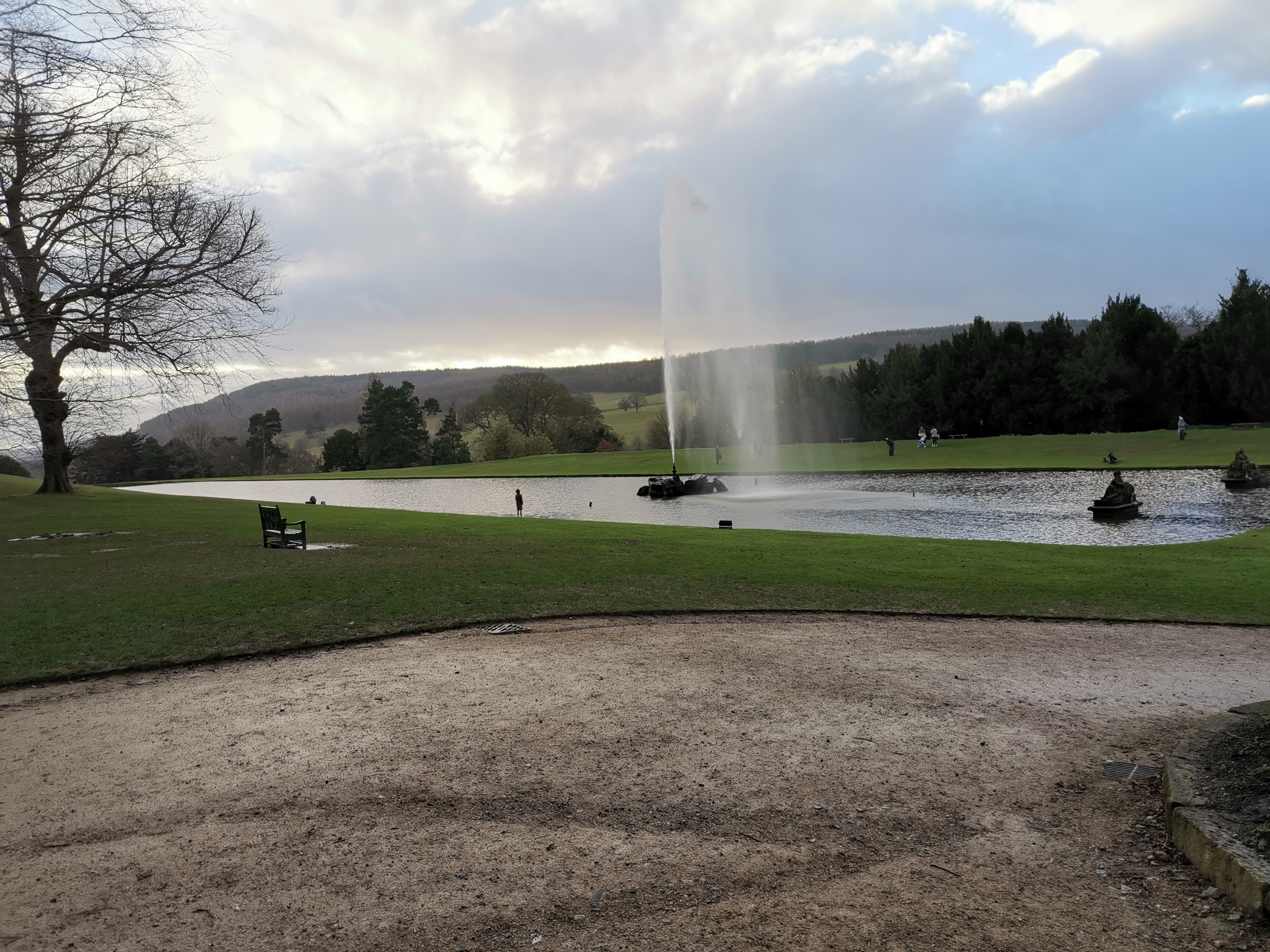
However, we were content to walk along the main path, The Broad Walk, past the private lawns and the fountain, up into the rock garden, which I suspect was missing its waterfall.


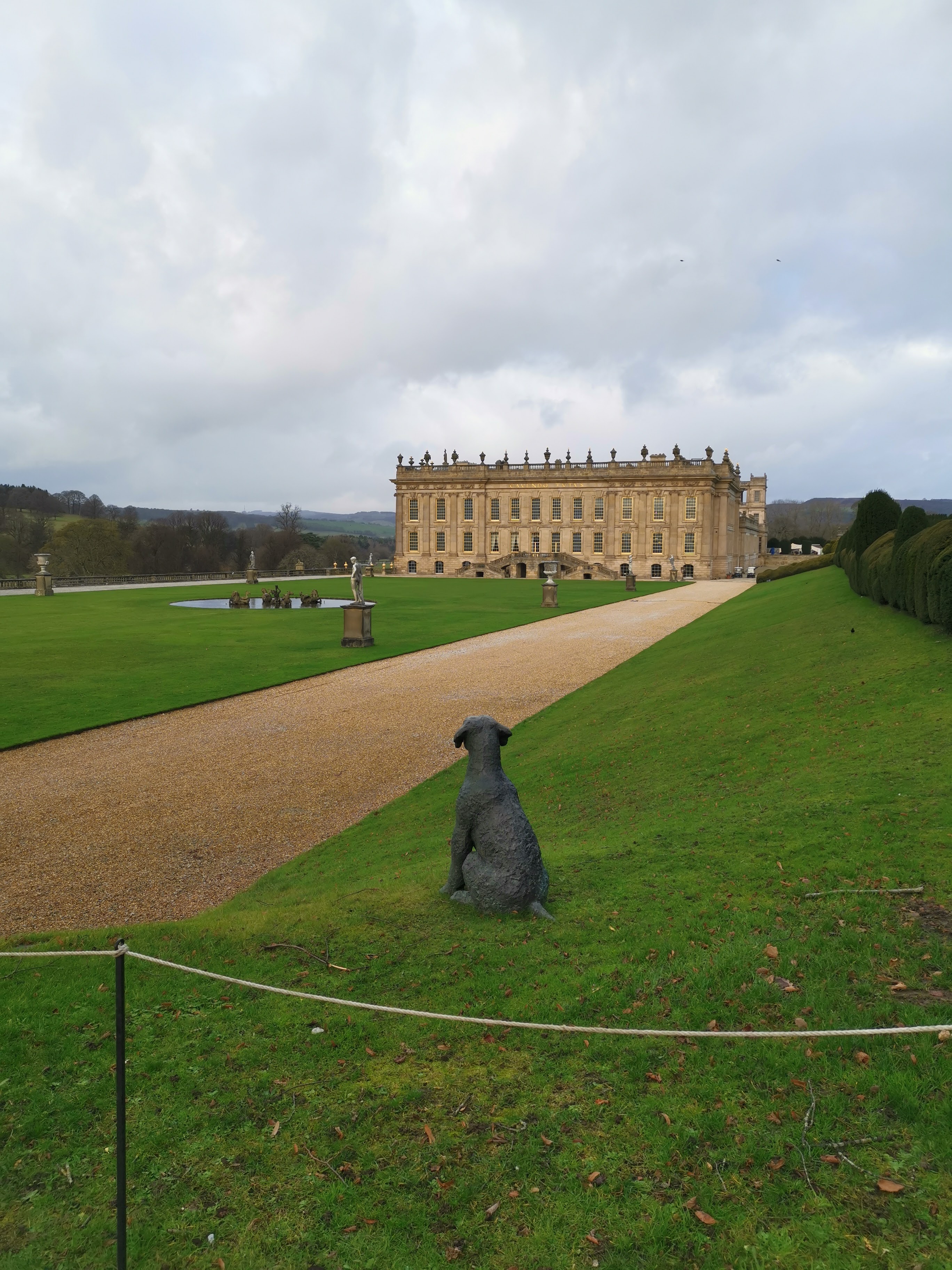
A statue of a dog watching over the private garden
I found out that Joseph Paxton was the head horticulturalist for the 6th Duke and laid out the gardens. He also cultivated the Cavendish banana in the greenhouses of Chatsworth House, which he designed and named the variety of bananas after his employer. Cavendish bananas are the most eaten variety in the Western world. The Paxton’s Glasshouse and Paxton’s Rock Garden are named after Sir Joseph Paxton.
Up behind the Rock Garden, there is an old coal tunnel that had been made safe for visitors to walk through, although it was pretty dark and waterlogged in the tunnel. The coal delivered here was needed to heat up a large conservatory, which no longer exists.


As the winter sun disappeared behind rain clouds, we decided to head back to the car and head home. It was a great way to spend an afternoon and it will be lovely to visit the house again and perhaps see more of the gardens, including the maze.
 Life is a Journey