27th January 2022
Lyme Regis, is a pretty little seaside town on the south coast of England.
This was my first visit to an English beach in over 50 years and I really enjoyed it.
I travelled with my brother and sister-in-law from Taunton, about 45 minutes away, by car. We drove through pretty countryside and passed quite a few thatched cottages on the journey, another one of my “want to see” list items.
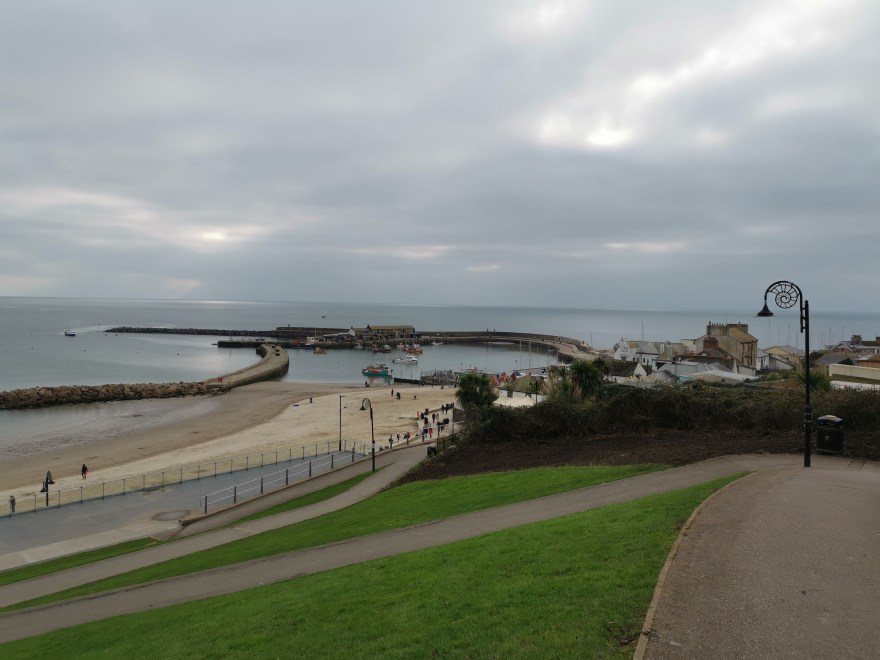
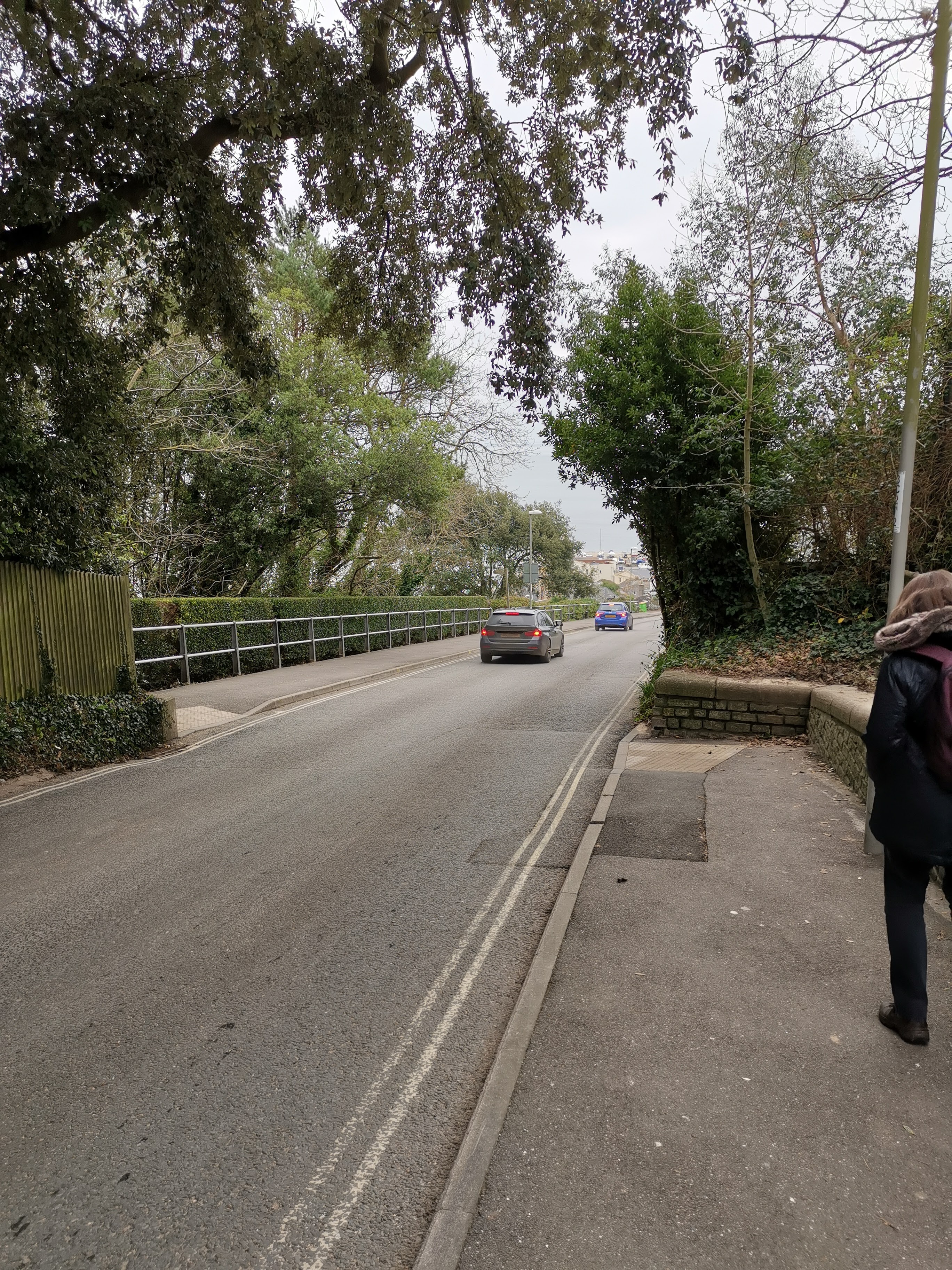
We parked up on the hill in the carpark and then walked down the very steep road towards the beach. I am not sure the photos really show how steep that road was, but my toes were squashed against the front of my shoes as my feet slipped forward in them. That was followed by a series of steps down onto a flatter walkway, which wound its way down to the beachfront.


The view from high up was lovely. This beach is part of the Jurrasic Coast, where it is possible to find fossils from that era (66 million years ago), especially of the ammonites, the curled shell of a marine creature. The shell is themed into the lights along the promenade.
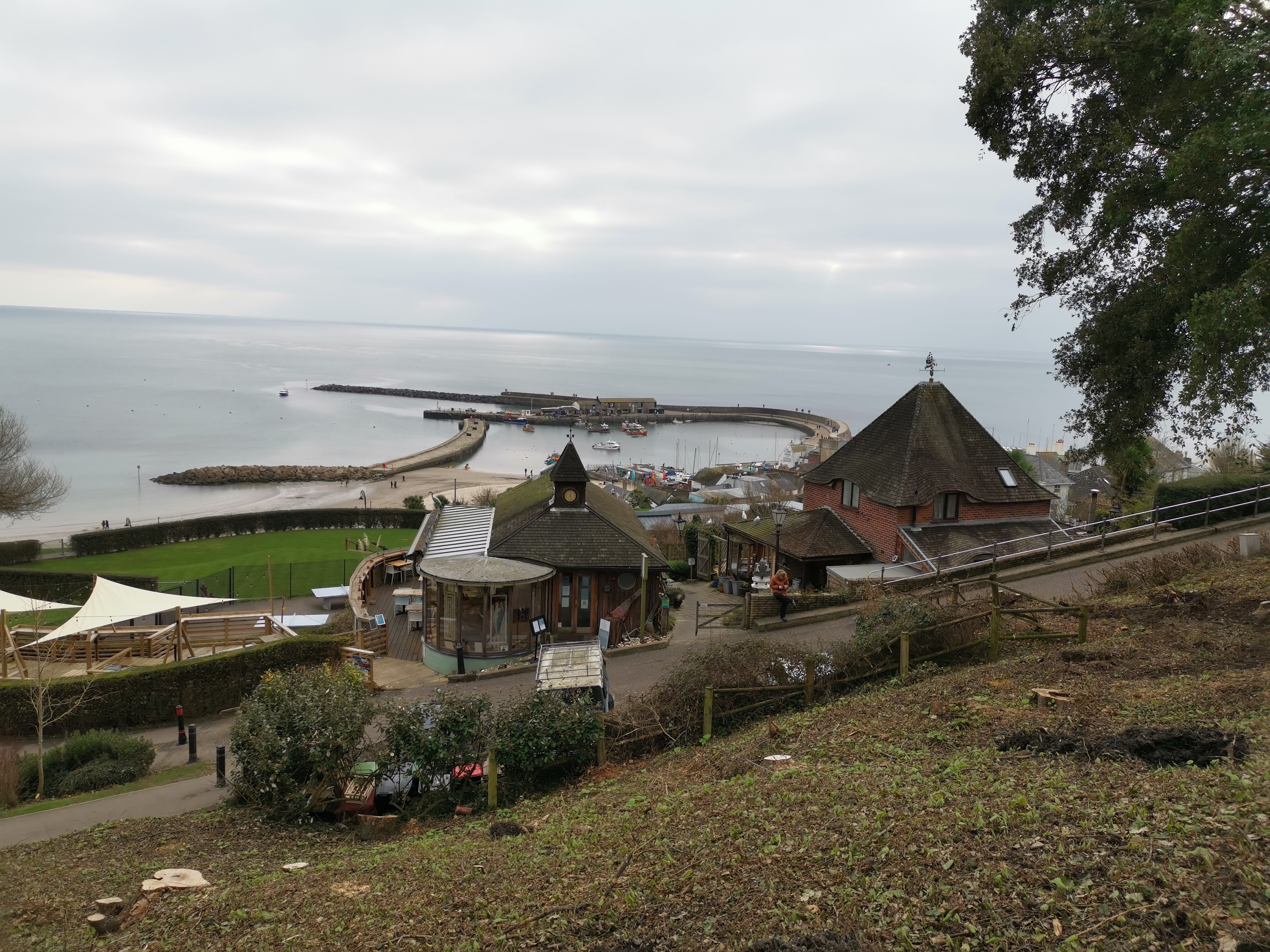
Our pathway passed a restaurant, the building with the pointed roof, and a mini-golf course. The little harbour wall is called The Cob and that was our destination. I was told, if you visit Lyme Regis, you have to walk along The Cob. There is also a sculpture trail which would be nice to follow, if we had more time.

We continued our walk down to the harbour and I heard a sound I haven’t heard since I was a child, the caw sound of English seagulls. Yes, we had gulls in Australia, where I lived, but the English ones sound different. As a child living in London, we would visit the coast for the weekend and I remember the seagull noise. It is amazing how a sound can trigger a memory.


Once we reached the “Cob” (harbour wall) we could look along the beach and there were the bright colourful beach huts. We didn’t have them where we lived in South Australia. They are a great idea. To have somewhere to store your things and get changed, while you are visiting the beach. The beach was also different in Australia to what was here at Lyme Regis. Here it is partially sand, but a lot of it was stones. In South Australia, we were blessed with beautiful clean sand.

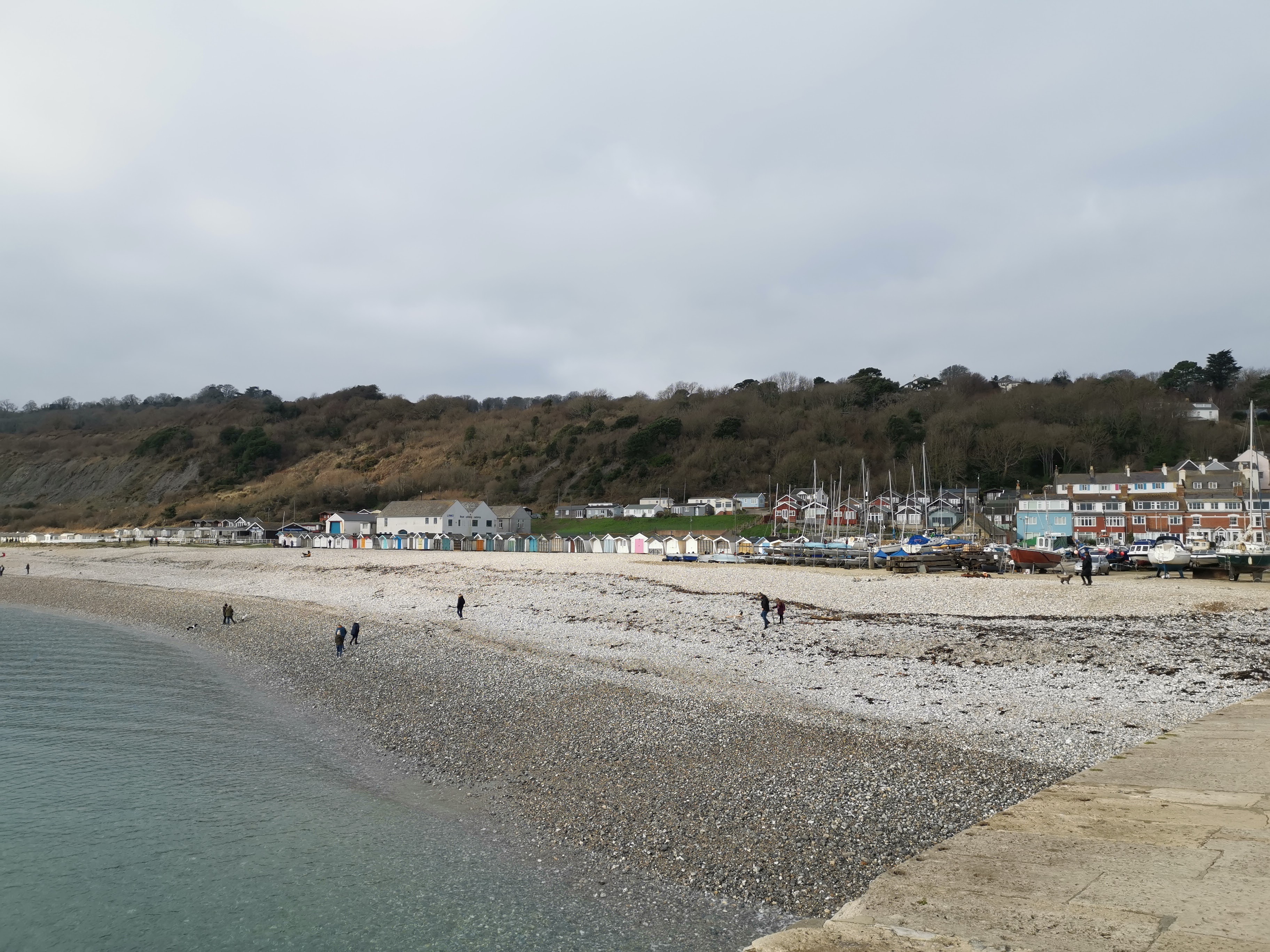


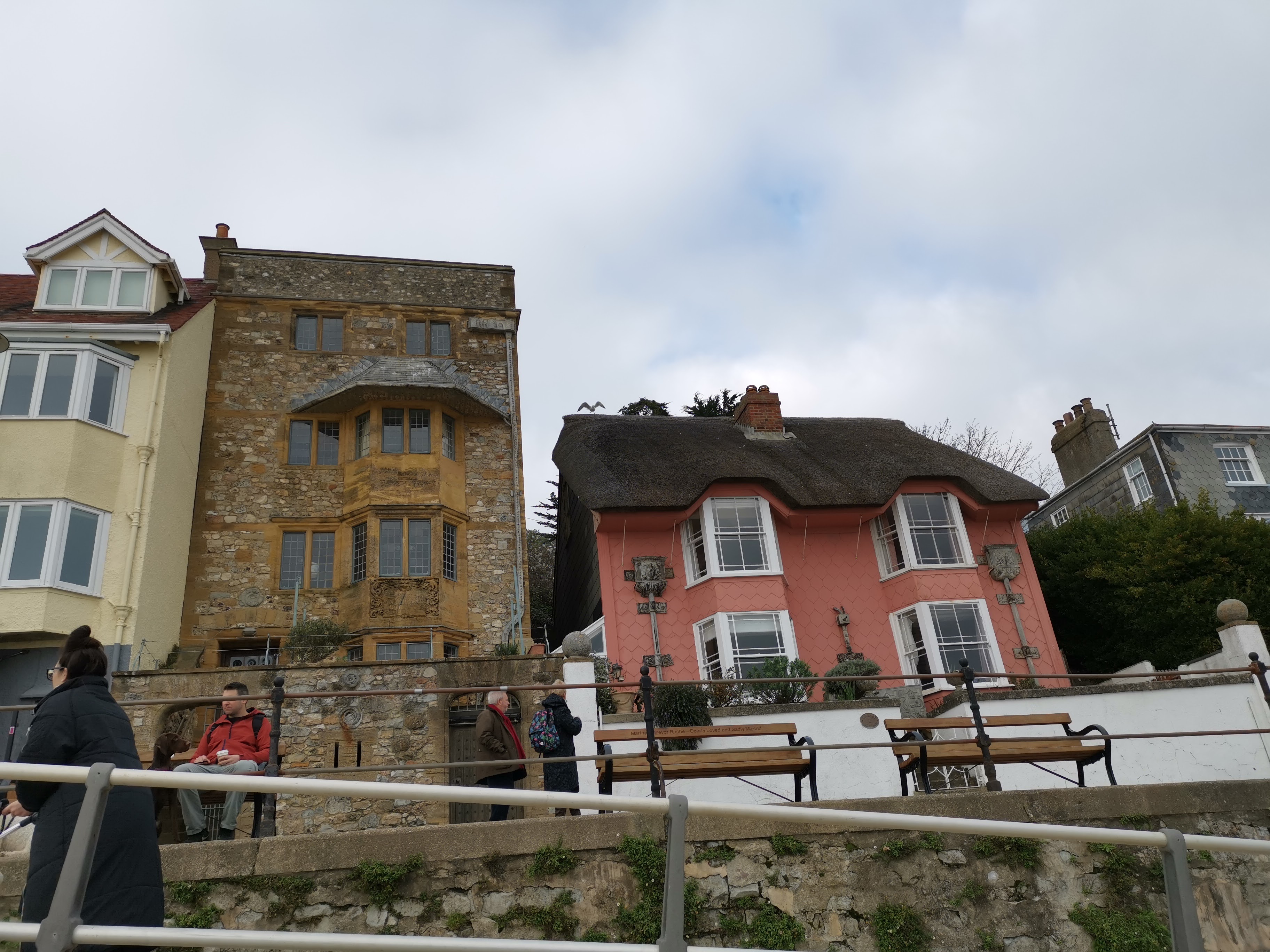
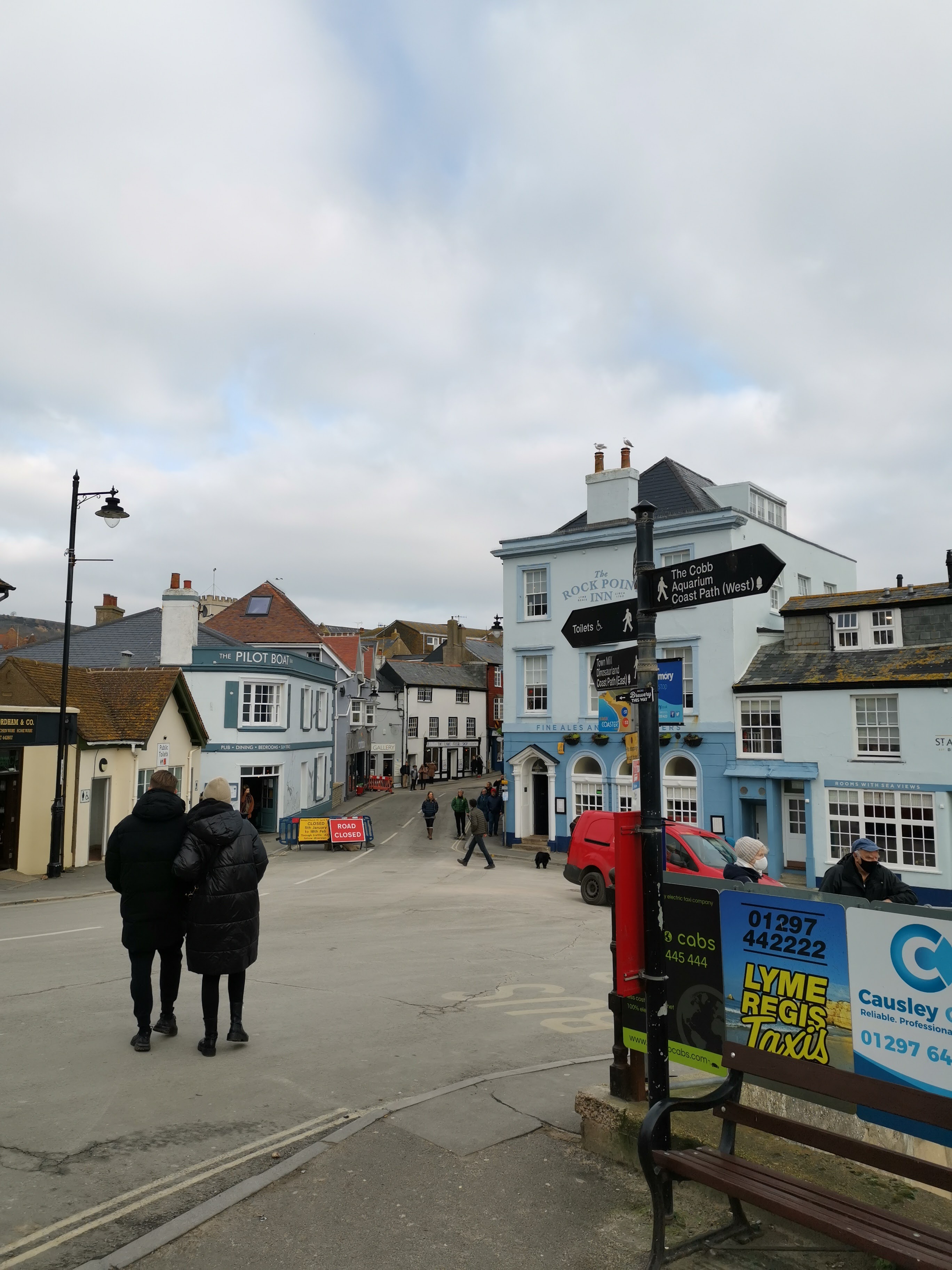
We walked along the promenade past the row of colourful bathing huts. Everywhere was lovely and tidy and clean, which was really nice. Above the promenade, the seafront buildings were a mix of different styles. I think some of them are guest houses. There is also a small town, with cafes and shops along narrow streets.

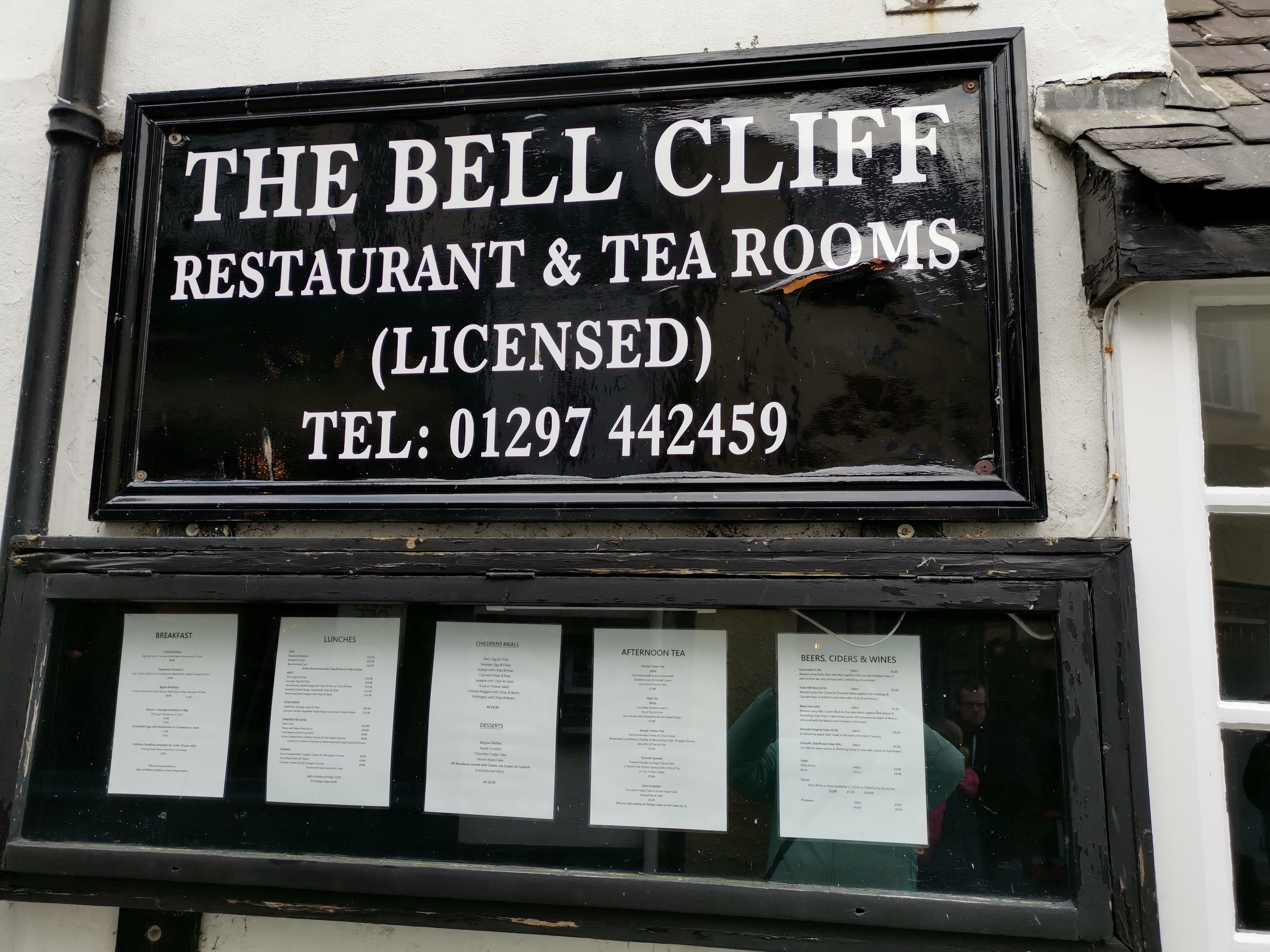
We stopped for lunch at a small cafe, The Bell Cliff, and were lucky enough to get a table. It got very busy in there quickly. We had the lunch special of soup and crusty sourdough bread and half a toasted sandwich. It was very nice.


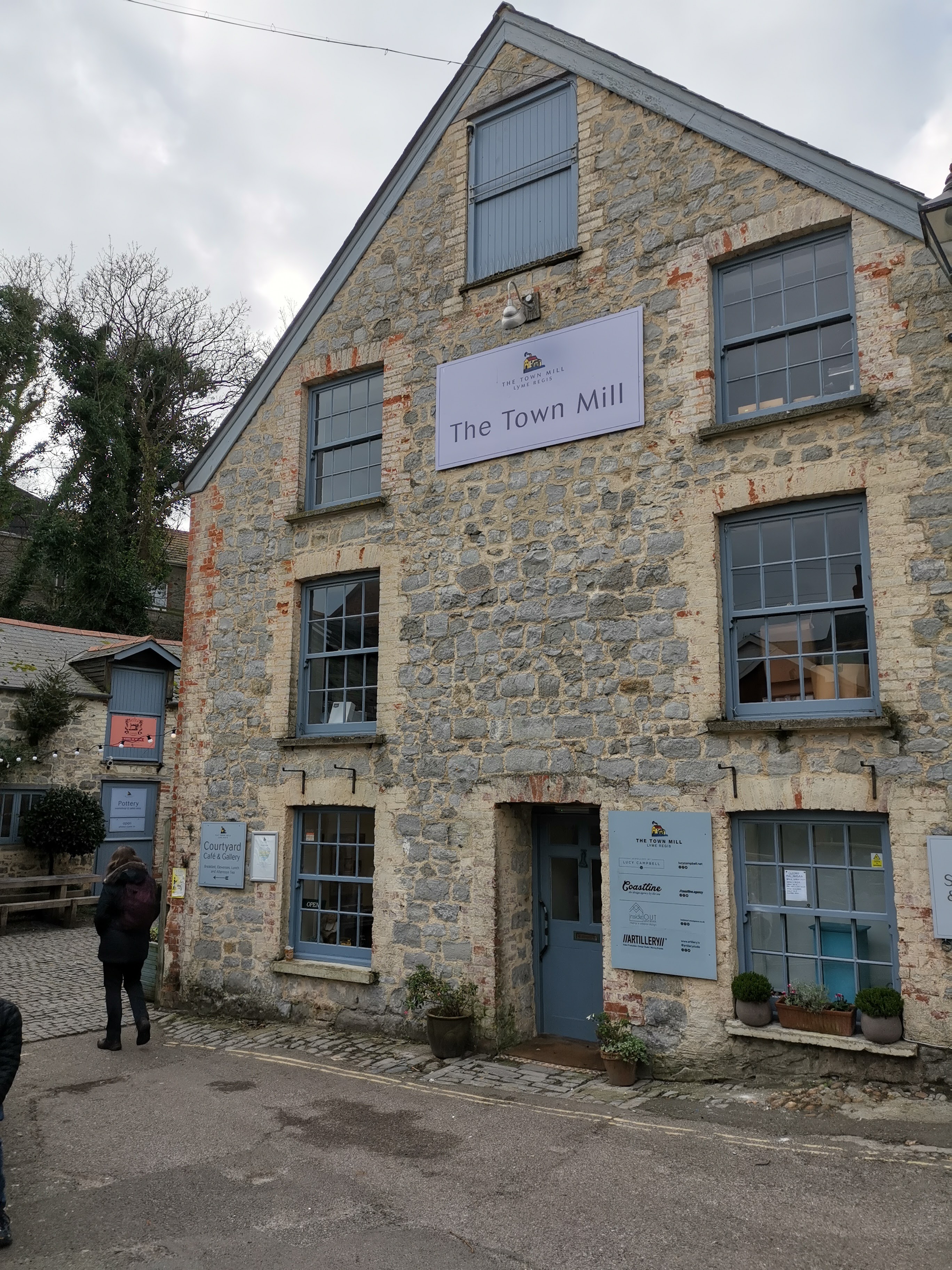
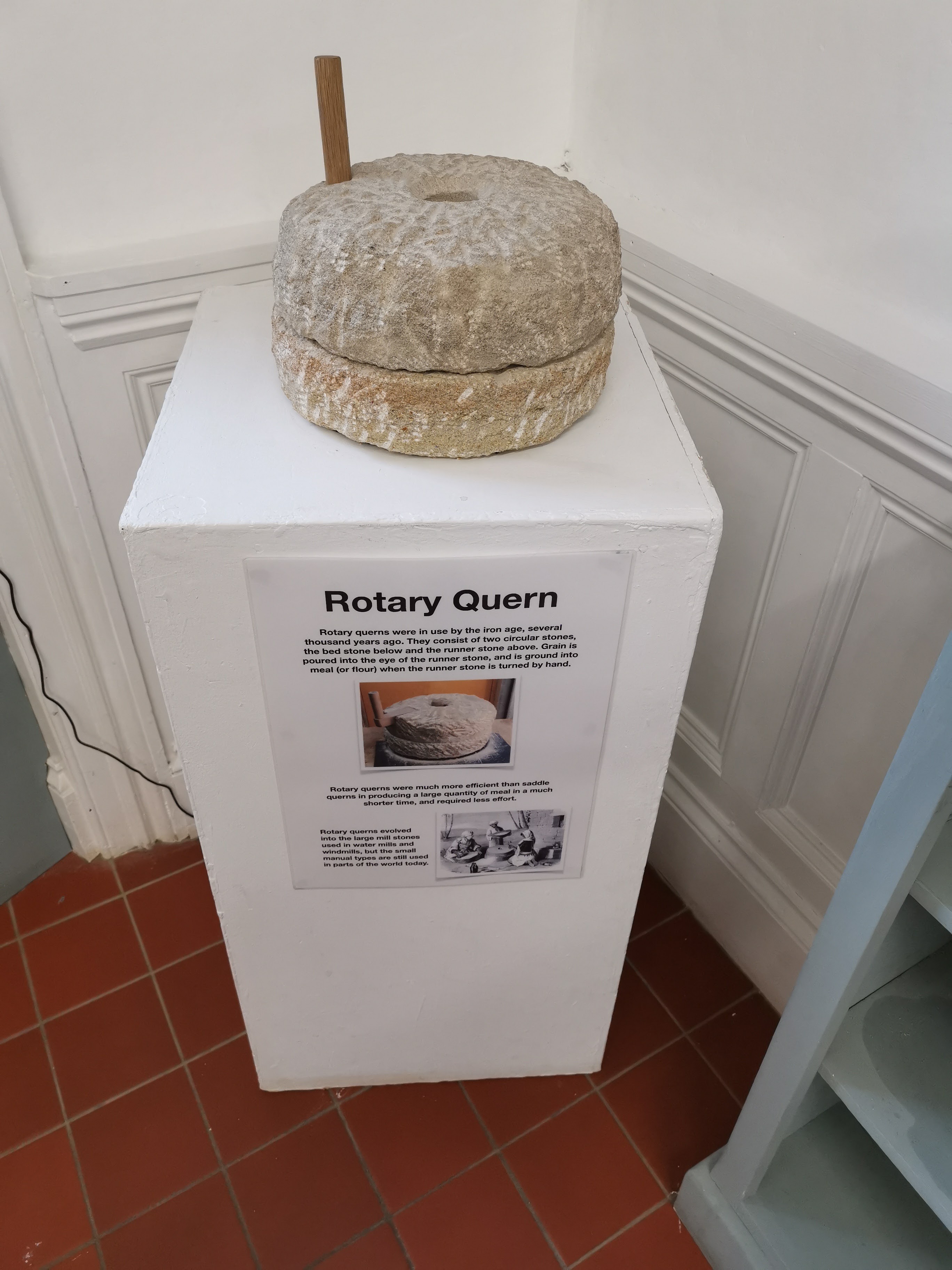
After lunch, we went in search of the town’s historical mill. It was tucked down a side street amongst other historic buildings. At The Town Mill, the power of water from the stream that runs through the village is harnessed by a water wheel, to turn the grinding stones to create a variety of different flours. It has been in action since the 1300s.




We got to talk with the miller, who showed us the different sections of the Mill. The water wheel turns 10 times a minute, but the spinning wheel that it drives spins at a much higher rate. That, in turn, drives the large wheel on the ground floor, where the millstones are. We were told about the timbers around the mill, which came from old sailing ships. When the mill was restored, the timber was kept.
When the grading stones need to be stopped, the waterwheel needs to be stopped too. So the supply of water is cut off by a gate and the waterwheel slows down as no water turns it. That is where the saying “grinding to a halt” comes from. The mill is also where the term “Damsel in distress” comes from and it refers to a piece of equipment called a damsel, which is part of the grain transfer process.
http://www.flitwickmill.co.uk/mill/milling-terms
From the mill, it is possible to buy freshly ground flour of different types and to see some of the grinding stones up close.
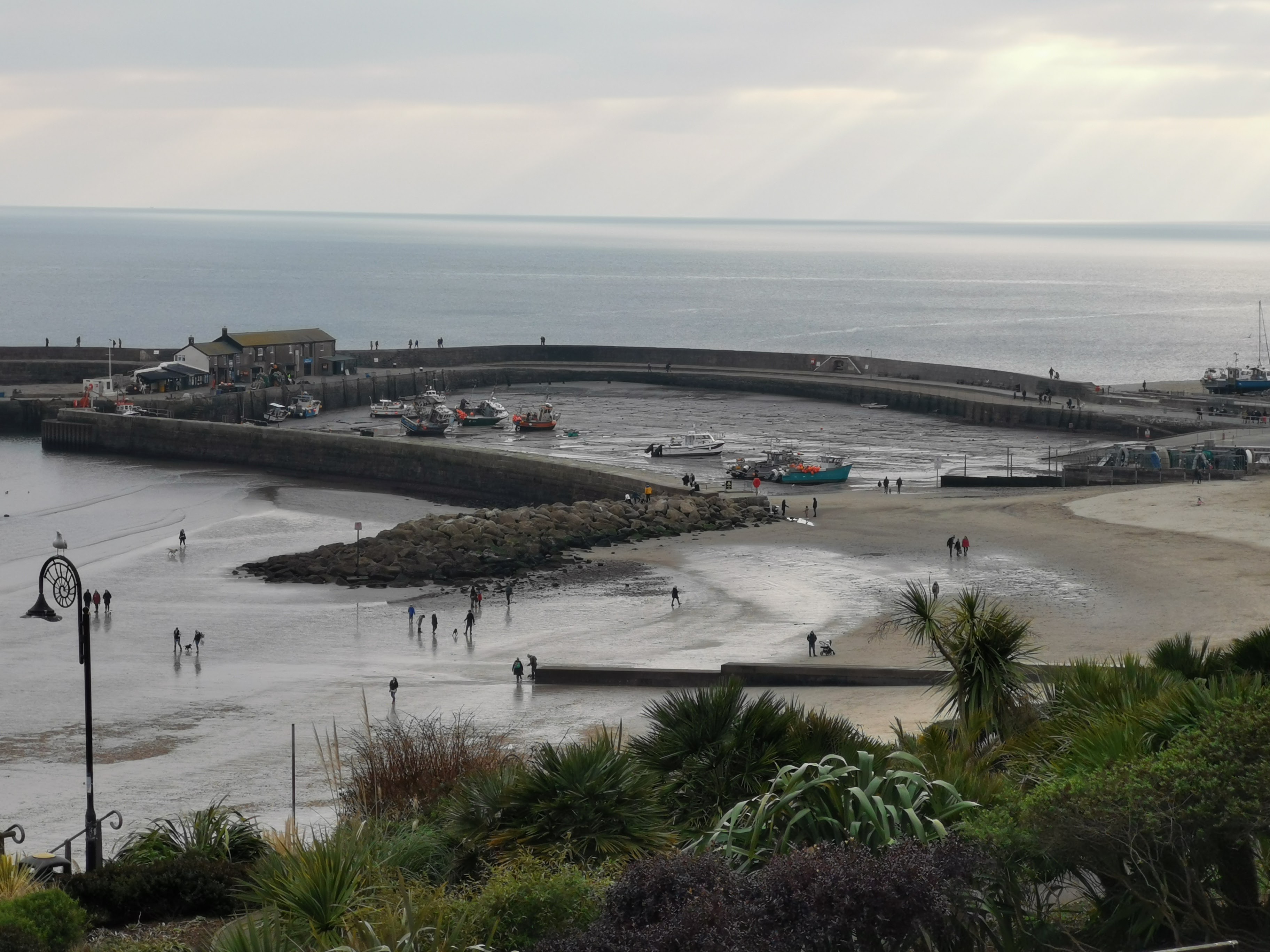
We left The Mill and returned back to the beach and the Cob. While we had been learning about the milling process, the tide had gone out and the fishing boats in the harbour were sitting on the mud. I don’t think we had anything like that in Adelaide. The boats sit there waiting for the tide to return.

Lyme Regis is a nice place to visit and I can see why it would be really popular with beachgoers.
 Life is a Journey