6th October 2021
While Nat and I were in Chester to purchase material from my new favourite store, Abakhan Fabric, Hobby and Home, we wandered the streets amazed at the black and white facades of the shops and the historic Roman built walls and amphitheatre, eating at an historic pub and enjoying each other’s company.
However, there is one building that stands back from the main thoroughfare street and it was definitely worth visiting, The Chester Cathedral.

The Cathedral belongs to The Church of England and since 1541 the Bishop of Chester has been attached to this Cathedral. It was originally an abbey church for a Benedictine monastery. It was built over a very long period of time, starting somewhere around 1093 and most recently had a bell tower added in 1900s. Services are still held here, but it is open to anyone who wishes to go in and explore, which is exactly what we did.
We came down off the Roman city wall, which we had been walking along and walked around the the Cathedral entrance. It is a beautiful old building and luckily it has is listed as a Grade 1 building, meaning it is protected for the future.


There are a lot of different architectural styles incorporated into this magnificent building, I guess that would be because it has been updated so many times over its history.
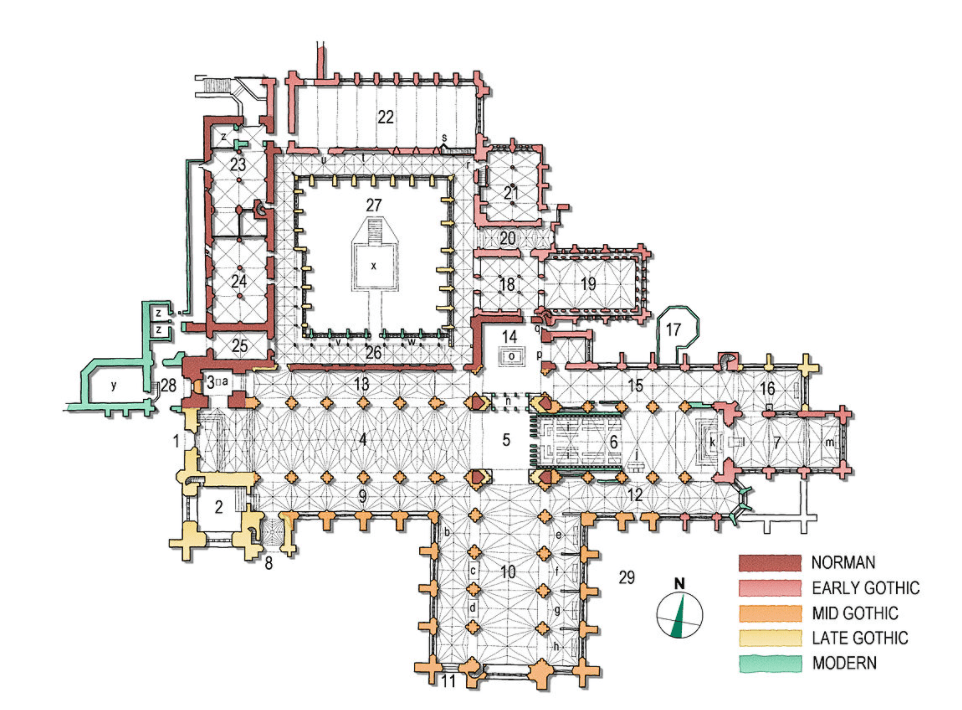
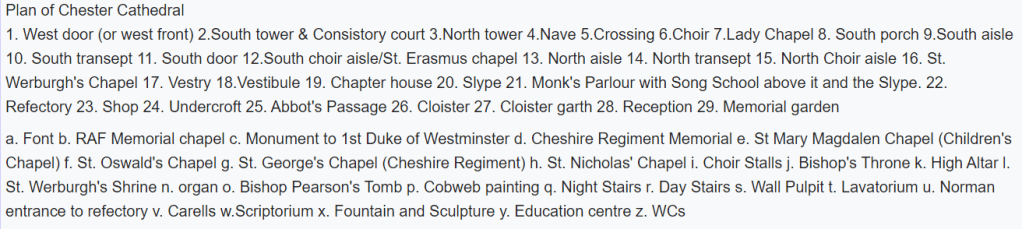
We entered via the South porch (8) and made our way into the middle of the Nave (4), looking towards the magnificent carved woodwork that separates where the congregation sit and the section for the choir (6) and the High Alter (k).. It is a towering space.
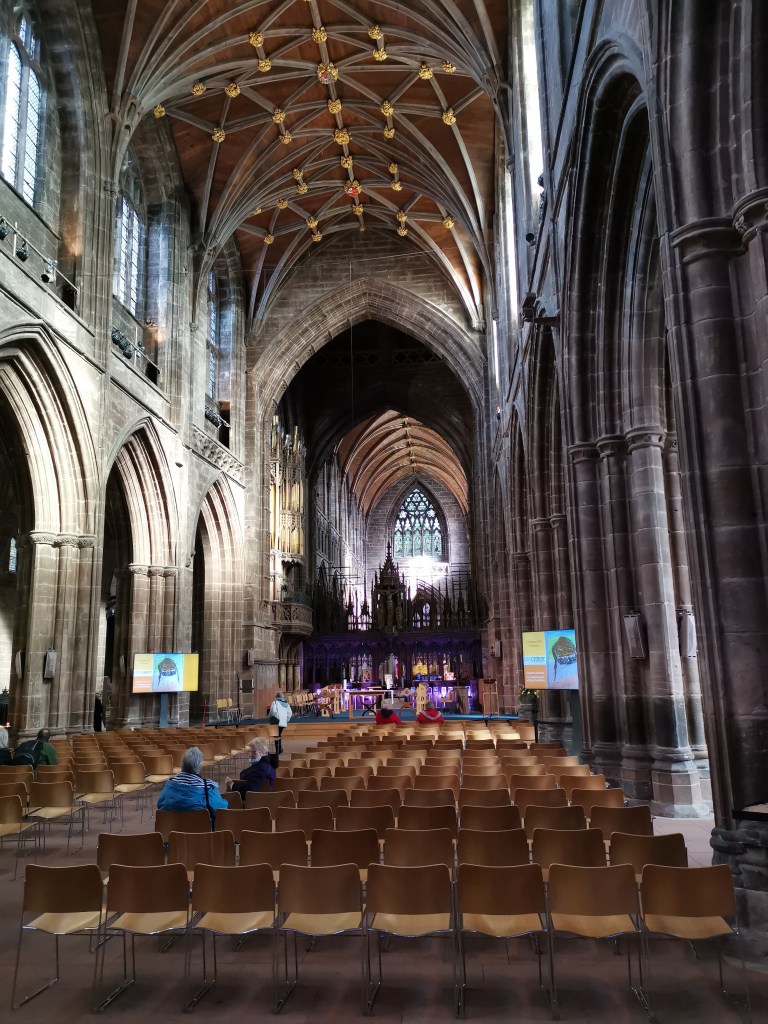
Behind us was the West Door(1) and above that, beautiful stained glass windows to catch the afternoon sunlight.
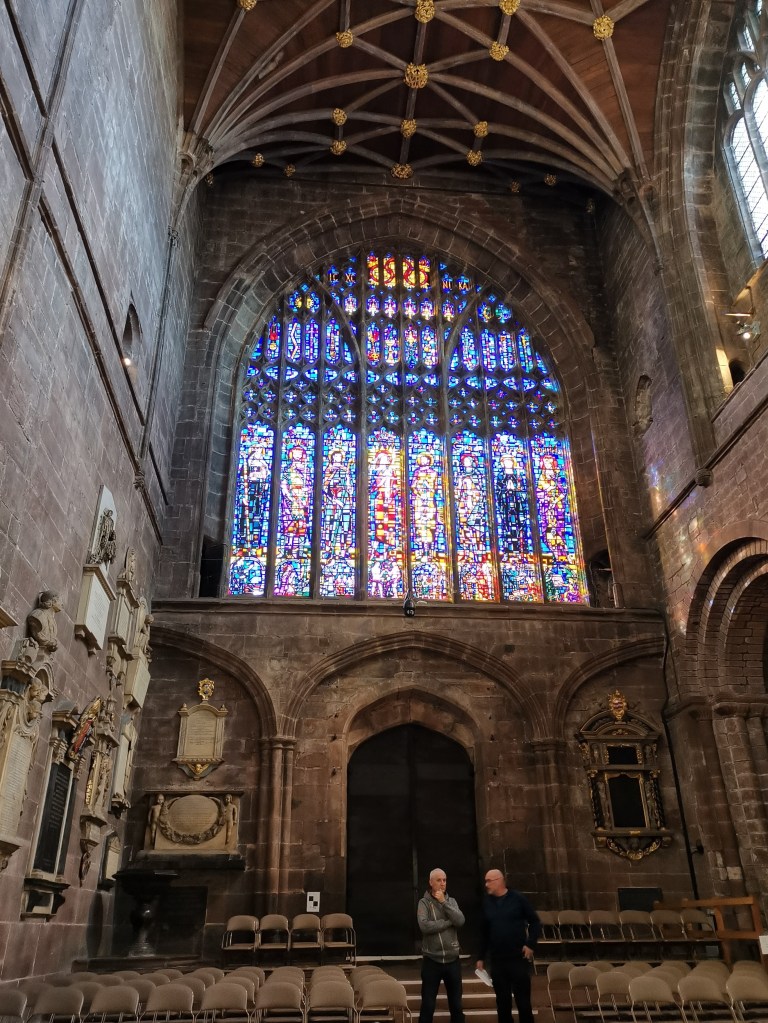
It is unfortunate that many of the windows were destroyed by civil unrest in the 1600s and replaced many times. These windows above the door date from the 1900s to replace what was damaged during WWII. They depict the Holy family.
Along the northern wall (13) of the Nave were scenes from Biblical stories, tiny mosaic stone work representing many hours of labour. Anyone who has made a mosaic table top will know just how long it takes to cover a small area with pattern. These are massive detailed pictures.


On the Southern side (9) of the Nave are more stain glass windows, these date from 1860. They are beautiful. I don’t think that I have ever seen abstract patterns in windows before, but these are striking.

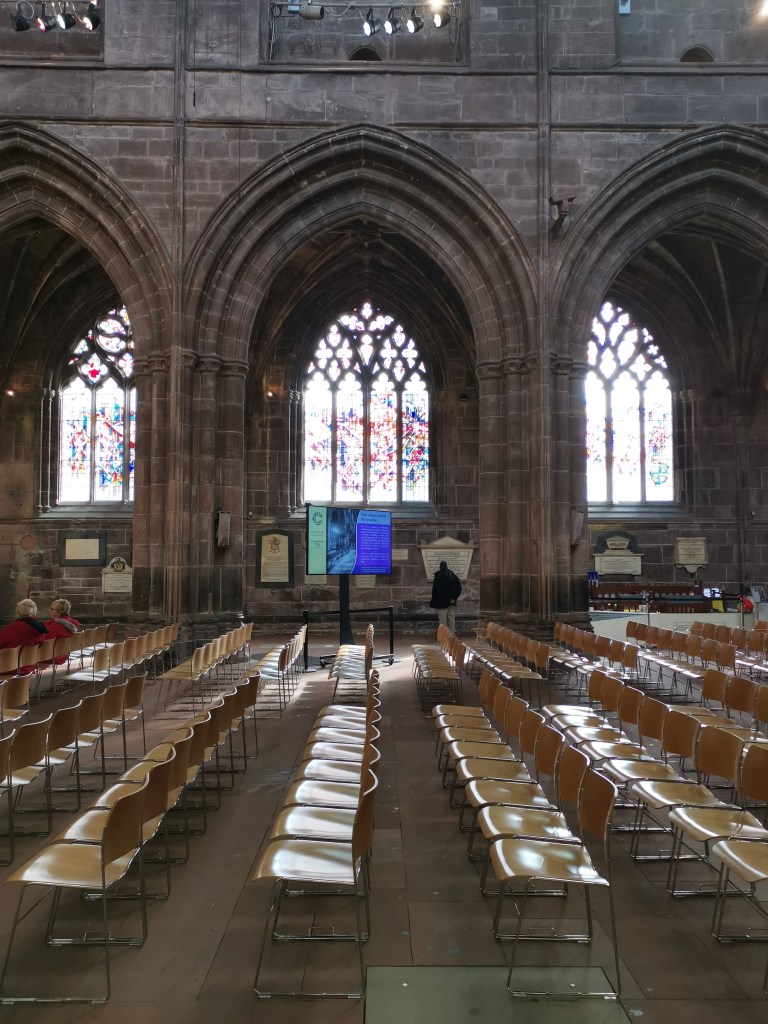
We walked down the Northern wall and then took a closer look at beautiful carved wood (5)that separates the Choir from the Nave.
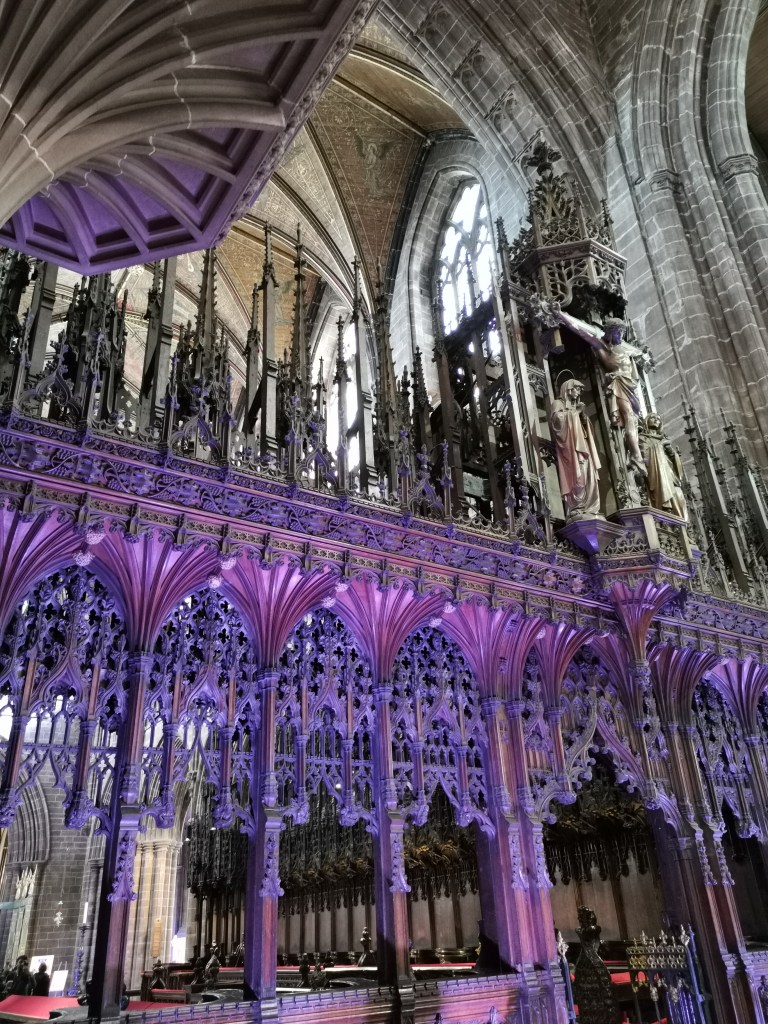
We ventured into the Choir. I asked Nat if she had ever attended an Evensong, where it is possible to hear the choie sing during the evening service. She said she hadn’t. John and I attended one in Salisbury Cathedral and also The Southwell Minster near Nottingham on previous trips to the UK. They are a very unique experience, even if you aren’t particularly religious. Just to sit in the Choir area and listen to the beautiful voices and the service. I would like to give this opportunity to Nat.
We walk through the entrance into the Choir and spotted the throne like seat up close to the alter. It turns out this is the Bishop’s Seat.

The Bishop’s Seat 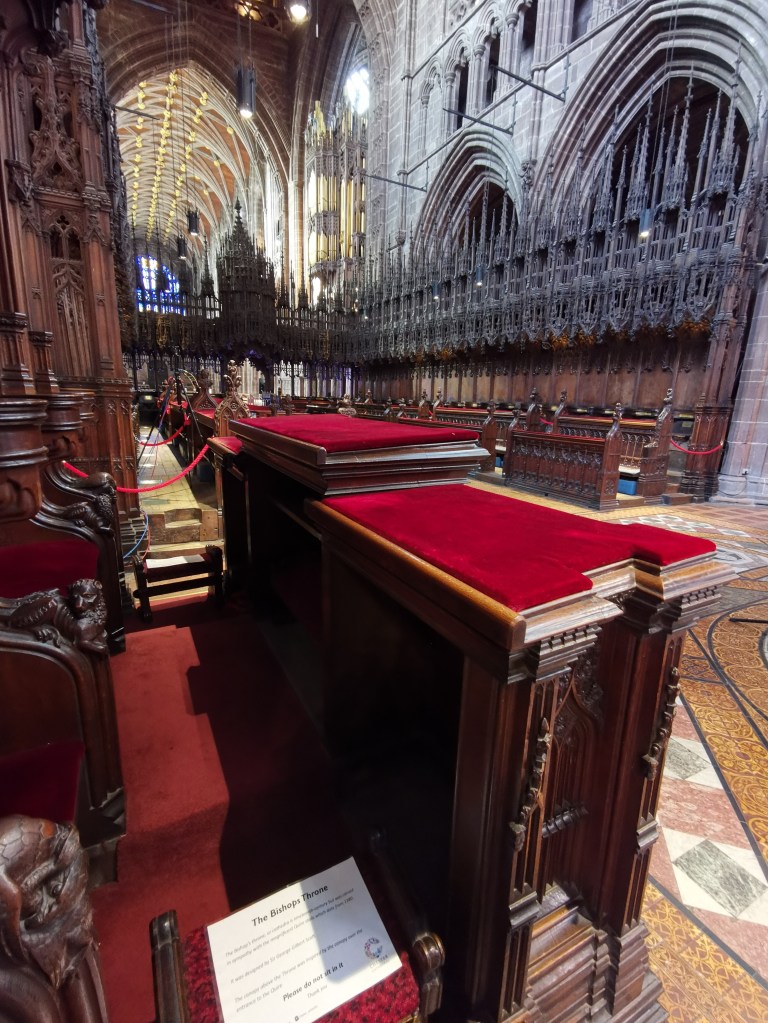
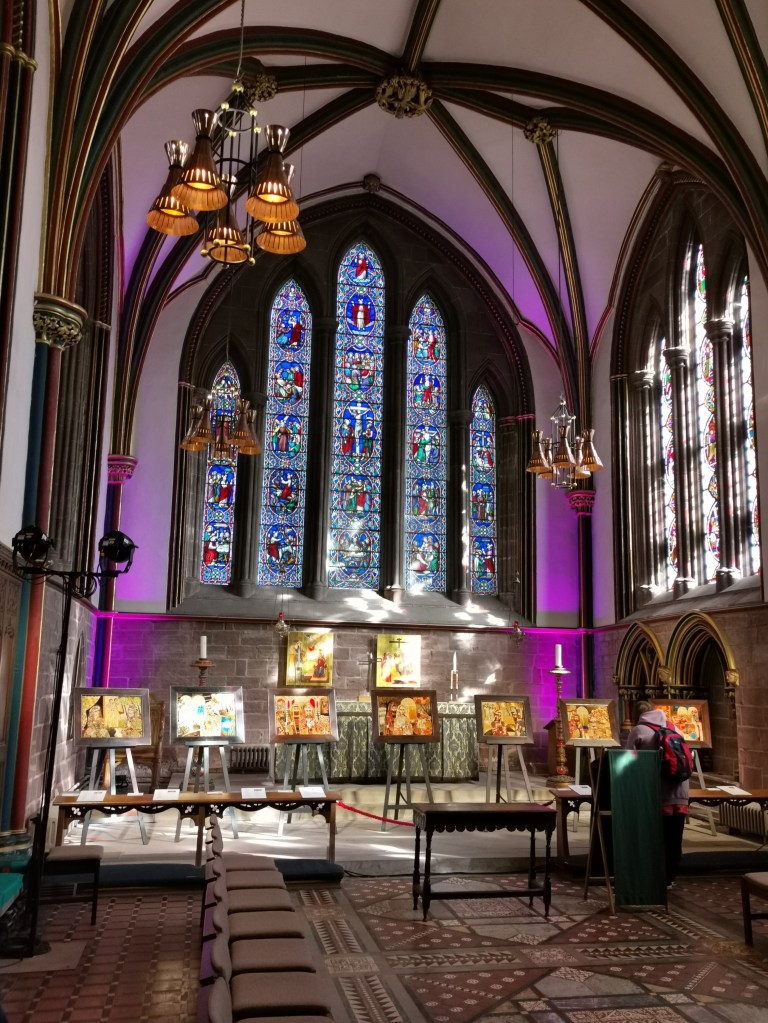
Behind the High Alter, is The Lady Chapel, where again there were beautiful windows and also decorations on the ceilings that they wanted to drawn our attention to. In the peace of the Lady Chapel, was part of an exhibition of Images of Christ from various artists.
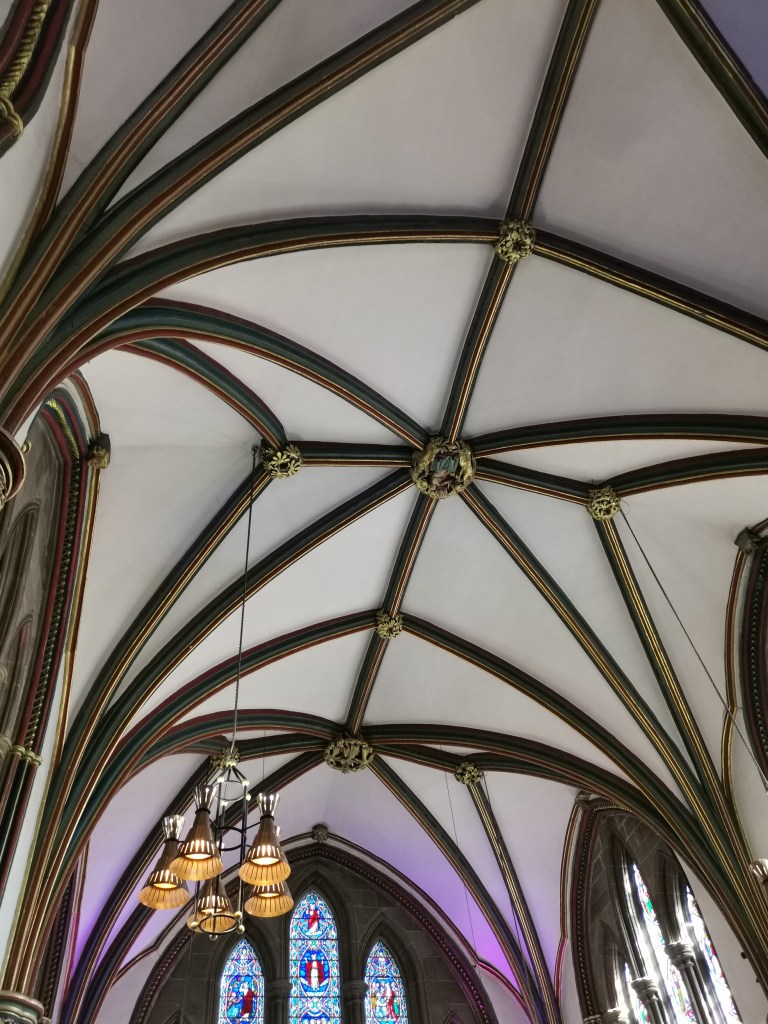
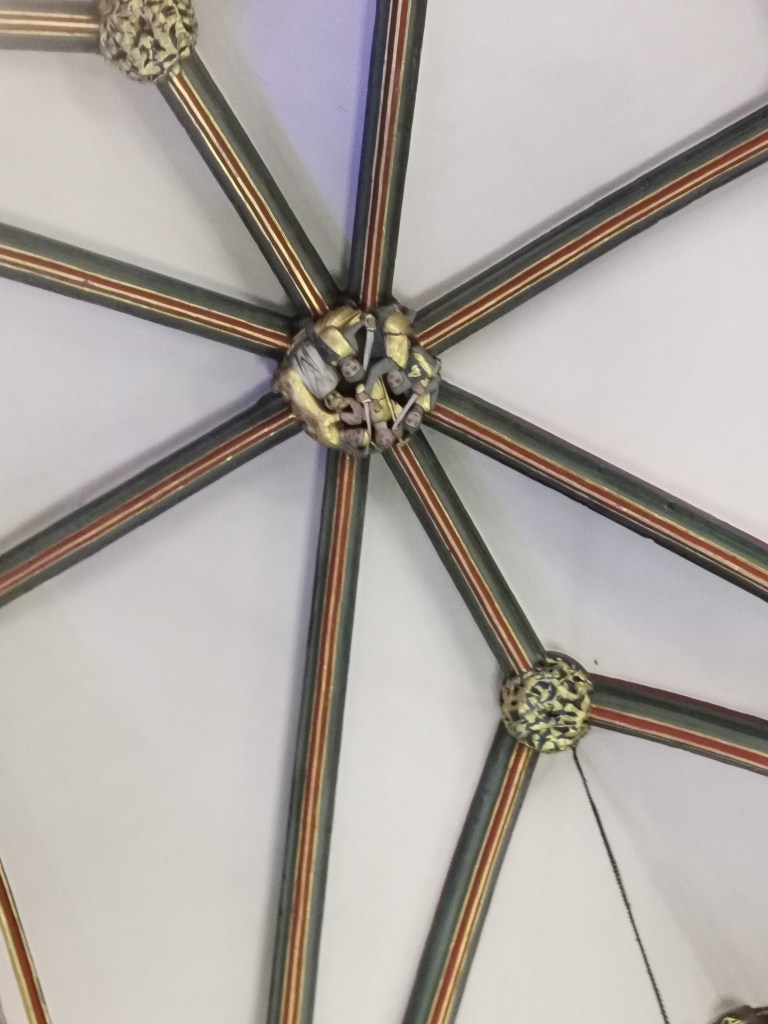
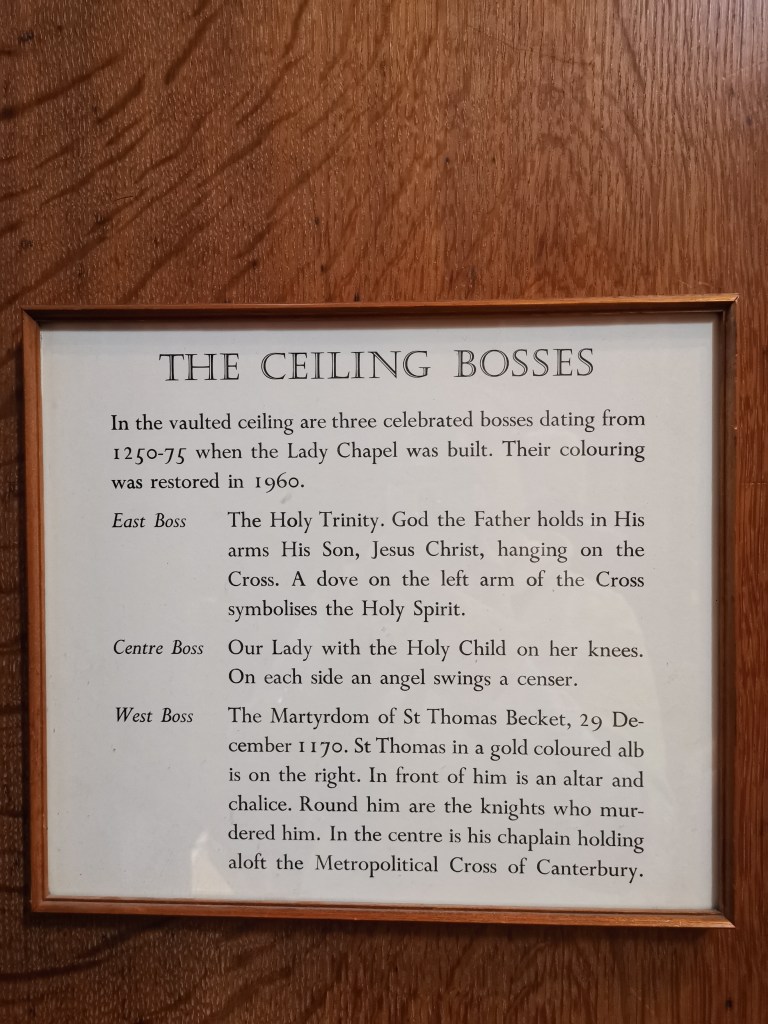
Along side the Lady Chapel, in the Northern Aisle was a very old book in a glass case. It was quite hard to photograph it because of the reflection and the lack of natural light. It wasn’t until I read the information alongside the case about the age of the book – written in 1280, that is 741 years ago, that they don’t want photographs taken of it. Not sure why, but perhaps flashes from cameras can damage it. It is an encyclopedia of the world history. The cover is wooden board covered in deer skin.


We left the main part of the Cathedral and walked through to the Vestibule and Chapter House. There was a tour going on in the Vestibule (the left picture with the ornate ceiling). The guide was pointing out the wires that are strung up between different parts of the ceiling and said that they are tension wires. If there is significant movement in the building, the wires will snap and point the to where there could be potential damage. In the bottom of the picture you can see a dark panel alongside what looks like a window. That indicated it was the size of a secret tunnel and if you were small enough to fit through that space, you would be able to go through a secret door and into the tunnel.


It is rumored that under parts of Chester there are many tunnels that lead around between buildings. It is suggested that they could be part of the Roman built sewerage system, rather than a secret way of getting around the city underground.
We decided to finish up our exploring of the Cathedral with a visit to the Refectory for a drink. We walked down the corridor alongside the garden. The windows are dated with events that happened over time.


Once we had had a drink in the refectory, we said our farewell to the Cathedral. It was worth the visit and if I visit Chester for longer than an afternoon, I would definitely visit again. If Nat is with me, I would take her to Evensong too, as I imagine it would be wonderful here.
 Life is a Journey