Chatsworth House Celebrates Christmas

2 January 2022

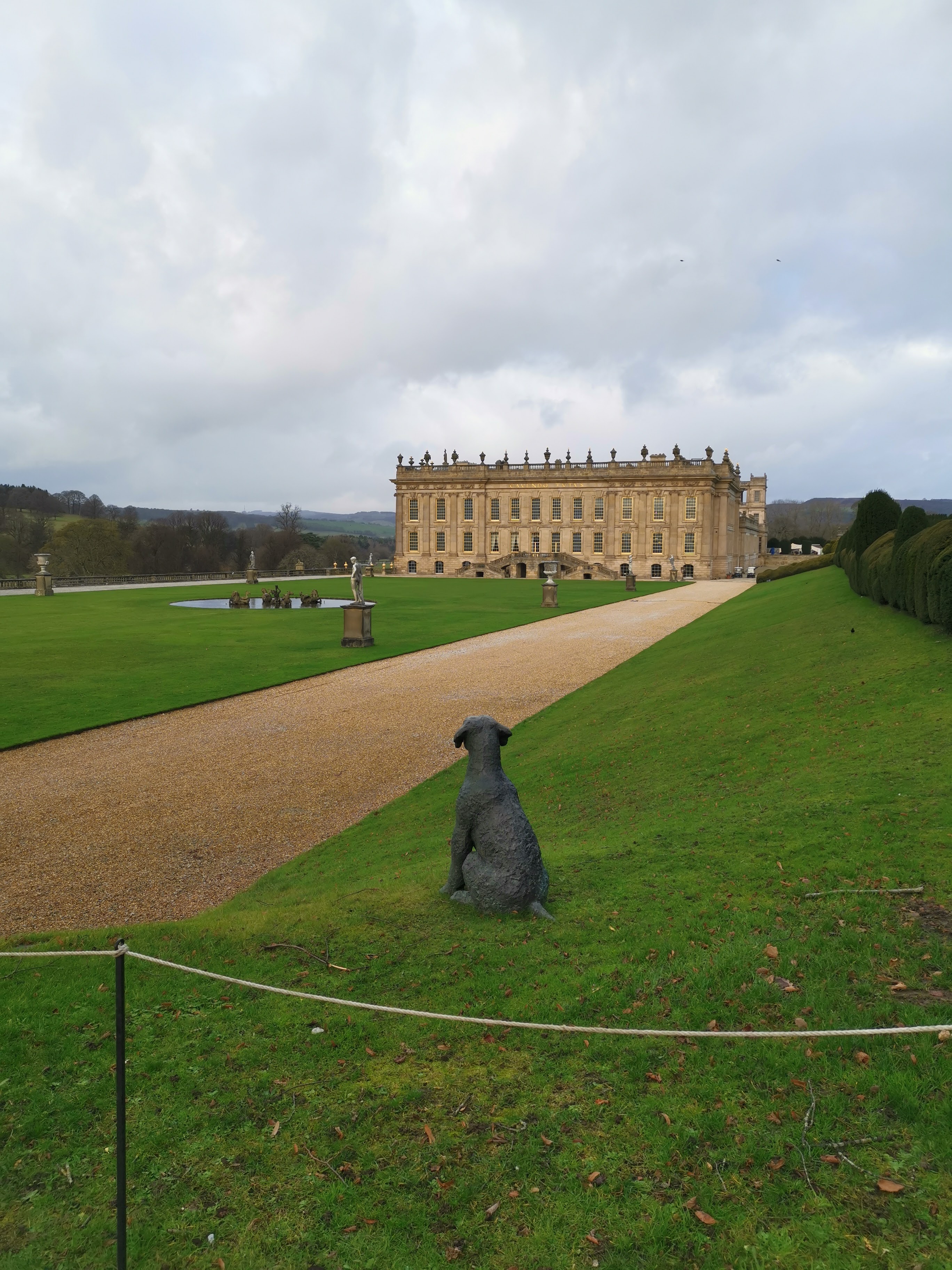
Following our recent visit to the Dunham Massey Estate for their Christmas Trail Event, we booked to visit Chatsworth House. This was to see the Christmas decorations in the house and explore the gardens. Chatsworth House is near the town of Bakewell in the English Peak District, so not far from Manchester.

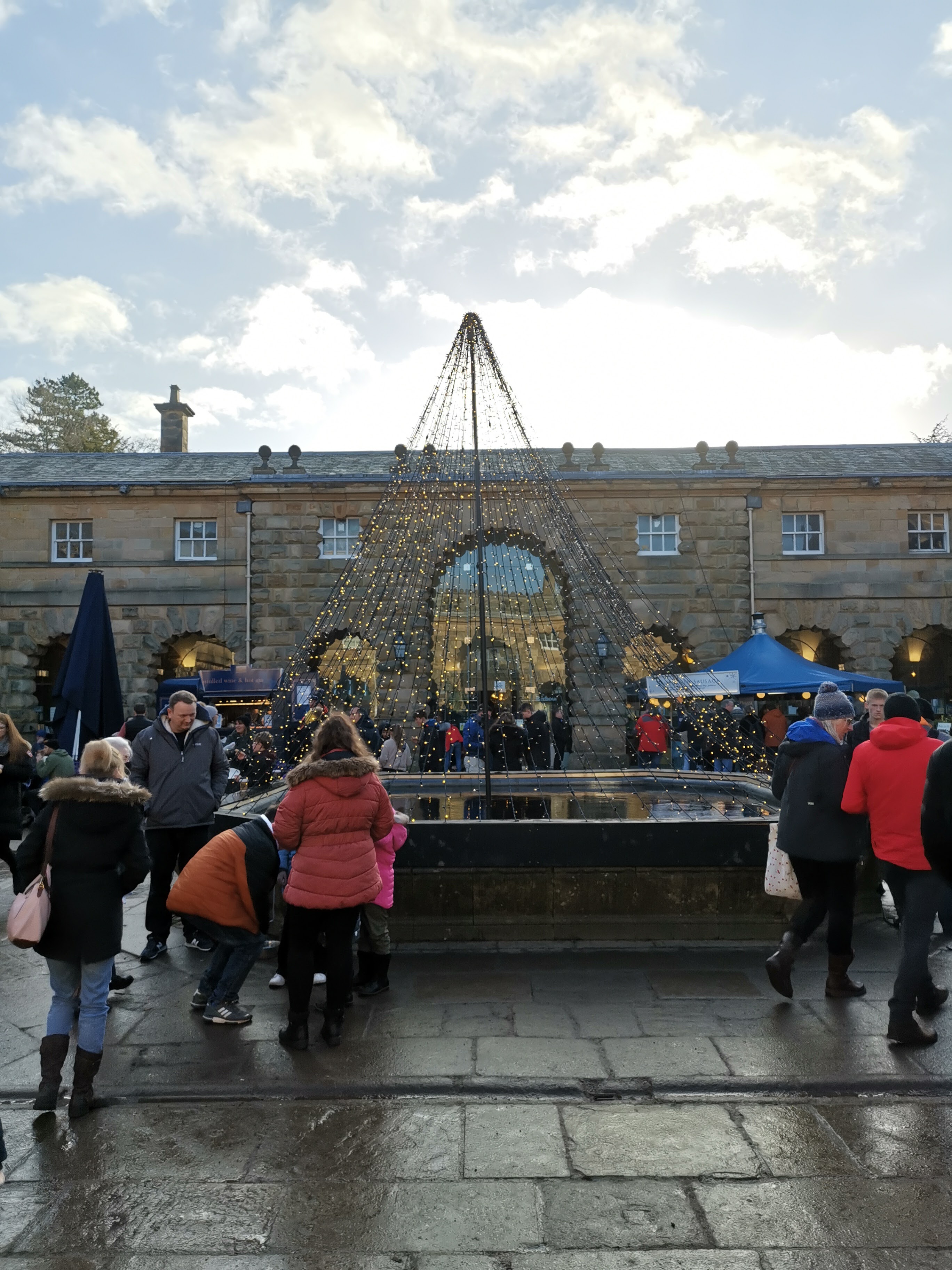
We entered the house via the gates between the lit columns.
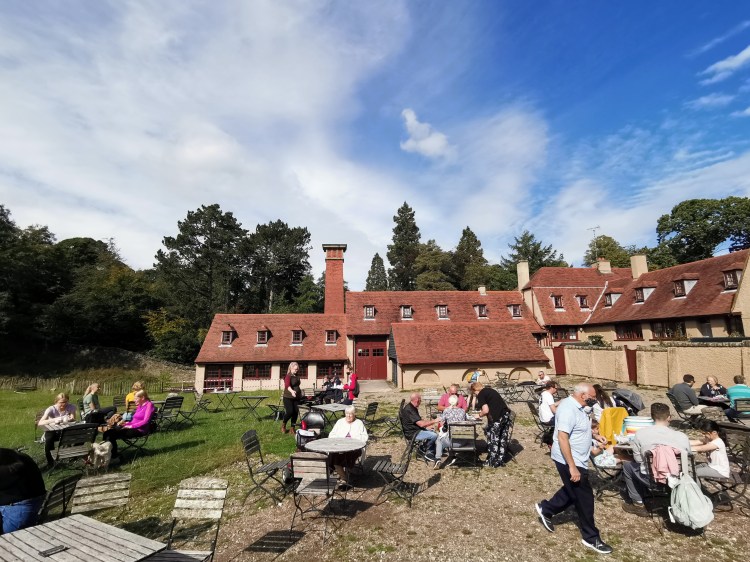
The side of the house where a cafe was serving hot drinks under the marque.
The private garden area, not accessible for us to visit

Chatsworth House is home to Peregrine Andrew Morny Cavendish, the 12th Duke and Amanda Carmen, the Duchess of Devonshire. This home has been passed down through 16 generations of the Cavendish family and some sections of the house are open to tourists.

Our tickets to visit the house and garden included being able to explore a number of rooms in the house, being guided through these on a walking trail. These rooms had been decorated for Christmas celebrating the Christmasses of the past 20 years that the house has been open for visitors.

Due to COVID19, it was necessary to book online a time slot for our visit. We were required to arrive on time to assist in controlling the number of people in the house at any one time. We were also required to sanitize our hands and wear our masks the whole time inside the house.

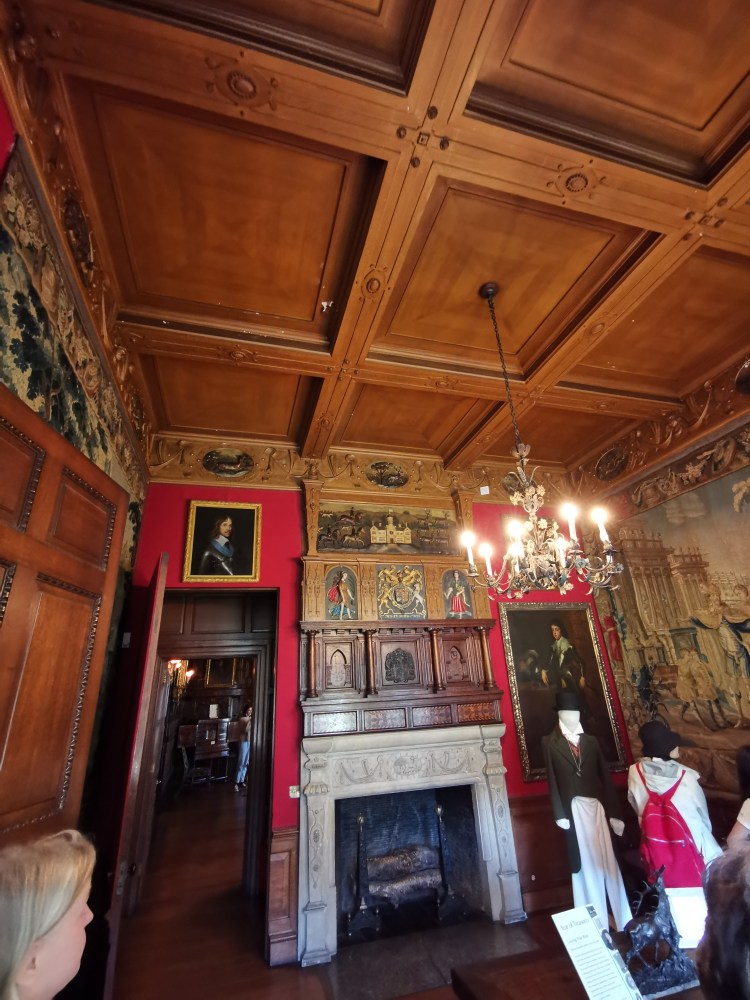
The mansion is amazing, even forgetting the Christmas displays. Every room we visited was decorated grandly. From painted ceilings and walls, portraits of family members, artworks, sculptures and tapestries, Chatsworth contains works that span 4,000 years, from ancient Roman and Egyptian sculpture to painted masterpieces by Rembrandt. The house is full of the history of the Cavendish family and their love of fine things.

We started our visit in The Painted Hall which welcomes guests as the entrance to the house. It was built by the 1st Duke of Devonshire, William Cavendish in the 1600s. The ceiling is amazing, as is the very grand marble staircase.

From the top of the marble staircase, we were guided through different rooms that the current Duke and Dutchess had opened to the public. Anywhere that was off-limit, was roped off or the doors were closed. In each room, we could visit, there was a guide to tell you about it if you had any questions.

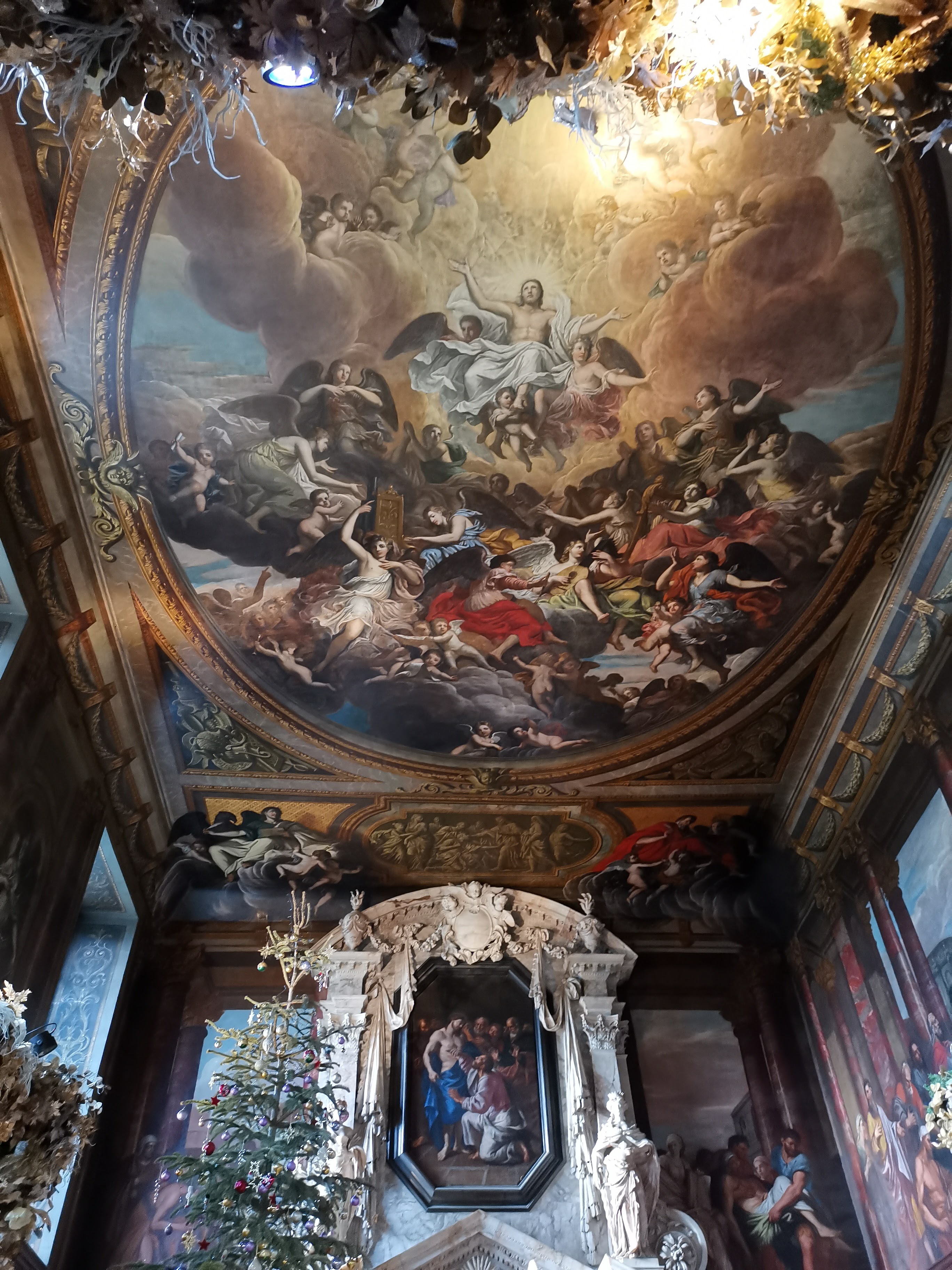
The next grand room was the Chapel, it was also designed by the 1st Duke and remains mostly unchanged since it was built in the 1600s. It was decorated for Christmas with a mechanical music box with a dancer from the Nutcracker and a very tall Christmas tree. The ceiling and walls have scenes from the bible.
Looking out the window it was possible to see the courtyard, which they had covered in “snow” – although I don’t think it was real, it certainly looked effective. There was also snow falling.

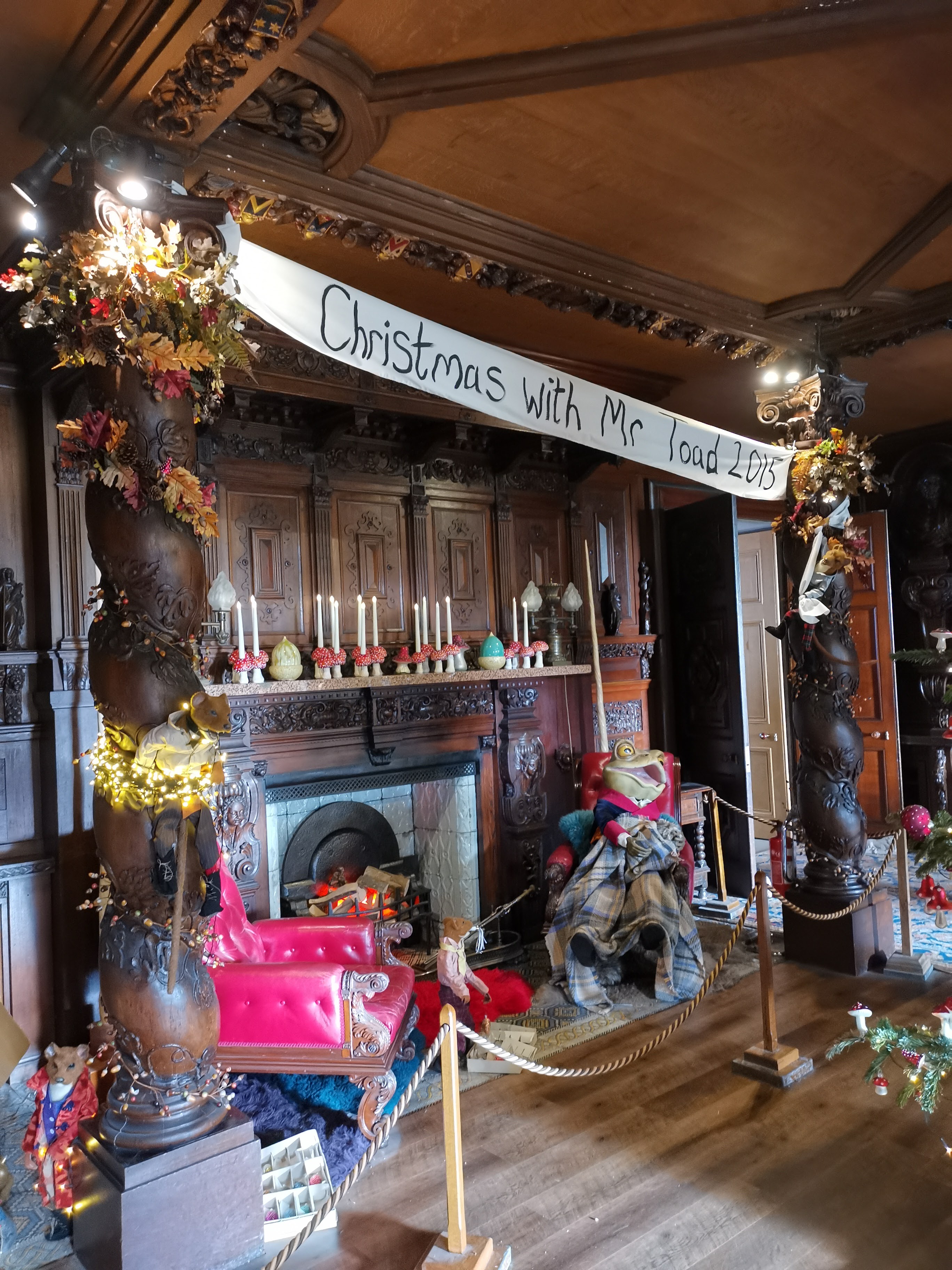
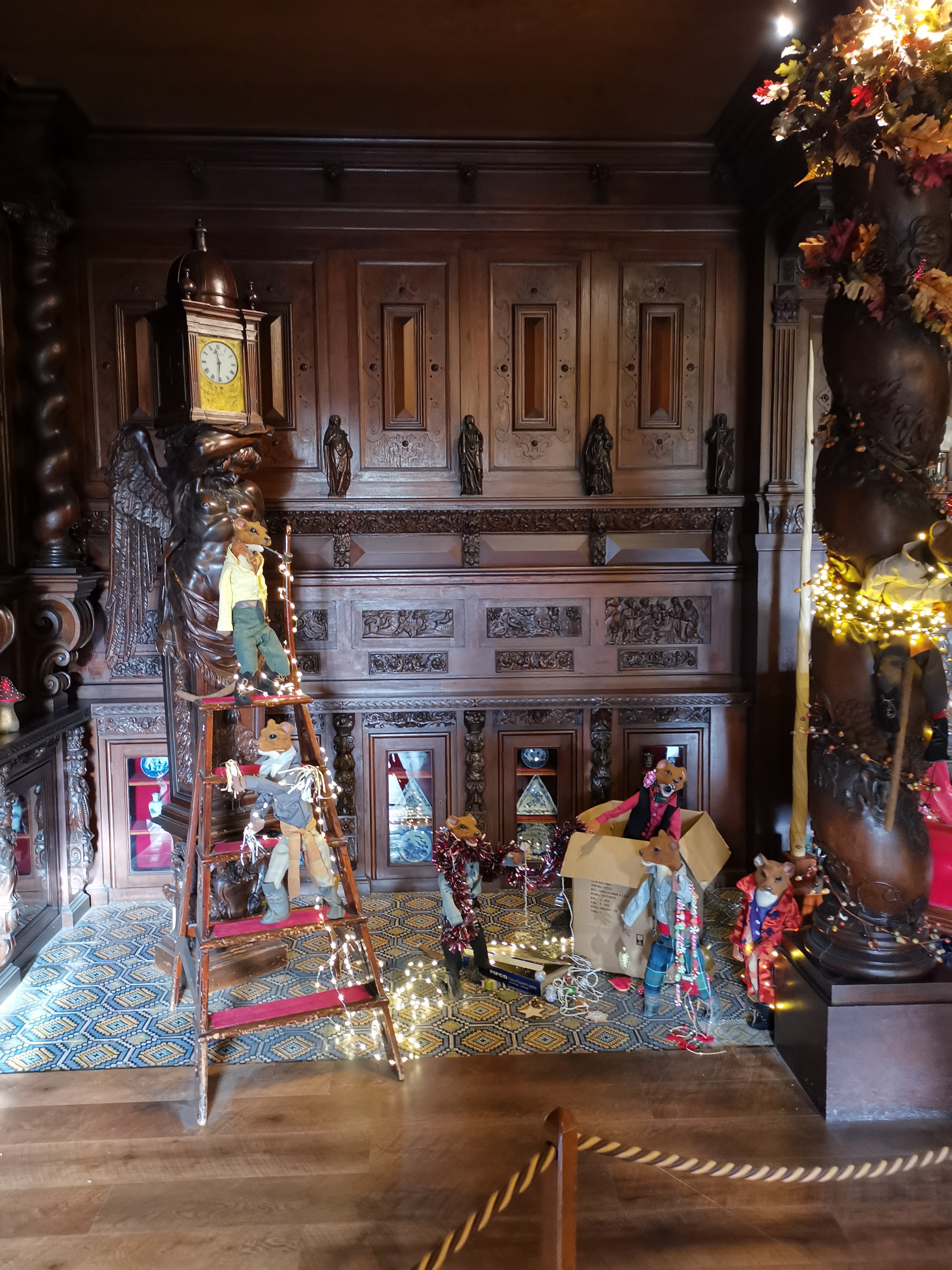
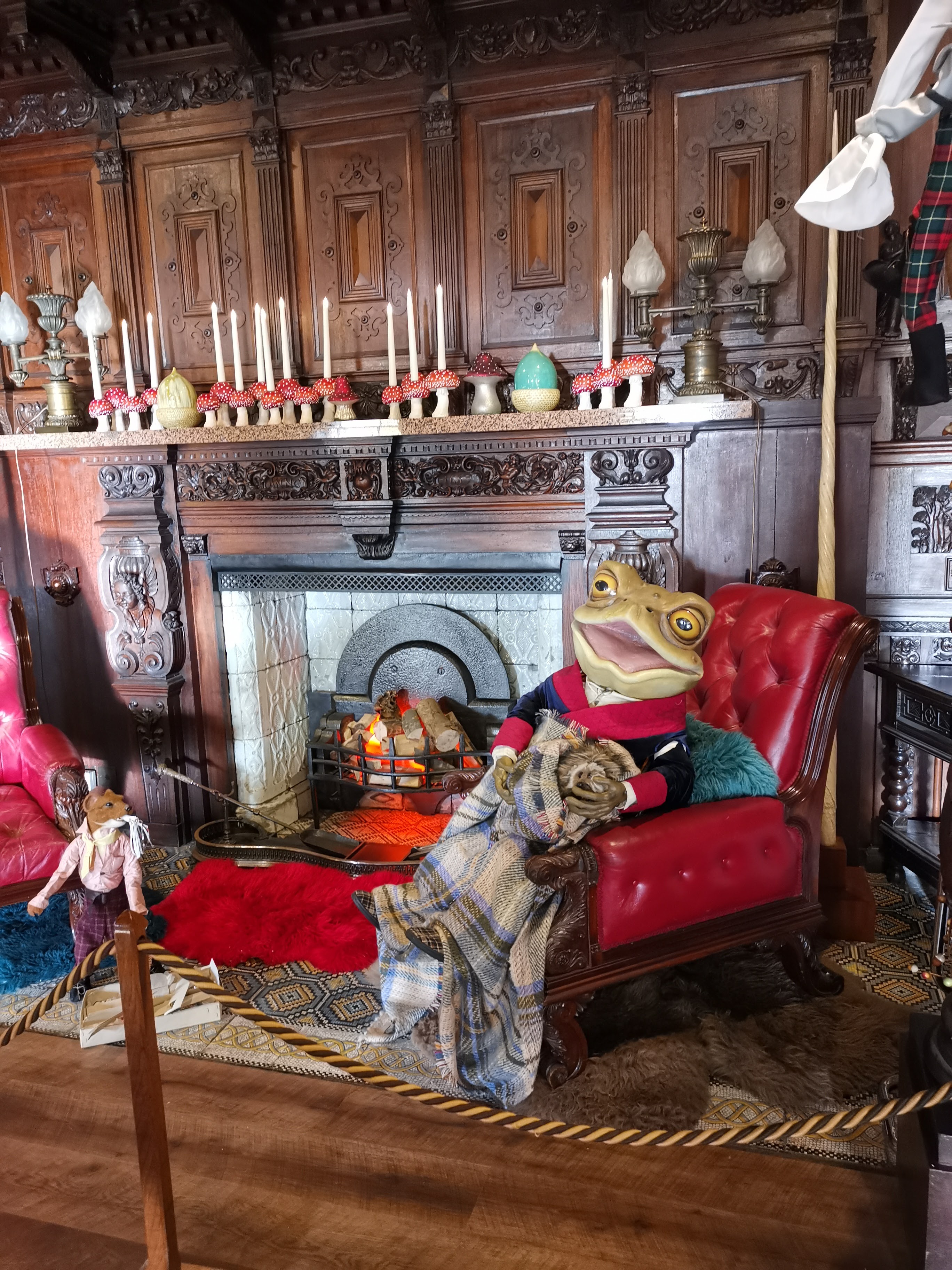
On a previous Christmas (2015), the next room was decorated with a Wind in The Willows theme, so they recreated it, including a very large Mr Toad.
The passageways were also decorated beautifully, although some we weren’t able to go down to explore where they led.

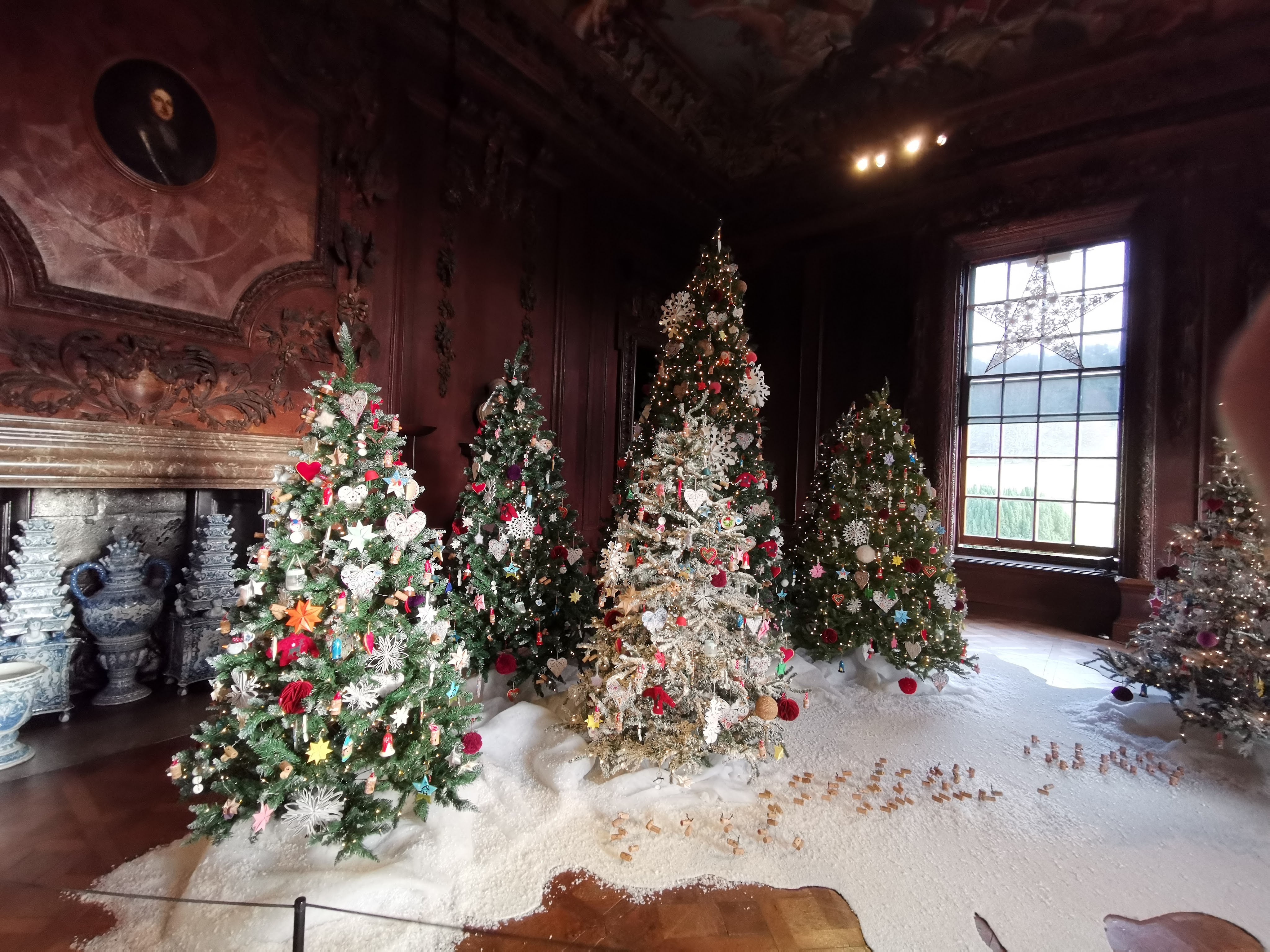
The Great Chamber is the first room of The State Apartment. There were a few Christmas trees differently decorated in this large open space. The little cork reindeer in the snow were a cute addition under the trees.

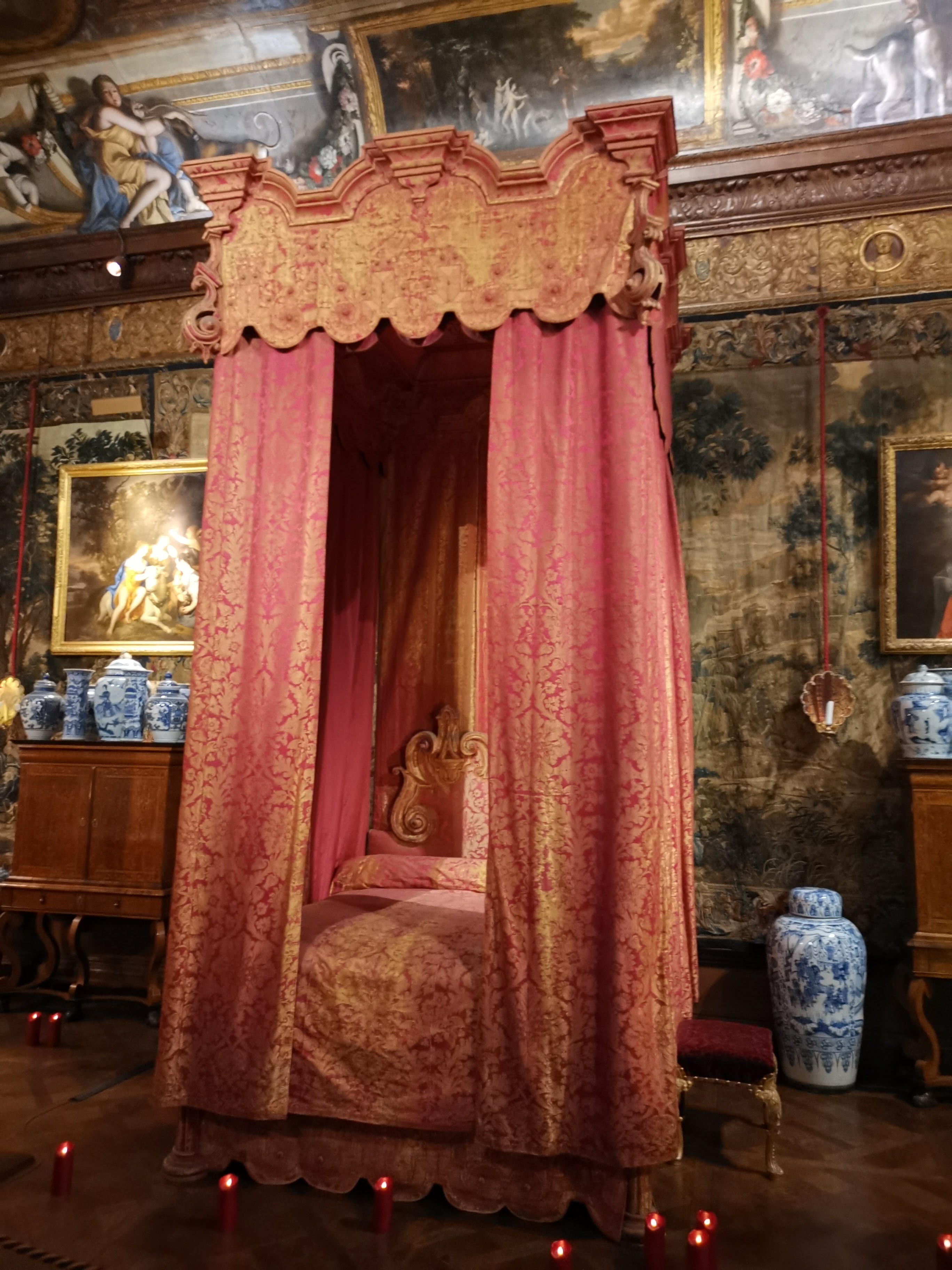
The State Apartment also includes a Drawing Room and Bed chamber and was intended to host a king. I thought it was interesting how small the bed was, compared with the height of the surround. In here, the ceilings were highly decorated too.
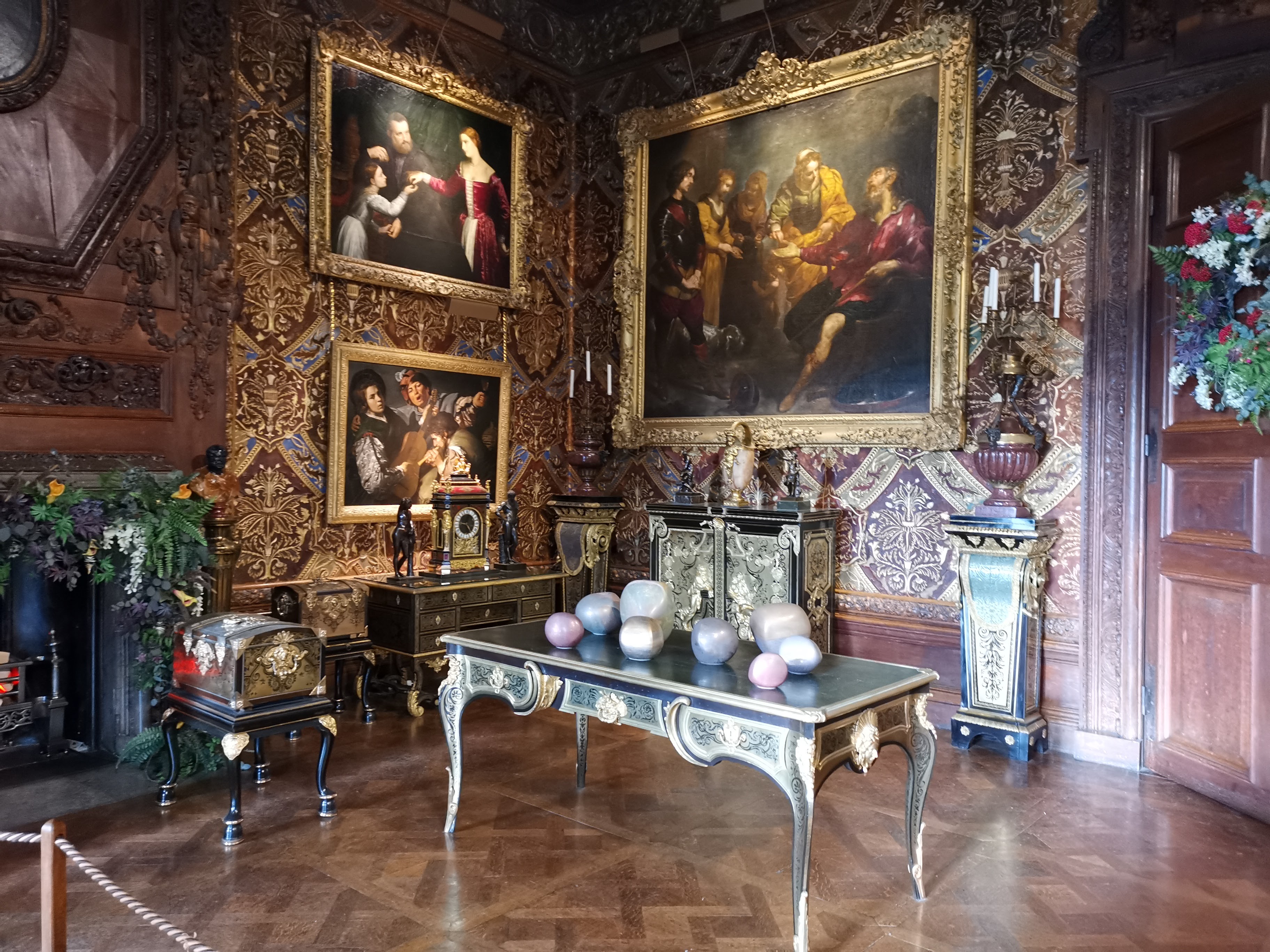
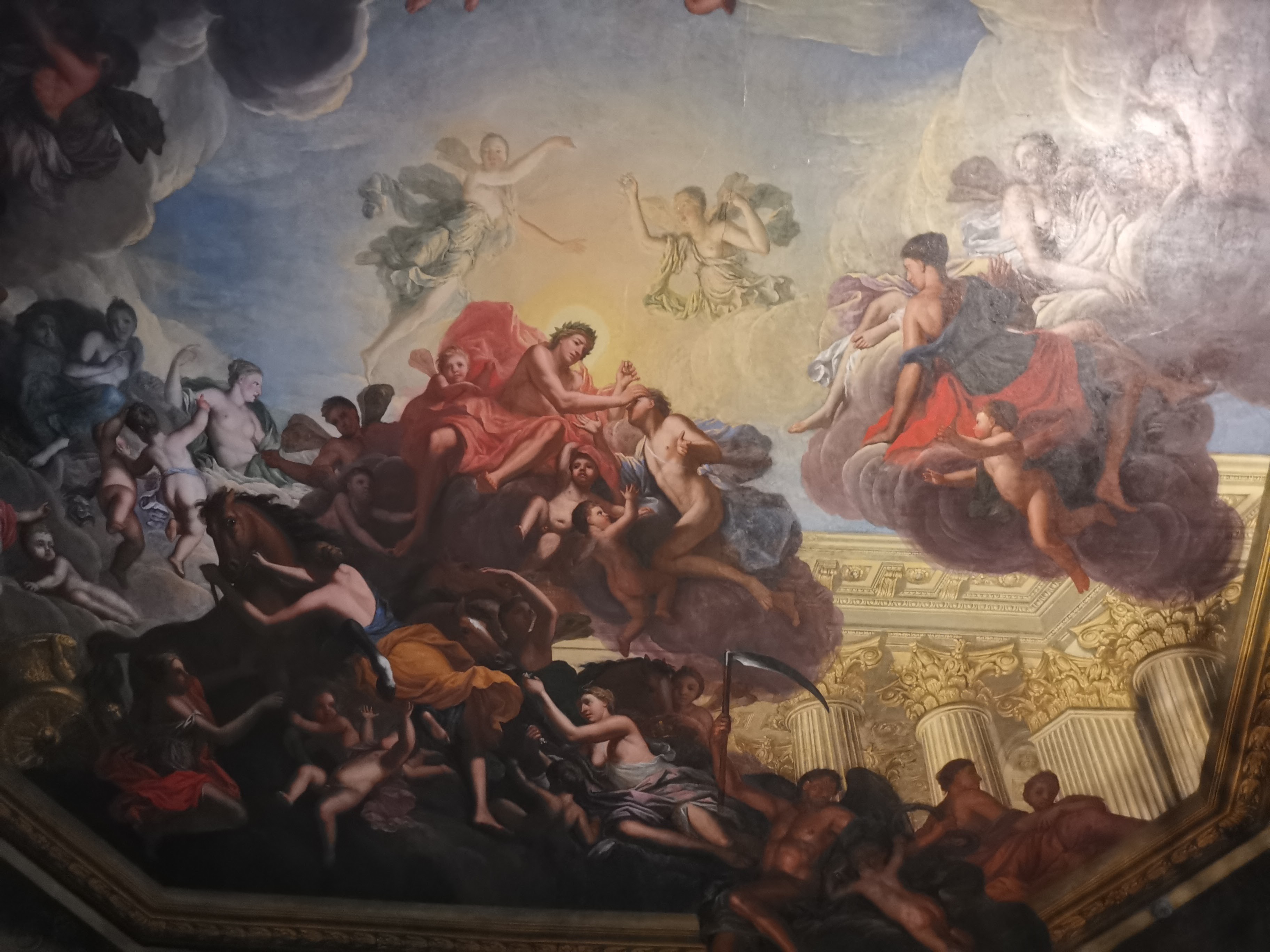
The Great Dining Room is still used to host formal dinners and was set up grandly for Christmas dinner. It was another room renovated by the 6th Duke, also named William Cavendish (c1800s).

The Oak staircase/Leicester landing, created by the 6th Duke to connect the old part of the house to the new. The beanstalk seems to have been from a Jack and the Beanstalk pantomime in 2012.

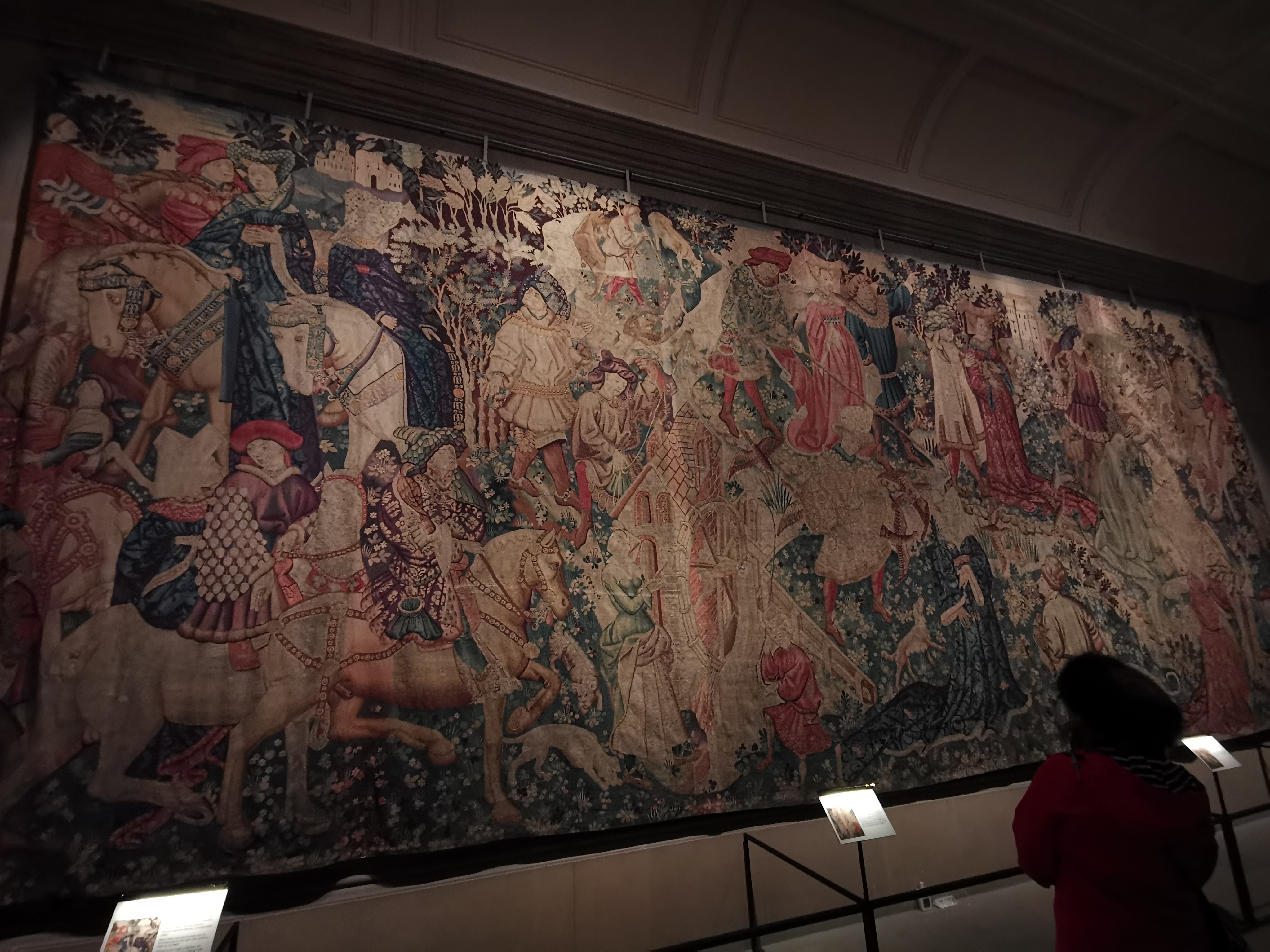
In the Sculpture Room, apart from sculptures were the Devonshire Hunting Tapestries. These are 500 years old and the only surviving tapestries in the UK depicting hunting from the medieval period (15th Century), it shows scenes of noble men and women who are engaged in hunting in imaginary landscapes.
Also in the Sculpture Room is the collection of sculptures. One of which is very prominent – a reclining young man. This I found out is Endymion. In Greek mythology, Endymion was a handsome shepherd boy of Asia Minor, the earthly lover of the moon goddess Selene, and each night he was kissed to sleep by her. She begged the god Zeus to grant him eternal life so she might be able to embrace him forever. Zeus granted her wish and put Endymion into eternal sleep.

There are several hallways that have been turned into galleries to display more works of art. This one has an entire wall covered in small ceramic rectangles. It is a representation of the DNA of the present Duke and Dutchess, their son and daughter-in-law. A very interesting way of capturing them for history.

It was lovely to see the house and how beautifully it is cared for. TI think you can certainly see, if historic houses interest you, just how lovely this one is.

If you would like to know more about the house and the family through the ages, the website has lots of interesting information https://www.chatsworth.org/

After we had finished looking through the house, we took time out to have lunch. The weather was threatening to rain, between times of bright winter sunshine, so we found a sheltered spot to eat our picnic sandwiches and packet chips. There are cafes and a restaurant on the grounds, but the food can be a bit expensive. With Covid19 restrictions in place, once you leave the house, you can’t re-enter. However, we were free to explore the gardens on our ticket.

Next, we ventured up to the Farmyard and Adventure Playground, so my grandson could see the animals. We followed the path up to the Stables, which houses various options for food, including their full-service restaurant, The Cavendish Restaurant and the Carriage House Cafe.
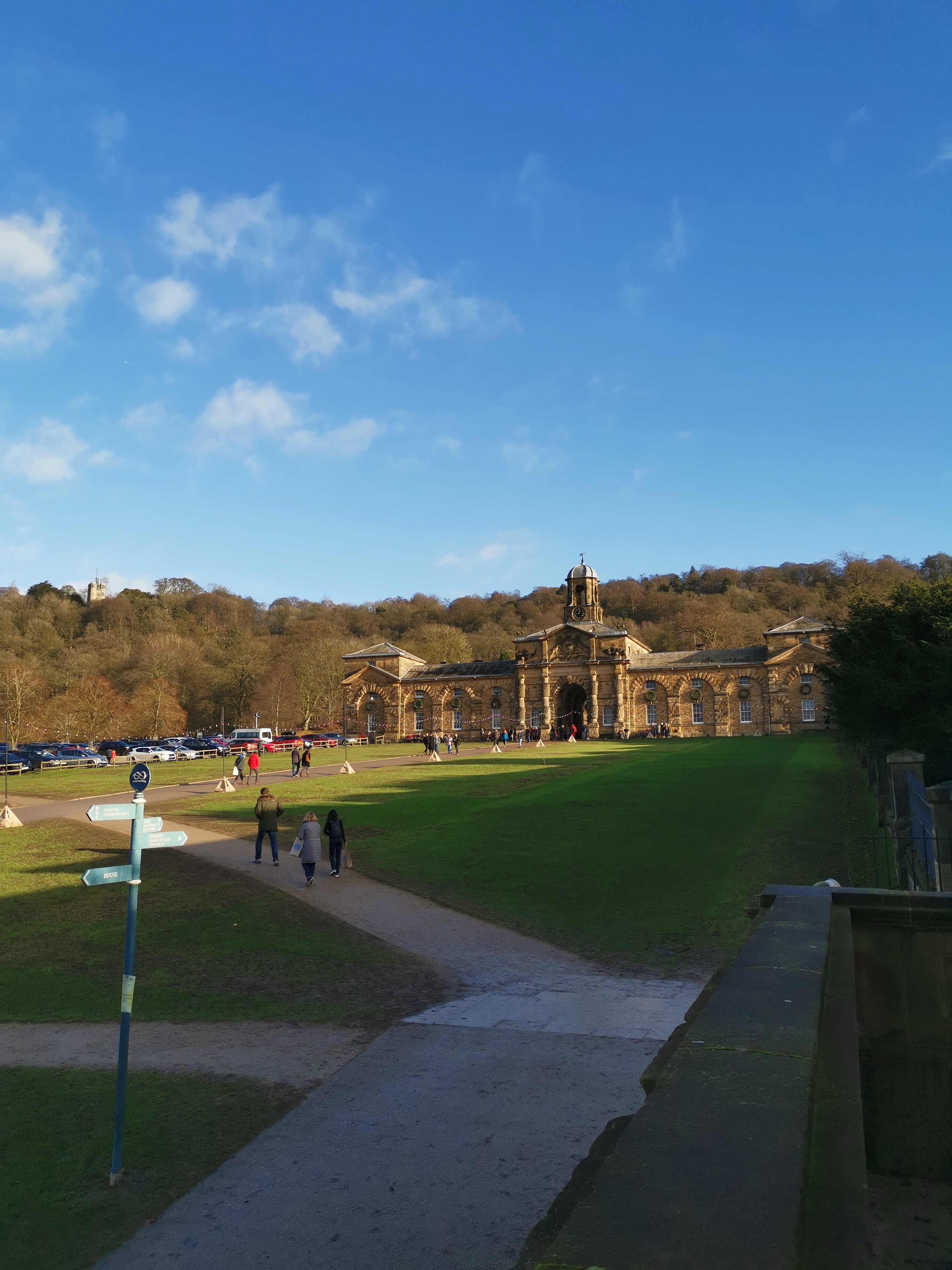
There were a variety of animals, including sheep, pigs, goats and donkeys in the farmyard. At various times during the day, it is possible to watch the cows being milked and pet the guinea pigs. We were able to buy a small bag of food for the animals, so we could hand feed some of them. That was very cute as sheep and goats have warm sticky tongues, so it was safe for little children to feed them.
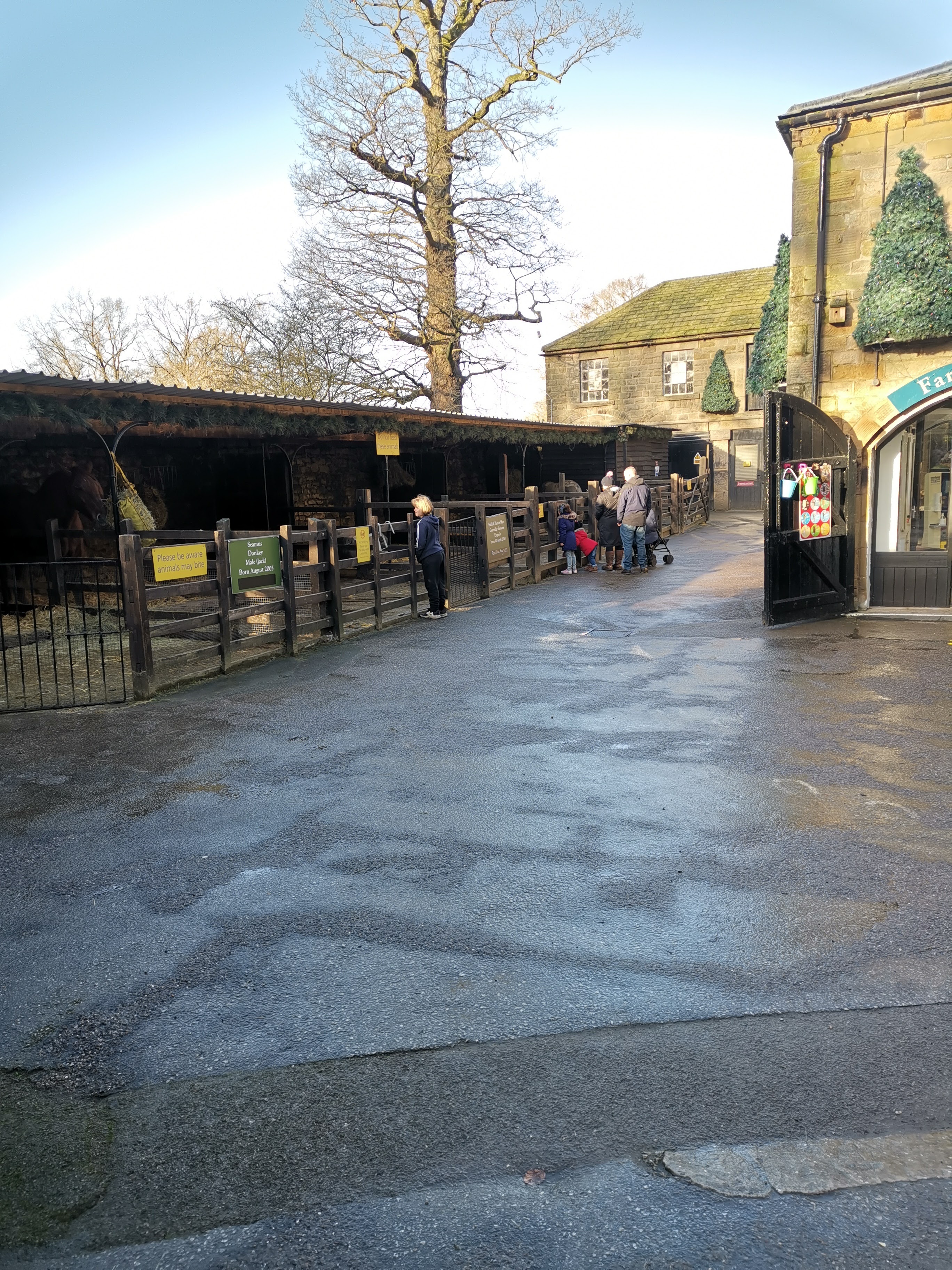
There was an old tractor set up for climbing on and also some little-people sized ride-on tractors, which the children were enjoying. My grandson is still a bit small for peddling, so Daddy power came in handy to propel him.

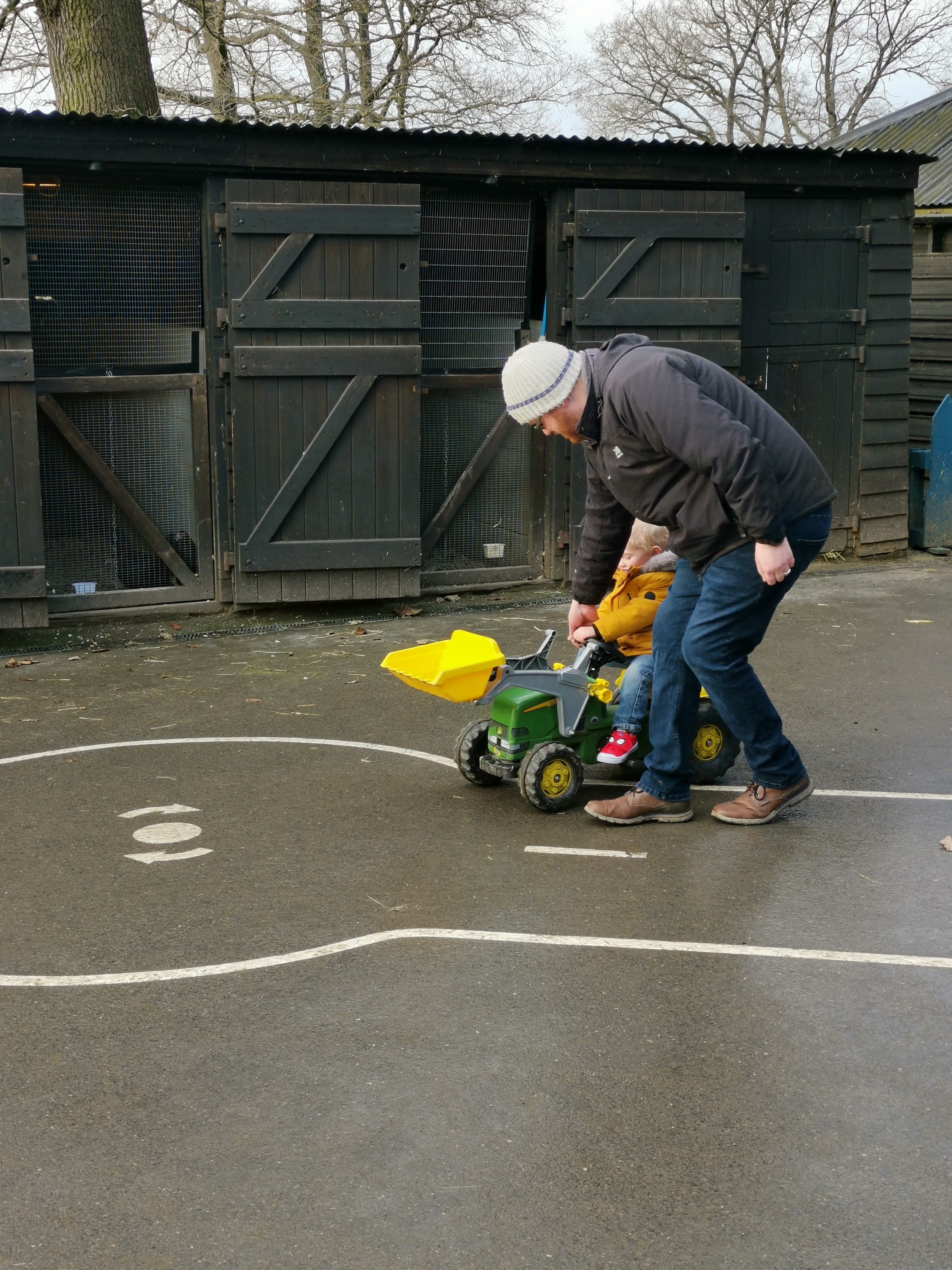
The Adventure Playground has large sandpit areas allowing the children to have water and sand play. There was also climbing play equipment for various ages. Up behind the playground is woodland for hiking through and in the valley below the house is open fields where it is possible to see deer.
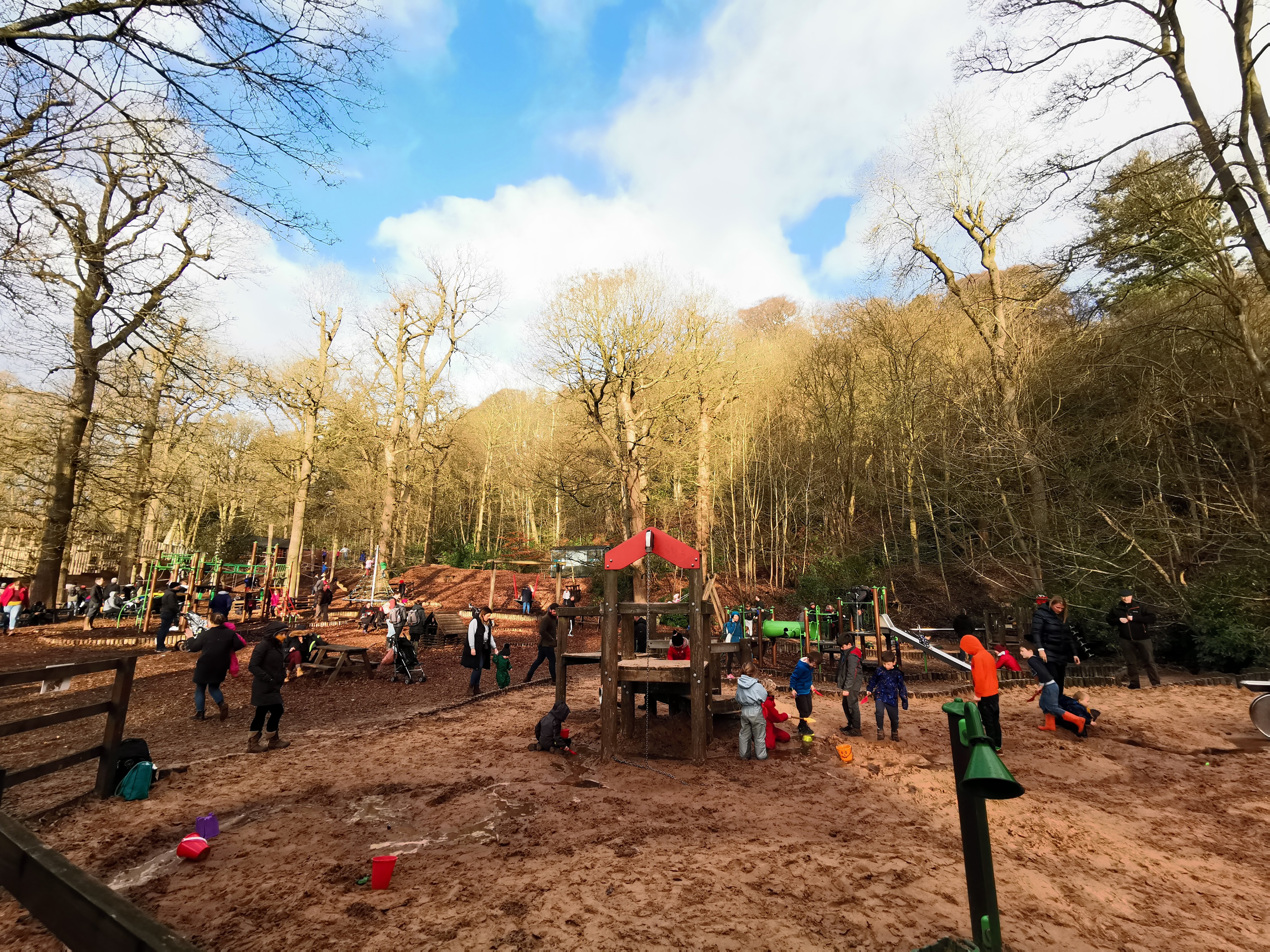
Once we had finished in the Adventure Playground, we returned back to the gardens of the House. There are extensive gardens and grounds surrounding the house to explore, including a hothouse of tropical plants and in the nicer spring/summer weather it would be lovely to spend more time exploring.

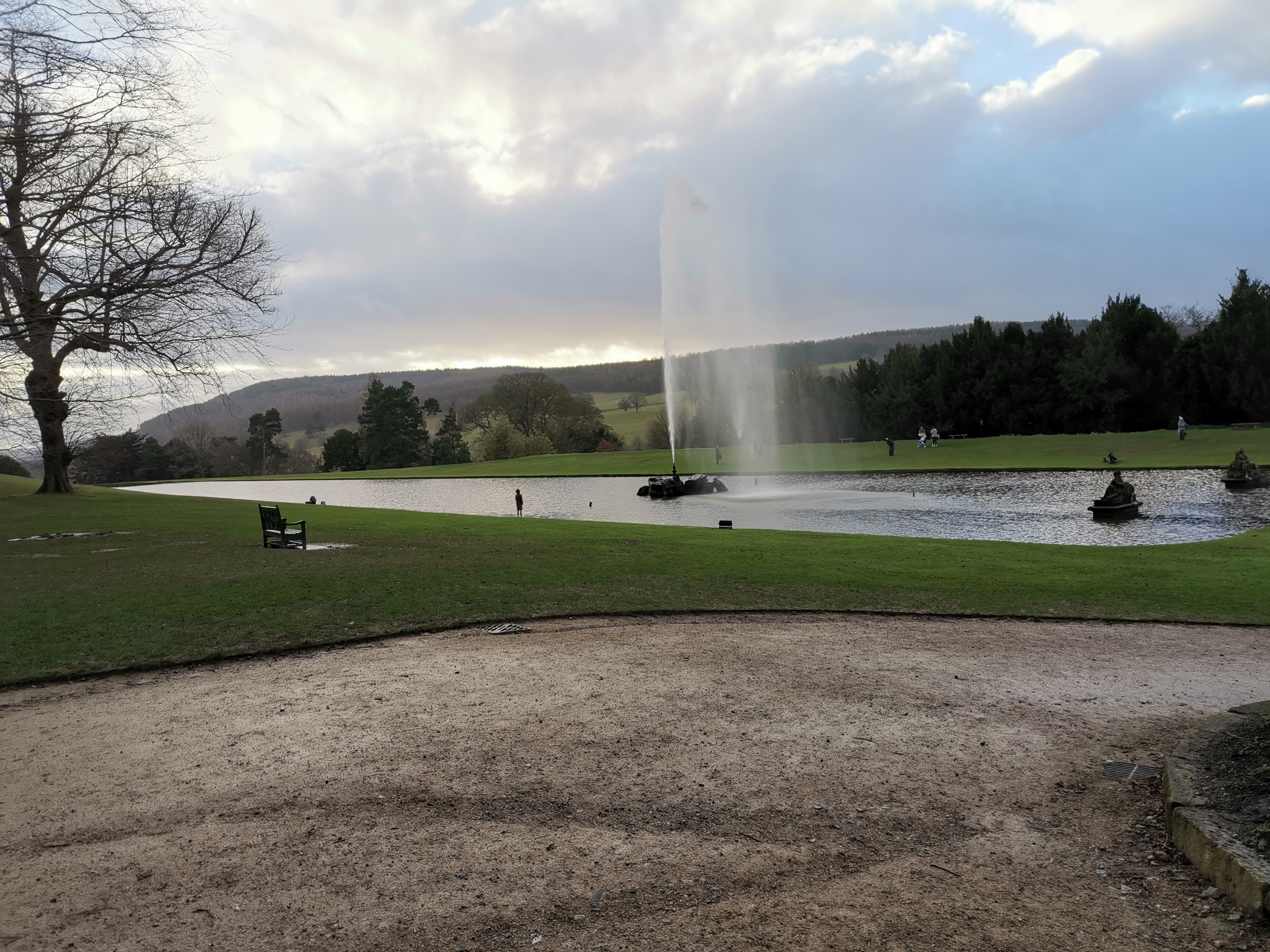
However, we were content to walk along the main path, The Broad Walk, past the private lawns and the fountain, up into the rock garden, which I suspect was missing its waterfall.
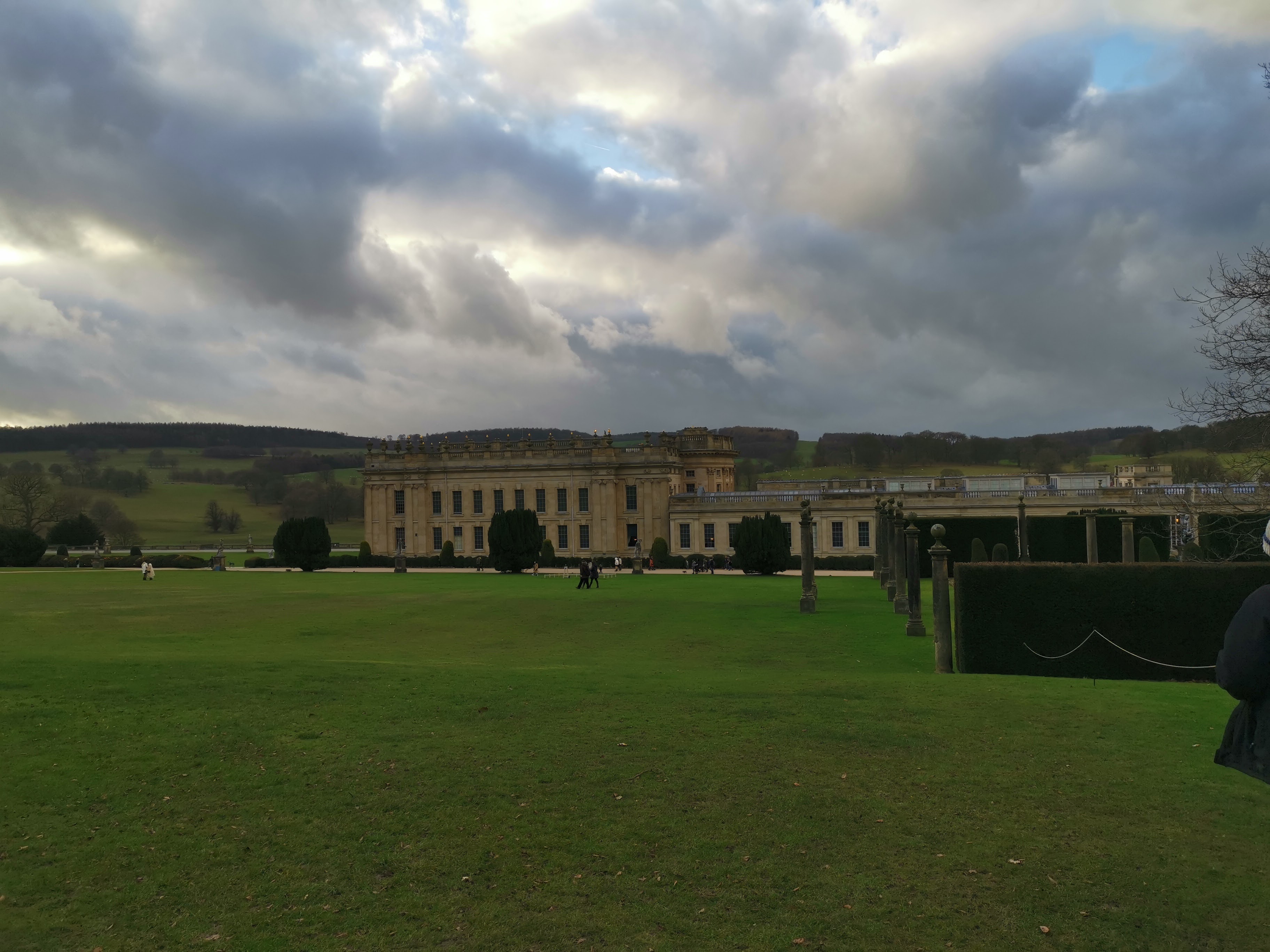
I found out that Joseph Paxton was the head horticulturalist for the 6th Duke and laid out the gardens. He also cultivated the Cavendish banana in the greenhouses of Chatsworth House, which he designed and named the variety of bananas after his employer. Cavendish bananas are the most eaten variety in the Western world. The Paxton’s Glasshouse and Paxton’s Rock Garden are named after Sir Joseph Paxton.

Up behind the Rock Garden, there is an old coal tunnel that had been made safe for visitors to walk through, although it was pretty dark and waterlogged in the tunnel. The coal delivered here was needed to heat up a large conservatory, which no longer exists.

As the winter sun disappeared behind rain clouds, we decided to head back to the car and head home. It was a great way to spend an afternoon and it will be lovely to visit the house again and perhaps see more of the gardens, including the maze.

A Folly or A Love Story to Break a Curse?

16 October 2021

Sitting high above the city of Lancaster and easy to see from many directions is the Ashton Memorial.  It is very hard to miss as it stands out in the skyline or is lit up at night with coloured lights.

After having the tower pointed out on my other adventures with Janice, Mike, Karen and Lulu the dog, from the motorway, we got to visit Williamson Park.  It is even more impressive up close.
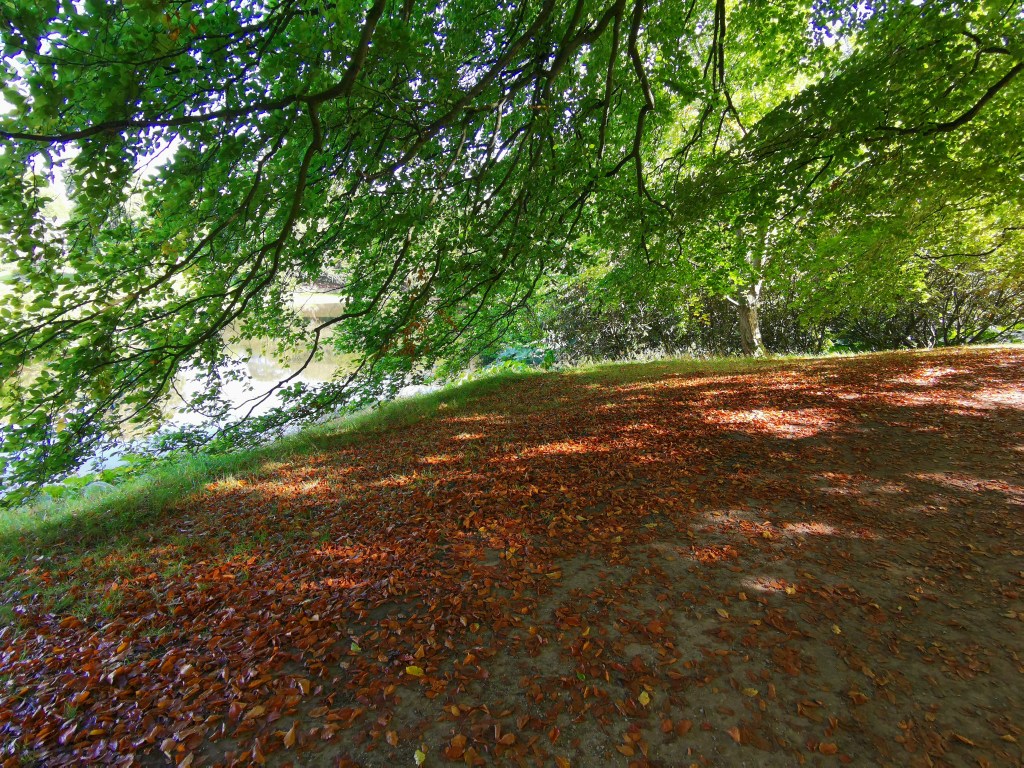
It is surrounded by a lot of parklands, although in our walk up the hill to the tower, I only got to see a small part of it. 
When it was mentioned that there were hangings here, it made me curious to find out more.  I would have loved to climb up to the viewing level, but the hill climb and the steps up don’t mix well with a dodgy knee.  So I was happy to just admire it from the outside.
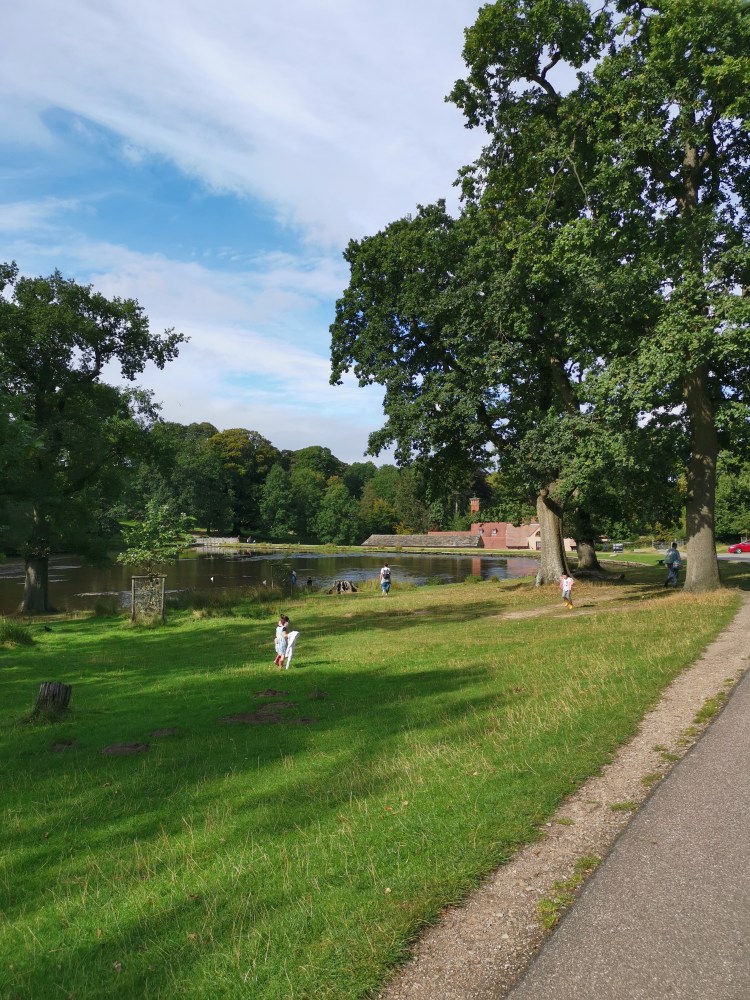
So who built this imposing building, known as the “Taj Mahal of the North” and a Folly?  Well, that’s a love story.  Like the Taj Mahal, it is a monument dedicated by a man to his wife.  The Ashton Memorial was commissioned by Lord Ashton as a tribute to his 2nd wife Jessy, a woman who supported him in his political career.  His family was extremely wealthy, but they were philanthropic with their wealth.  It is written that in 1885, he served a breakfast for 10,000 people of the local population and was noted for his generosity and support of Lancaster.

The Memorial was designed by John Belcher and completed in 1909, 5 years after she had died. It cost £87,000 or equivalent to about £8.4m in 2020.  It is topped with a dome made of copper and has sculptures representing Commerce, Industry, Science and Art.  It stands on the top of the hill and is 150ft tall, meaning you can get a view of the surrounding countryside, Morecambe Bay and the Lake District Fells.

It is known as a Folly, an architectural word used to describe a “costly ornamental building” that doesn’t have a practical purpose.  That doesn’t seem to me to be an accurate description, because this building is a symbol of love.  Imagine being loved so much by another person that they want to build you a monument. A beautiful white building, with a gleaming dome sitting in 54 acres of parklands and woodlands.

The tower is now used as a location for weddings, amongst other things. I think it would be a beautiful location that is very sought after.  A chance for the couple to start their wedded life at an iconic place and representative of love between two people.

However, it could also be this memorial is the means to break a curse because of the dark history of the location where this park and building are.  This is not something that I read about, it was something that occurred to me.

The Williamson Park is situated in a former quarry, but before that, it was the location of hangings and specifically the hanging of nine of the Pendle Witches in 1612 when it was known as Gallows Hill.  The interesting history of the Pendle Witches can be found here https://en.wikipedia.org/wiki/Pendle_witches taken from the records of the trials.

The Pendle Witches trials and subsequent hangings would, I suspect, have been known about by James Williamson, First Baron Ashton, after all, he had been the Sherrif of Lancaster in 1885. Was there a curse put on the location by the witches as they faced their hangings on Gallows Hill?

Maybe, James Williamson wanted to remove the memory of the hangings and what better way to end a curse than with love.  A bit like the fairy tales of Sleeping Beauty or Snow White, where love’s true kiss ends a witch’s curse.  With the tower being a memorial to his wife and now the location of many couples sealing their marriage with a “true love’s kiss” the curse remains broken.

Just an idea, what do you think?

Exploring Lyme Park, Cheshire

21st September 2021

On Sunday 19th September, my Marshmallow insurance policy commenced on my car, so it was time for me to take her out for a drive and start exploring my new homeland. The weather forecast had changed and the rain we were expecting was pretty much done by dawn with the sun now expected to make a show. As my family had another commitment in the afternoon, I went alone.

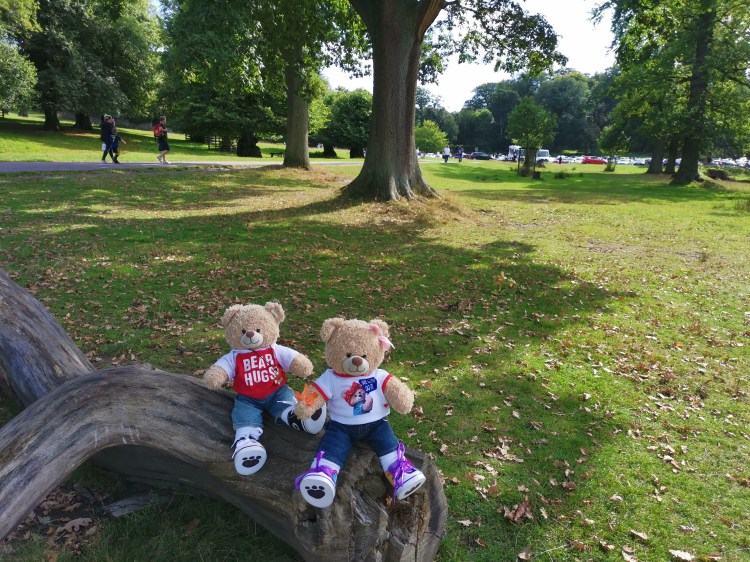
I chose the National Trust owned Lyme Park, House and Gardens in Cheshire as my first outing, because it isn’t too far from home. Nat and Mark have been there before and enjoyed it. So, I decided to bring Snow and Fin to enjoy the adventure with me.

I arrived just before 11am, very pleased with my efforts at driving down the narrow roads to get there. They were the type of roads where it is almost too narrow for two cars to pass each other. So, I decided to be patient and move as close as I could to the edge of the road and let other cars coming towards me, pass. I didn’t mind, it wasn’t busy and all of them acknowledged my efforts. My car has built in GPS/Sat Nav, which looked for the quickest way to get to Lyme Park, selecting mostly back roads rather than the main arterial roads.

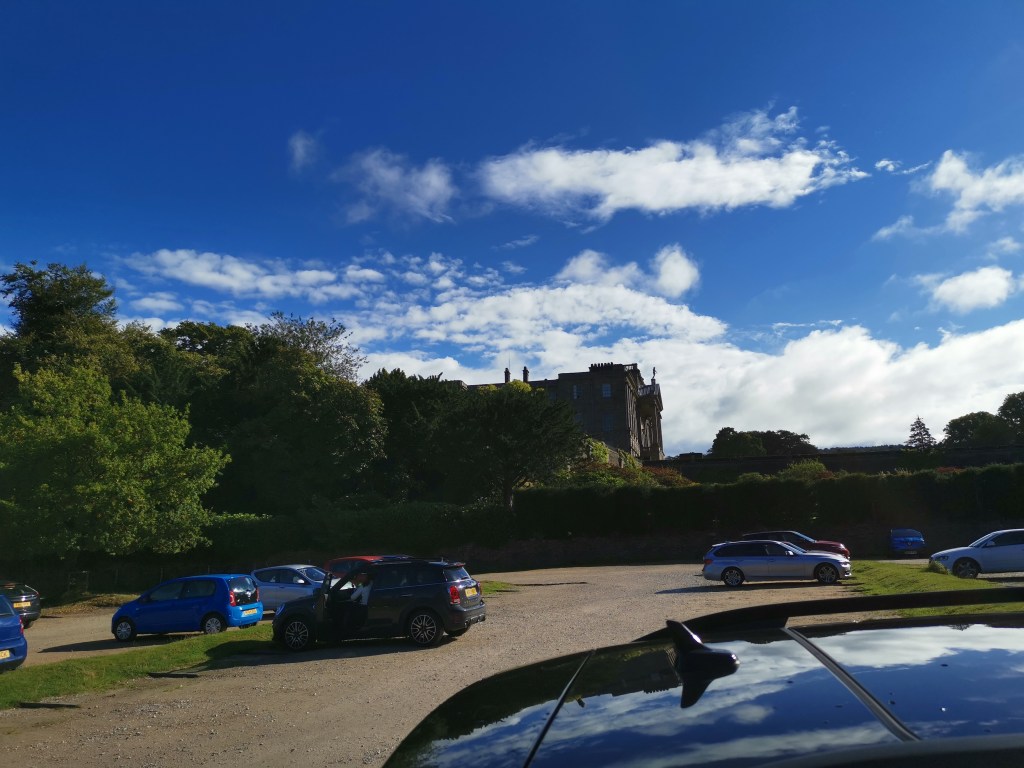
It seemed that before 11am was a good time to arrive, as it was just before the house opened for visitors, although the gardens opened from 9.30am. The carpark was not too busy, so it was easy to find a park. From there I got my first view of the house.

The walk up to the house from the carpark is quite a steep path. So I took advantage of the free shuttle buggy cart ride up to the gates, as I didn’t want to upset my knee with walking up hill. Anne, the driver, seemed very happy to have Snow, Fin and I as passengers. She said if I needed a ride back down from the house to let a staff member know and they would radio her to come and get me. That was nice of her.

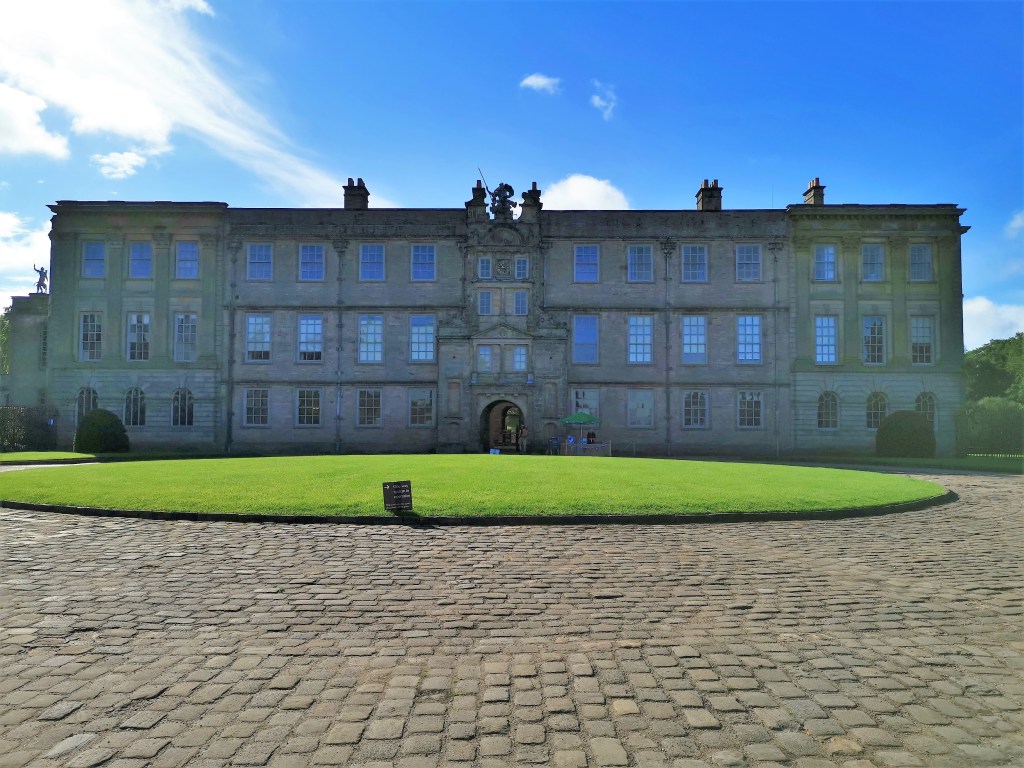
Welcome to Lyme Park House.

Snow and Fin looked forward to seeing inside

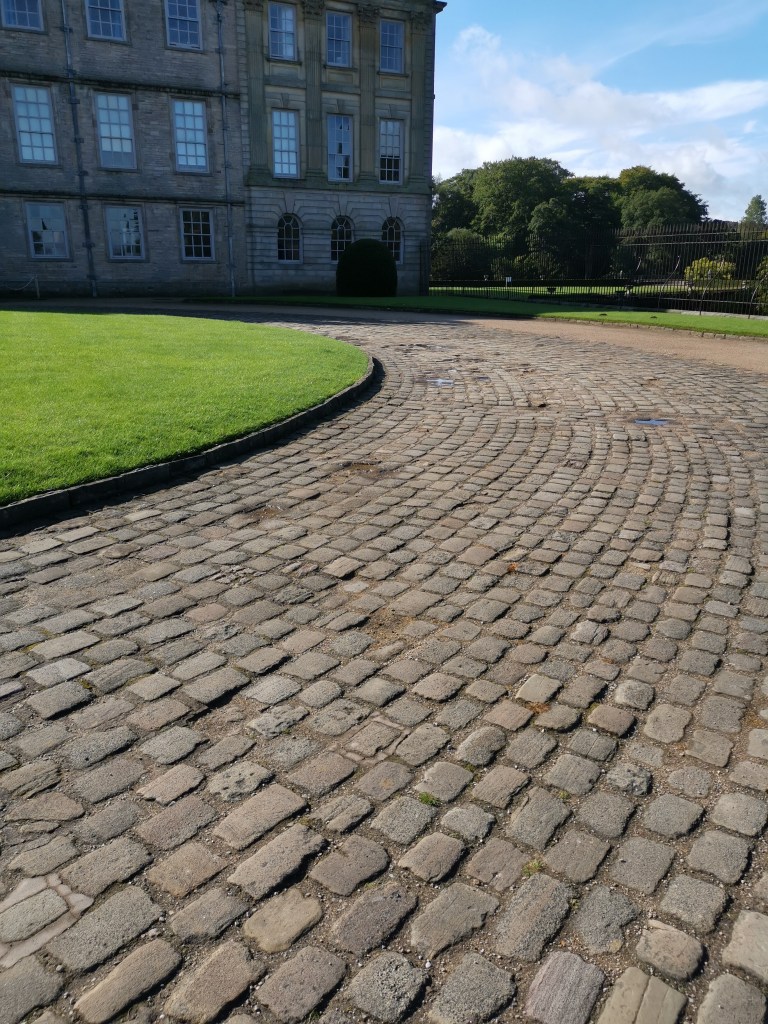
I could just imagine the horses and carriages entering the gates and driving around the cobblestone drive to the entrance. This is the house that was used in the 1995 film “Pride and Prejudice” as the exterior of Mr Darcy’s Estate of Pemberley.

I borrowed Nat’s National Trust membership card to be allowed to go in through the entrance archway. I am waiting to be able to sign up for a membership of my own. It will give me a good excuse to explore. Tickets to get into Lyme Park House and gardens is £8 for an adult who doesn’t have a membership, but walking in the mooreland hills and forests around the house is free.

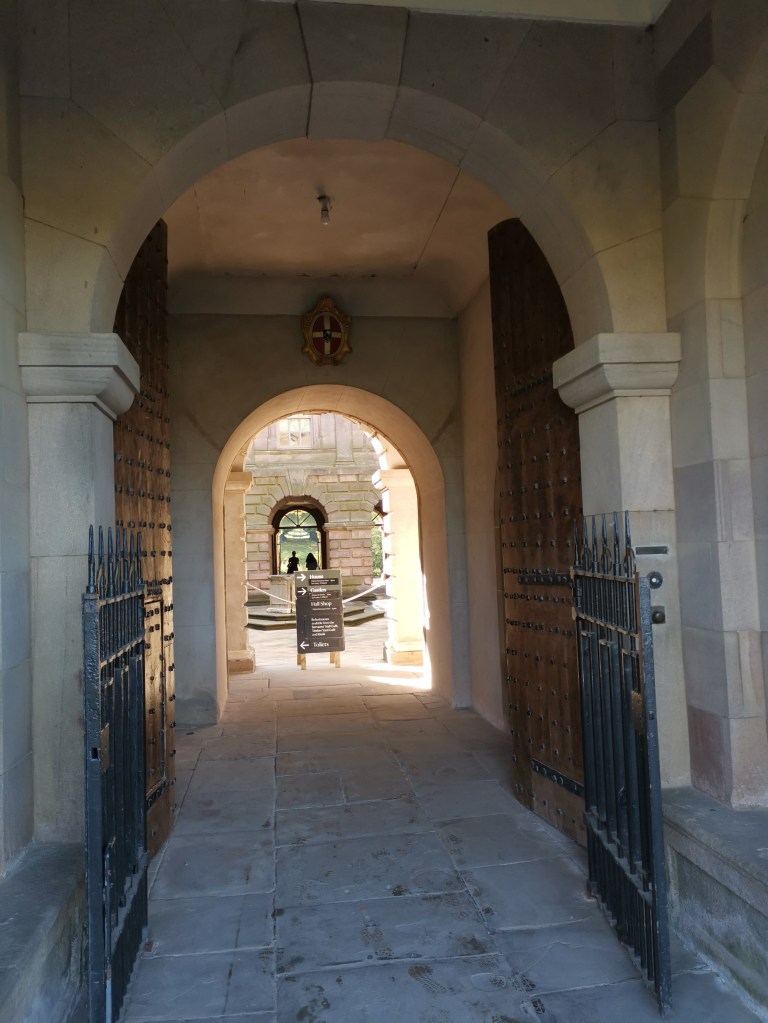
Time to venture through the entrance.

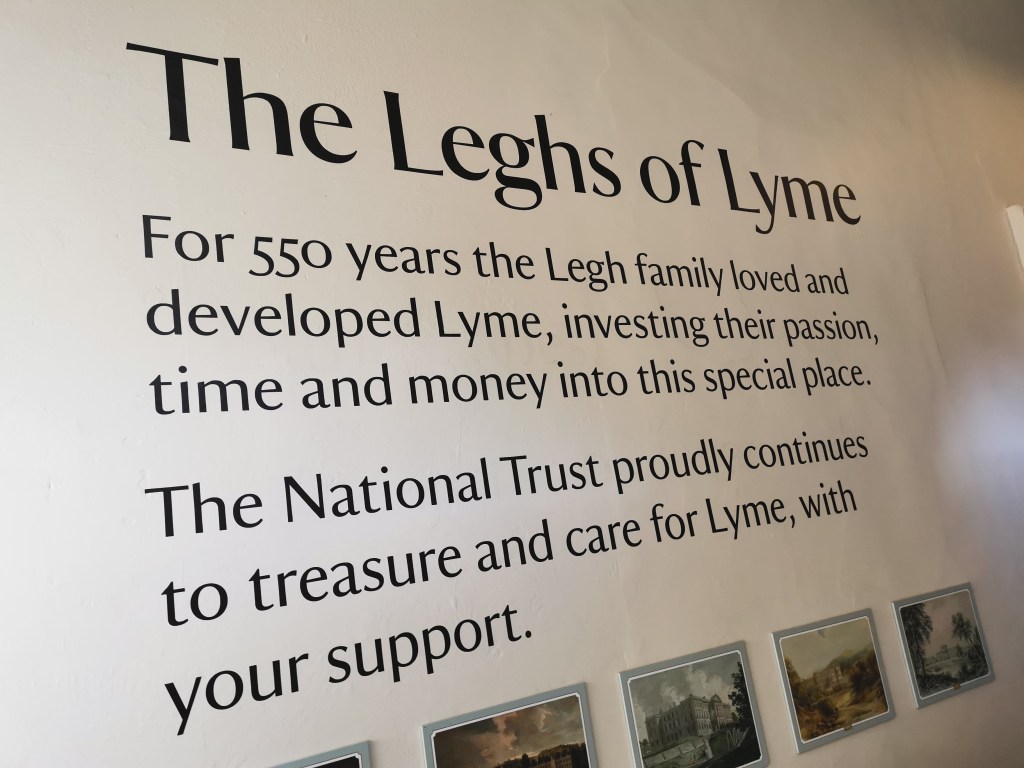
Through the archway is the dedication that explains that the Estate has been in the Legh family for 600 years before it was presented to the National Trust in 1946 for the Health, Education and Delight of the People.

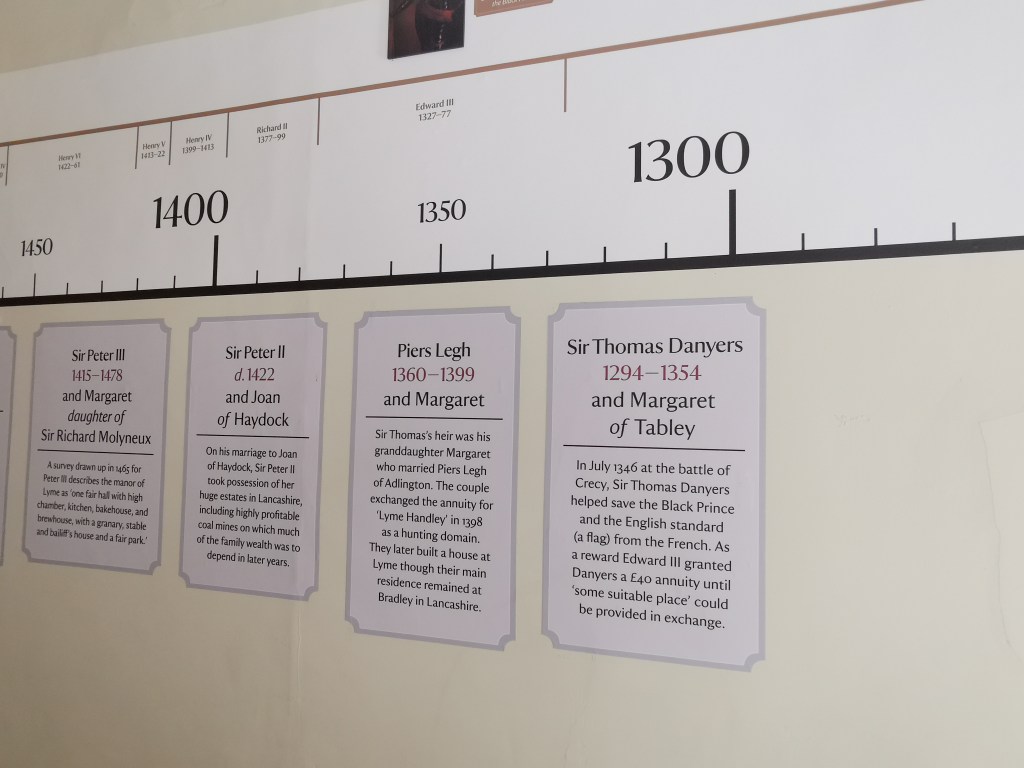
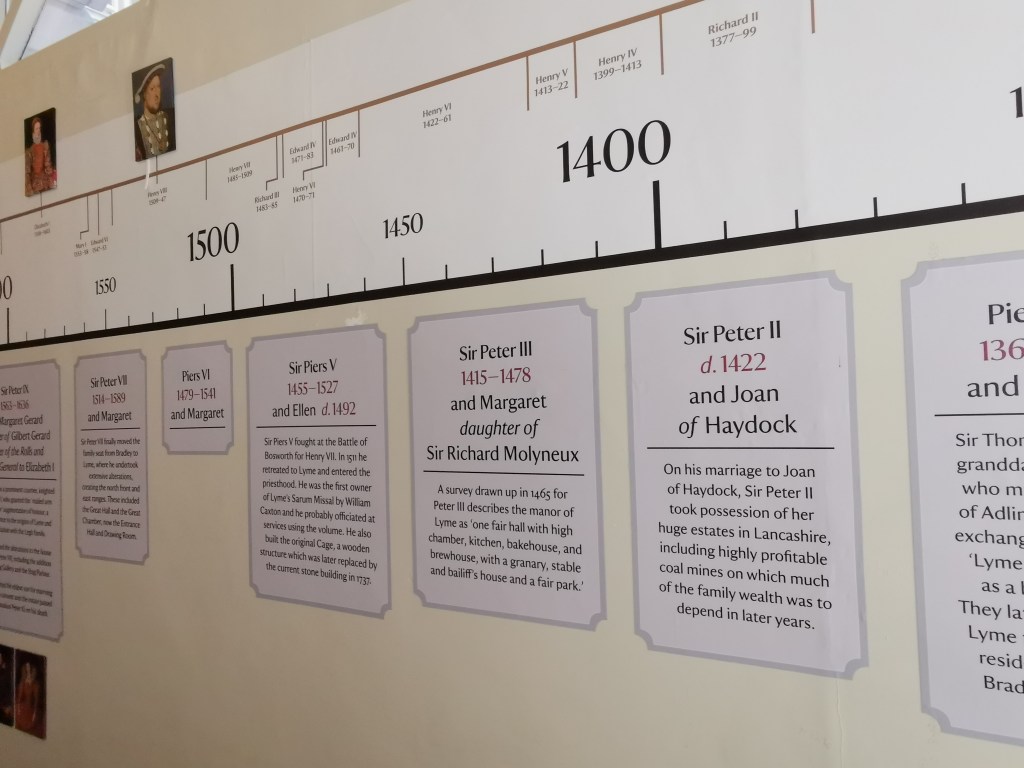
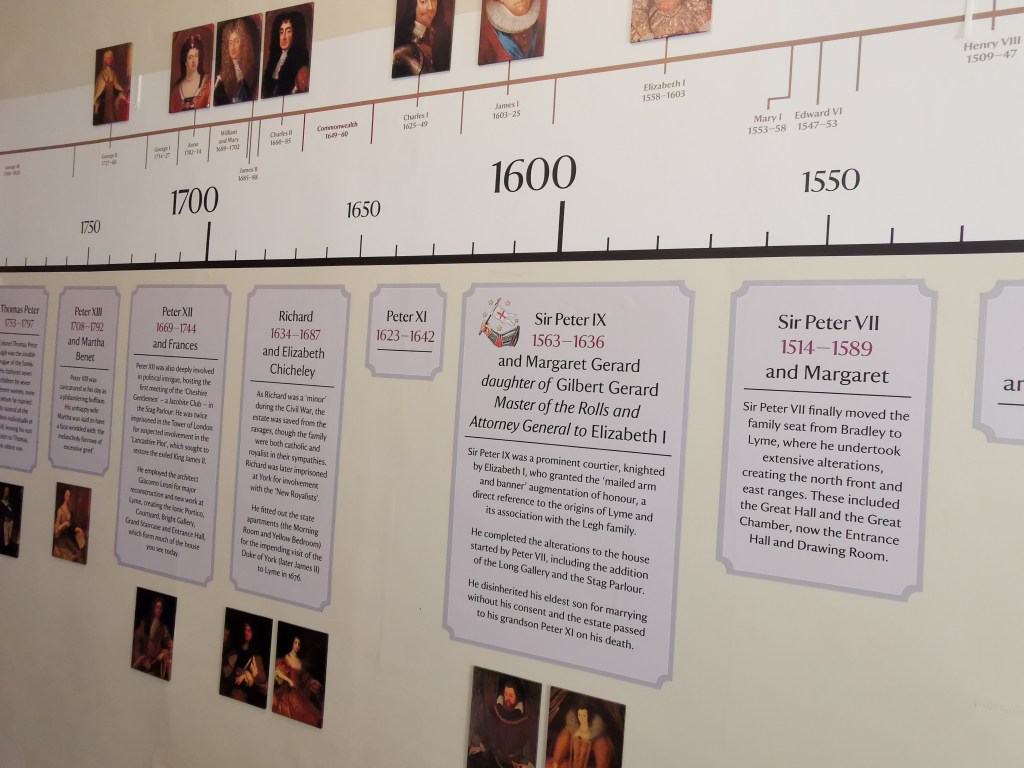
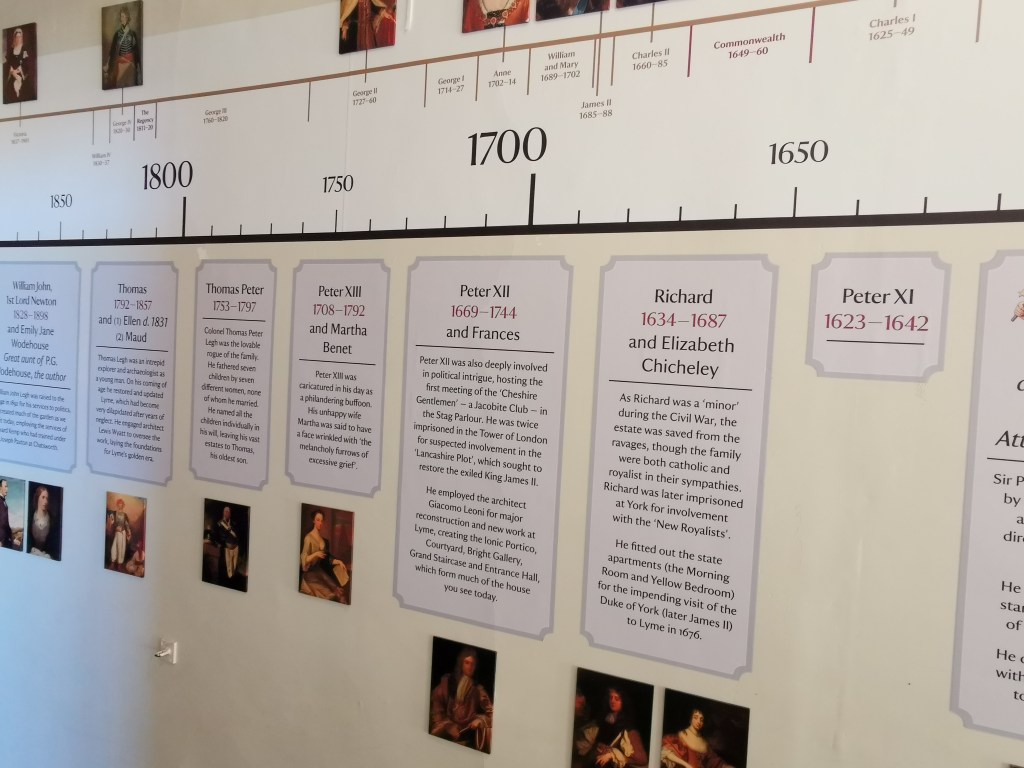
One of the walls set out the time line for the history of the family and the house.

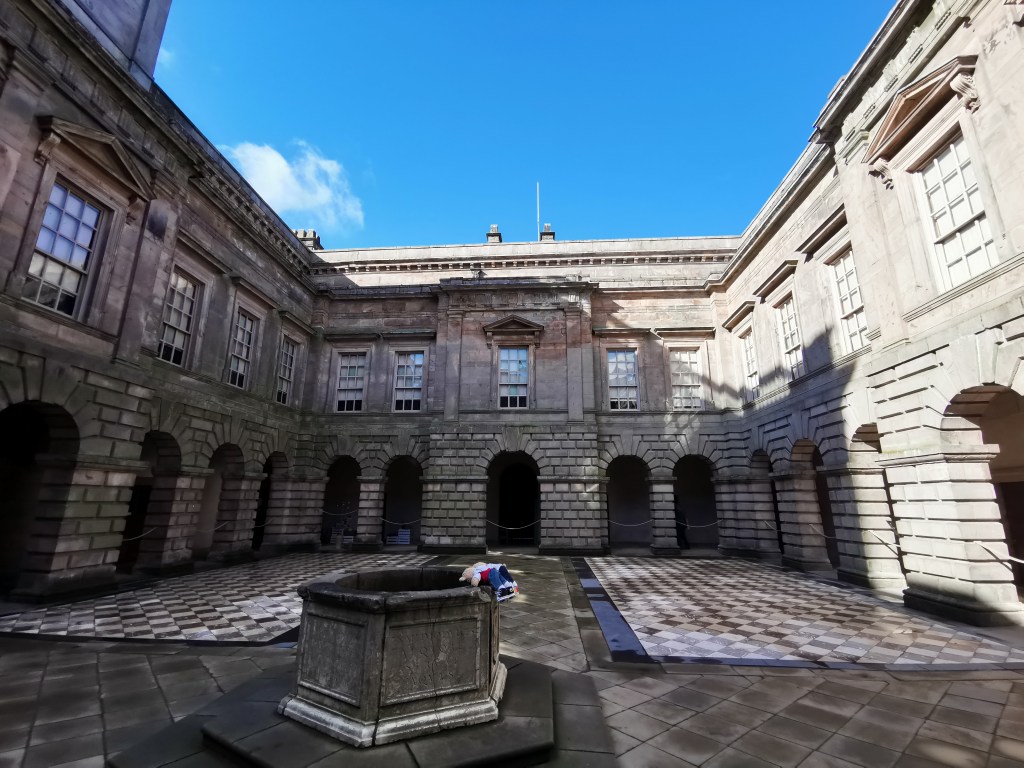
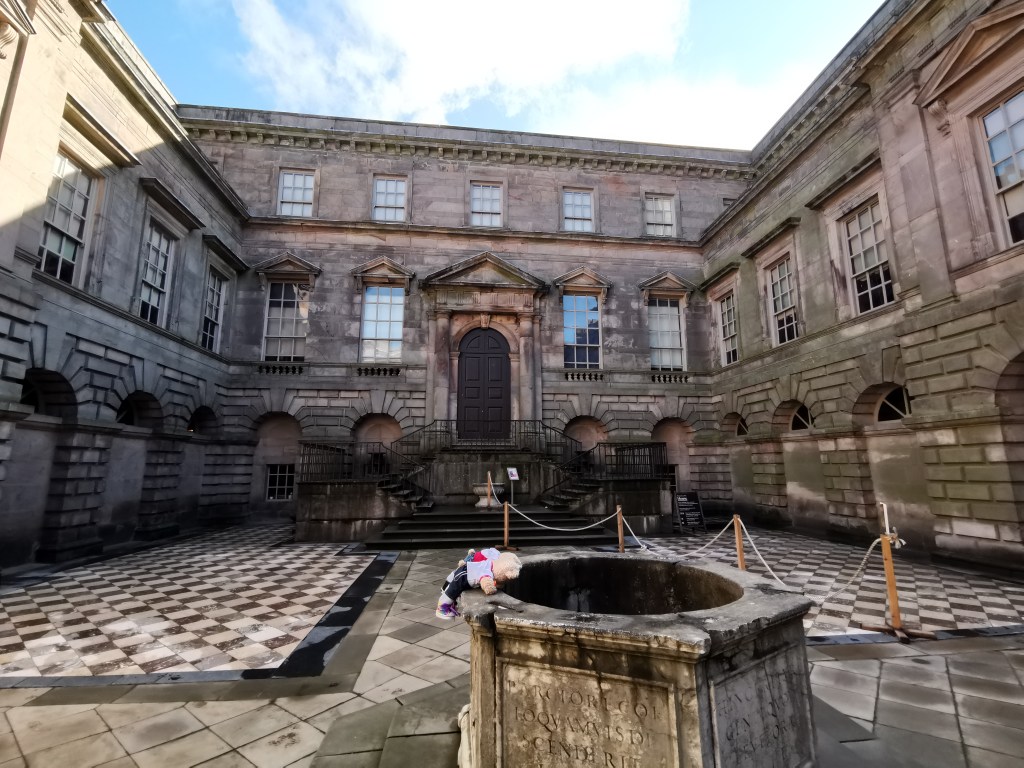
Through the archway, I reached the central courtyard and my first close look at this imposing house from the inside. Fin and Snow liked the wishing well in the middle. I was glad that it was sealed at the bottom, so if they got too adventurous, they wouldn’t have fallen far.

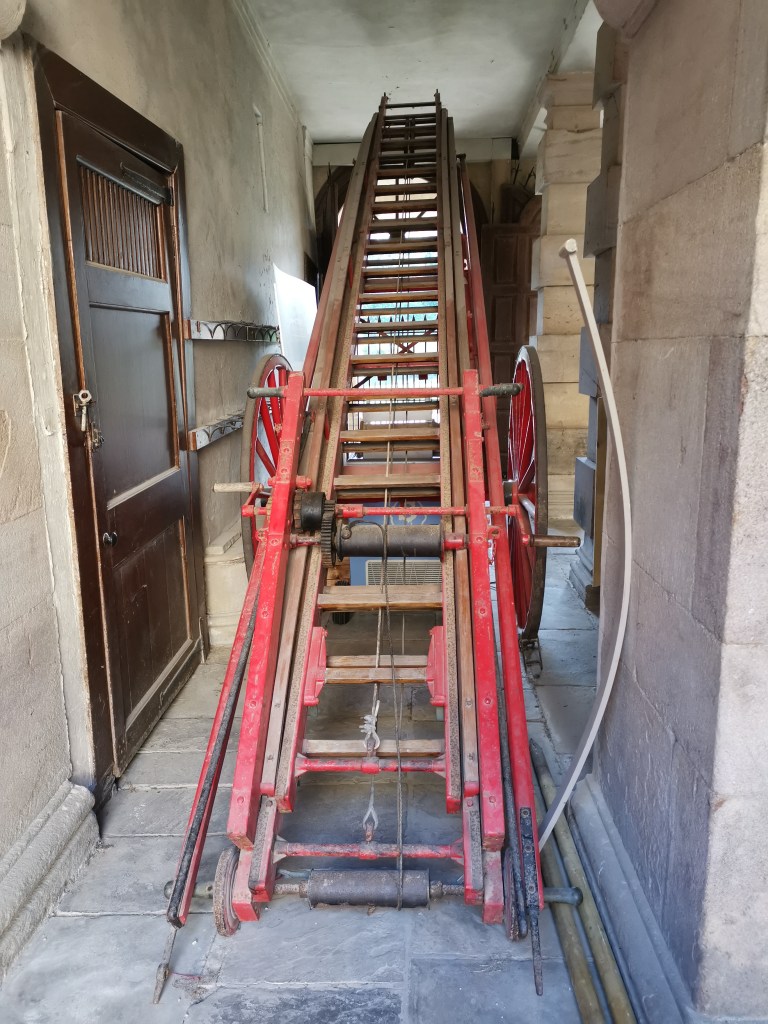
The house didn’t open until 11am for touring, so I crossed the courtyard and took time to visit the gardens. On the way through there was a ladder which was a fire escape, designed to be able to reach each of the windows in the courtyard. Because the kitchens are on the lower level, William John Legh (1800s) was worried about the risk of fires and had the ladder made, as well as placing fire buckets around the house and building a pump to bring water up from the lake to the house for fire fighting.

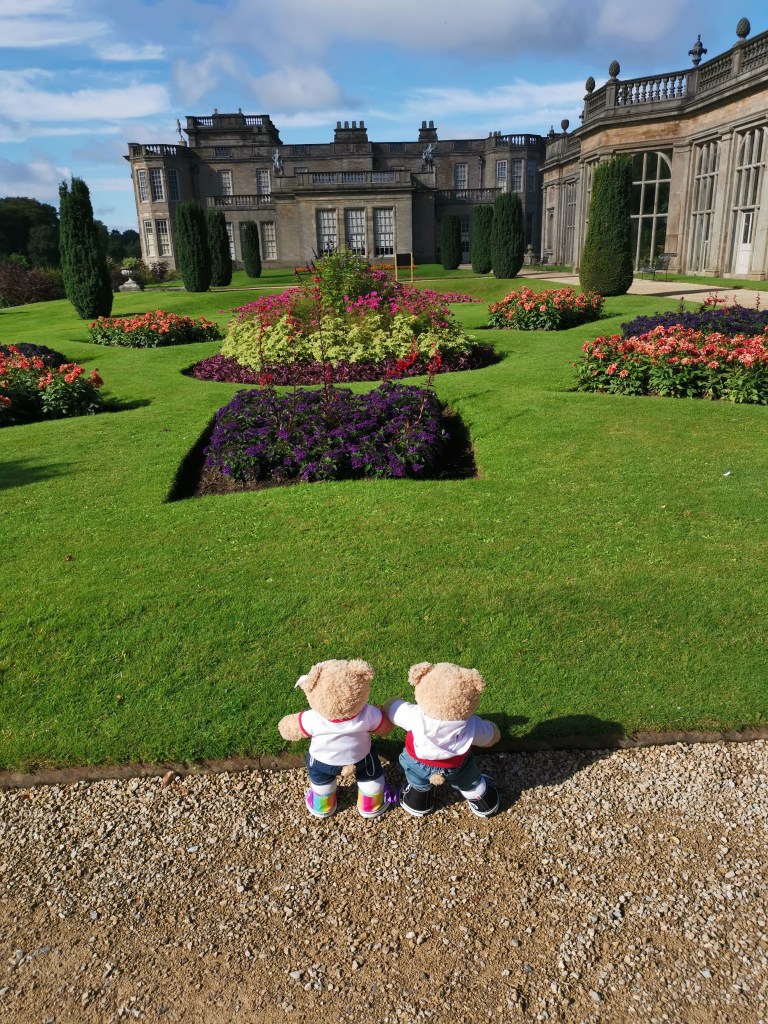
Through the archway, the garden beckoned to be explored. The weather was perfect for it, with the sun shining, a light breeze and fluffy white clouds. The National Trust was taking very good care of the grounds as you can see from the impressive lawn.

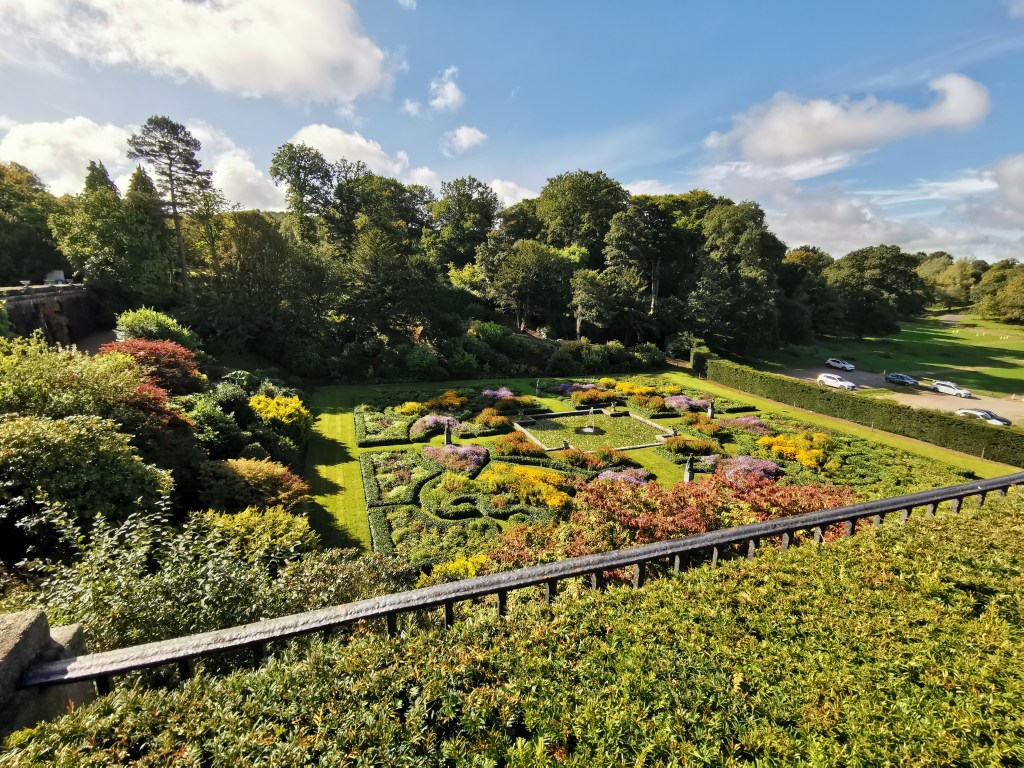
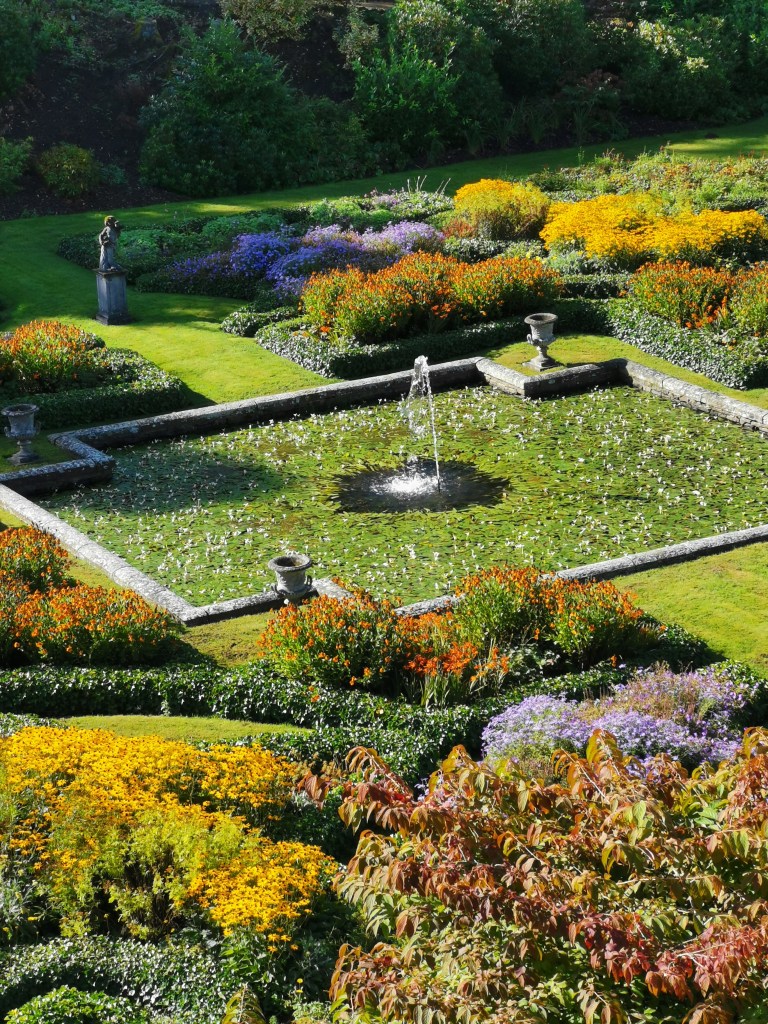
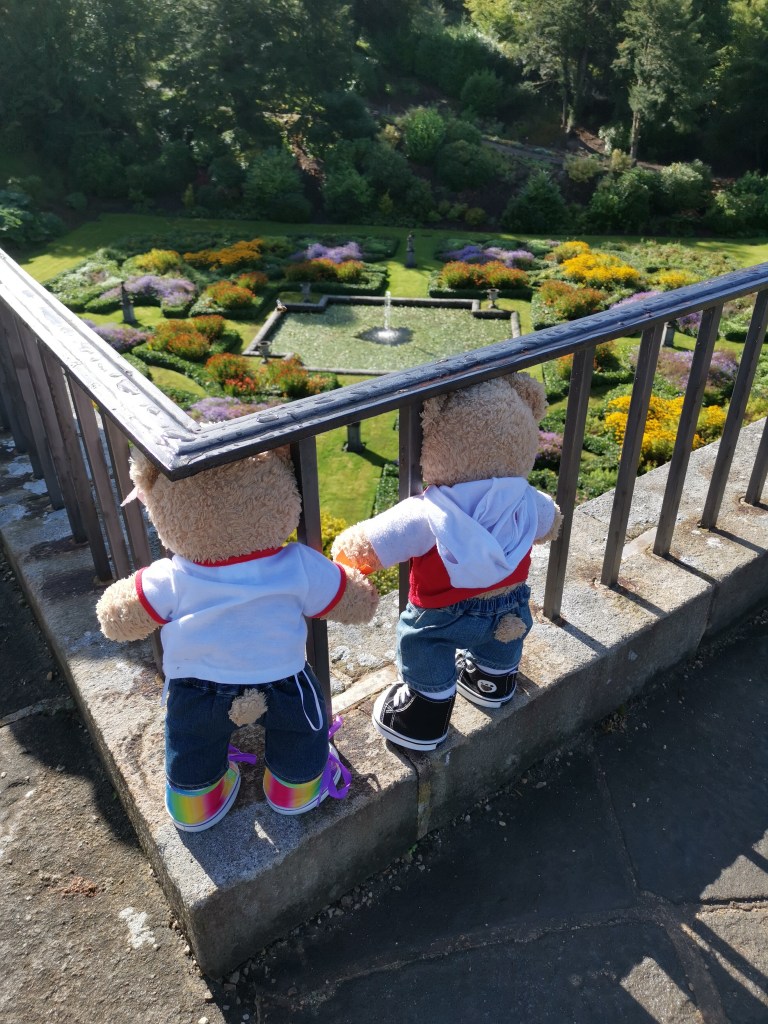
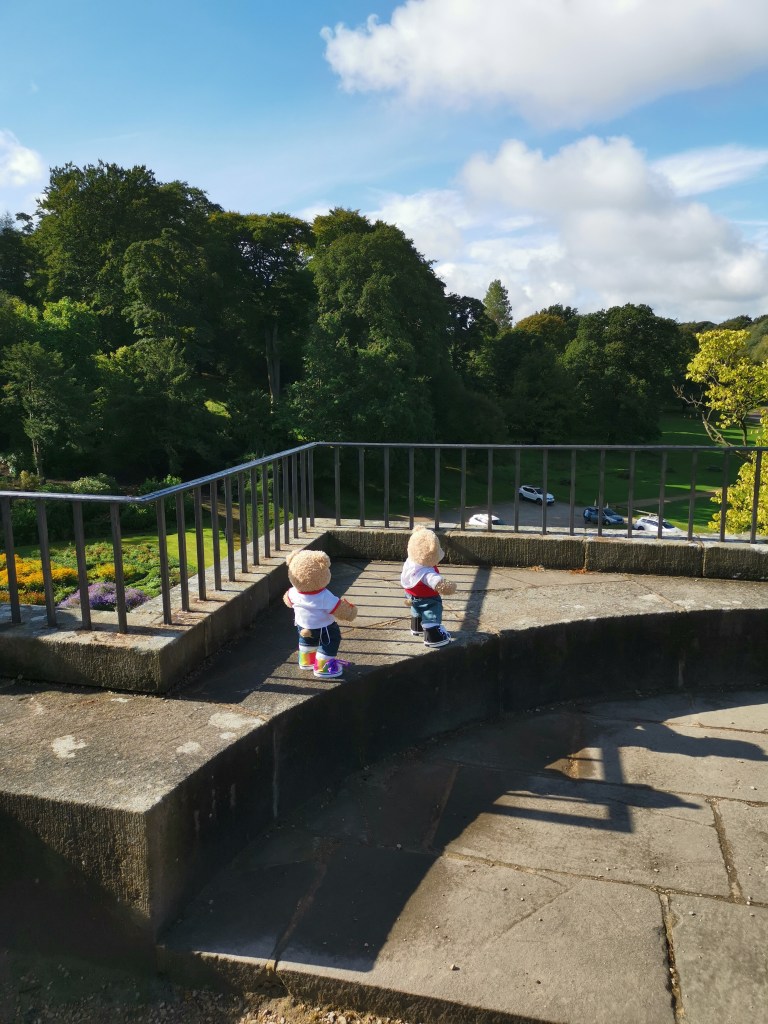
We discovered there was a beautiful garden laid out to be viewed from above. Fin and Snow enjoyed having a look at it and so did I. This was situated to the side of the house and the wall I had seen from the carpark was the wall of this garden.

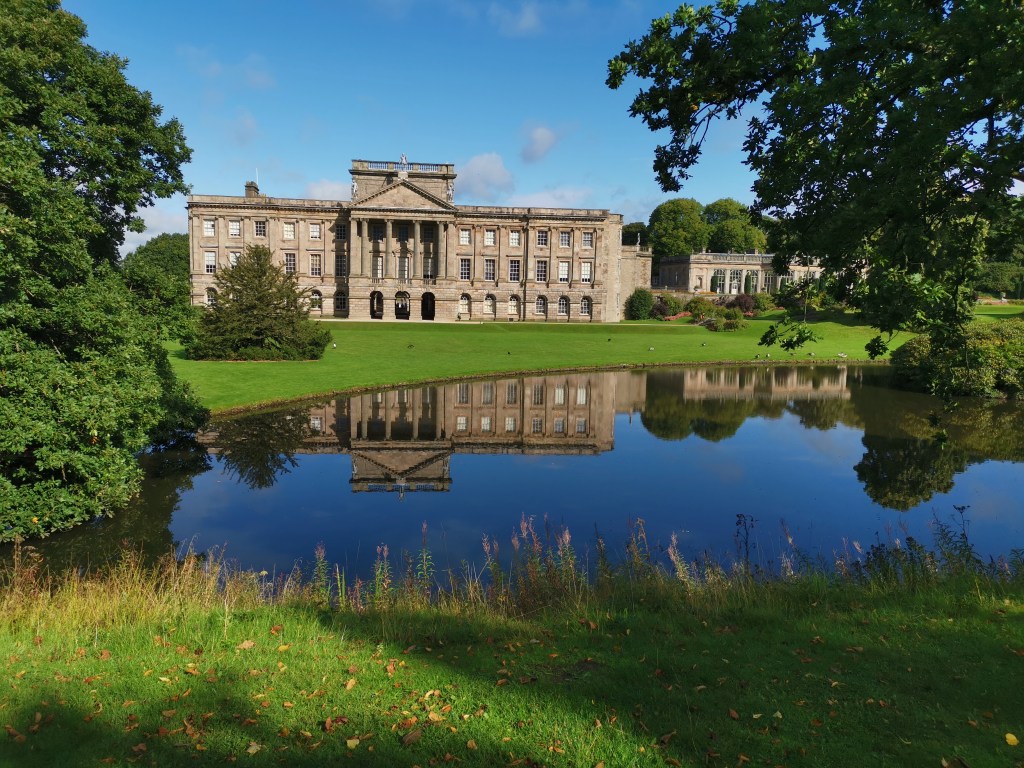
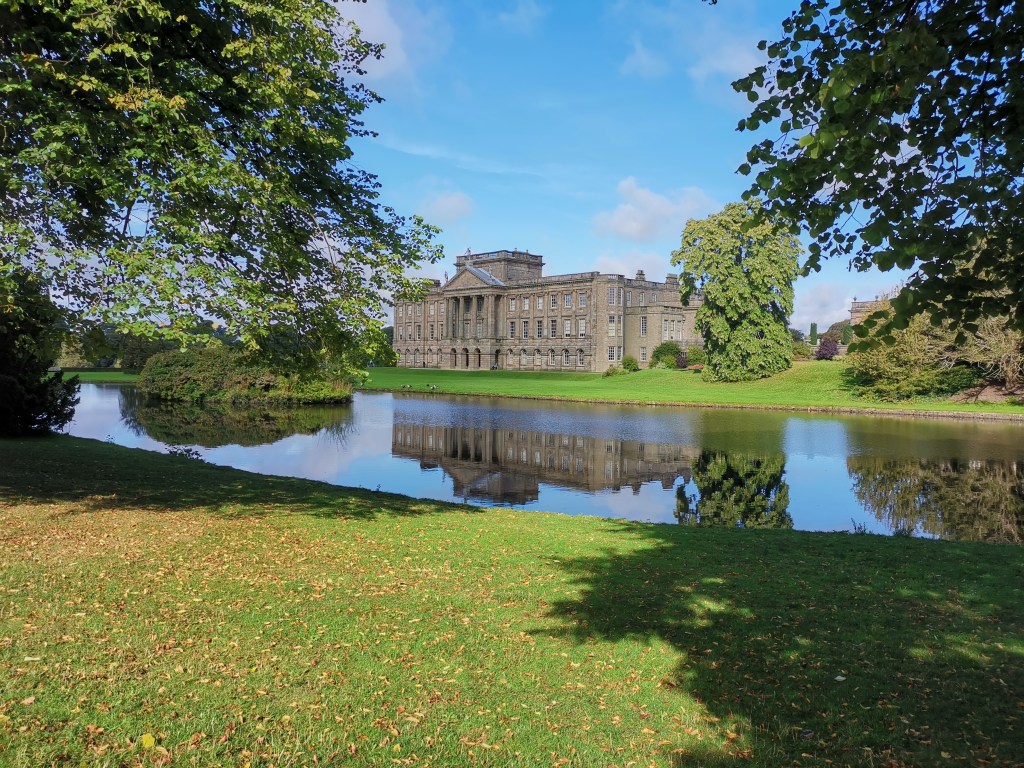
At the back of the house is The Reflection Lake. A beautiful lake would have been visible from all the rooms on that side of the house. I walk around to the lake and was treated to a sight that was lovely to photograph.

It was very peaceful on this side of the lake under the canopy of the trees.

After I had walked around the lake back to the side with the house, I reached more of the created gardens, including a rose garden and the garden in front of the Orangery. An orangery is a building designed to grow plants that need the warmth. The Lyme Park one used to house camellias. I could imagine that would have been stunning and also very fragrant when they were all in flower.

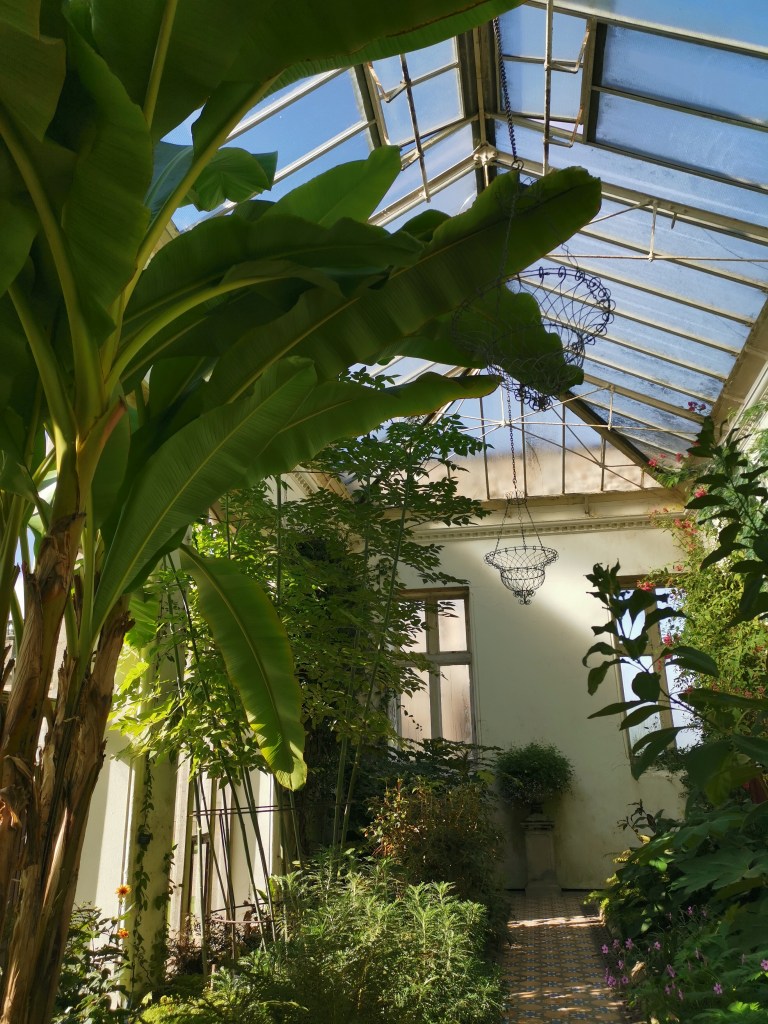
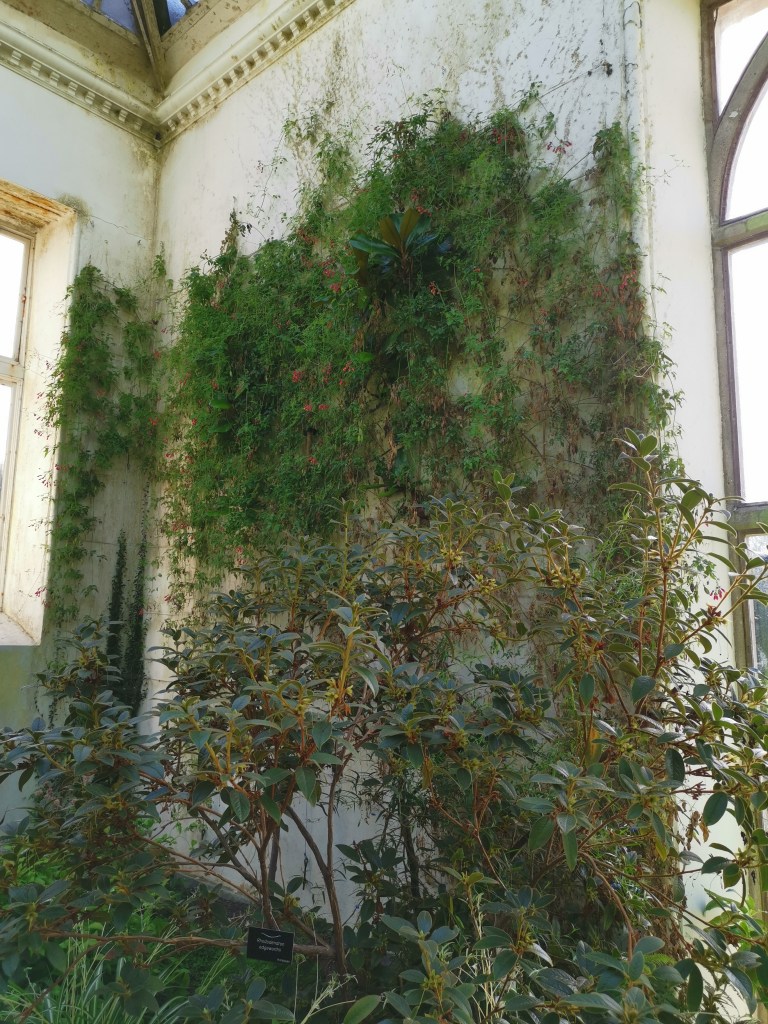
We went inside the Orangery and it was warm in there. The camellias had been replaced with a tropical plant collection. It reminded me of the exotic plants we had in our pergola back in Adelaide. I had hoped it would be bigger inside. I suspect that there was more of the building, but it was blocked off to visitors.

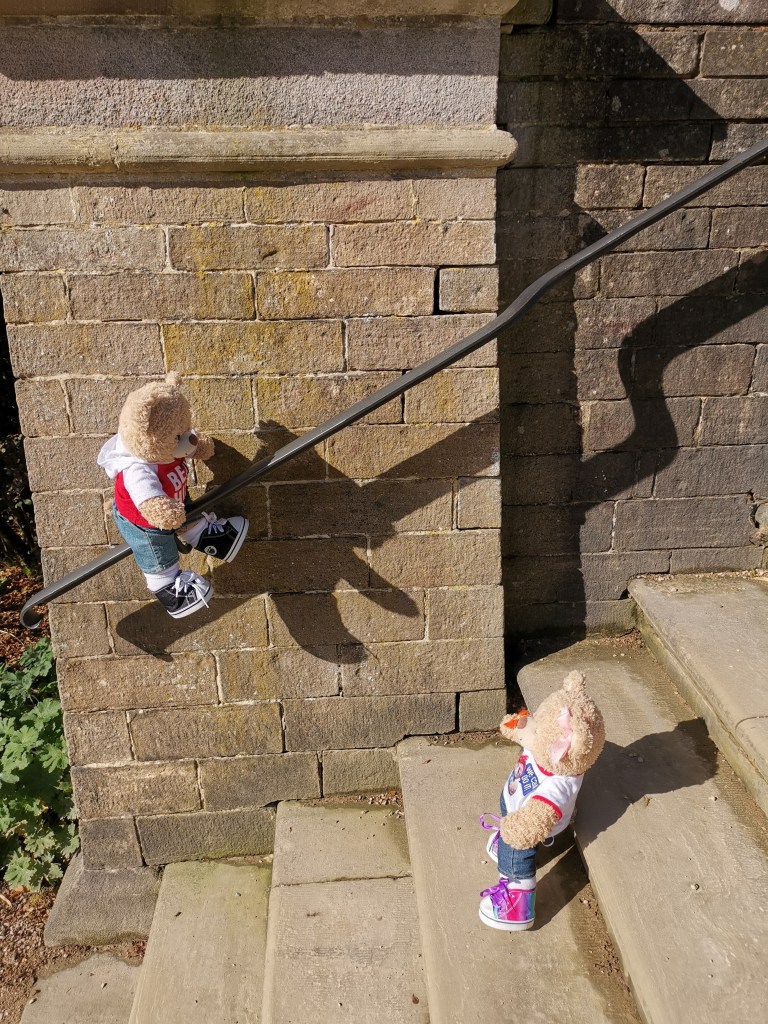
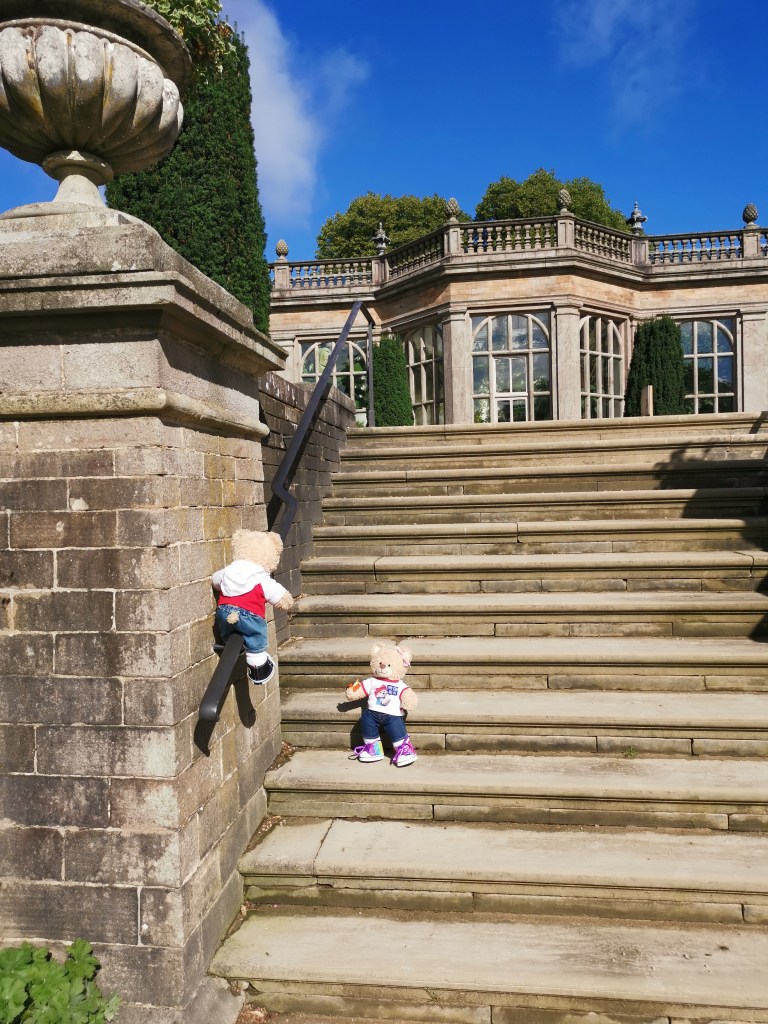
After a wander amongst the hot house plants, I suggested to Fin and Snow that it was getting close to lunch time. They asked if they could slide down the handrail on the way back to the house. Of course I let them.

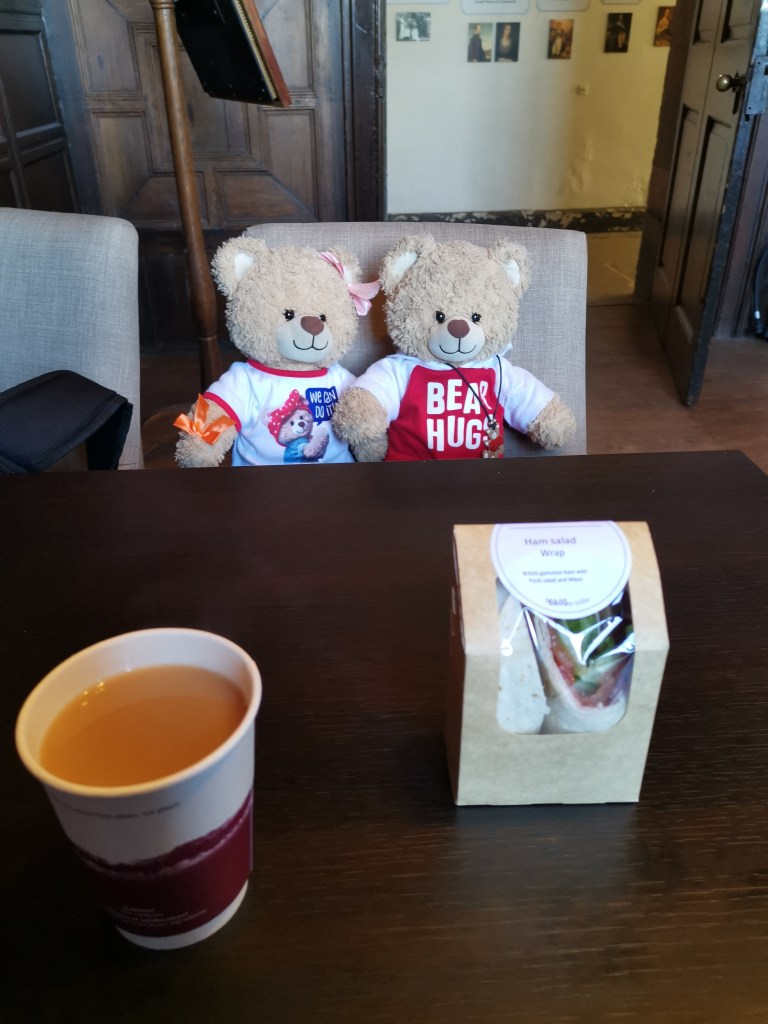
We went back into the courtyard and across to the café, which was situated in the Servant’s Hall. Time for a wrap and cup of tea before going to join the line for a tour inside the house.

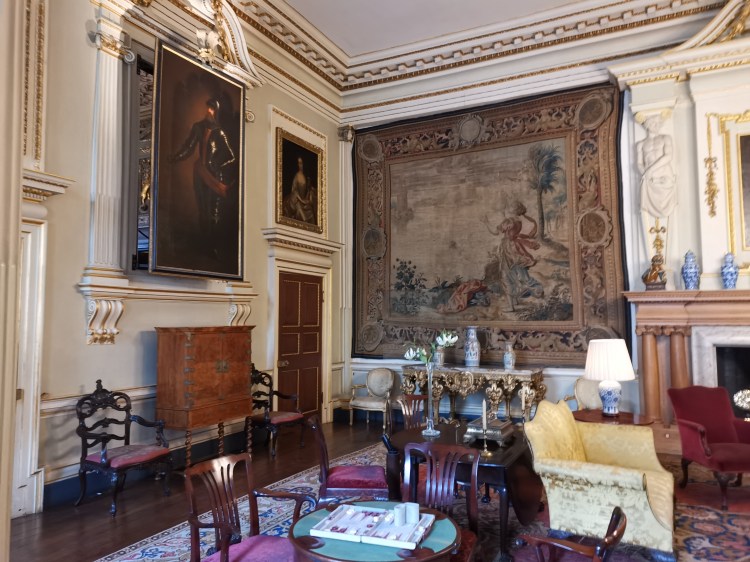
Due to COVID-19, groups going into the house were restricted to a maximum of 15 at a time. In my group, there were less than that, as it was still early. We entered via the steps into a large room. This was the Entrance hall, where guests would have been welcomed. There we watched a film about the history of the estate and the Legh family. The hall certainly was grand with its tapestries (created between 1623 and 1636).

If you look carefully at the painting on the wall in the photo below, you can see it stands out from the wall. I didn’t notice this at the time, but later on the tour, we saw the reason for it being like that. It is called a Squint and it allows the goings on in the Entrance Hall to be seen from the Drawing Room on the upper floor.

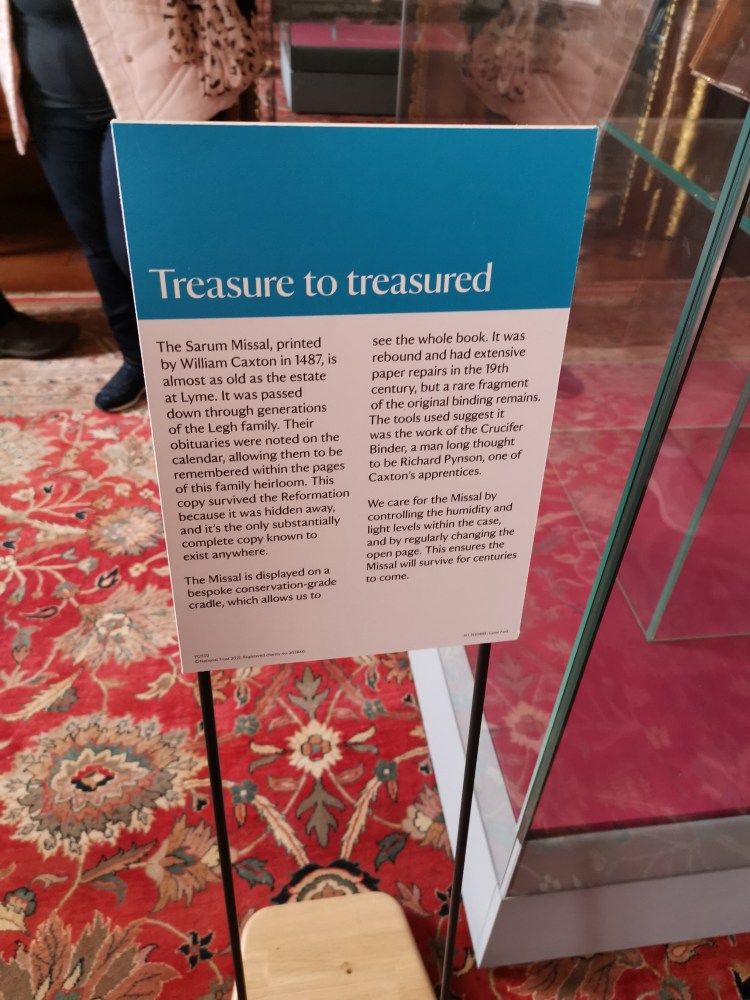
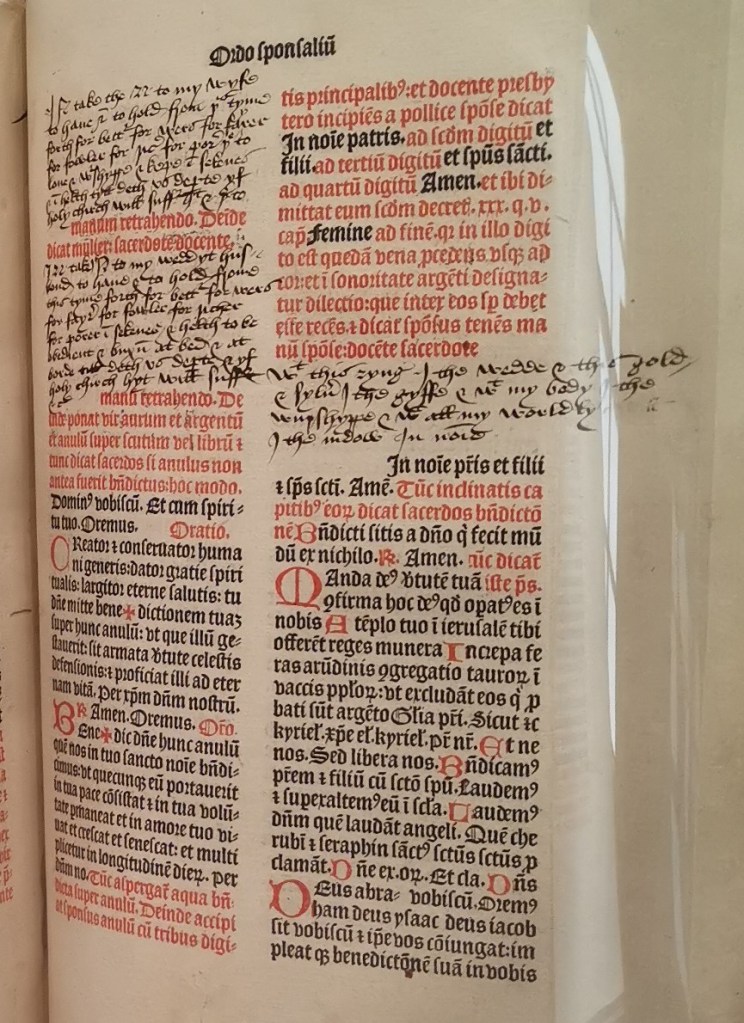
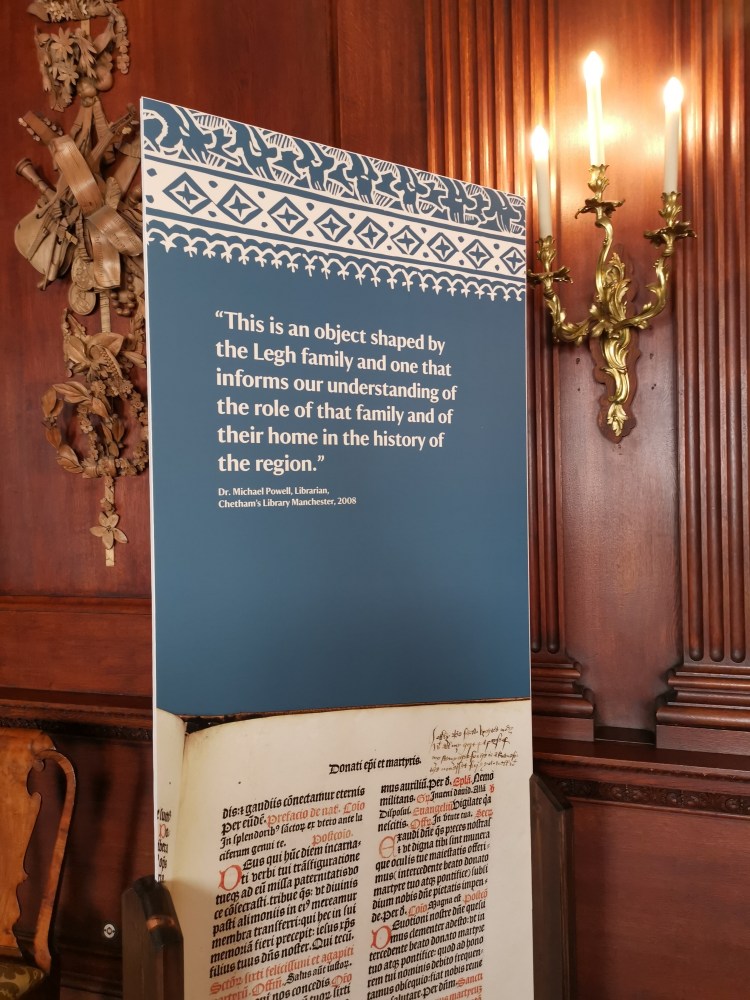
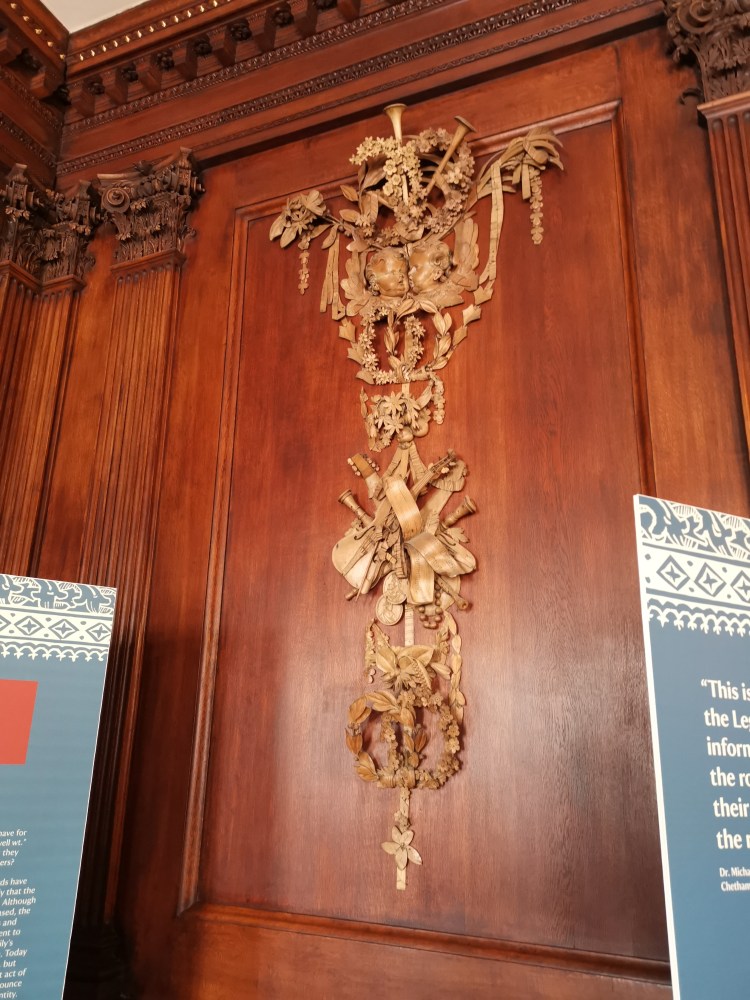
We left the grand Entrance Hall and went upstairs to access other rooms within the house. We turned off into a room, which could have been a ball room, and inside a sealed glass cabinet was a very old book, The Caxton Missal, that had been with the family since at least 1508. This copy has been altered by the family over the years and their markings can be seen on the pages. It is a book containing the liturgy of Mass (religious service). I thought it was fascinating to be looking at a book that is so old. The carvings on the walls were amazing too.

Here is a link to more about the book. https://en.wikipedia.org/wiki/Lyme_Caxton_Missal

The next room we went into was the Library. The walls were filled with books. Unfortunately, I wasn’t allowed to touch them or take one out of the shelves to have a closer look at it, as there is too much risk that it could be damaged. That was a shame, as I have always been fascinated by books in historic libraries.

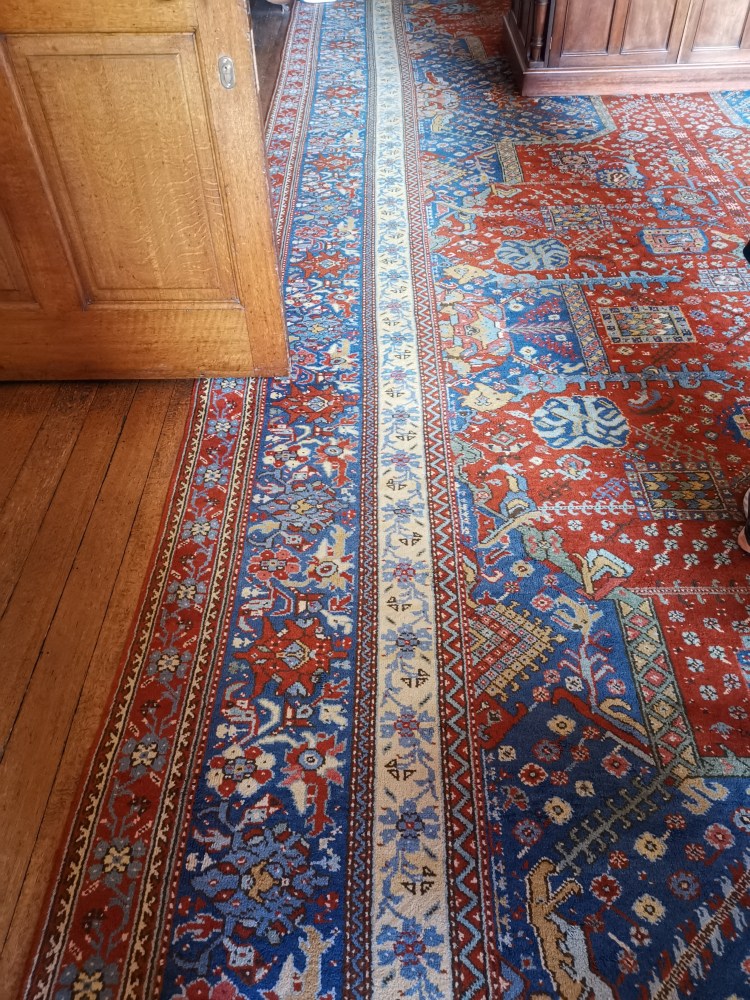
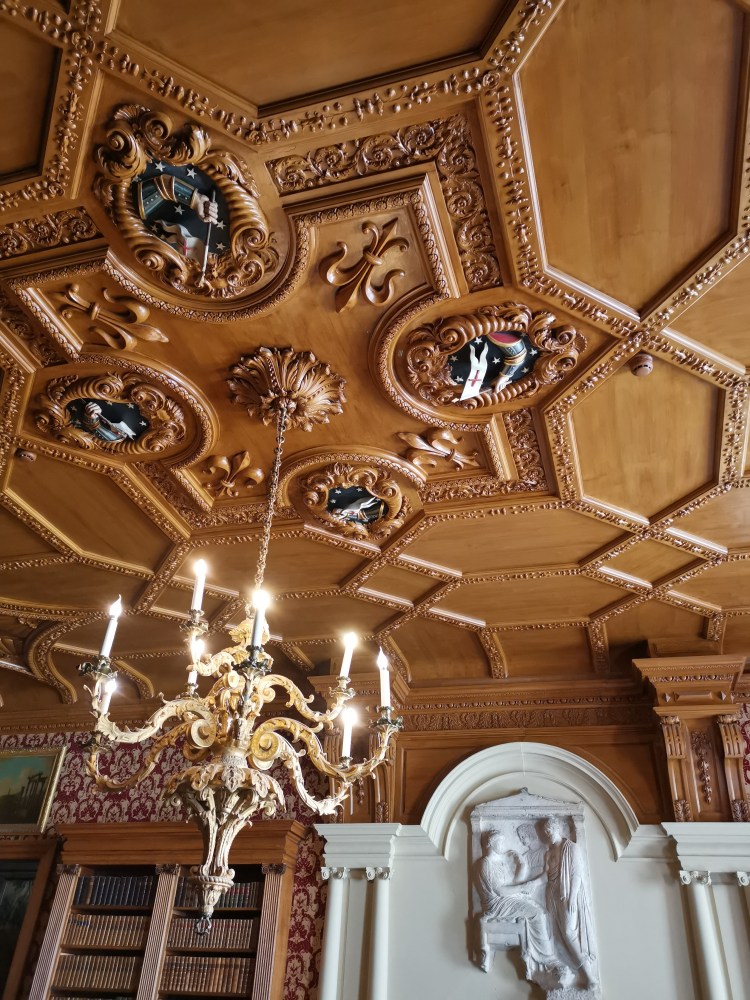
The Library has been carefully restored, with an exact copy of the original wall paper being obtained for renovating the walls. The wall paper was manufactured especially for the house and the pattern is now known as Lyme Park. The velvet upholstery on the seats was reproduced and even the carpet was replicated. It is hand woven and amazing that we were allowed to walk on it. The renovations have returned this room back to how it looked during the 1800s and were timed to fit in the returning of the Caxton Missal back into the house after it had spent time in a museum.

The renovations had been done really carefully and they bring the room back to life. However, it was the ceiling that really caught my eye. It thought it was carved wood. The guide explained that it wasn’t , it was painted plaster. So much timber had been used during the war (not sure which one during the 500 years), it was not readily available and plaster was much cheaper to use. The painting work really made it look like wood.

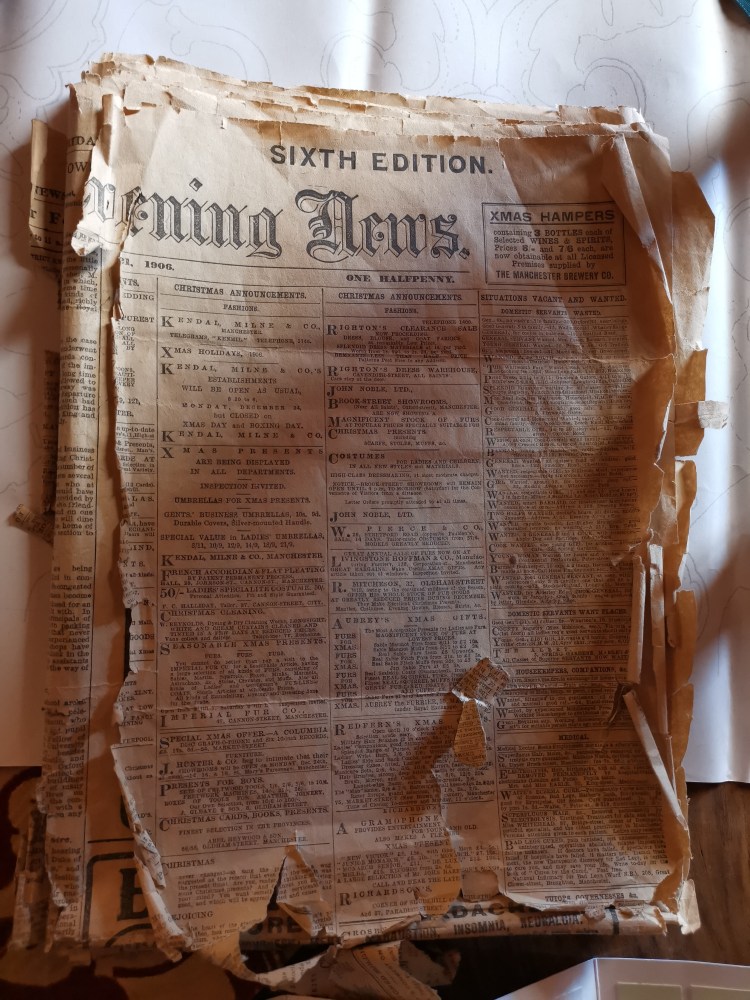
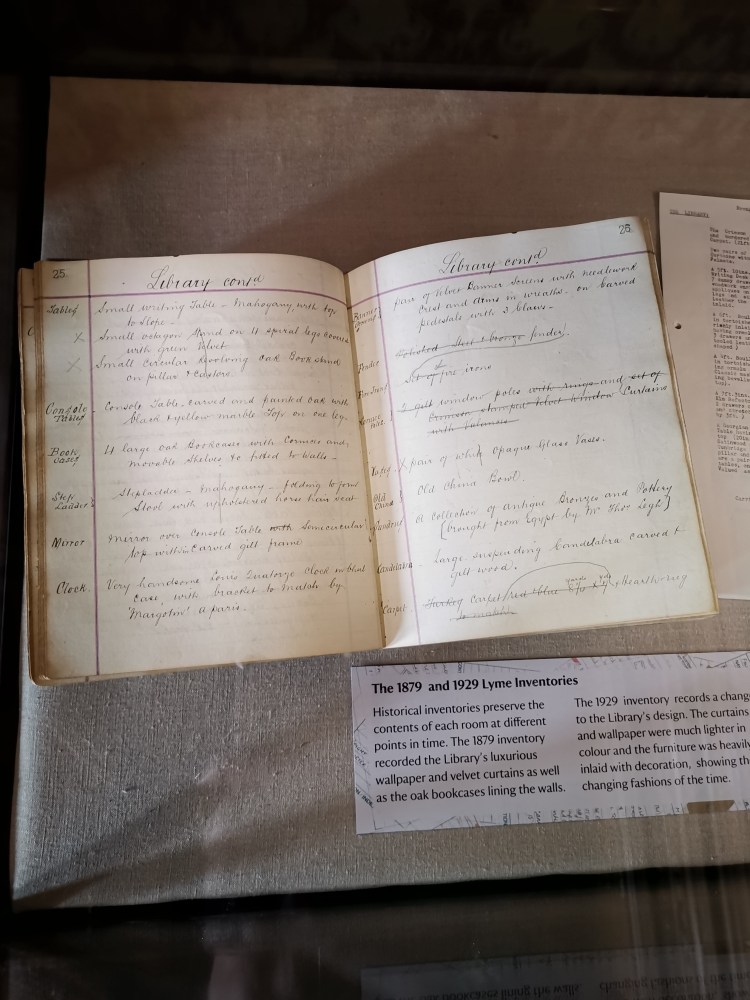
Other interesting things in the Library were a newspaper from 1906 and an Inventory book with a hand written listing of all the items in each room of the house.

Two of the books I discovered on one of the shelves (I didn’t touch them) were written by one of the ladies of the house, Lady Newton. To protect the books (and probably to make them easier to dust), a cover was placed over the top of them. It was a shame that there wasn’t the chance to spend longer in the house exploring and taking a closer look at the things in each room.

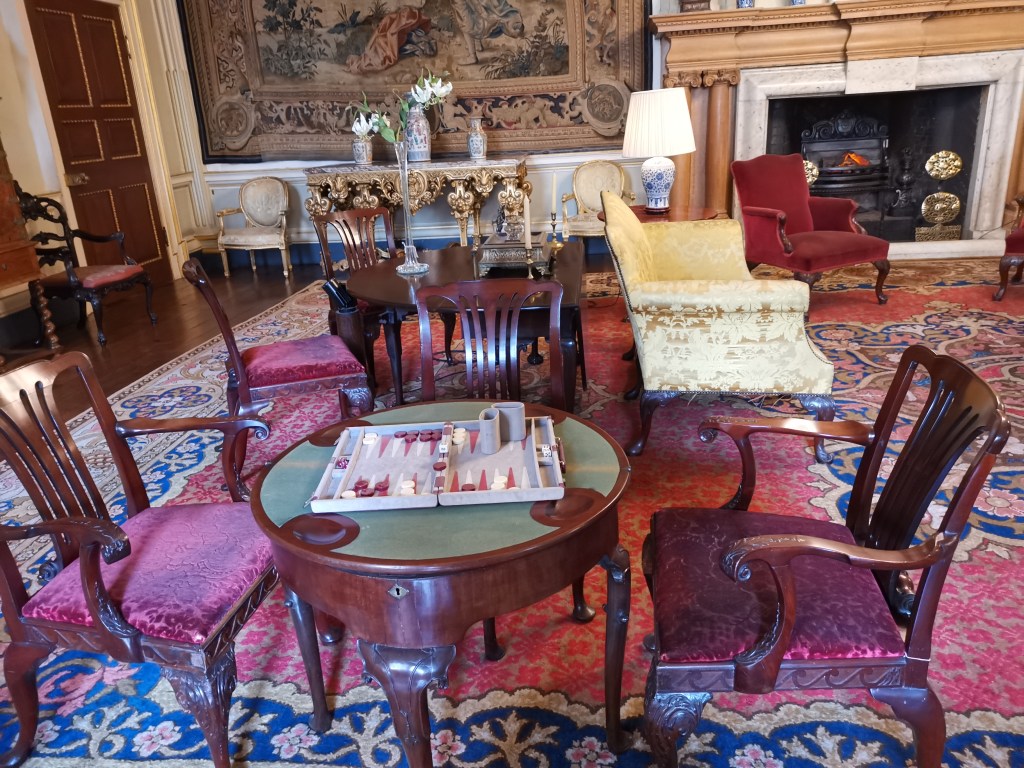
The next room on the tour was the Wyatt’s Dining Room. They had the table set up as it would have looked for a Christmas feast. The table could seat 20 around it, although there were less chairs at the table now, the rest of the chairs were stacked along the walls. There is so much intricate carving into the ceiling and walls, stemming from the 1600s. It certainly would have been a grand place for dinner.

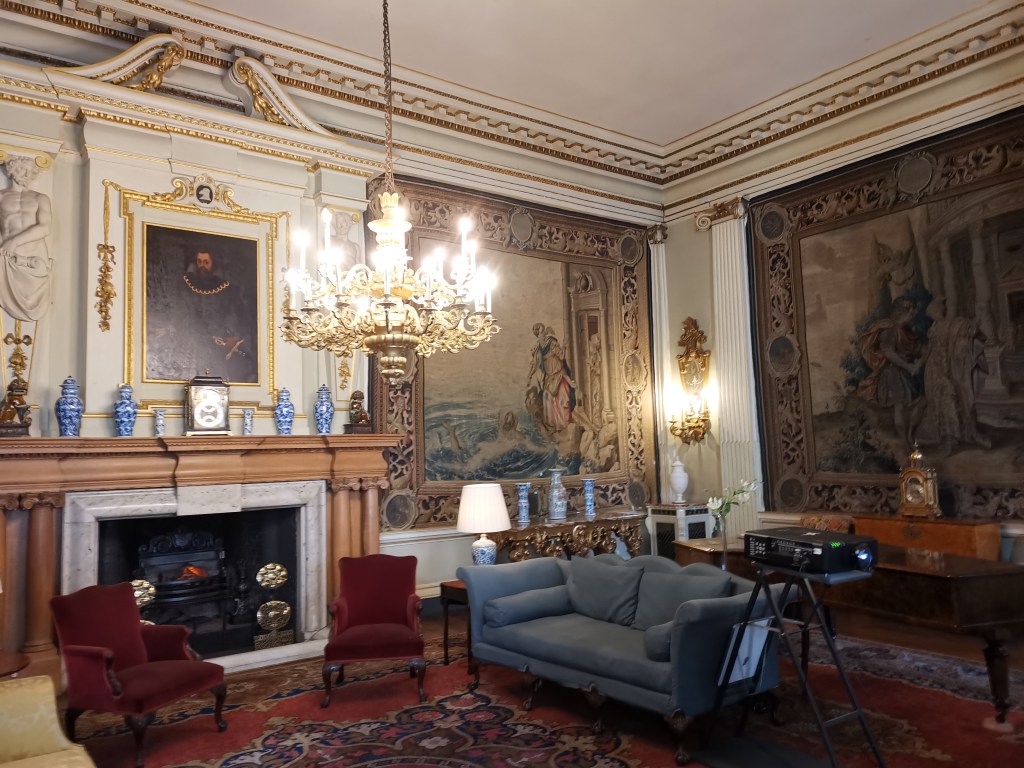
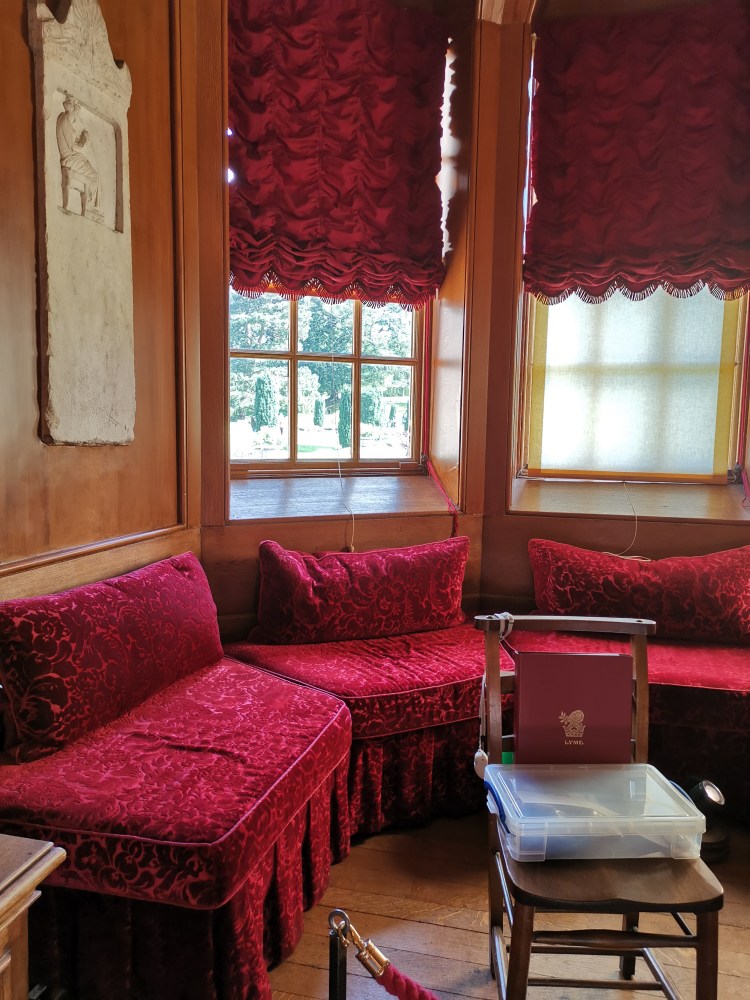
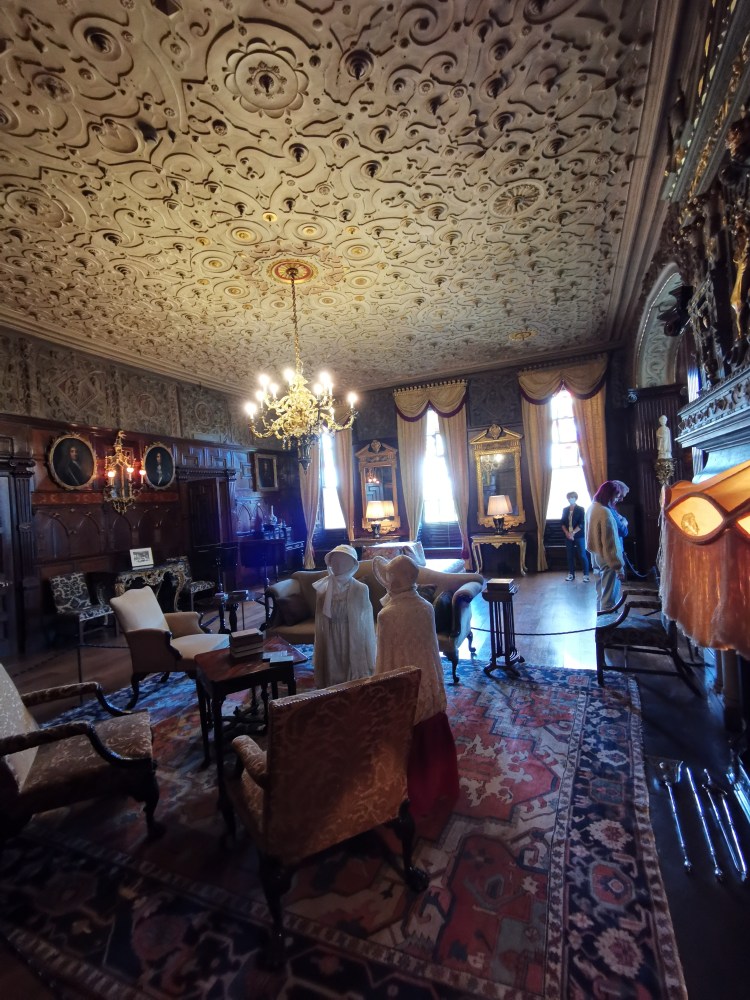
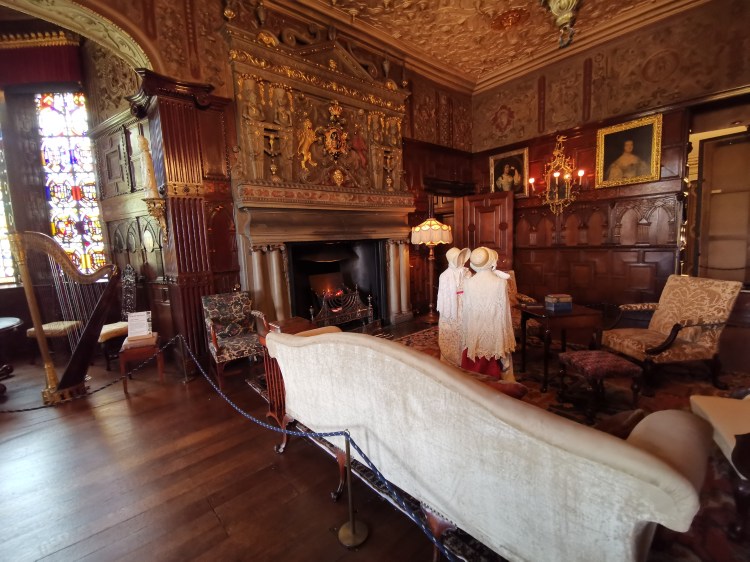
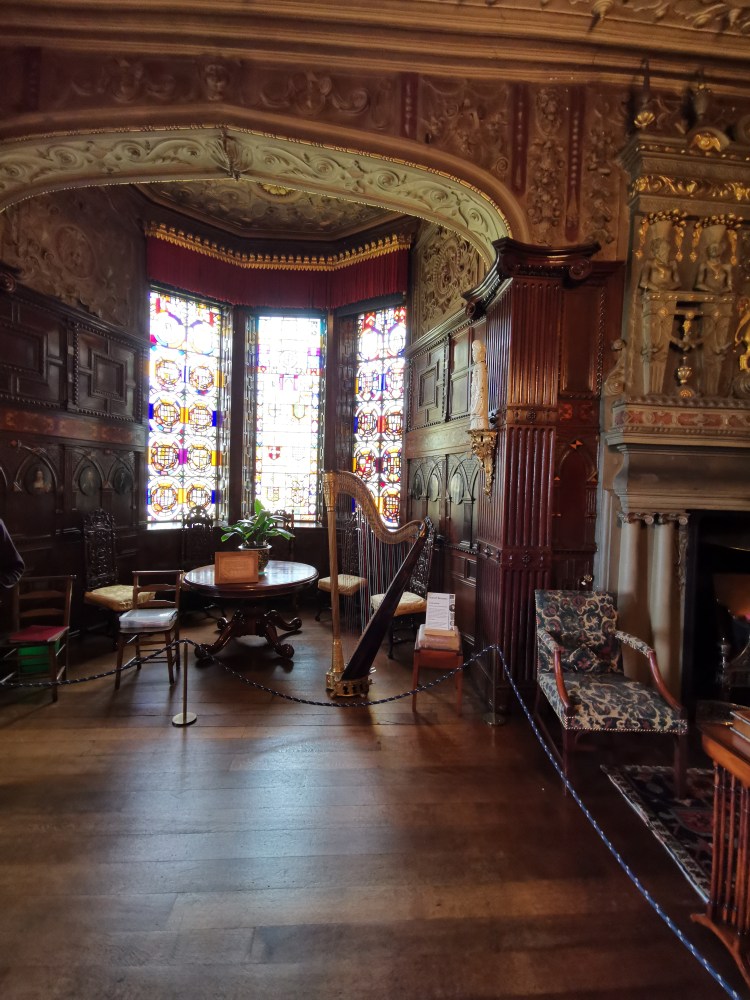
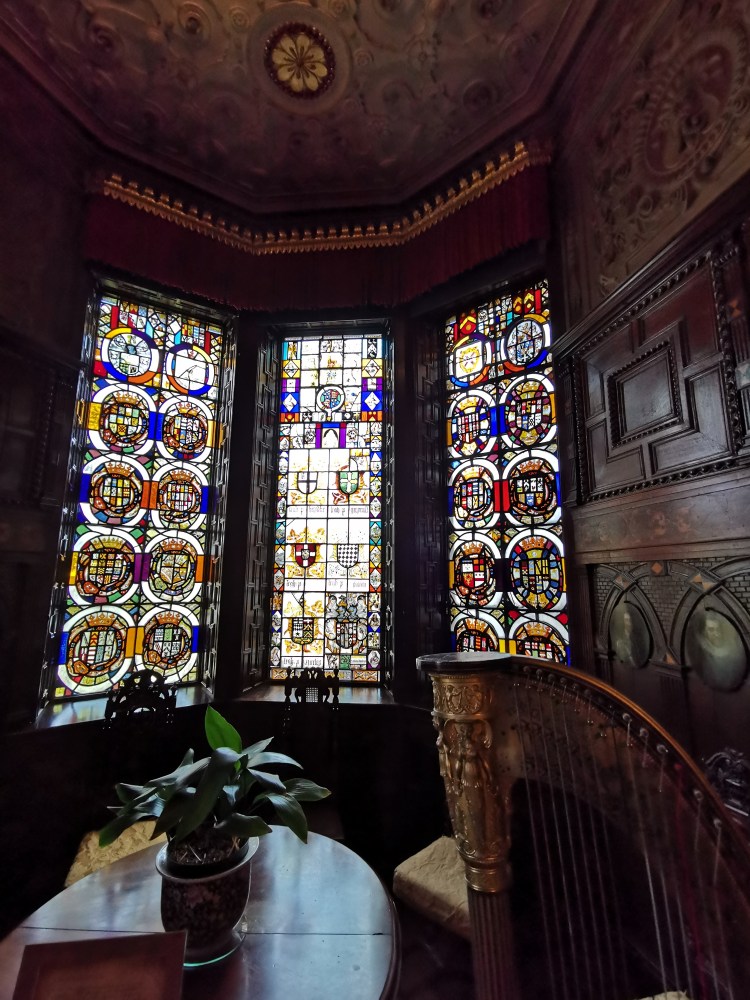
The next room was the Drawing room, where the guests could move to after dinner. It has a very ornate ceiling and fireplace with Elizabeth 1 crest above it. There was a lovely corner with stained glass windows that were originally in a church set up to appear that it was used to play a harp to entertain the guests. From this room, the painting in the Entrance Hall could be moved aside so that the goings on could be seen. I missed getting a photo of that.

This is the Stag Parlour with deer hunting scenes depicted and more of the painted ceiling to look like wood.

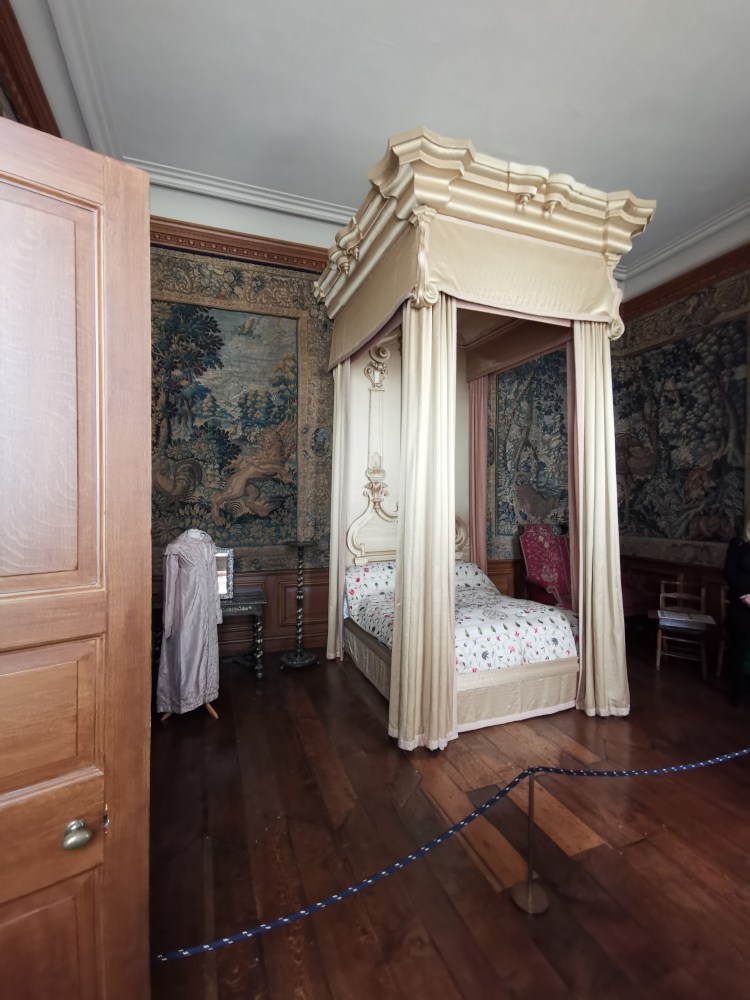
The last room we were allowed to go into was the “Yellow Room”, with its four post bed. The guide said that this could have been a guest room, as it was close to the Drawing and Dining room and there was also a smaller room next to it which they believed could have been a dressing room. The walls again were covered in tapestries.

Although there were a lot more rooms above this floor, we weren’t permitted to go upstairs and see them. But I think it was easy to see that this would have been a beautiful house for the family. The Trust had tried to keep each room as authentic as they could and having the handwritten inventory, stored in the library would have helped.

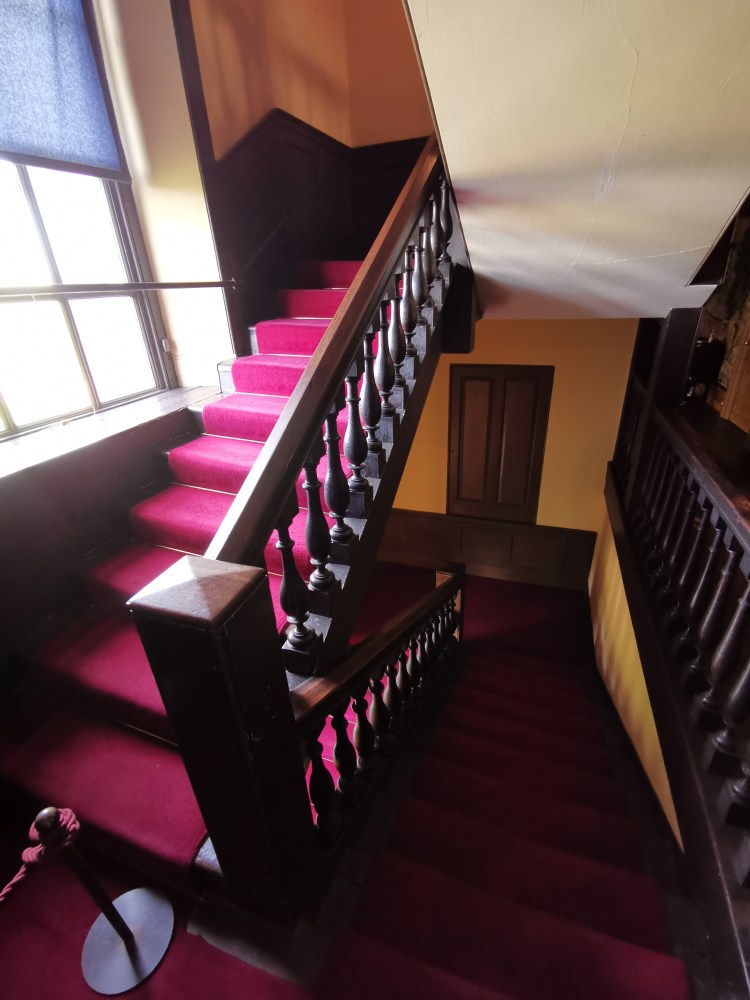
Time to go back downstairs. These stairs were pretty narrow, so I expect they were probably a back entrance/exit and returned us back down into the courtyard area.

There are a few buildings around the property, so it was time for Snow, Fin and I to stretch our legs and enjoy the fresh air as we went exploring. So we left the house behind and started climbing the hill.

We walked up to the Stables, but unfortunately we weren’t able to go in for a look as it is a working part of the estate.

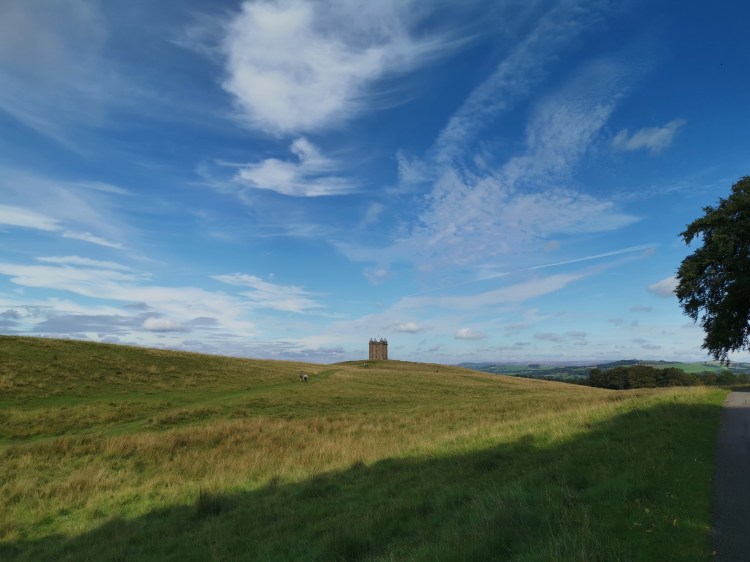
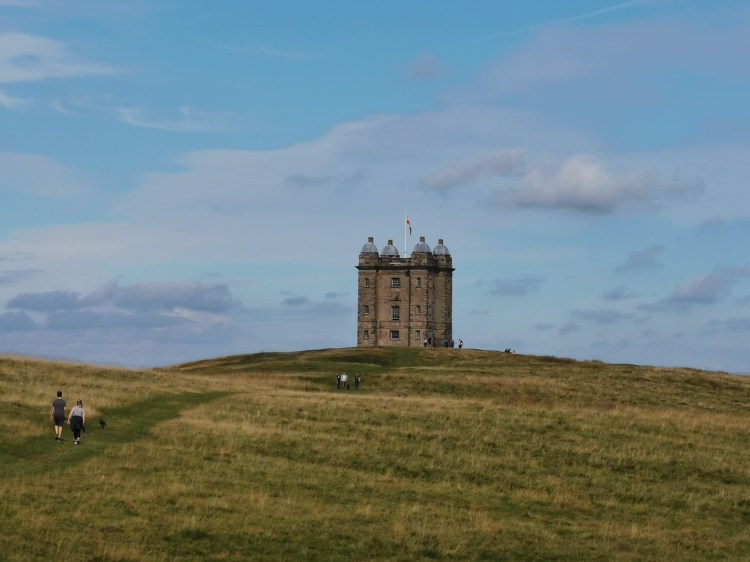
We continued up the hill and could see the Cage in the distance. I wasn’t sure if I could walk directly up to it, as the way was quite steep, so we side tracked along the Stables wall, which gave Fin and Snow time to have a play on old gate.

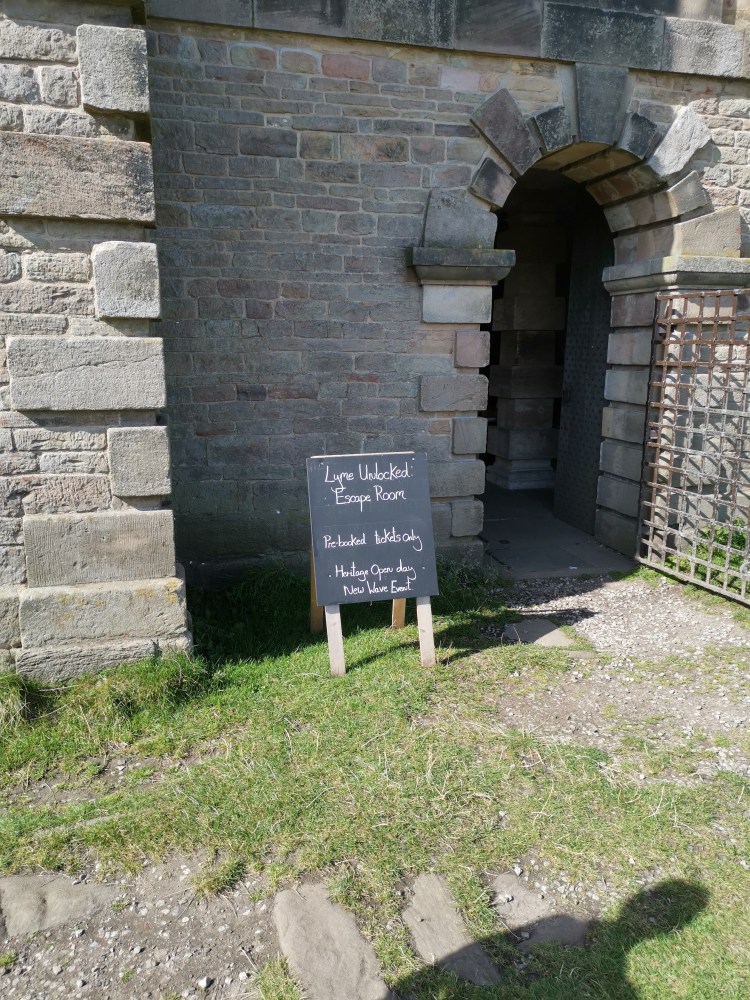
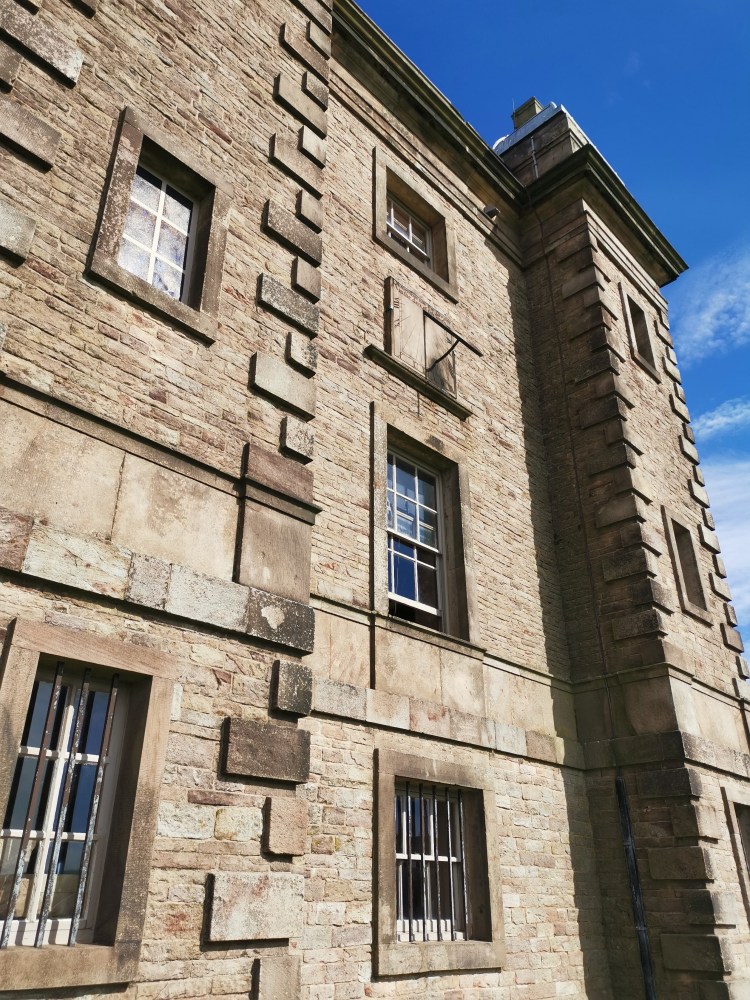
Time to tackle the walk to the building in the distance and I managed it ok. Unfortunately we weren’t able to go inside The Cage, as it was being used for an Escape Room experience. It seems The Cage was used as a hunting lodge, a place for the ladies to watch the hunt and may also have been used as a prison to hold poachers who were caught with the estate’s deer. There are red deer on the estate, but I didn’t go in the right direction to see them as they are up beyond the house.

The view from up on the hill is of Manchester. So I sat on the grass alongside the tower to see if I could pick any landmarks. I think it is a bit soon to recognize any, but it nice being up high. There were quite a few family groups up by The Cage also sitting on the grass and others setting off on to hike further afield.

I decided it was time to walk down hill and beyond the house and the carpark to see The Timber Yard, which is tucked down in the valley. The map indicated there was a café there in what was the carpenters workshop. Walking down hill was much easier than up hill. I didn’t need Anne and her buggy to help.

Beyond the carpark was the area alongside The Timber Yard, which was a nice setting for a picnic.

The Timber Yard was quite busy, especially the café, so I didn’t stay long in the courtyard and headed back to the carpark.

It was a lovely outing. A nice drive in my car to a lovely historic location to see so much history that is close to where I now live. I am looking forward to being able to discover more gems with the National Trust. I have signed up and my welcome pack will hopefully arrive in the next few days. I am going to try to get my £72 worth of entrances and car parking over the next 12 months (the membership).

I wonder where I will go next.

Connecting with Nature

5th September 2021

As you know, I love being around nature, especially in the garden. Our garden in Adelaide gave us so much joy. It didn’t matter whether it was sitting out in it with John and Angel, or if I was digging or planting in it, I found the garden as a place of peace. I would feed the birds and give them a fresh bath water to play in. I would talk to the plants and look for signs they needed help or were doing well. I loved seeing the shadows cast by our big Lemon Myrtle tree making dappled light. I loved to see the rainbows in the water spray when I hand watered. I loved to create new spaces in the garden with John.

It was very tough to say goodbye to the garden that I had loved for 40 years, since moving into John’s house on 3rd March 1981 and making it our Harmony House. Now that garden belongs with another couple.

Here in Manchester, I don’t have my own garden, yet. I hope that I will get another home I can make into my garden haven. But in the mean time Natasha and Mark are ok with me spending time in their garden.

Living busy lives, they aren’t able to spend as much time as John and I did in ours. But it is a lovely space. Big patch of grass for Alex to run around in. Two different types of apple trees and some pots with roses or small buses in them.

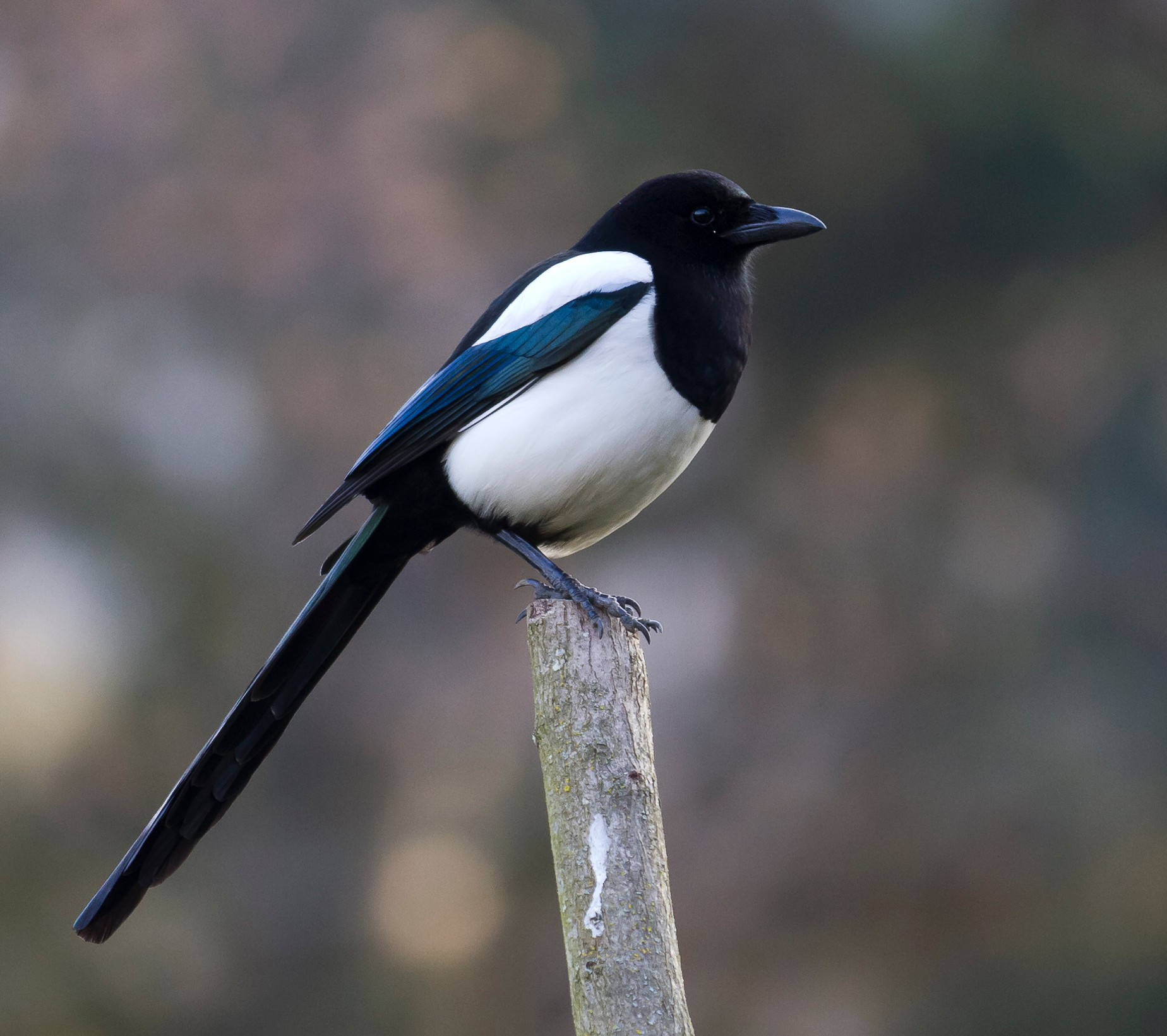
Their garden gets English Magpies, small birds and grey squirrels visiting. There are also a few cats who come into the garden. Jessie, who is the family tuxedo cat, is an indoors only cat, watches the visitors to the garden through the windows.

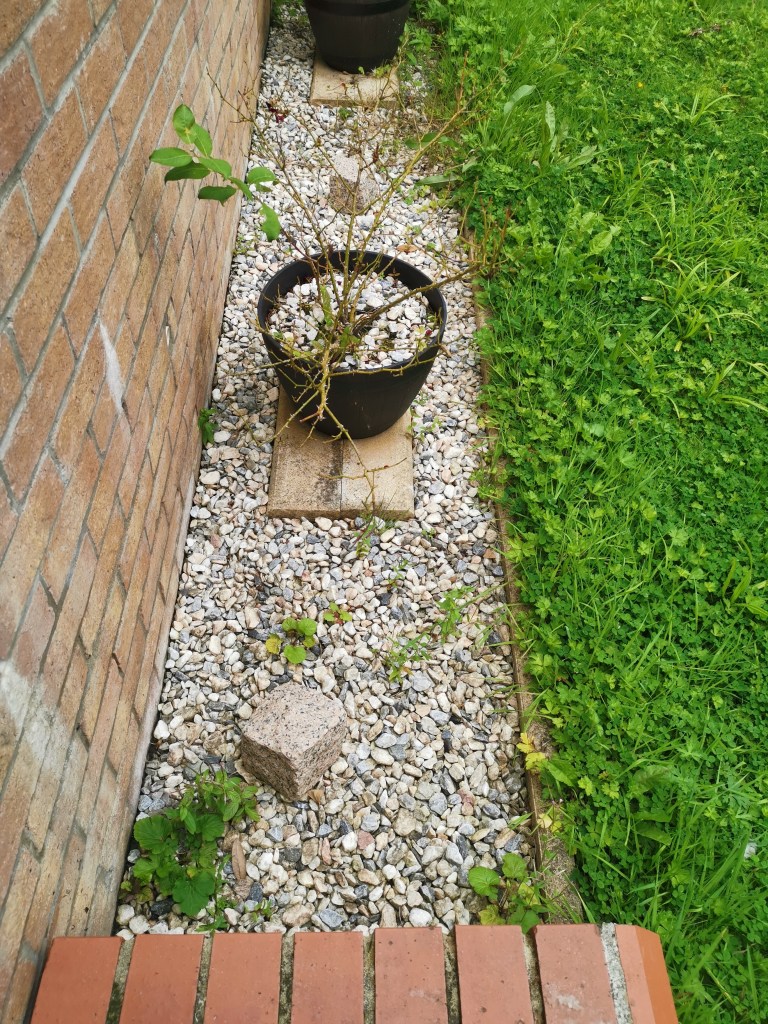
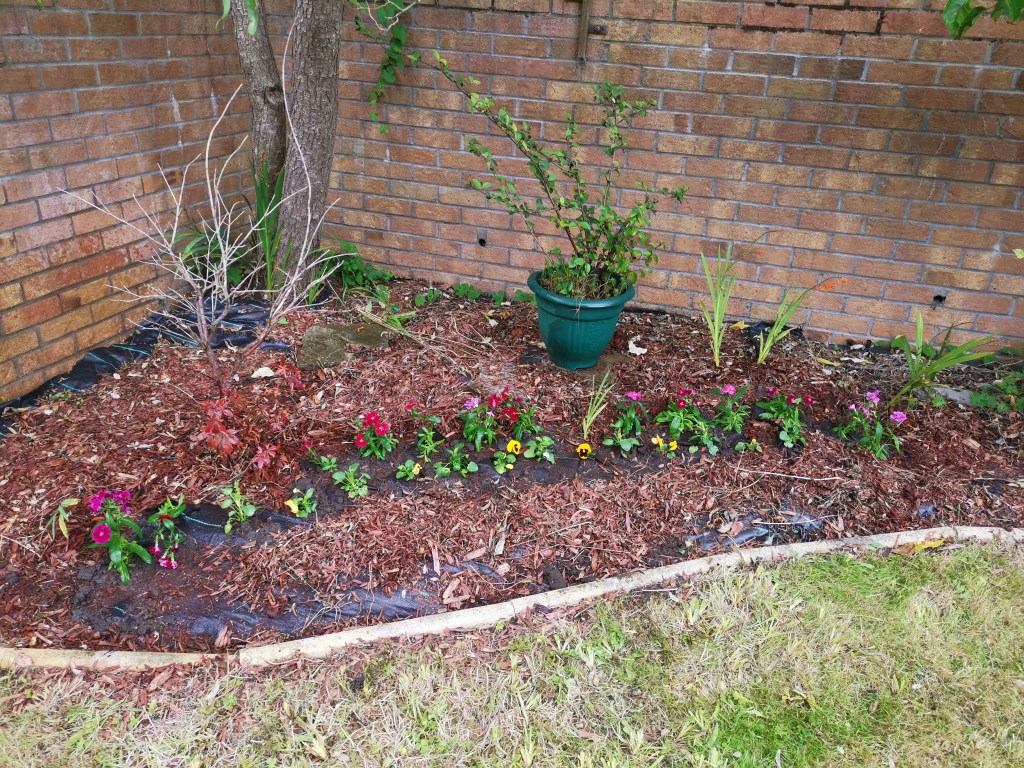
I started my UK gardening experience by pulling out weeds. Nat and Mark lay down week mat and it works really well, except that opportunistic weeds will grow wherever they can and aren’t too fussy if all there is available is stones or bark mulch. They were very easy to pull out because the roots were all very shallow.

Unfortunately, I my knees didn’t like me either squatting down or kneeling to weed. So I couldn’t get it finished. But I told myself, I don’t have to finish it in a day. The patches I had done looked ok. I also trimmed back a couple of the roses, to neaten them up. It is hanging on to still be like summer here, so too early to prune the roses or move the pretty bulbs that Nat would like to see in a raised garden bed. Mark mowed the lawn the next day, so it looked nice.

I asked if I could get some flowers to put in the garden, just something that was bright and colourful. Mark took Alex and I to the stores that have a garden centre – B&M and B&Q. B&M is a bit like an everything shop. You can pretty get most items you need for the home from them. So a bit like Australia’s Big W or KMart without the clothing. B&Q is the DIY centre, perhaps like a Mitre 10 store as the range is not as extensive as the big hardware store Bunnings is.

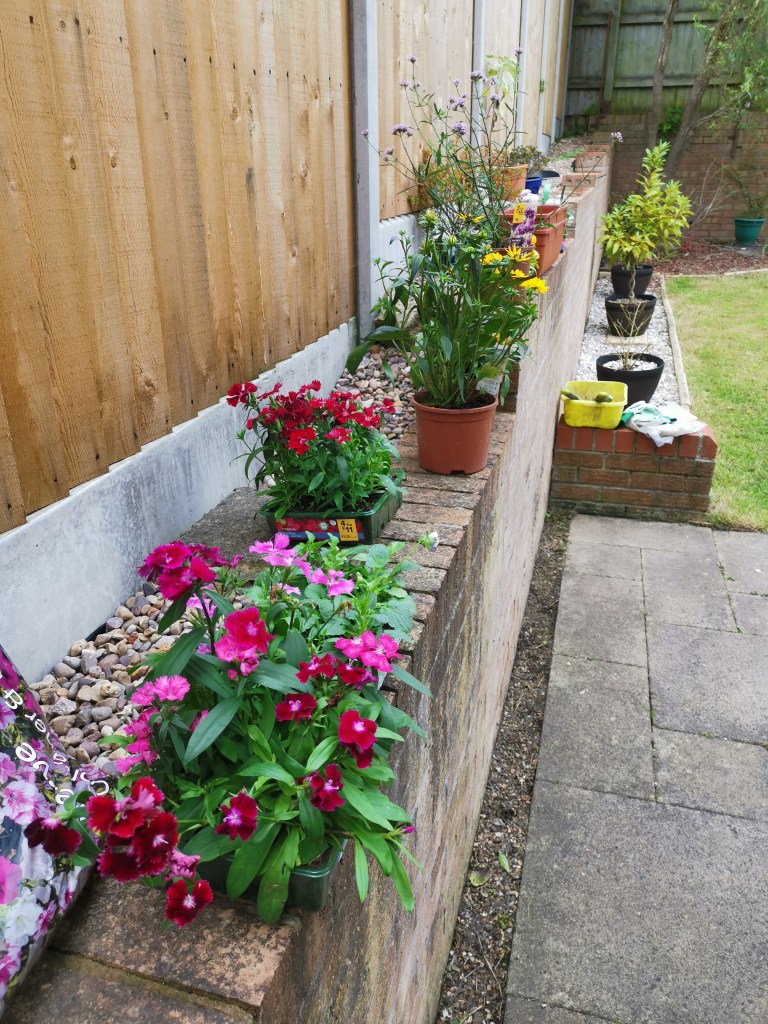
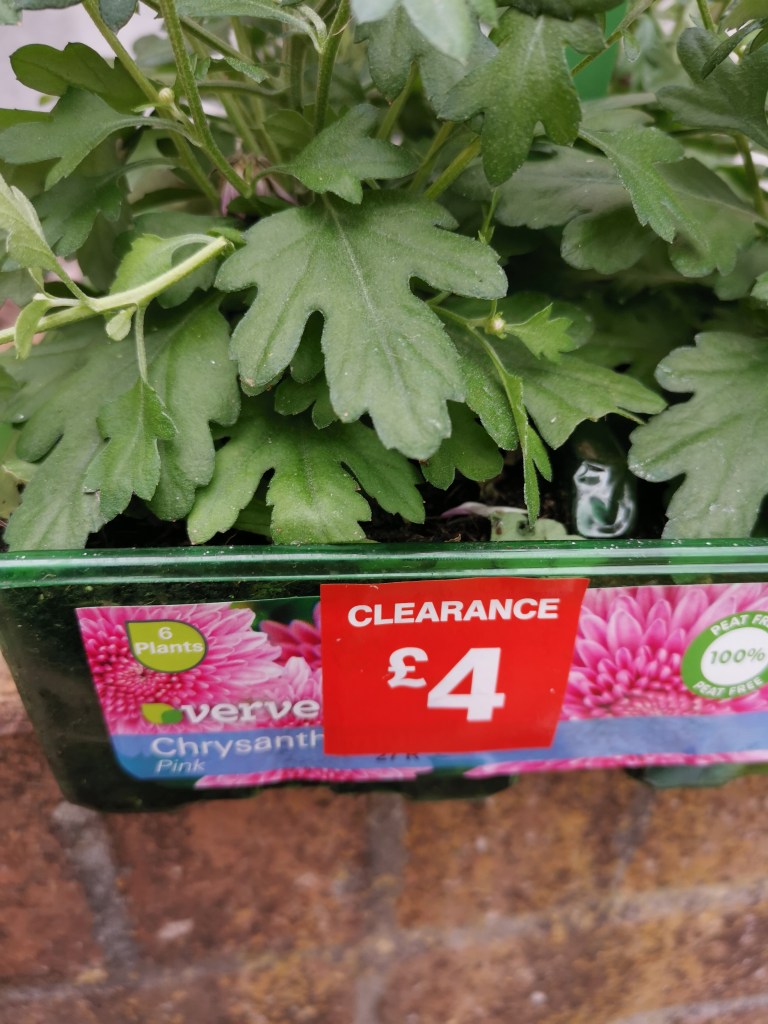
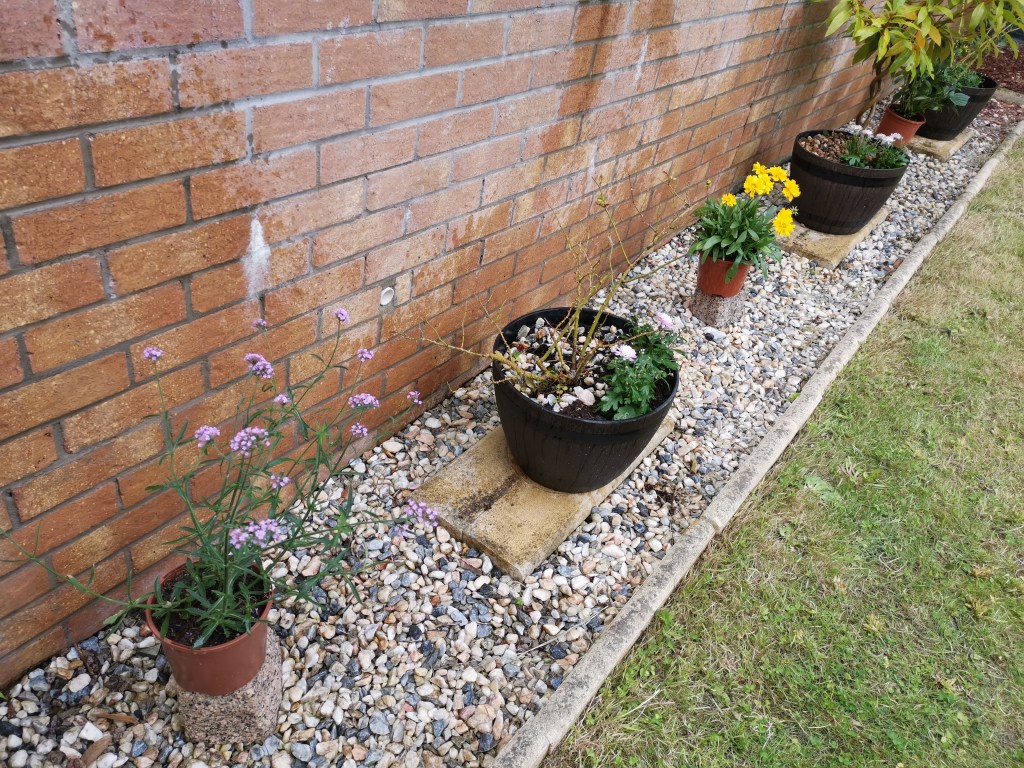
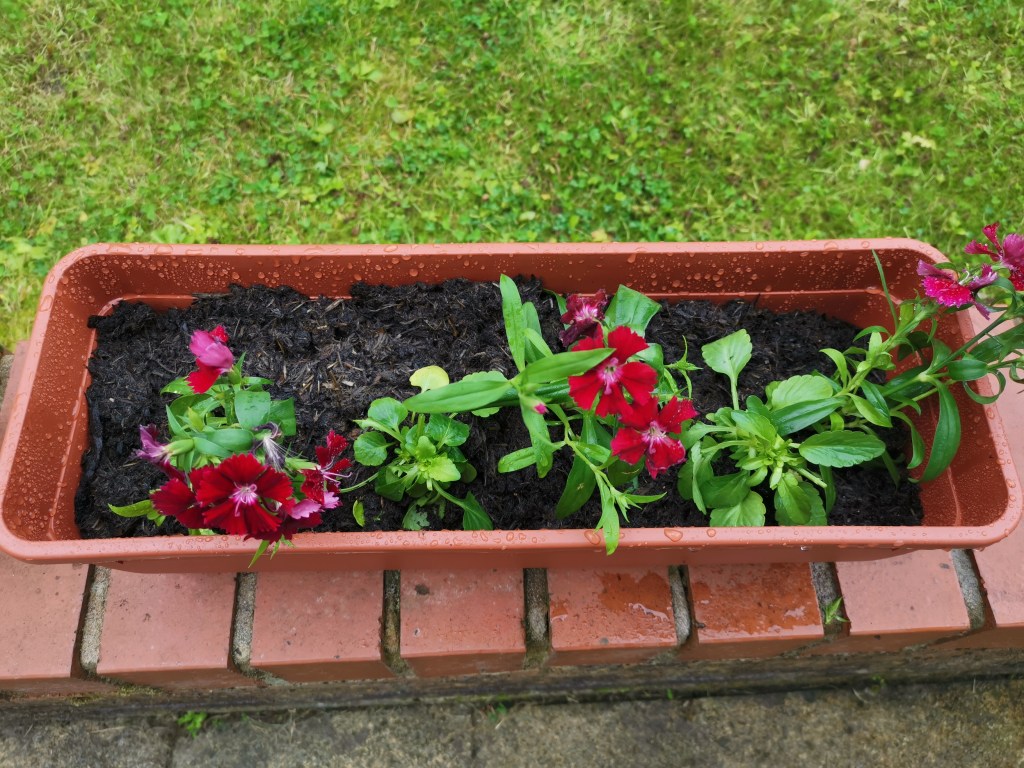
Mark said that it was not unusual to go to one store and then to the other one, as often you can’t get everything you need. Luckily, the homemaker centre had both stores there. I hoped to find some simple to grow plants and some pots. I managed to find pansies, yellow and mixed, some Dianthus in mixed colours and some Chrysanthemums that were going out cheaper because they were in need of TLC. I also found some potted flowers that are ideal for bees and butterflies. There is a purple Verbena, a bright yellow Coreopsis and a Rudbeckia daisy. The three pots were 3 for £15 or £6 per pot and the punnets were multipacks. I also bought potting mix, two small rectangular pots, a set of secateurs. I was quite happy with my collection of colourful things.

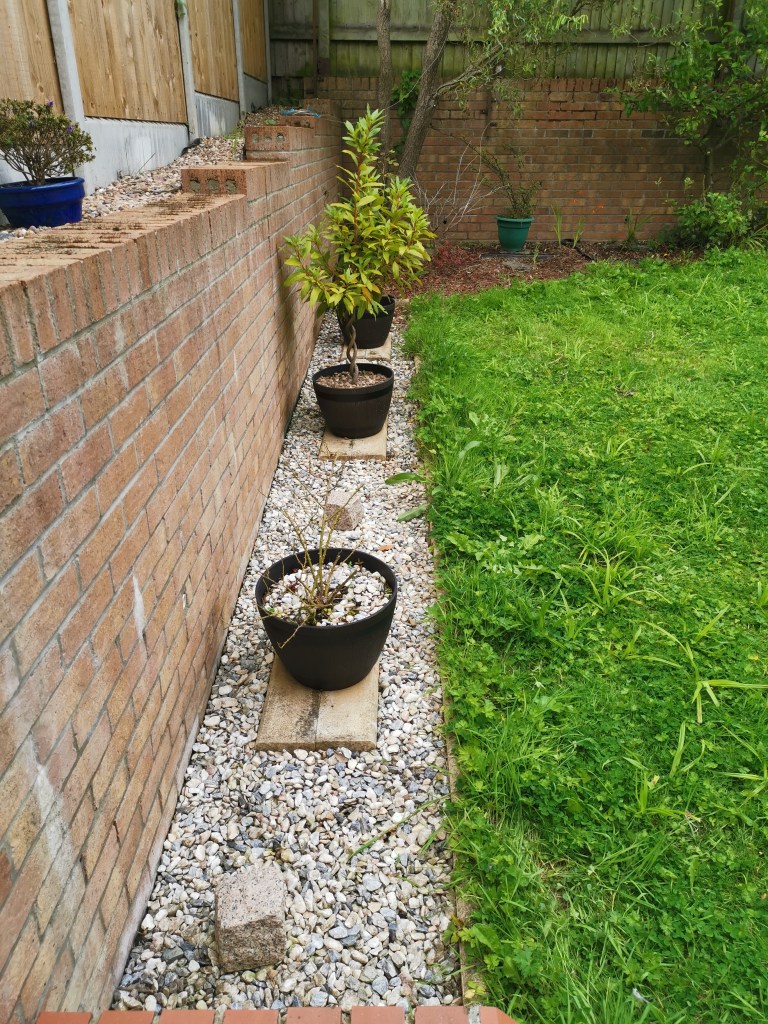
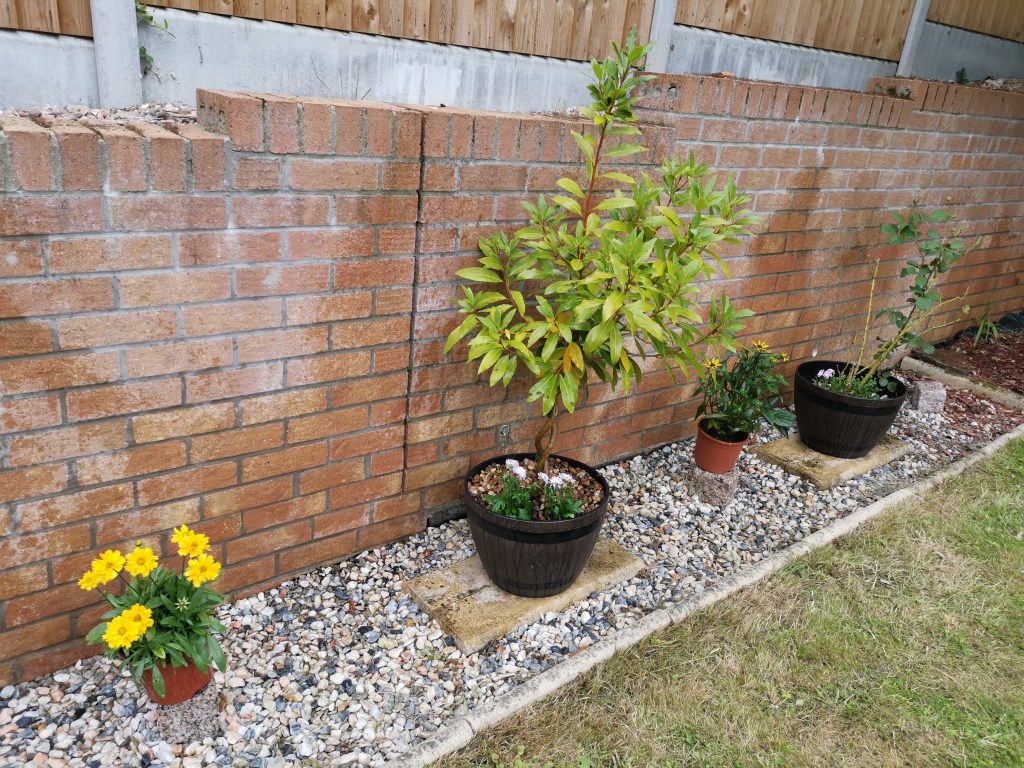
Once home, (that sounds lovely), I happily planted the seedlings into the rectangle pots, in the existing pots with the roses and little bush and also in the garden where I had weeded. I had to make holes in the weed mat to put them into soil, so hopefully they will grow ok. I also I placed the new bee and butterfly plants between the existing pots.

The plants in the pots I want to grow so I can teach Alex how to look after plants and watch them grow. So they are down at Alex height on a wall.

I like looking out the kitchen window and seeing the sweet and welcoming little flowers.

Fingers crossed everything survives.