Chatsworth House Celebrates Christmas

2 January 2022

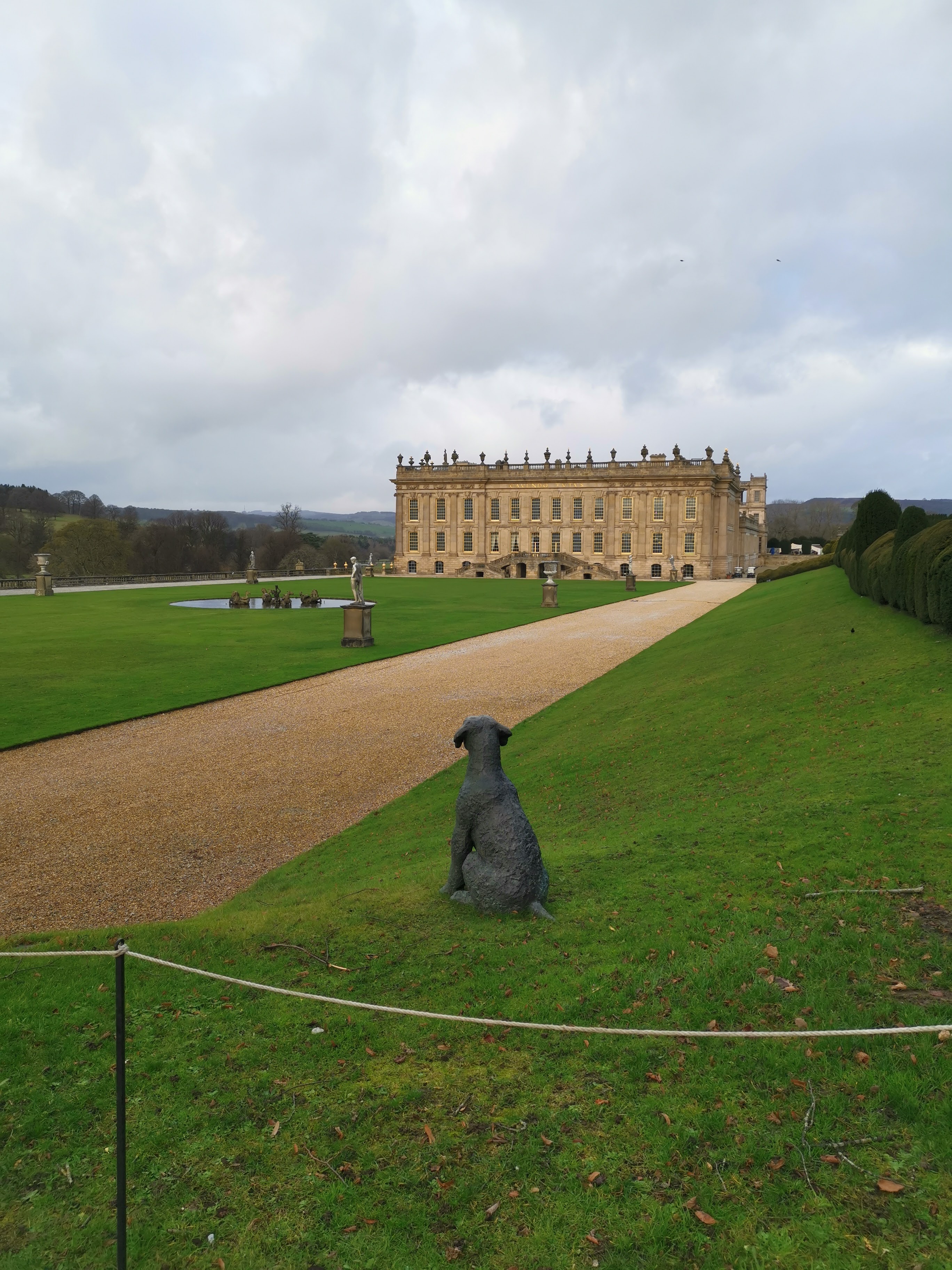
Following our recent visit to the Dunham Massey Estate for their Christmas Trail Event, we booked to visit Chatsworth House. This was to see the Christmas decorations in the house and explore the gardens. Chatsworth House is near the town of Bakewell in the English Peak District, so not far from Manchester.

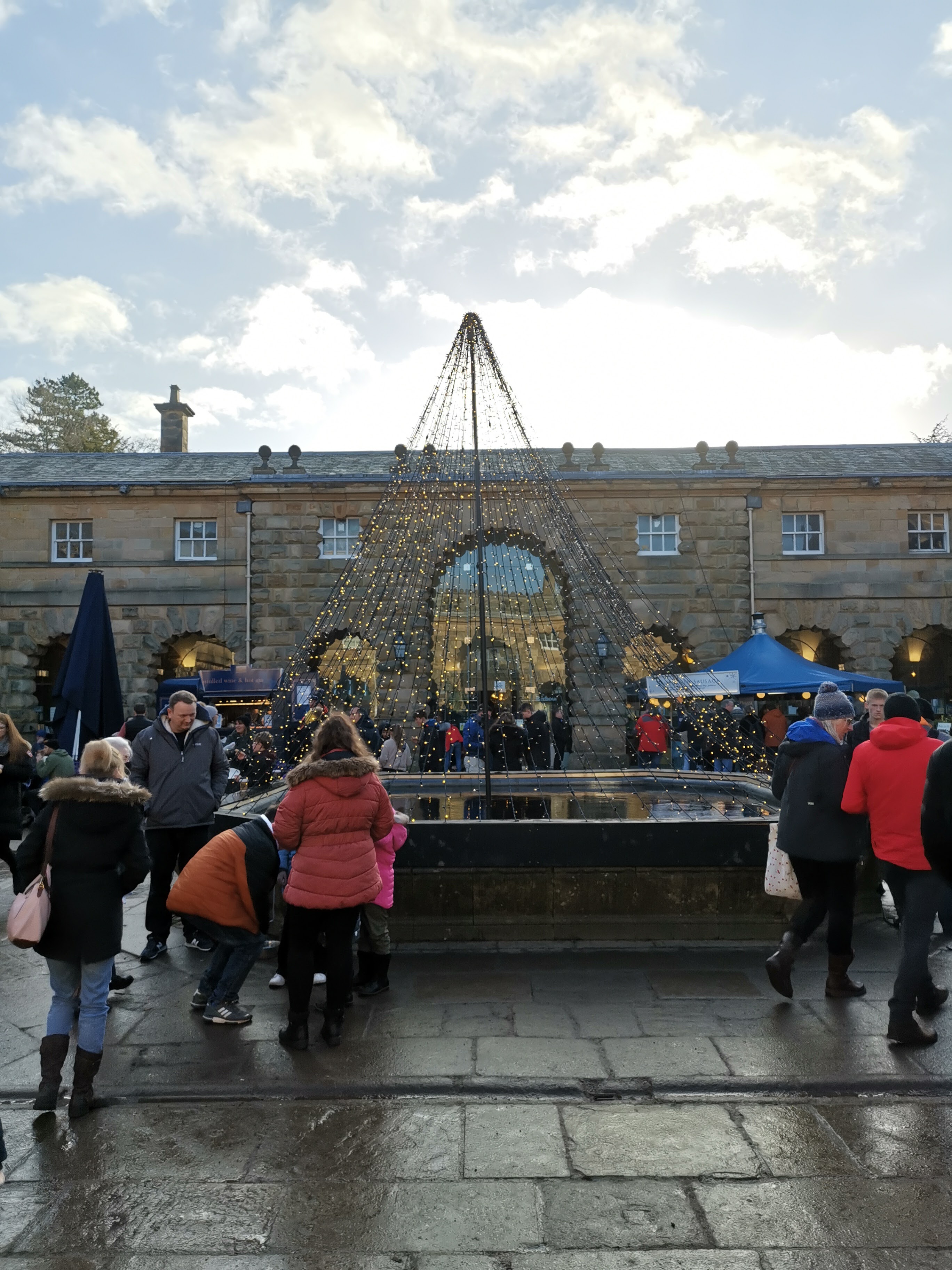
We entered the house via the gates between the lit columns.
The side of the house where a cafe was serving hot drinks under the marque.
The private garden area, not accessible for us to visit

Chatsworth House is home to Peregrine Andrew Morny Cavendish, the 12th Duke and Amanda Carmen, the Duchess of Devonshire. This home has been passed down through 16 generations of the Cavendish family and some sections of the house are open to tourists.

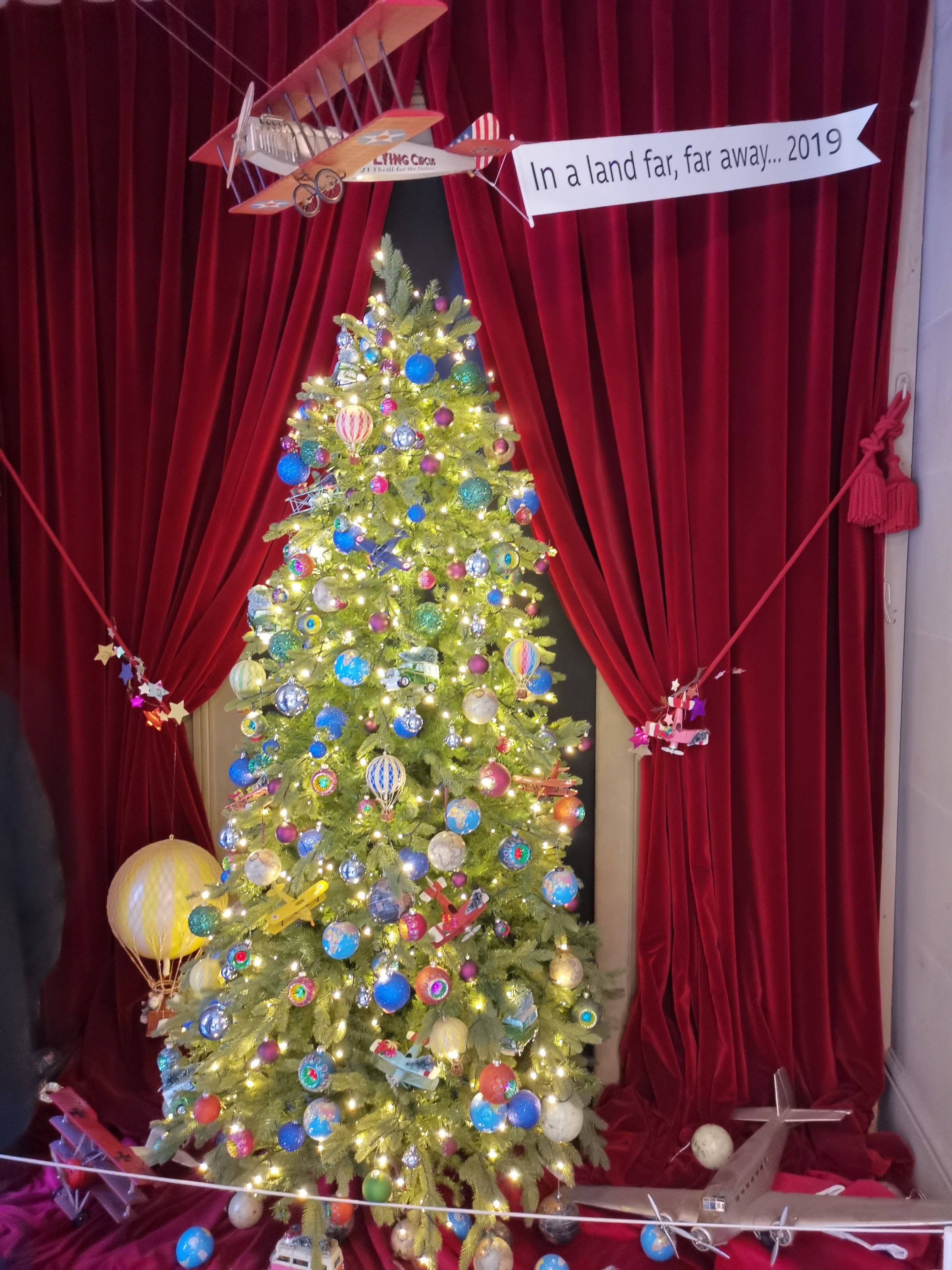
Our tickets to visit the house and garden included being able to explore a number of rooms in the house, being guided through these on a walking trail. These rooms had been decorated for Christmas celebrating the Christmasses of the past 20 years that the house has been open for visitors.

Due to COVID19, it was necessary to book online a time slot for our visit. We were required to arrive on time to assist in controlling the number of people in the house at any one time. We were also required to sanitize our hands and wear our masks the whole time inside the house.

The mansion is amazing, even forgetting the Christmas displays. Every room we visited was decorated grandly. From painted ceilings and walls, portraits of family members, artworks, sculptures and tapestries, Chatsworth contains works that span 4,000 years, from ancient Roman and Egyptian sculpture to painted masterpieces by Rembrandt. The house is full of the history of the Cavendish family and their love of fine things.

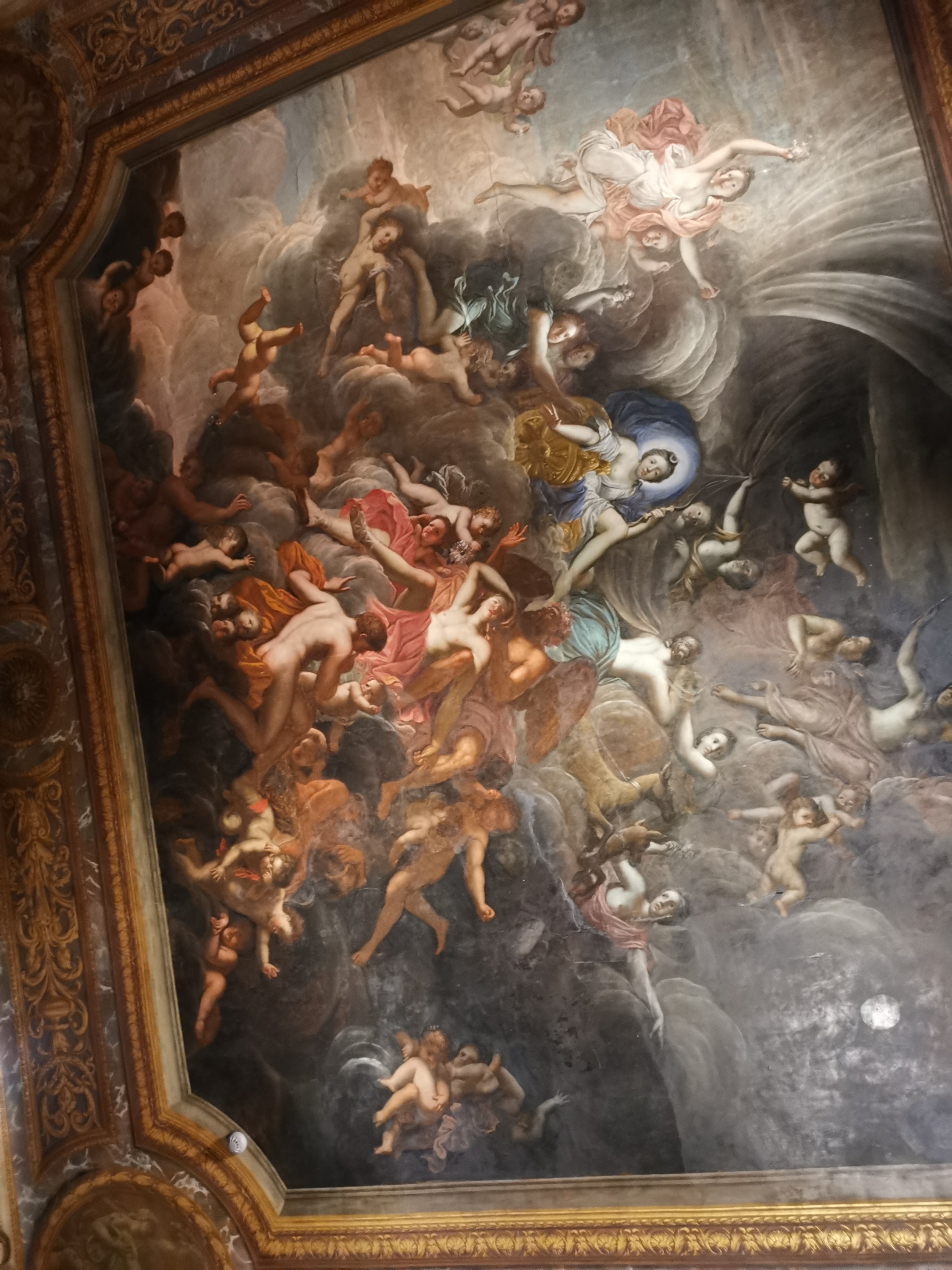
We started our visit in The Painted Hall which welcomes guests as the entrance to the house. It was built by the 1st Duke of Devonshire, William Cavendish in the 1600s. The ceiling is amazing, as is the very grand marble staircase.

From the top of the marble staircase, we were guided through different rooms that the current Duke and Dutchess had opened to the public. Anywhere that was off-limit, was roped off or the doors were closed. In each room, we could visit, there was a guide to tell you about it if you had any questions.

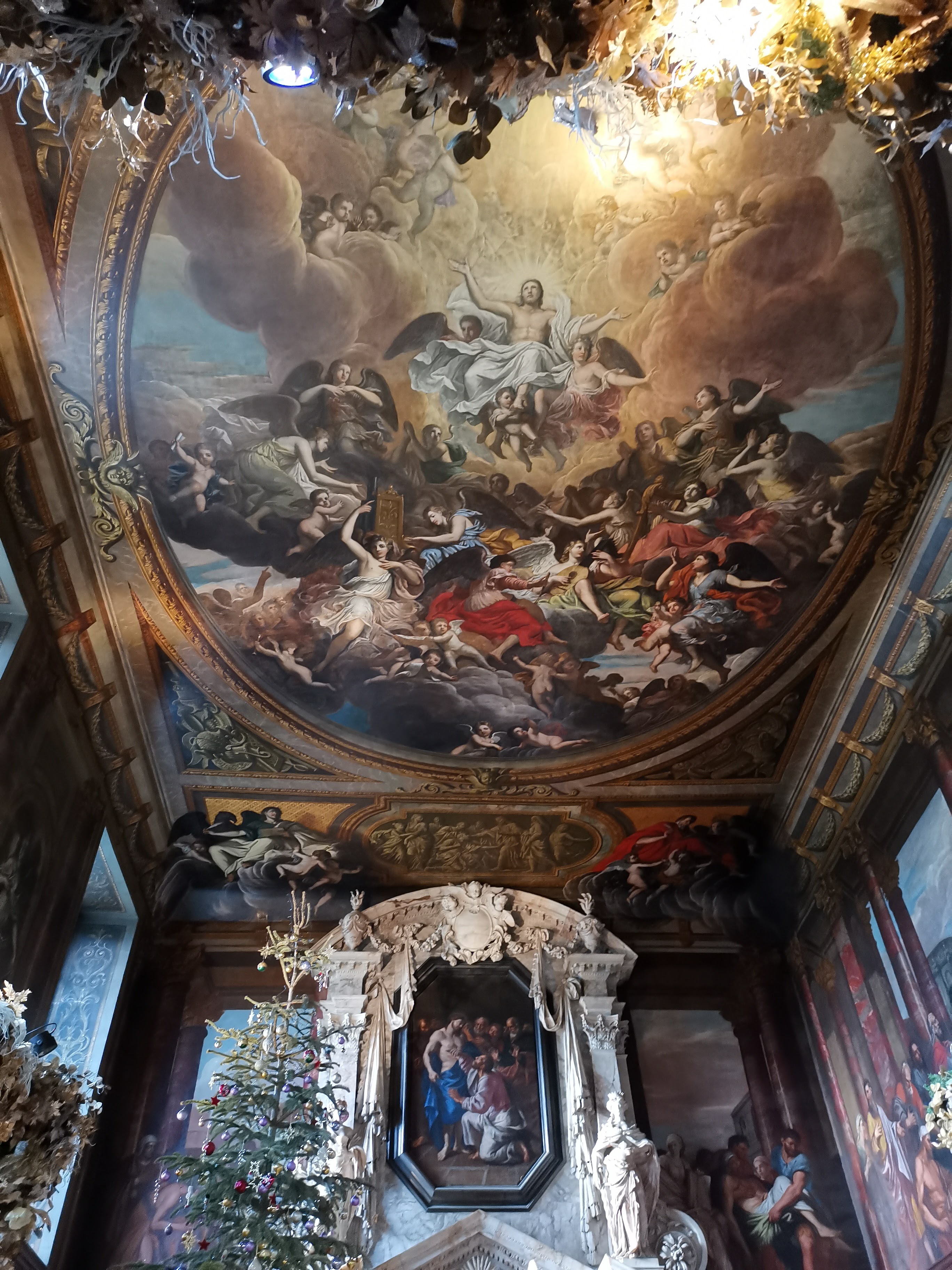
The next grand room was the Chapel, it was also designed by the 1st Duke and remains mostly unchanged since it was built in the 1600s. It was decorated for Christmas with a mechanical music box with a dancer from the Nutcracker and a very tall Christmas tree. The ceiling and walls have scenes from the bible.
Looking out the window it was possible to see the courtyard, which they had covered in “snow” – although I don’t think it was real, it certainly looked effective. There was also snow falling.

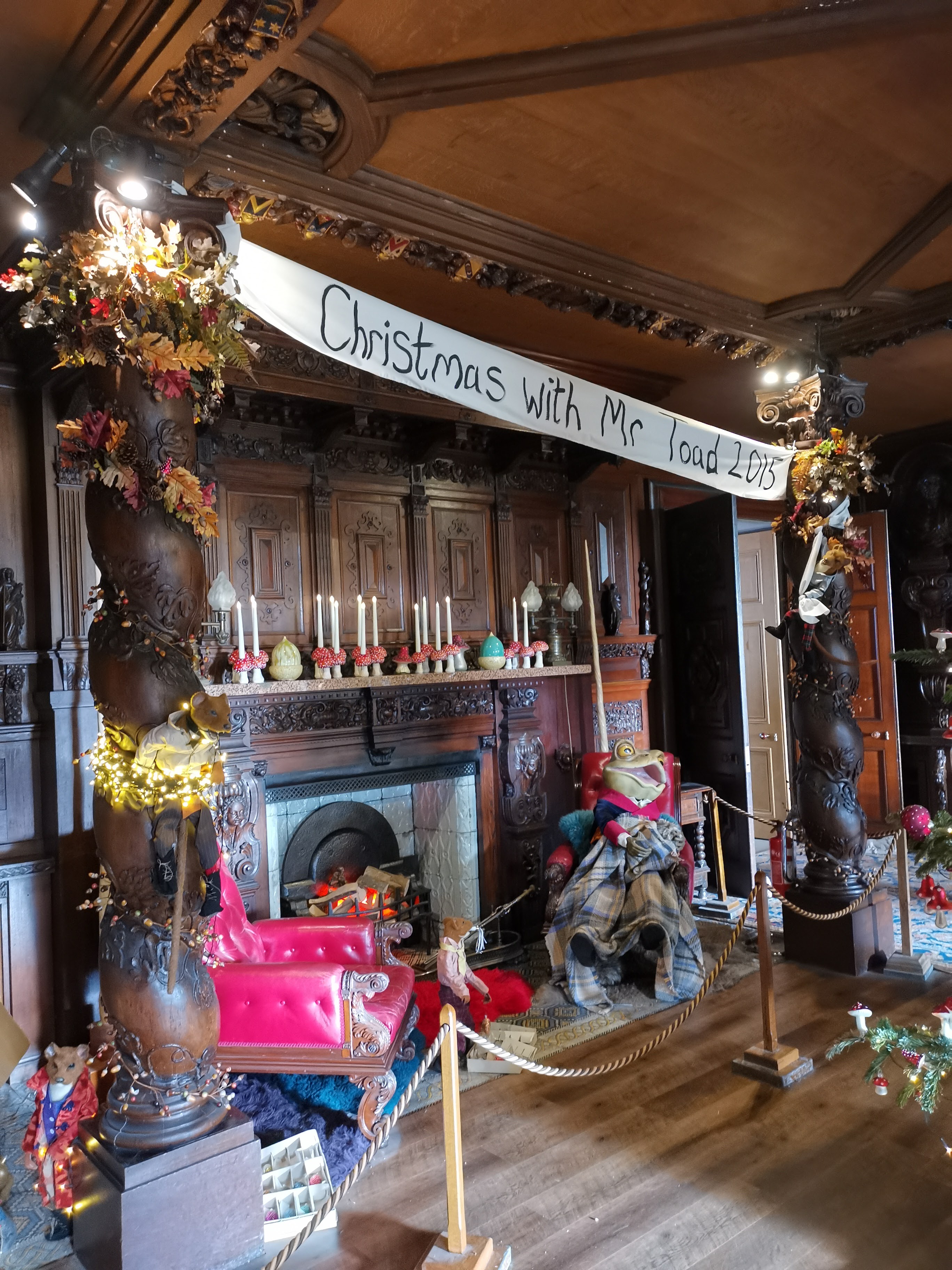
On a previous Christmas (2015), the next room was decorated with a Wind in The Willows theme, so they recreated it, including a very large Mr Toad.
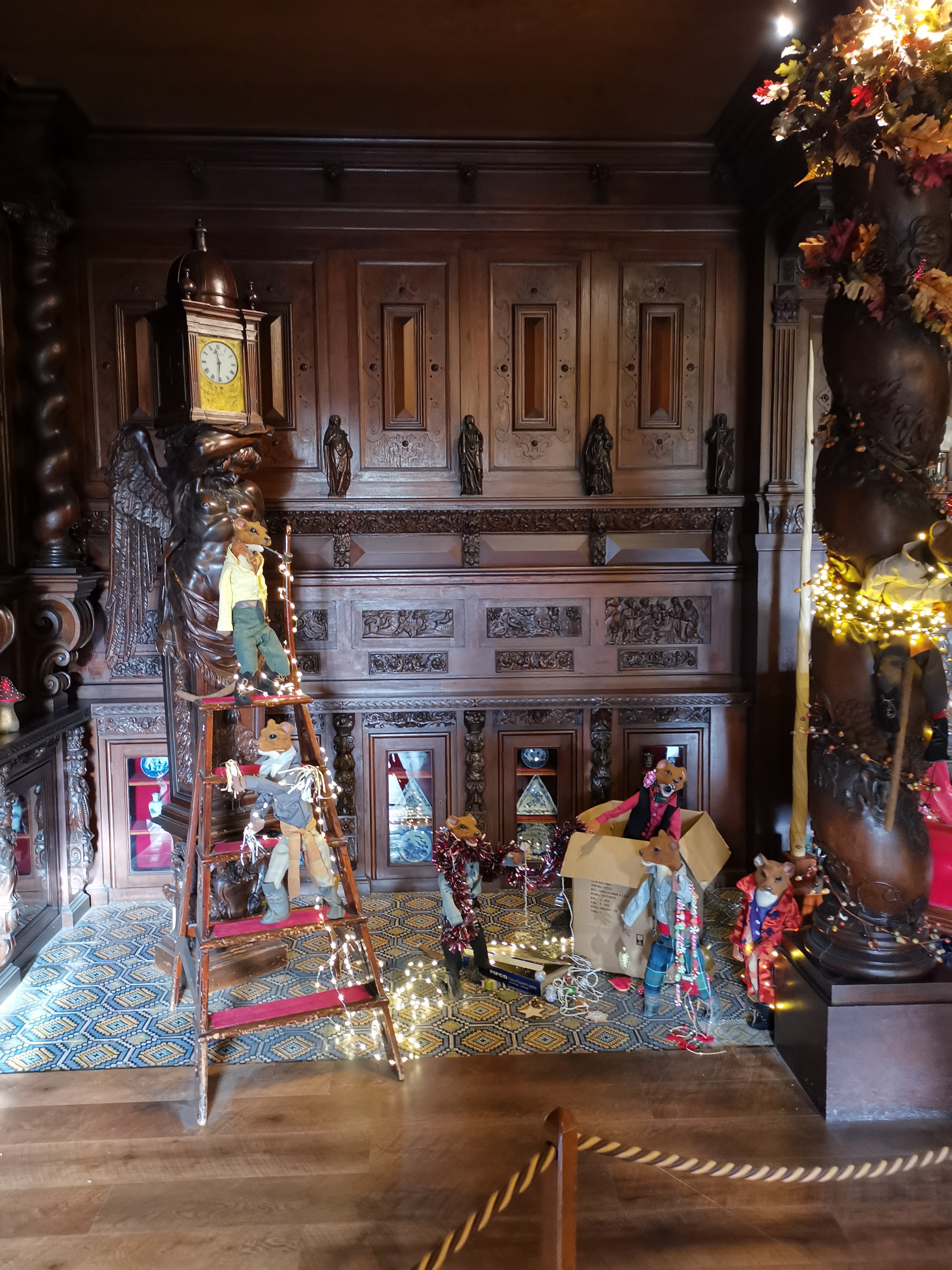
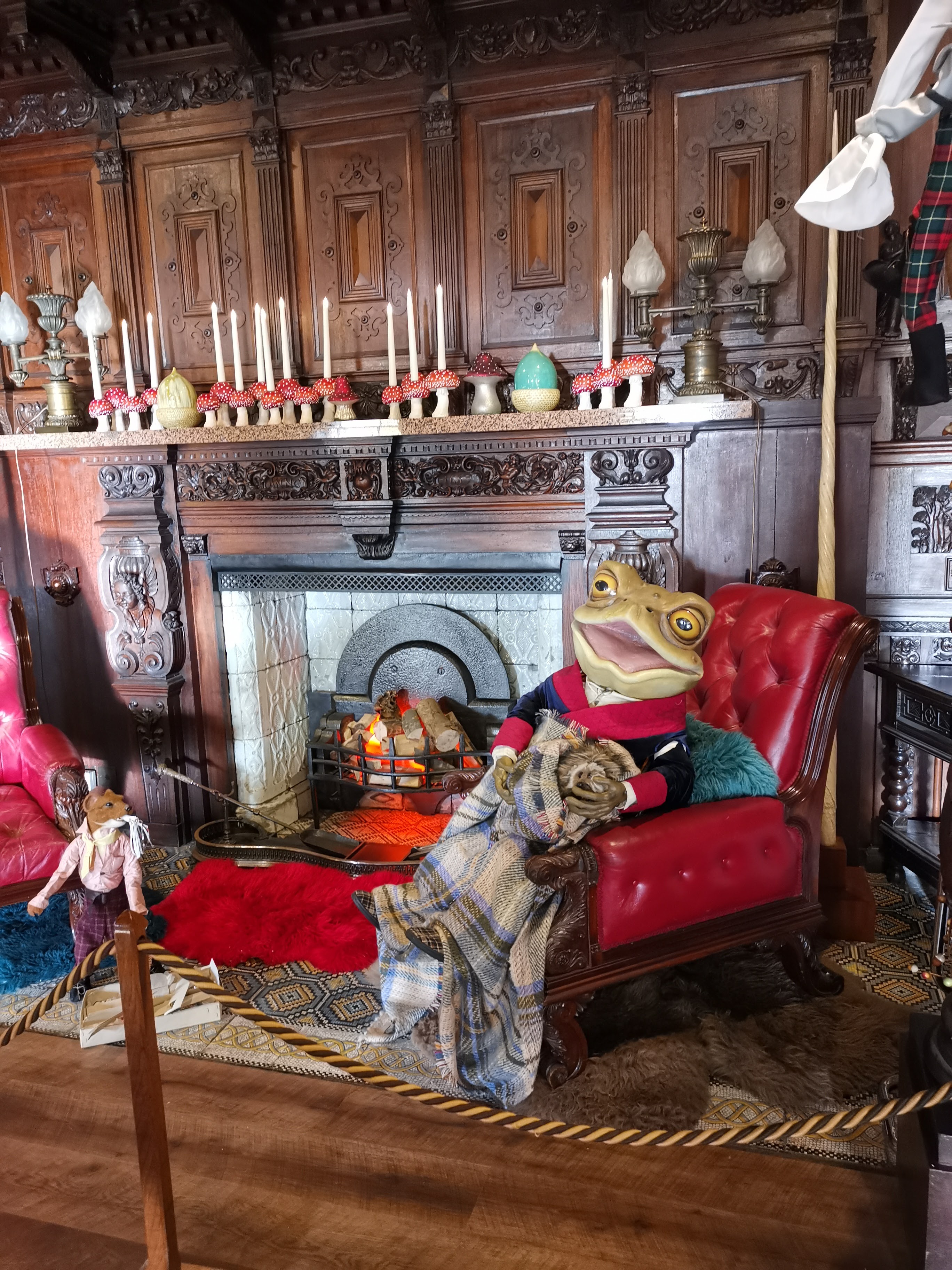
The passageways were also decorated beautifully, although some we weren’t able to go down to explore where they led.

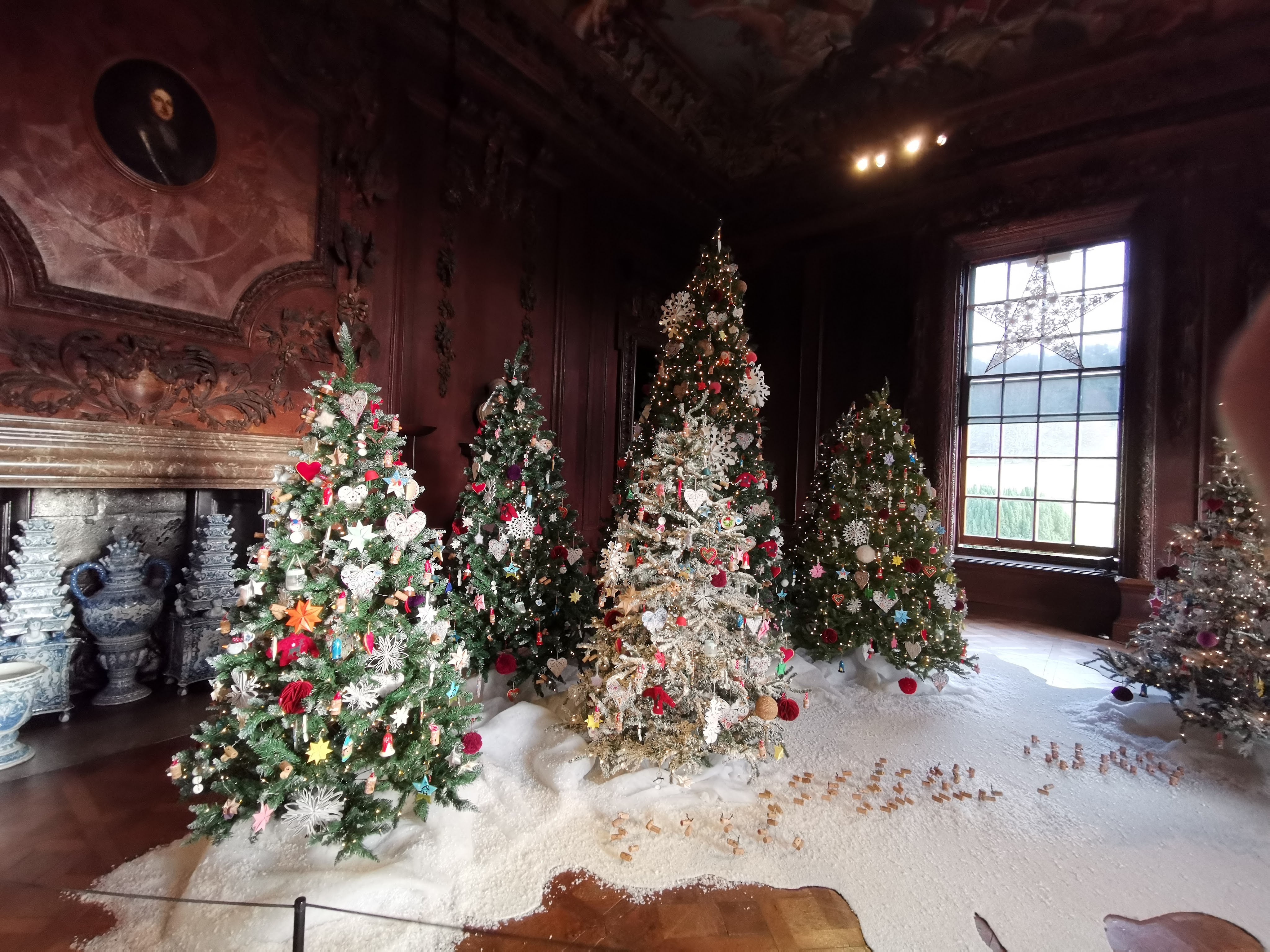
The Great Chamber is the first room of The State Apartment. There were a few Christmas trees differently decorated in this large open space. The little cork reindeer in the snow were a cute addition under the trees.

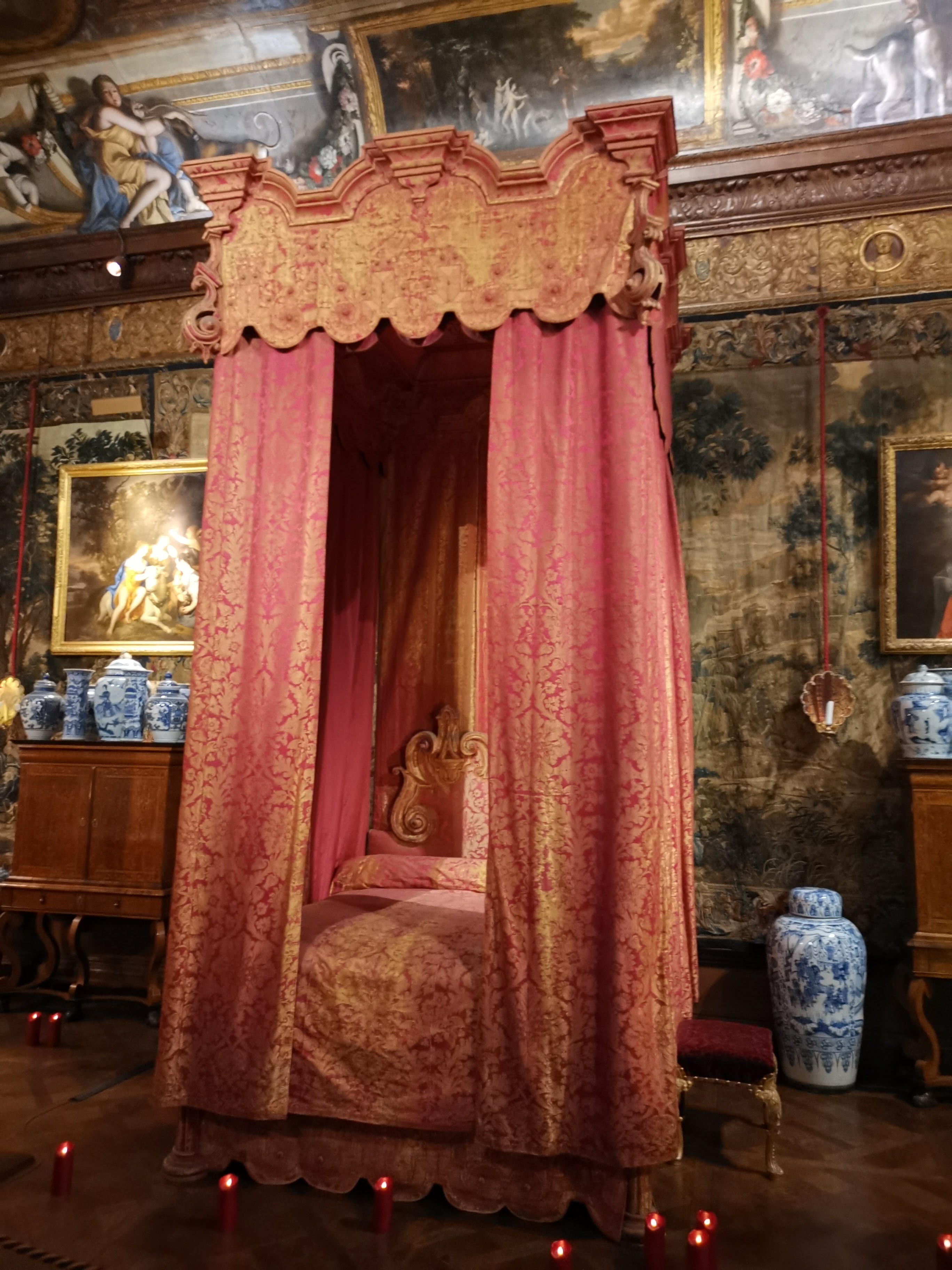
The State Apartment also includes a Drawing Room and Bed chamber and was intended to host a king. I thought it was interesting how small the bed was, compared with the height of the surround. In here, the ceilings were highly decorated too.
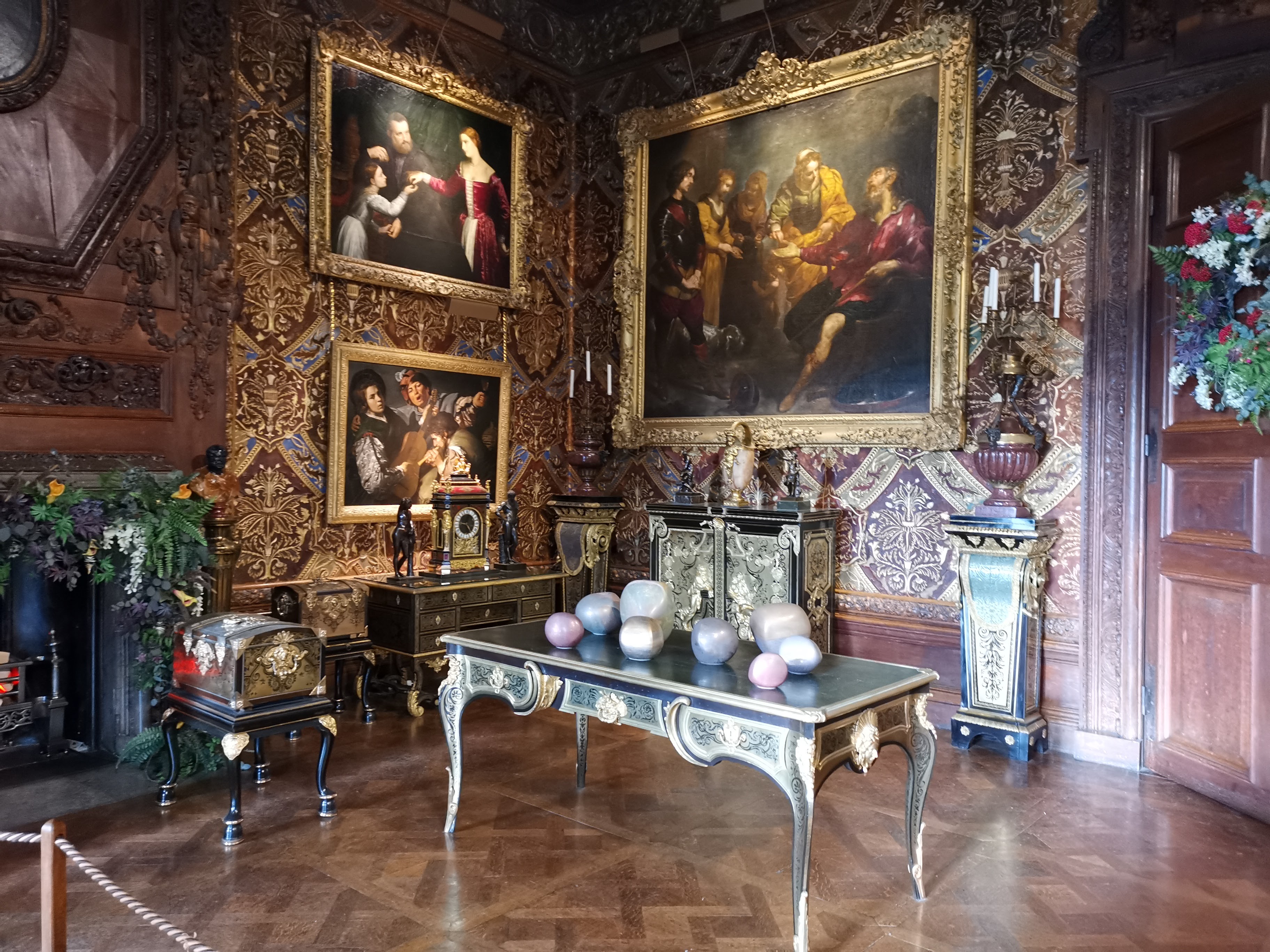
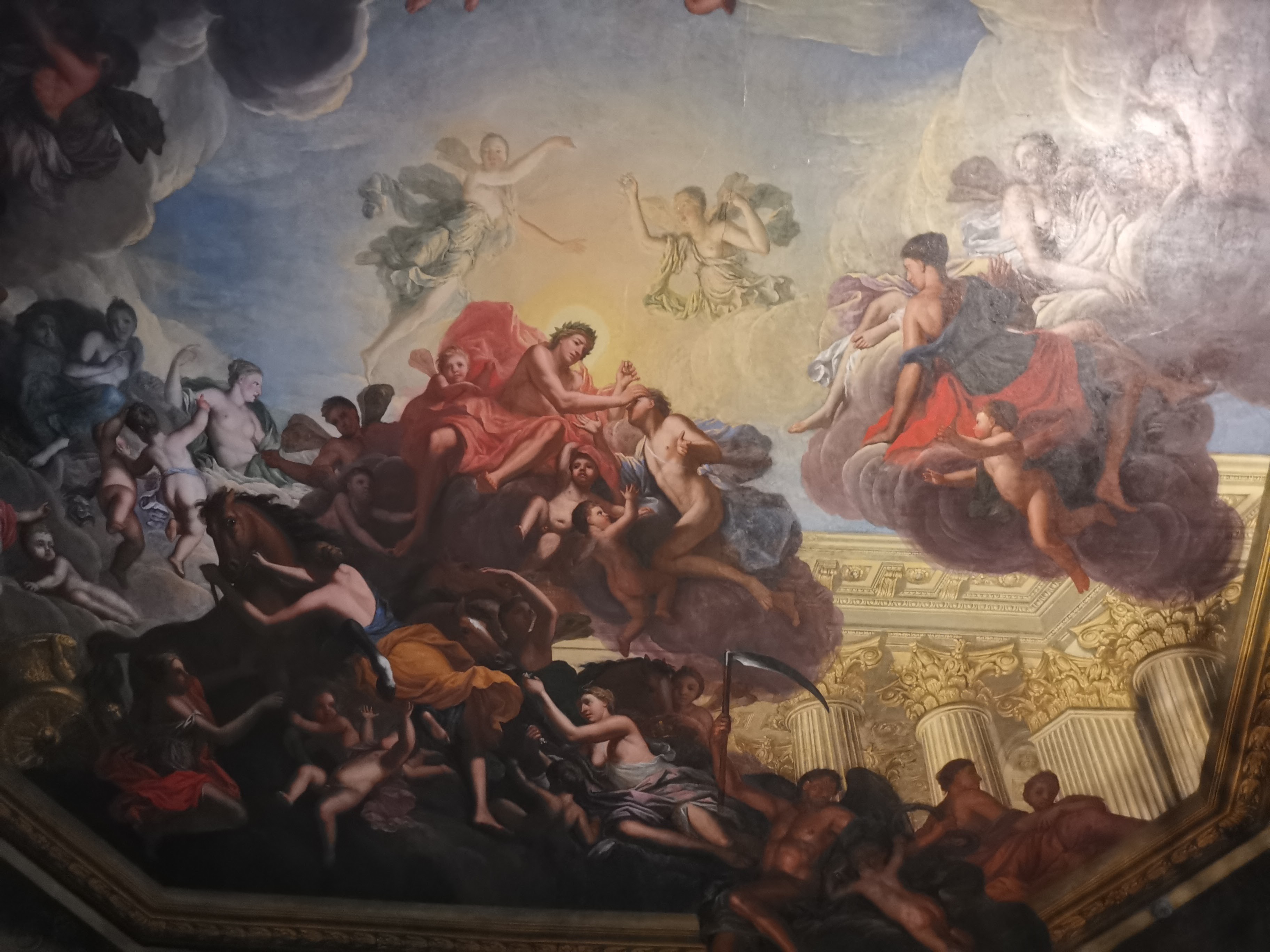
The Great Dining Room is still used to host formal dinners and was set up grandly for Christmas dinner. It was another room renovated by the 6th Duke, also named William Cavendish (c1800s).

The Oak staircase/Leicester landing, created by the 6th Duke to connect the old part of the house to the new. The beanstalk seems to have been from a Jack and the Beanstalk pantomime in 2012.

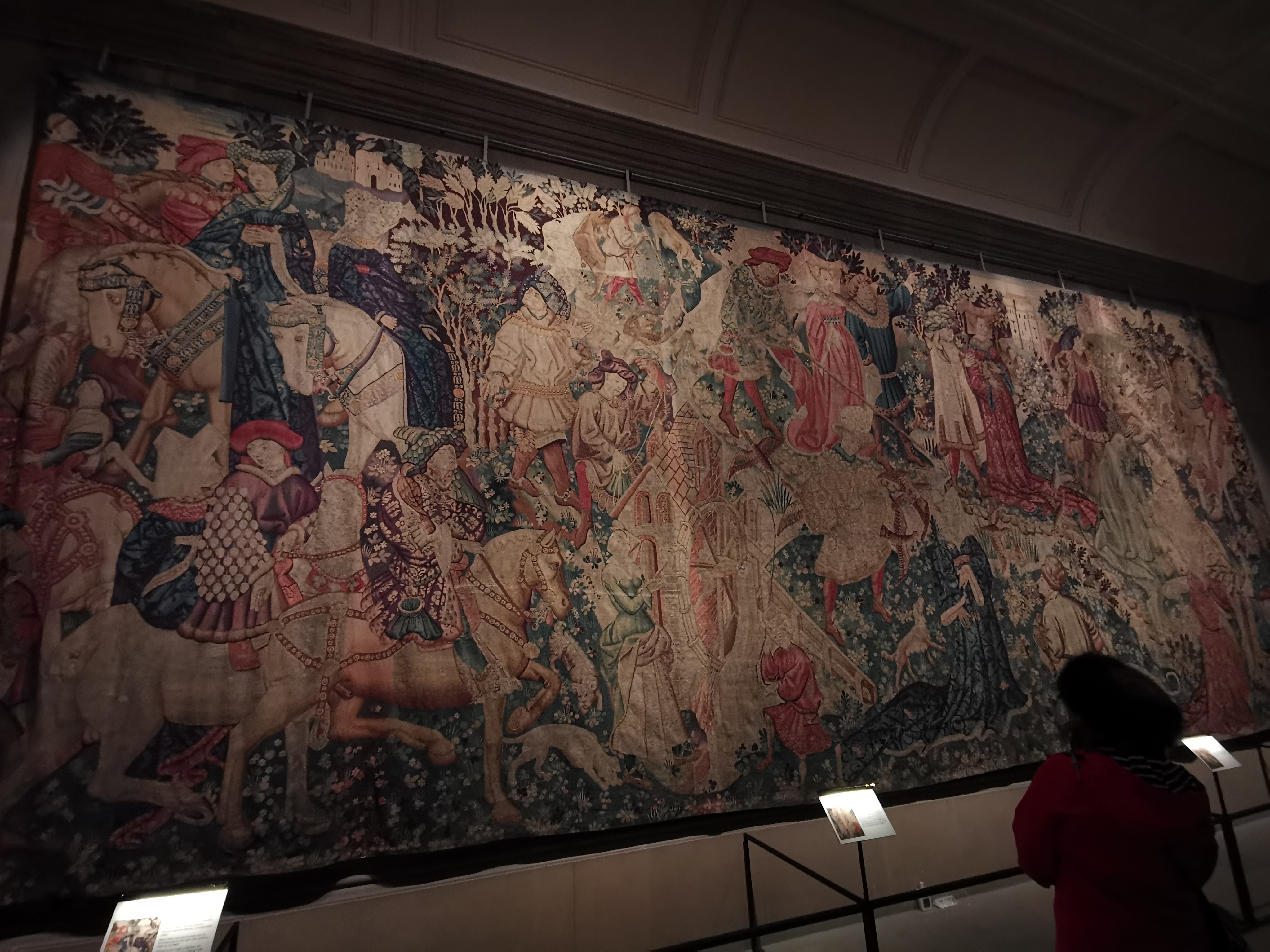
In the Sculpture Room, apart from sculptures were the Devonshire Hunting Tapestries. These are 500 years old and the only surviving tapestries in the UK depicting hunting from the medieval period (15th Century), it shows scenes of noble men and women who are engaged in hunting in imaginary landscapes.
Also in the Sculpture Room is the collection of sculptures. One of which is very prominent – a reclining young man. This I found out is Endymion. In Greek mythology, Endymion was a handsome shepherd boy of Asia Minor, the earthly lover of the moon goddess Selene, and each night he was kissed to sleep by her. She begged the god Zeus to grant him eternal life so she might be able to embrace him forever. Zeus granted her wish and put Endymion into eternal sleep.

There are several hallways that have been turned into galleries to display more works of art. This one has an entire wall covered in small ceramic rectangles. It is a representation of the DNA of the present Duke and Dutchess, their son and daughter-in-law. A very interesting way of capturing them for history.

It was lovely to see the house and how beautifully it is cared for. TI think you can certainly see, if historic houses interest you, just how lovely this one is.

If you would like to know more about the house and the family through the ages, the website has lots of interesting information https://www.chatsworth.org/

After we had finished looking through the house, we took time out to have lunch. The weather was threatening to rain, between times of bright winter sunshine, so we found a sheltered spot to eat our picnic sandwiches and packet chips. There are cafes and a restaurant on the grounds, but the food can be a bit expensive. With Covid19 restrictions in place, once you leave the house, you can’t re-enter. However, we were free to explore the gardens on our ticket.

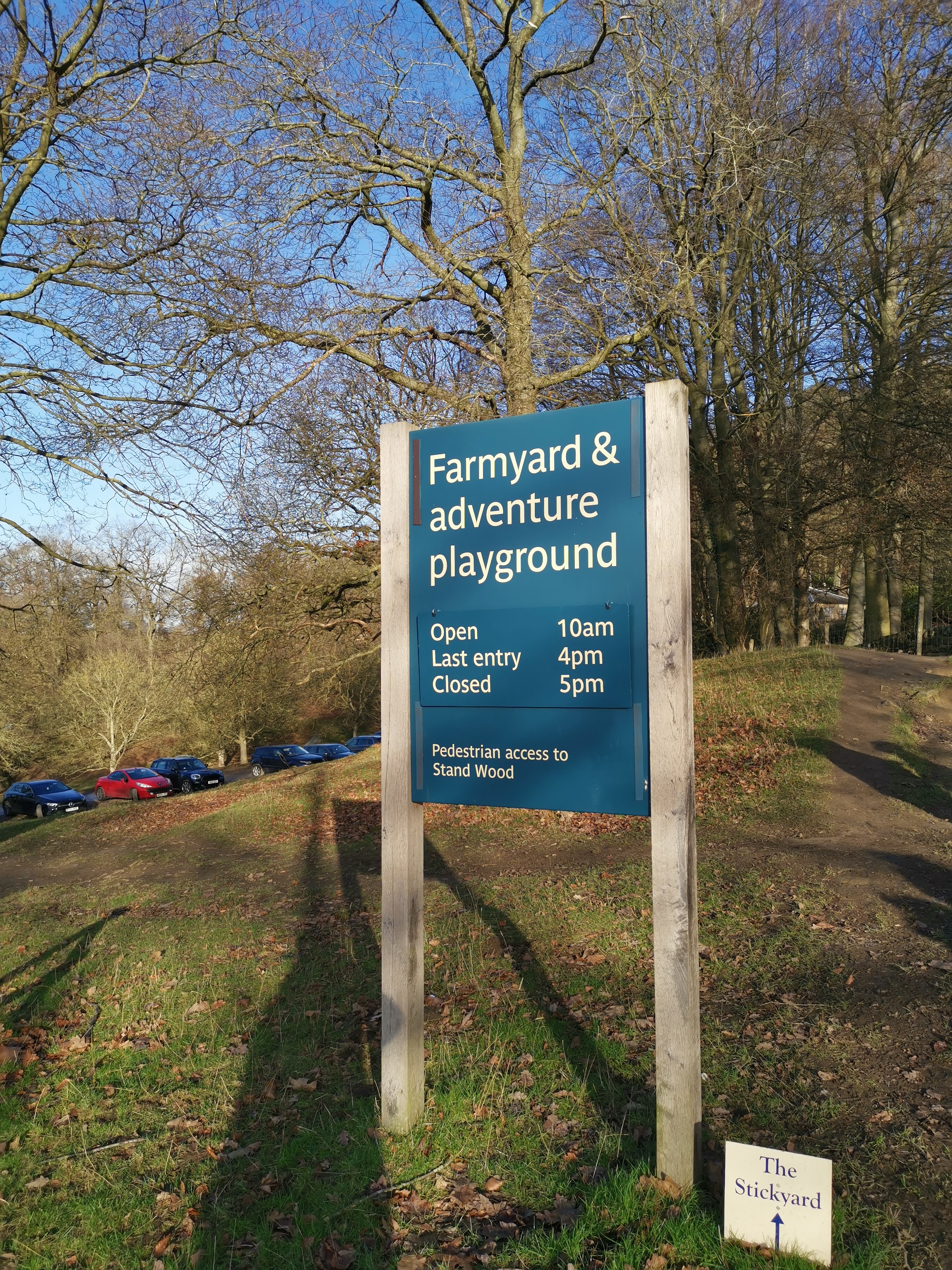
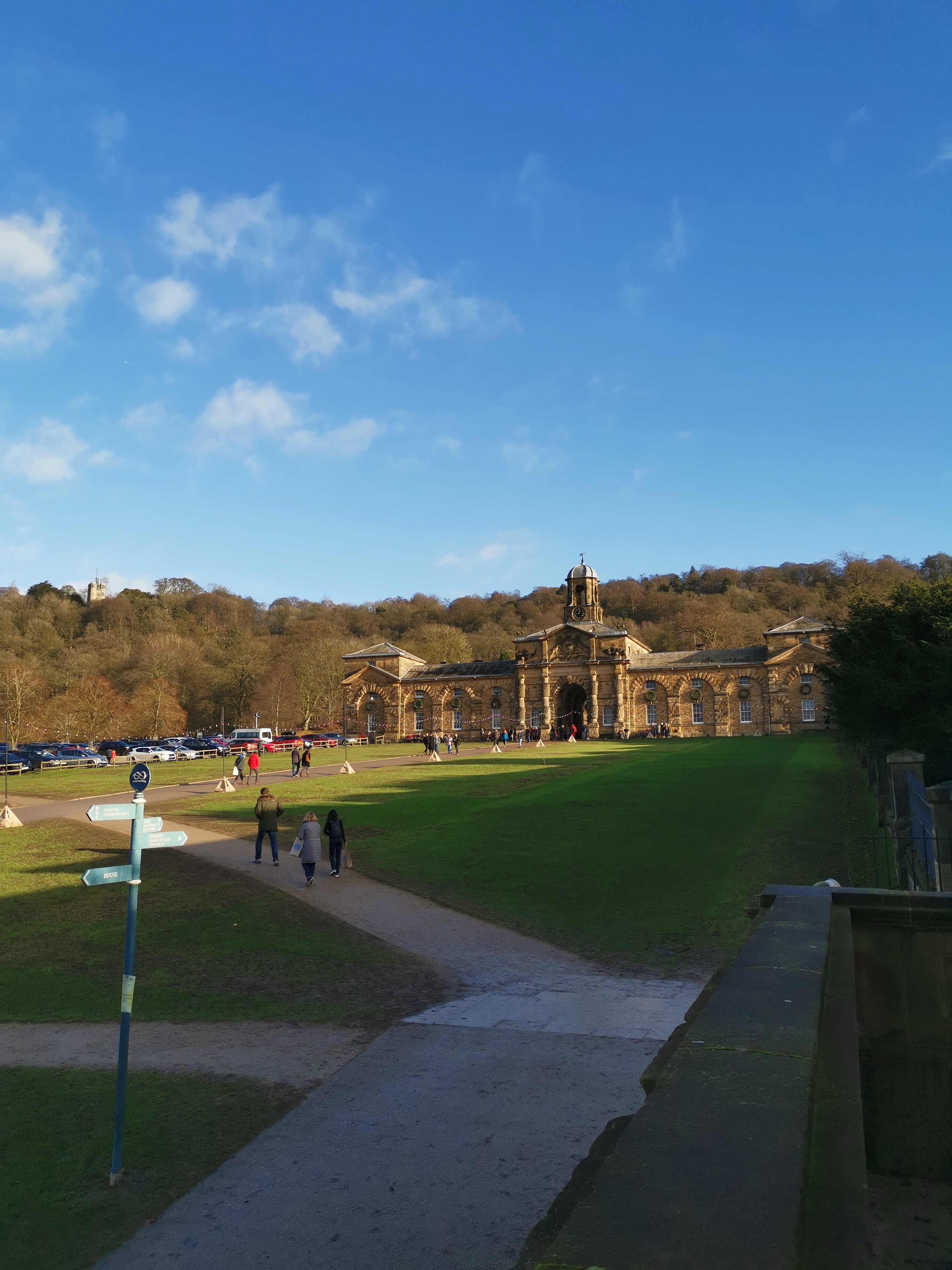
Next, we ventured up to the Farmyard and Adventure Playground, so my grandson could see the animals. We followed the path up to the Stables, which houses various options for food, including their full-service restaurant, The Cavendish Restaurant and the Carriage House Cafe.
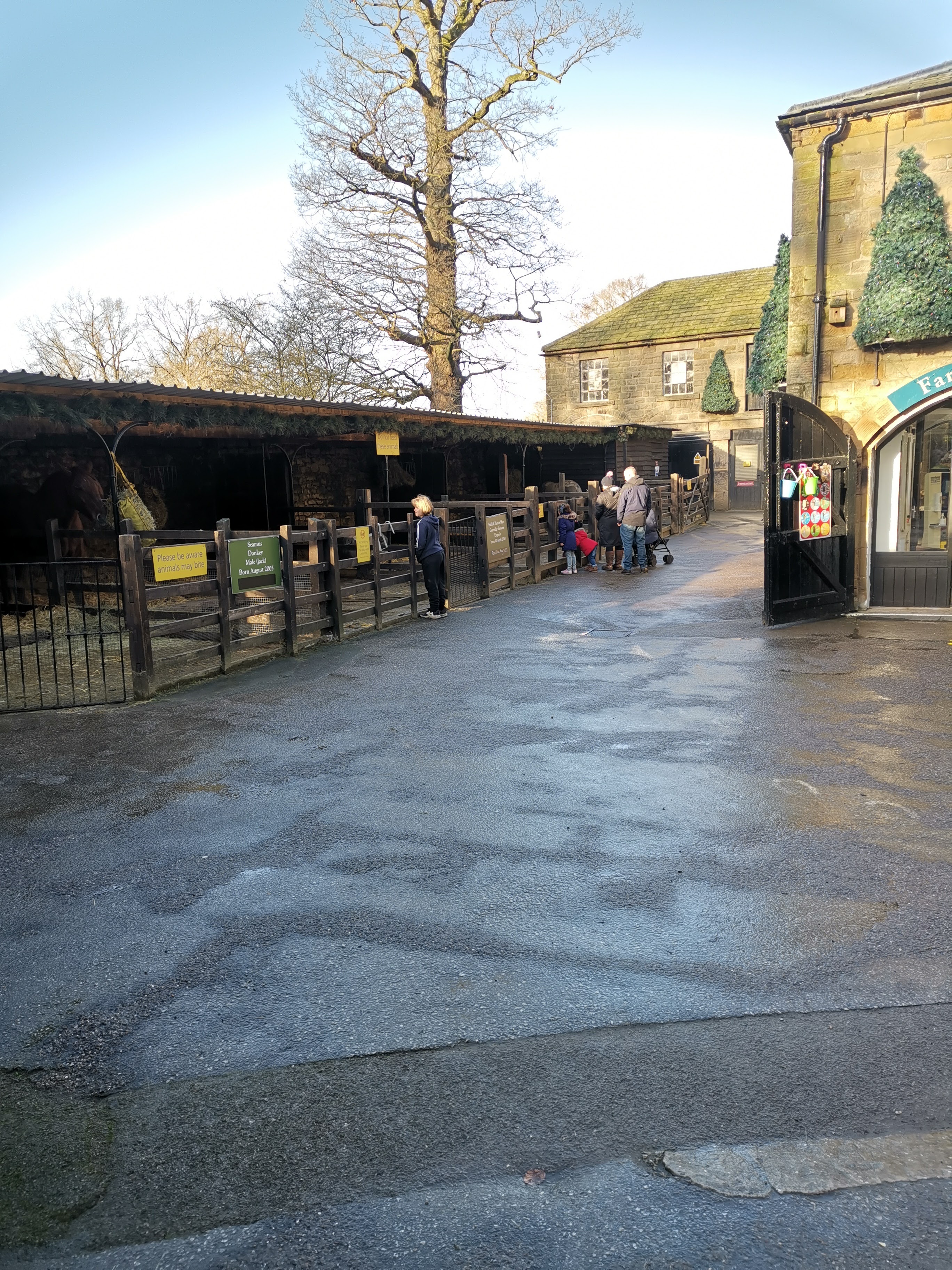
There were a variety of animals, including sheep, pigs, goats and donkeys in the farmyard. At various times during the day, it is possible to watch the cows being milked and pet the guinea pigs. We were able to buy a small bag of food for the animals, so we could hand feed some of them. That was very cute as sheep and goats have warm sticky tongues, so it was safe for little children to feed them.
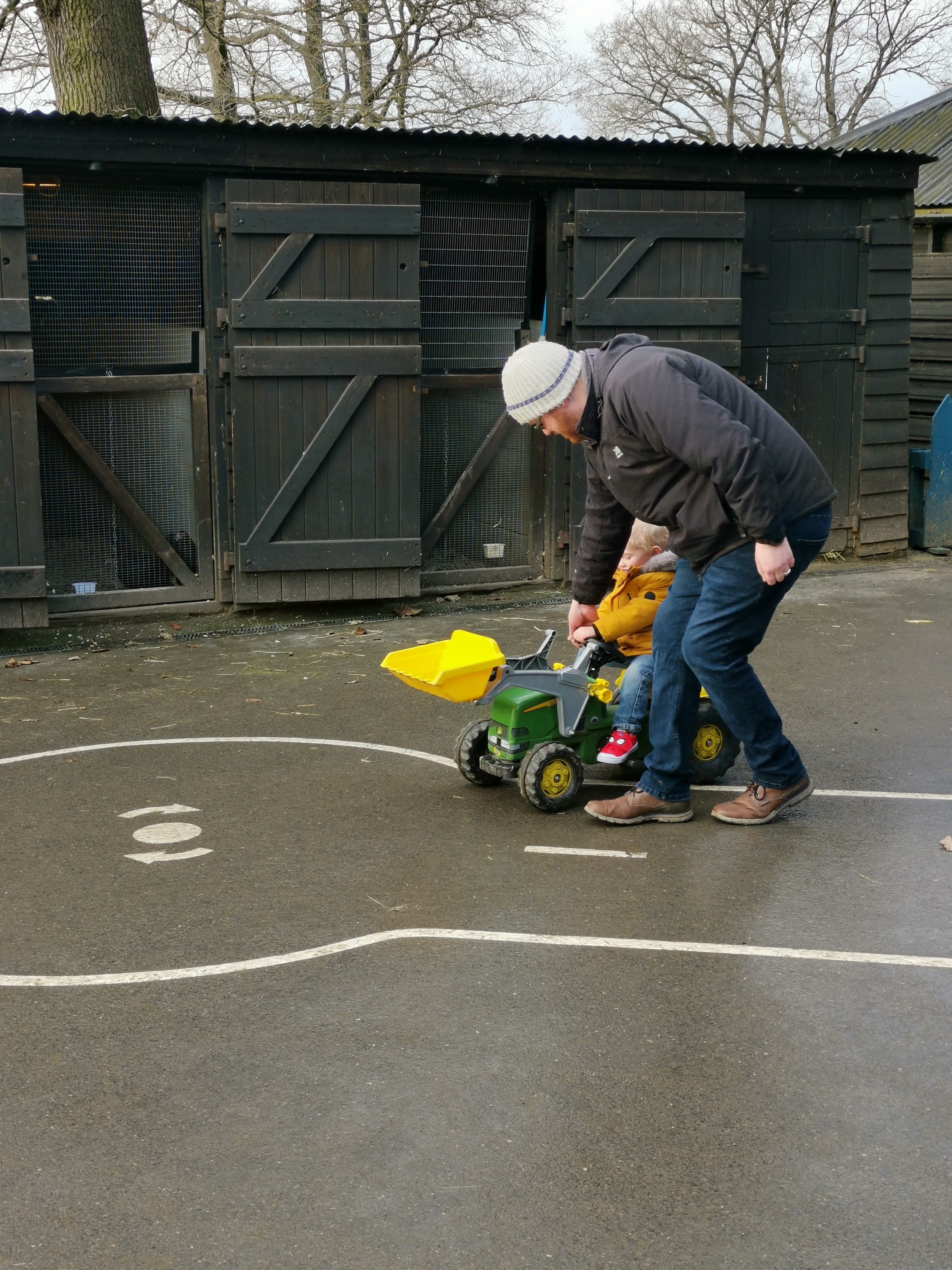
There was an old tractor set up for climbing on and also some little-people sized ride-on tractors, which the children were enjoying. My grandson is still a bit small for peddling, so Daddy power came in handy to propel him.

The Adventure Playground has large sandpit areas allowing the children to have water and sand play. There was also climbing play equipment for various ages. Up behind the playground is woodland for hiking through and in the valley below the house is open fields where it is possible to see deer.
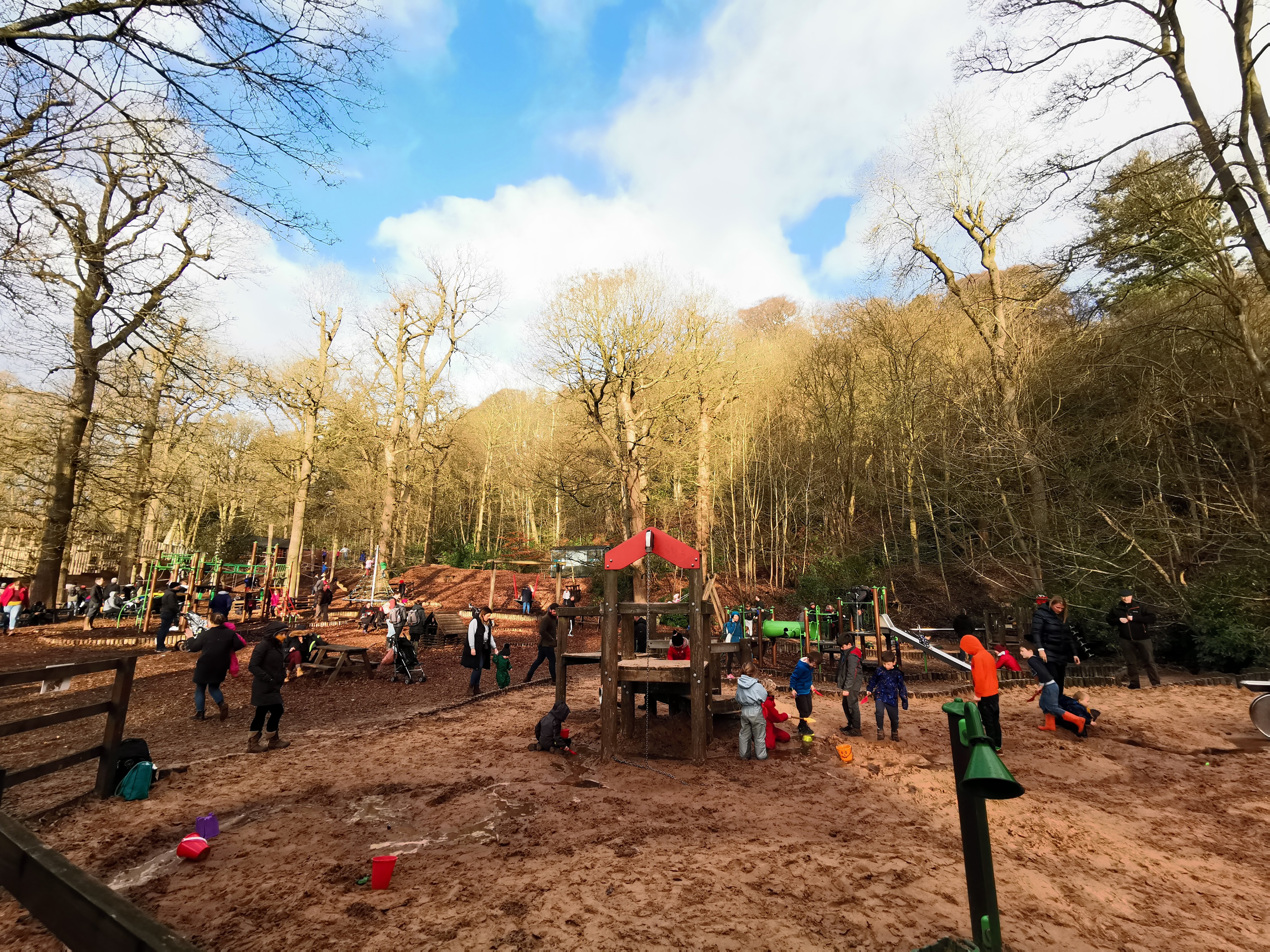
Once we had finished in the Adventure Playground, we returned back to the gardens of the House. There are extensive gardens and grounds surrounding the house to explore, including a hothouse of tropical plants and in the nicer spring/summer weather it would be lovely to spend more time exploring.

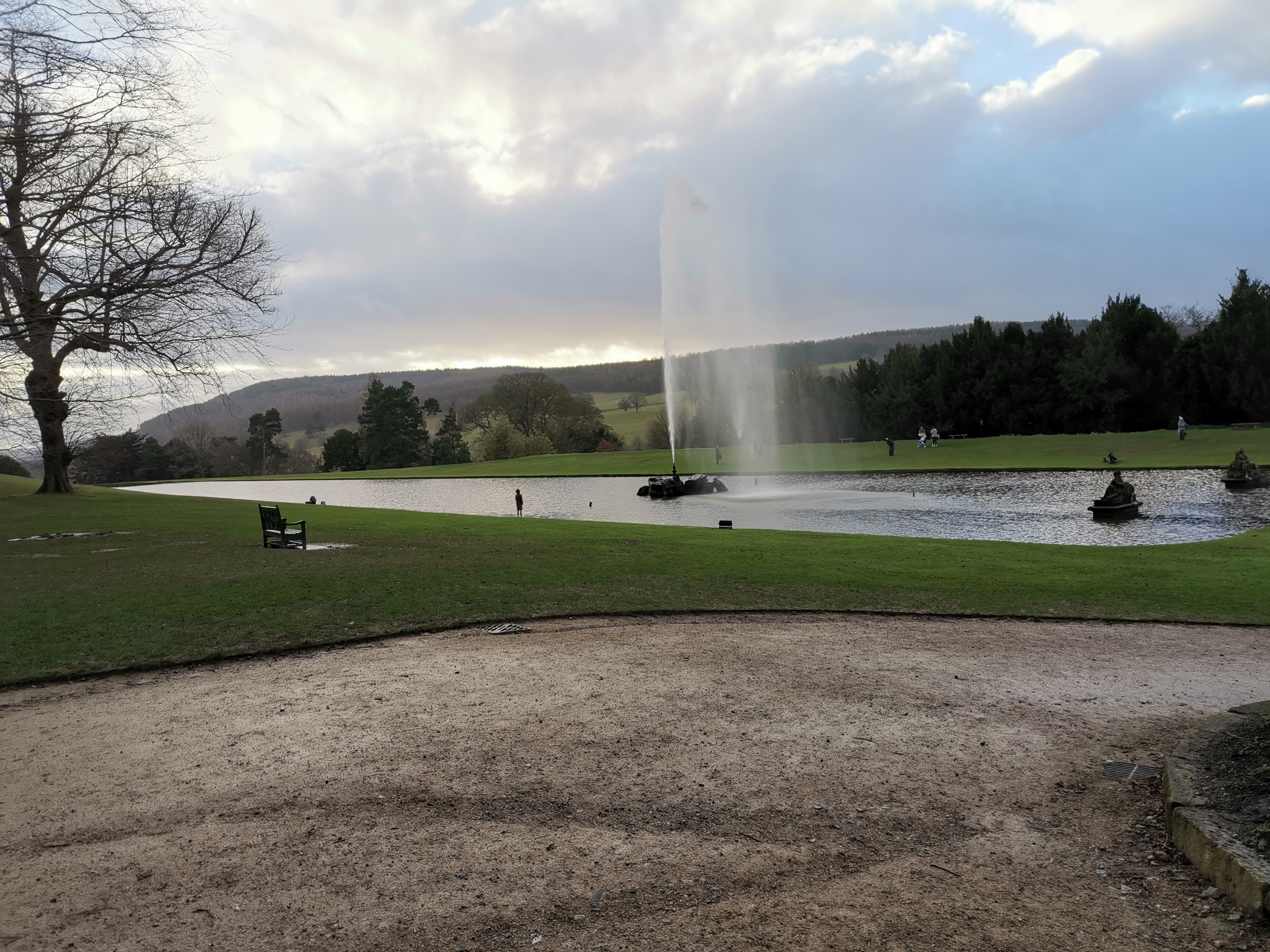
However, we were content to walk along the main path, The Broad Walk, past the private lawns and the fountain, up into the rock garden, which I suspect was missing its waterfall.
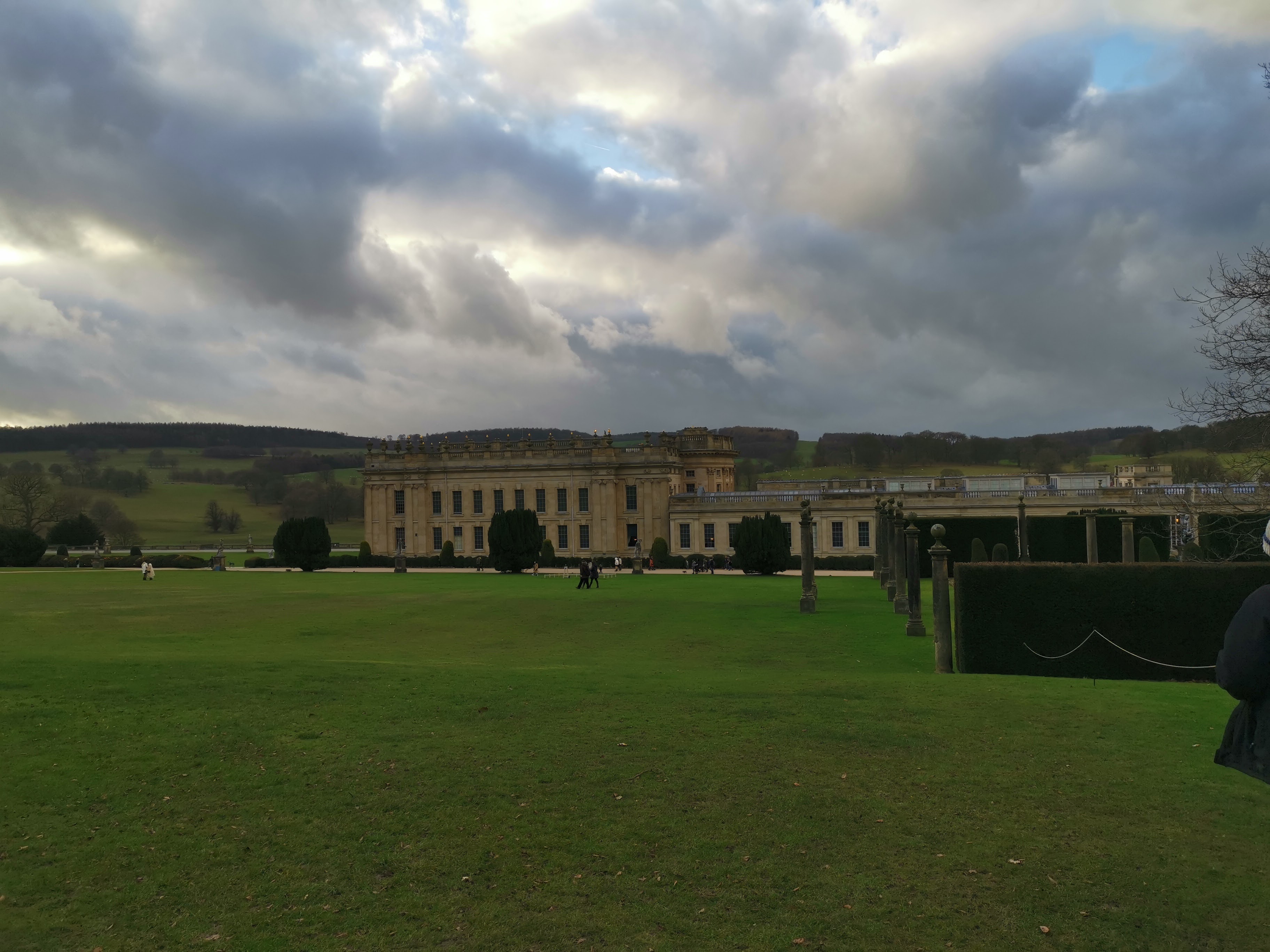
I found out that Joseph Paxton was the head horticulturalist for the 6th Duke and laid out the gardens. He also cultivated the Cavendish banana in the greenhouses of Chatsworth House, which he designed and named the variety of bananas after his employer. Cavendish bananas are the most eaten variety in the Western world. The Paxton’s Glasshouse and Paxton’s Rock Garden are named after Sir Joseph Paxton.

Up behind the Rock Garden, there is an old coal tunnel that had been made safe for visitors to walk through, although it was pretty dark and waterlogged in the tunnel. The coal delivered here was needed to heat up a large conservatory, which no longer exists.

As the winter sun disappeared behind rain clouds, we decided to head back to the car and head home. It was a great way to spend an afternoon and it will be lovely to visit the house again and perhaps see more of the gardens, including the maze.

Lonely Places

16 October 2021

There are some places in England that you can sense that if they had a life, they would feel lonely.  On another lovely time out with my friends Janice, Karen, Mike and Cockapoo Lulu, we visited two locations that to me fit that description.

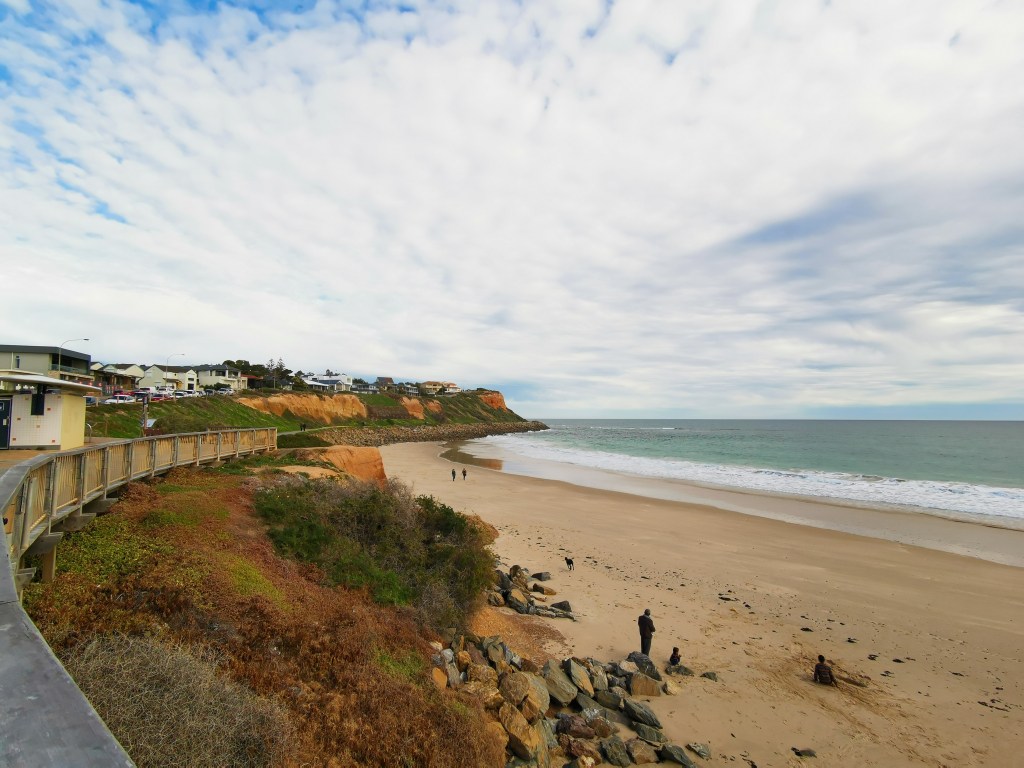
Half Moon Bay is my first experience of the ‘Sea-side’ since returning to the UK from Australia.  It was a very different experience from a visit to the beach back in Adelaide, South Australia.

Where I lived in Huntfield Heights in South Australia, the sea could be seen from my back garden.  The garden faced west, which meant that every night the sun melted into the sea producing a unique sunset.

Home was also a short drive, about 10 minutes to our local beaches of Christies Beach and Port Noarlunga in South Australia.

Christies Beach was a lovely beach to walk along and in summer would be filled with families. 

Port Noarlunga has a jetty (or pier in the UK) and a natural reef full of fish.  Many afternoons and evenings were spent enjoying the beaches.  I wasn’t much into swimming, but I did love walking along with John on warm evenings, looking for shells or pretty, smooth stones.

Although both beaches could be wild places during bad weather, with the wind whipping up the waves, they never felt lonely to me, just wild and beautiful.

Christies Beach

Now I live in Manchester, the beach is further away and not something that my family have visited often.

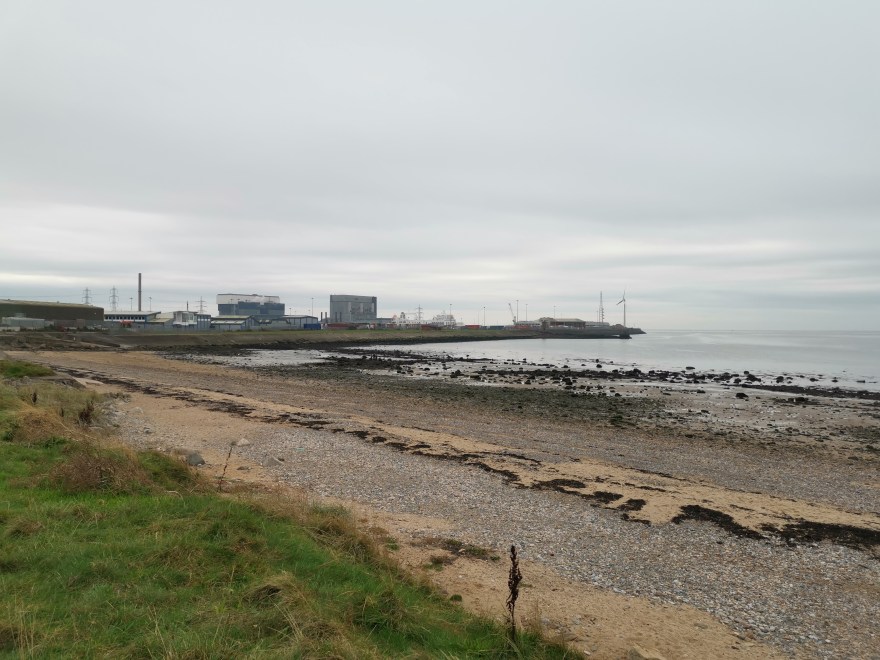
When Mike and Janice said we were off to visit Half Moon Bay, which is very close to a nuclear power plant and where the Ferry to the Isle of Mann leaves from, it sounded like a perfect opportunity to renew my association with the sea.  As a teenager, I wanted to be a marine biologist as I loved the water and hoped to be able to work towards caring for the precious wildlife under the waves on the warm waters of The Great Barrier Reef.

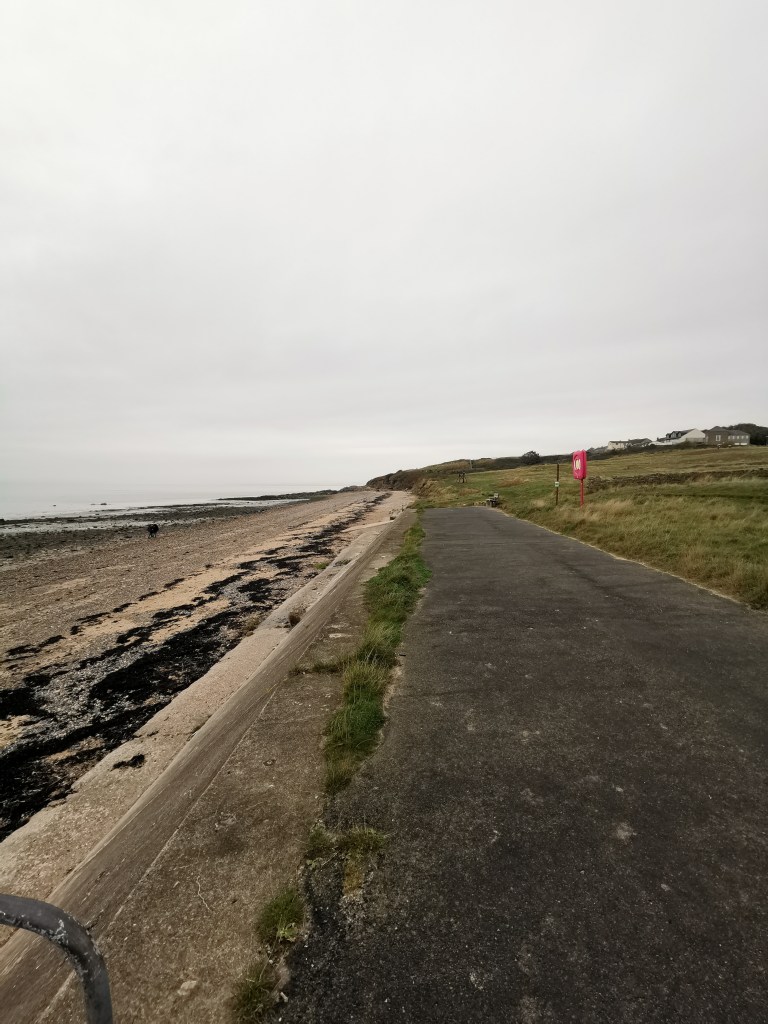
After driving past where the Isle of Mann ferry left from, we reached the tiny car park at the head of Half Moon Bay with its tiny café, toilets in a shipping container, slipway for boat launches and the empty, lonely beach to Morecambe Bay. 

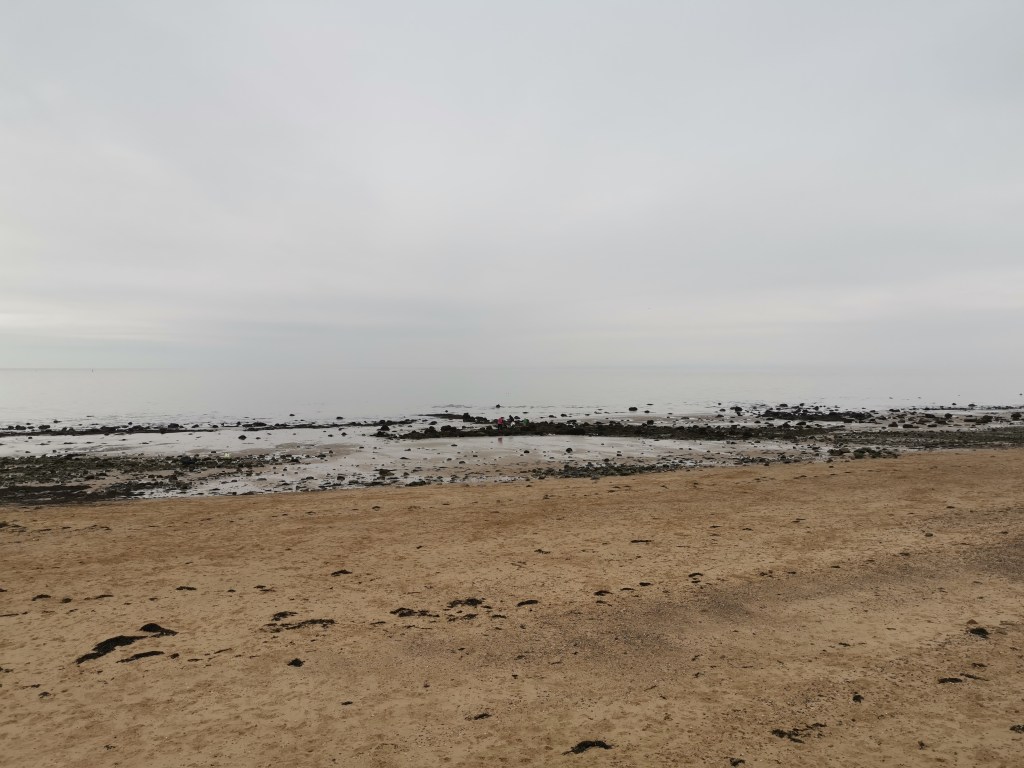
The weather today could only be described as grey.  There was no horizon as the sky and sea merged into each other.

There was a family down in the rock pools, as the tide had gone out.  There were a couple of people walking their dogs and there were the sculptures. However, the beach still looked lonely.  I think if you came down to take a walk along this beach to find a happy place, I don’t think you would find it here.

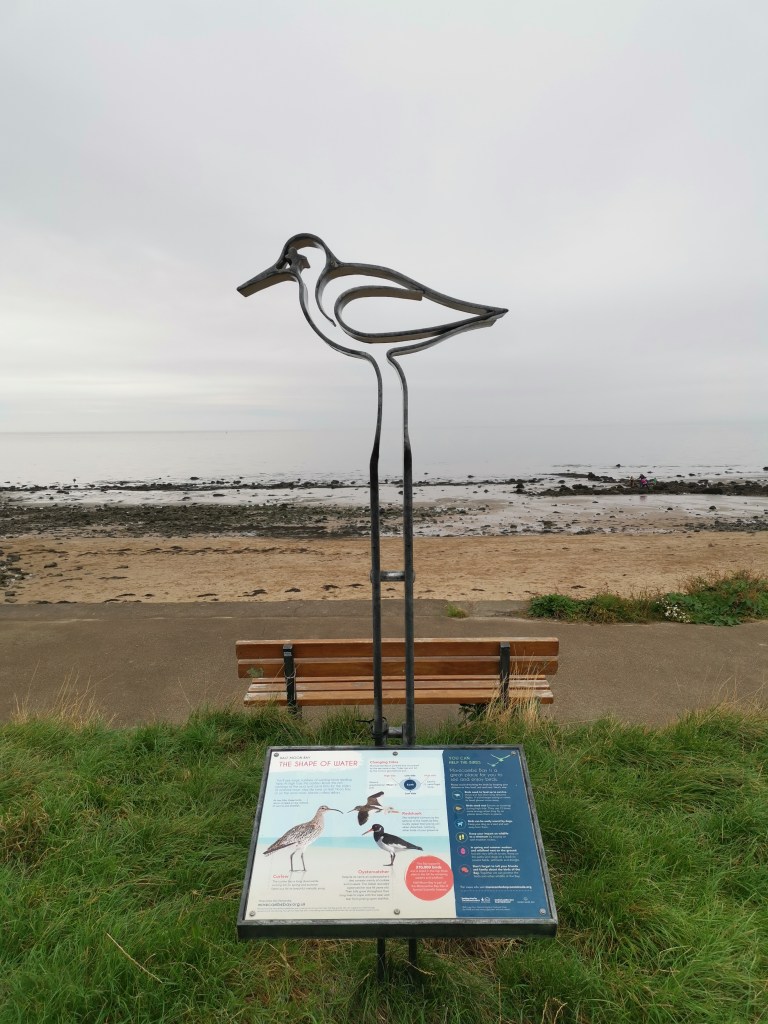
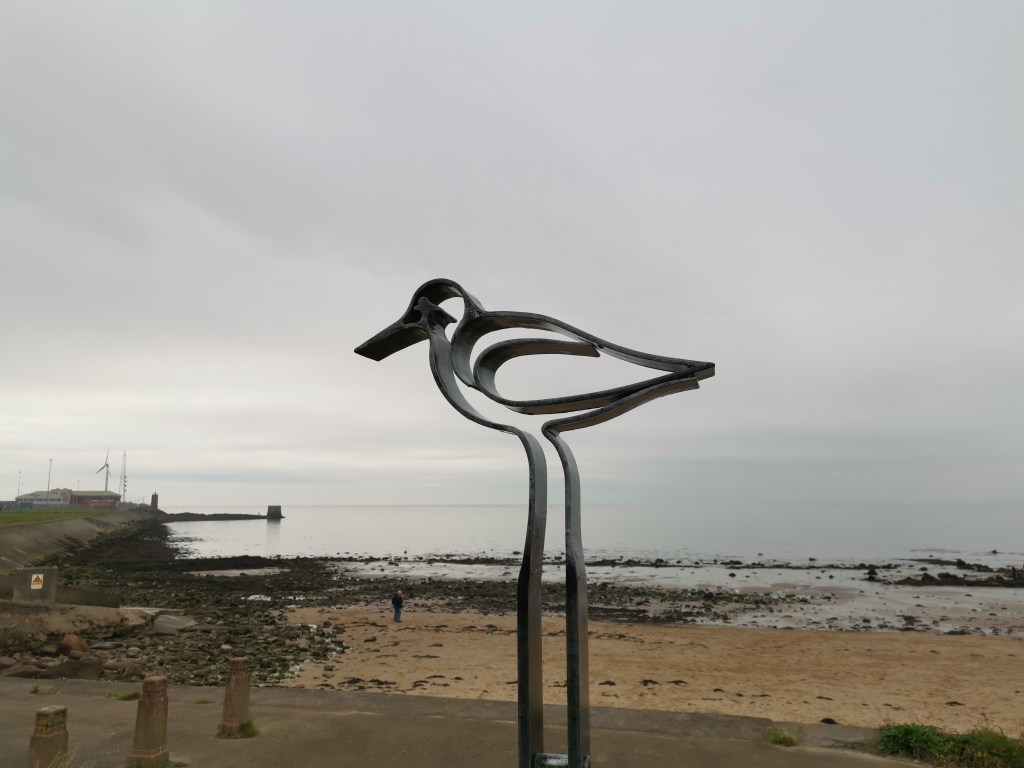
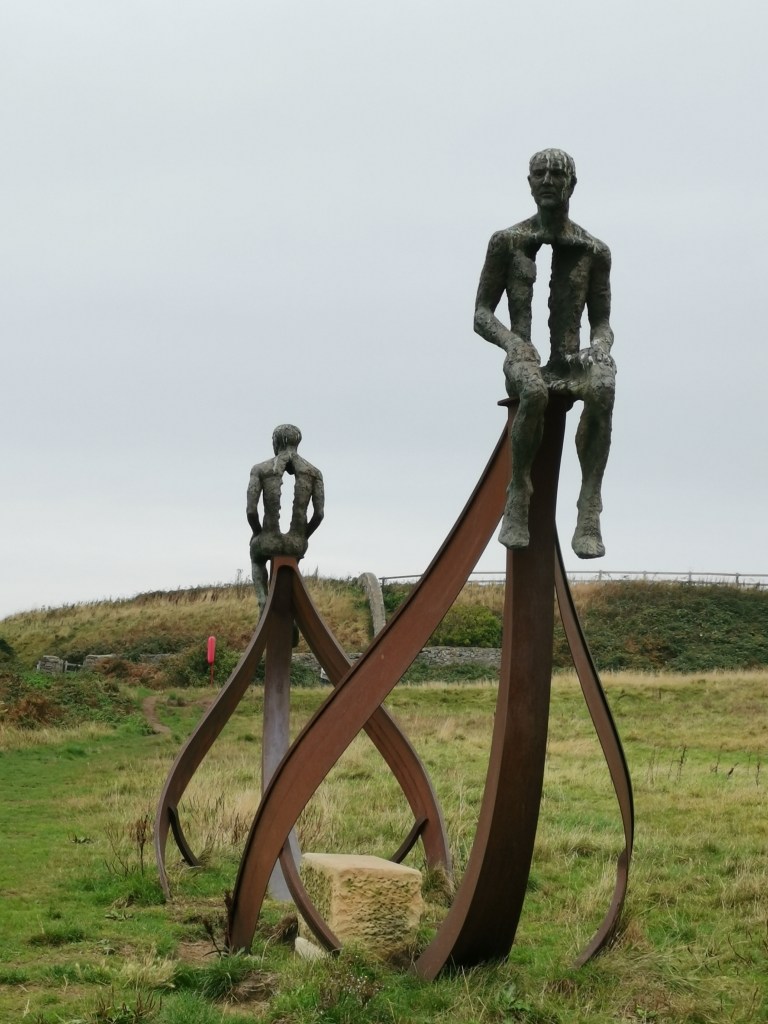
There were a couple of pieces of sculpture work facing the weather. The wading bird, placed on the break wall tricked my eye and camera into thinking it looked like it was walking in the tidal pools.  Very cleverly placed.

The other sculpture is called ‘Ship’.  It was an abstract piece that leaves it with the viewer as to how they want to interpret what she has been created.  The spine of the ship and two figures without spines.  The sculptor website indicates she wanted to capture the figures looking to the future, the ferries and nuclear powerplant and to the past of the historic church called St Patrick’s Chapel.

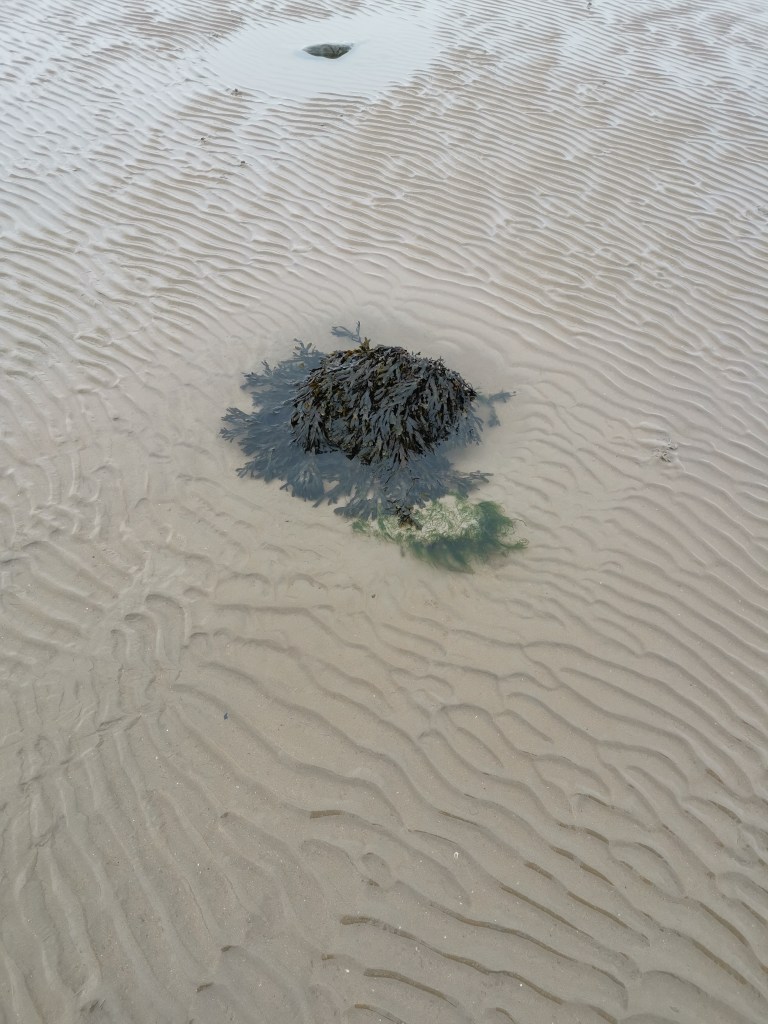
The combination of the empty beach and the grey sky evoked a feeling of loneliness.  As the others wandered back to the little café for a coffee, I went down onto the beach, a combination of stones, seaweed and tidal pools to see if perhaps there was life here.  Maybe a crab or other sea creature could change this from a desolate beach to home to life.  But there was nothing.

I joined the others in the café for a coffee and quickly was drawn away from the sense of sadness brought on by this lonely place.

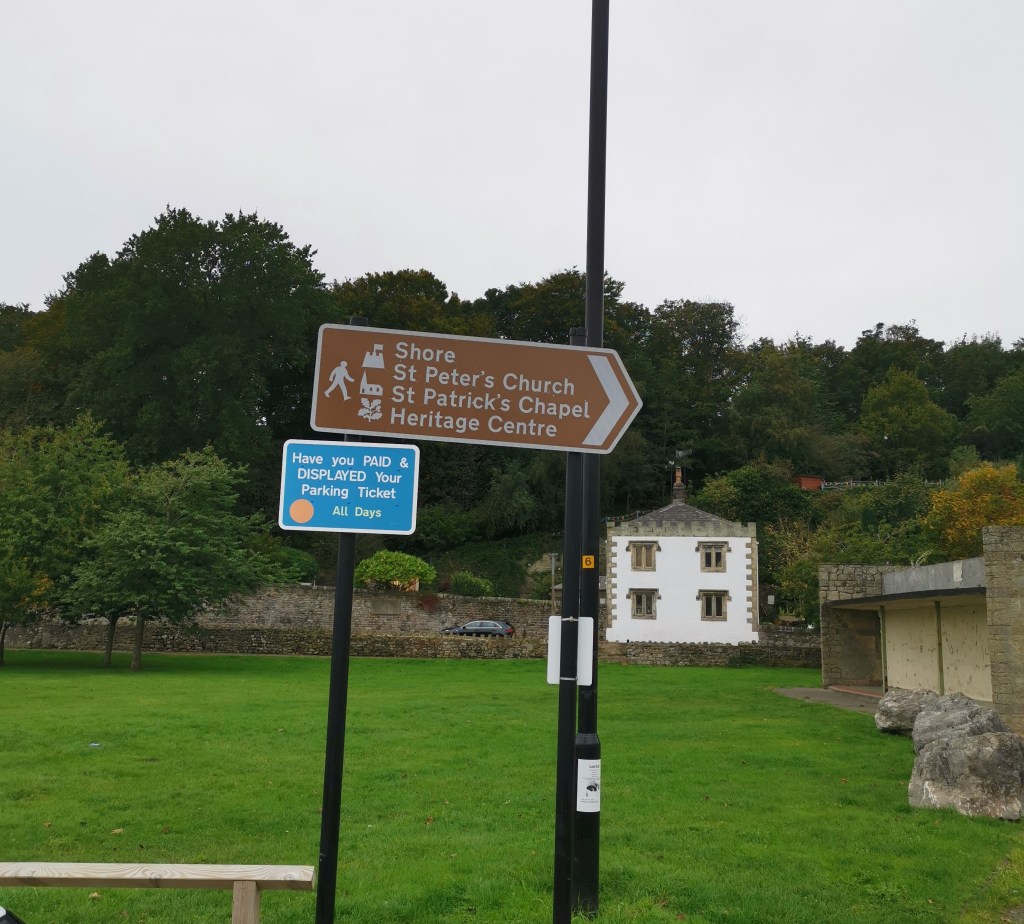
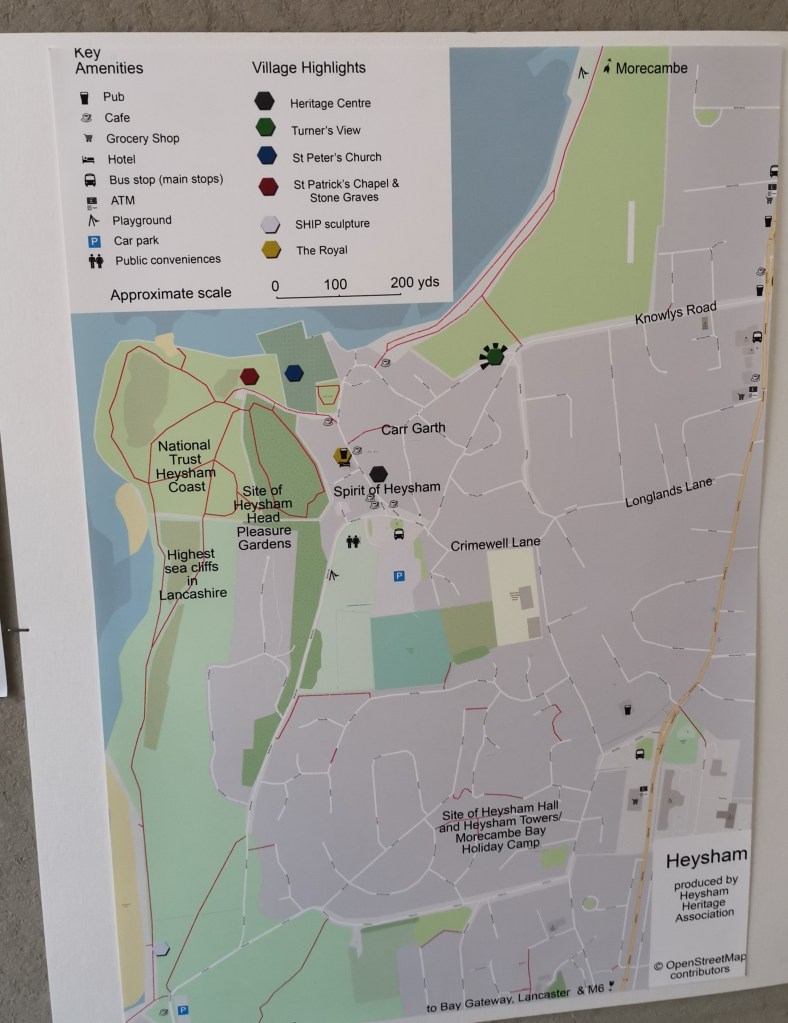
With Mike at the wheel, we left Half Moon Bay and set off to find the historic St Patrick’s Chapel, in the village of Heysham, which I felt again personified the sense of loneliness.  Although the little historic village Main Street was busy with people coming and going, and a wedding ceremony was in progress at St Peter’s Church, it was the layout of the graveyard and the remains of St Patrick’s that left me with a feeling that this was a lonely place.

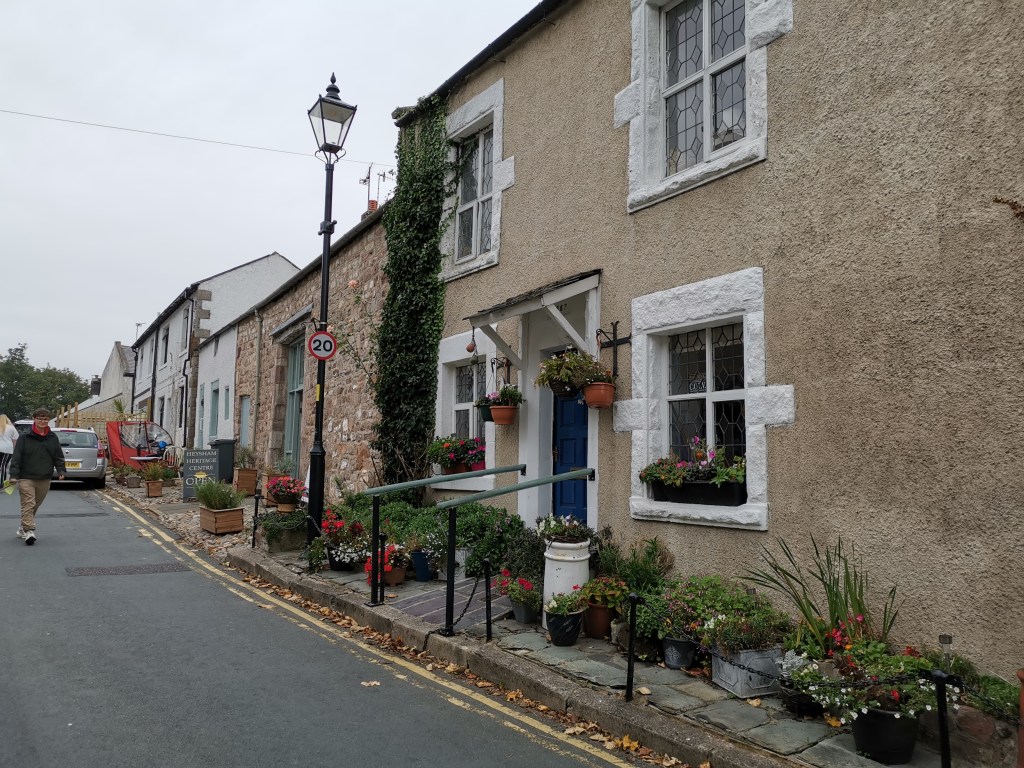
We parked next to the Heysham Cricket Ground and walked through to the historic Main Street.  It isn’t the main street anymore but is now is part of a Heritage Trail. 

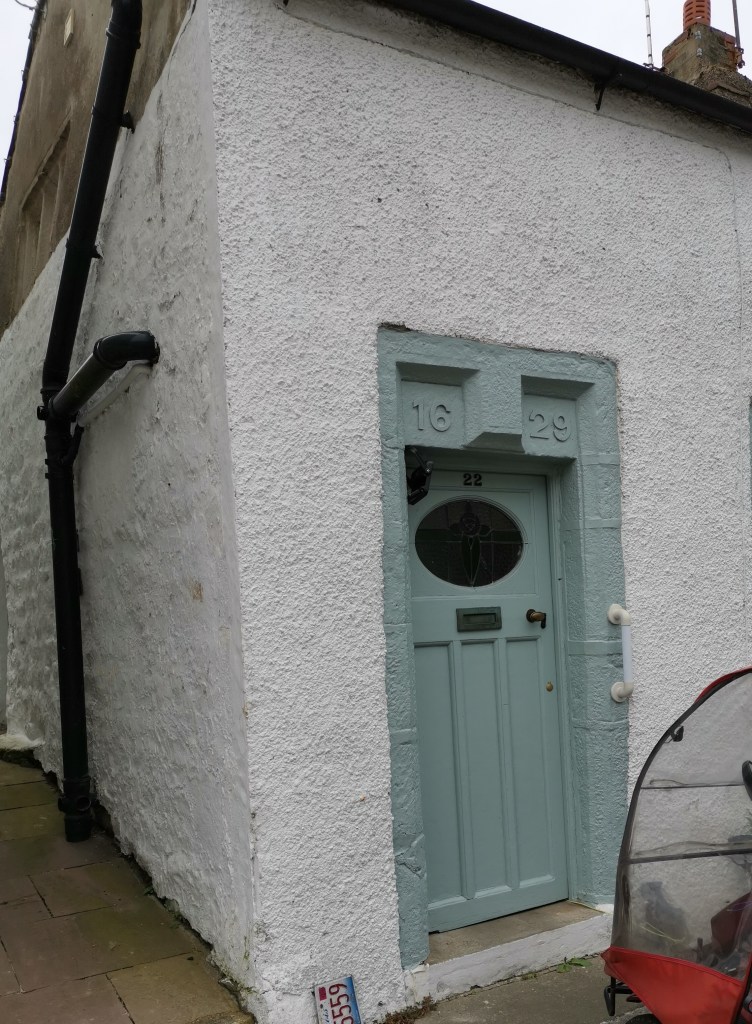
Main Street is very narrow, only really one car’s width and there are a variety of different cottages. There is a date above one of the doors that indicates it was built in 1633 as a fisherman’s cottage. 

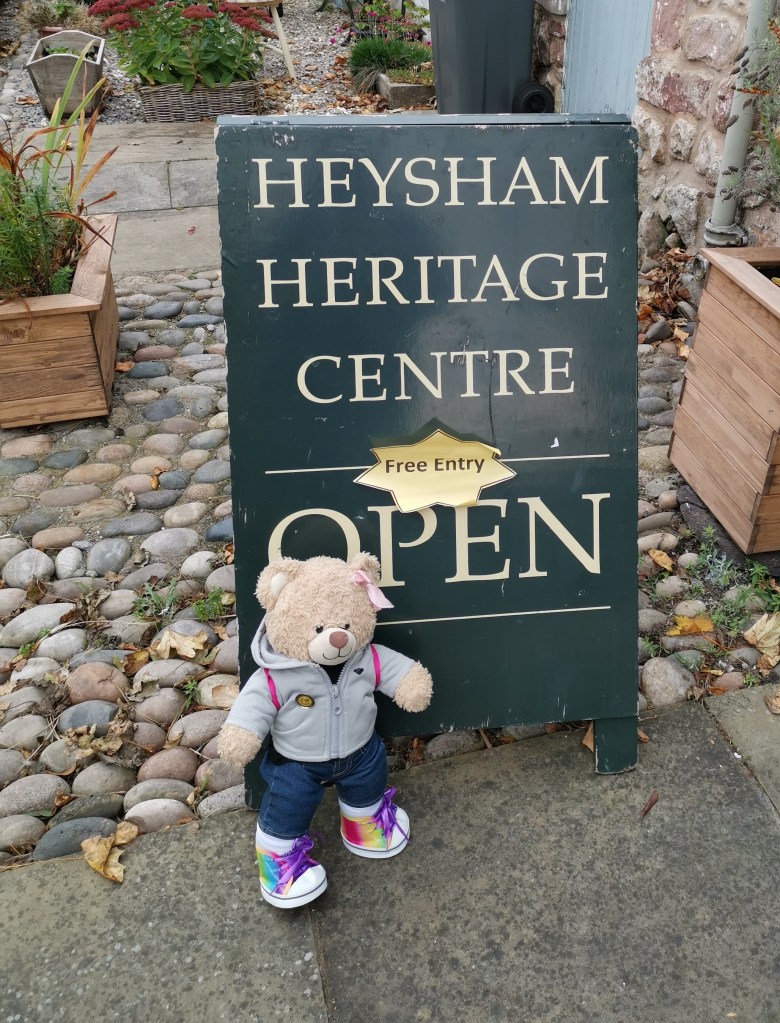
There is a Heritage Centre where you can pick up information about the village and the local community. 

The National Trust helps look after the area to protect it. 

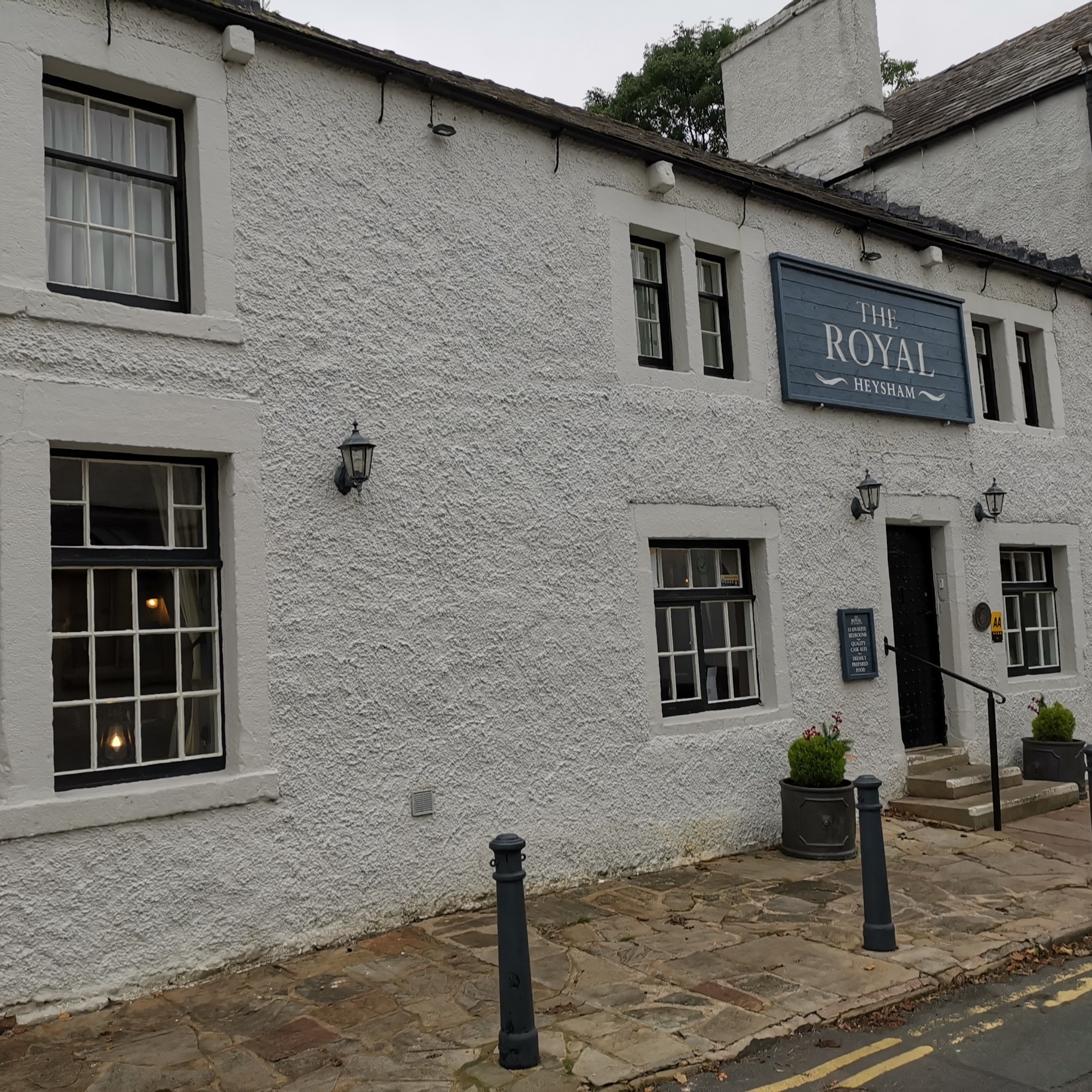
We strolled past the little cottages, reaching The Royal Hotel, which doesn’t look old, but a sign indicated c1502 and that there are deeds to confirm that date, making it the oldest building in the village. 

When a luxury car passed us with wedding ribbons on the front, we guested that there was a wedding happening at St Peter’s Church and presumed that the reason the shops seemed to be shut in the newer section of Heysham, that it was very likely a local was getting married and everyone was invited to the wedding.  When we enquired about lunch at The Royal Hotel and was advised we could only sit outside, but it wasn’t the type of weather for outdoor eating. We presumed the reception was going to be in their dining room.

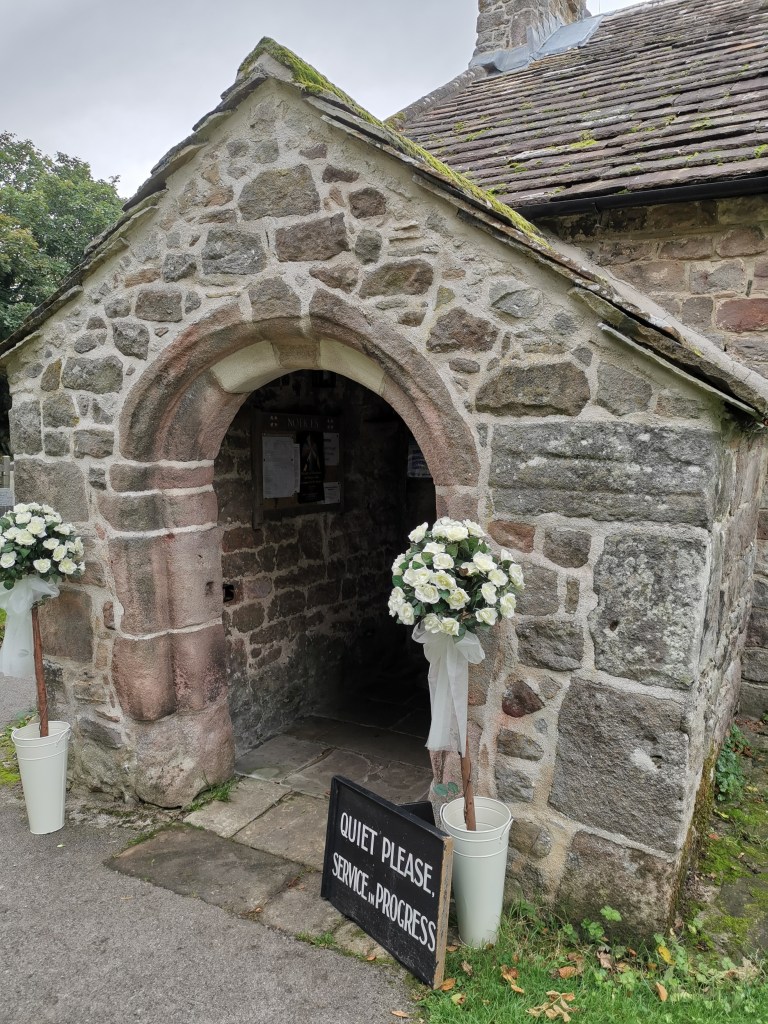
When we walked up to the churchyard of St Peter’s, a sign asked us to be quiet while the service was happening. We didn’t get to have a look in the church, which dates back to 962AD.  That is crazy to think that in 1967, the church was 1000 years old – a millennium.

Many of the graves in the church yeard are on the same level as the church, but there is also a field of them at a lower level.  These overlooked the grey of Morecambe Bay and the sky.  If it would have been raining and windy, this would be a setting out of a movie.  Karen suggested that she could write a historic crime novel with Heysham giving her inspiration for the story.

After we had had a brief look around the graveyard, Janice and I decided to walk up to the ruins of St Patrick’s Chapel.  This church is believed to have been built in the 8th Century, so 700 to 800 AD.

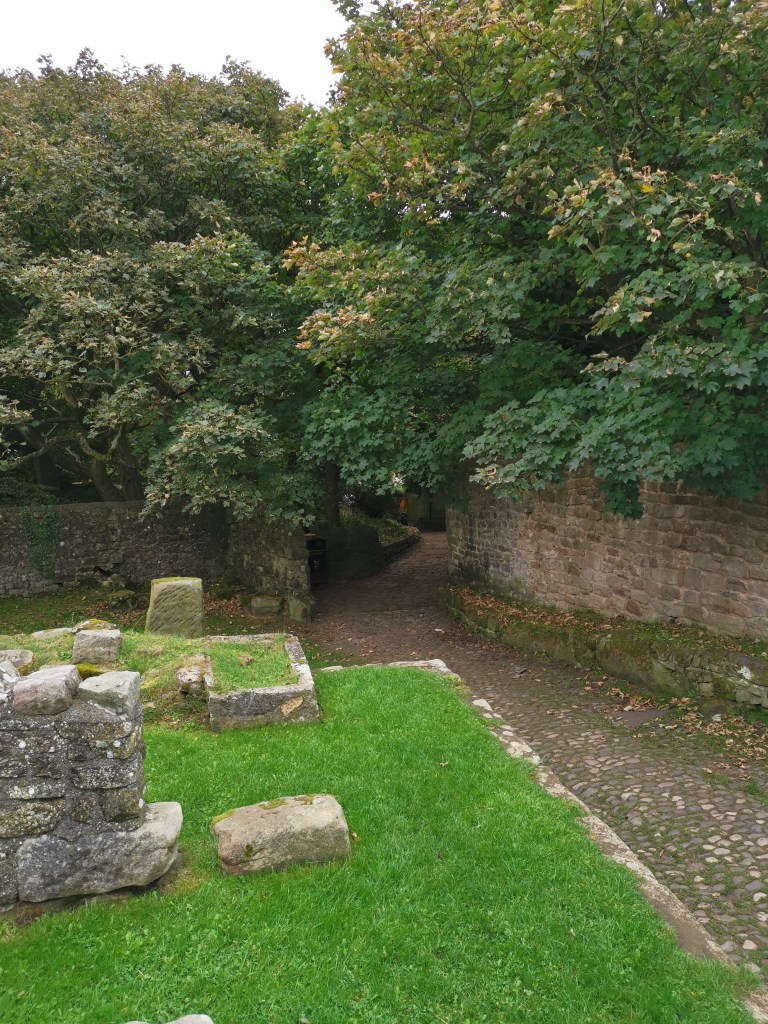
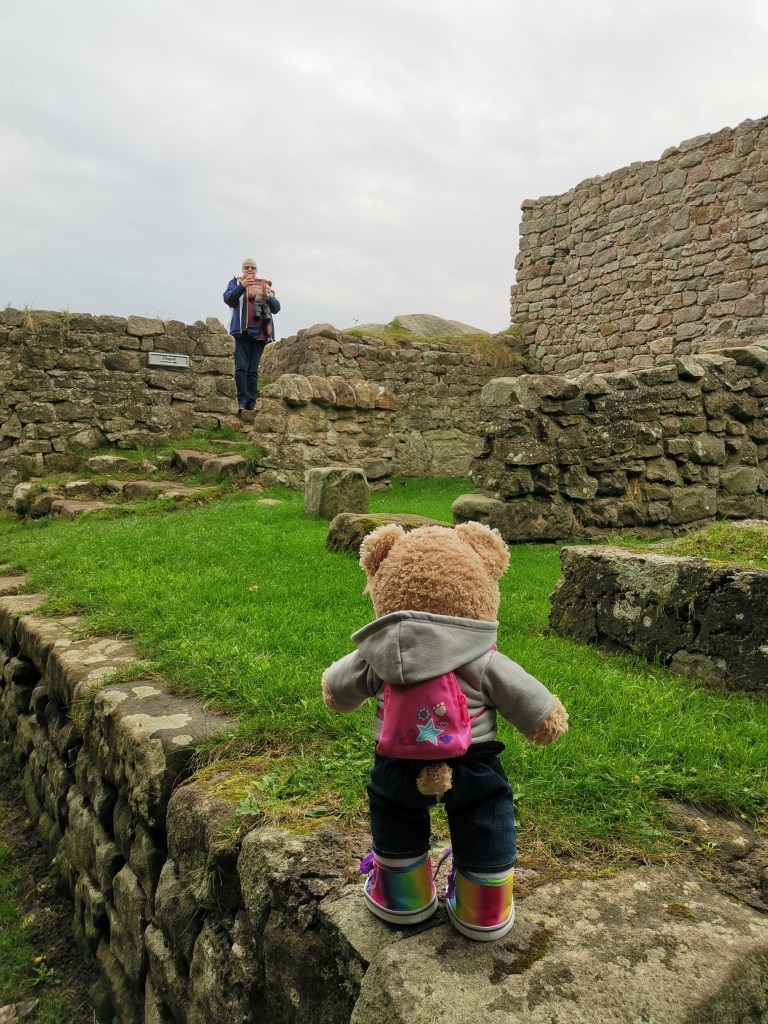
There wasn’t much of the church left which is understandable considering its position on the headland and the weather that it would have had to endure over 1200 years.

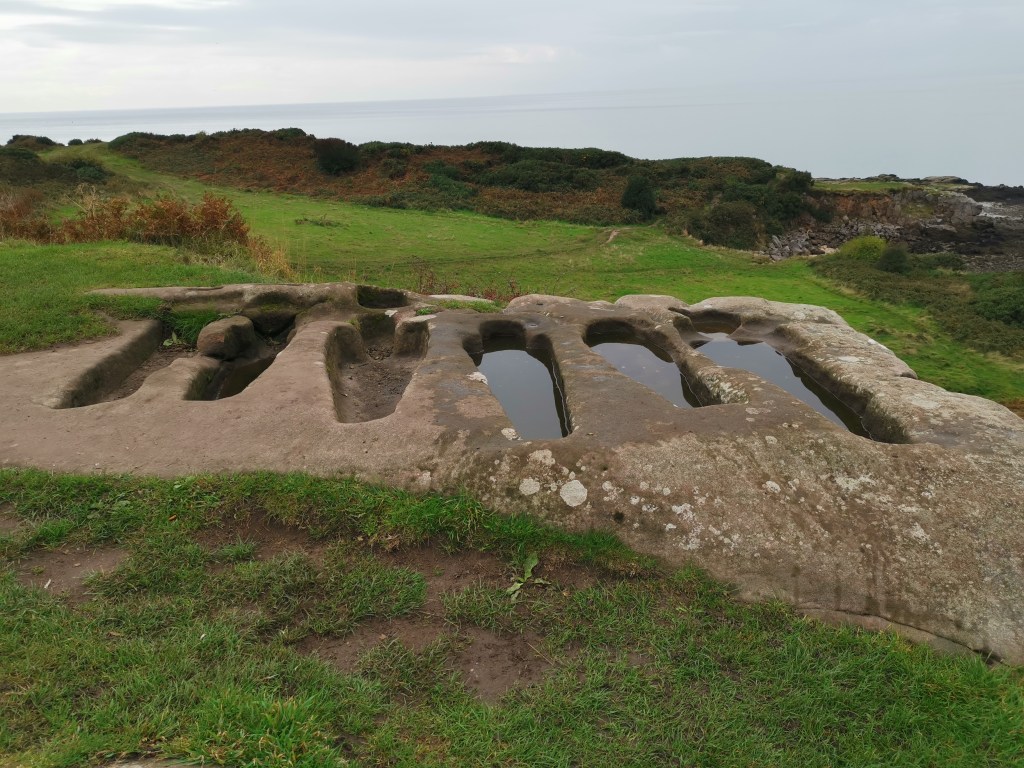
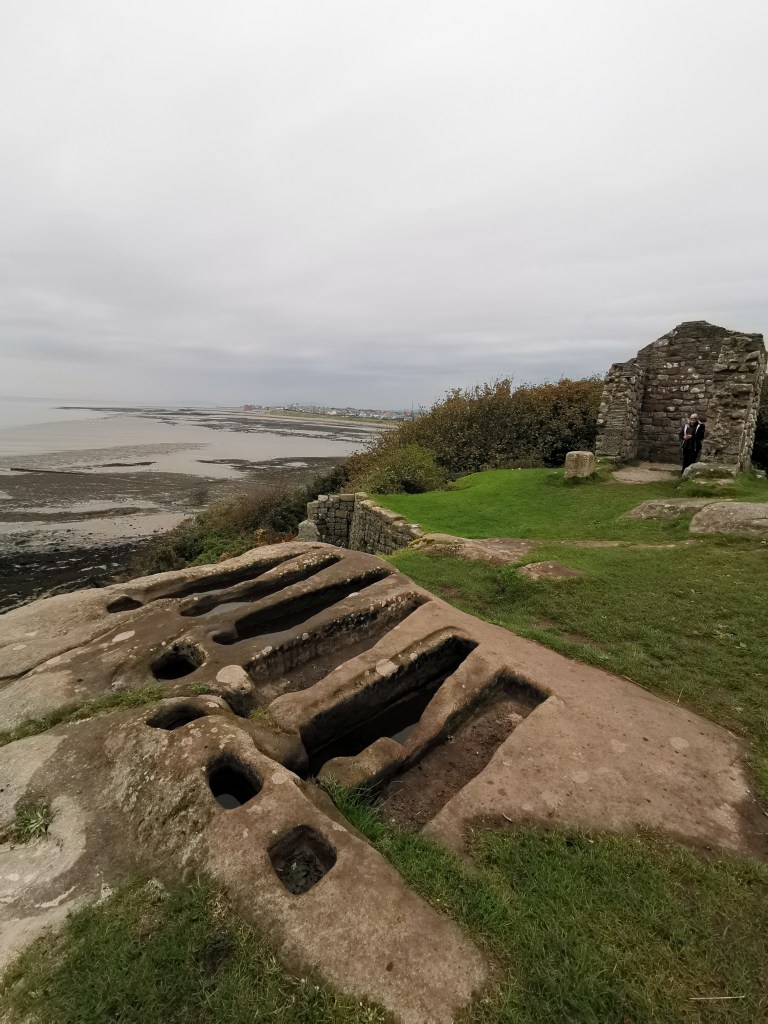
It was very unusual to see the rock-hewn graves. It struck me that with the land around the church being more like dirt or sand that it was probably the only way to make them last. I’ve never seen graves carved out of the rocks. One of them is small, like for a child.  How sad would that be if it was?

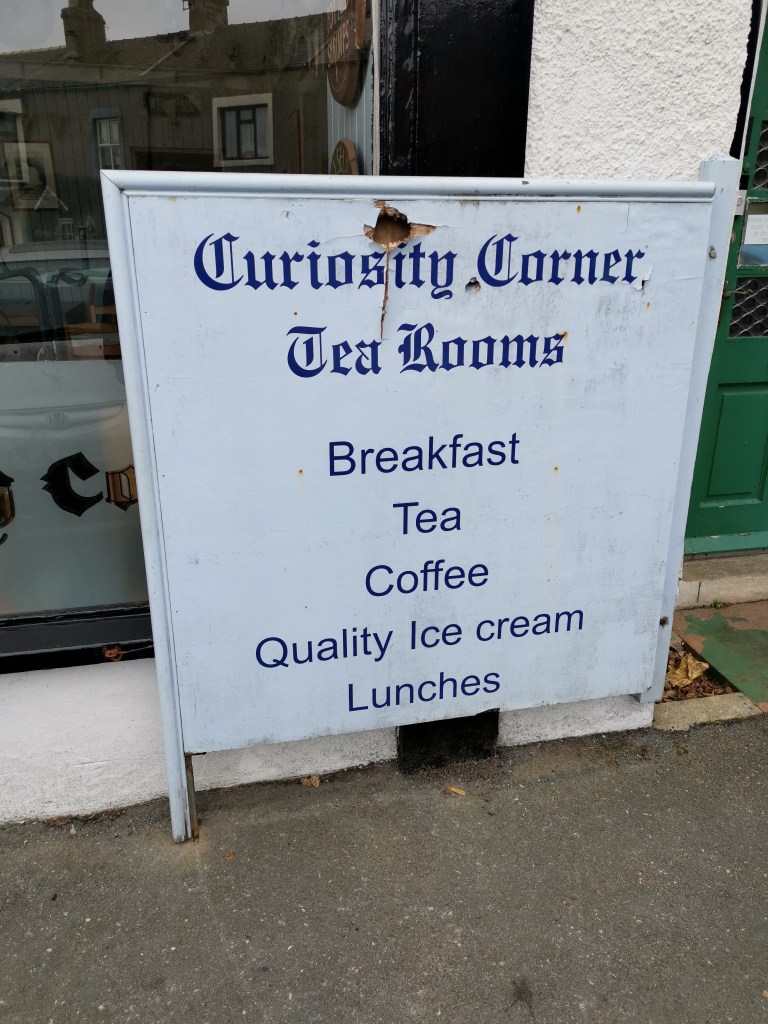
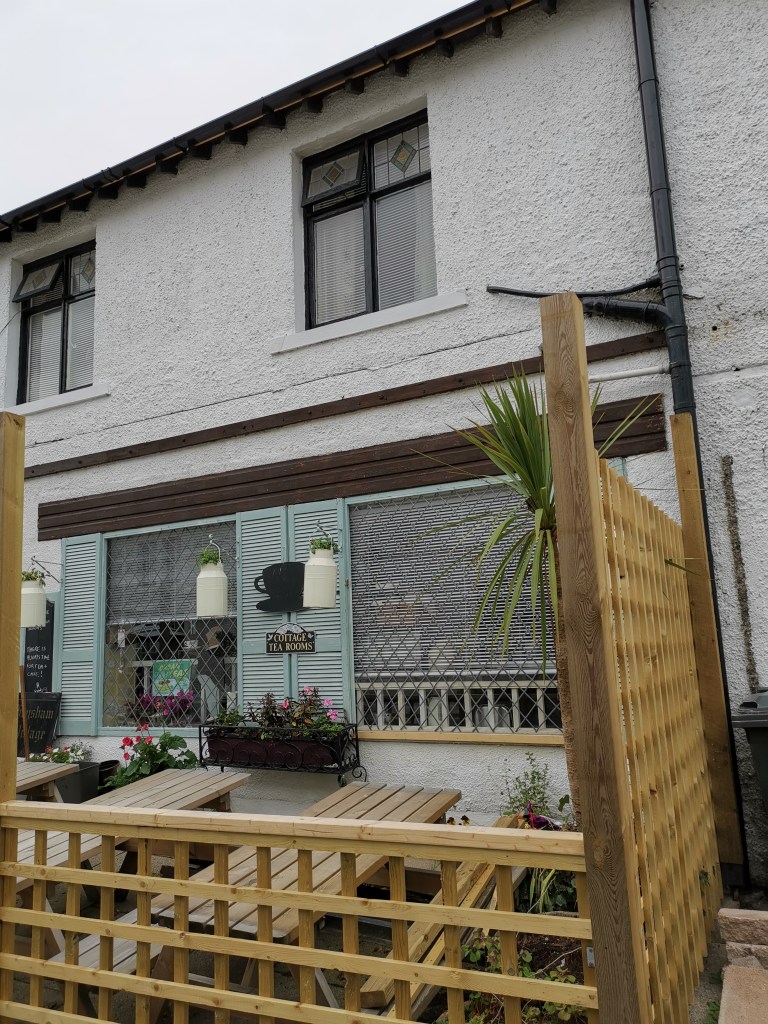
After having a look around St Patrick’s church, Janice and I wandered back to where Karen, Mike and Lulu were waiting by the tea room.  Time for lunch.

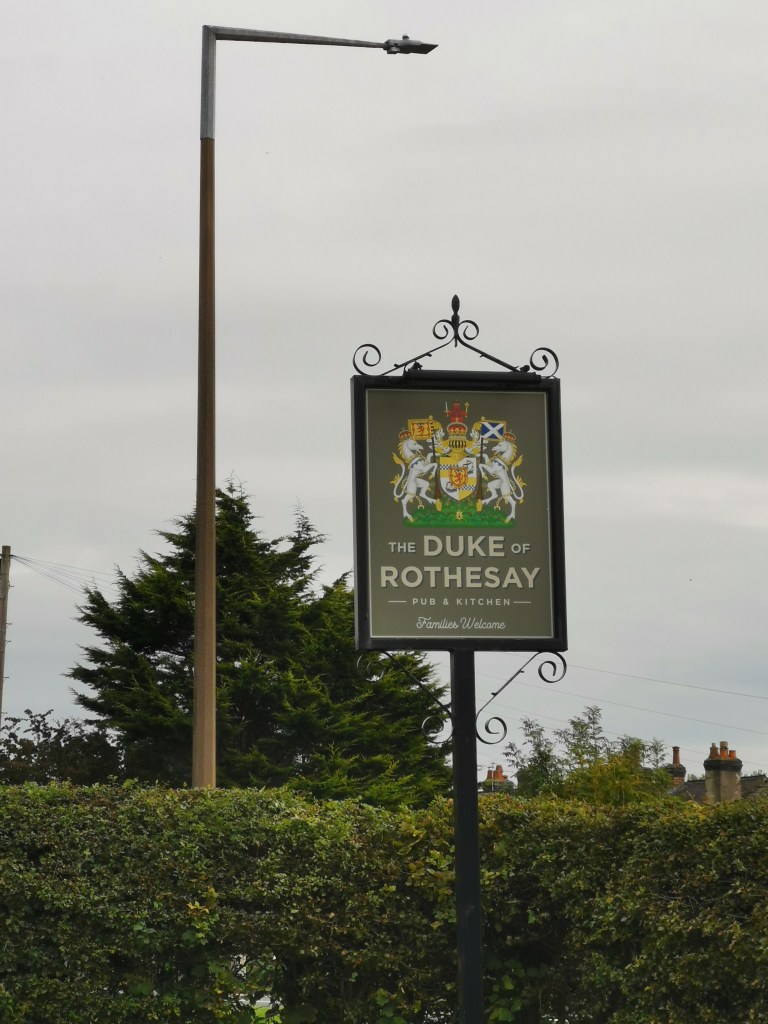
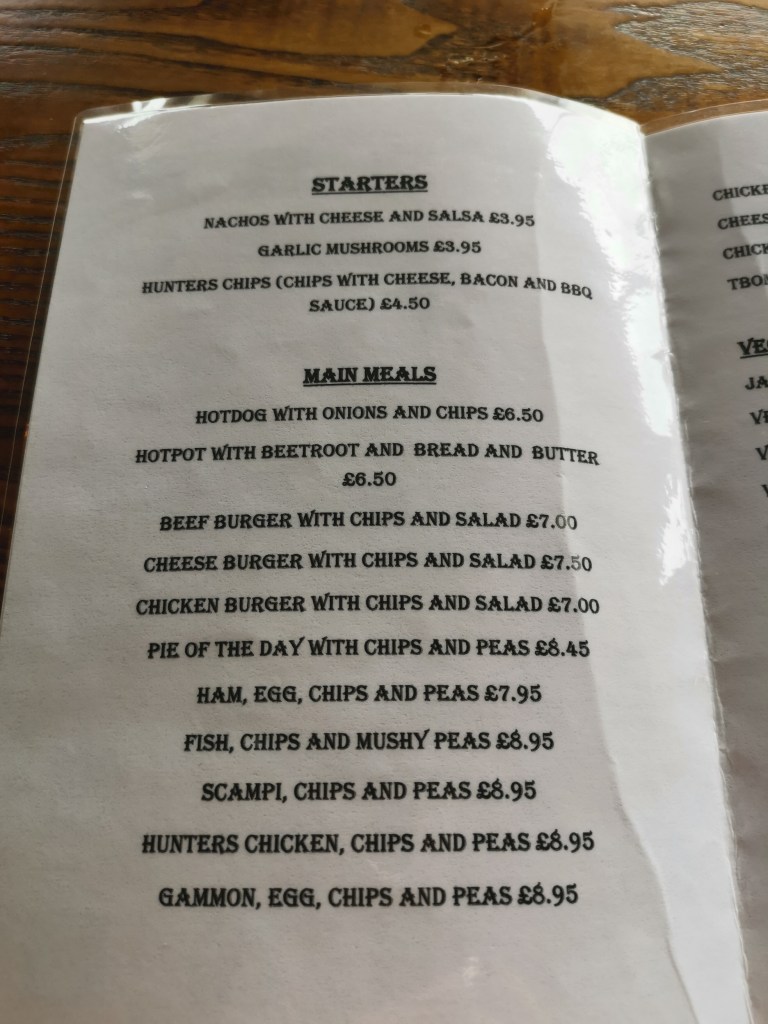
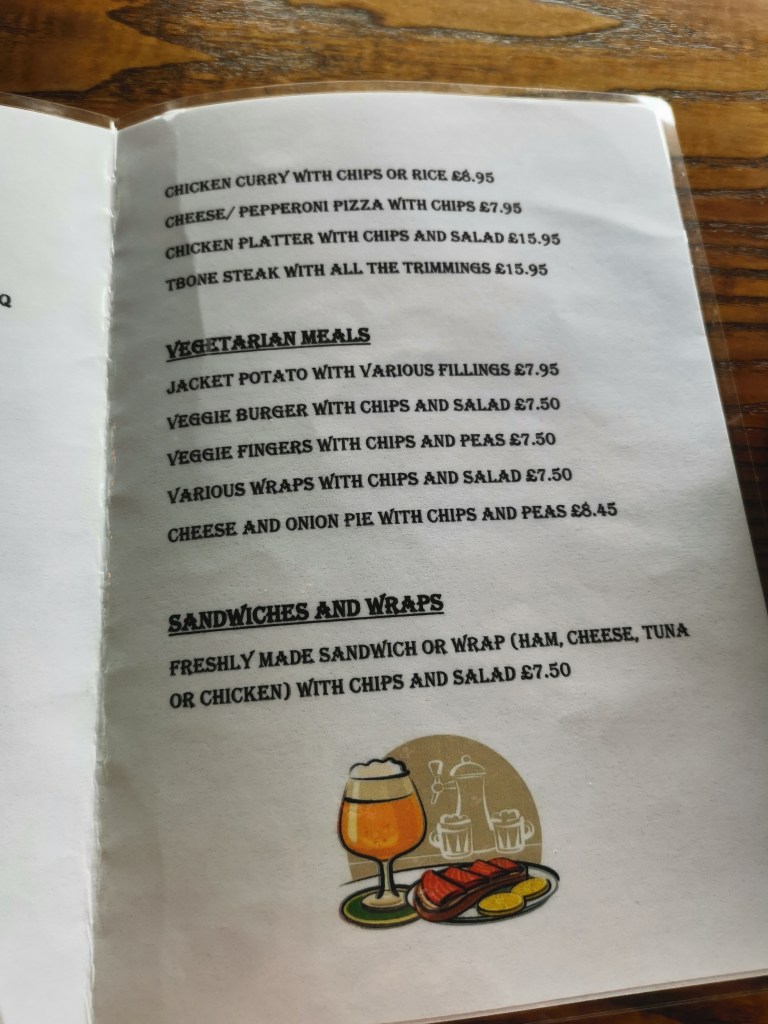
After trying a pub for lunch (not sure of the name) and finding that they didn’t allow dogs in the dining room and the only area to sit was at picnic tables where the smokers watch the soccer, we headed back to The Duke of Rothesay pub near the ferry terminal to the Isle of Mann.  Here our furry friend was welcome and we got a great booth table next to the window. 

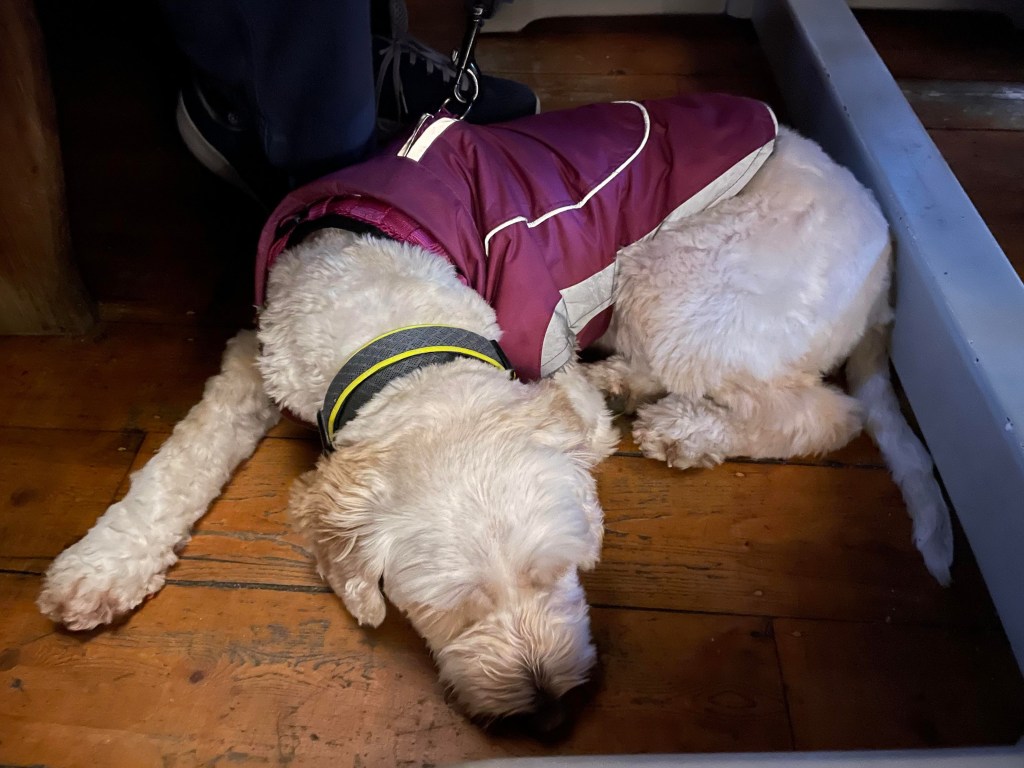
We enjoyed a lovely lunch together and Lulu enjoyed having a comfy bed to snooze on while we ate and talked.

Any sense of sadness over the lonely places we had visited this morning faded in the company of wonderful friends.

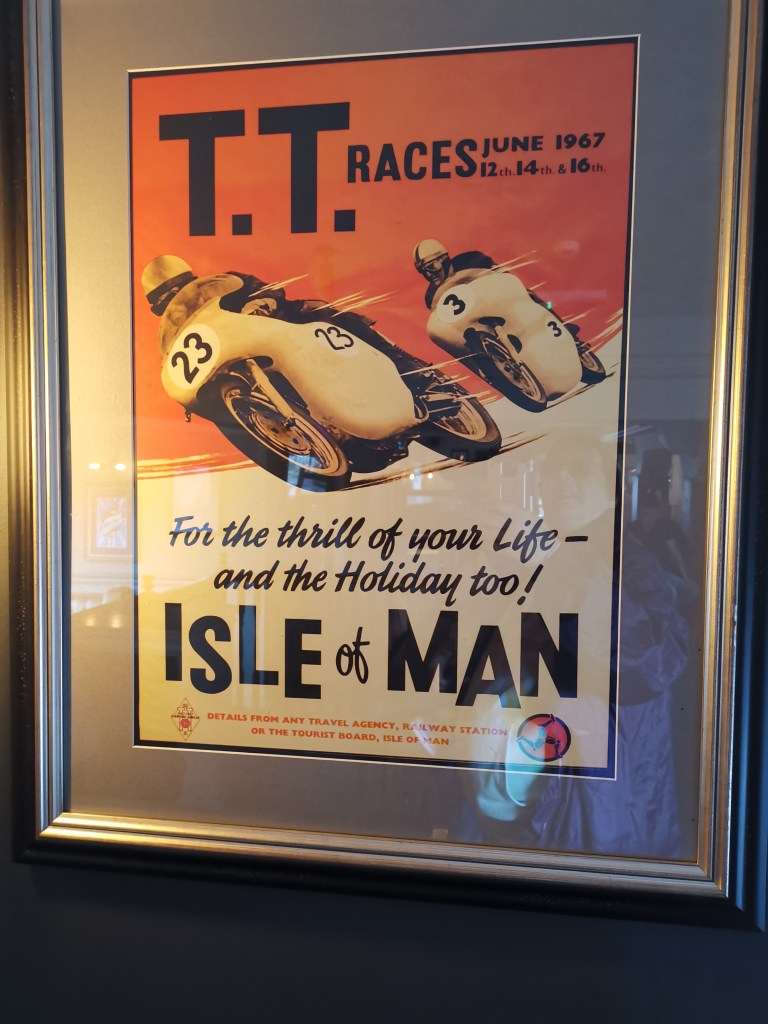
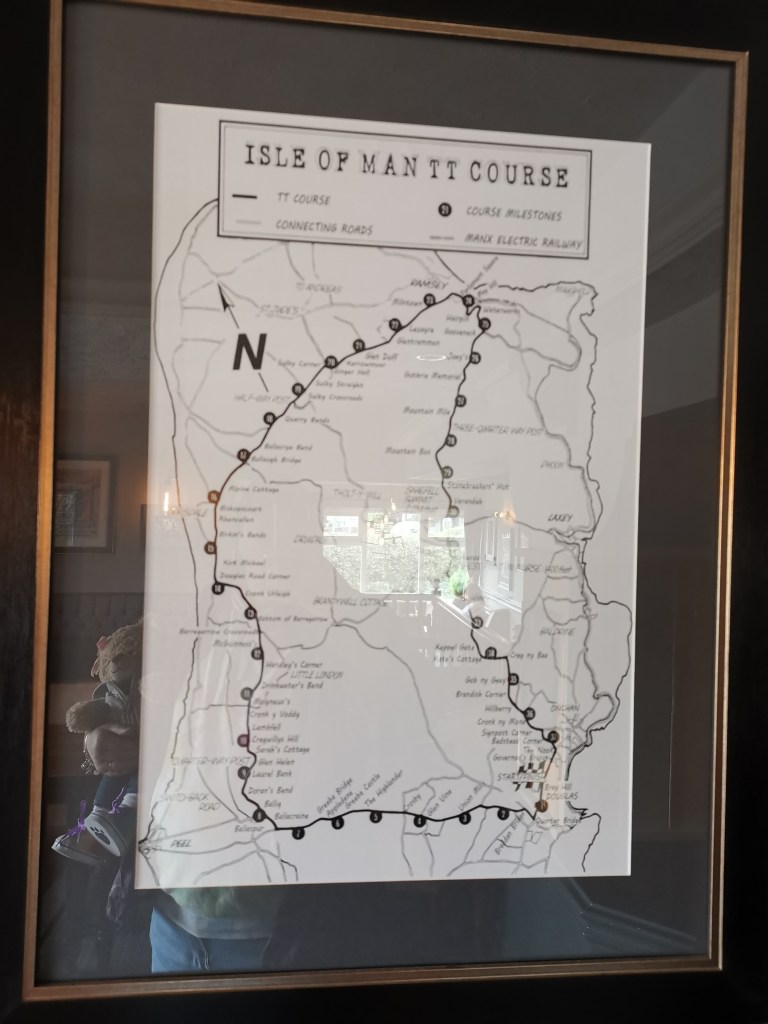
All around the walls of The Duke of Rothesay pub were references to the Isle of Mann TT Races.  I asked Mike what these were and he explained that it is a crazy motorbike race around the Isle of Mann held each year in Summer.

When I looked up information about the race around the island it is known as the most dangerous race.  More than 250 riders have died since 1907.  The record for riding the 60km course is just over 16 minutes at a crazy speed of 218kph in 2018 (Wikipedia).

I have never been to the Isle of Mann.  Mike and Janice went there recently, but very unfortunately Mike contracted COVID-19 and had to spend time in the island hospital.  Certainly not the holiday they had expected.  Mike believed he contracted the virus onboard the ferry boat to the island and now will wait until they launch the new ferry there in the next couple of years, before going again. Sounds like a wise idea. I will wait too.

Time to head off to our next destination back in Lancaster, the tower on the hill.

The Information from the National Trust Boards

The original Anglo Saxon chapel at this site is thought to have been established a short distance from the rock-cut graves during the 8tth century, around 1300 years ago.

What was it like?

Remanents of plaster and paint have been found at the site, indicating that the early chapel had decorated walls, suggesting a wealthy patron. The chapel would have been too small to accommodate a congregation, so preaching is likely to have taken place outside, an idea supported by the discovery of a large rock-cut socket for supporting a free-standing cross under the eastern wall of the later chapel.

The chape was rebuilt and extended in the 10th century, possibly due to the increasing popularity of St Patrick as a patron saint.  Following this, the existing walled enclosure developed as a cemetery.  Burial of at least eighty men, women and children have been recorded in the area around the chapel dating from the 10th and 11th centuries.  Remarkably, the remains of 10 individuals were recovered from within the chapel itself.

Rock-Cut Graves

It is likely the graves would have been originally covered with heavy stone slabs and the sockets at the head of the graves indicate that each one would have been marked with a cross.

It is thought that the graves contained disarticulated bones, rather than complete skeletons and that they may have functioned as ‘reliquaries’ to hold the remains of saints and other important Christians.  Perhaps even those of St Patrick himself.  As such they may have acted as an important focus for veneration and pilgrimage, with St Patrick’s chapel being established here to draw upon their significance and association.

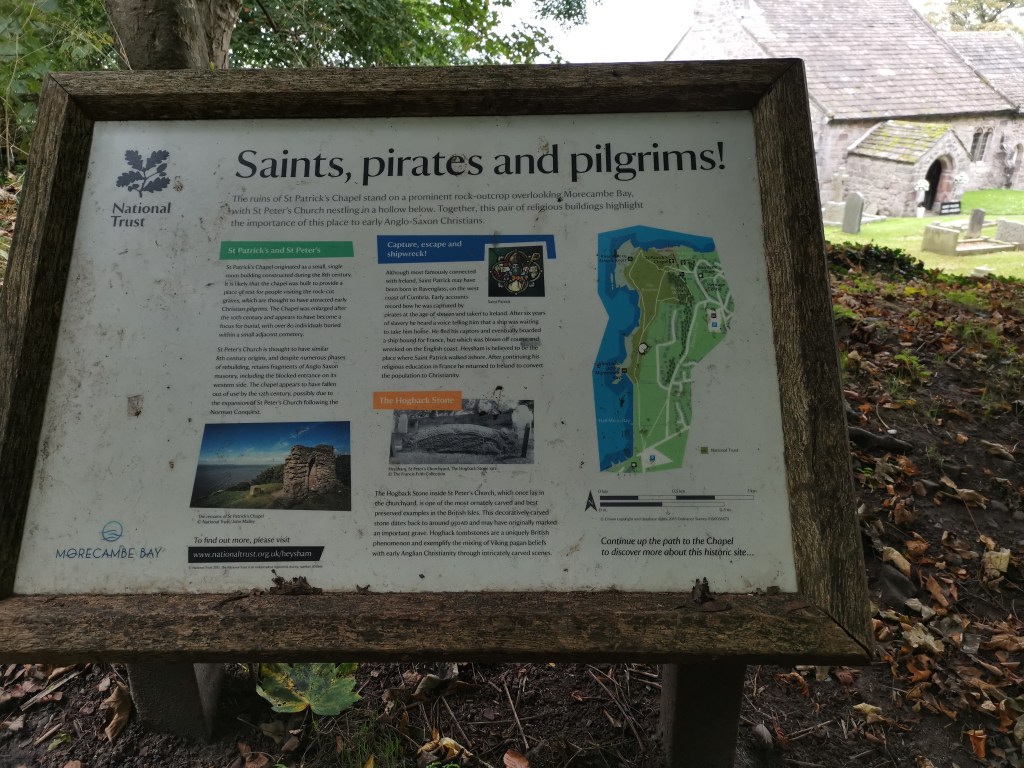
The Saints, Pirates and Pilgrims board gives a history of Saint Patrick

Although most famously connected with Ireland, Saint Patrick may have been born in Ravenglass, on the west coast of Cumbria.  Early accounts record how he was captured by pirates at the age of sixteen and was taken to Ireland.  After six years of slavery, he heard a voice telling him that a ship was waiting to take him home.  He fled his captors and eventually boarded a ship bound for France, but which was blown off course and wrecked o the English coast.  Heysham is believed to be the place where St Patrick walked ashore.  After continuing his religious education in France he returned to Ireland to convert the population to Christianity.

The Lake District

15 October 2021

If you live in England, there is a very good chance you have visited this magical part of the world. Even living in Australia, the reputation of the Lake District is used as a measure of natural beauty. Parts of Tasmania, the Apple Isle off the coast of Australia, are described as being Australia’s Lake District, wild and beautiful.

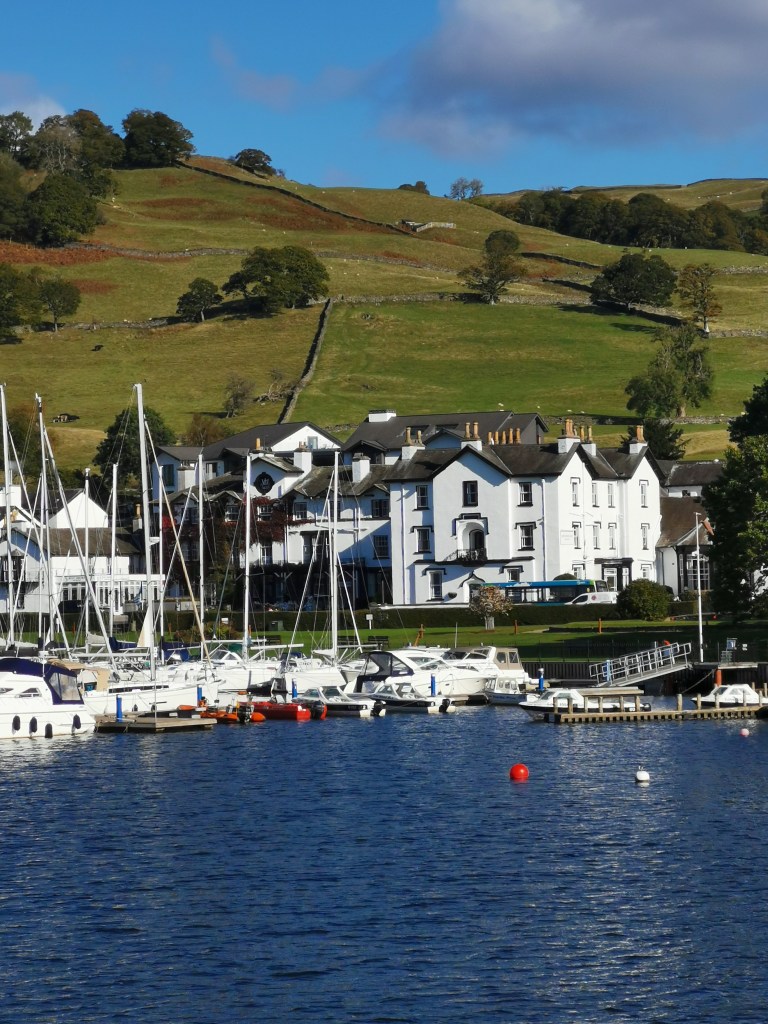
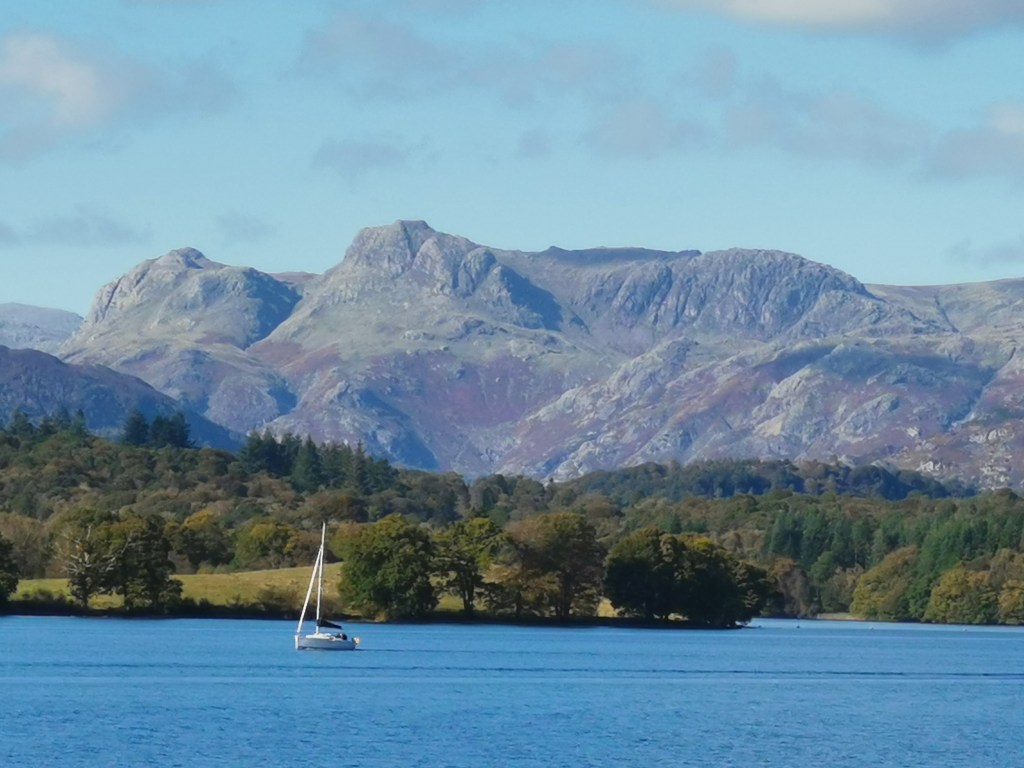
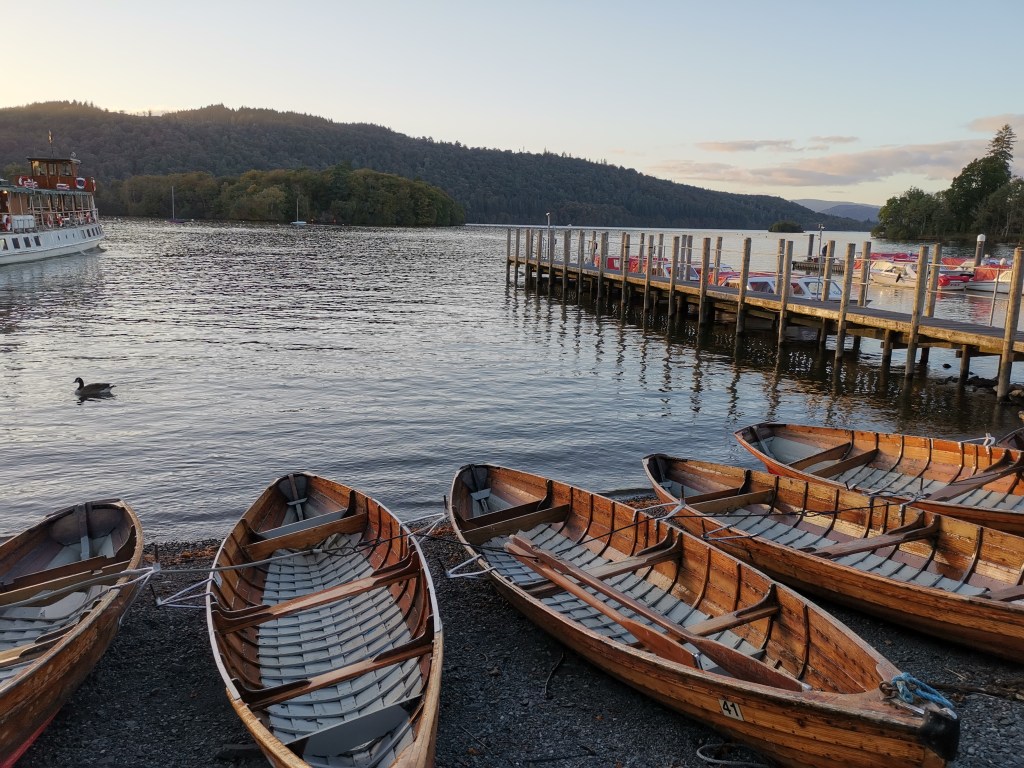
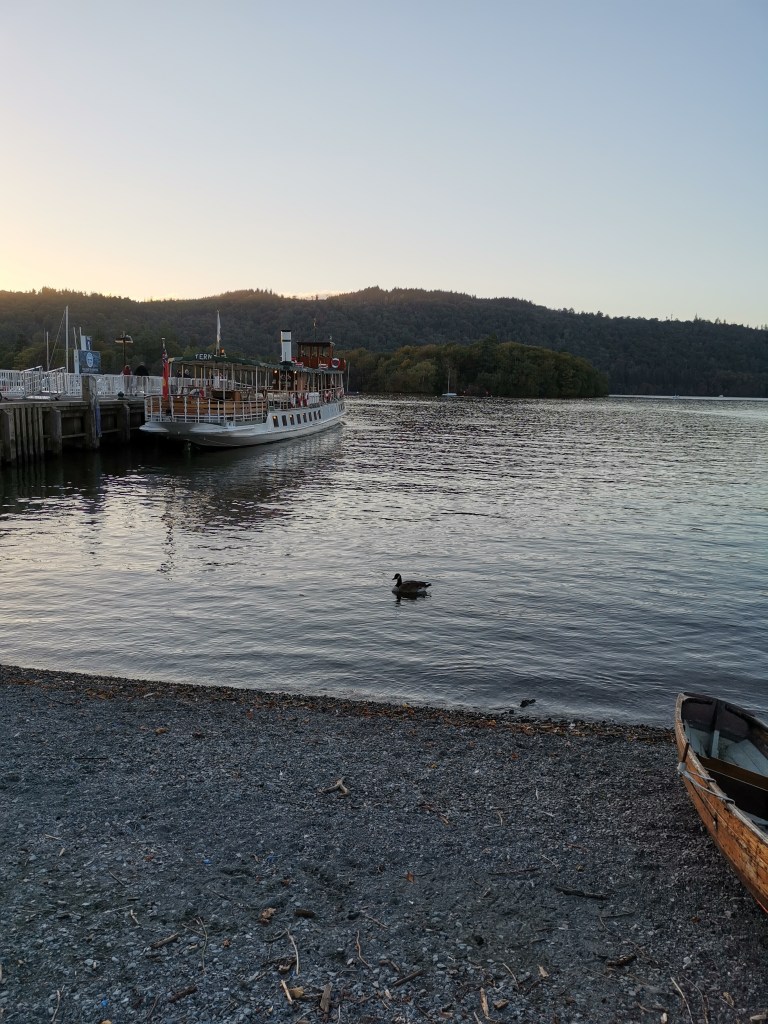
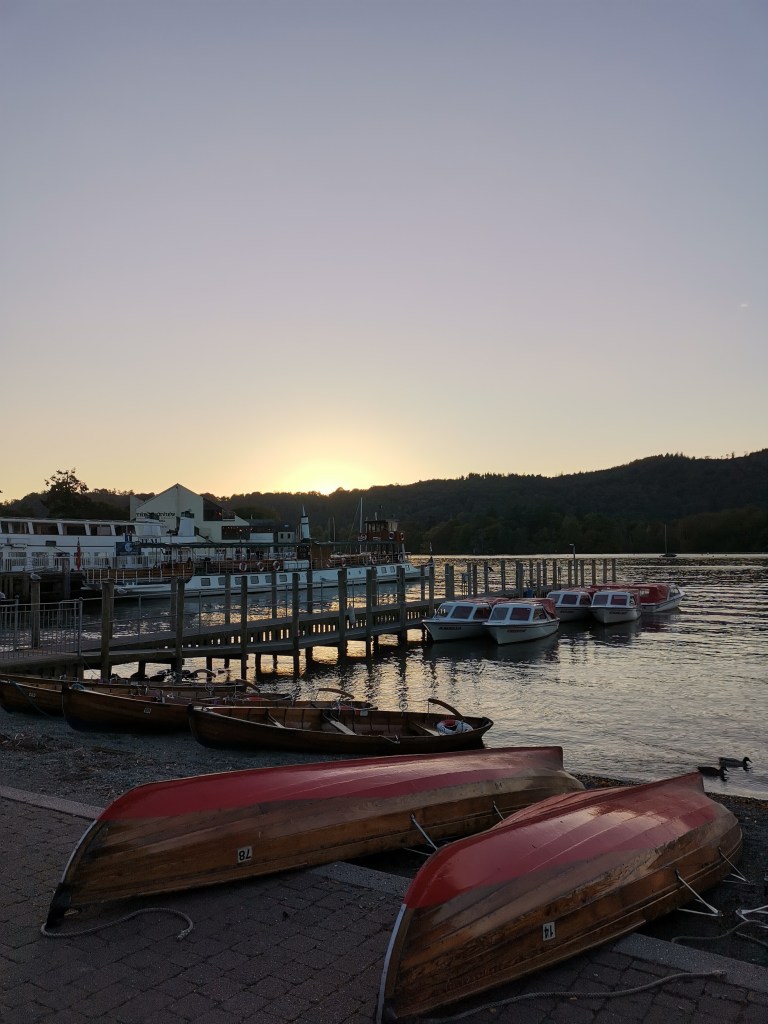
View from the Lakeside dock of Windermere

I have had the opportunity to visit both of these places and now I live in England, the chance to visit the Lake District with friends was something I couldn’t miss.

The last time John and I had visited the Lake District was in 2019 when I drove our hired motorhome around the narrow roads and through the little towns. I had to find car parks that would take a motor home so that we could stop and see the beauty that is in every direction. I couldn’t take my eyes off the road as I was driving and concentrating on being able to squeeze past oncoming cars and navigate the winding roads.

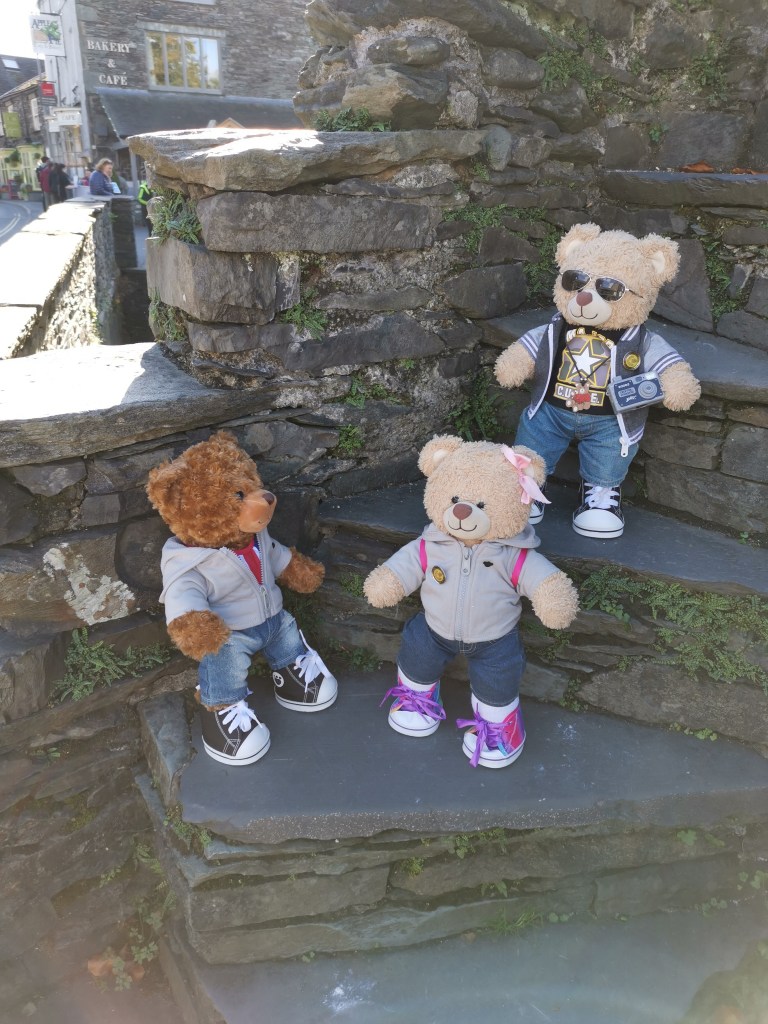
This time, my visit would be with my friends, with Mike driving, along with Janice, Karen and Lulu the dog and some of our bear kids. I was really looking forward to being a passenger in Mike and Janice’s car and being able to relax and enjoy the stunning countryside.

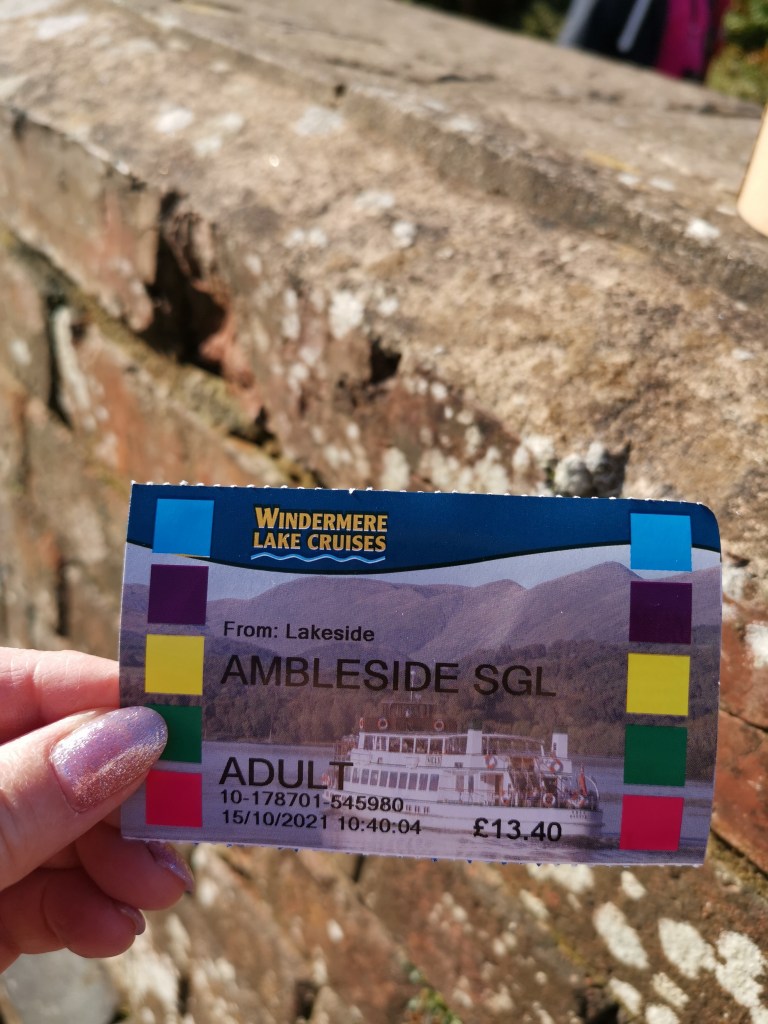
Mike and Janice had sorted out the itinerary for our Lake District experience, which sounded perfect. We were going to start with a cruise on Lake Windemere from Lakeside to Ambleside, with a brief stop into Bowness. We would meet Mike and Lulu at Ambleside, where we would have a lunch break. Then Mike would drive us to Grasmere, a pretty little village that is the resting place for William Wordsworth. Then we would return to Bowness for dinner.

Karen and I were staying in the Broadwater Guest House in Morecambe and Mike, Janice and Lulu came to pick us up after breakfast. The great news was we were blessed with a beautiful morning, perfect for the cruise on Lake Windemere. It would be about a 45-minute drive up to Lakeside, which is at the western end of Lake Windemere.

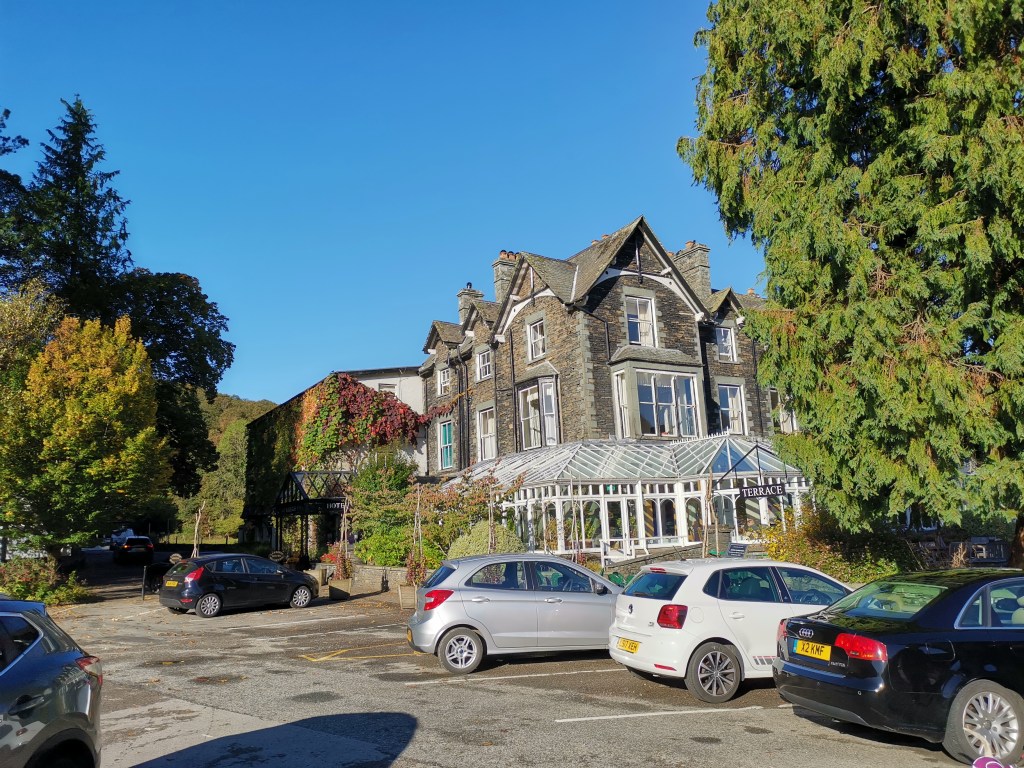
Lakeside is home to a grand looking hotel, the dock for the cruise boat, a station for a steam train and an aquarium.

We were lucky enough to be in time to see the steam train arrive at the station.

While we waited for the cruise boat to arrive, it gave us time to get a drink and snack from the little cafe at the station and to admire just how stunning the lake area is in the bright morning light.

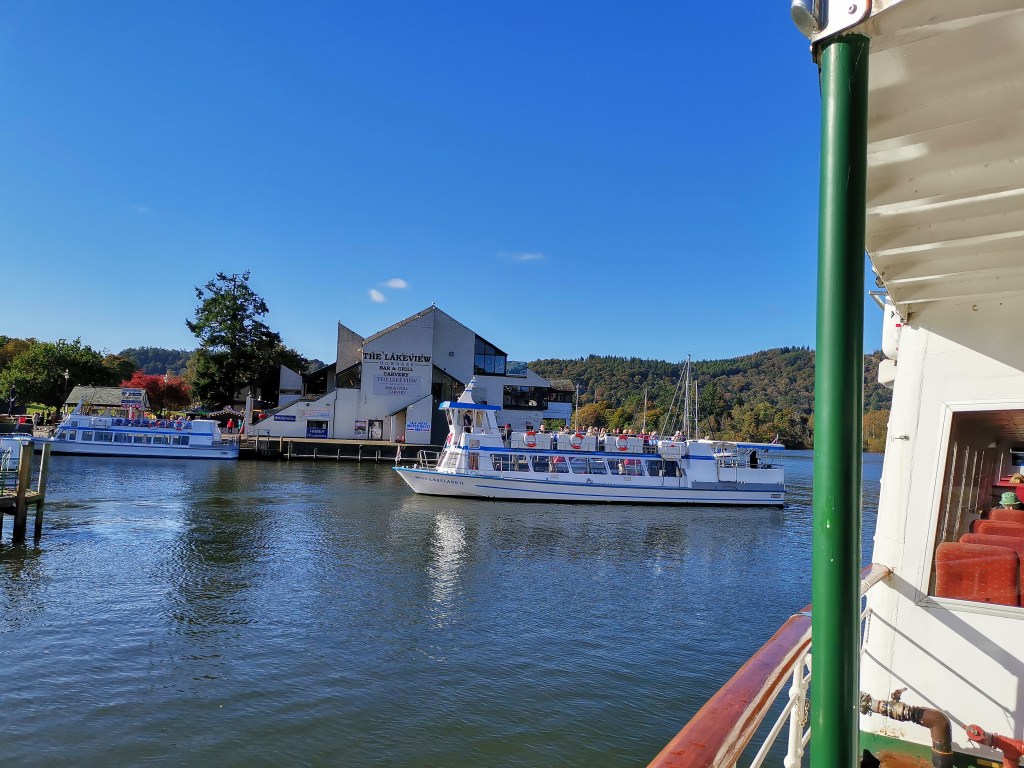
It didn’t take too long before the boat arrived. It is called the Swan. We farewelled Mike and Lulu and made our way onto the deck with a screen surrounding the seating area, which very nicely blocked the wind that was quite cold as we travelled. We were free to move around the boat and take photos during our journey.

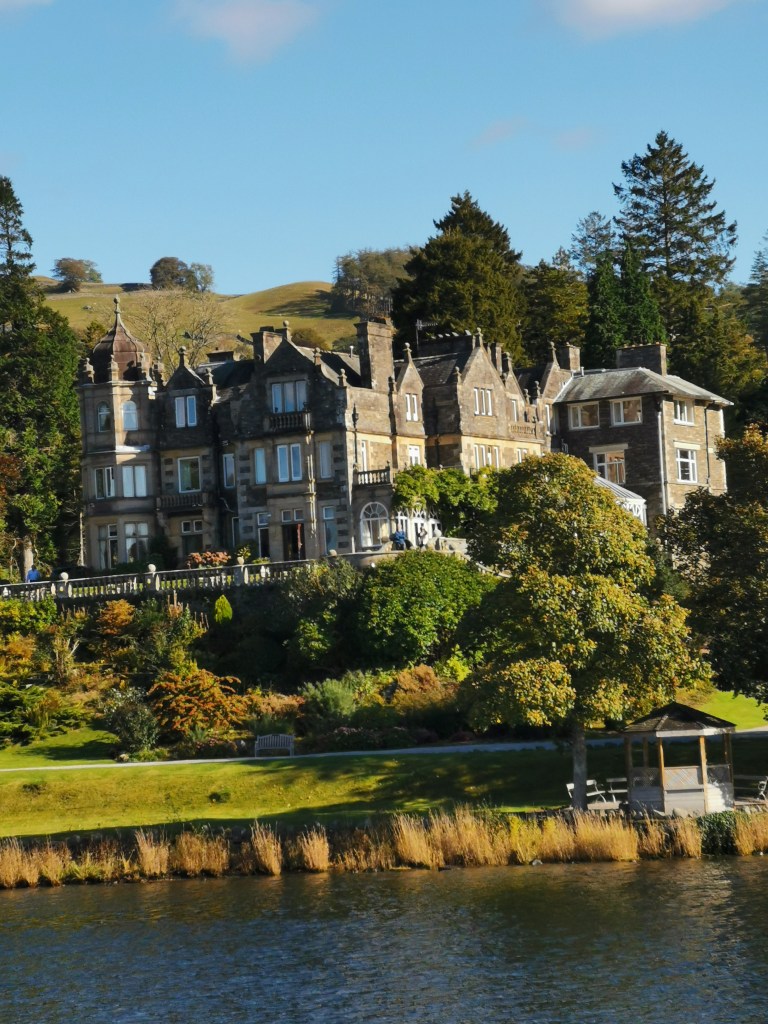
We were certainly blessed with beautiful weather and the cruise was on the calm water of Lake Windemere. There was some narration of our journey with things to look out for as we cruised along. Many historic properties overlook Windermere, with some of them now turned into hotels.

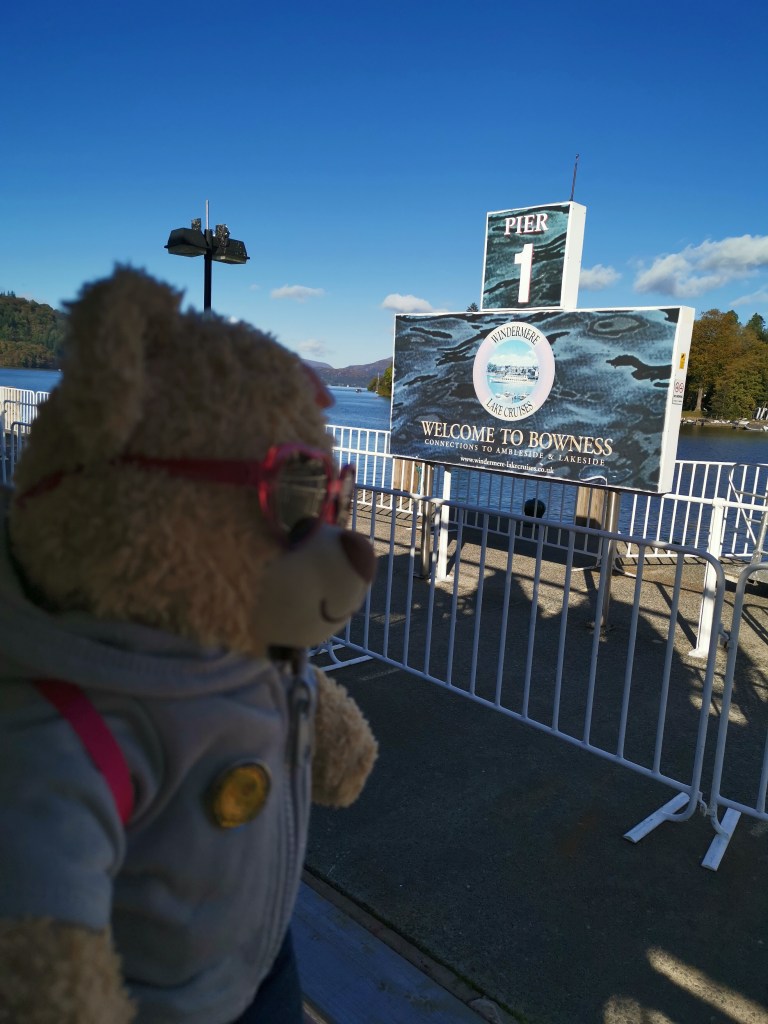
We cruised into Bowness to allow passengers to leave at the halfway point before we headed off for the next part of the journey to Ambleside.

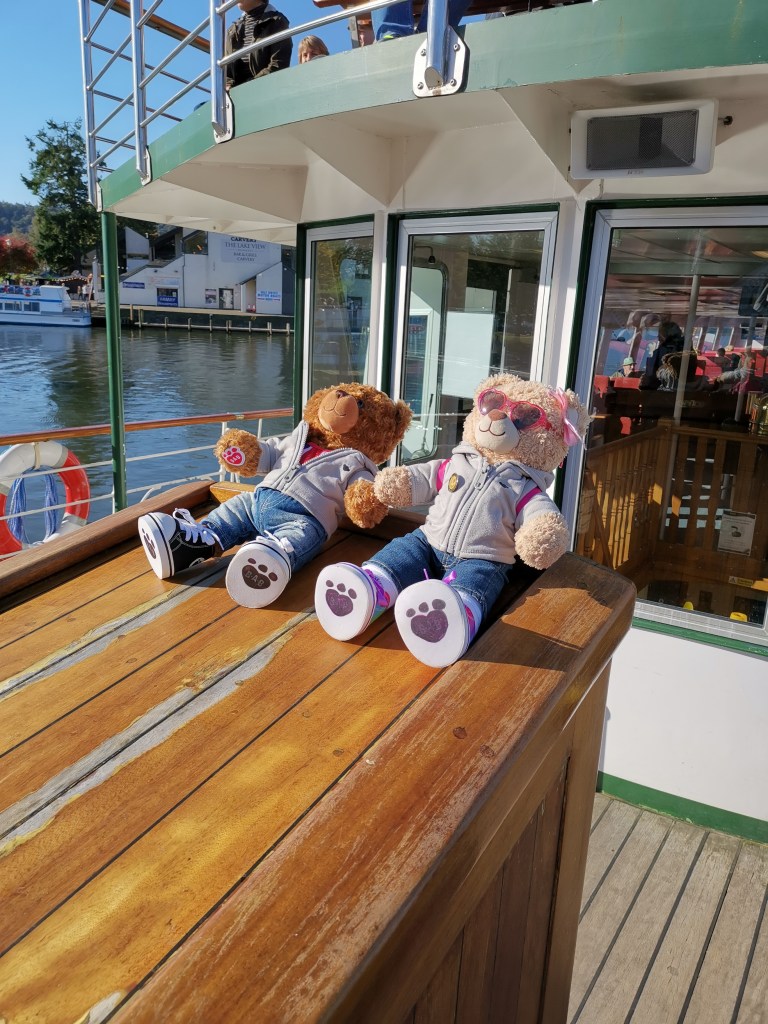
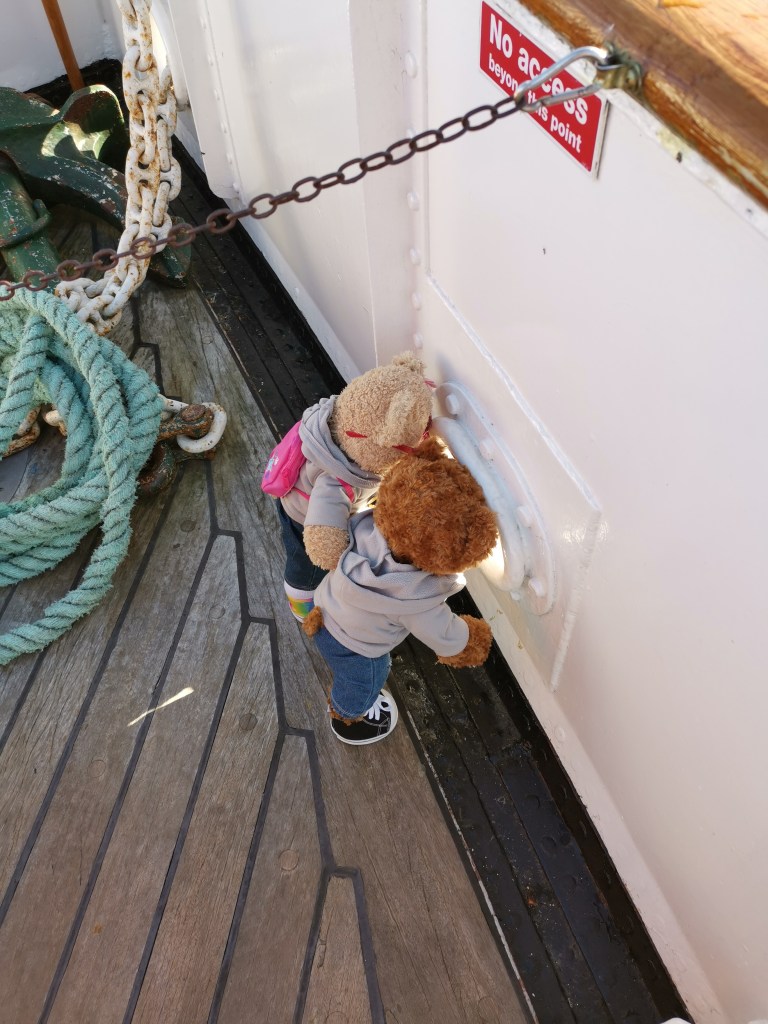
It gave us each time to let our Bear Kids have fun and entertain the other passengers.

The scenery started to change as we continued the journey and we started to see the Fells, the rugged mountains that challenge climbers to scale their slopes. They are so beautiful.

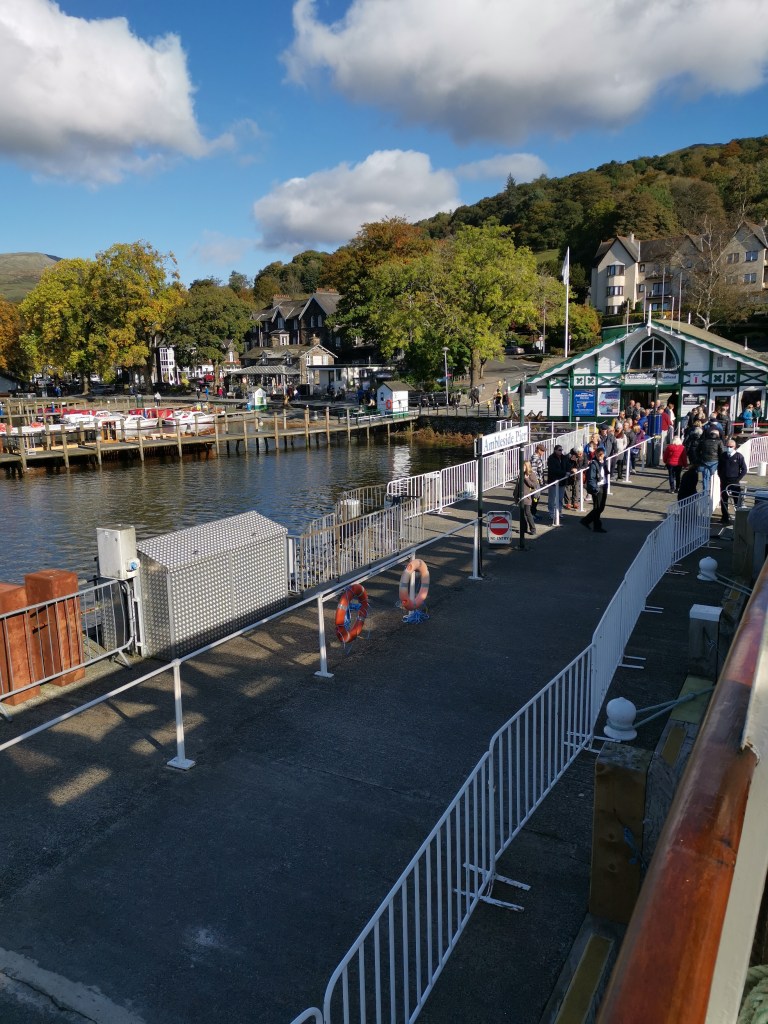
Snow and Fin got to meet one of the crew when we docked at Ambleside. He was really happy to have his photo taken with them and asked if he could also get a photo taken on his phone so that he could show his 13-year-old daughter, who also has a family of bears, like us.

If you would like to see the journey set to music, please check out my video here.

Once we had finished having fun with the crew, we joined Mike and Lulu to go head off and have lunch. Lulu the Cockapoo was very happy to see her mum.

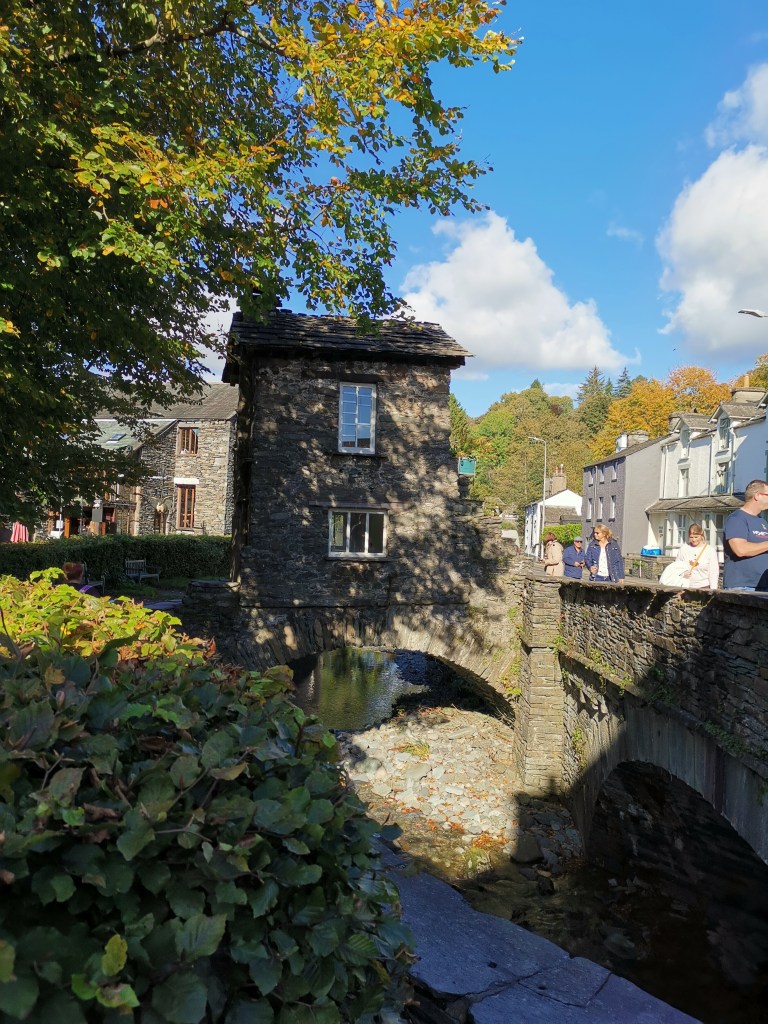
Mike found a park in the town centre and we walked through to the Flying Fleece cafe for our lunch. It is alongside an amazing tiny house that is built over a stream. It is The Bridge House and it was built in the 1600s. For me, who has just returned from living in a country where civilisation only started in 1788, it is wonderful to just be able to walk up next to an incredible building like this and mind-boggling to think that a family of 8 lived here at one stage. Now it is looked after by the National Trust. My Bear kids loved climbing up the narrow steps to the front door.

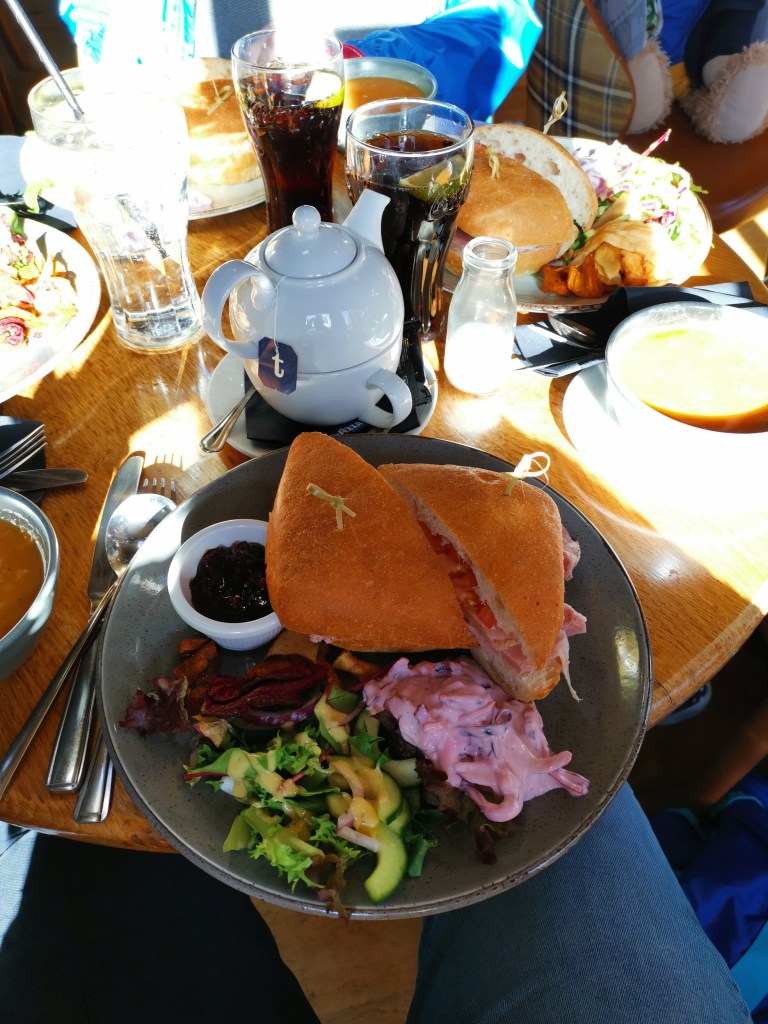
Lunch was lovely. we sat inside next to a fireplace so we were toasty warm and I enjoyed nice hot soup and a lovely ham sandwich. The amount of ham inside was very generous. This was the first time I have been to Ambleside, having only driven through it on other occasions on holidays with John.

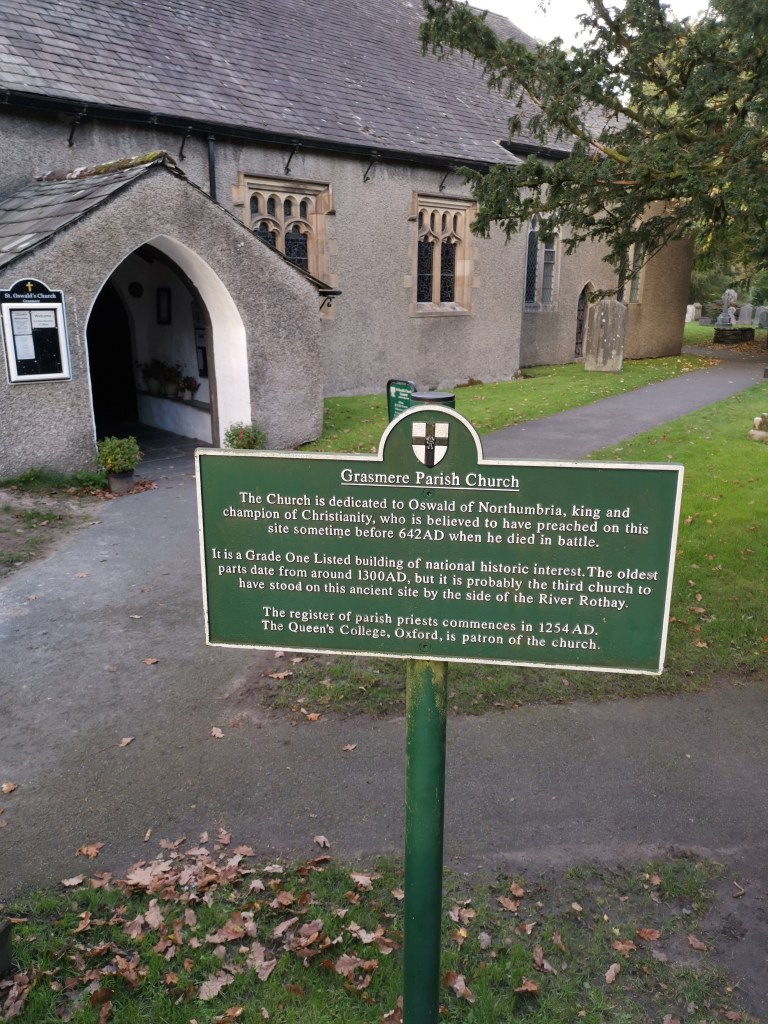
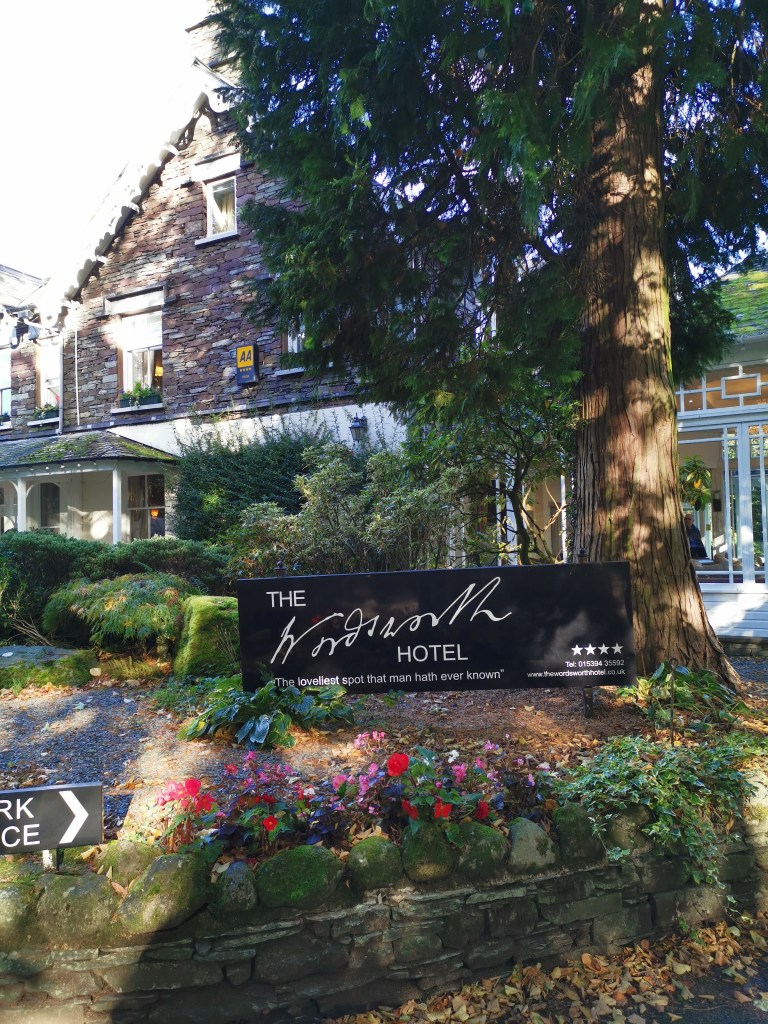
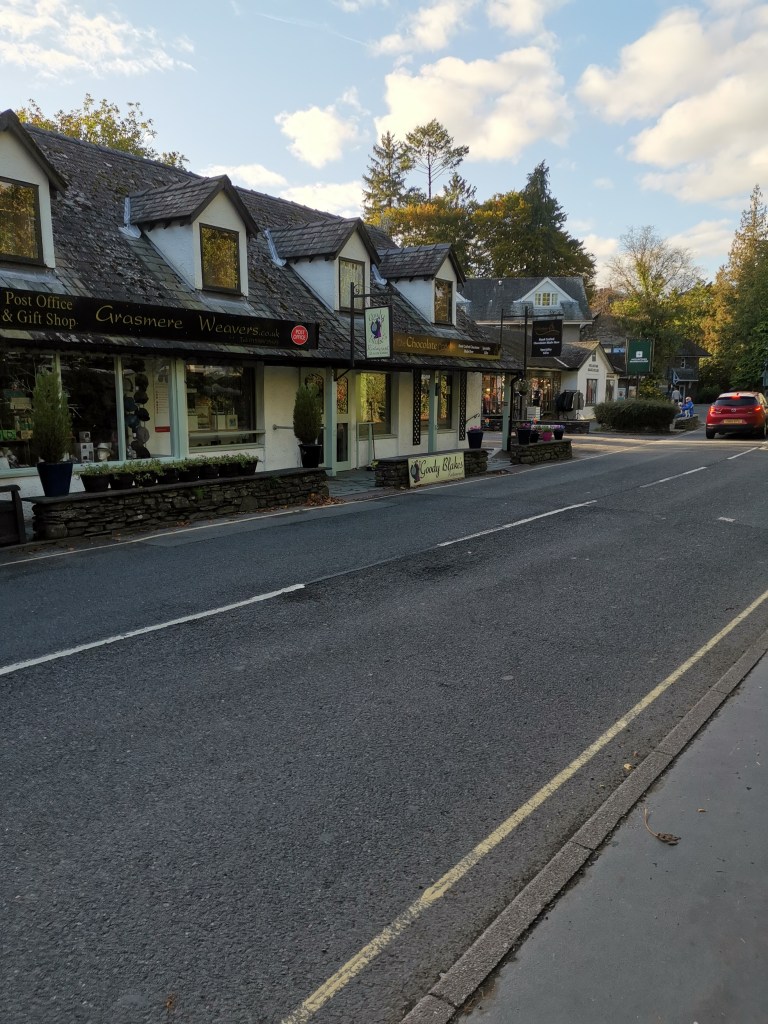
After lunch, we drove up to Grasmere, another lovely little village in the Lake District, although this one isn’t on the shores of any of the lakes. Grasmere is well known as the home of the poet William Wordsworth. On previous visits here, we have ventured into the tiny church of St Oswald’s and seen the resting place of William Wordsworth and his family in its graveyard. It is also where his home, Dover Cottage, which is open to the public along with his garden.

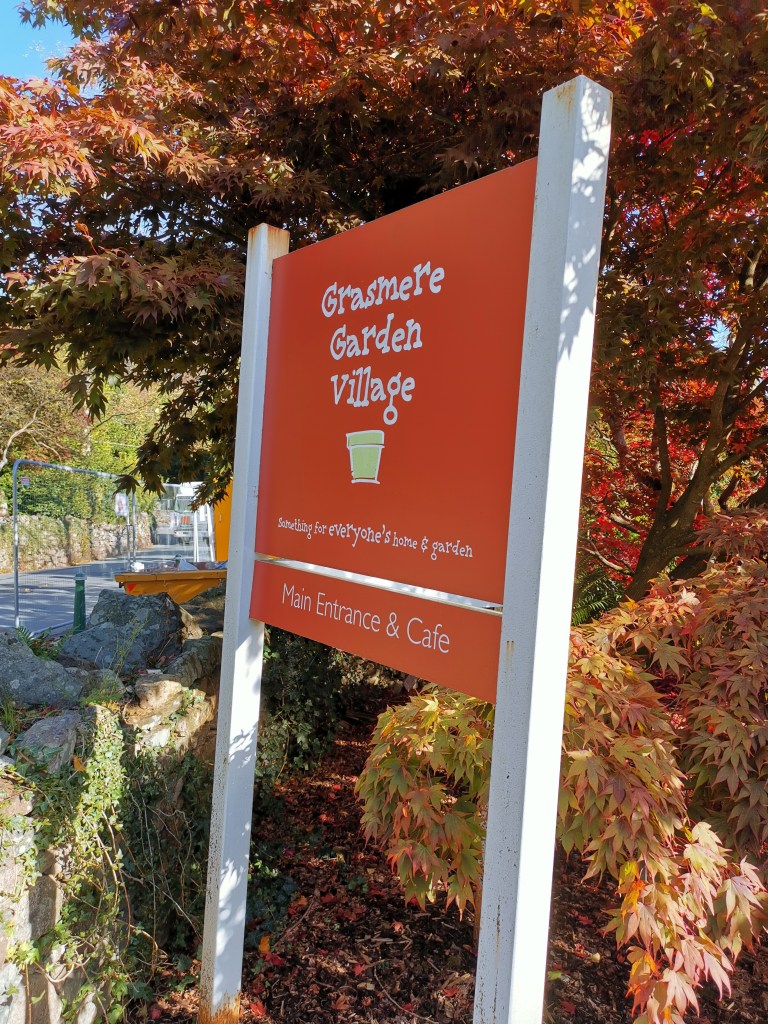
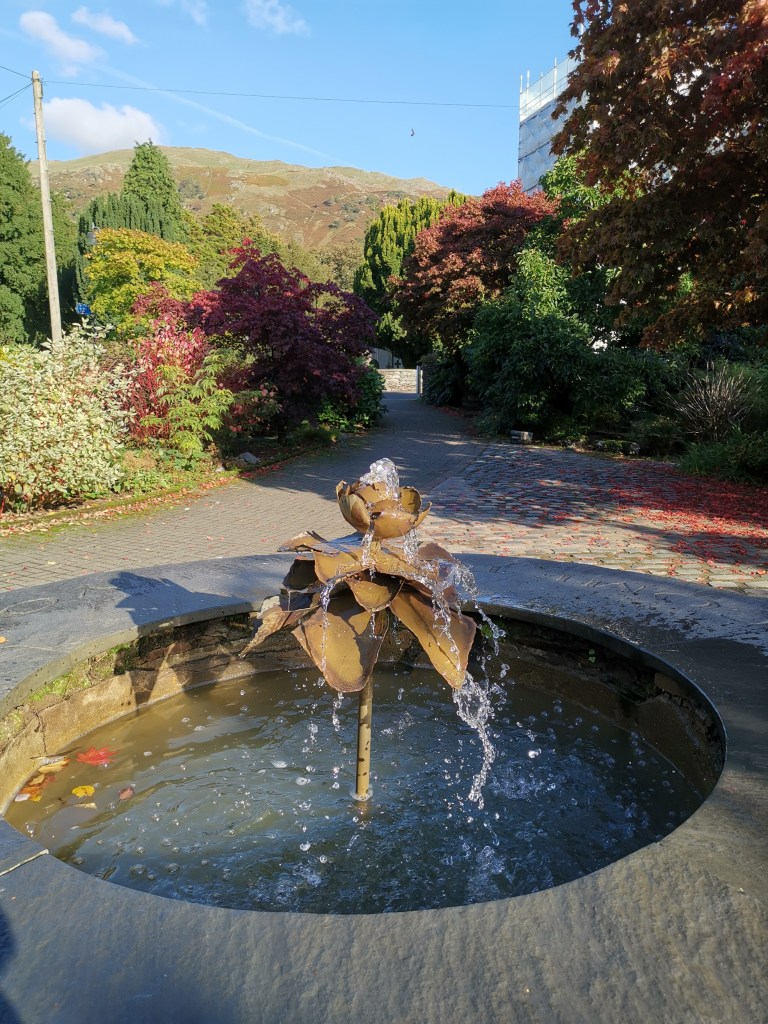
Mike parked us very close to the garden centre in the town and we walked through their front area. What I think is lovely about the garden centres I have been to here is that they all have had cafes in them, which makes for a nice experience when coming to browse through the plants and other things they sell that you can call in for a cup of tea. Where Janice and Mike live, the garden centre has two cafes and has a view of the sea

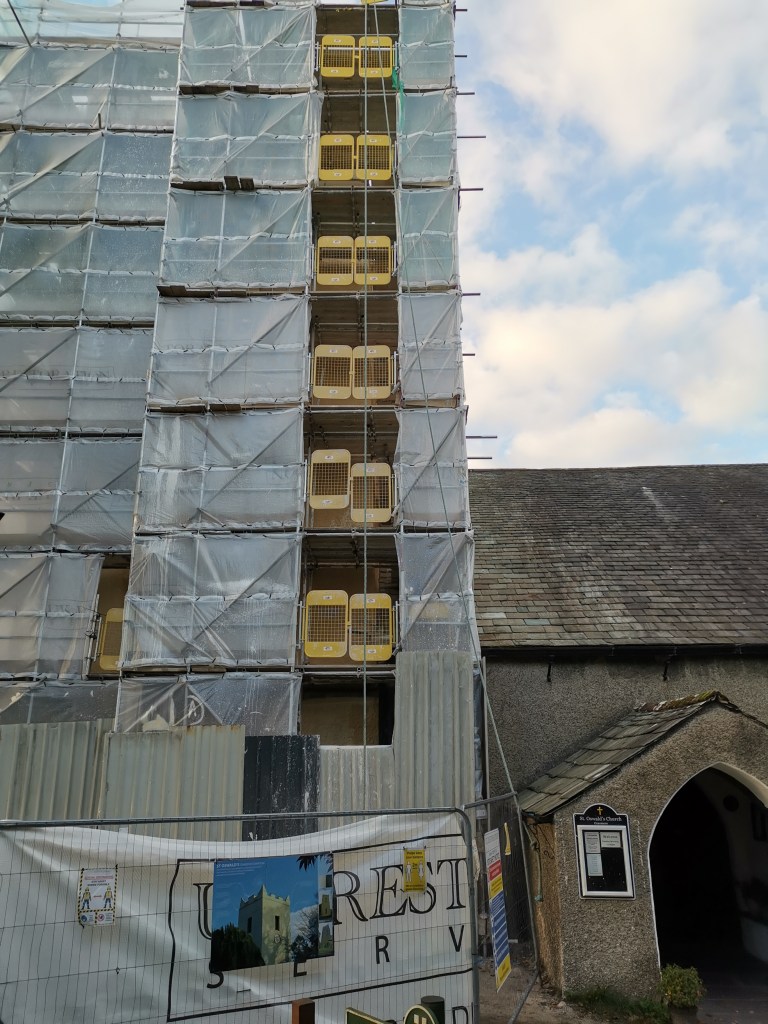
As we passed by St Oswald’s, the bell tower was covered in protective scaffolding as it is undergoing restoration work. It is good that they are looking after the church. Parts of it were built in 1250AD and the site dates back to 642AD.

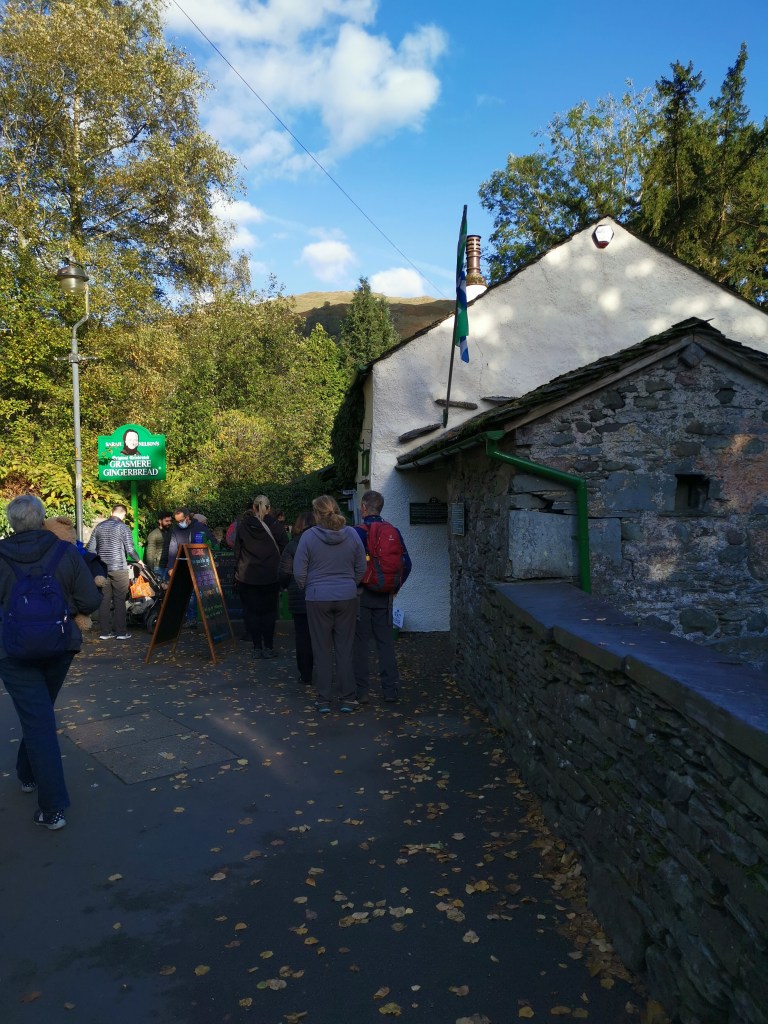
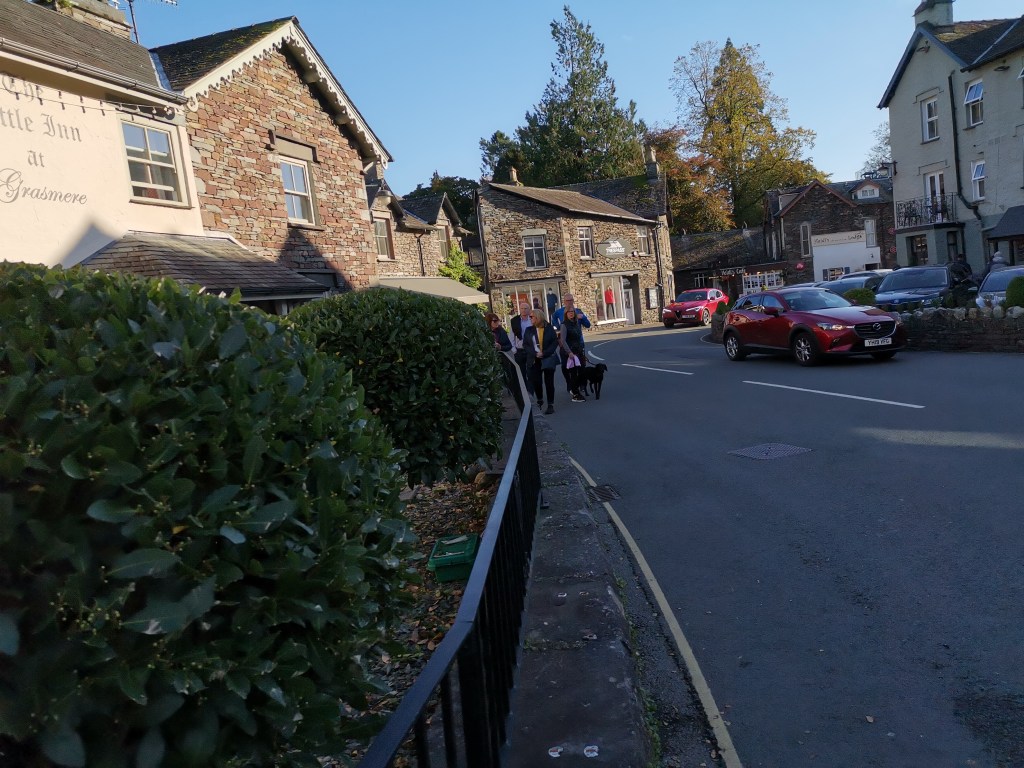
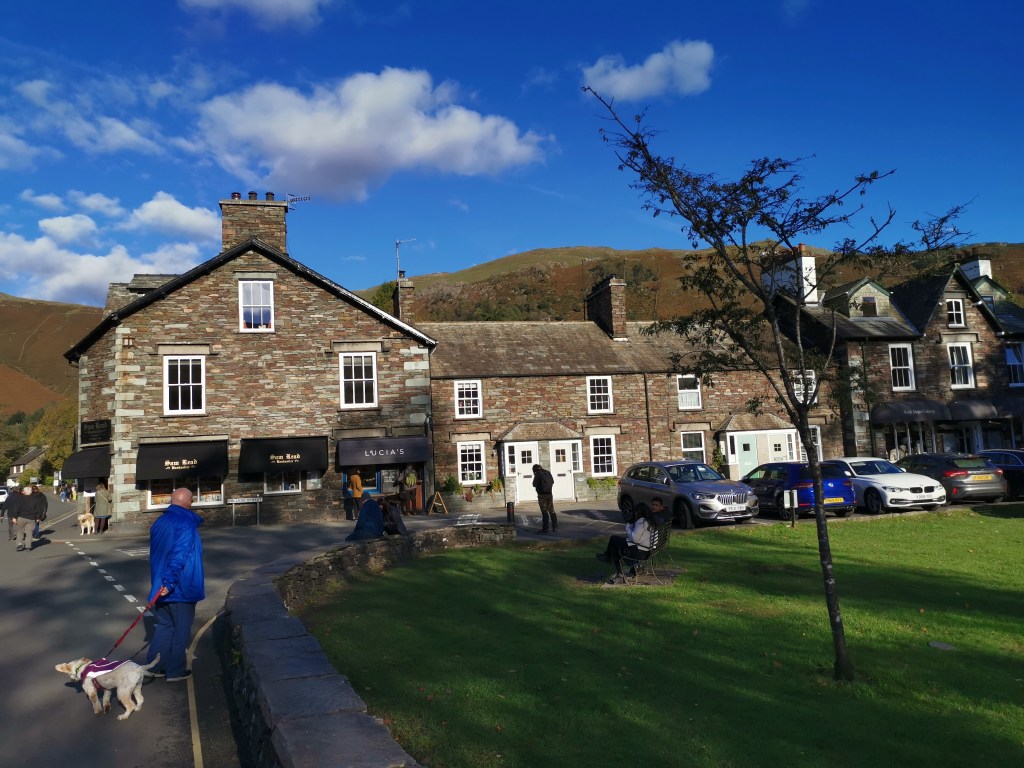
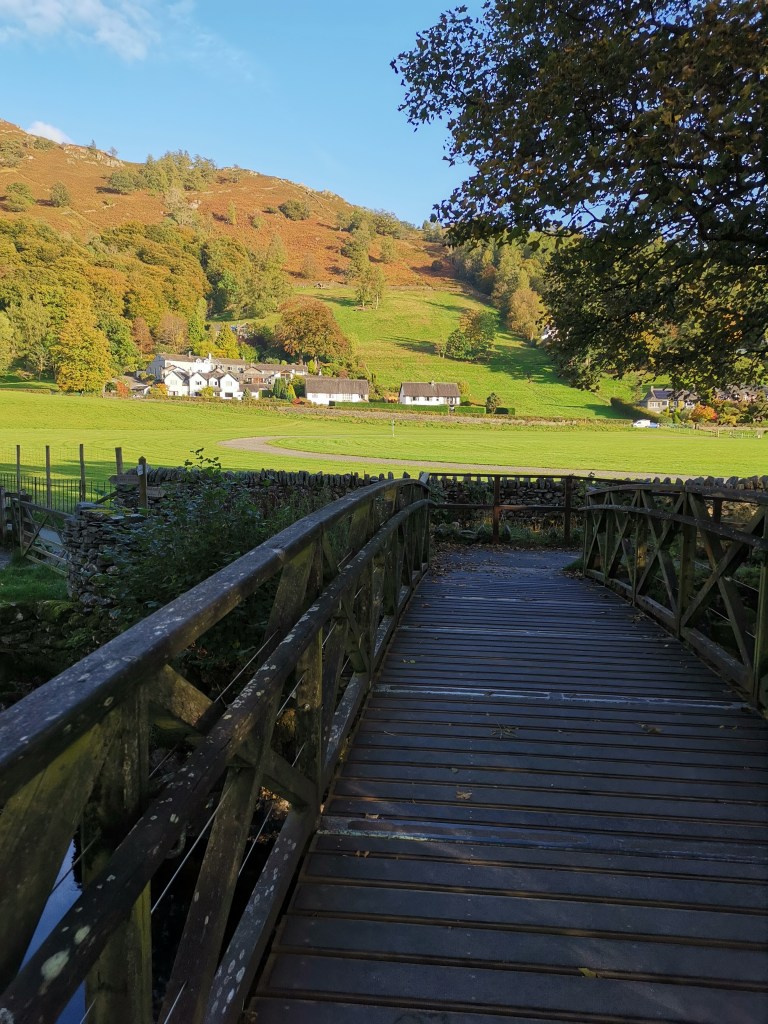
We wandered through the village, crossing over the River Rothay, surrounded by the little old shops and houses. We then walked along a track that took us for a scenic walk to the entrance road into the village where we stopped at their Wishing Well and then the Hawkshead outdoor clothing shop, where I treated myself to two outdoor warmth tops from their 2 for £20 sale.

It had been a lovely afternoon, but the late afternoon chill had started to come in, so we decided it was time to venture back to the car and make our way to Bowness where Mike and Janice planned for us to have dinner.

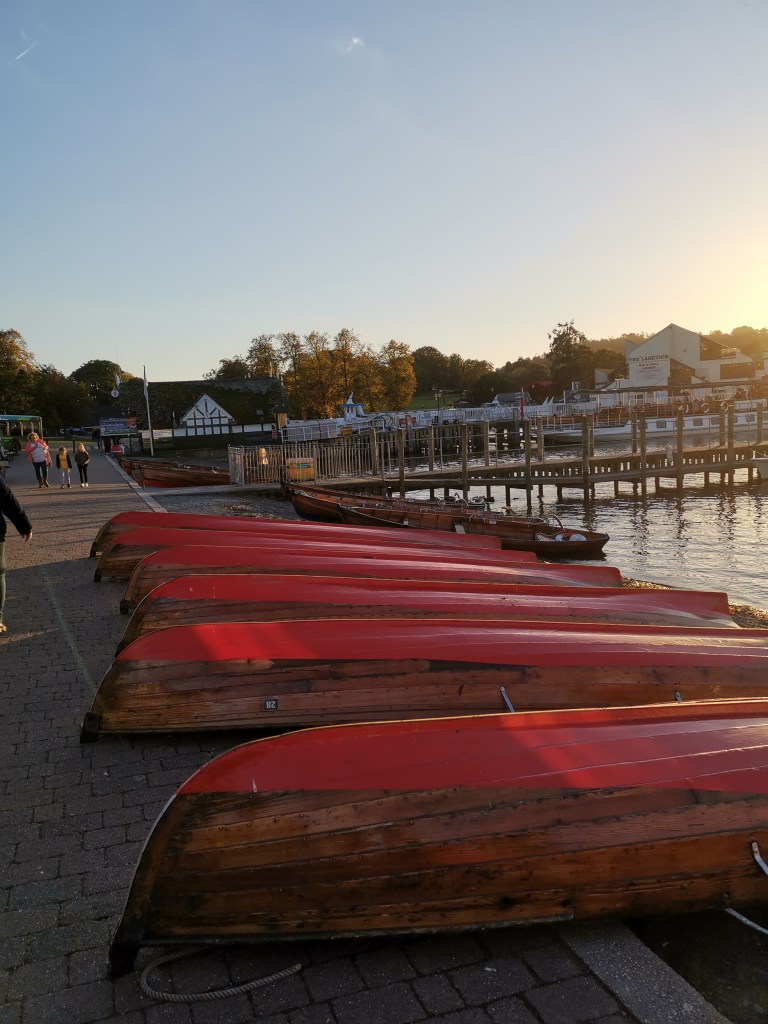
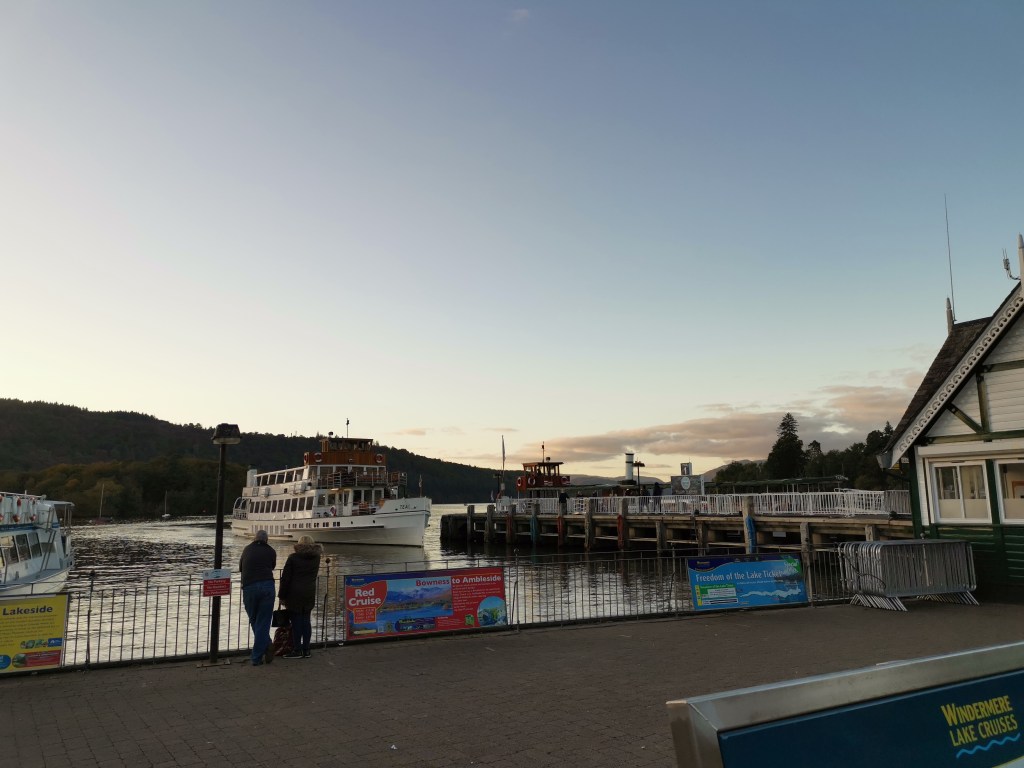
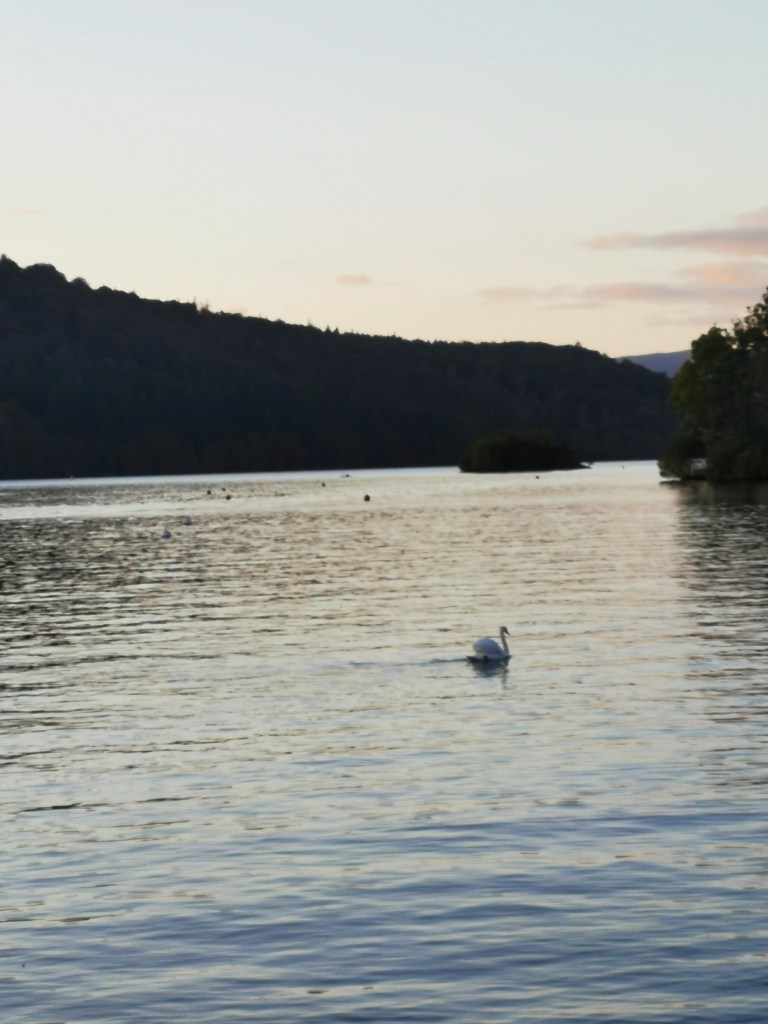
We walked down to where the Swan had come into the Bowness pier, while we were on our cruise, just in time to enjoy the late afternoon fading light which was so beautiful as it touched everything. It was a photographer’s delight.

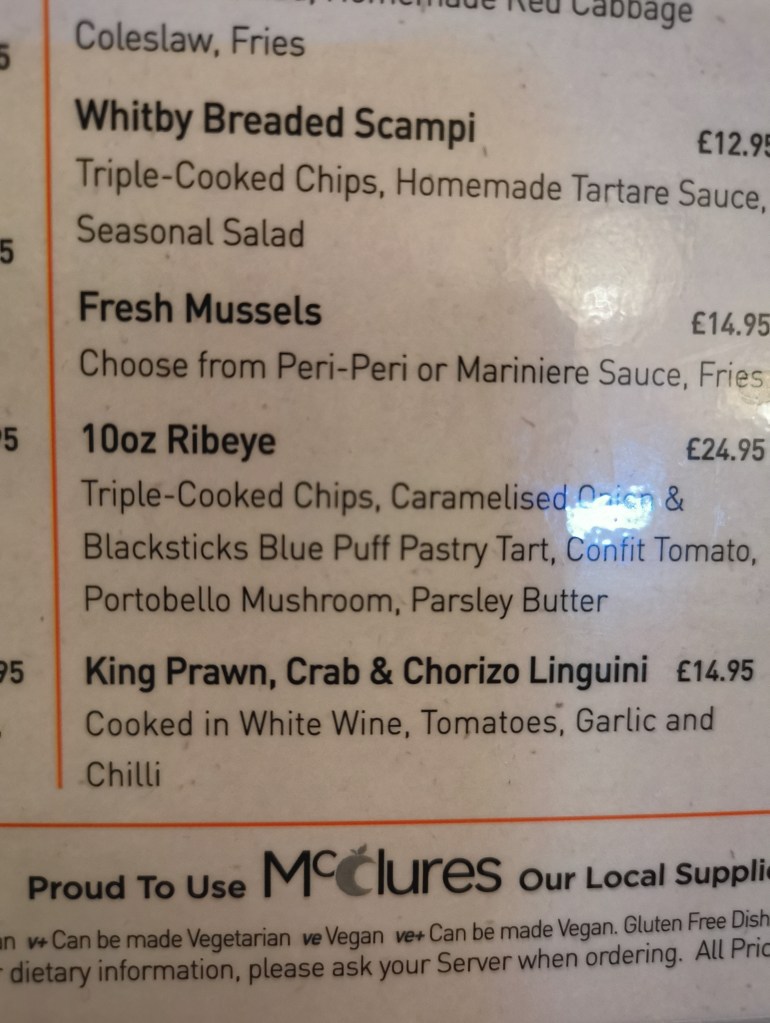
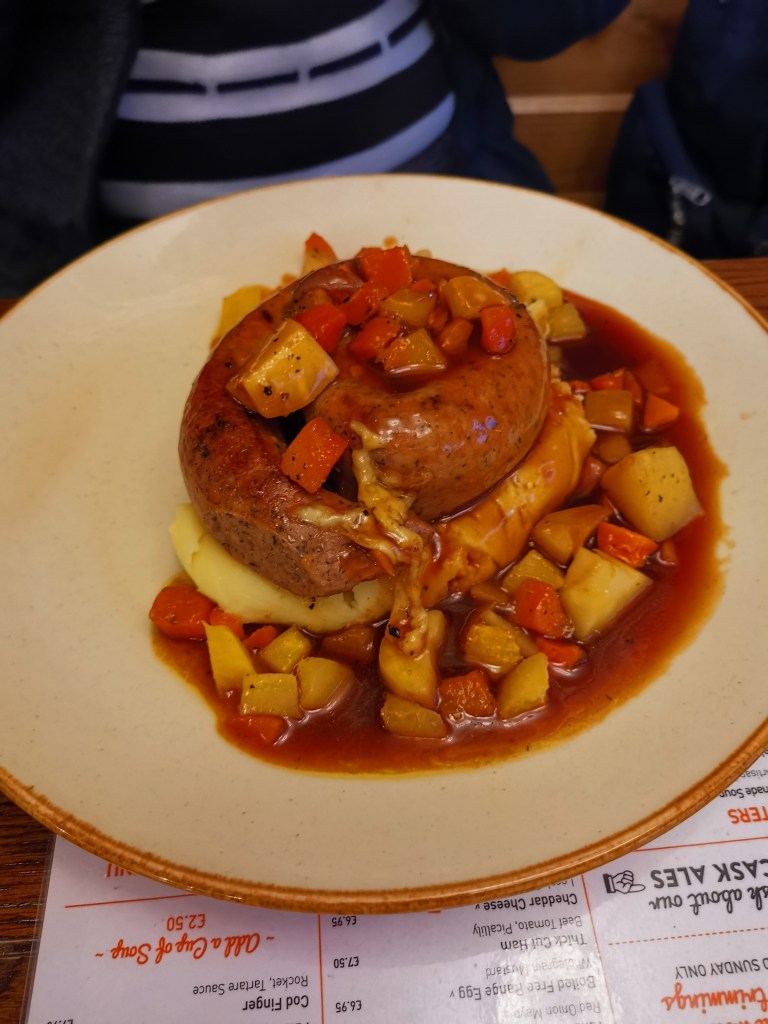
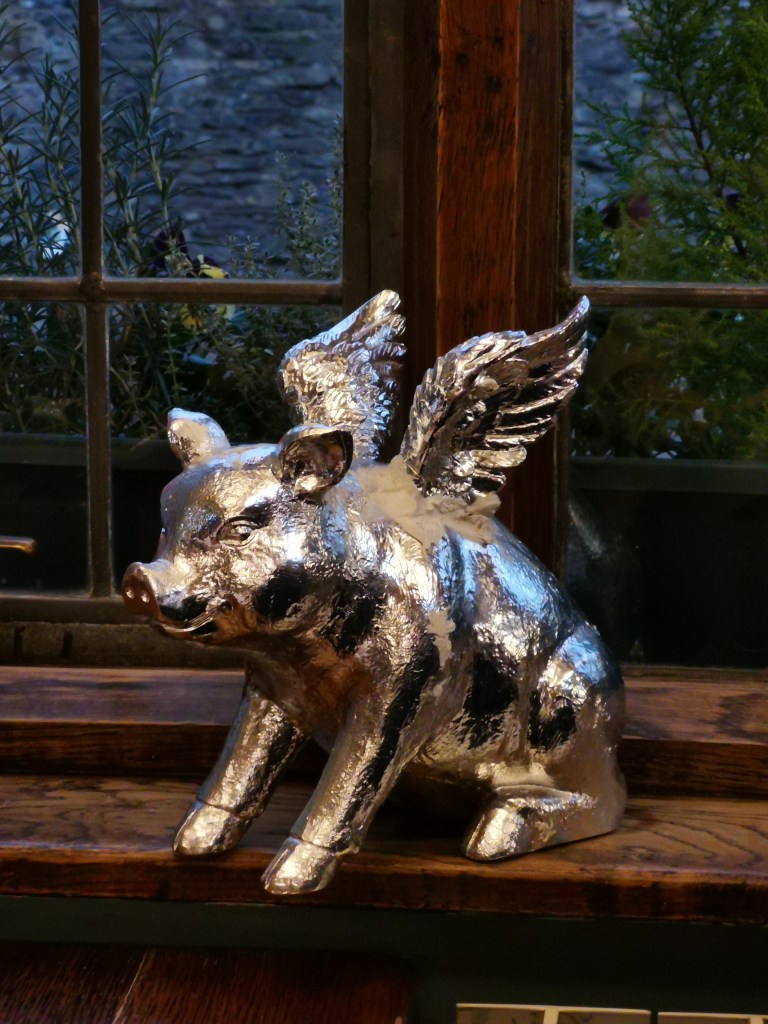
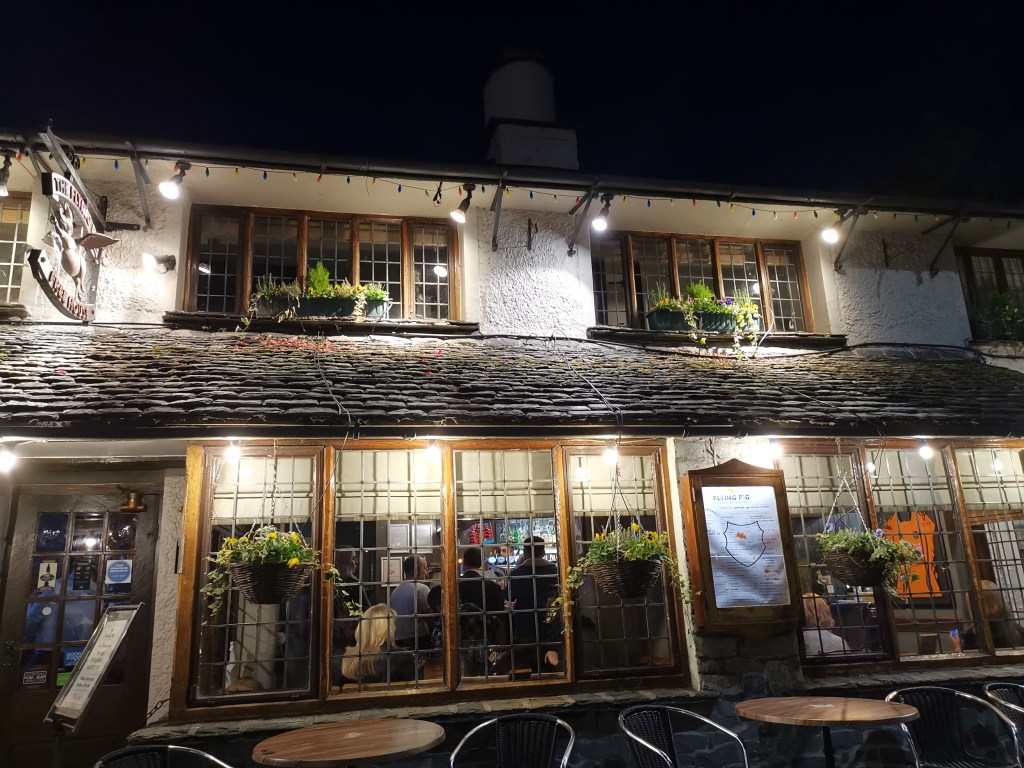
We wandered back up to the Flying Pig pub, which is associated with the Flying Fleece where we ate at lunchtime. It was a similar menu, but that was ok. We knew the food would be good and judging by the number of other diners, the reputation was pretty good. Again we were able to get a table close to the fire. My dinner was the King Prawn, Crab & Chorio Linguini. I didn’t find very many prawns, but there was no shortage of tomatoes and chorizo. Mike and Janice had the Cartmel Valley Cumberland Sausage, which they enjoyed and Karen had the Whitby Breaded Scampi.

What is lovely is that for Mike and Janice, Lulu can join them. It appears that a lot of cafes/pubs happily let you bring your dog in. Lulu was content to lay down on the floor and fall asleep. I expect the floor was warm thanks to the fire.

By the time dinner was over, it was dark. The little town still had a lovely atmosphere and there were plenty of people around enjoying the atmosphere.

It had been a lovely day in the company of Janice, Karen, Mike and Lulu. I feel very blessed to have their friendship. Mike safely drove us back to Morecambe and The Broadwater Guest House. Tomorrow would be time to say goodbye in the afternoon to Karen as she headed home to Cheltenham. But there would be time for another adventure for the five of us.

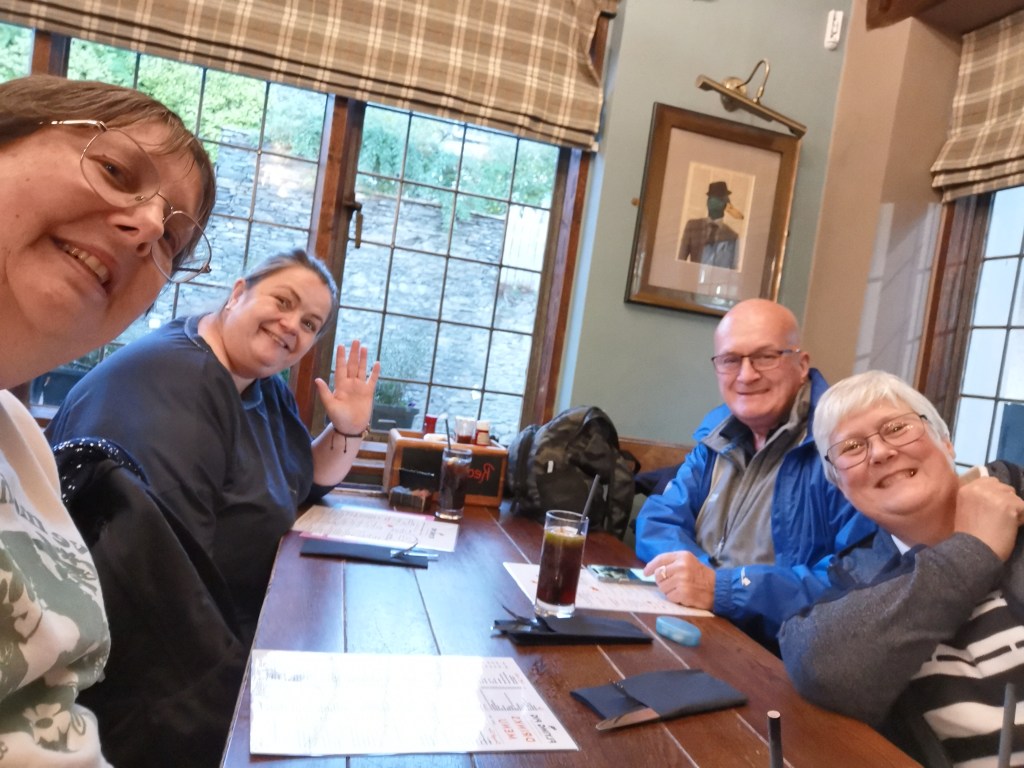
Lovely friends, me, Karen, Mike and Janice. Lulu is under the table.

Chester Cathedral

6th October 2021

While Nat and I were in Chester to purchase material from my new favourite store, Abakhan Fabric, Hobby and Home, we wandered the streets amazed at the black and white facades of the shops and the historic Roman built walls and amphitheatre, eating at an historic pub and enjoying each other’s company.

However, there is one building that stands back from the main thoroughfare street and it was definitely worth visiting, The Chester Cathedral.

View of the Cathedral from outside the visitor centre.

The Cathedral belongs to The Church of England and since 1541 the Bishop of Chester has been attached to this Cathedral. It was originally an abbey church for a Benedictine monastery. It was built over a very long period of time, starting somewhere around 1093 and most recently had a bell tower added in 1900s. Services are still held here, but it is open to anyone who wishes to go in and explore, which is exactly what we did.

We came down off the Roman city wall, which we had been walking along and walked around the the Cathedral entrance. It is a beautiful old building and luckily it has is listed as a Grade 1 building, meaning it is protected for the future.

There are a lot of different architectural styles incorporated into this magnificent building, I guess that would be because it has been updated so many times over its history.

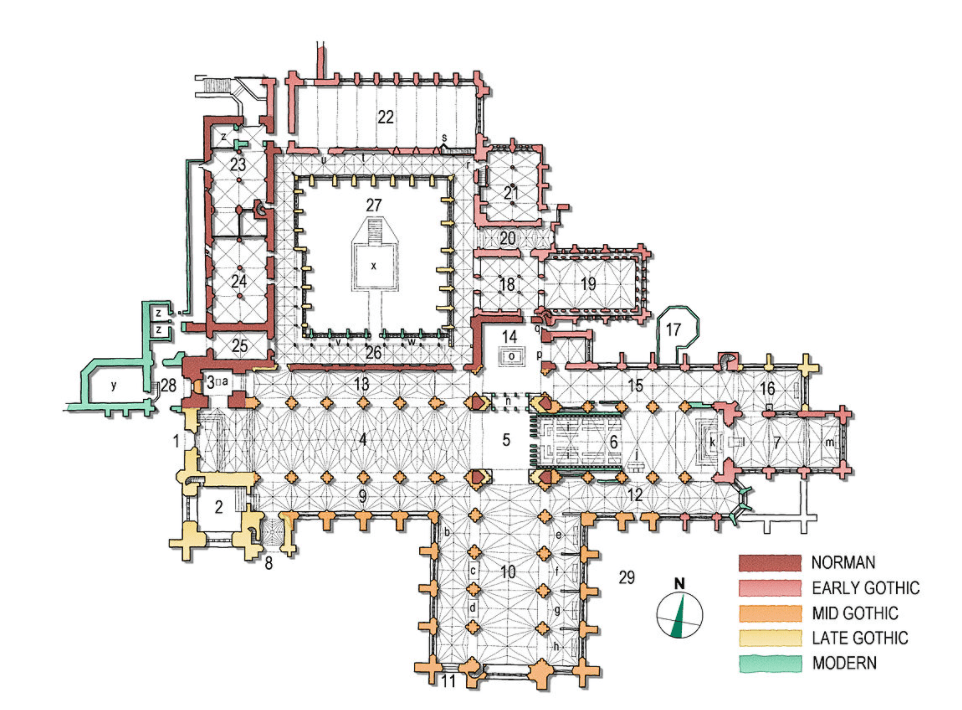
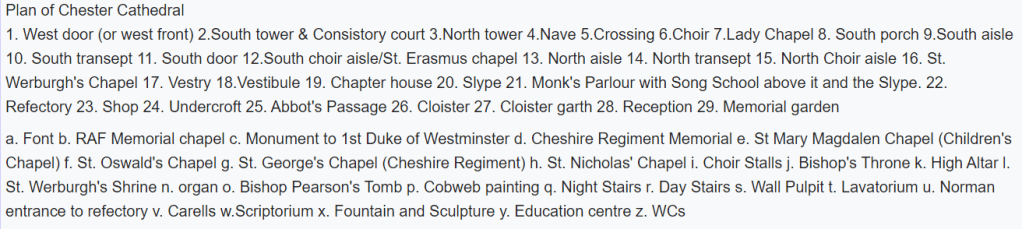
The layout of the Cathedral with architectural styles

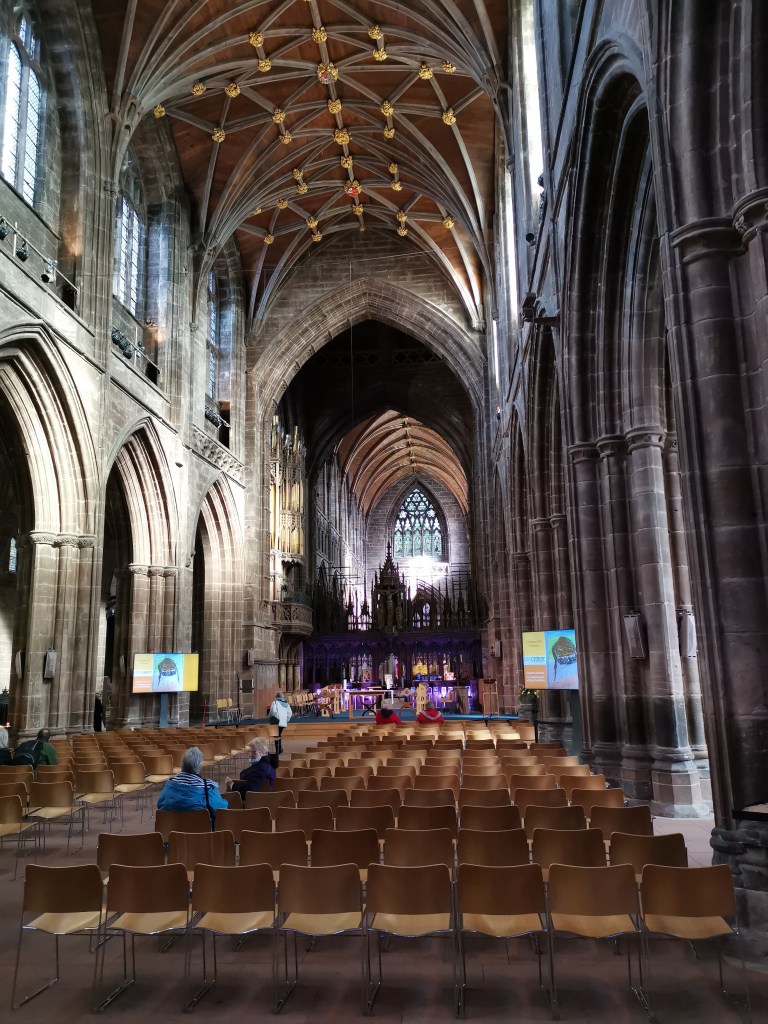
We entered via the South porch (8) and made our way into the middle of the Nave (4), looking towards the magnificent carved woodwork that separates where the congregation sit and the section for the choir (6) and the High Alter (k).. It is a towering space.

The Nave

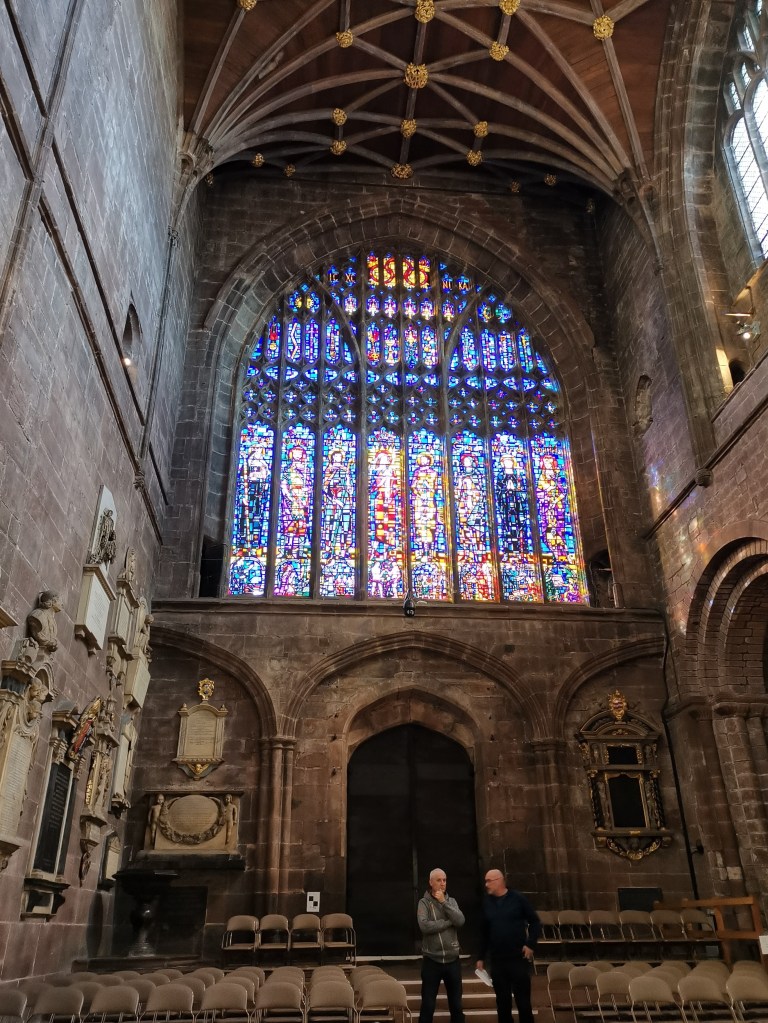
Behind us was the West Door(1) and above that, beautiful stained glass windows to catch the afternoon sunlight.

The West Door and Windows

It is unfortunate that many of the windows were destroyed by civil unrest in the 1600s and replaced many times. These windows above the door date from the 1900s to replace what was damaged during WWII. They depict the Holy family.

Along the northern wall (13) of the Nave were scenes from Biblical stories, tiny mosaic stone work representing many hours of labour. Anyone who has made a mosaic table top will know just how long it takes to cover a small area with pattern. These are massive detailed pictures.

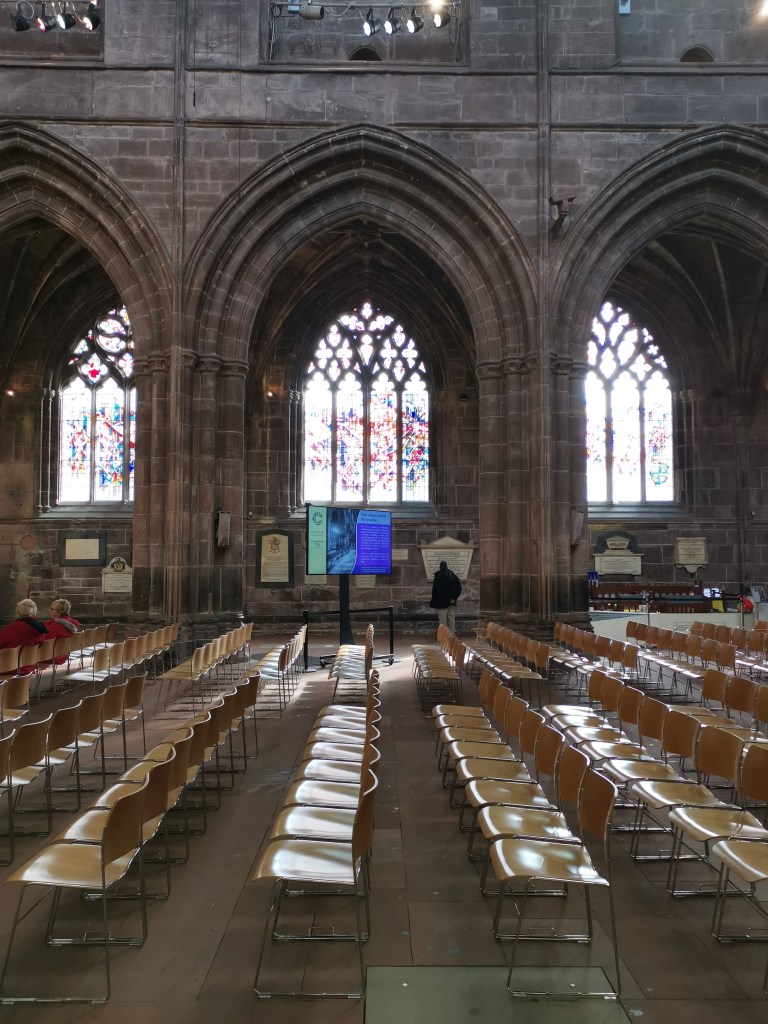
On the Southern side (9) of the Nave are more stain glass windows, these date from 1860. They are beautiful. I don’t think that I have ever seen abstract patterns in windows before, but these are striking.

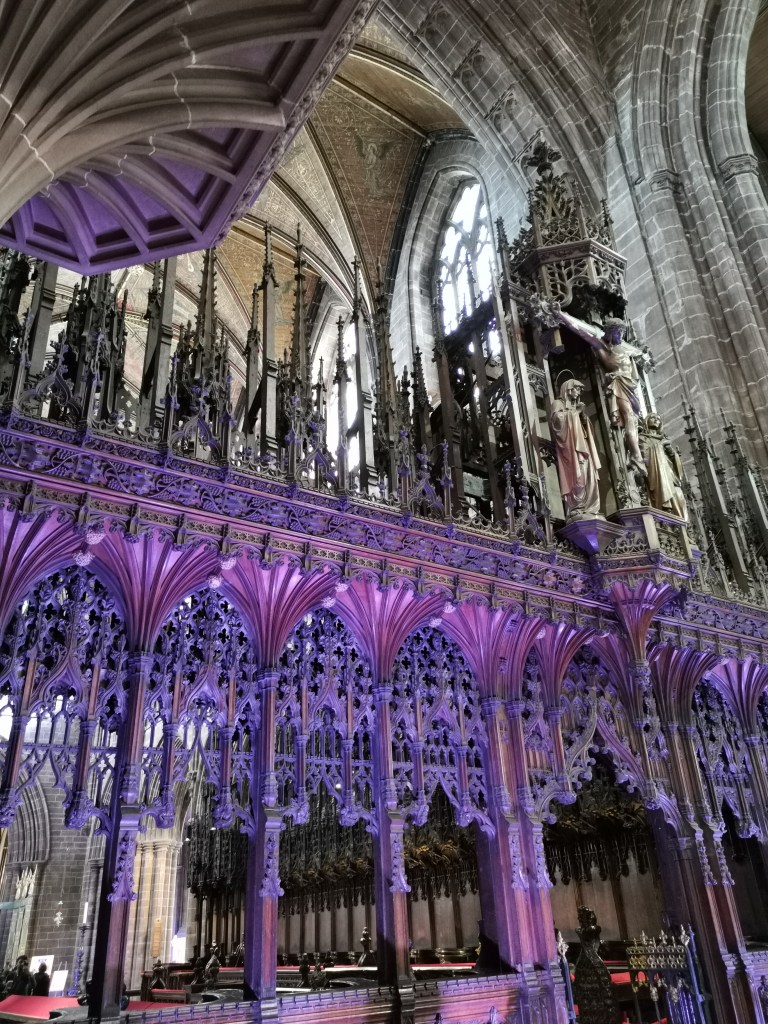
We walked down the Northern wall and then took a closer look at beautiful carved wood (5)that separates the Choir from the Nave.

The soft purple lighting hides the darkness of the wood

We ventured into the Choir. I asked Nat if she had ever attended an Evensong, where it is possible to hear the choie sing during the evening service. She said she hadn’t. John and I attended one in Salisbury Cathedral and also The Southwell Minster near Nottingham on previous trips to the UK. They are a very unique experience, even if you aren’t particularly religious. Just to sit in the Choir area and listen to the beautiful voices and the service. I would like to give this opportunity to Nat.

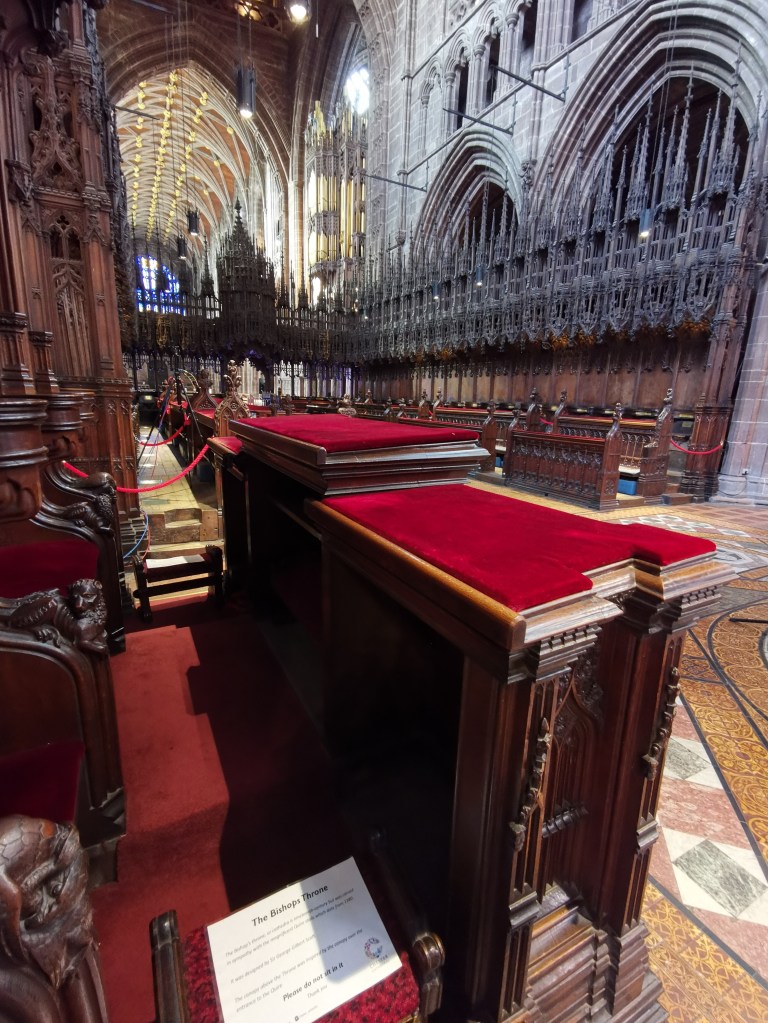
We walk through the entrance into the Choir and spotted the throne like seat up close to the alter. It turns out this is the Bishop’s Seat.

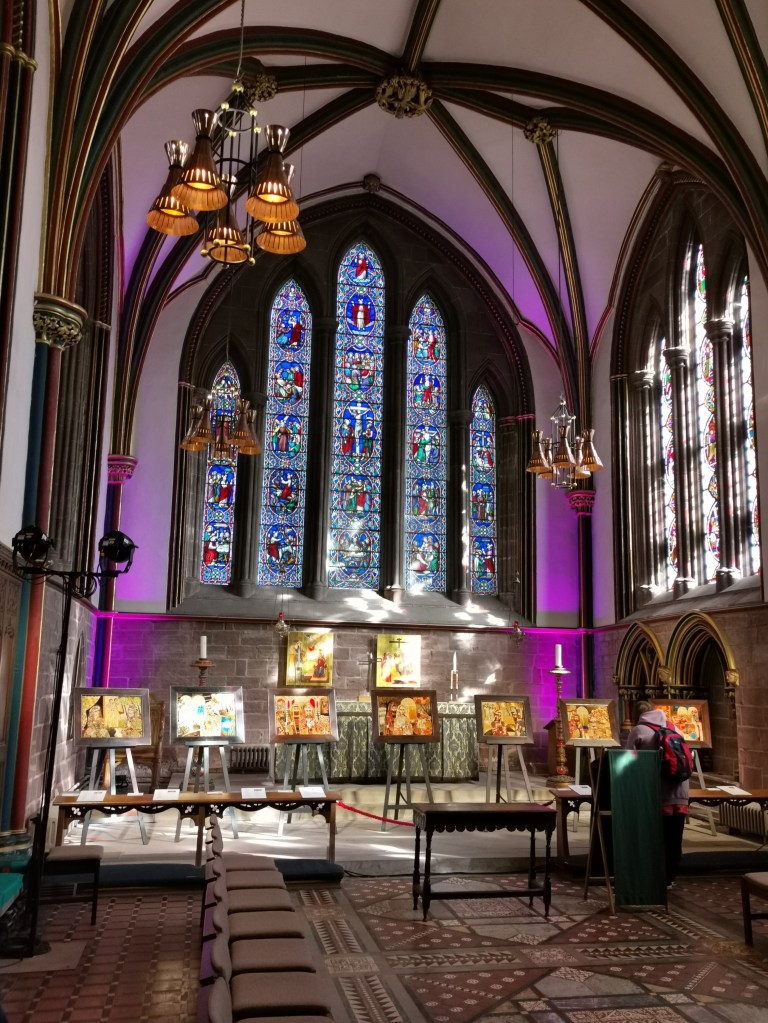
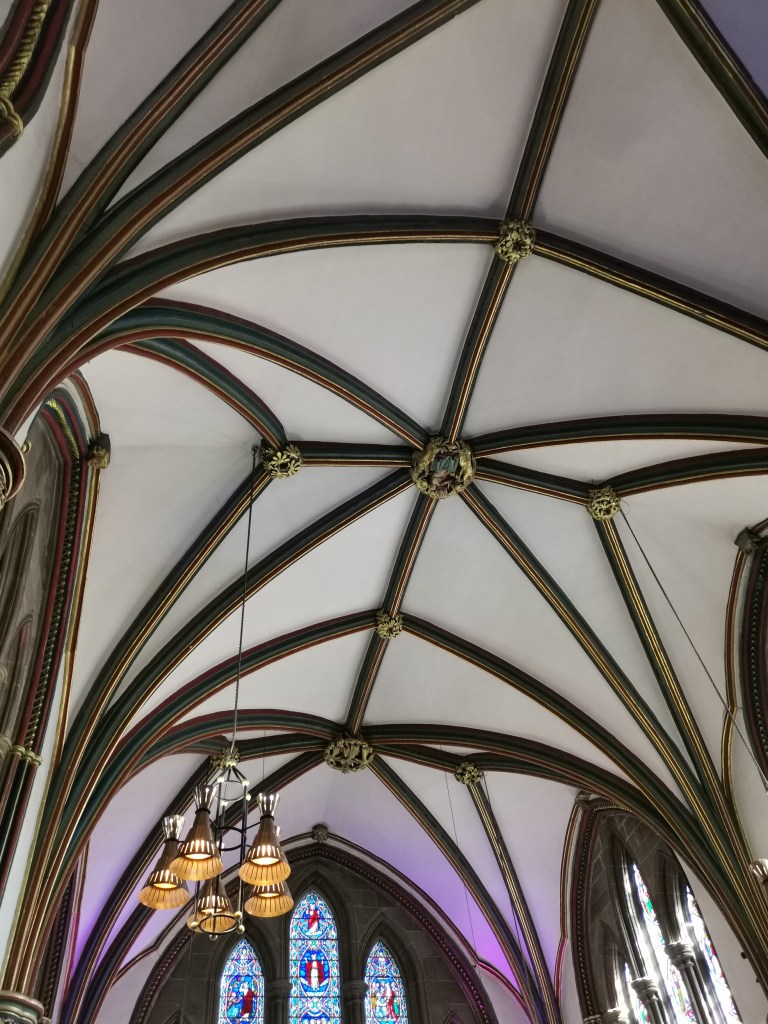
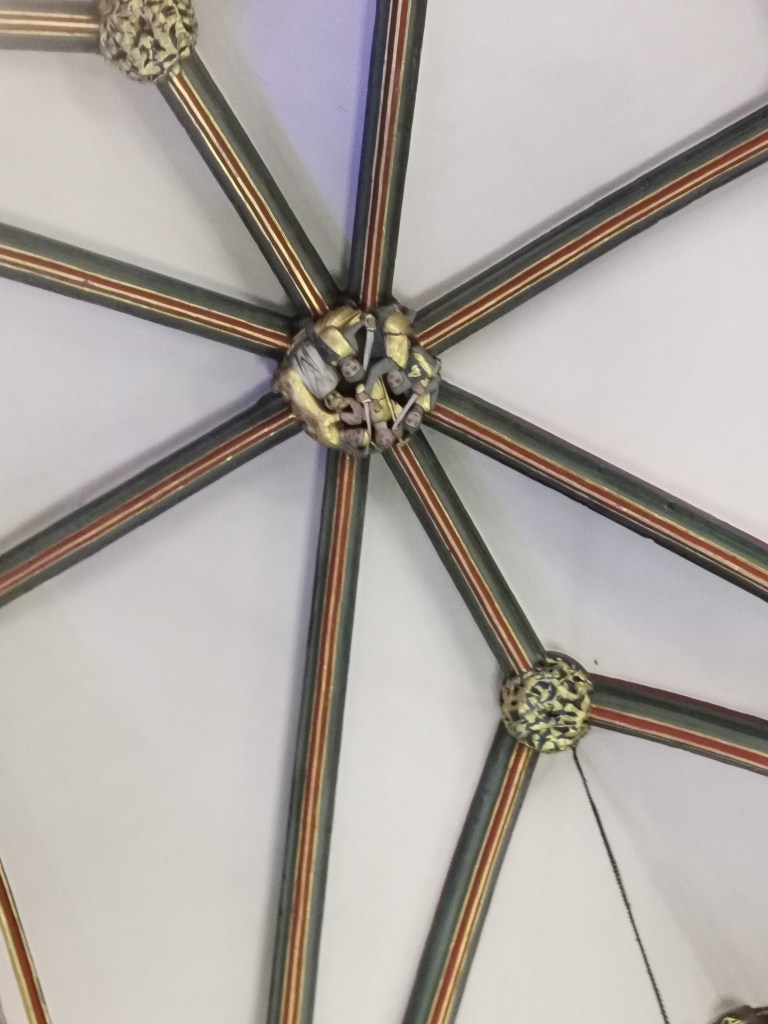
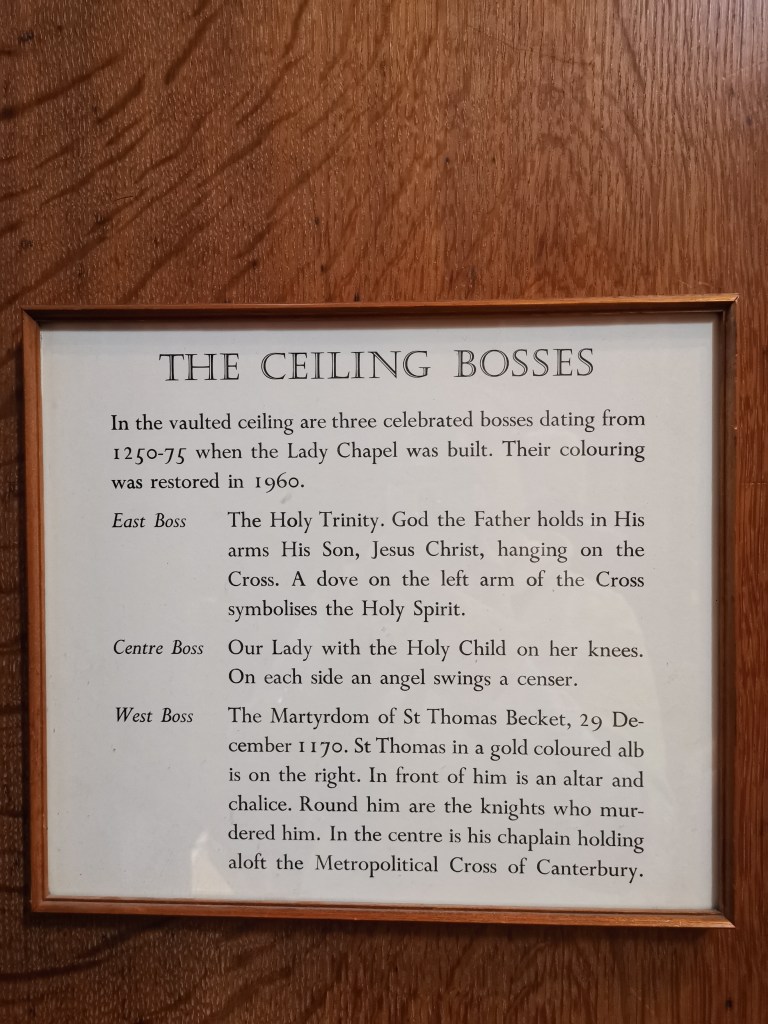
Behind the High Alter, is The Lady Chapel, where again there were beautiful windows and also decorations on the ceilings that they wanted to drawn our attention to. In the peace of the Lady Chapel, was part of an exhibition of Images of Christ from various artists.

Along side the Lady Chapel, in the Northern Aisle was a very old book in a glass case. It was quite hard to photograph it because of the reflection and the lack of natural light. It wasn’t until I read the information alongside the case about the age of the book – written in 1280, that is 741 years ago, that they don’t want photographs taken of it. Not sure why, but perhaps flashes from cameras can damage it. It is an encyclopedia of the world history. The cover is wooden board covered in deer skin.

We left the main part of the Cathedral and walked through to the Vestibule and Chapter House. There was a tour going on in the Vestibule (the left picture with the ornate ceiling). The guide was pointing out the wires that are strung up between different parts of the ceiling and said that they are tension wires. If there is significant movement in the building, the wires will snap and point the to where there could be potential damage. In the bottom of the picture you can see a dark panel alongside what looks like a window. That indicated it was the size of a secret tunnel and if you were small enough to fit through that space, you would be able to go through a secret door and into the tunnel.

It is rumored that under parts of Chester there are many tunnels that lead around between buildings. It is suggested that they could be part of the Roman built sewerage system, rather than a secret way of getting around the city underground.

We decided to finish up our exploring of the Cathedral with a visit to the Refectory for a drink. We walked down the corridor alongside the garden. The windows are dated with events that happened over time.

Once we had had a drink in the refectory, we said our farewell to the Cathedral. It was worth the visit and if I visit Chester for longer than an afternoon, I would definitely visit again. If Nat is with me, I would take her to Evensong too, as I imagine it would be wonderful here.