Lyme Regis, is a pretty little seaside town on the south coast of England.
This was my first visit to an English beach in over 50 years and I really enjoyed it.
I travelled with my brother and sister-in-law from Taunton, about 45 minutes away, by car. We drove through pretty countryside and passed quite a few thatched cottages on the journey, another one of my “want to see” list items.
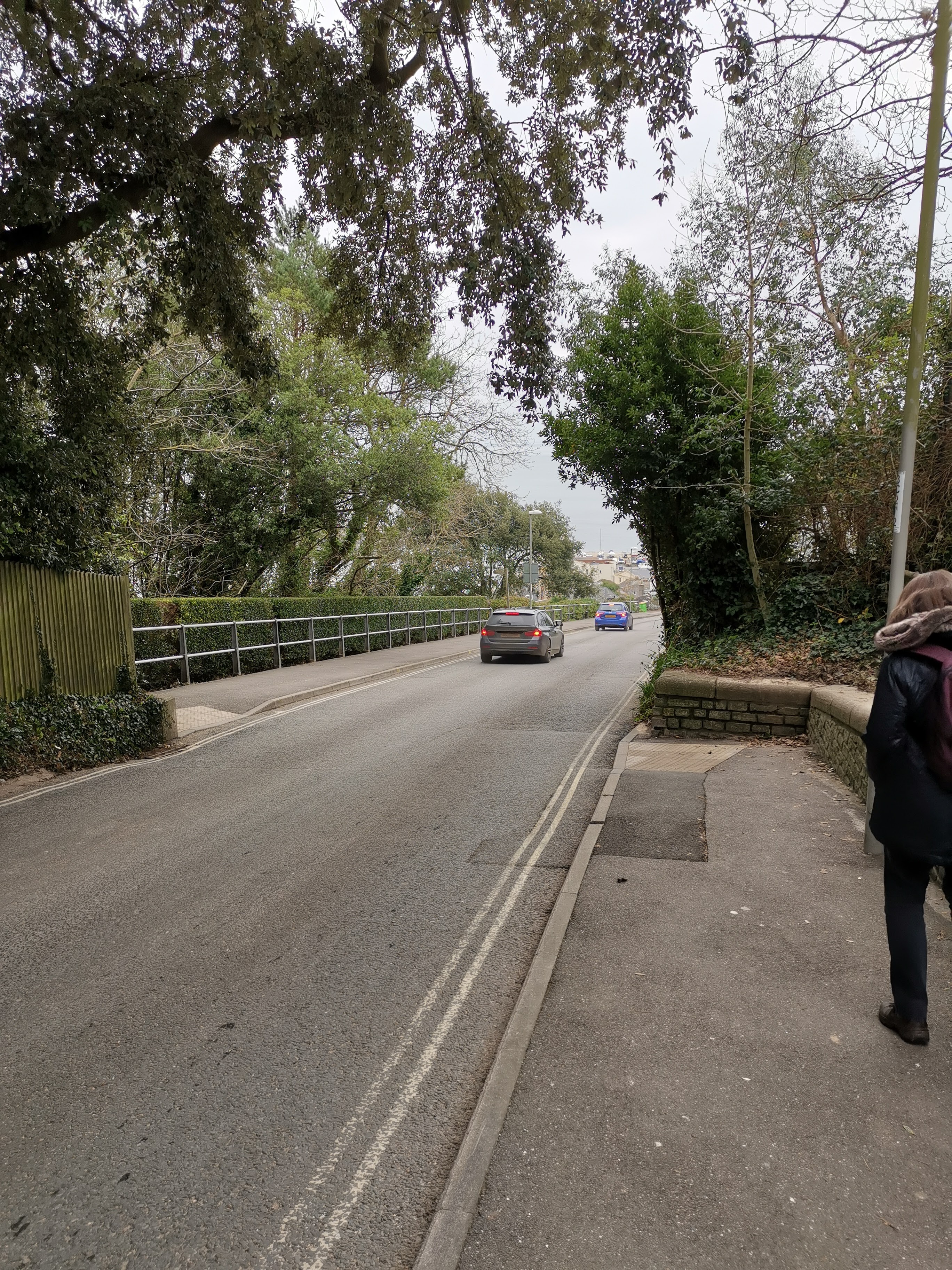
We parked up on the hill in the carpark and then walked down the very steep road towards the beach. I am not sure the photos really show how steep that road was, but my toes were squashed against the front of my shoes as my feet slipped forward in them. That was followed by a series of steps down onto a flatter walkway, which wound its way down to the beachfront.
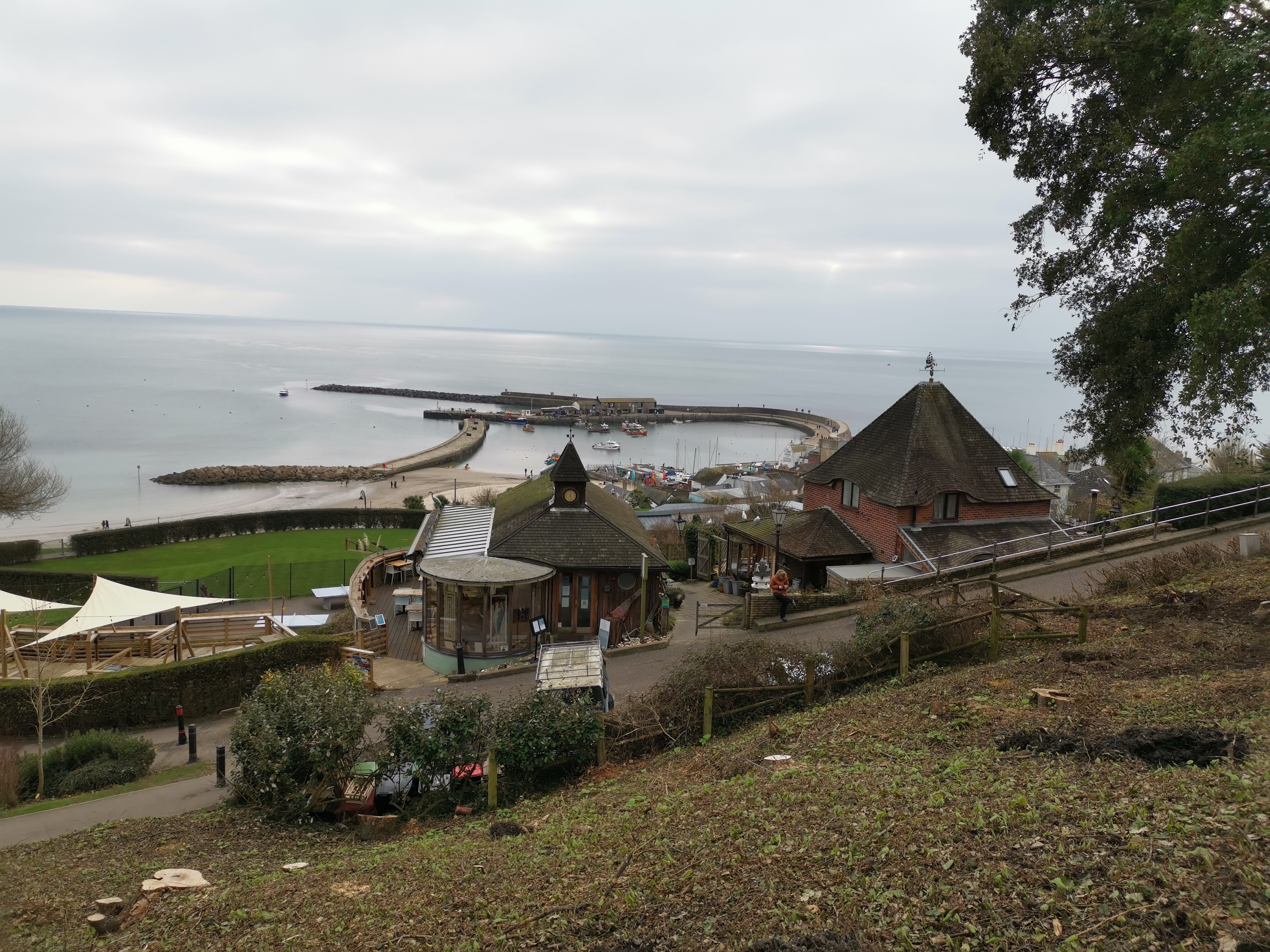
The view from high up was lovely. This beach is part of the Jurrasic Coast, where it is possible to find fossils from that era (66 million years ago), especially of the ammonites, the curled shell of a marine creature. The shell is themed into the lights along the promenade.
Our pathway passed a restaurant, the building with the pointed roof, and a mini-golf course. The little harbour wall is called The Cob and that was our destination. I was told, if you visit Lyme Regis, you have to walk along The Cob. There is also a sculpture trail which would be nice to follow, if we had more time.
We continued our walk down to the harbour and I heard a sound I haven’t heard since I was a child, the caw sound of English seagulls. Yes, we had gulls in Australia, where I lived, but the English ones sound different. As a child living in London, we would visit the coast for the weekend and I remember the seagull noise. It is amazing how a sound can trigger a memory.
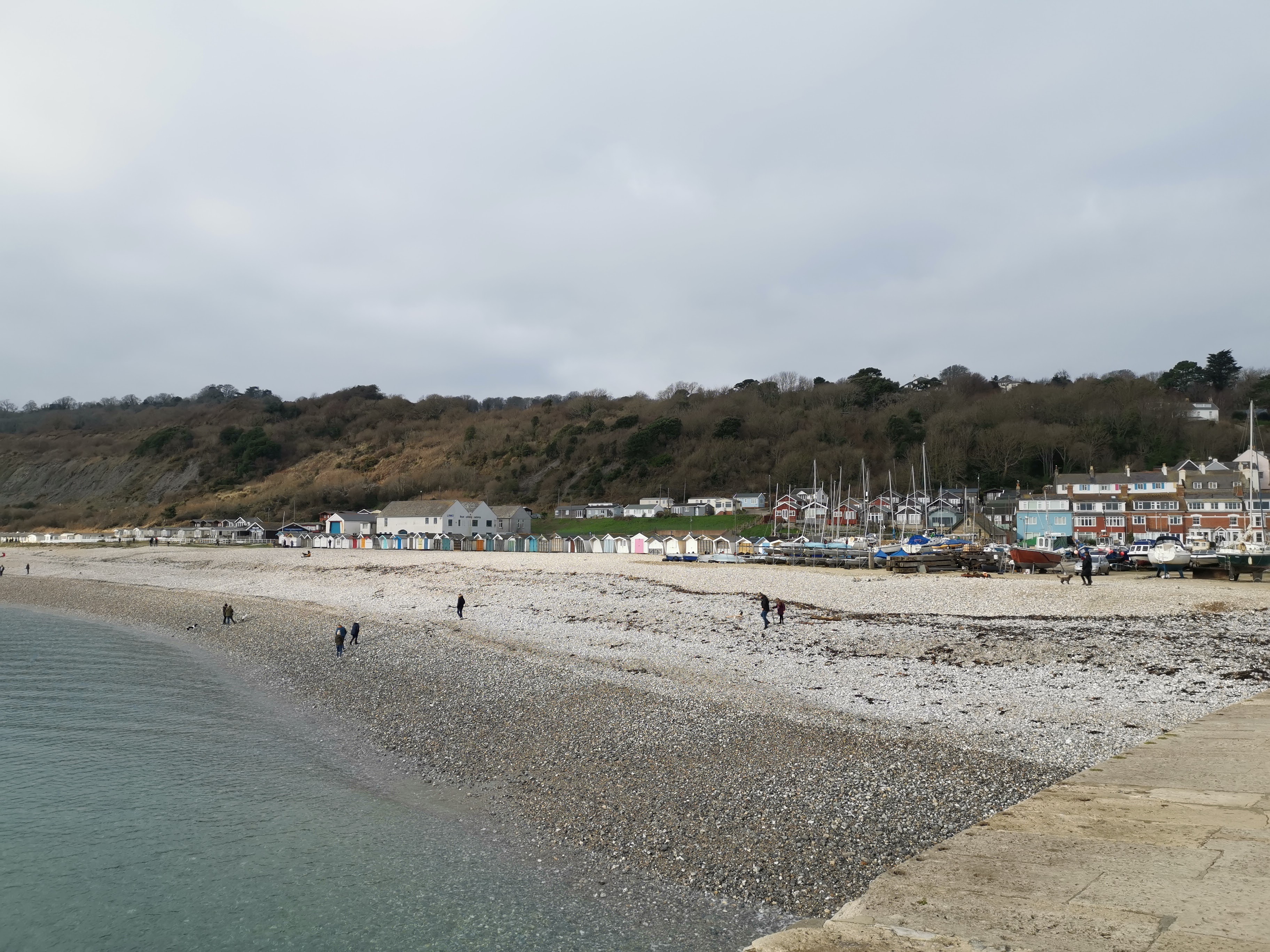
Once we reached the “Cob” (harbour wall) we could look along the beach and there were the bright colourful beach huts. We didn’t have them where we lived in South Australia. They are a great idea. To have somewhere to store your things and get changed, while you are visiting the beach. The beach was also different in Australia to what was here at Lyme Regis. Here it is partially sand, but a lot of it was stones. In South Australia, we were blessed with beautiful clean sand.
The little harbourThe stone beachThe sand beachThe cute little bathing huts along the promenade
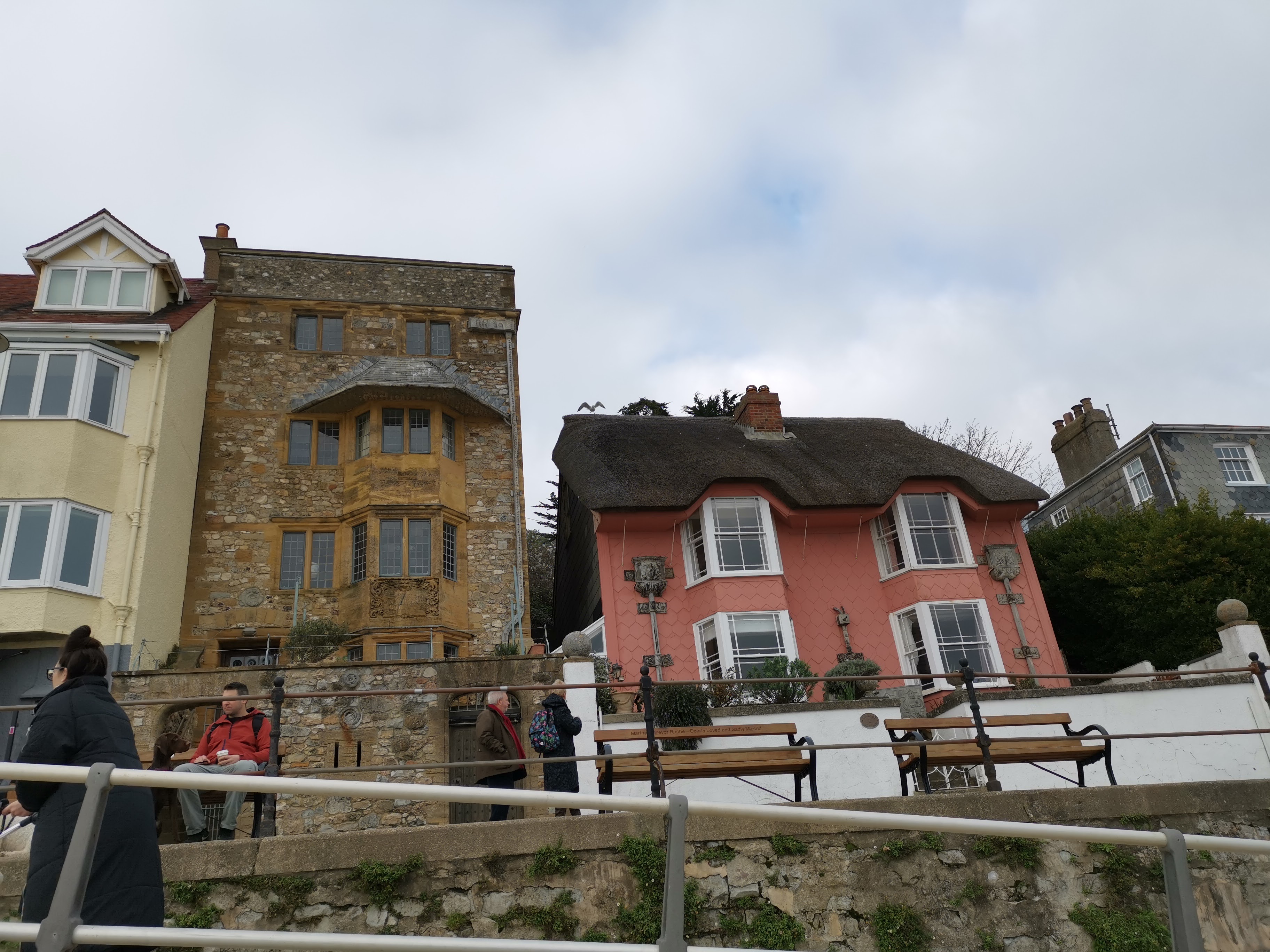
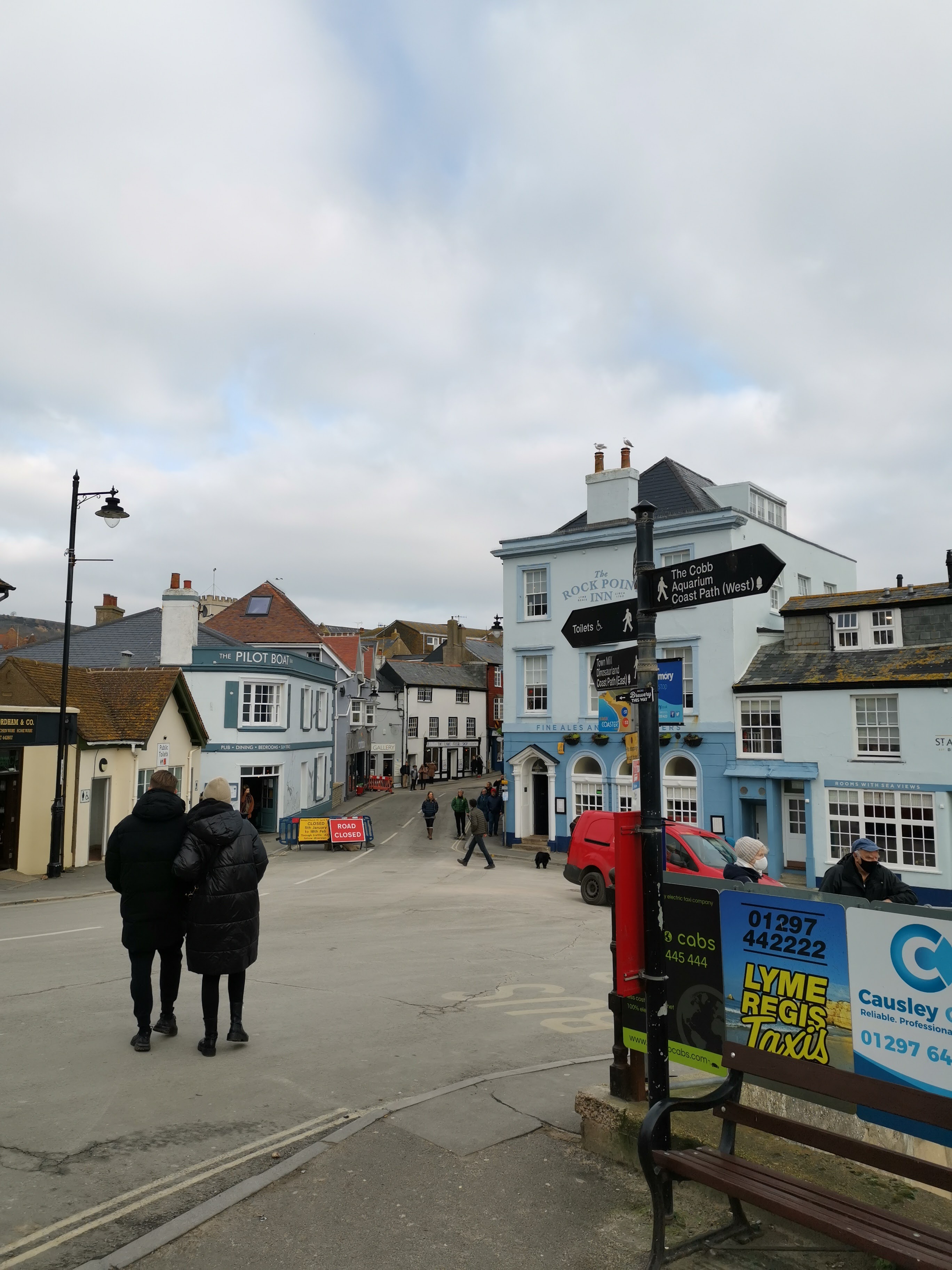
We walked along the promenade past the row of colourful bathing huts. Everywhere was lovely and tidy and clean, which was really nice. Above the promenade, the seafront buildings were a mix of different styles. I think some of them are guest houses. There is also a small town, with cafes and shops along narrow streets.
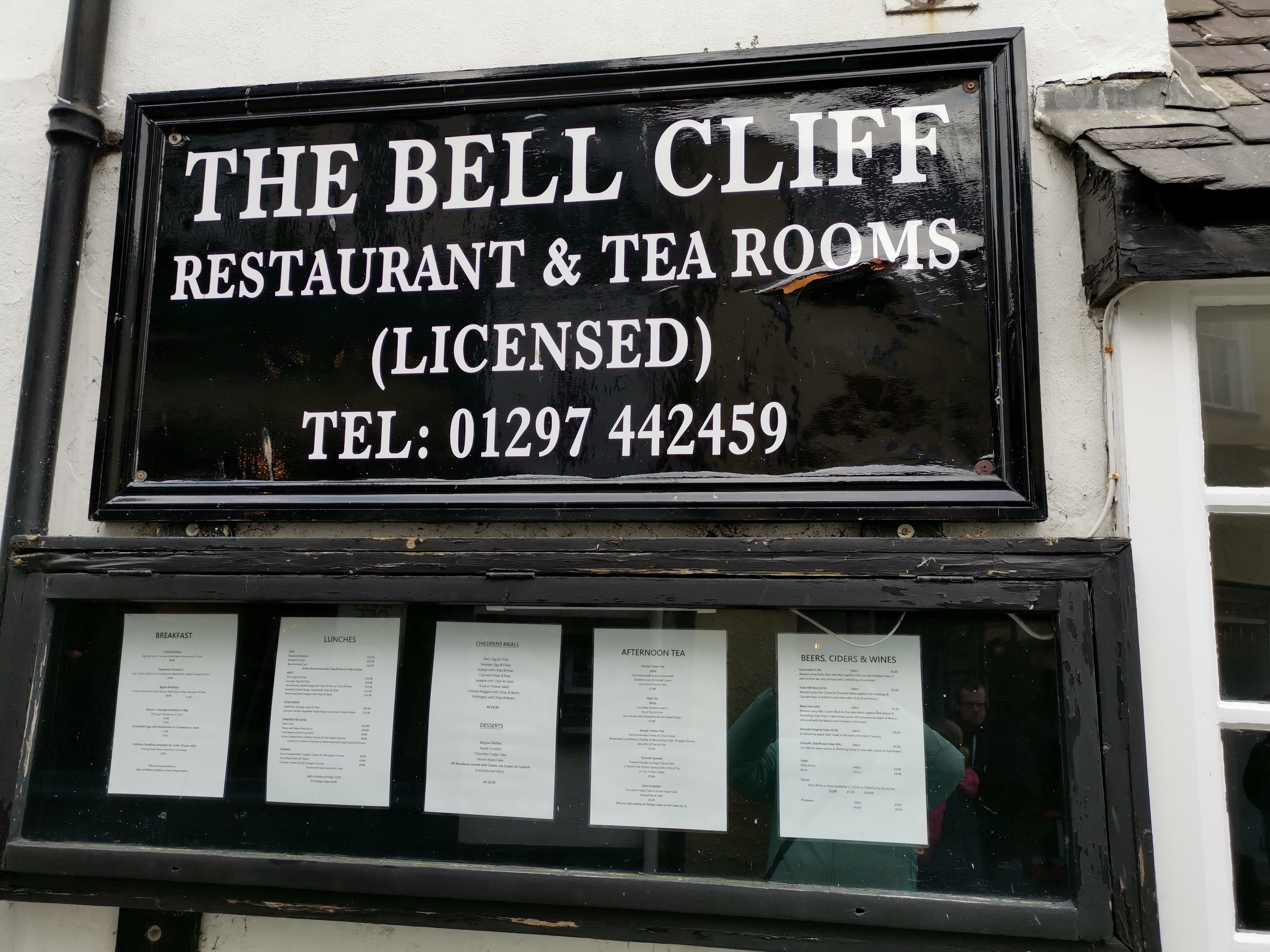
We stopped for lunch at a small cafe, The Bell Cliff, and were lucky enough to get a table. It got very busy in there quickly. We had the lunch special of soup and crusty sourdough bread and half a toasted sandwich. It was very nice.
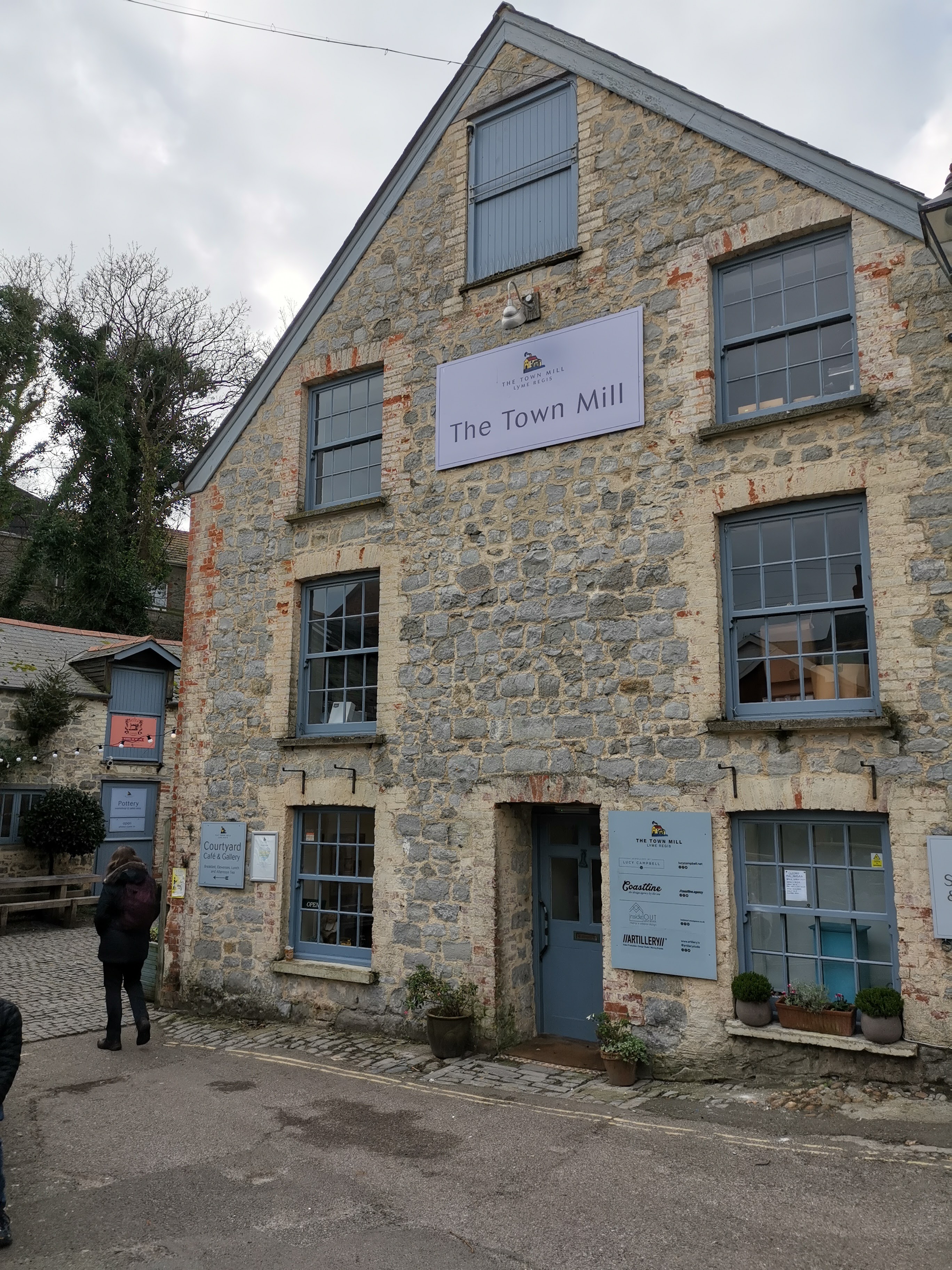
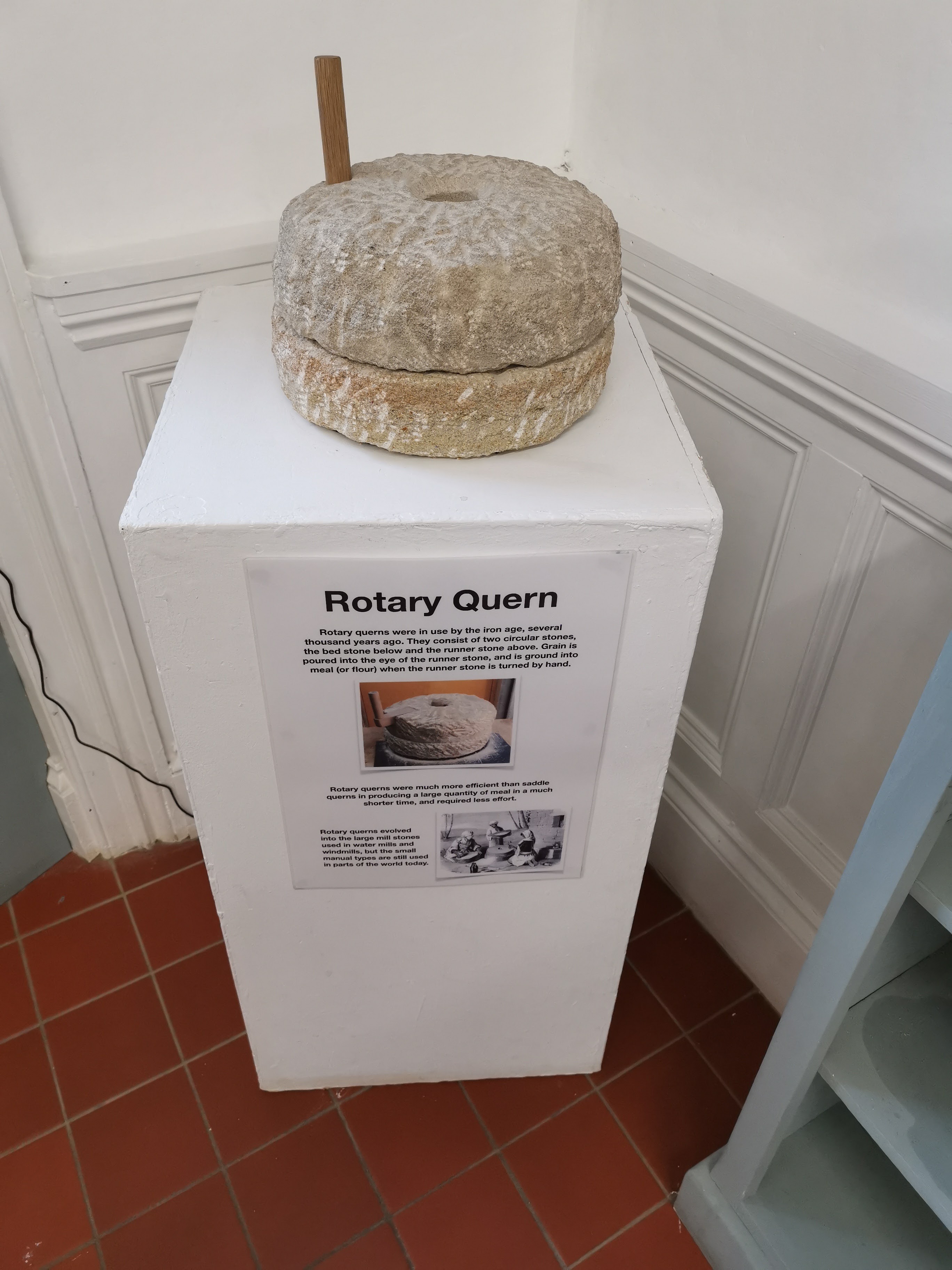
After lunch, we went in search of the town’s historical mill. It was tucked down a side street amongst other historic buildings. At The Town Mill, the power of water from the stream that runs through the village is harnessed by a water wheel, to turn the grinding stones to create a variety of different flours. It has been in action since the 1300s.
The Mill The stream that drives the water wheelThe Town Mill buildingThe waterwheel drives the cog wheels that will turn the millstonesThe spinning wheel upstairs, turns a wheel on the ground floorSome of the timbers used were from shipwrecks
We got to talk with the miller, who showed us the different sections of the Mill. The water wheel turns 10 times a minute, but the spinning wheel that it drives spins at a much higher rate. That, in turn, drives the large wheel on the ground floor, where the millstones are. We were told about the timbers around the mill, which came from old sailing ships. When the mill was restored, the timber was kept.
When the grading stones need to be stopped, the waterwheel needs to be stopped too. So the supply of water is cut off by a gate and the waterwheel slows down as no water turns it. That is where the saying “grinding to a halt” comes from. The mill is also where the term “Damsel in distress” comes from and it refers to a piece of equipment called a damsel, which is part of the grain transfer process.
From the mill, it is possible to buy freshly ground flour of different types and to see some of the grinding stones up close.
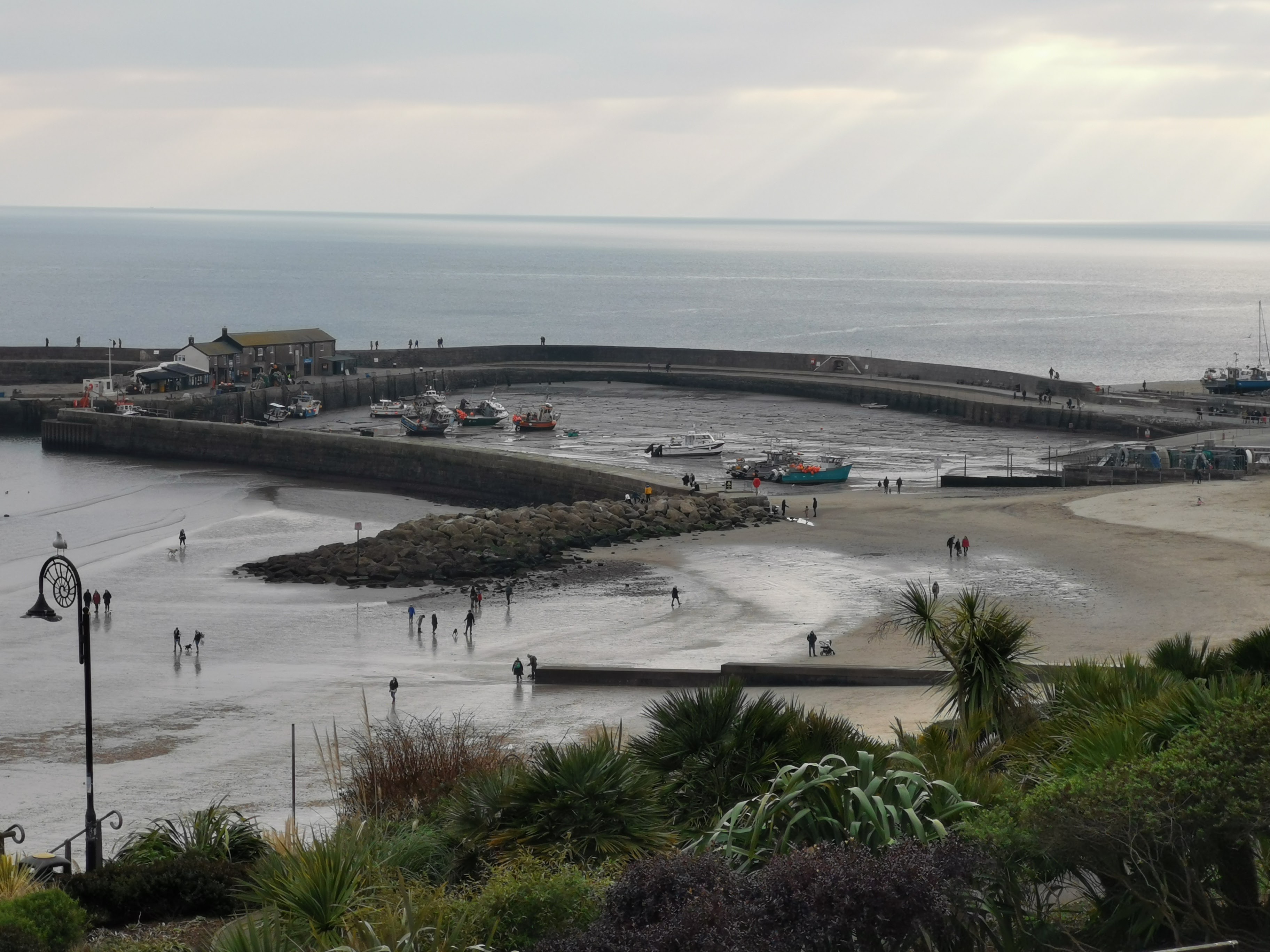
We left The Mill and returned back to the beach and the Cob. While we had been learning about the milling process, the tide had gone out and the fishing boats in the harbour were sitting on the mud. I don’t think we had anything like that in Adelaide. The boats sit there waiting for the tide to return.
The harbour before was full of water.
The harbour with the boats sitting on the mud with the tide out.
Lyme Regis is a nice place to visit and I can see why it would be really popular with beachgoers.
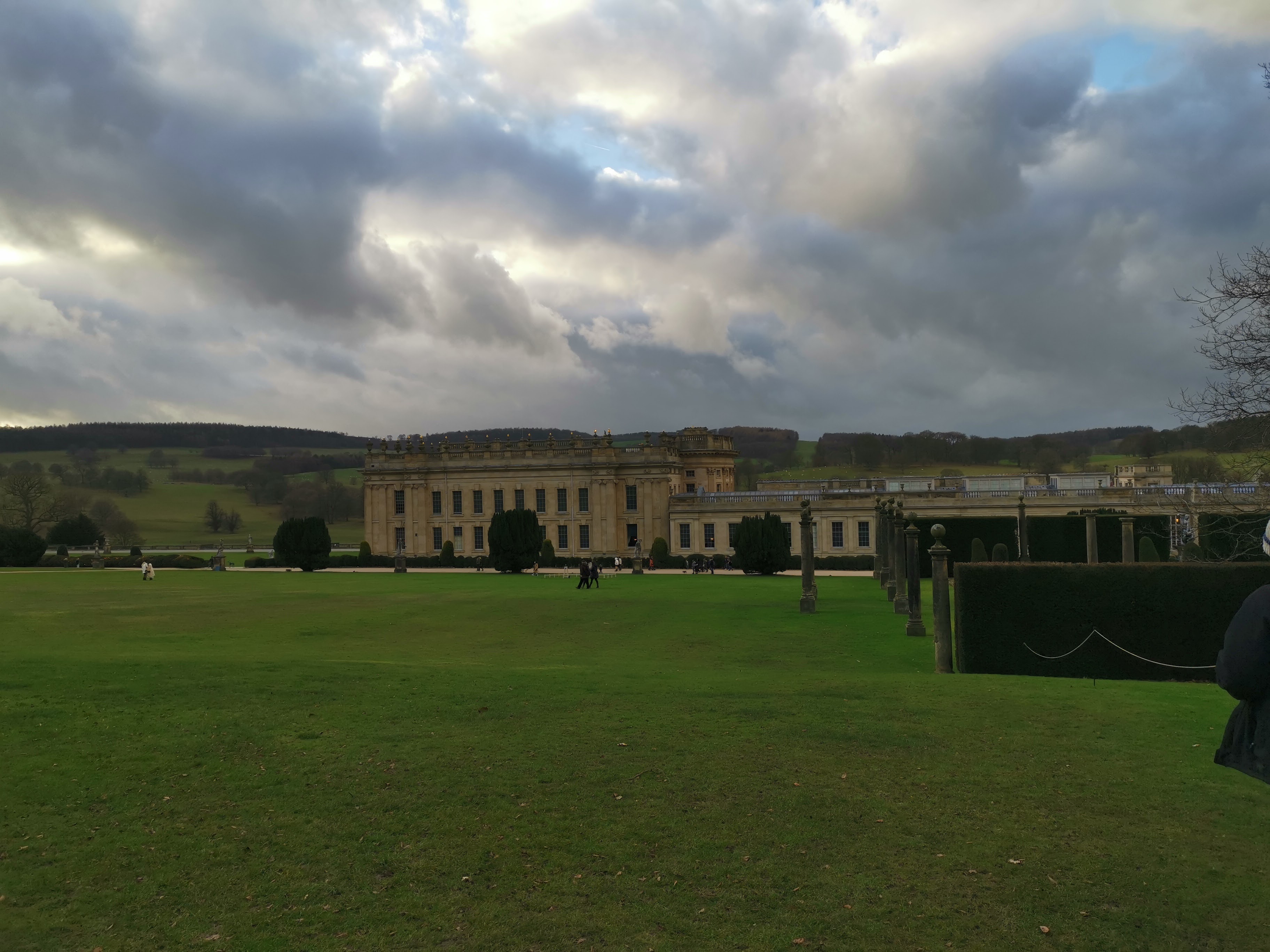
Following our recent visit to the Dunham Massey Estate for their Christmas Trail Event, we booked to visit Chatsworth House. This was to see the Christmas decorations in the house and explore the gardens. Chatsworth House is near the town of Bakewell in the English Peak District, so not far from Manchester.
We entered the house via the gates between the lit columns.
The side of the house where a cafe was serving hot drinks under the marque.
The private garden area, not accessible for us to visit
Chatsworth House is home to Peregrine Andrew Morny Cavendish, the 12th Duke and Amanda Carmen, the Duchess of Devonshire. This home has been passed down through 16 generations of the Cavendish family and some sections of the house are open to tourists.
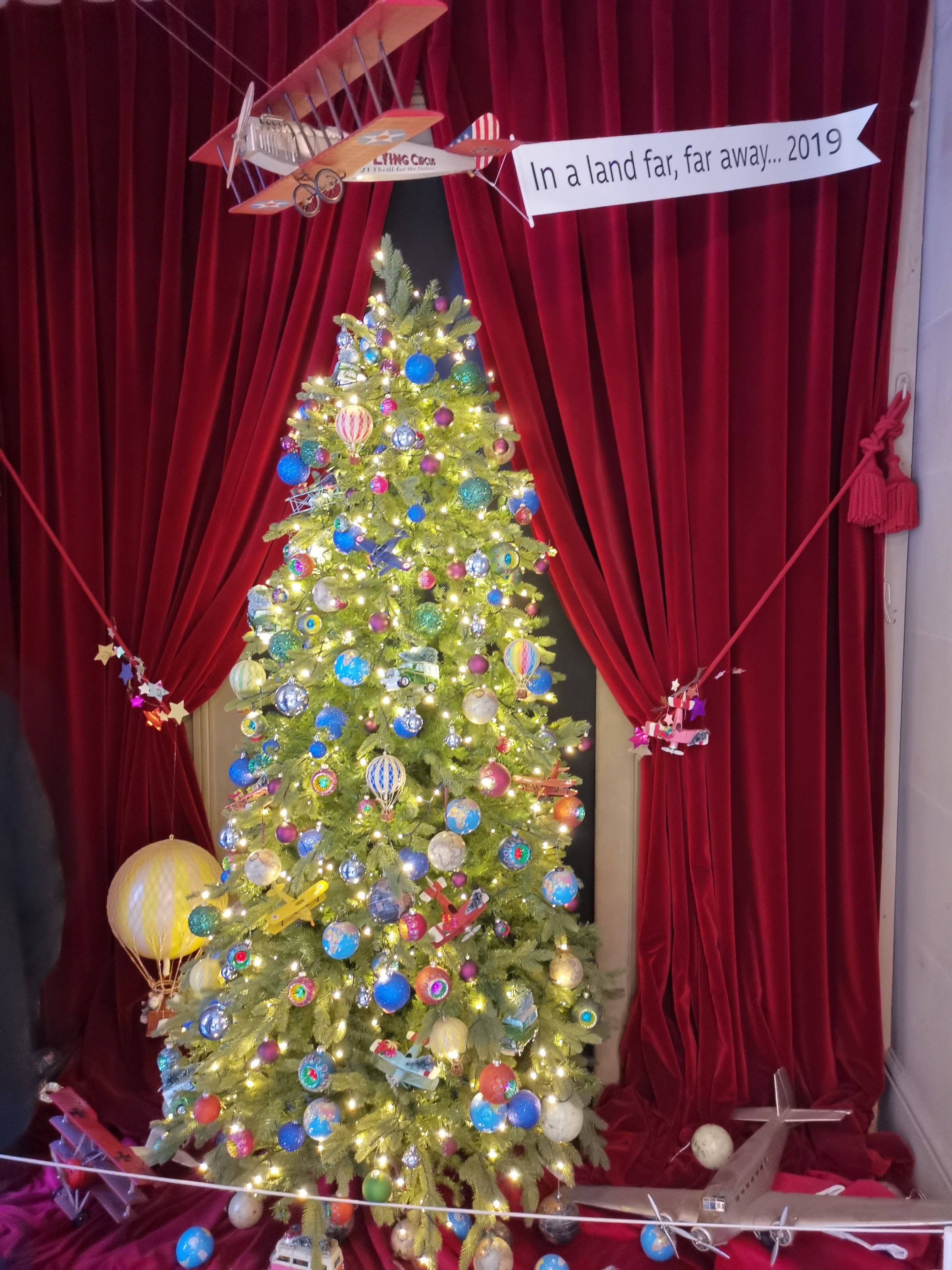
Our tickets to visit the house and garden included being able to explore a number of rooms in the house, being guided through these on a walking trail. These rooms had been decorated for Christmas celebrating the Christmasses of the past 20 years that the house has been open for visitors.
Due to COVID19, it was necessary to book online a time slot for our visit. We were required to arrive on time to assist in controlling the number of people in the house at any one time. We were also required to sanitize our hands and wear our masks the whole time inside the house.
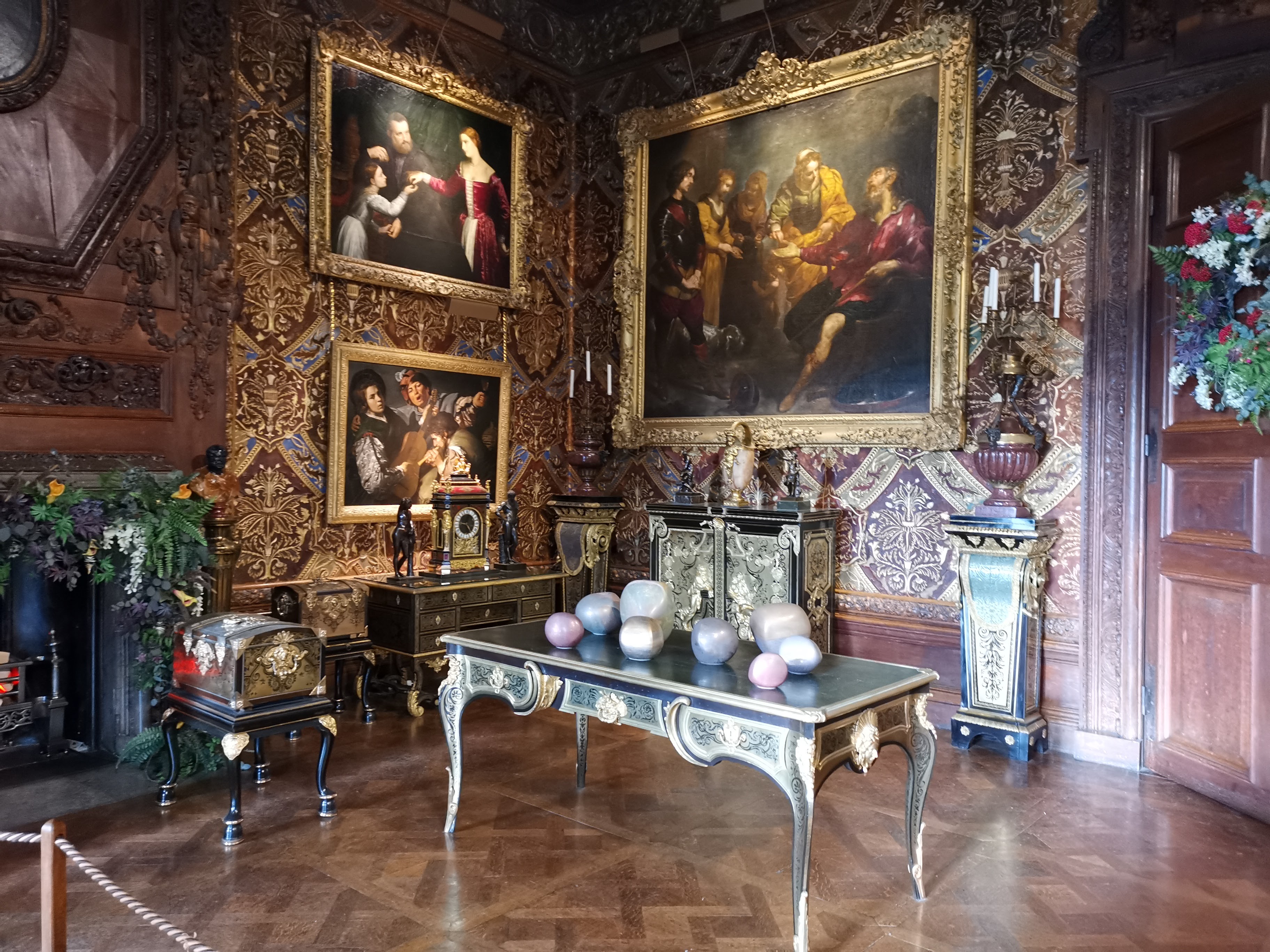
The mansion is amazing, even forgetting the Christmas displays. Every room we visited was decorated grandly. From painted ceilings and walls, portraits of family members, artworks, sculptures and tapestries, Chatsworth contains works that span 4,000 years, from ancient Roman and Egyptian sculpture to painted masterpieces by Rembrandt. The house is full of the history of the Cavendish family and their love of fine things.
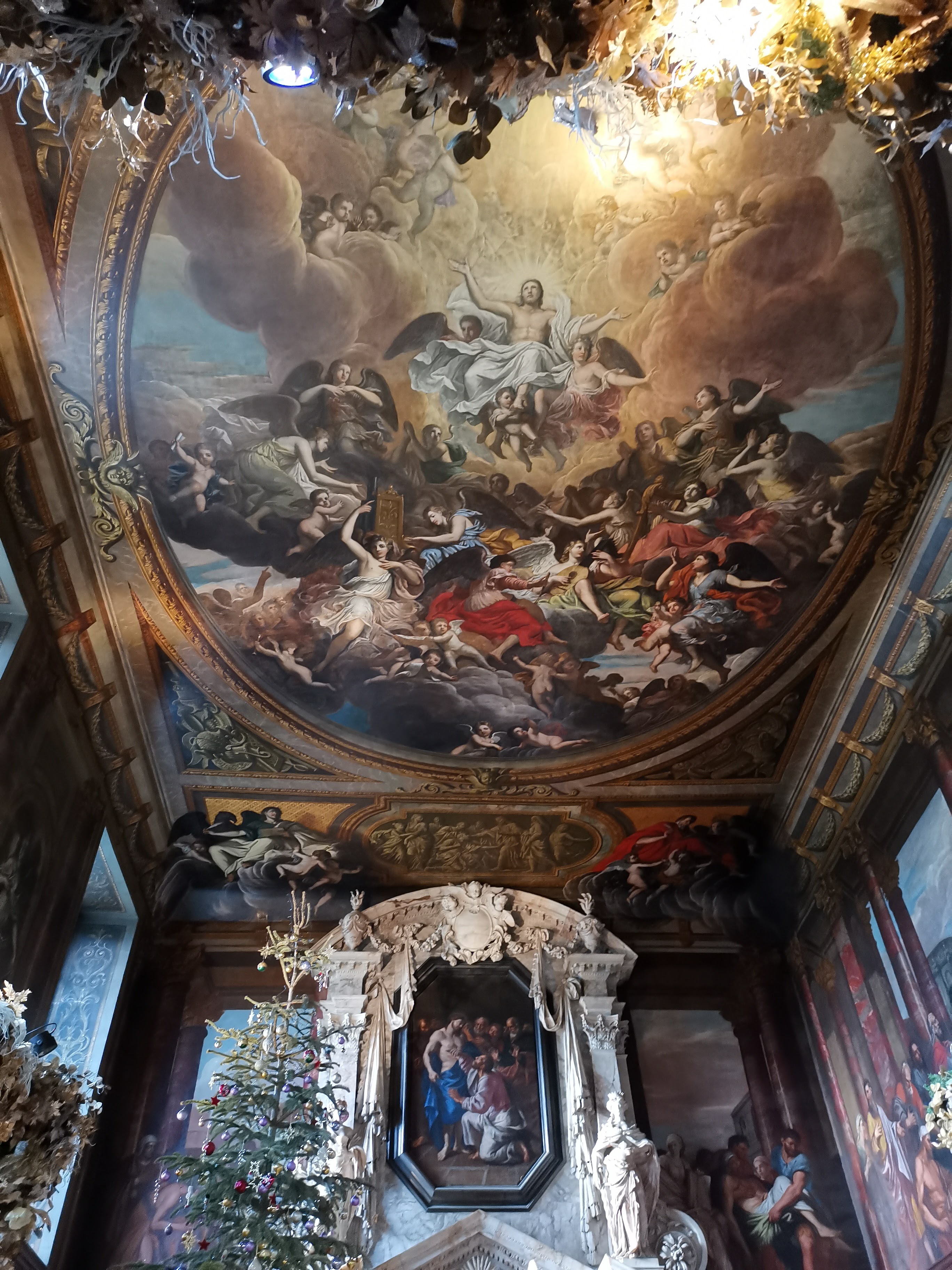
We started our visit in The Painted Hall which welcomes guests as the entrance to the house. It was built by the 1st Duke of Devonshire, William Cavendish in the 1600s. The ceiling is amazing, as is the very grand marble staircase.
From the top of the marble staircase, we were guided through different rooms that the current Duke and Dutchess had opened to the public. Anywhere that was off-limit, was roped off or the doors were closed. In each room, we could visit, there was a guide to tell you about it if you had any questions.
The next grand room was the Chapel, it was also designed by the 1st Duke and remains mostly unchanged since it was built in the 1600s. It was decorated for Christmas with a mechanical music box with a dancer from the Nutcracker and a very tall Christmas tree. The ceiling and walls have scenes from the bible.
Looking out the window it was possible to see the courtyard, which they had covered in “snow” – although I don’t think it was real, it certainly looked effective. There was also snow falling.
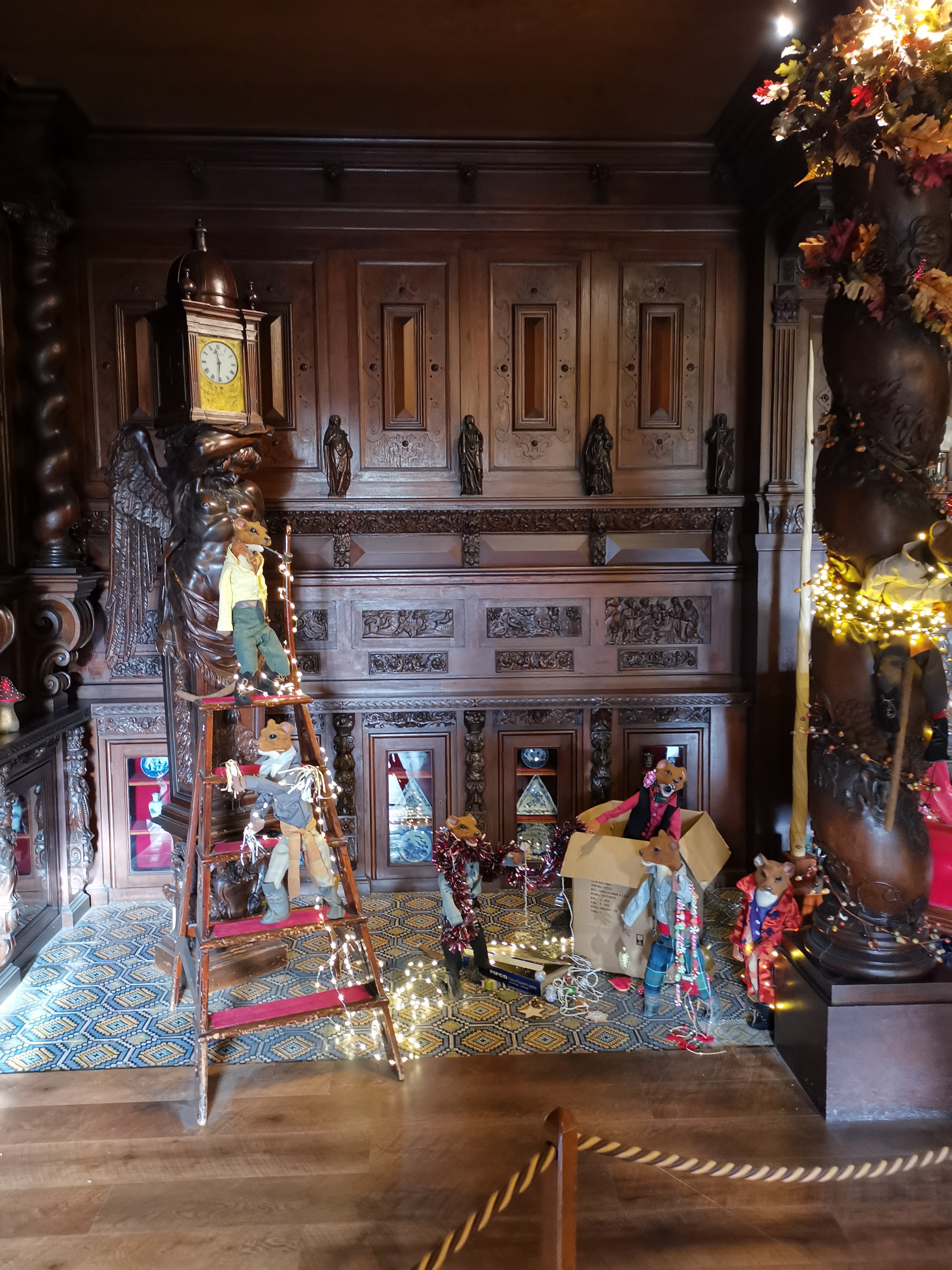
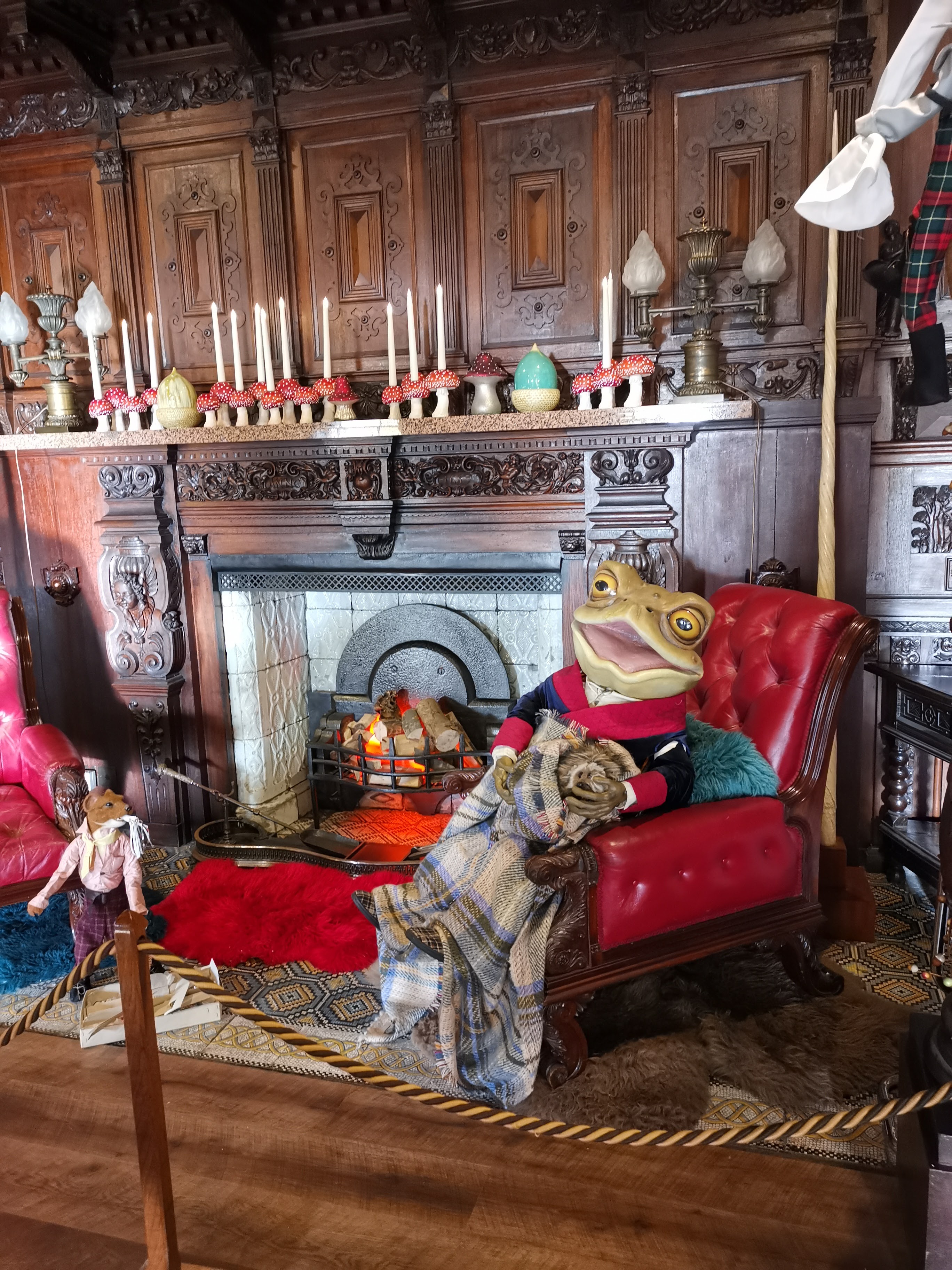
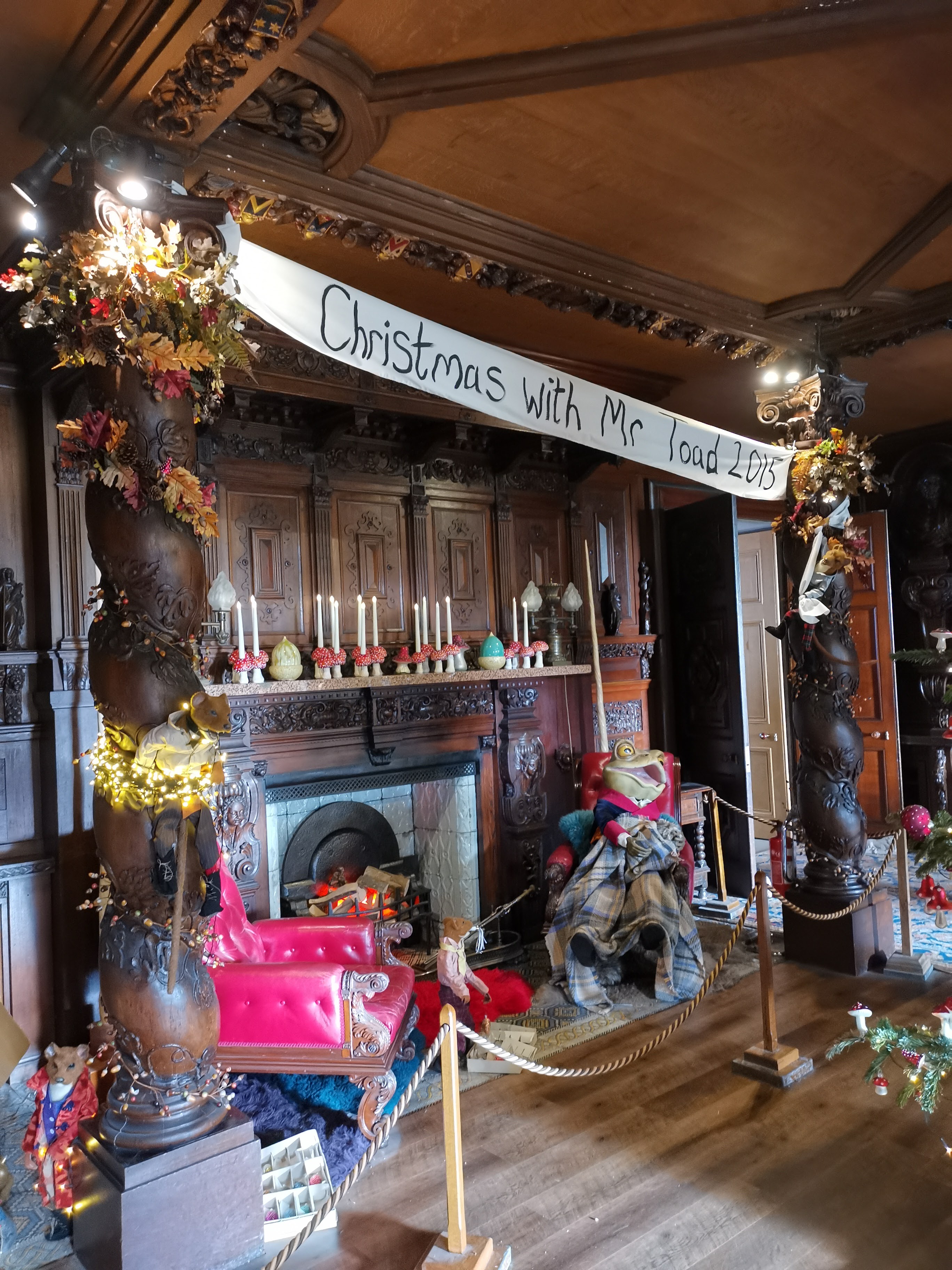
On a previous Christmas (2015), the next room was decorated with a Wind in The Willows theme, so they recreated it, including a very large Mr Toad.
The passageways were also decorated beautifully, although some we weren’t able to go down to explore where they led.
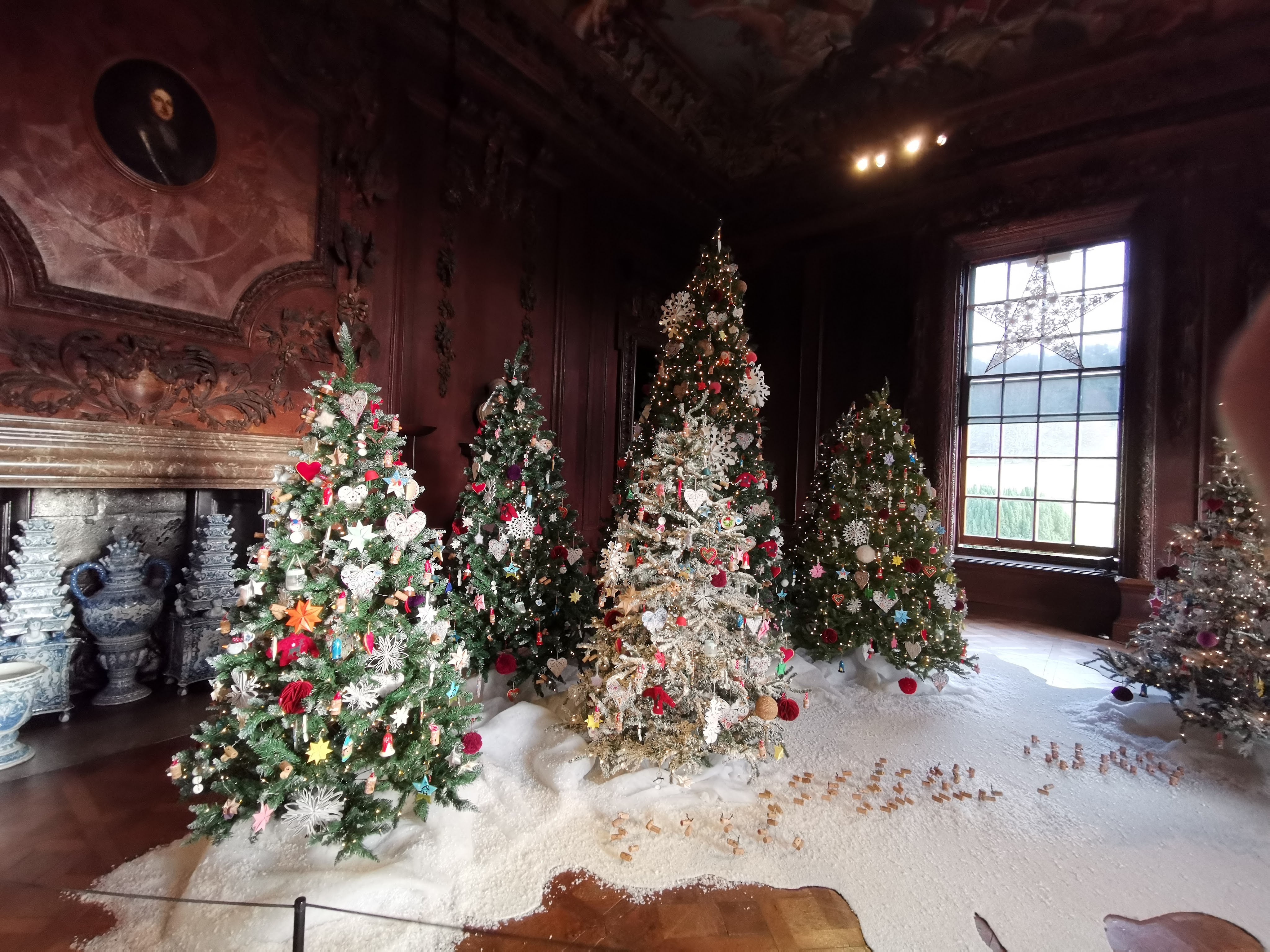
The Great Chamber is the first room of The State Apartment. There were a few Christmas trees differently decorated in this large open space. The little cork reindeer in the snow were a cute addition under the trees.
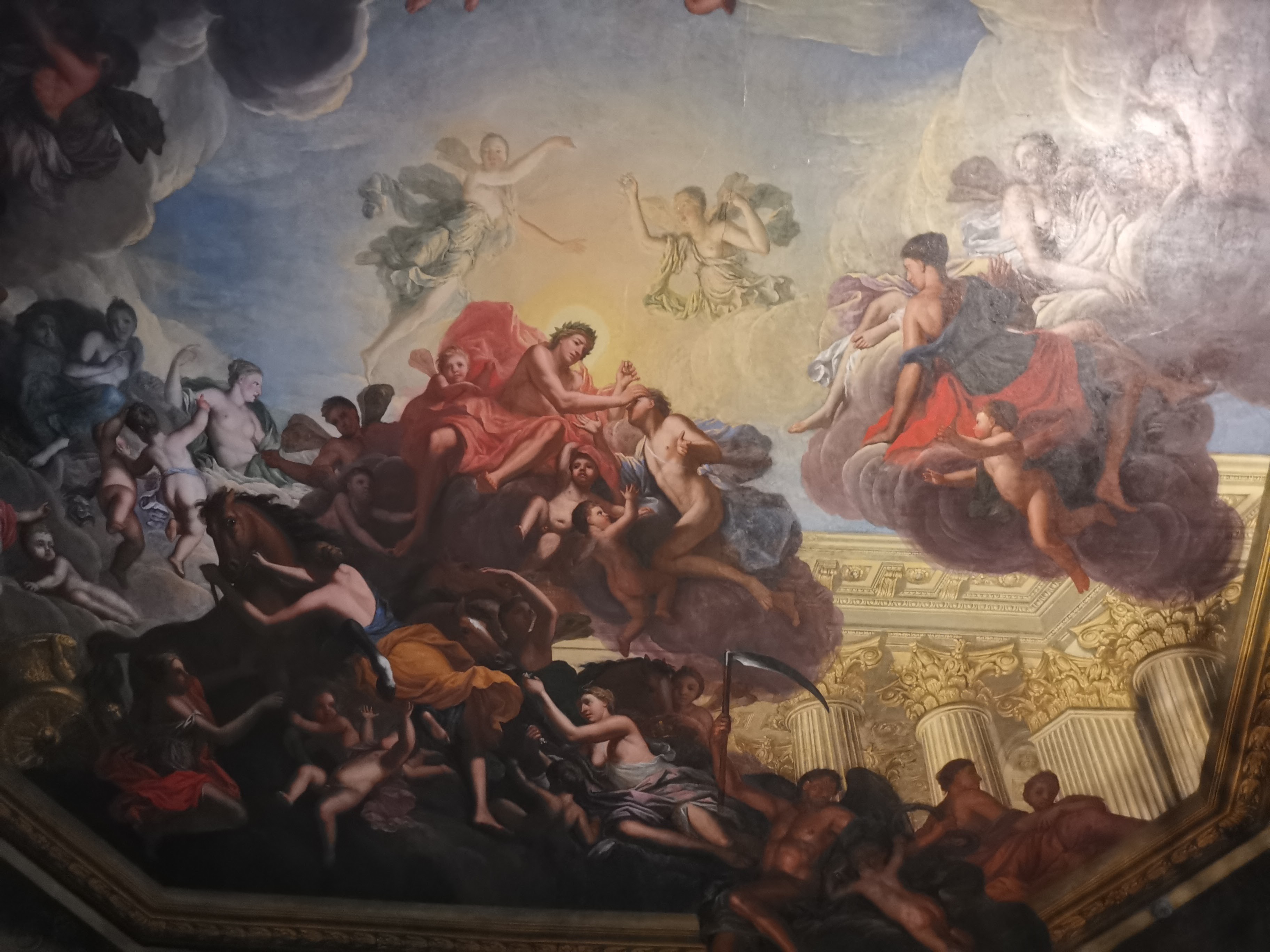
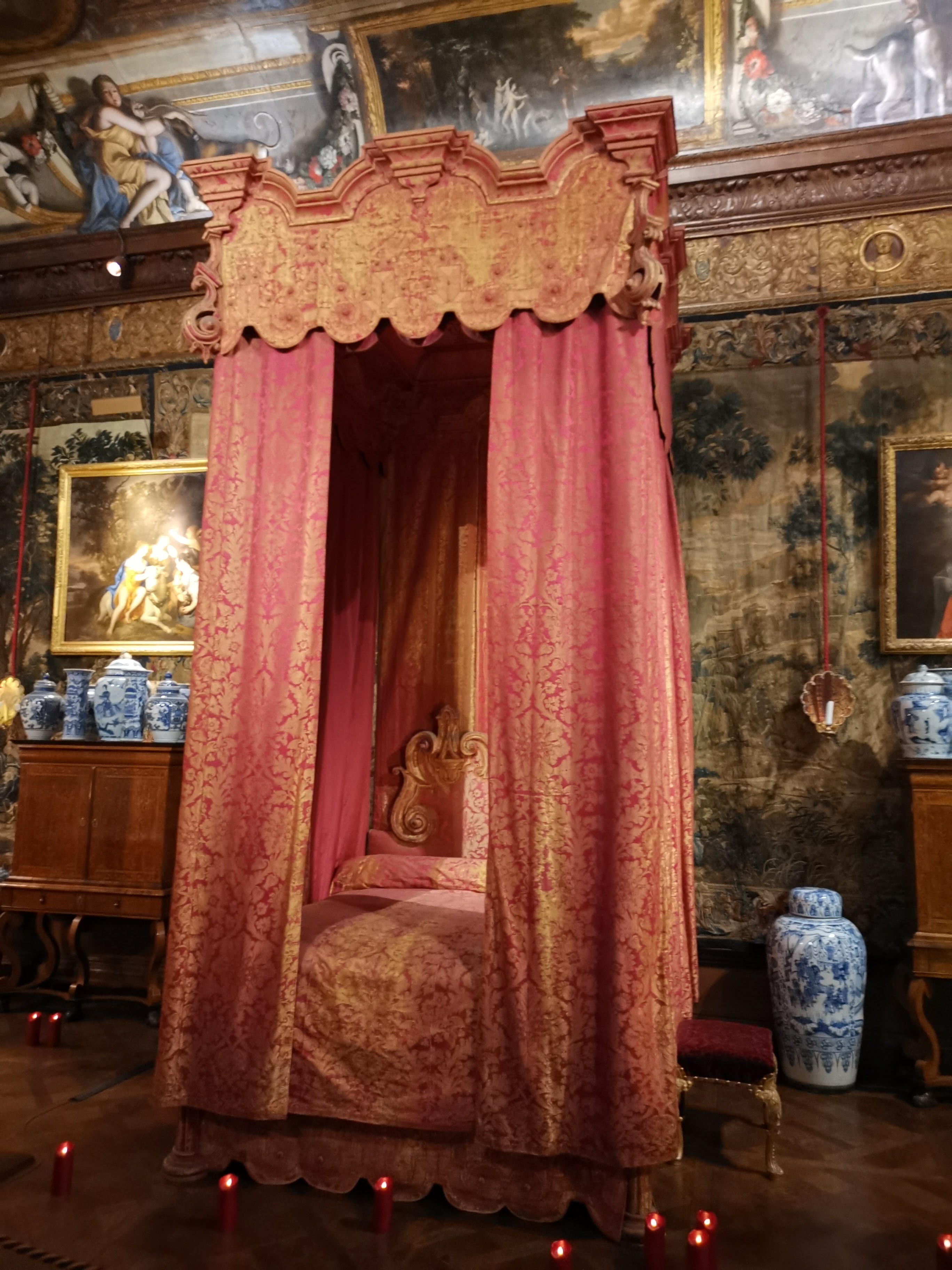
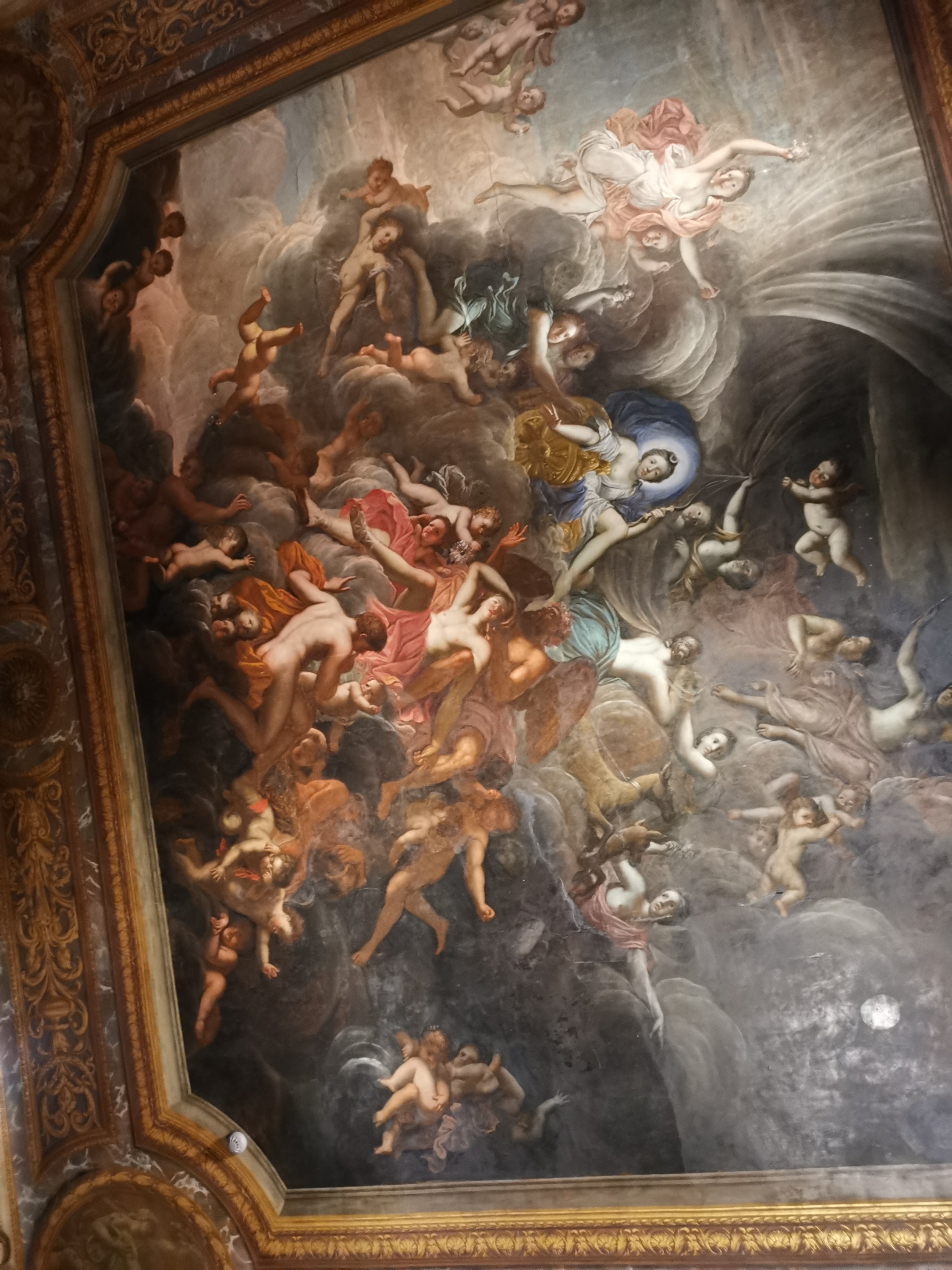
The State Apartment also includes a Drawing Room and Bed chamber and was intended to host a king. I thought it was interesting how small the bed was, compared with the height of the surround. In here, the ceilings were highly decorated too.
The Great Dining Room is still used to host formal dinners and was set up grandly for Christmas dinner. It was another room renovated by the 6th Duke, also named William Cavendish (c1800s).
The Oak staircase/Leicester landing, created by the 6th Duke to connect the old part of the house to the new. The beanstalk seems to have been from a Jack and the Beanstalk pantomime in 2012.
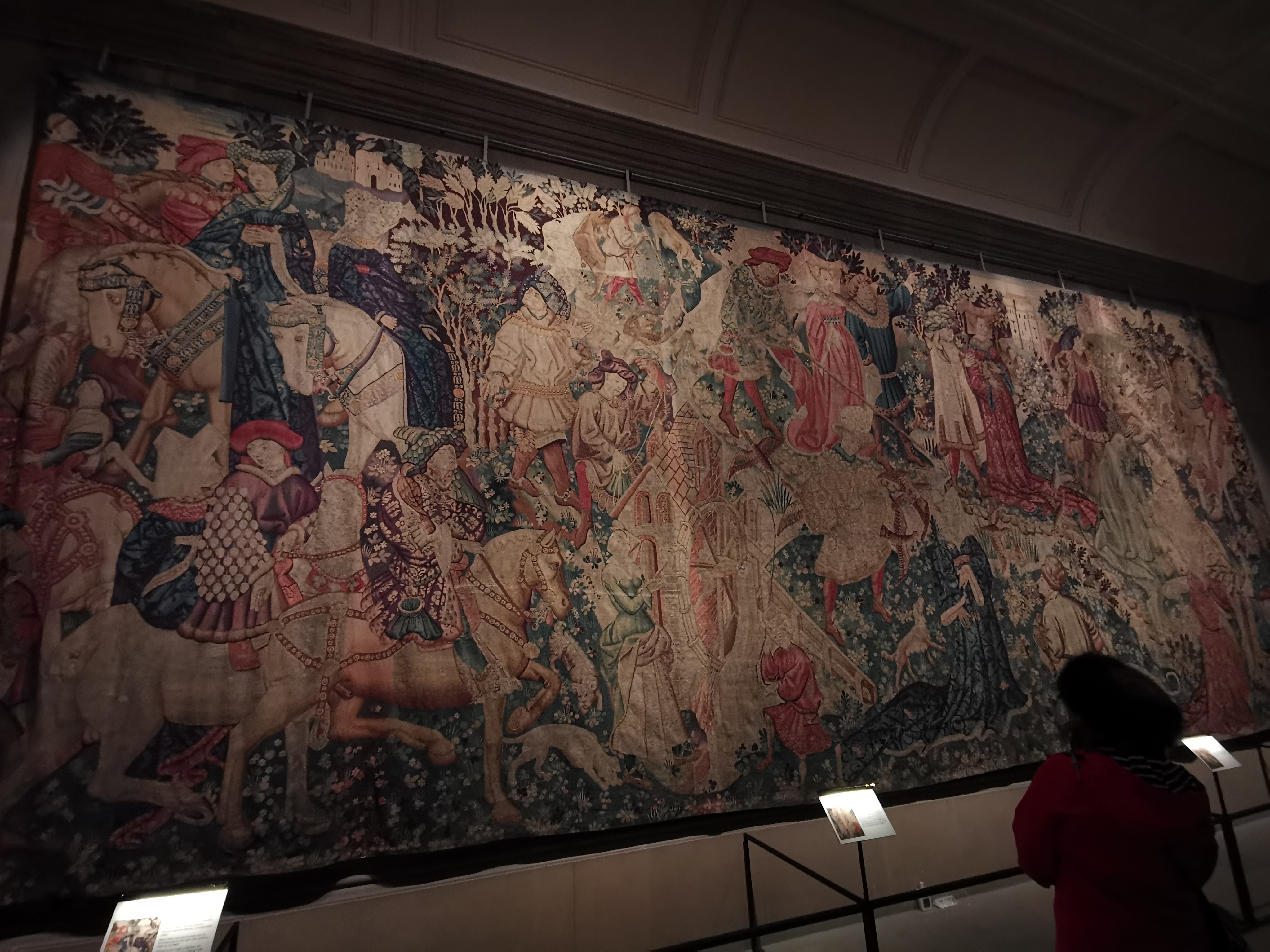
In the Sculpture Room, apart from sculptures were the Devonshire Hunting Tapestries. These are 500 years old and the only surviving tapestries in the UK depicting hunting from the medieval period (15th Century), it shows scenes of noble men and women who are engaged in hunting in imaginary landscapes.
Also in the Sculpture Room is the collection of sculptures. One of which is very prominent – a reclining young man. This I found out is Endymion. In Greek mythology, Endymion was a handsome shepherd boy of Asia Minor, the earthly lover of the moon goddess Selene, and each night he was kissed to sleep by her. She begged the god Zeus to grant him eternal life so she might be able to embrace him forever. Zeus granted her wish and put Endymion into eternal sleep.
There are several hallways that have been turned into galleries to display more works of art. This one has an entire wall covered in small ceramic rectangles. It is a representation of the DNA of the present Duke and Dutchess, their son and daughter-in-law. A very interesting way of capturing them for history.
It was lovely to see the house and how beautifully it is cared for. TI think you can certainly see, if historic houses interest you, just how lovely this one is.
If you would like to know more about the house and the family through the ages, the website has lots of interesting information https://www.chatsworth.org/
After we had finished looking through the house, we took time out to have lunch. The weather was threatening to rain, between times of bright winter sunshine, so we found a sheltered spot to eat our picnic sandwiches and packet chips. There are cafes and a restaurant on the grounds, but the food can be a bit expensive. With Covid19 restrictions in place, once you leave the house, you can’t re-enter. However, we were free to explore the gardens on our ticket.
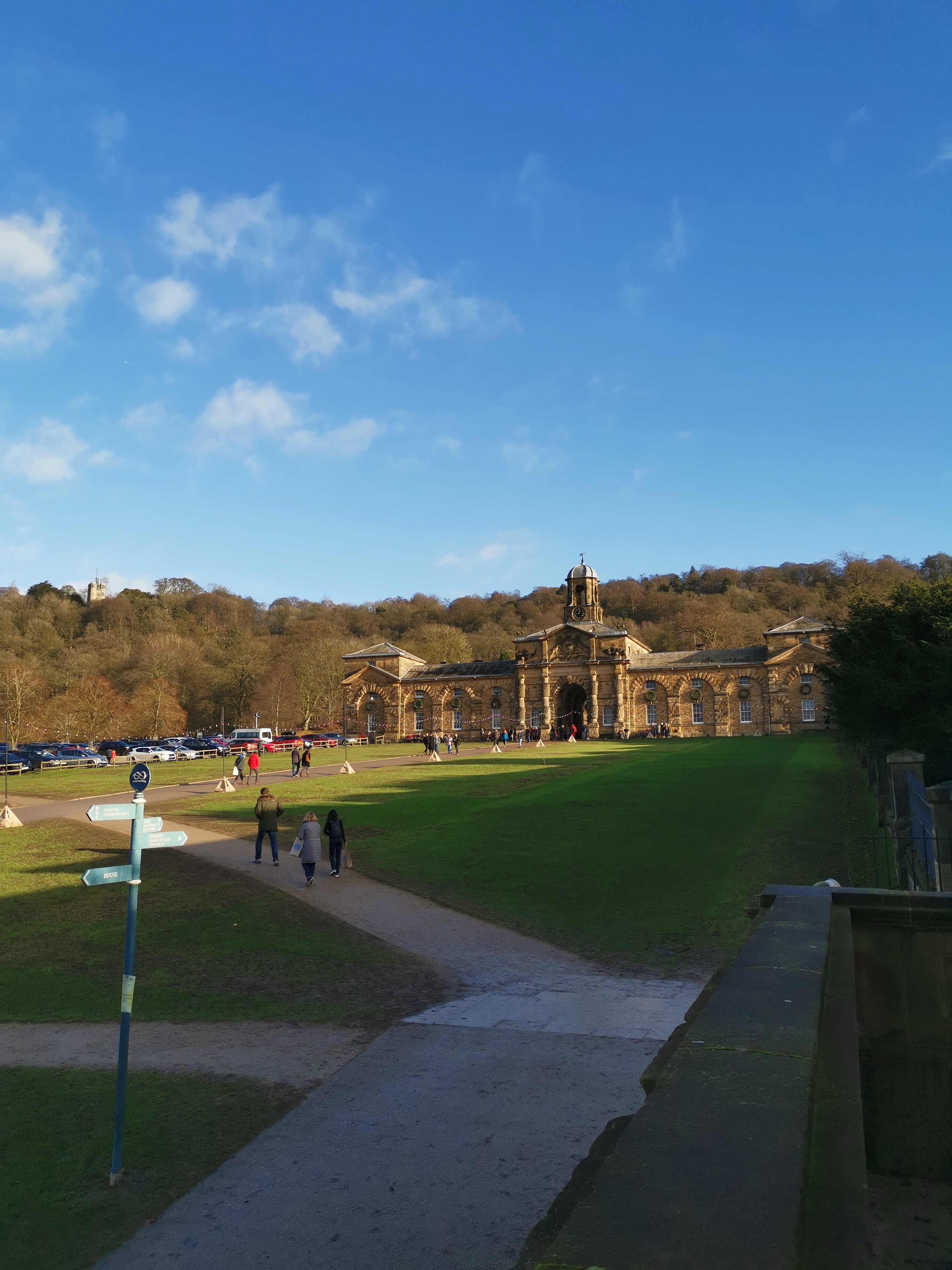
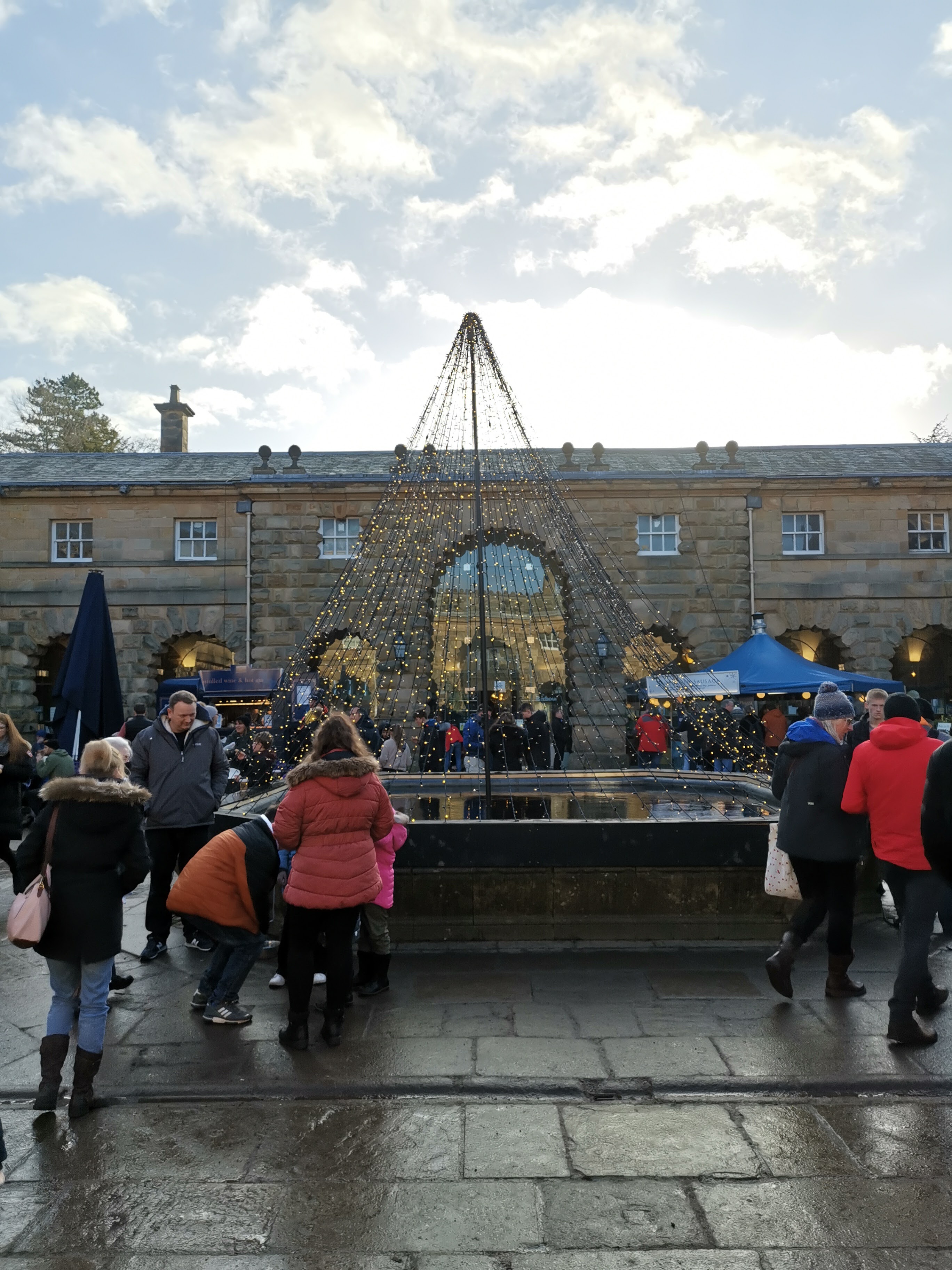
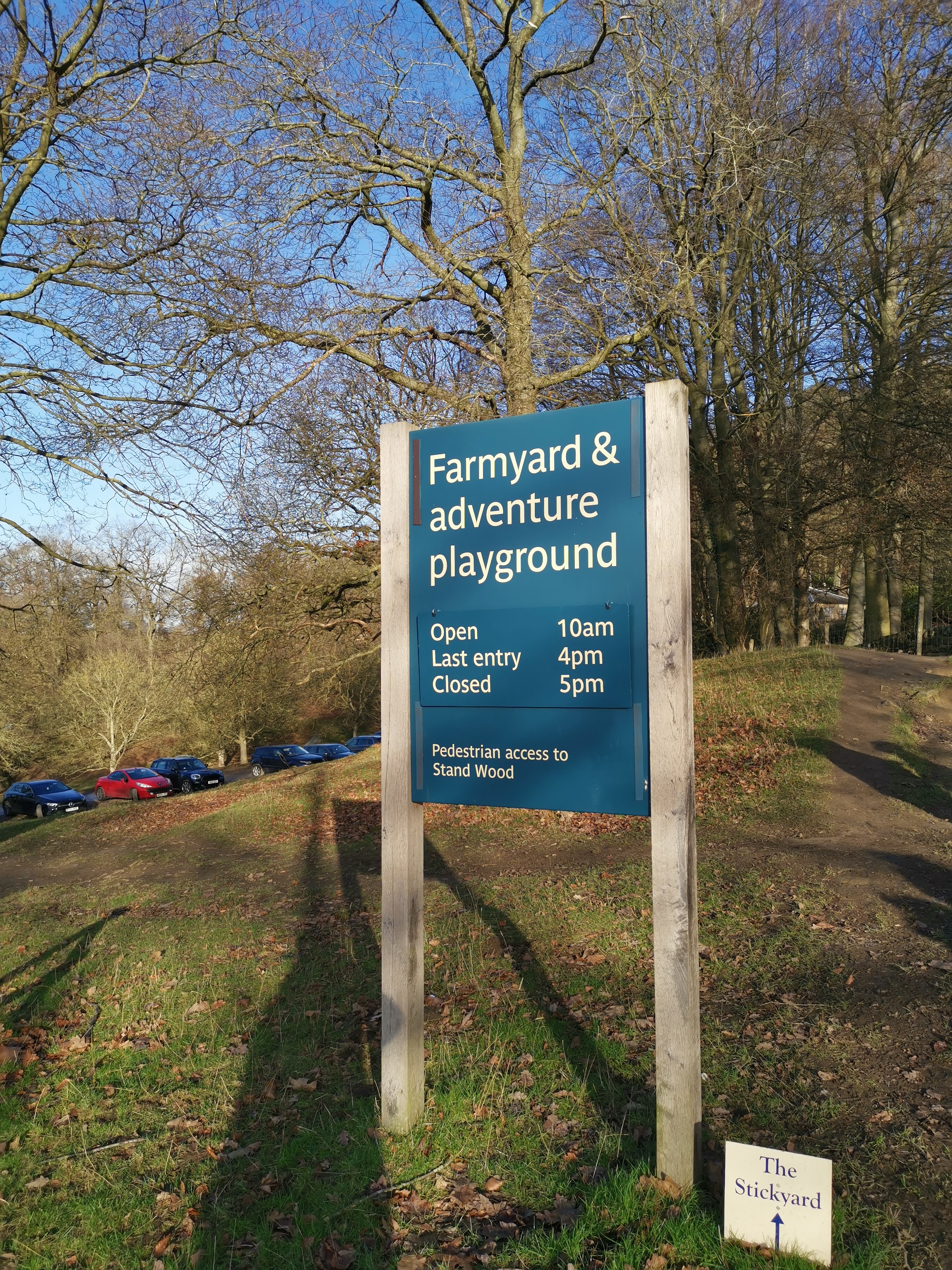
Next, we ventured up to the Farmyard and Adventure Playground, so my grandson could see the animals. We followed the path up to the Stables, which houses various options for food, including their full-service restaurant, The Cavendish Restaurant and the Carriage House Cafe.
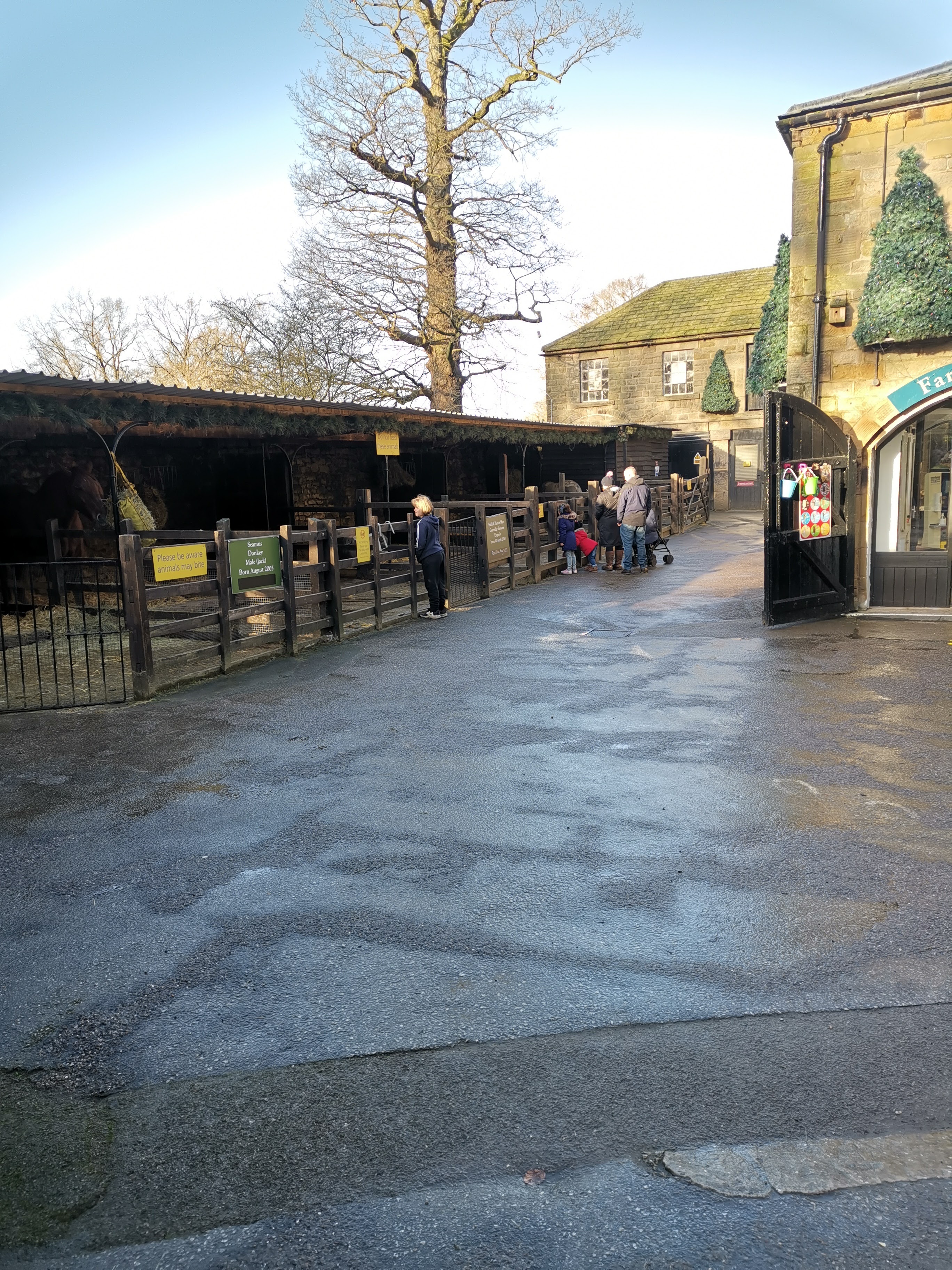
There were a variety of animals, including sheep, pigs, goats and donkeys in the farmyard. At various times during the day, it is possible to watch the cows being milked and pet the guinea pigs. We were able to buy a small bag of food for the animals, so we could hand feed some of them. That was very cute as sheep and goats have warm sticky tongues, so it was safe for little children to feed them.
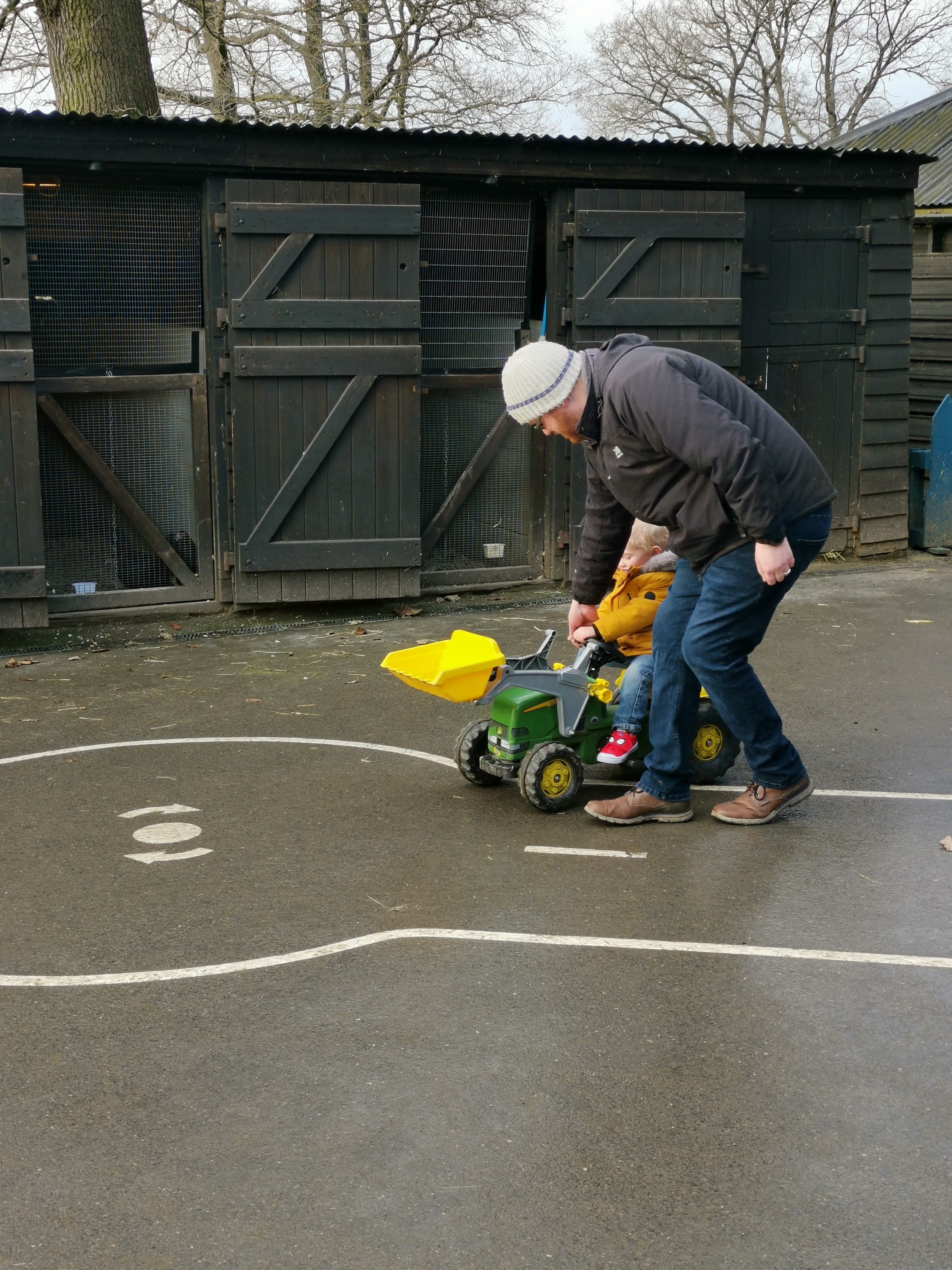
There was an old tractor set up for climbing on and also some little-people sized ride-on tractors, which the children were enjoying. My grandson is still a bit small for peddling, so Daddy power came in handy to propel him.
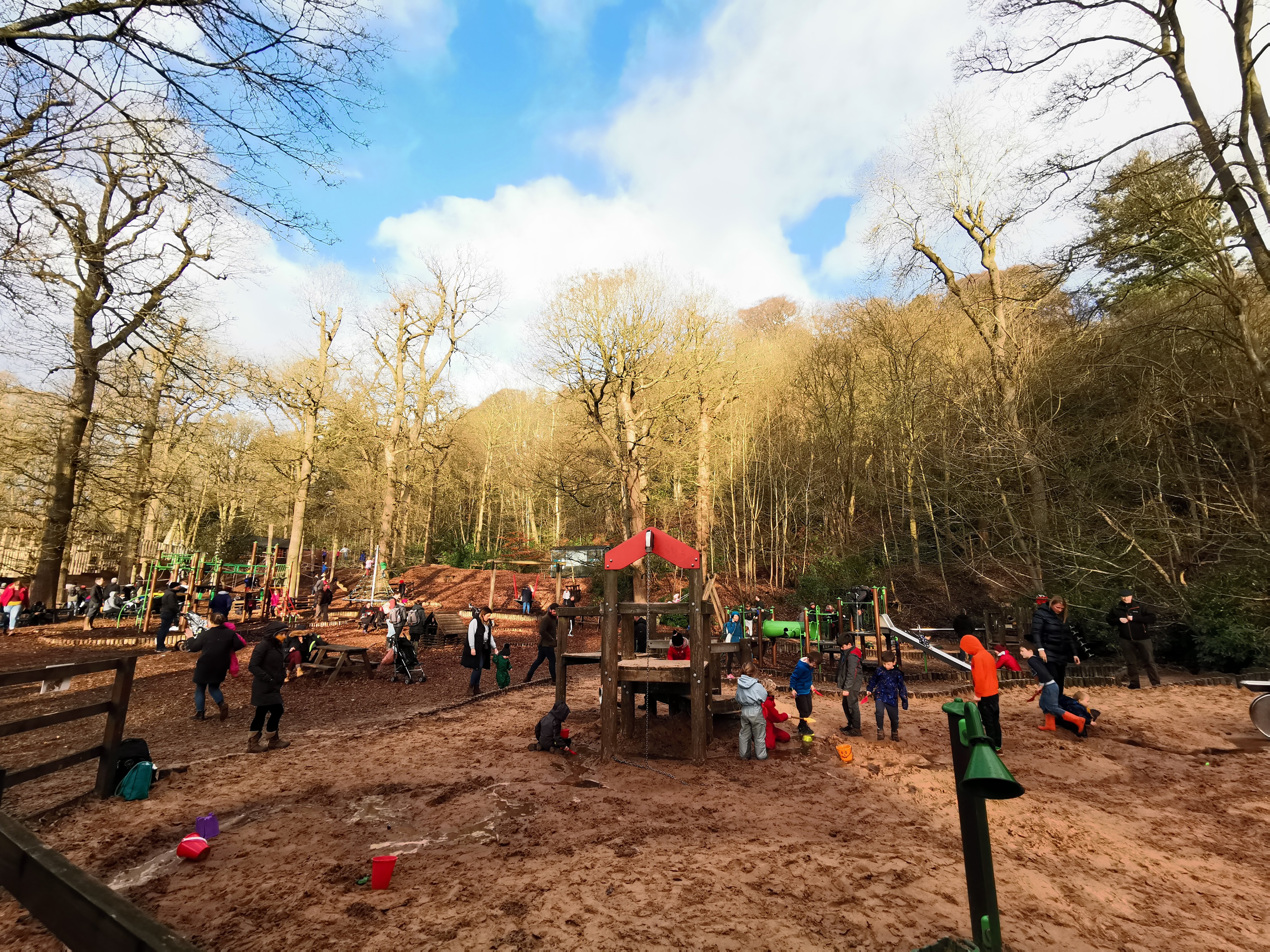
The Adventure Playground has large sandpit areas allowing the children to have water and sand play. There was also climbing play equipment for various ages. Up behind the playground is woodland for hiking through and in the valley below the house is open fields where it is possible to see deer.
Once we had finished in the Adventure Playground, we returned back to the gardens of the House. There are extensive gardens and grounds surrounding the house to explore, including a hothouse of tropical plants and in the nicer spring/summer weather it would be lovely to spend more time exploring.
The hothouse, it was lovely and warm in there
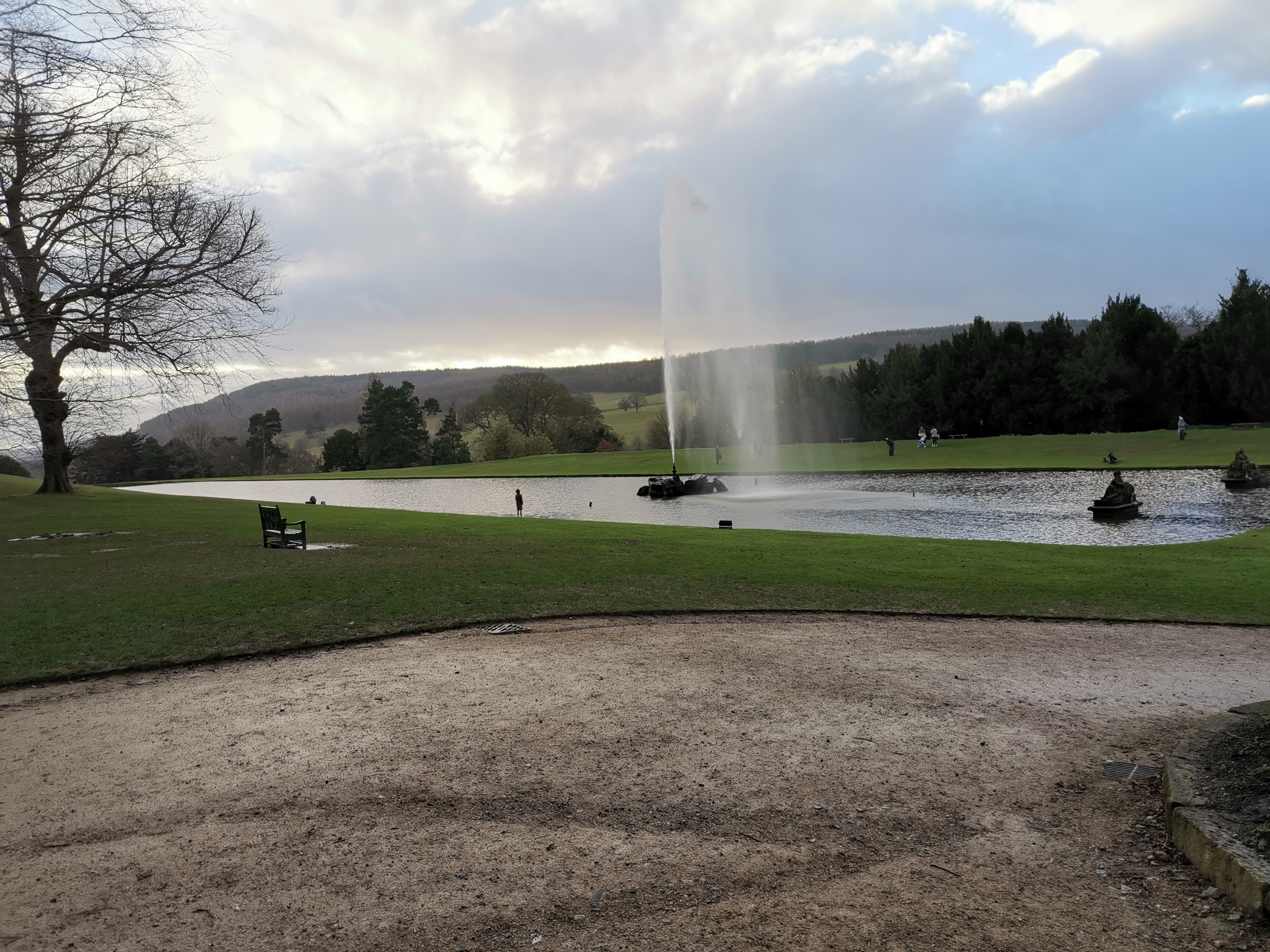
However, we were content to walk along the main path, The Broad Walk, past the private lawns and the fountain, up into the rock garden, which I suspect was missing its waterfall.
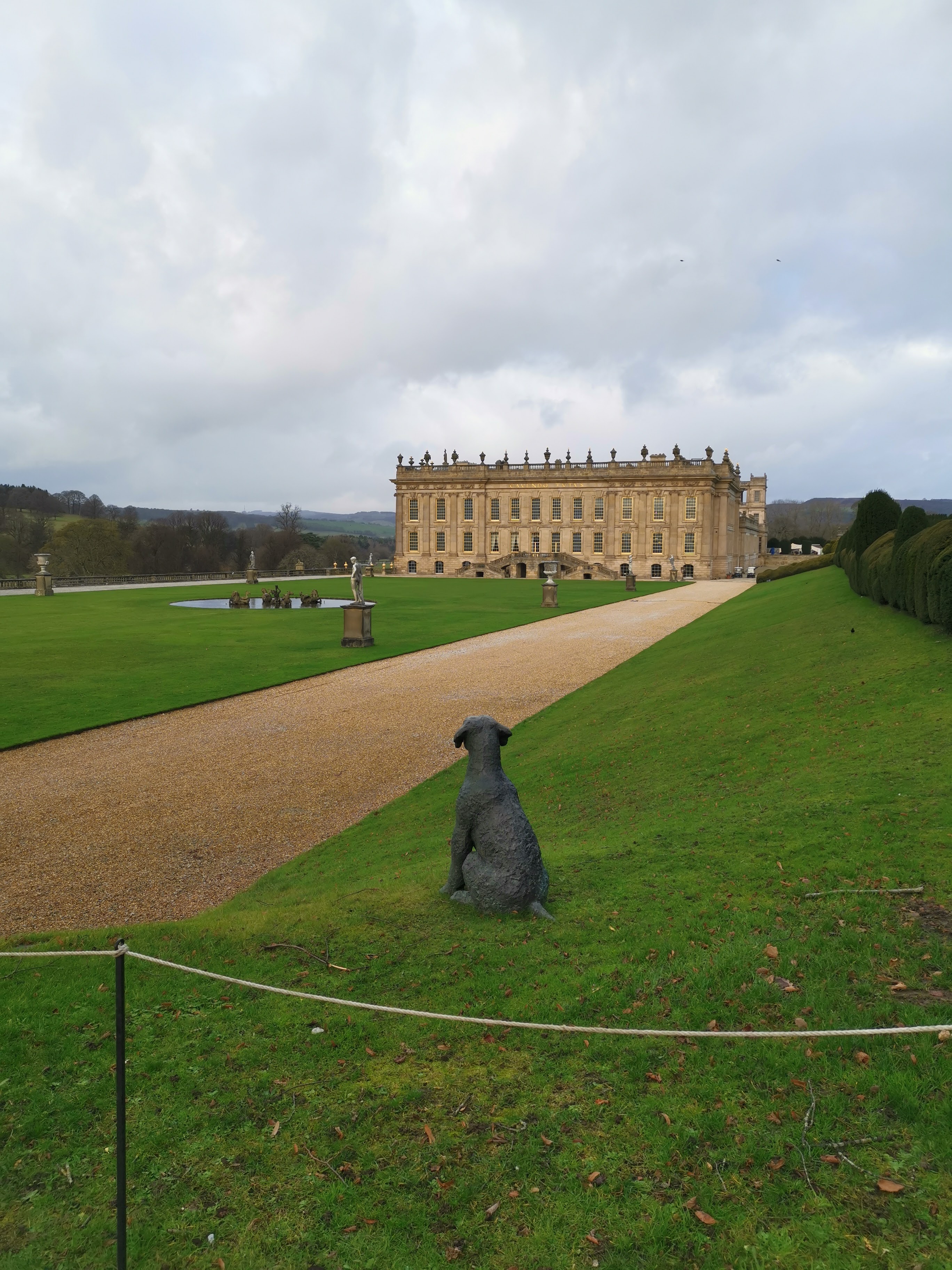
View cross the Salisbury LawnsThese are statues of dogsThe Emperor Fountain and Canal PondPaxton’s Rock Garden A statue of a dog watching over the private garden
I found out that Joseph Paxton was the head horticulturalist for the 6th Duke and laid out the gardens. He also cultivated the Cavendish banana in the greenhouses of Chatsworth House, which he designed and named the variety of bananas after his employer. Cavendish bananas are the most eaten variety in the Western world. The Paxton’s Glasshouse and Paxton’s Rock Garden are named after Sir Joseph Paxton.
Up behind the Rock Garden, there is an old coal tunnel that had been made safe for visitors to walk through, although it was pretty dark and waterlogged in the tunnel. The coal delivered here was needed to heat up a large conservatory, which no longer exists.
As the winter sun disappeared behind rain clouds, we decided to head back to the car and head home. It was a great way to spend an afternoon and it will be lovely to visit the house again and perhaps see more of the gardens, including the maze.
This year will be my first Christmas living in England since 1970. As a 9-year-old, as I was in 1970, my memory is of Christmas was a tree in the lounge and my brothers and I opening gifts while mum checked on the turkey in the oven, ready for lunch when my aunt and uncle would come and join us.
The next Christmas was 1971 and I was part of a new migrant family in Australia, specifically Adelaide, South Australia and as a family we were living in the migrant hostel and experiencing our very first Aussie summer. The Christmas tree was a communal one, shared with other migrant families and our presents were the only toys we had, as our belongings had not joined us in Adelaide when we got off the ship. For a 10-year-old, that first Christmas in Summertime, was the start of 50 years of being away from the climate that is associated with Christmas, the one that produces snow.
This year, my Christmas cards can depict snow scenes, reindeer, robins and people being rugged up against the cold and it is more accurate. No more trying to find Christmas cards to send to overseas friends that sort of look like Summer in Australia, depicting the heat, the beach, people in shorts, prawns on BBQs and Santa’s sleigh being pulled by 6 white kangaroos. Images that give the impression that Australia is a place where you have Christmas dinner on the beach and I am sure contribute to the reason people ask why would I want to move back to England when I lived in Australia as if it is an ideal place to live. I have been in England for 3 months and I am keeping a very open mind about my new home and not compare it with being “back home” in Australia.
Pre-COVID19, back home in Australia, when travel was a luxury available if you could afford it, visiting a Northern Hemisphere country at Christmas Time was on many a bucket list, including mine. The idea of a Christmas time holiday would often include time allocated to visit famous “Christmas Markets” in city squares. And just like the idea of Christmas dinner on the beach, the idea of the Christmas market was based a lot on photos in travel magazines of a city square somewhere in Europe.
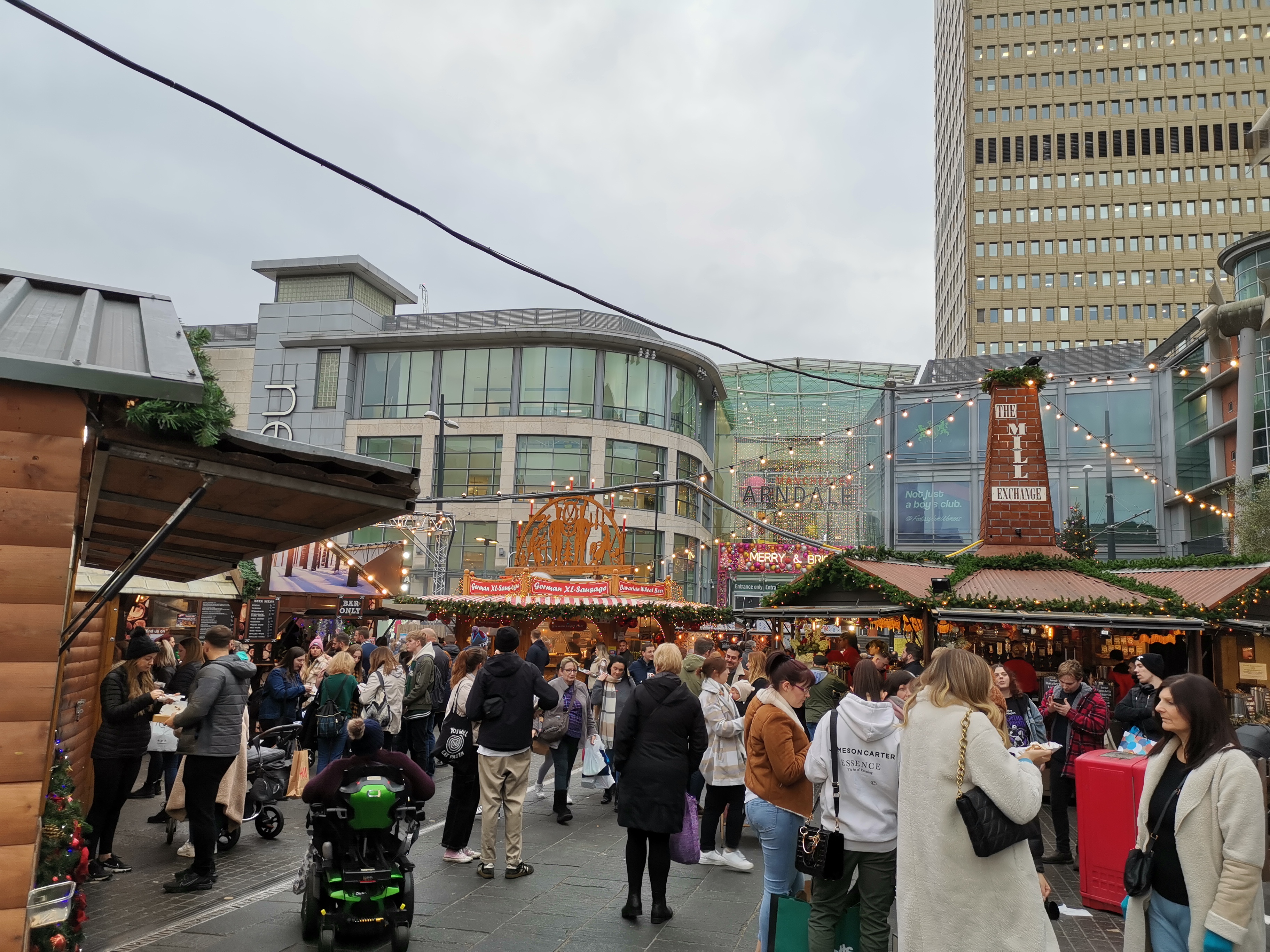
When the advertising started happening here in Manchester that the Christmas market would be happening in the city, I couldn’t wait to go and have a look. I thought that things would probably be scaled back due to the virus, that maybe there would be limitations on the number of people who could access the stalls or that everyone entering the area would have to wear a mask. That didn’t seem to be the case in Manchester and when I also got to visit 3 markets in London and one in Sheffield, it wasn’t the case there either.
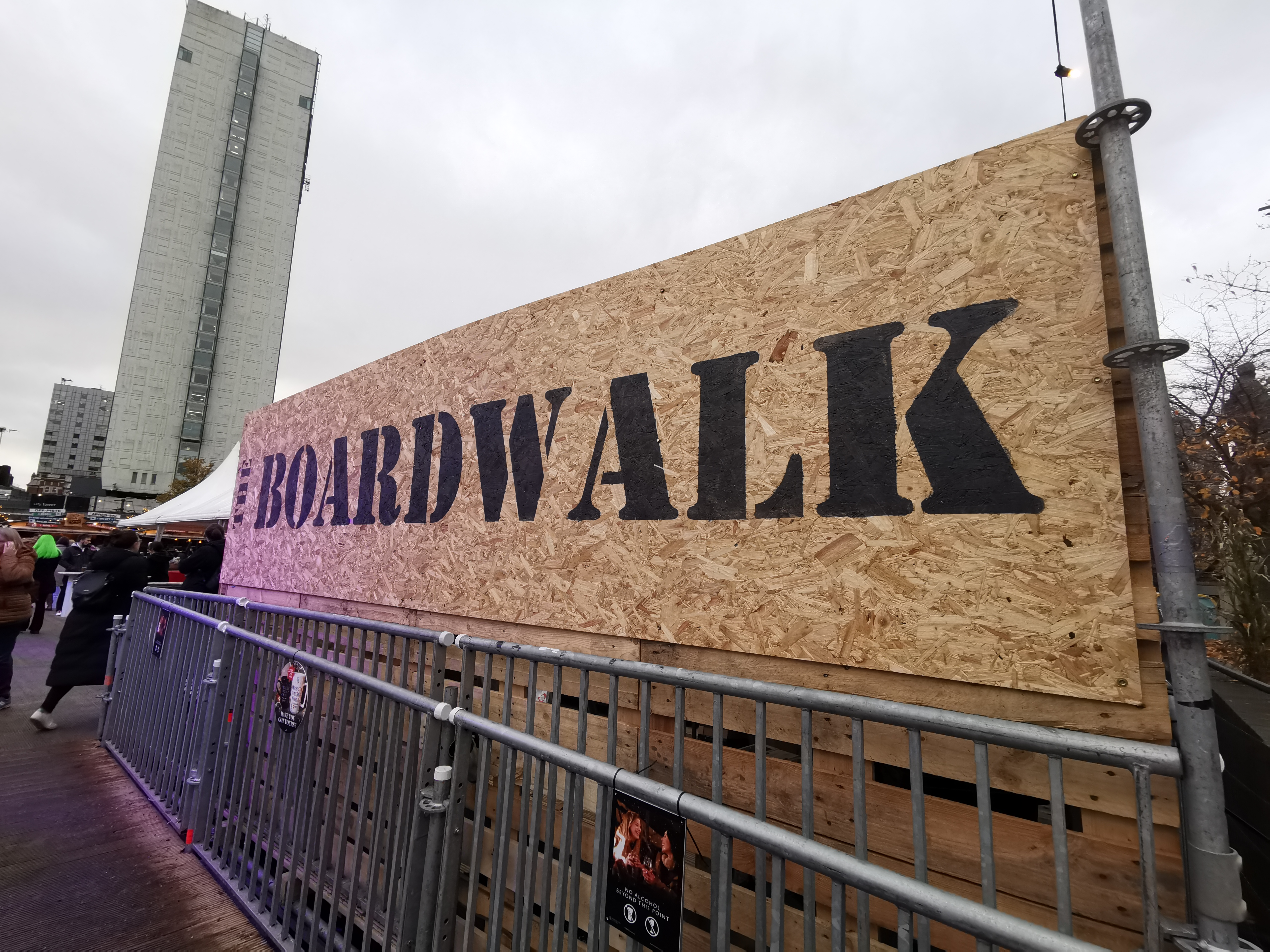
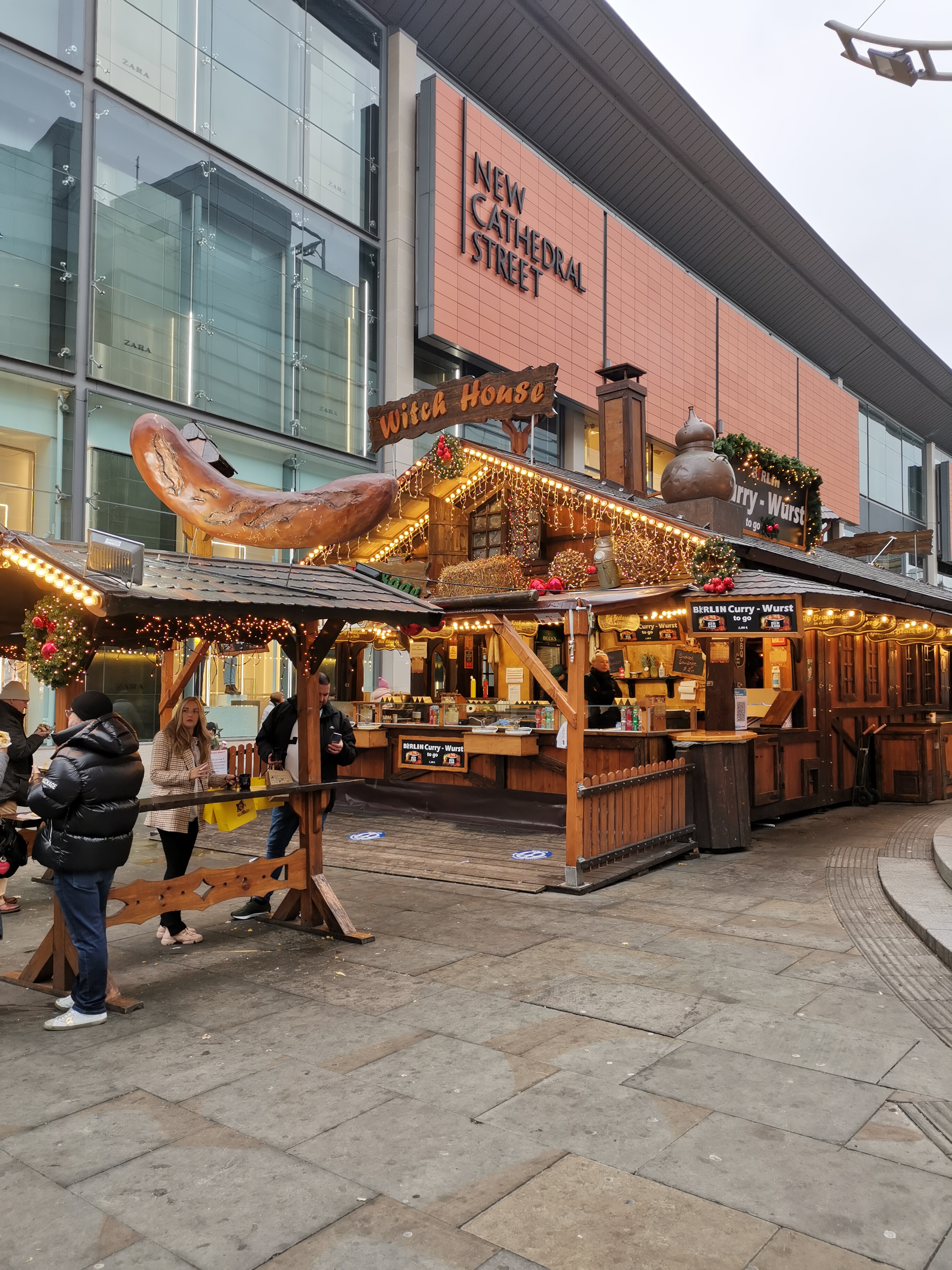
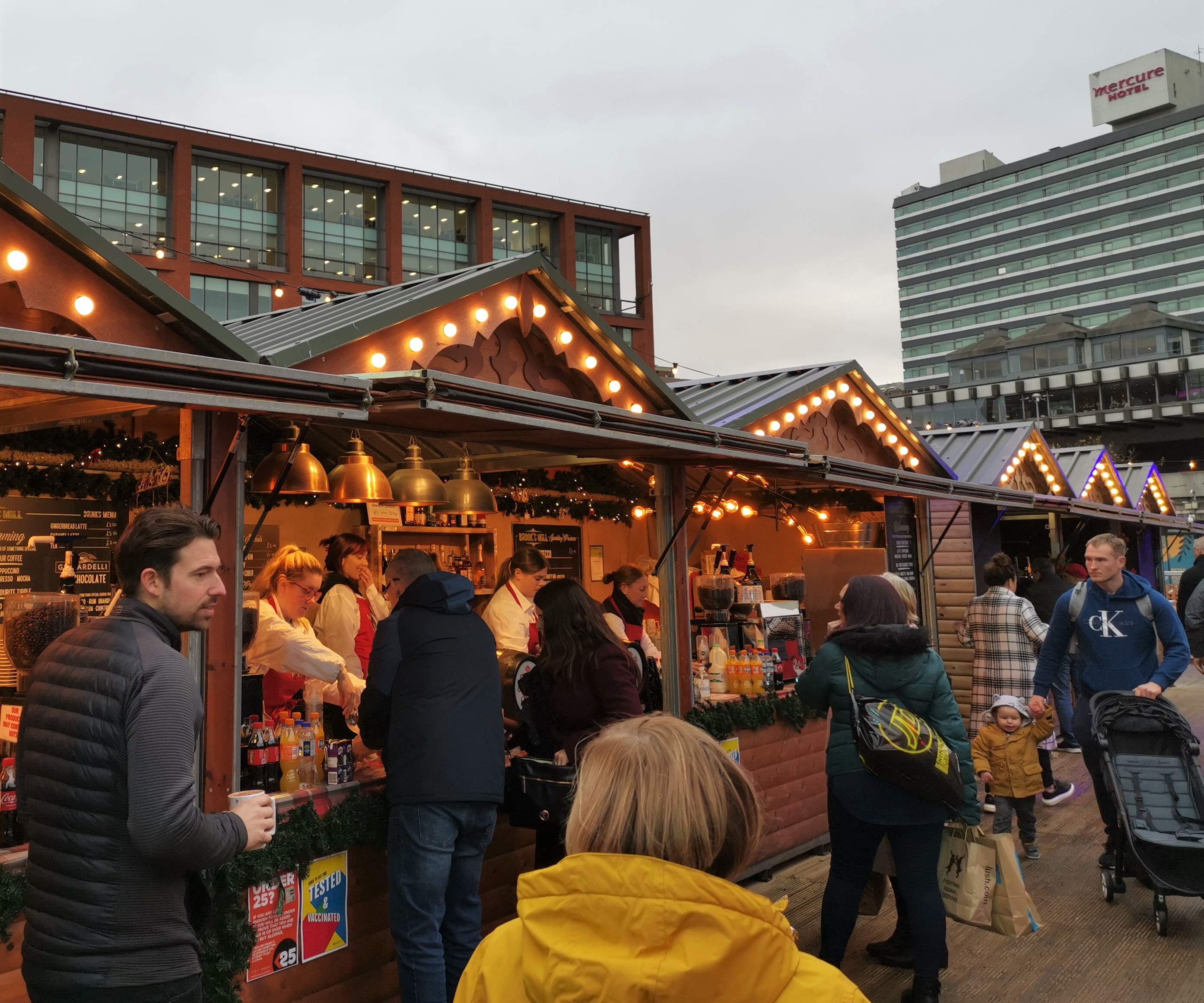
What surprised me about the market in Manchester, which is spread out around the streets of the city centre is that Christmas shopping isn’t what the market was about. Yes, there were a few hut shaped stalls selling goods, but most of the popular stalls were selling drinks or food and that was where the people were congregated.
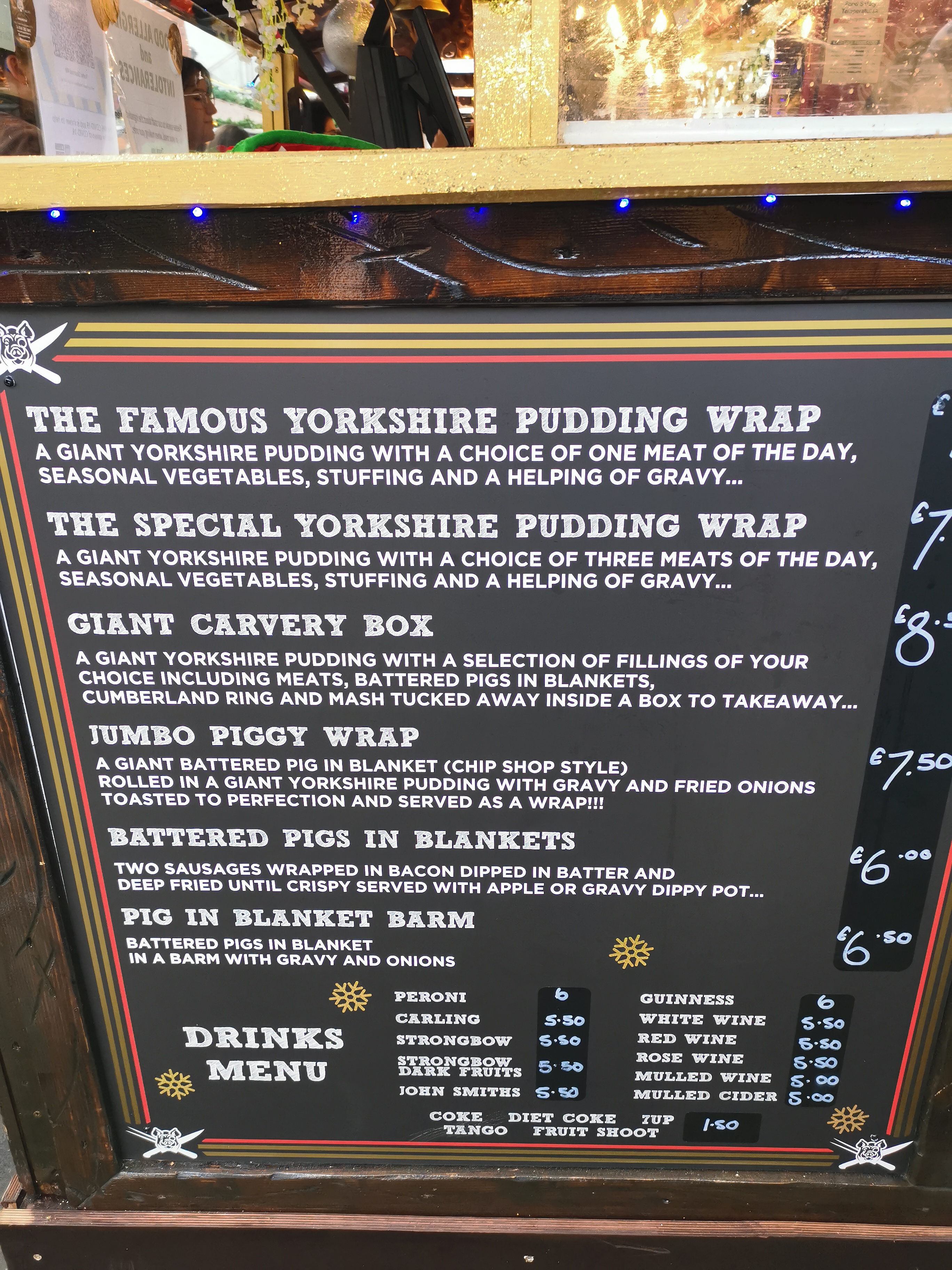
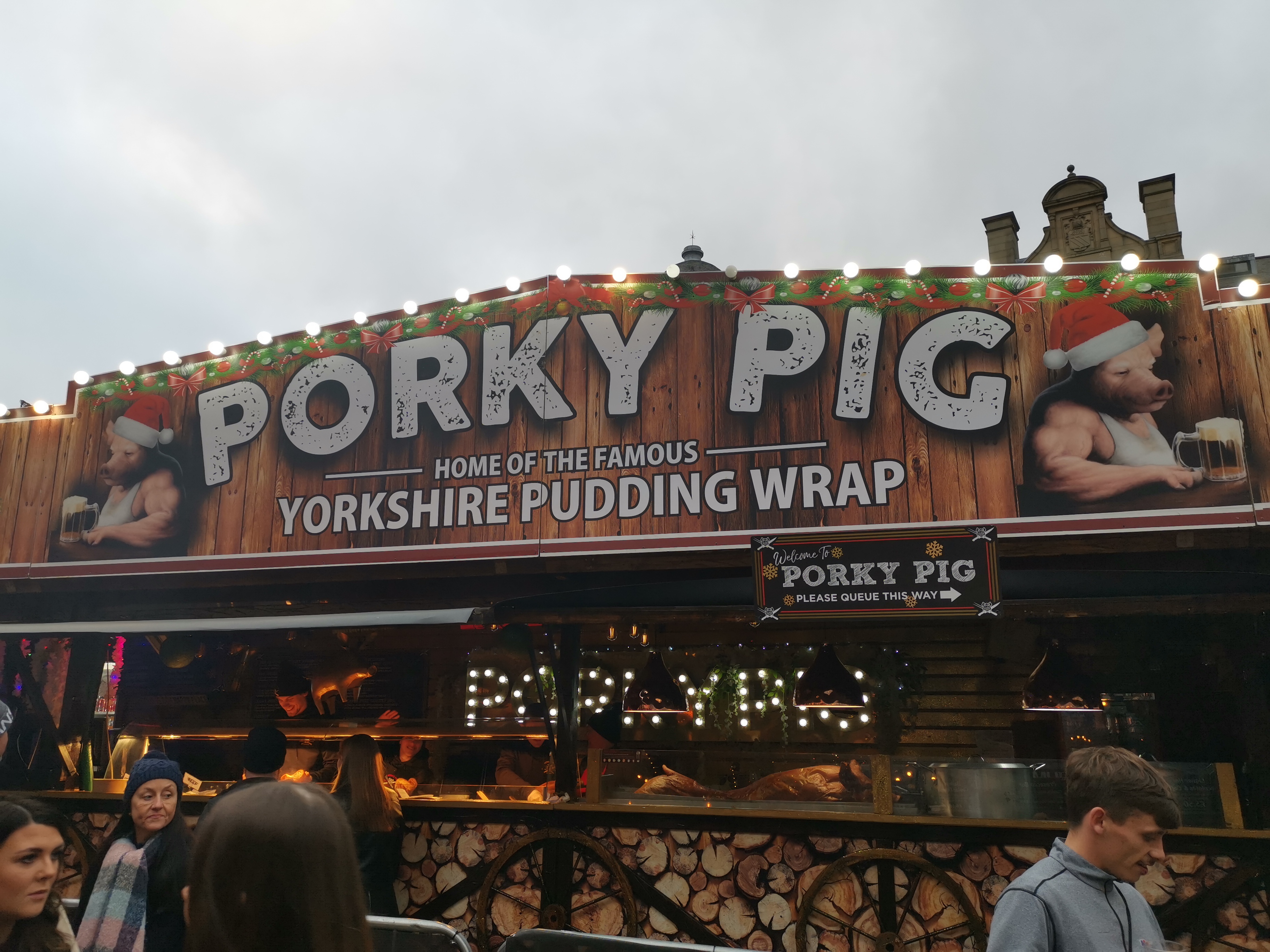
We, my son-in-law and grandson and I, joined them. And despite the number of cases of Covid infection, masks were rarely seen. We drank hot chocolate in mugs specifically printed for the market and ate The Famous Yorkshire pudding wraps. Both were quite nice. The mugs were yours to keep, or you could return them to the stand where you got them and get your deposit back. We just kept one of them.
We walked alongside the huts that were selling items other than food but didn’t see anything tempting to buy. I don’t think that many of the people were buying items either. Being that it is cold now, it would make for very long days and nights for the store people, as they open at 10 and shut at 8pm.
Wine and cheeseCakes
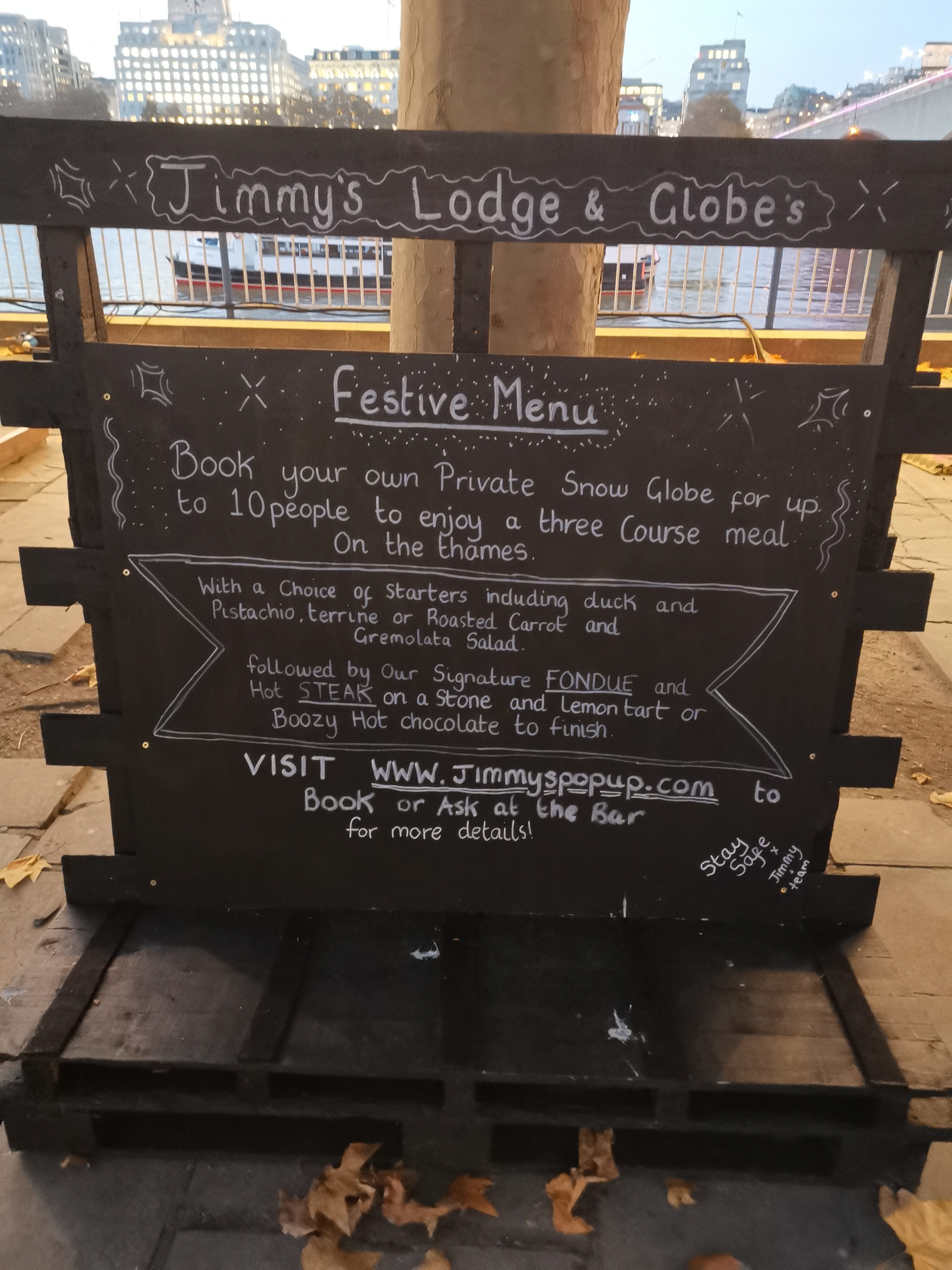
When I travelled with my daughter to London, I was able to visit the markets at The Southbank walk beside the Thames River. There they also had these “Snow Globes” which could be hired for dinner. There were quite a few of them, but no one using them when I walked past them.
The Southbank walkwayFondue and warm mulled wine
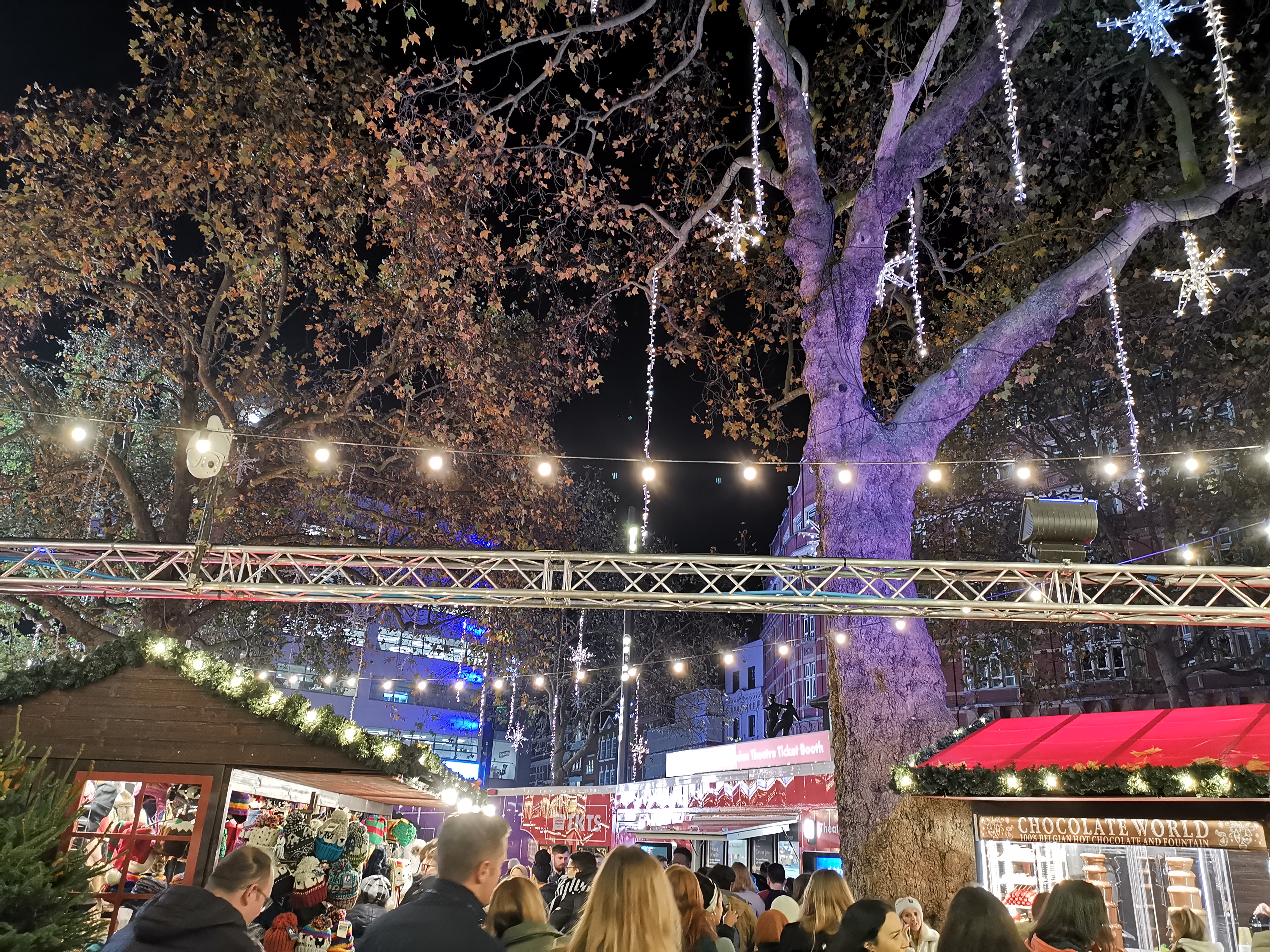
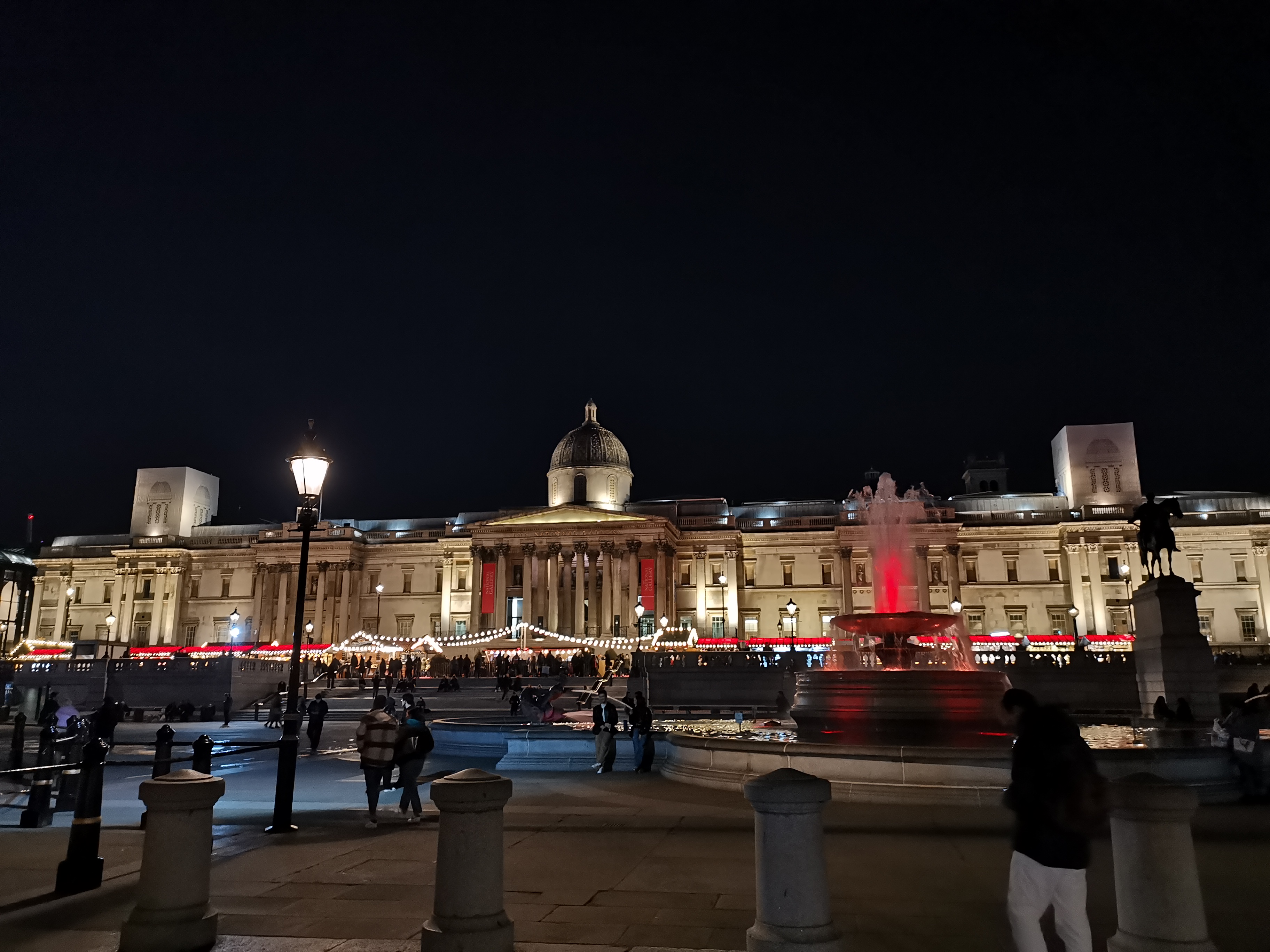
Leicester Square and Trafalgar Square. Leicester Square had the added bonus of trees that were strung up with lights and they could control numbers entering as there was only one way into the enclosed area and one way out. Trafalgar Square had the stalls set up along the front of the National Art Gallery building, which is up behind the famous square with its fountain and statue of Nelson and the lions.
It was a very similar situation as, in Manchester, most of the people were visiting the food and alcohol stalls. Although, there did seem to be some interest in the stalls selling Christmas tree ornaments that could be personalised with family names. There were a few versions of that stall in the different locations.
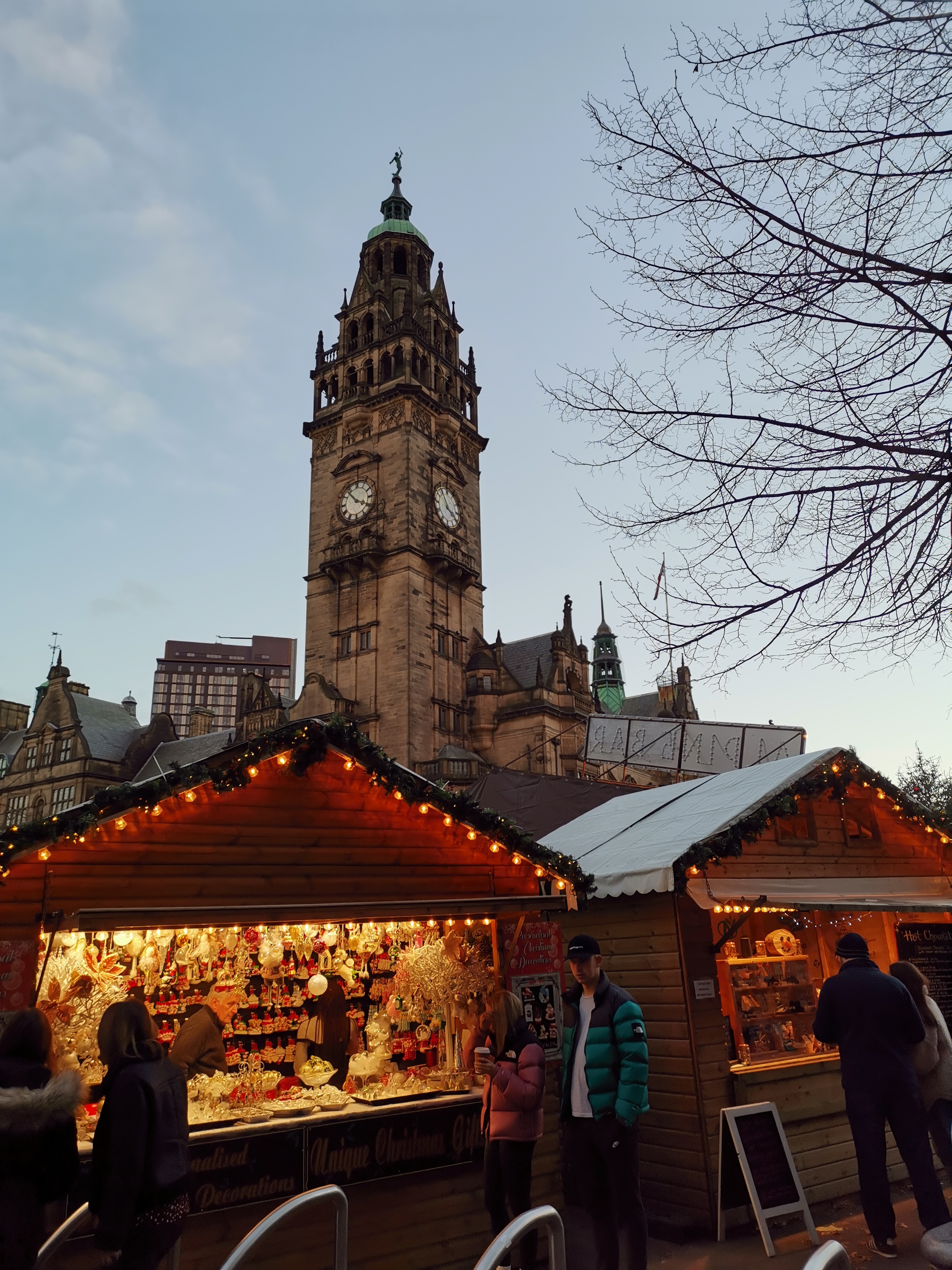
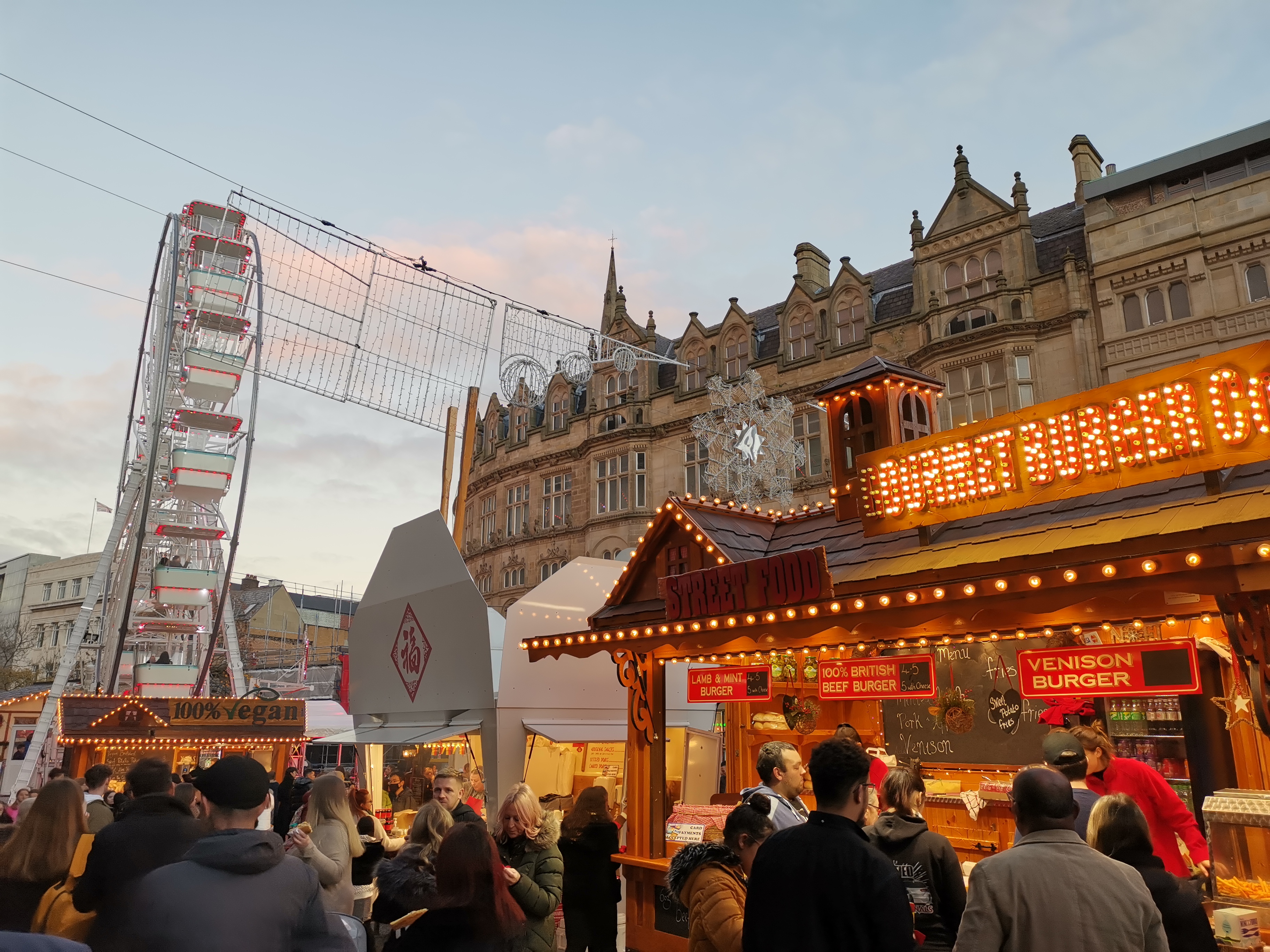
I also got the chance to visit the Christmas Market in Sheffield. Again it was the small wooden stalls selling goods, which were attracting only passing interest, but it was the food, alcohol and the Ferris wheel that were of most interest.
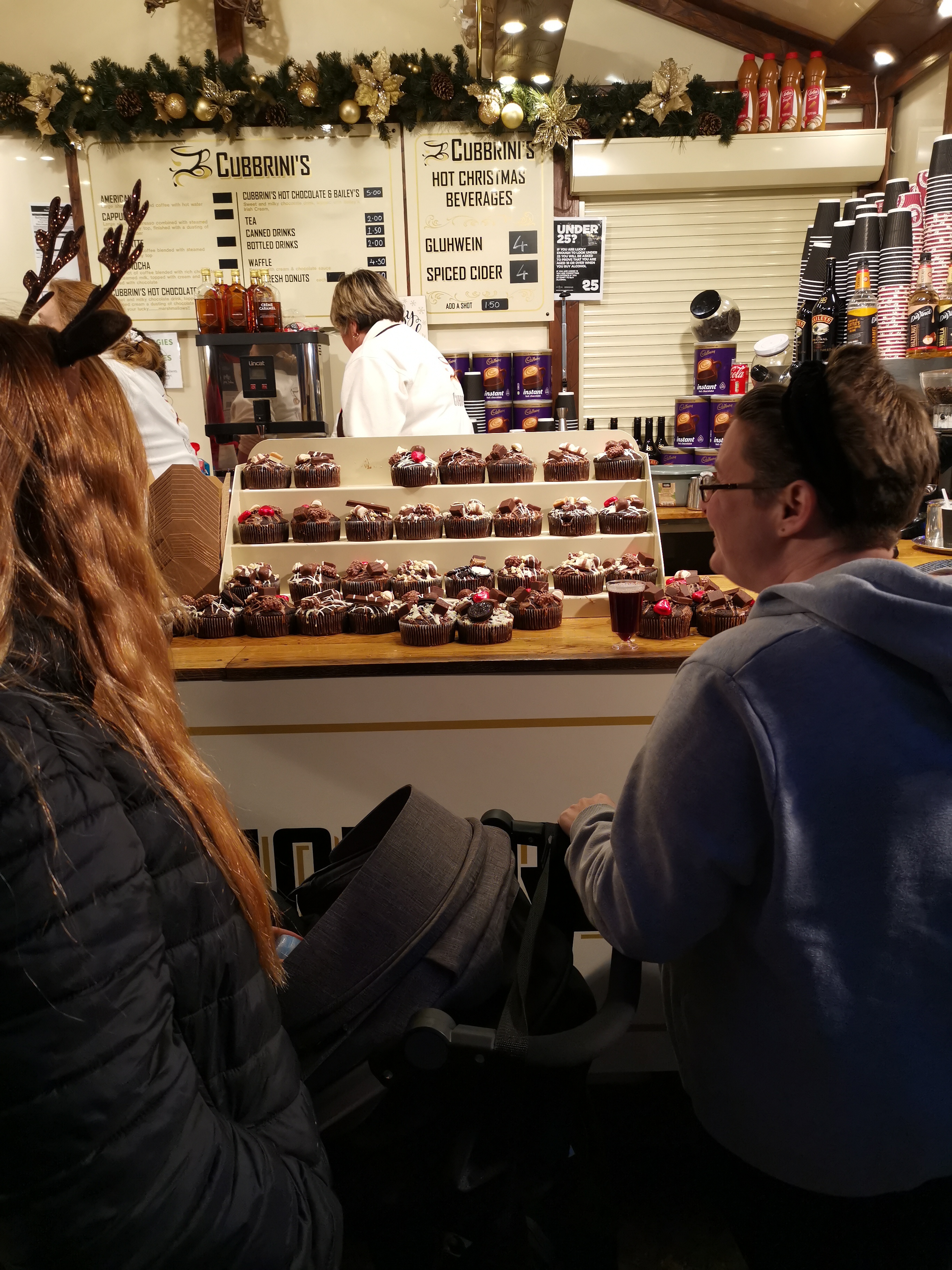
I treated myself to a BBQ Pork Bratwurst hot dog and couldn’t go past a Cadbury’s Hot Chocolate with Baileys Irish Cream. I took this tasty tempter home for Nat, Mark and Alex to share – a large cupcake.
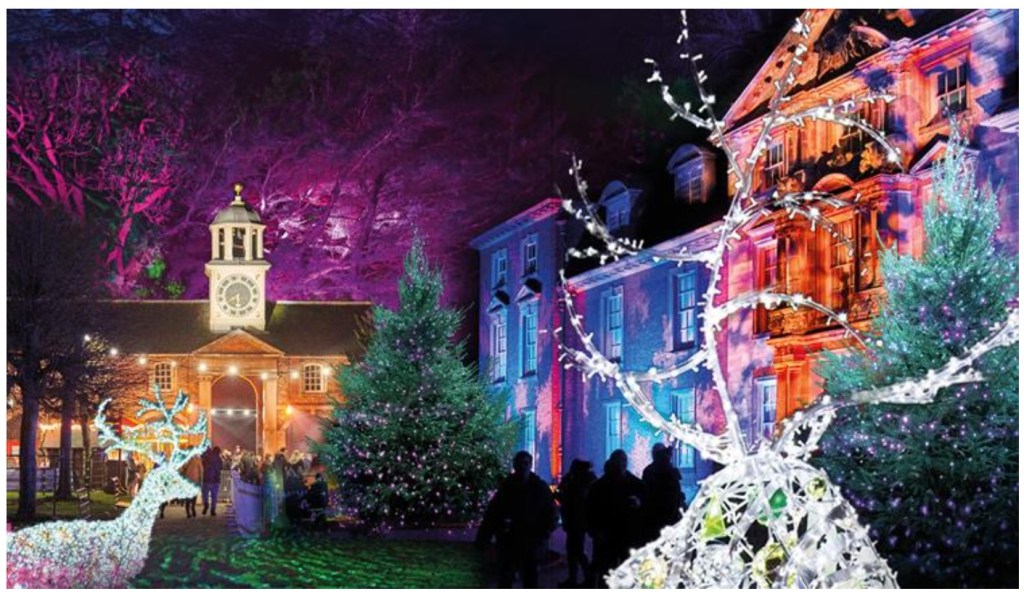
Tthere are other Christmas events coming up once we hit December, including lighting shows and winter wonderland. There will also be for us a trip out to Dunham Massey estate for their Christmas wonderland.
photo courtesy of Visit Manchester.
I wonder if the Christmas markets will ever return to their pre-COVID19 format, whatever that was? From what I understand, the Manchester Christmas market used to be in one location, in front of the town hall. However, that is undergoing renovations which aren’t due to be completed until 2024, so they were spread out around the streets. I also wonder what the markets would be like this year in European cities.
Maybe when the world opens for more travel options, I might find out. But this year, I am just happy to be able to visit those of my new home in England.
Sitting high above the city of Lancaster and easy to see from many directions is the Ashton Memorial. It is very hard to miss as it stands out in the skyline or is lit up at night with coloured lights.
After having the tower pointed out on my other adventures with Janice, Mike, Karen and Lulu the dog, from the motorway, we got to visit Williamson Park. It is even more impressive up close.
It is surrounded by a lot of parklands, although in our walk up the hill to the tower, I only got to see a small part of it.
When it was mentioned that there were hangings here, it made me curious to find out more. I would have loved to climb up to the viewing level, but the hill climb and the steps up don’t mix well with a dodgy knee. So I was happy to just admire it from the outside.
So who built this imposing building, known as the “Taj Mahal of the North” and a Folly? Well, that’s a love story. Like the Taj Mahal, it is a monument dedicated by a man to his wife. The Ashton Memorial was commissioned by Lord Ashton as a tribute to his 2nd wife Jessy, a woman who supported him in his political career. His family was extremely wealthy, but they were philanthropic with their wealth. It is written that in 1885, he served a breakfast for 10,000 people of the local population and was noted for his generosity and support of Lancaster.
The Memorial was designed by John Belcher and completed in 1909, 5 years after she had died. It cost £87,000 or equivalent to about £8.4m in 2020. It is topped with a dome made of copper and has sculptures representing Commerce, Industry, Science and Art. It stands on the top of the hill and is 150ft tall, meaning you can get a view of the surrounding countryside, Morecambe Bay and the Lake District Fells.
It is known as a Folly, an architectural word used to describe a “costly ornamental building” that doesn’t have a practical purpose. That doesn’t seem to me to be an accurate description, because this building is a symbol of love. Imagine being loved so much by another person that they want to build you a monument. A beautiful white building, with a gleaming dome sitting in 54 acres of parklands and woodlands.
The tower is now used as a location for weddings, amongst other things. I think it would be a beautiful location that is very sought after. A chance for the couple to start their wedded life at an iconic place and representative of love between two people.
However, it could also be this memorial is the means to break a curse because of the dark history of the location where this park and building are. This is not something that I read about, it was something that occurred to me.
The Williamson Park is situated in a former quarry, but before that, it was the location of hangings and specifically the hanging of nine of the Pendle Witches in 1612 when it was known as Gallows Hill. The interesting history of the Pendle Witches can be found here https://en.wikipedia.org/wiki/Pendle_witches taken from the records of the trials.
The Pendle Witches trials and subsequent hangings would, I suspect, have been known about by James Williamson, First Baron Ashton, after all, he had been the Sherrif of Lancaster in 1885. Was there a curse put on the location by the witches as they faced their hangings on Gallows Hill?
Maybe, James Williamson wanted to remove the memory of the hangings and what better way to end a curse than with love. A bit like the fairy tales of Sleeping Beauty or Snow White, where love’s true kiss ends a witch’s curse. With the tower being a memorial to his wife and now the location of many couples sealing their marriage with a “true love’s kiss” the curse remains broken.
There are some places in England that you can sense that if they had a life, they would feel lonely. On another lovely time out with my friends Janice, Karen, Mike and Cockapoo Lulu, we visited two locations that to me fit that description.
Half Moon Bay is my first experience of the ‘Sea-side’ since returning to the UK from Australia. It was a very different experience from a visit to the beach back in Adelaide, South Australia.
Where I lived in Huntfield Heights in South Australia, the sea could be seen from my back garden. The garden faced west, which meant that every night the sun melted into the sea producing a unique sunset.
Home was also a short drive, about 10 minutes to our local beaches of Christies Beach and Port Noarlunga in South Australia.
Christies Beach was a lovely beach to walk along and in summer would be filled with families.
Port Noarlunga has a jetty (or pier in the UK) and a natural reef full of fish. Many afternoons and evenings were spent enjoying the beaches. I wasn’t much into swimming, but I did love walking along with John on warm evenings, looking for shells or pretty, smooth stones.
Although both beaches could be wild places during bad weather, with the wind whipping up the waves, they never felt lonely to me, just wild and beautiful.
Christies Beach
Now I live in Manchester, the beach is further away and not something that my family have visited often.
When Mike and Janice said we were off to visit Half Moon Bay, which is very close to a nuclear power plant and where the Ferry to the Isle of Mann leaves from, it sounded like a perfect opportunity to renew my association with the sea. As a teenager, I wanted to be a marine biologist as I loved the water and hoped to be able to work towards caring for the precious wildlife under the waves on the warm waters of The Great Barrier Reef.
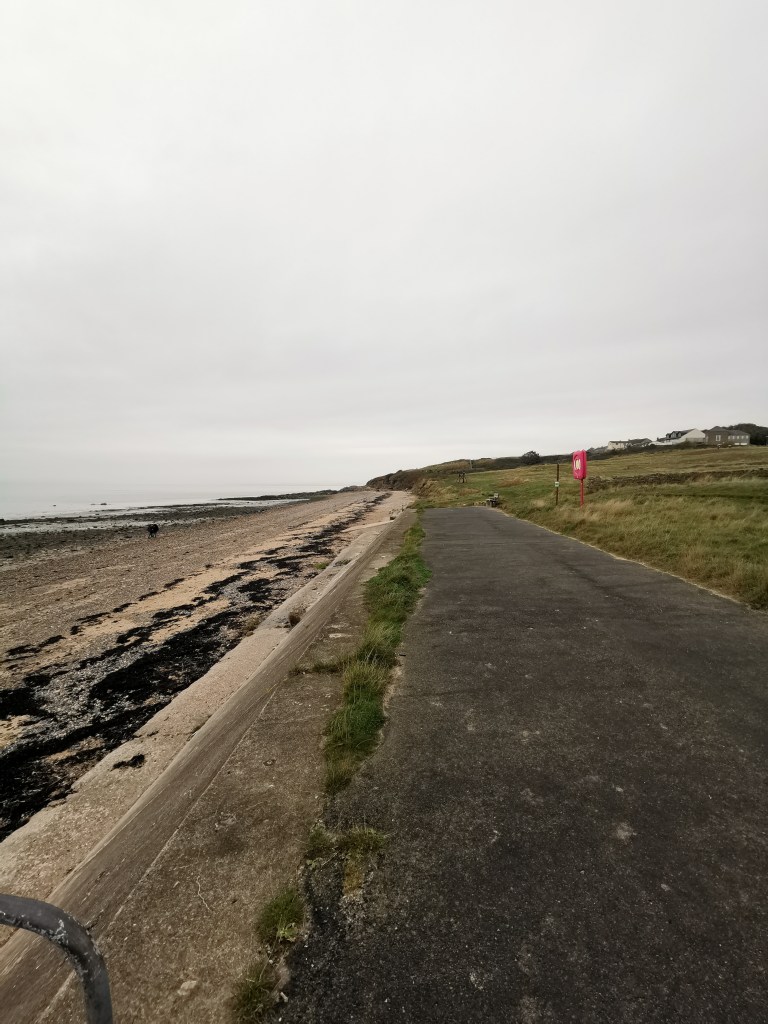
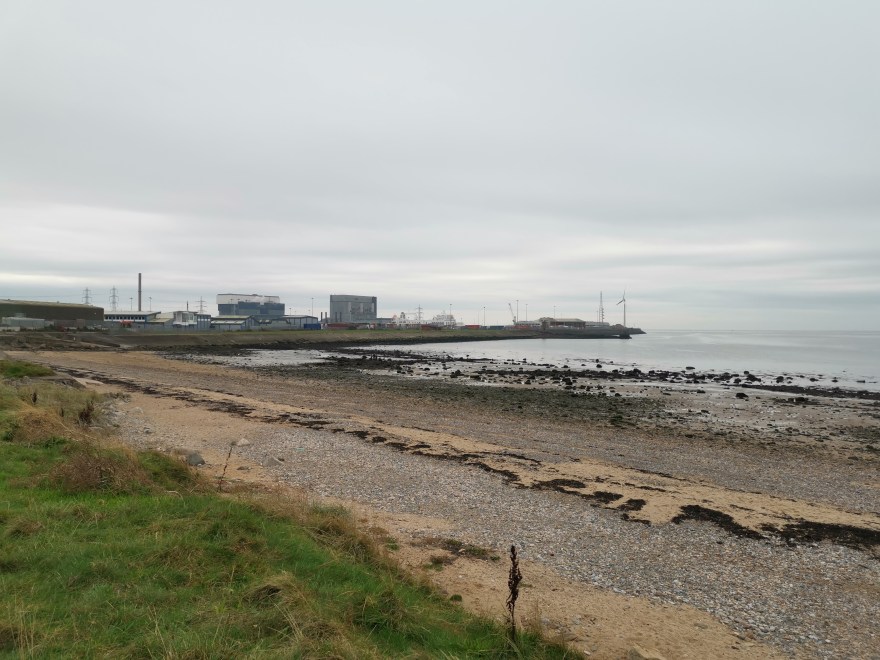
After driving past where the Isle of Mann ferry left from, we reached the tiny car park at the head of Half Moon Bay with its tiny café, toilets in a shipping container, slipway for boat launches and the empty, lonely beach to Morecambe Bay.
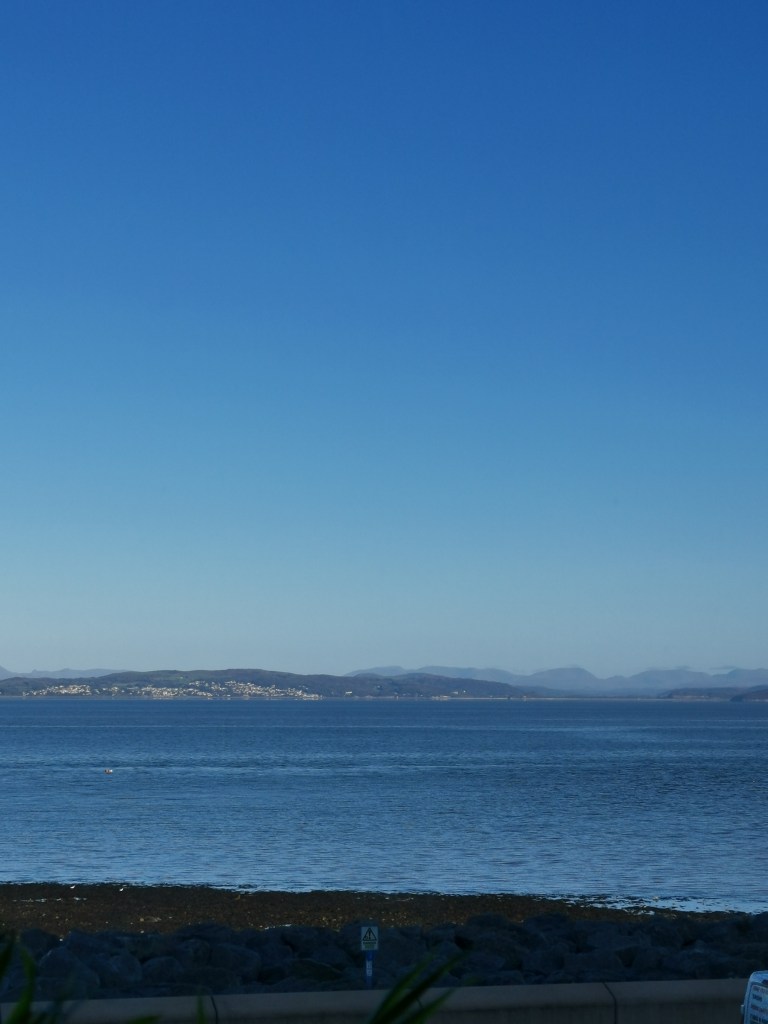
The weather today could only be described as grey. There was no horizon as the sky and sea merged into each other.
There was a family down in the rock pools, as the tide had gone out. There were a couple of people walking their dogs and there were the sculptures. However, the beach still looked lonely. I think if you came down to take a walk along this beach to find a happy place, I don’t think you would find it here.
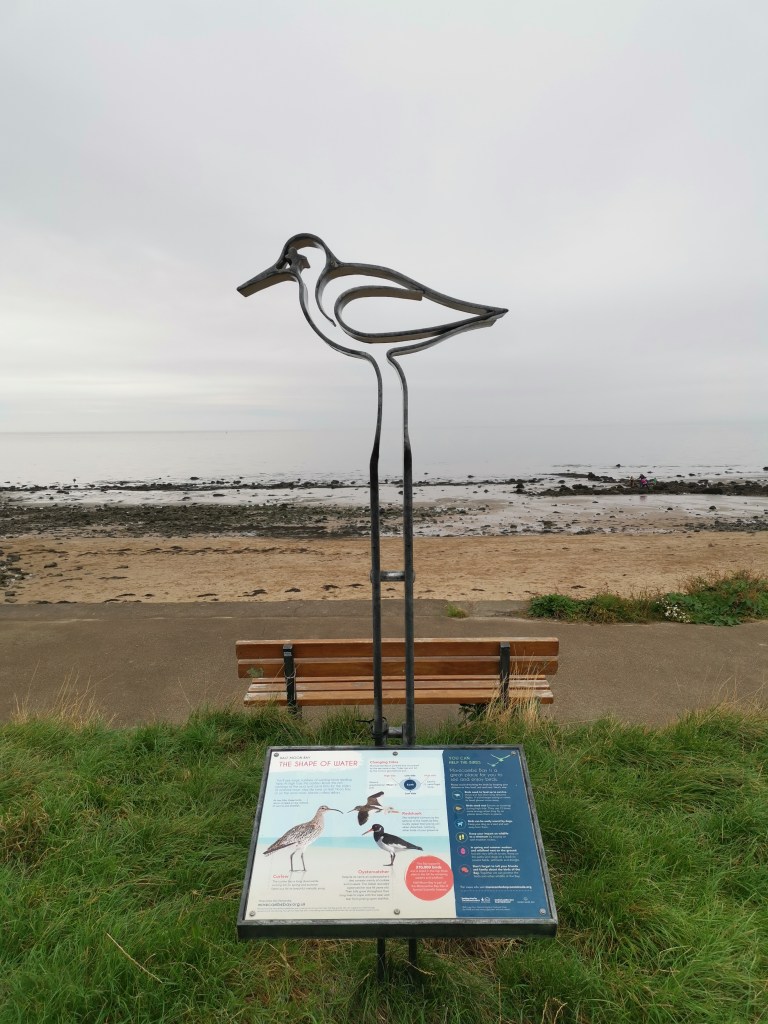
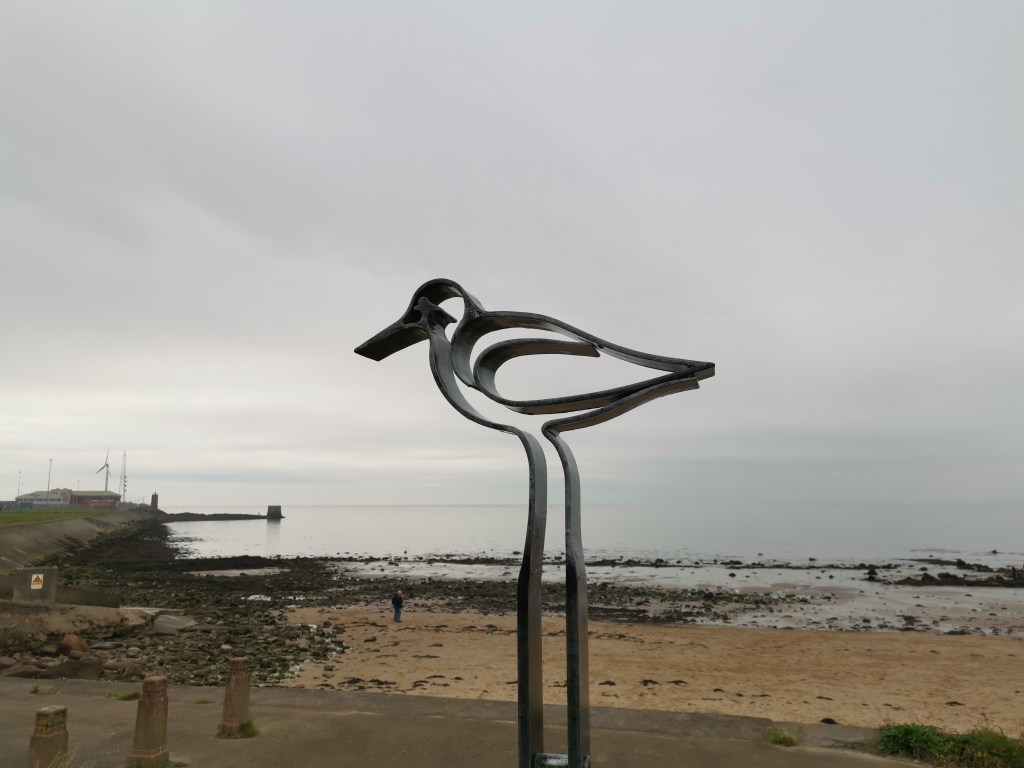
There were a couple of pieces of sculpture work facing the weather. The wading bird, placed on the break wall tricked my eye and camera into thinking it looked like it was walking in the tidal pools. Very cleverly placed.
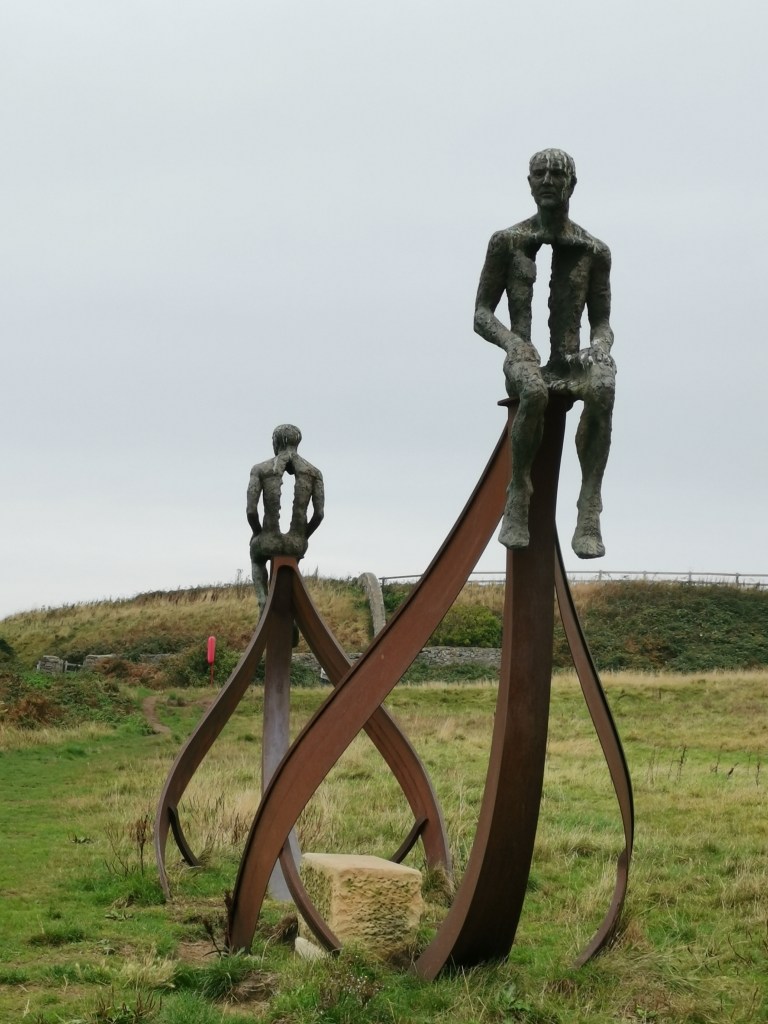
The other sculpture is called ‘Ship’. It was an abstract piece that leaves it with the viewer as to how they want to interpret what she has been created. The spine of the ship and two figures without spines. The sculptor website indicates she wanted to capture the figures looking to the future, the ferries and nuclear powerplant and to the past of the historic church called St Patrick’s Chapel.
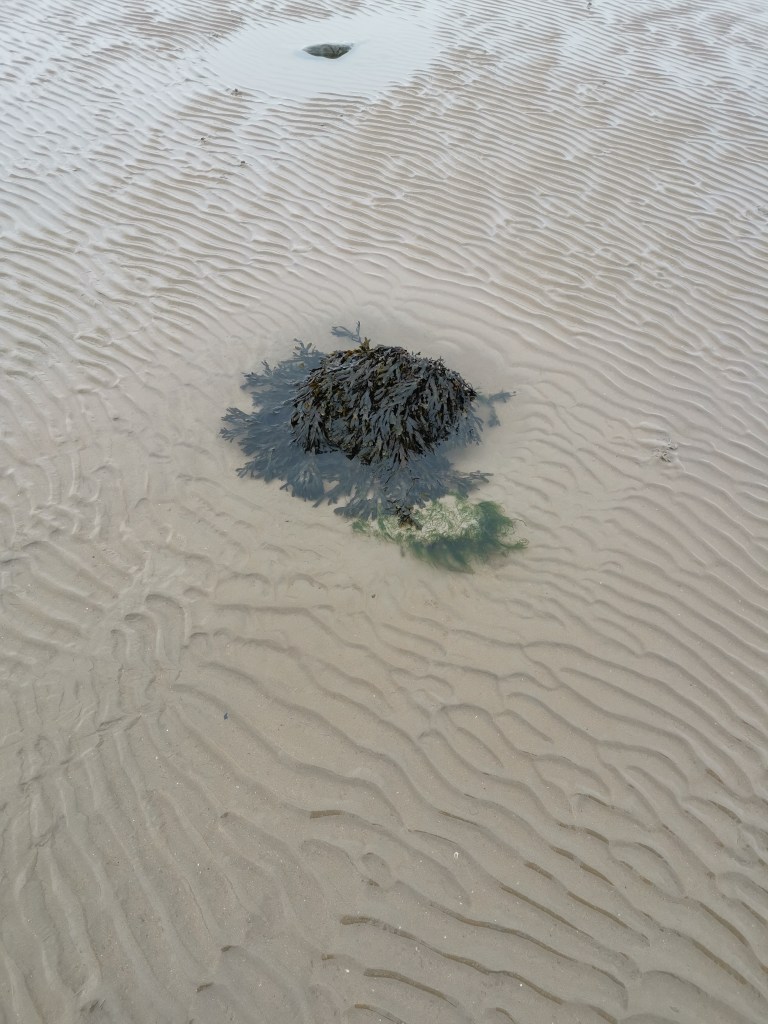
The combination of the empty beach and the grey sky evoked a feeling of loneliness. As the others wandered back to the little café for a coffee, I went down onto the beach, a combination of stones, seaweed and tidal pools to see if perhaps there was life here. Maybe a crab or other sea creature could change this from a desolate beach to home to life. But there was nothing.
I joined the others in the café for a coffee and quickly was drawn away from the sense of sadness brought on by this lonely place.
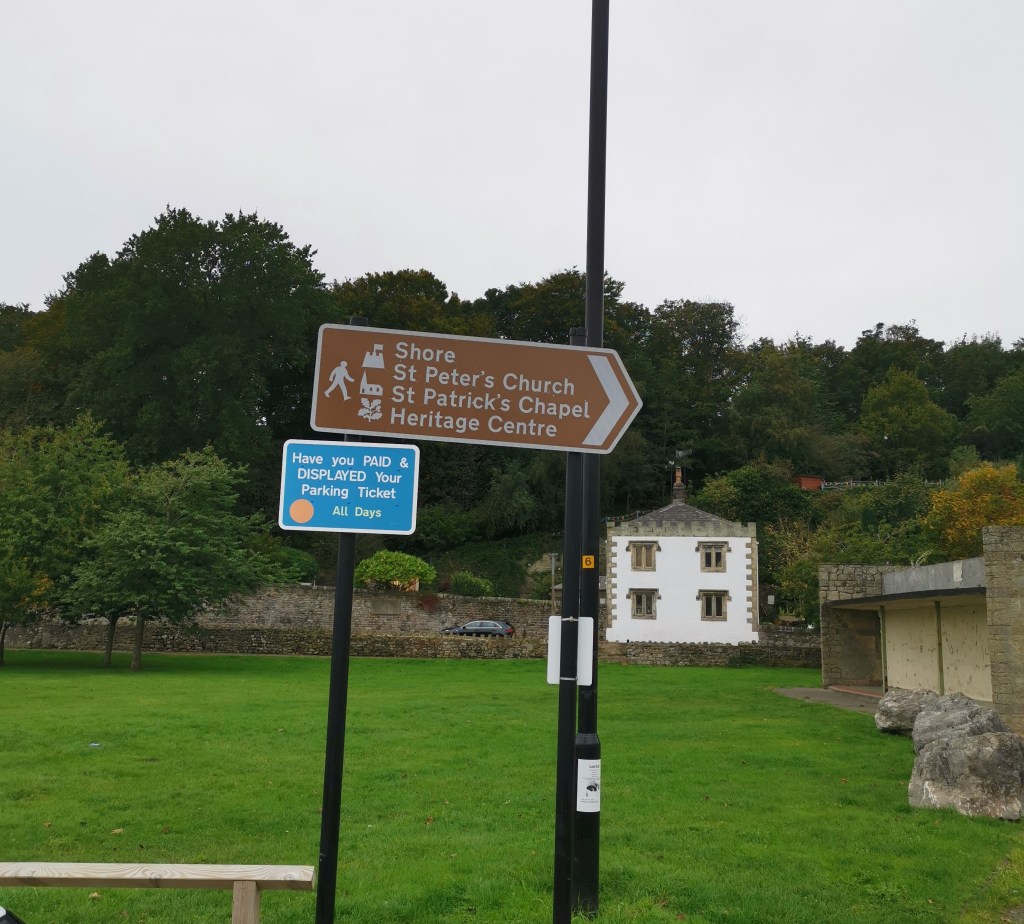
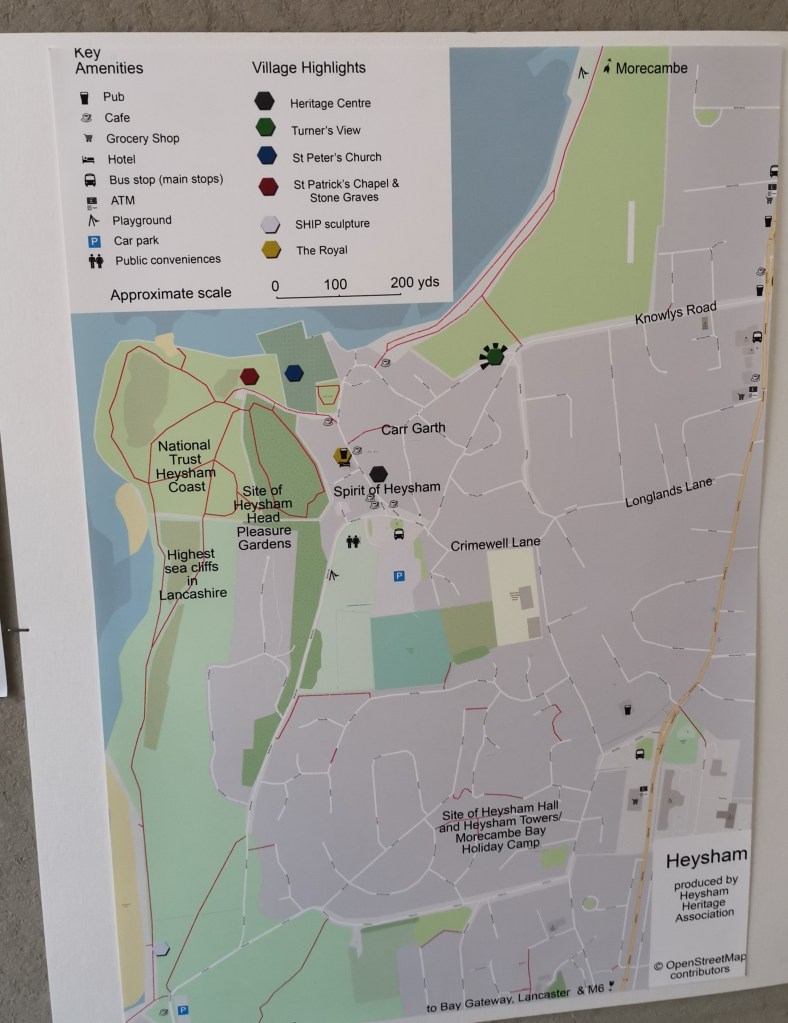
With Mike at the wheel, we left Half Moon Bay and set off to find the historic St Patrick’s Chapel, in the village of Heysham, which I felt again personified the sense of loneliness. Although the little historic village Main Street was busy with people coming and going, and a wedding ceremony was in progress at St Peter’s Church, it was the layout of the graveyard and the remains of St Patrick’s that left me with a feeling that this was a lonely place.
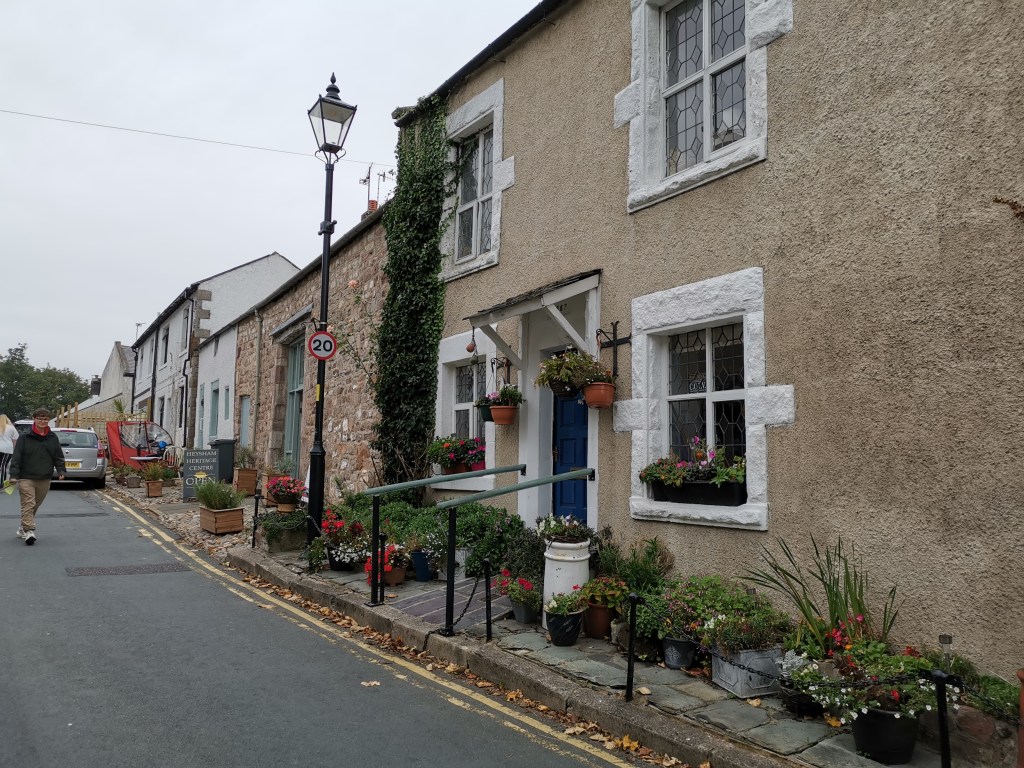
We parked next to the Heysham Cricket Ground and walked through to the historic Main Street. It isn’t the main street anymore but is now is part of a Heritage Trail.
The Spirit of Heysham
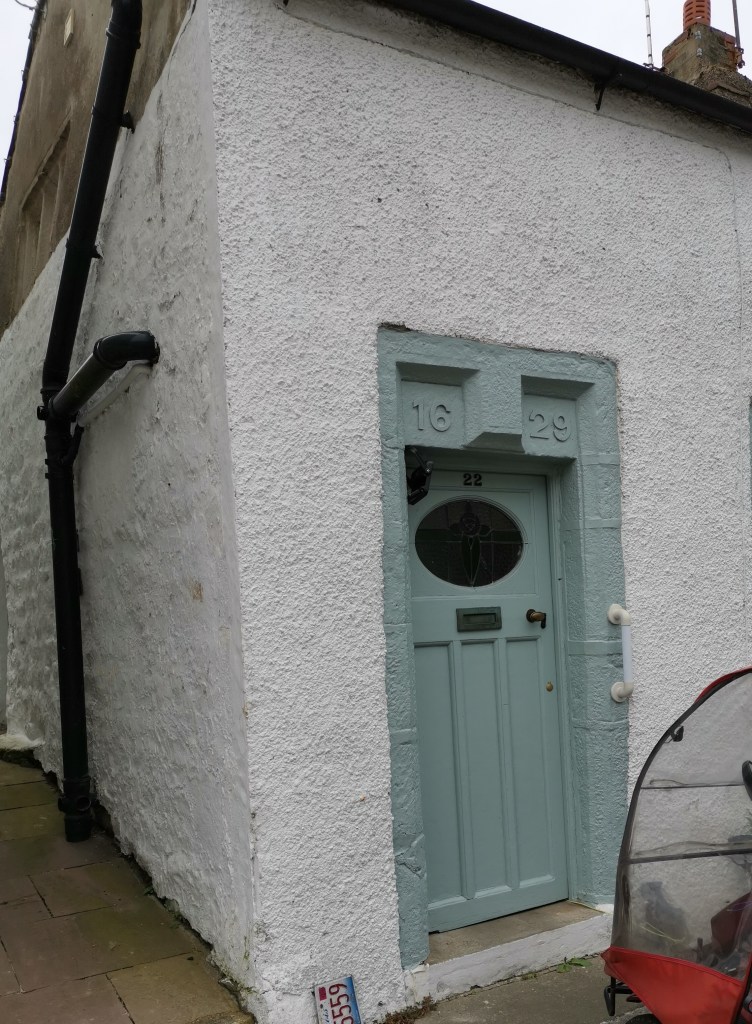
Main Street is very narrow, only really one car’s width and there are a variety of different cottages. There is a date above one of the doors that indicates it was built in 1633 as a fisherman’s cottage.
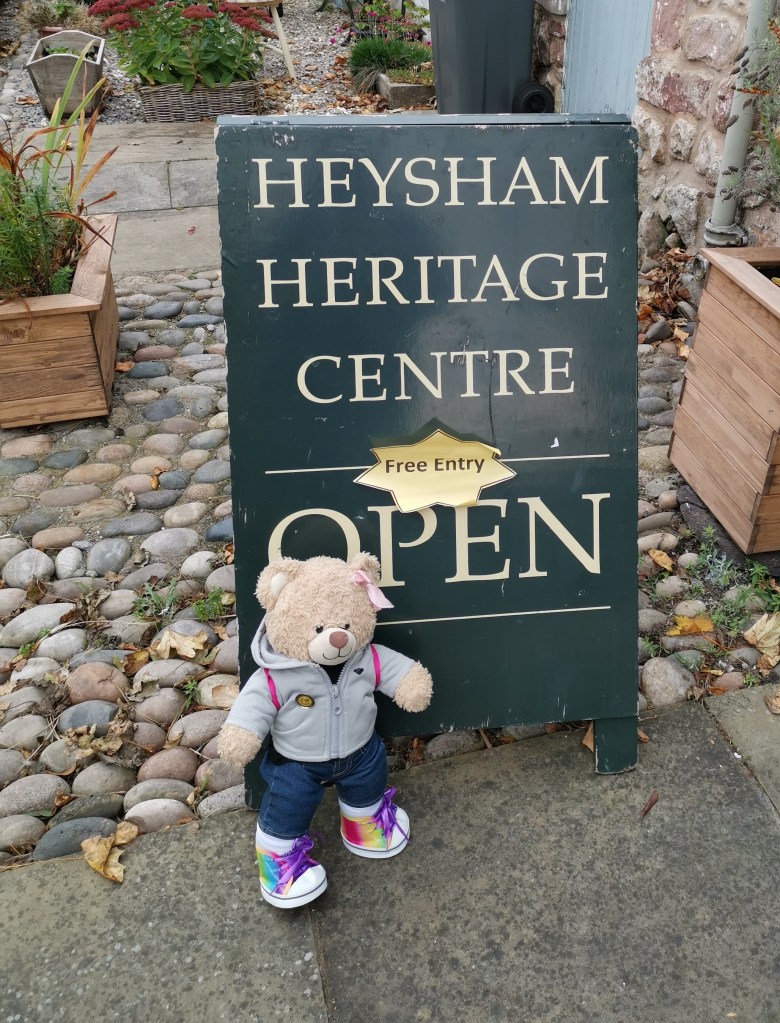
There is a Heritage Centre where you can pick up information about the village and the local community.
The National Trust helps look after the area to protect it.
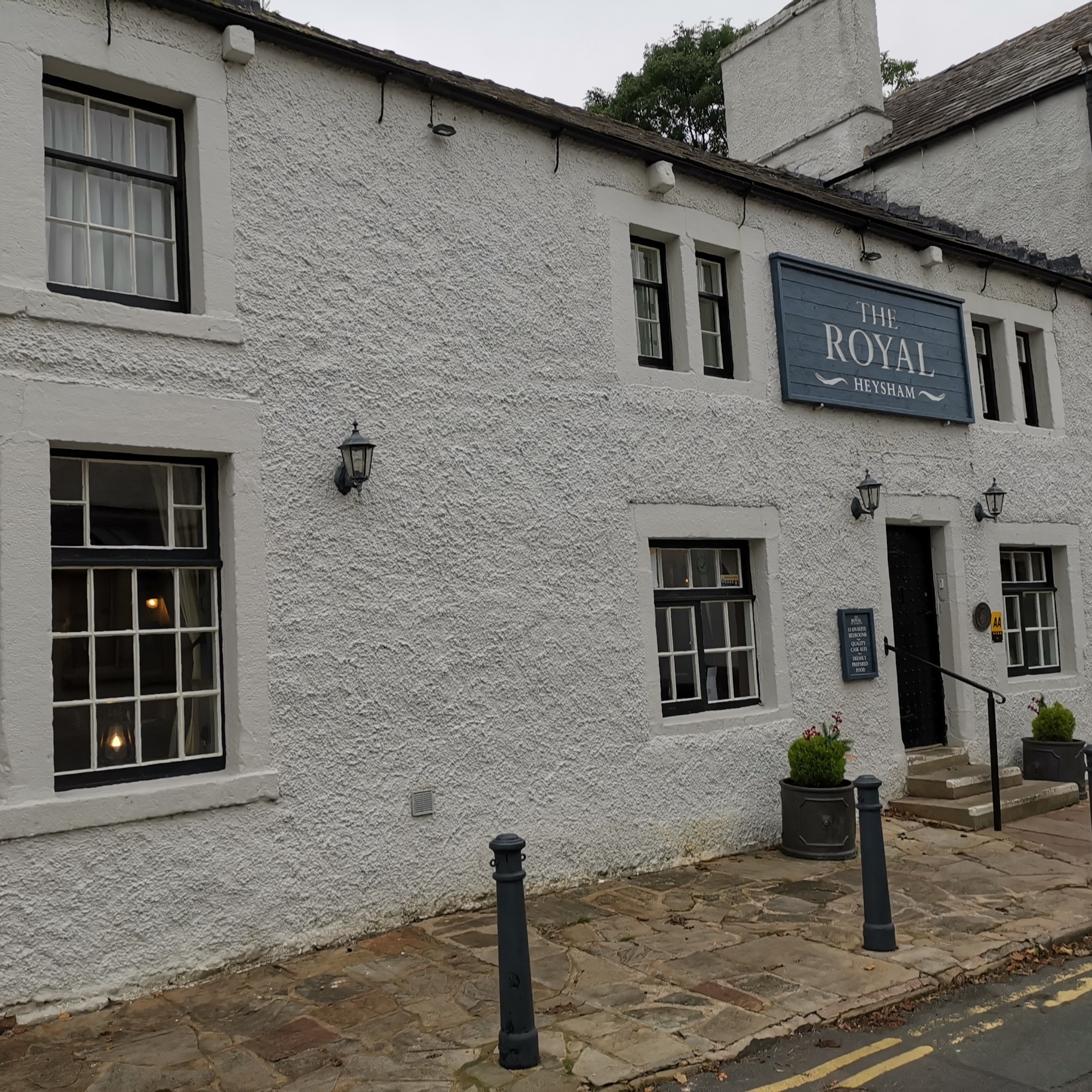
We strolled past the little cottages, reaching The Royal Hotel, which doesn’t look old, but a sign indicated c1502 and that there are deeds to confirm that date, making it the oldest building in the village.
When a luxury car passed us with wedding ribbons on the front, we guested that there was a wedding happening at St Peter’s Church and presumed that the reason the shops seemed to be shut in the newer section of Heysham, that it was very likely a local was getting married and everyone was invited to the wedding. When we enquired about lunch at The Royal Hotel and was advised we could only sit outside, but it wasn’t the type of weather for outdoor eating. We presumed the reception was going to be in their dining room.
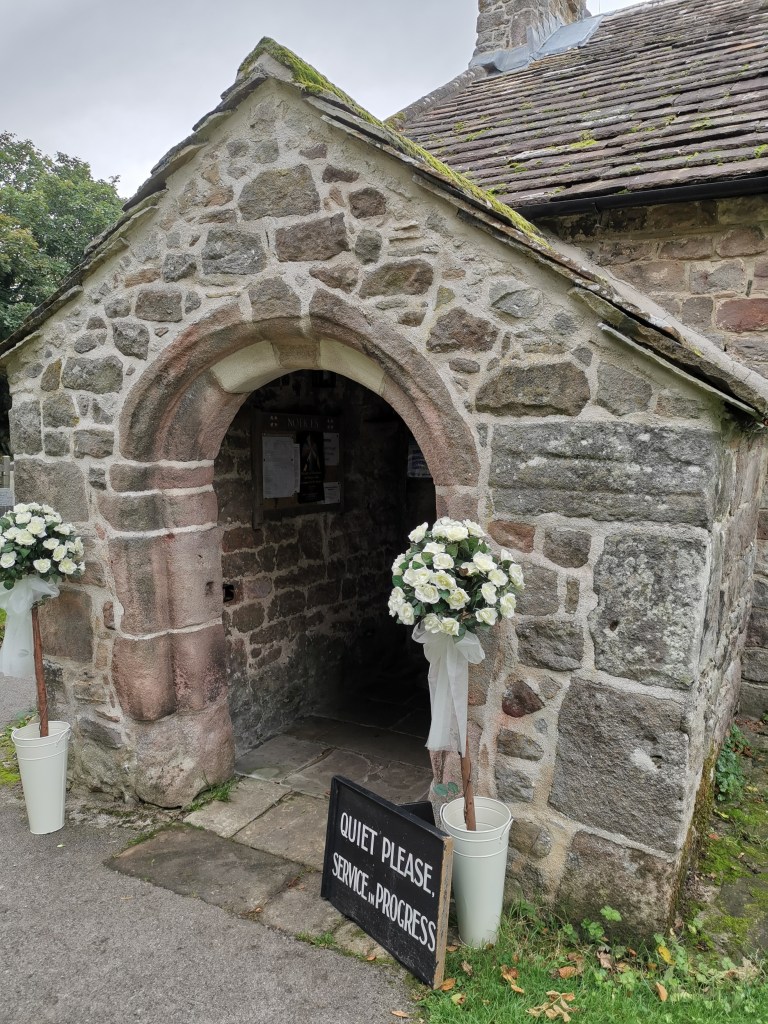
When we walked up to the churchyard of St Peter’s, a sign asked us to be quiet while the service was happening. We didn’t get to have a look in the church, which dates back to 962AD. That is crazy to think that in 1967, the church was 1000 years old – a millennium.
Many of the graves in the church yeard are on the same level as the church, but there is also a field of them at a lower level. These overlooked the grey of Morecambe Bay and the sky. If it would have been raining and windy, this would be a setting out of a movie. Karen suggested that she could write a historic crime novel with Heysham giving her inspiration for the story.
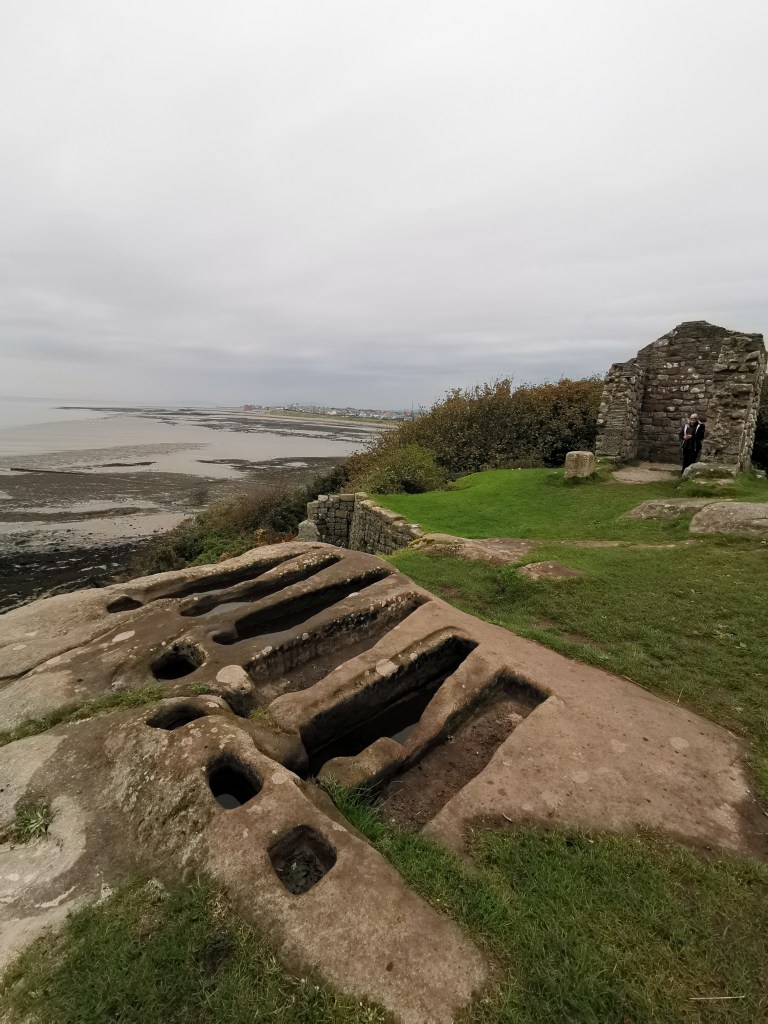
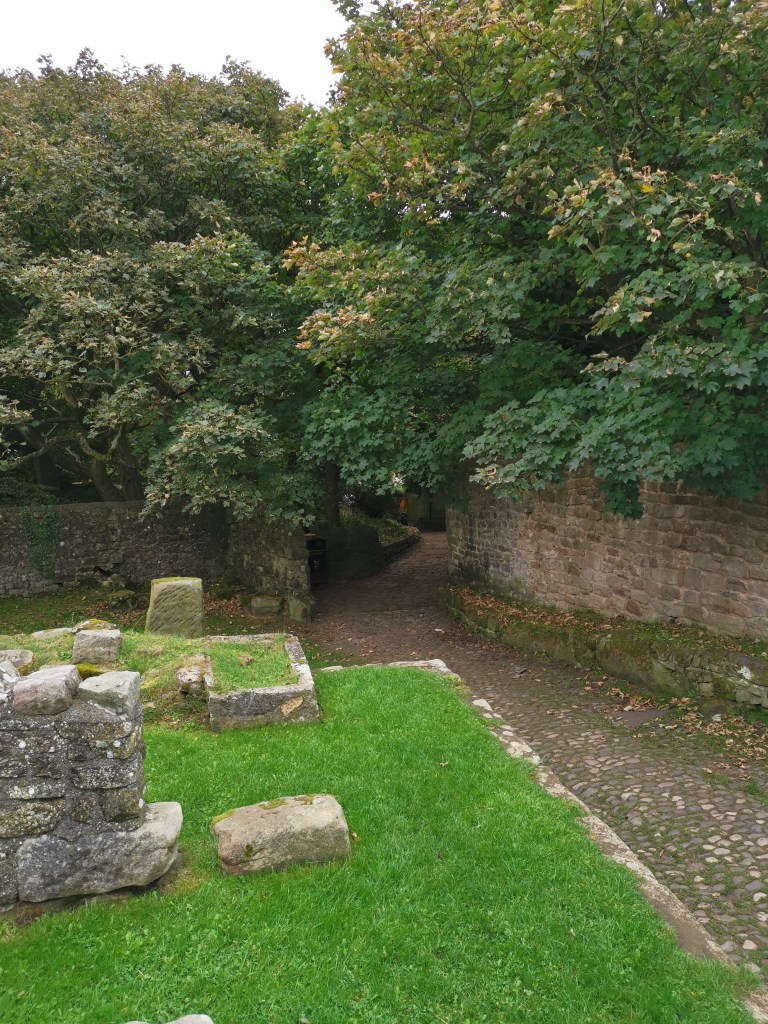
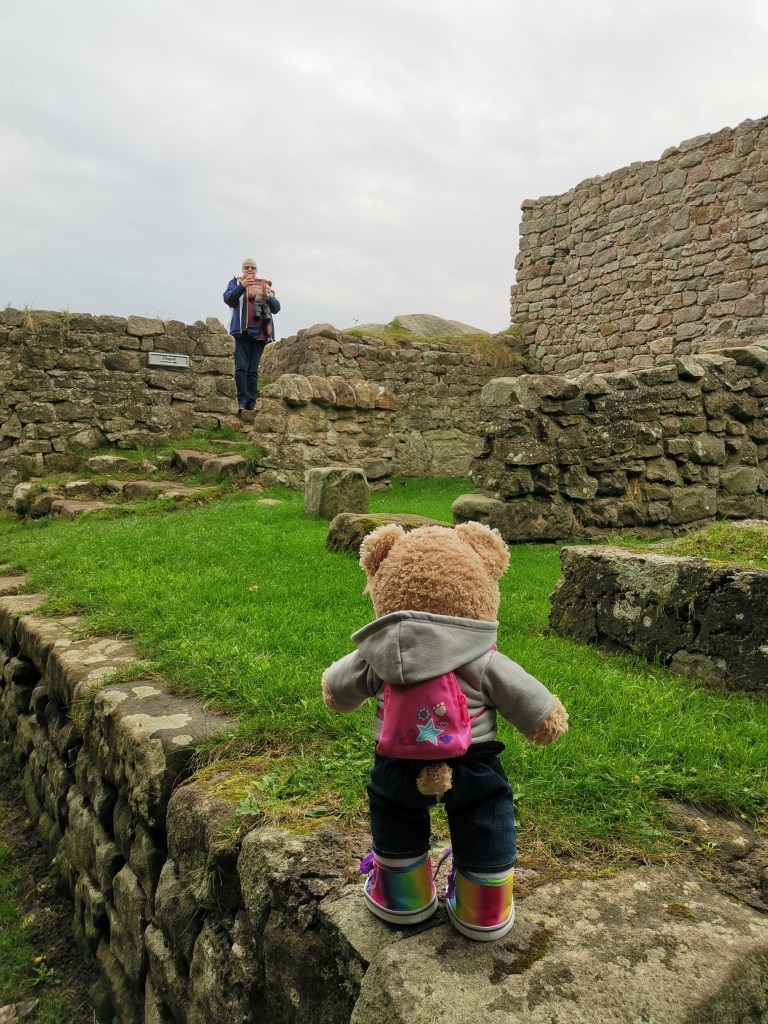
After we had had a brief look around the graveyard, Janice and I decided to walk up to the ruins of St Patrick’s Chapel. This church is believed to have been built in the 8th Century, so 700 to 800 AD.
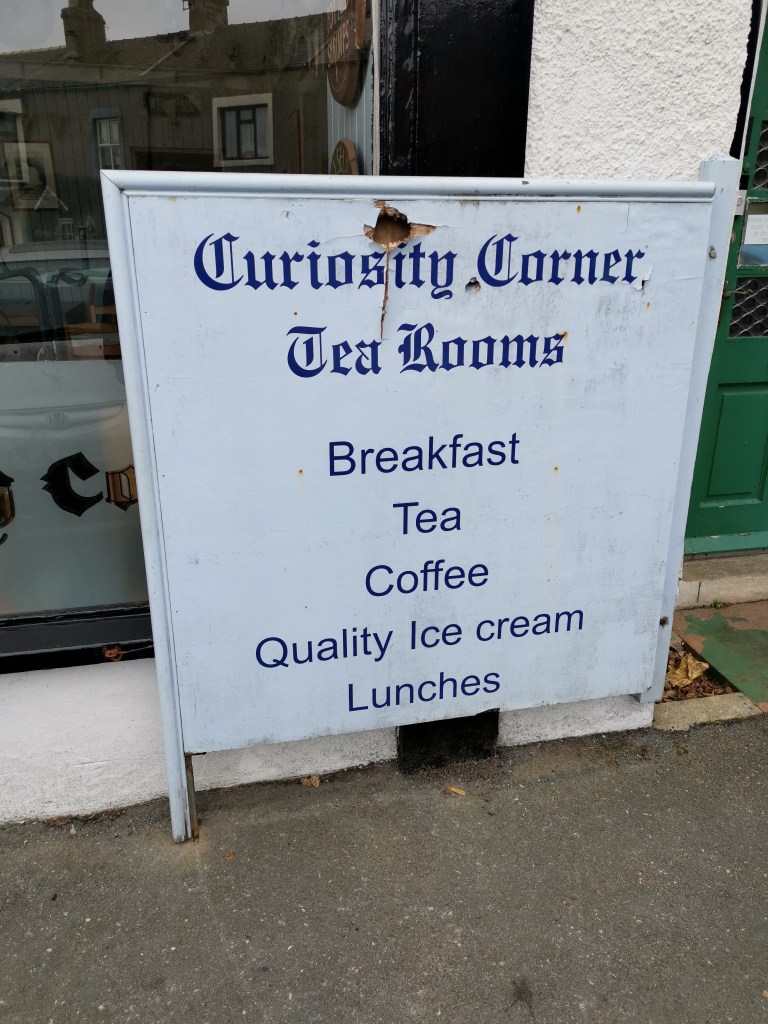
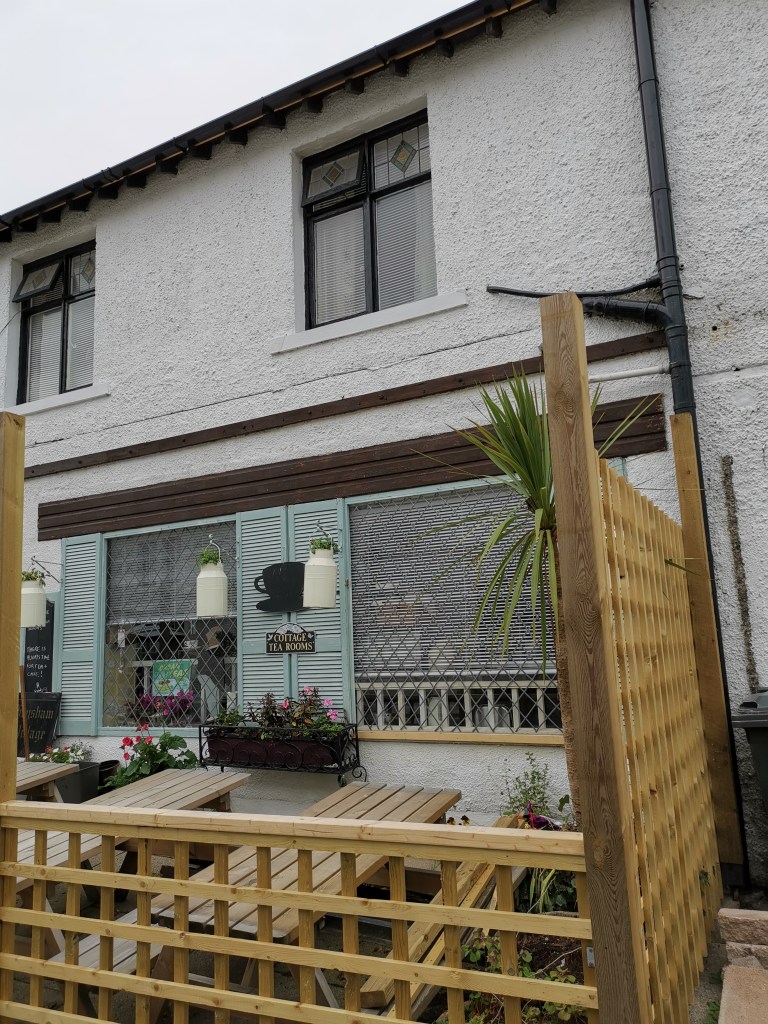
Outside the tea room
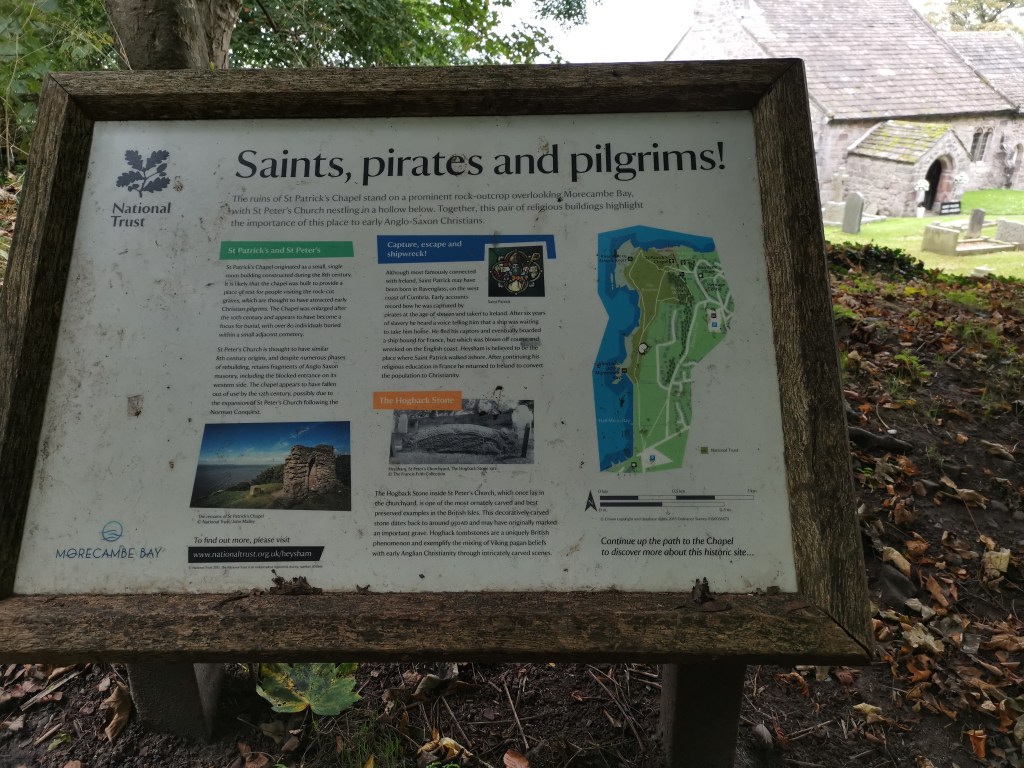
See the end of this Blog for details about what this board says
There wasn’t much of the church left which is understandable considering its position on the headland and the weather that it would have had to endure over 1200 years.
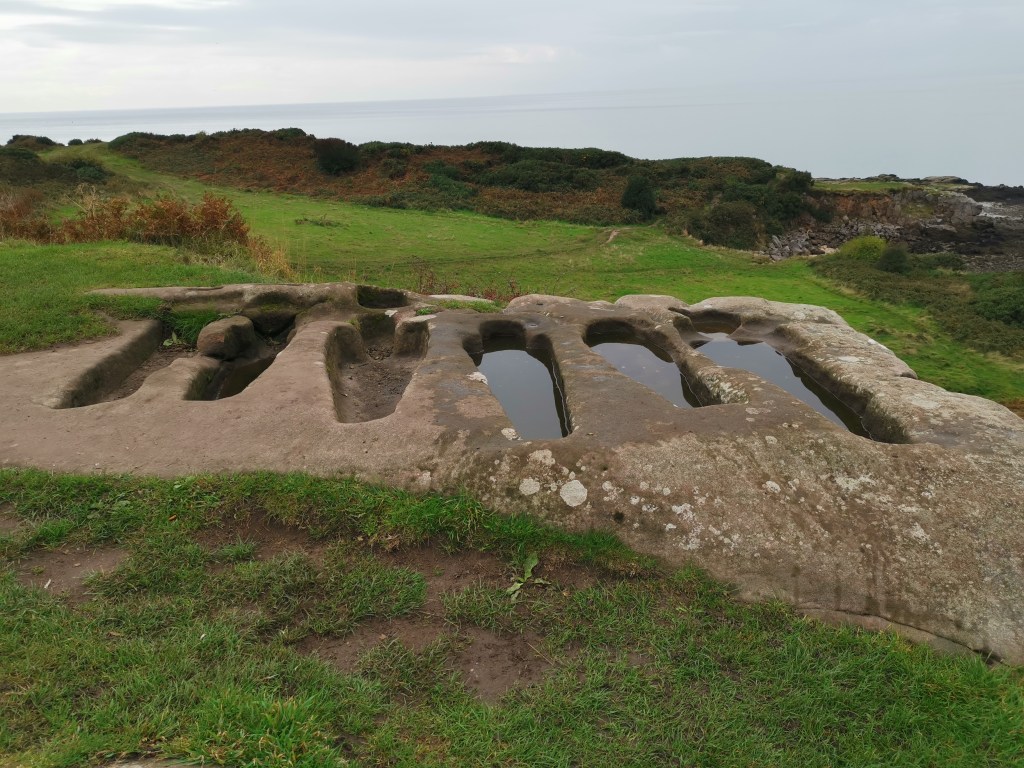
It was very unusual to see the rock-hewn graves. It struck me that with the land around the church being more like dirt or sand that it was probably the only way to make them last. I’ve never seen graves carved out of the rocks. One of them is small, like for a child. How sad would that be if it was?
See the end of the blog for details of what this says about the Chapel
After having a look around St Patrick’s church, Janice and I wandered back to where Karen, Mike and Lulu were waiting by the tea room. Time for lunch.
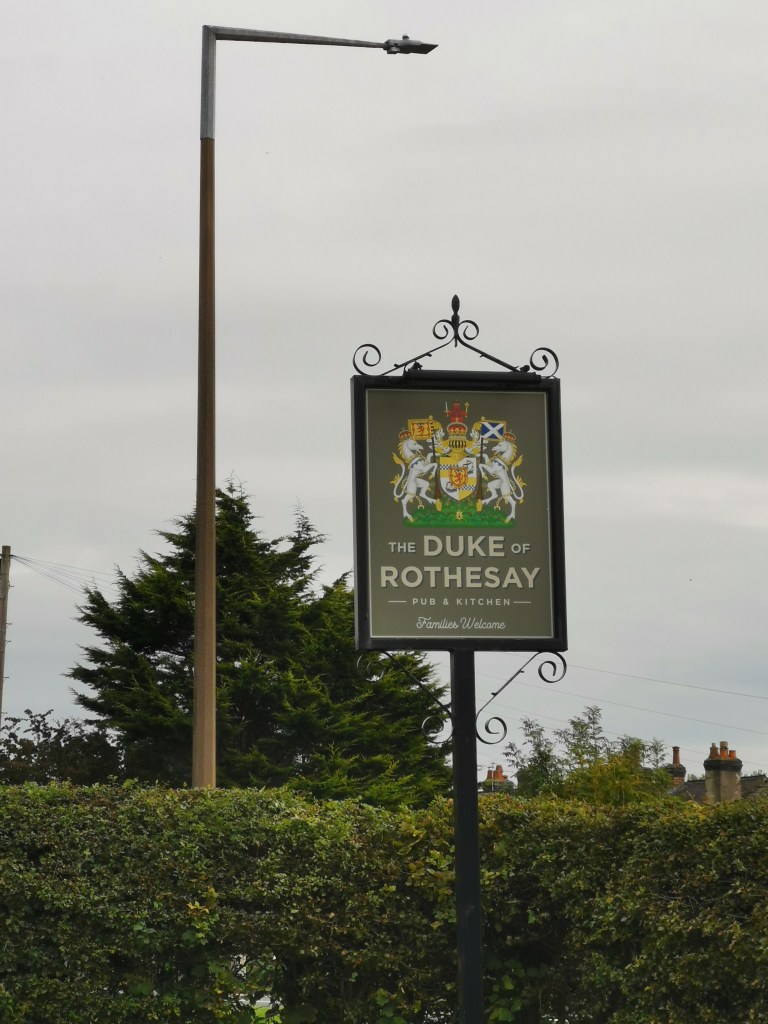
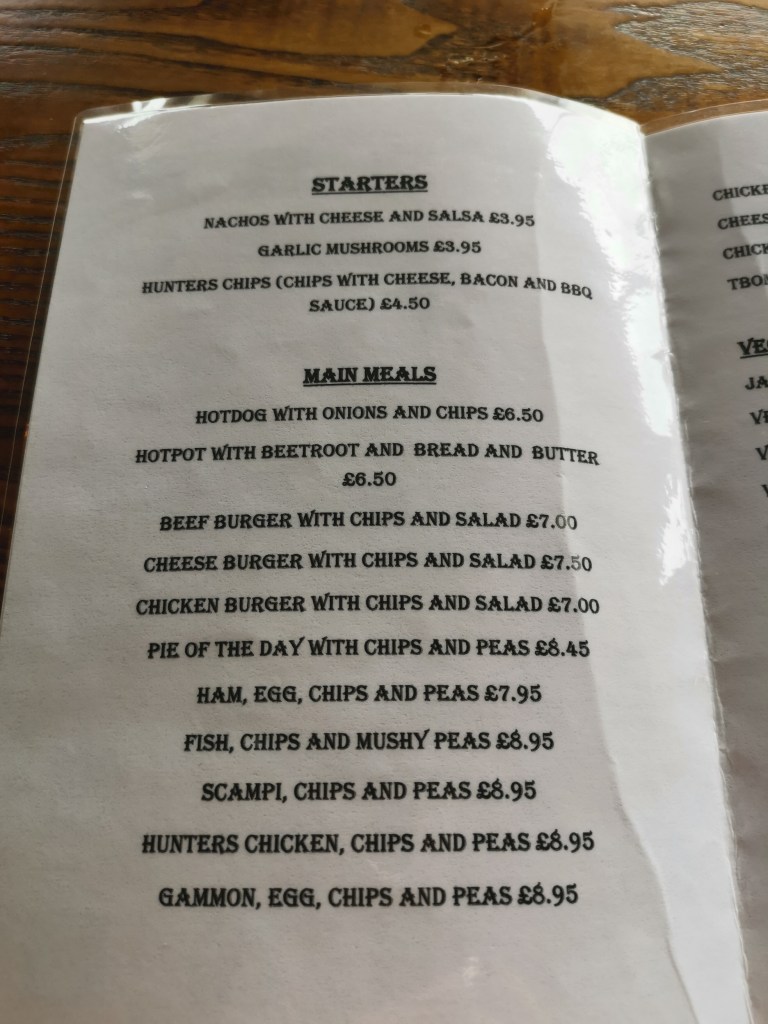
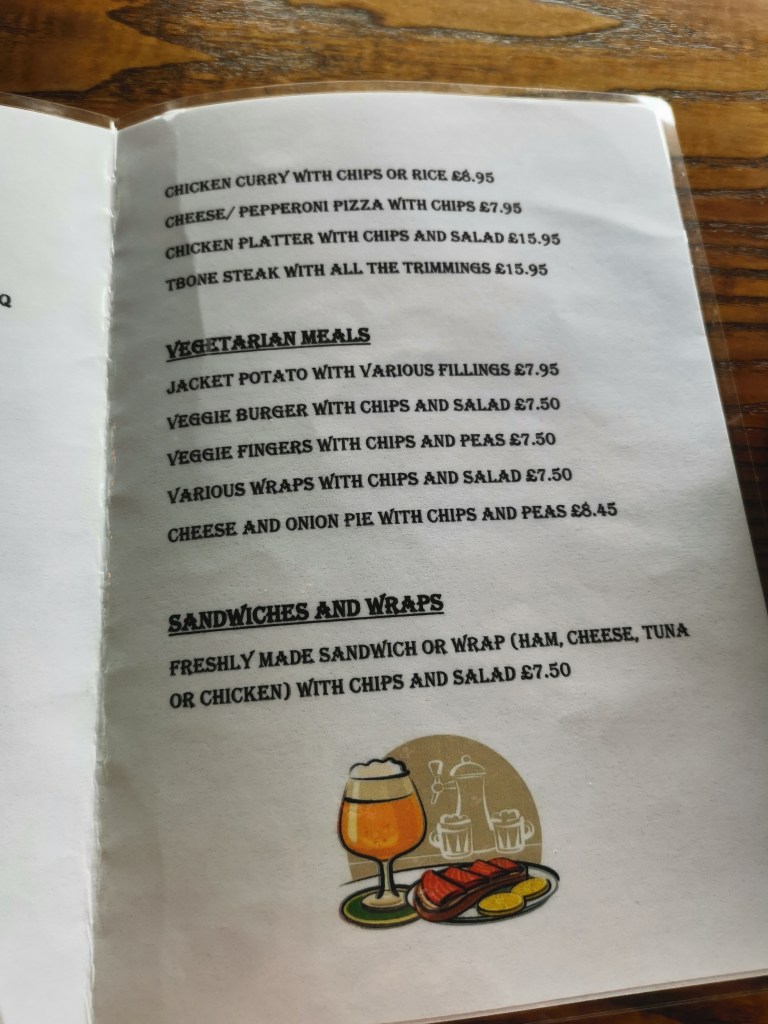
After trying a pub for lunch (not sure of the name) and finding that they didn’t allow dogs in the dining room and the only area to sit was at picnic tables where the smokers watch the soccer, we headed back to The Duke of Rothesay pub near the ferry terminal to the Isle of Mann. Here our furry friend was welcome and we got a great booth table next to the window.
We enjoyed a lovely lunch together and Lulu enjoyed having a comfy bed to snooze on while we ate and talked.
Any sense of sadness over the lonely places we had visited this morning faded in the company of wonderful friends.
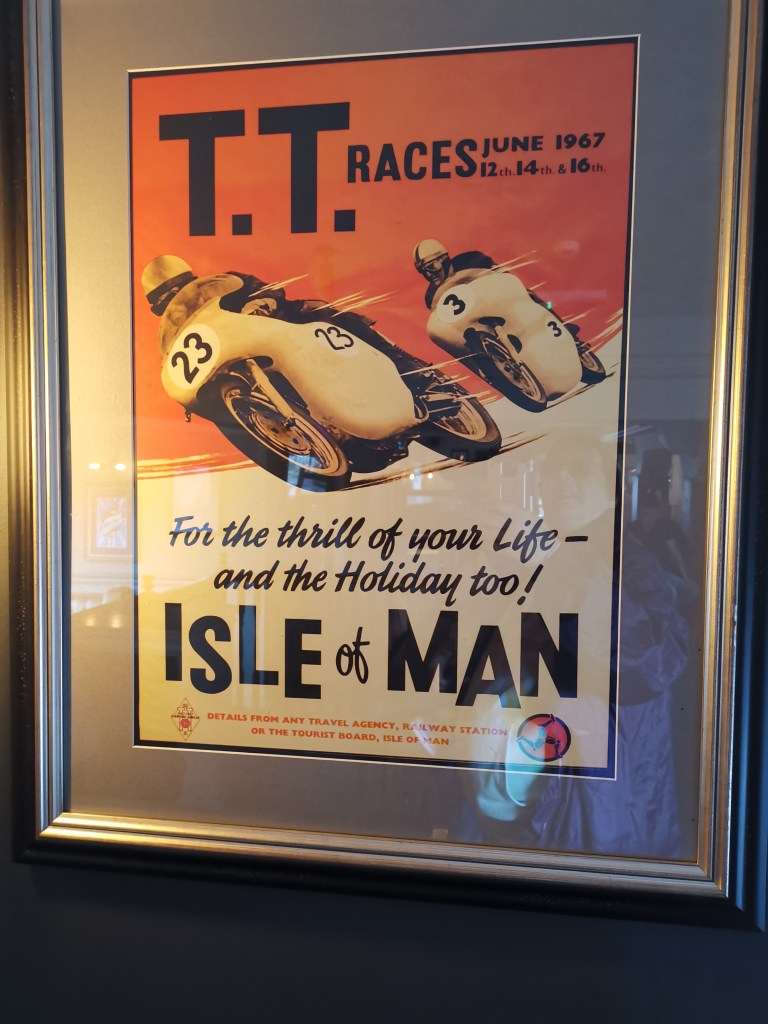
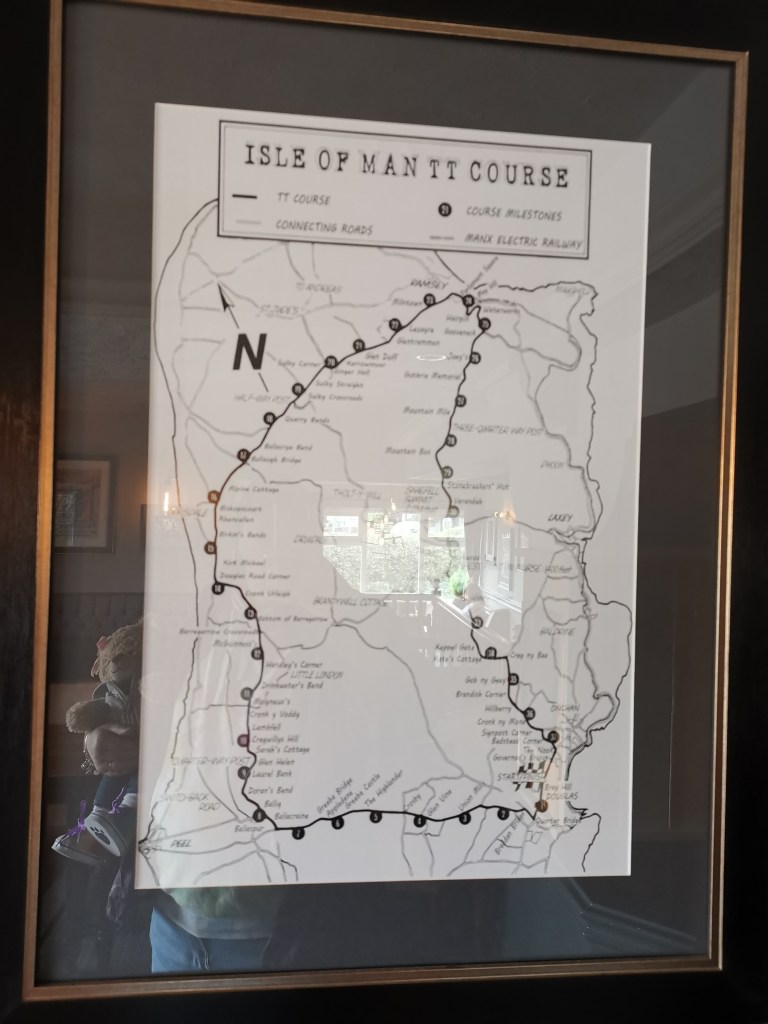
All around the walls of The Duke of Rothesay pub were references to the Isle of Mann TT Races. I asked Mike what these were and he explained that it is a crazy motorbike race around the Isle of Mann held each year in Summer.
When I looked up information about the race around the island it is known as the most dangerous race. More than 250 riders have died since 1907. The record for riding the 60km course is just over 16 minutes at a crazy speed of 218kph in 2018 (Wikipedia).
I have never been to the Isle of Mann. Mike and Janice went there recently, but very unfortunately Mike contracted COVID-19 and had to spend time in the island hospital. Certainly not the holiday they had expected. Mike believed he contracted the virus onboard the ferry boat to the island and now will wait until they launch the new ferry there in the next couple of years, before going again. Sounds like a wise idea. I will wait too.
Time to head off to our next destination back in Lancaster, the tower on the hill.
The Information from the National Trust Boards
The original Anglo Saxon chapel at this site is thought to have been established a short distance from the rock-cut graves during the 8tth century, around 1300 years ago.
What was it like?
Remanents of plaster and paint have been found at the site, indicating that the early chapel had decorated walls, suggesting a wealthy patron. The chapel would have been too small to accommodate a congregation, so preaching is likely to have taken place outside, an idea supported by the discovery of a large rock-cut socket for supporting a free-standing cross under the eastern wall of the later chapel.
The chape was rebuilt and extended in the 10th century, possibly due to the increasing popularity of St Patrick as a patron saint. Following this, the existing walled enclosure developed as a cemetery. Burial of at least eighty men, women and children have been recorded in the area around the chapel dating from the 10th and 11th centuries. Remarkably, the remains of 10 individuals were recovered from within the chapel itself.
Rock-Cut Graves
It is likely the graves would have been originally covered with heavy stone slabs and the sockets at the head of the graves indicate that each one would have been marked with a cross.
It is thought that the graves contained disarticulated bones, rather than complete skeletons and that they may have functioned as ‘reliquaries’ to hold the remains of saints and other important Christians. Perhaps even those of St Patrick himself. As such they may have acted as an important focus for veneration and pilgrimage, with St Patrick’s chapel being established here to draw upon their significance and association.
The Saints, Pirates and Pilgrims board gives a history of Saint Patrick
Although most famously connected with Ireland, Saint Patrick may have been born in Ravenglass, on the west coast of Cumbria. Early accounts record how he was captured by pirates at the age of sixteen and was taken to Ireland. After six years of slavery, he heard a voice telling him that a ship was waiting to take him home. He fled his captors and eventually boarded a ship bound for France, but which was blown off course and wrecked o the English coast. Heysham is believed to be the place where St Patrick walked ashore. After continuing his religious education in France he returned to Ireland to convert the population to Christianity.
If you live in England, there is a very good chance you have visited this magical part of the world. Even living in Australia, the reputation of the Lake District is used as a measure of natural beauty. Parts of Tasmania, the Apple Isle off the coast of Australia, are described as being Australia’s Lake District, wild and beautiful.
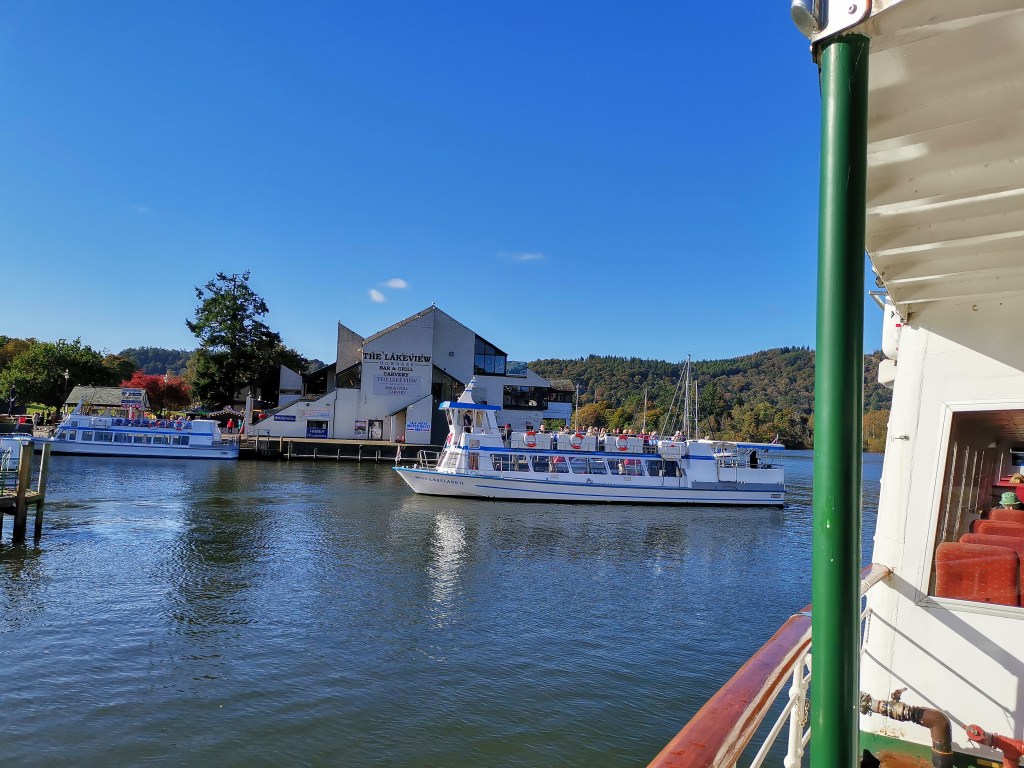
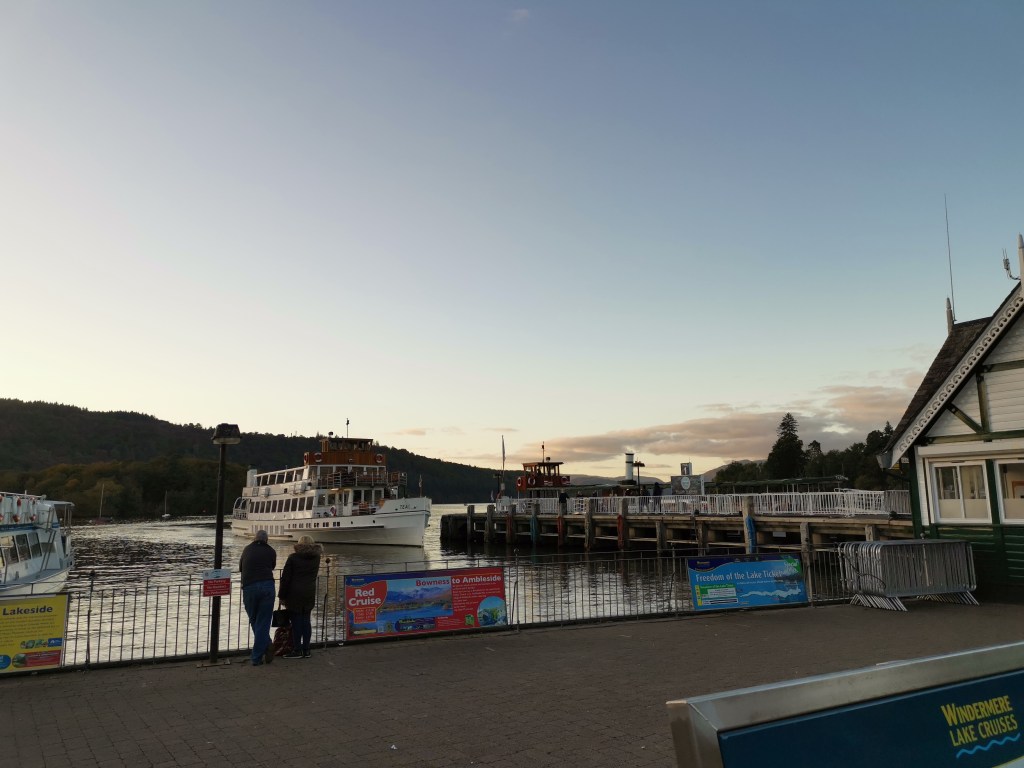
View from the Lakeside dock of Windermere
I have had the opportunity to visit both of these places and now I live in England, the chance to visit the Lake District with friends was something I couldn’t miss.
The last time John and I had visited the Lake District was in 2019 when I drove our hired motorhome around the narrow roads and through the little towns. I had to find car parks that would take a motor home so that we could stop and see the beauty that is in every direction. I couldn’t take my eyes off the road as I was driving and concentrating on being able to squeeze past oncoming cars and navigate the winding roads.
This time, my visit would be with my friends, with Mike driving, along with Janice, Karen and Lulu the dog and some of our bear kids. I was really looking forward to being a passenger in Mike and Janice’s car and being able to relax and enjoy the stunning countryside.
Mike and Janice had sorted out the itinerary for our Lake District experience, which sounded perfect. We were going to start with a cruise on Lake Windemere from Lakeside to Ambleside, with a brief stop into Bowness. We would meet Mike and Lulu at Ambleside, where we would have a lunch break. Then Mike would drive us to Grasmere, a pretty little village that is the resting place for William Wordsworth. Then we would return to Bowness for dinner.
Karen and I were staying in the Broadwater Guest House in Morecambe and Mike, Janice and Lulu came to pick us up after breakfast. The great news was we were blessed with a beautiful morning, perfect for the cruise on Lake Windemere. It would be about a 45-minute drive up to Lakeside, which is at the western end of Lake Windemere.
“Beautiful Morning,” said Fin.
View across the Morecambe Bay
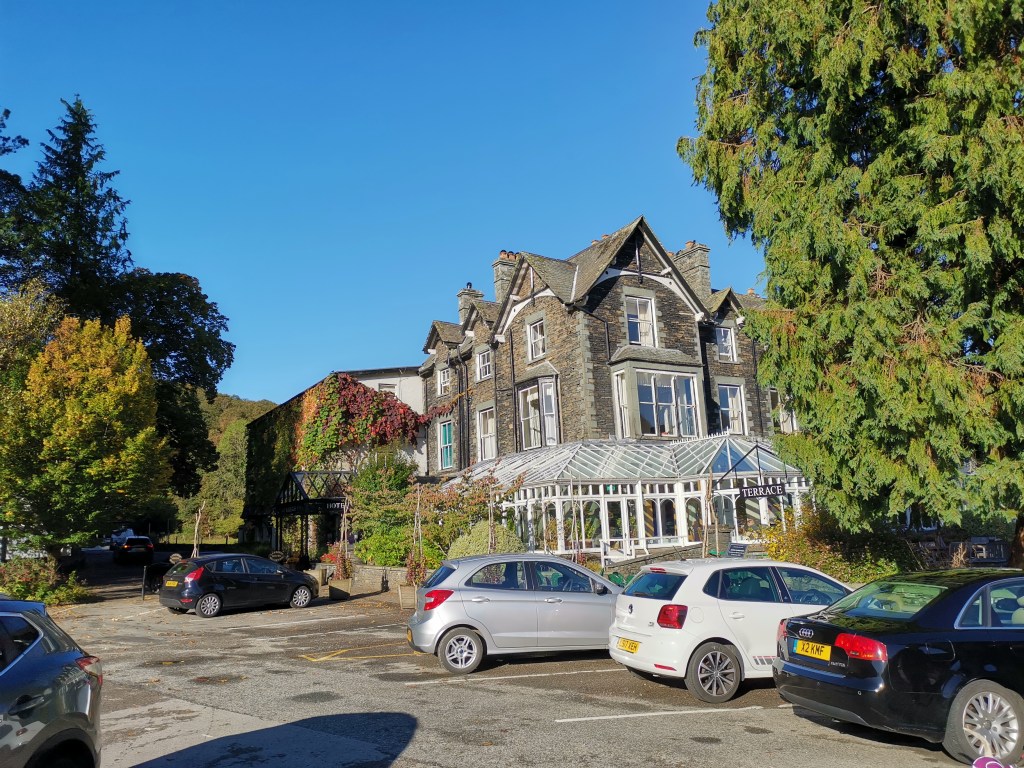
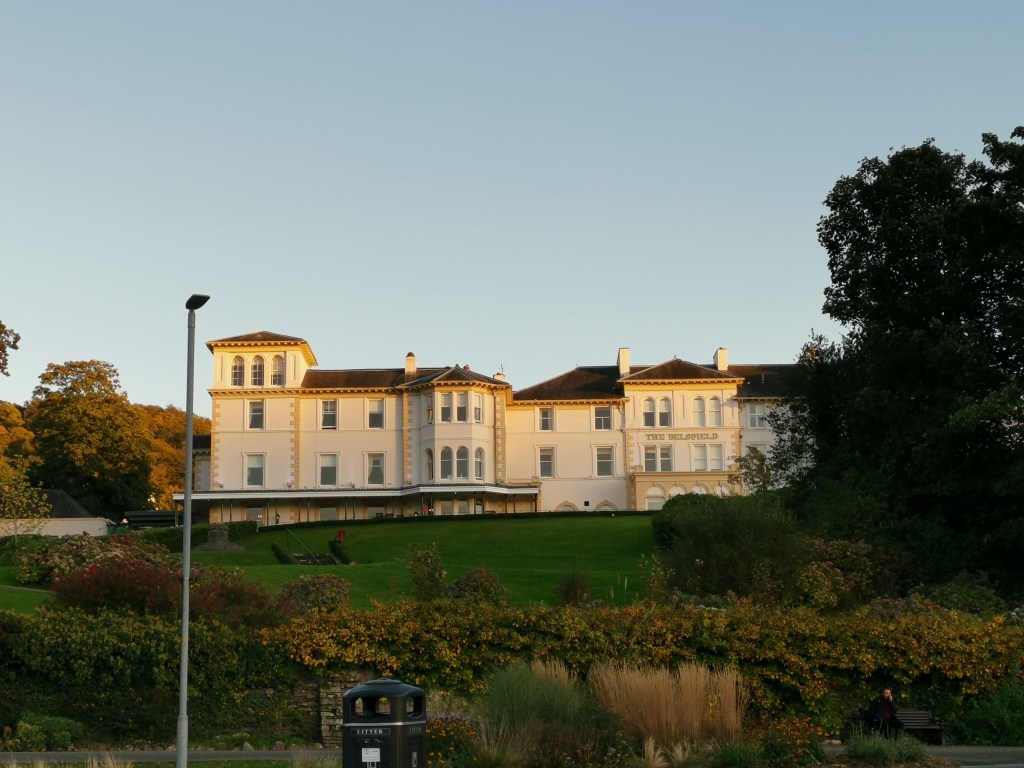
Lakeside is home to a grand looking hotel, the dock for the cruise boat, a station for a steam train and an aquarium.
The Lakeside Hotel
Fin waiting for the train
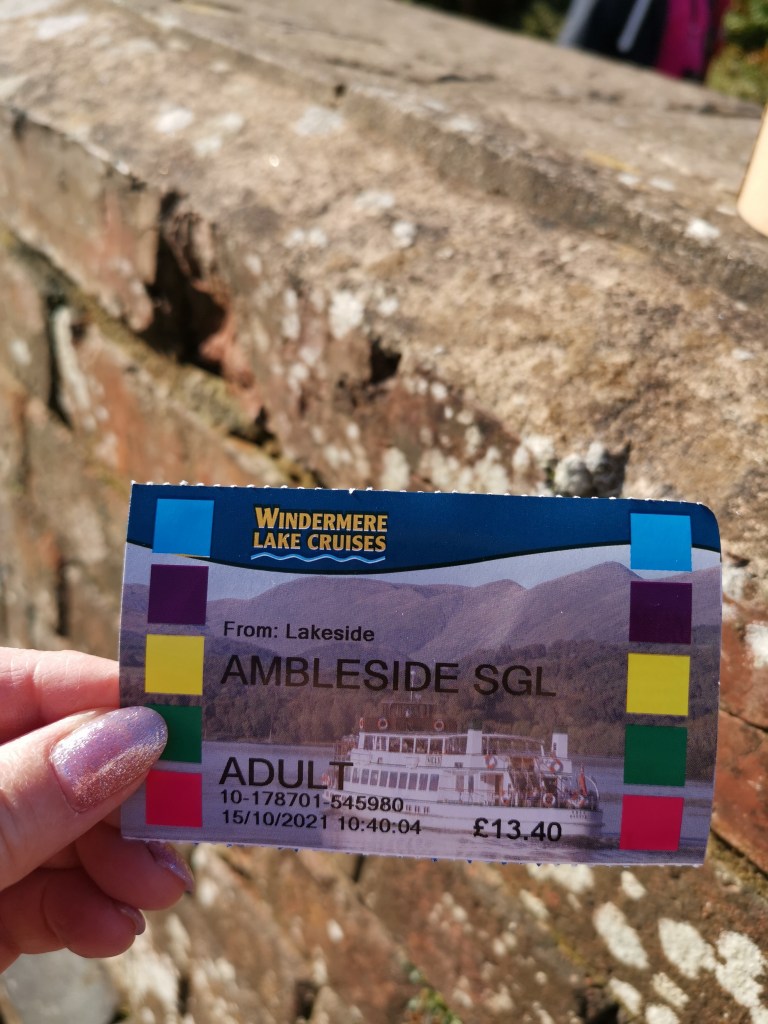
My ticket
We were lucky enough to be in time to see the steam train arrive at the station.
While we waited for the cruise boat to arrive, it gave us time to get a drink and snack from the little cafe at the station and to admire just how stunning the lake area is in the bright morning light.
It didn’t take too long before the boat arrived. It is called the Swan. We farewelled Mike and Lulu and made our way onto the deck with a screen surrounding the seating area, which very nicely blocked the wind that was quite cold as we travelled. We were free to move around the boat and take photos during our journey.
The Swan, our cruise boat
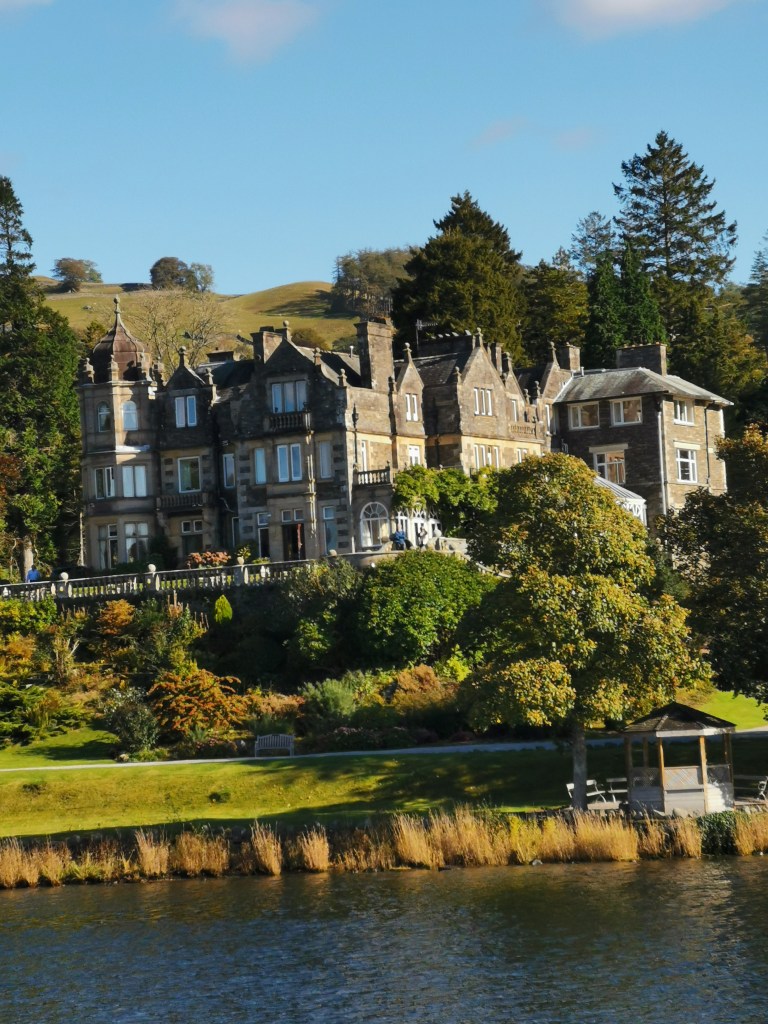
The Lakeside Hotel
Me and Fin
We were certainly blessed with beautiful weather and the cruise was on the calm water of Lake Windemere. There was some narration of our journey with things to look out for as we cruised along. Many historic properties overlook Windermere, with some of them now turned into hotels.
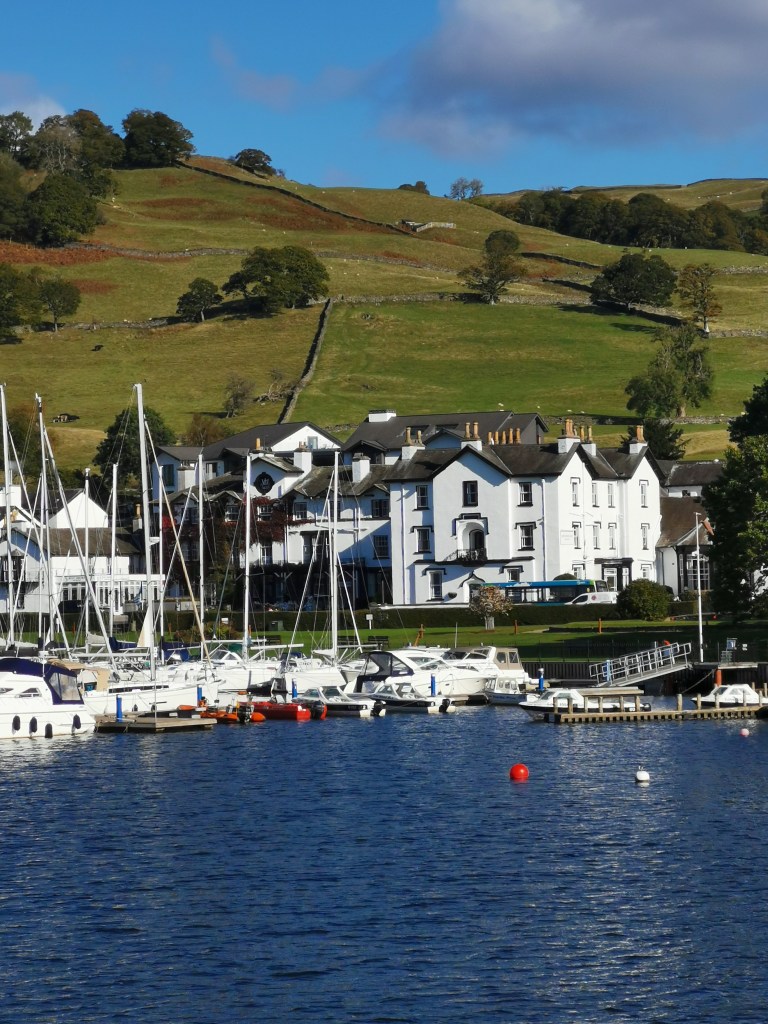
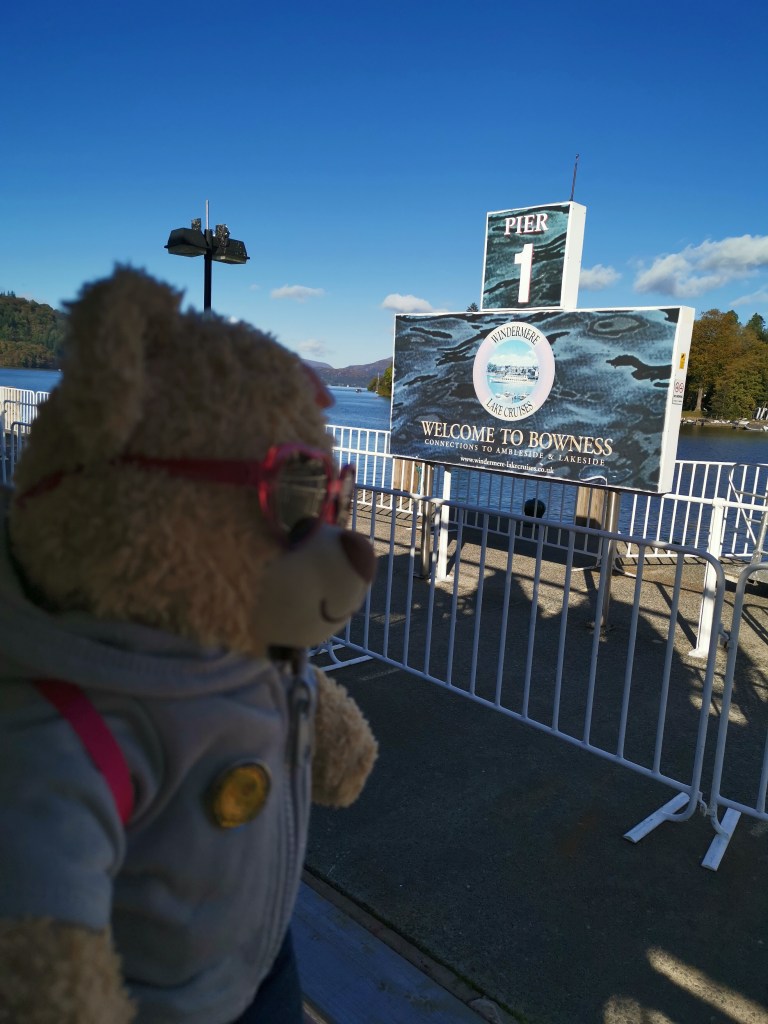
We cruised into Bowness to allow passengers to leave at the halfway point before we headed off for the next part of the journey to Ambleside.
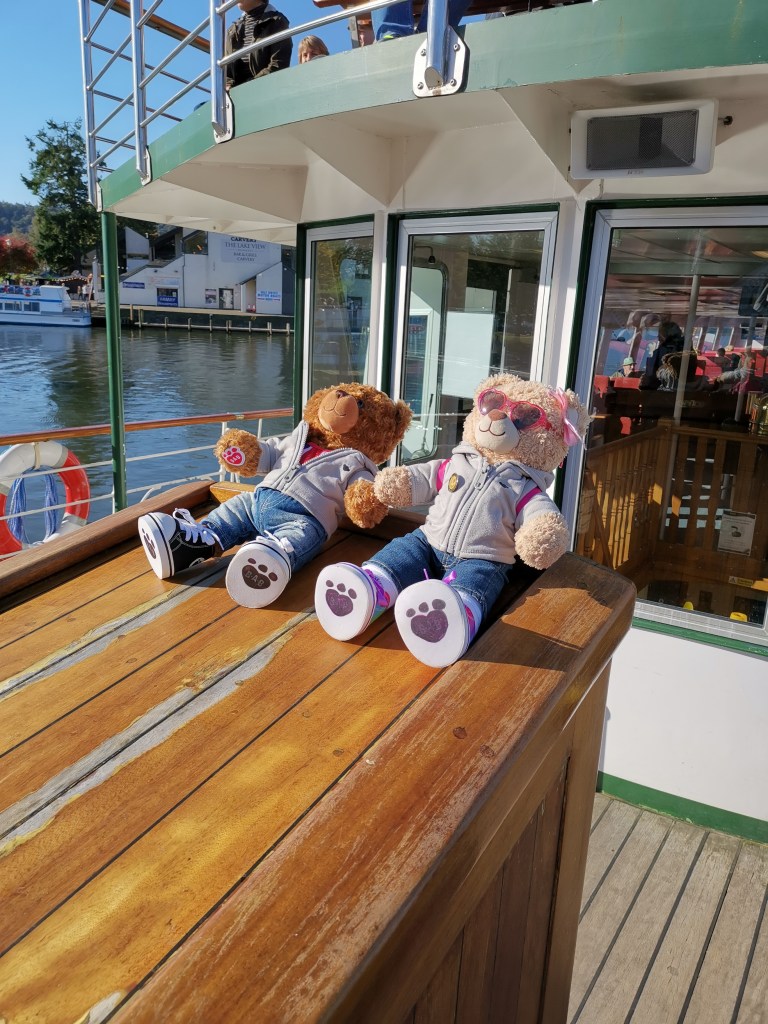
It gave us each time to let our Bear Kids have fun and entertain the other passengers.
Fin enjoying the sunshine
Don’t fall over Fin
Snow watches the passengers waiting to join
Jack and Snow catching the sun
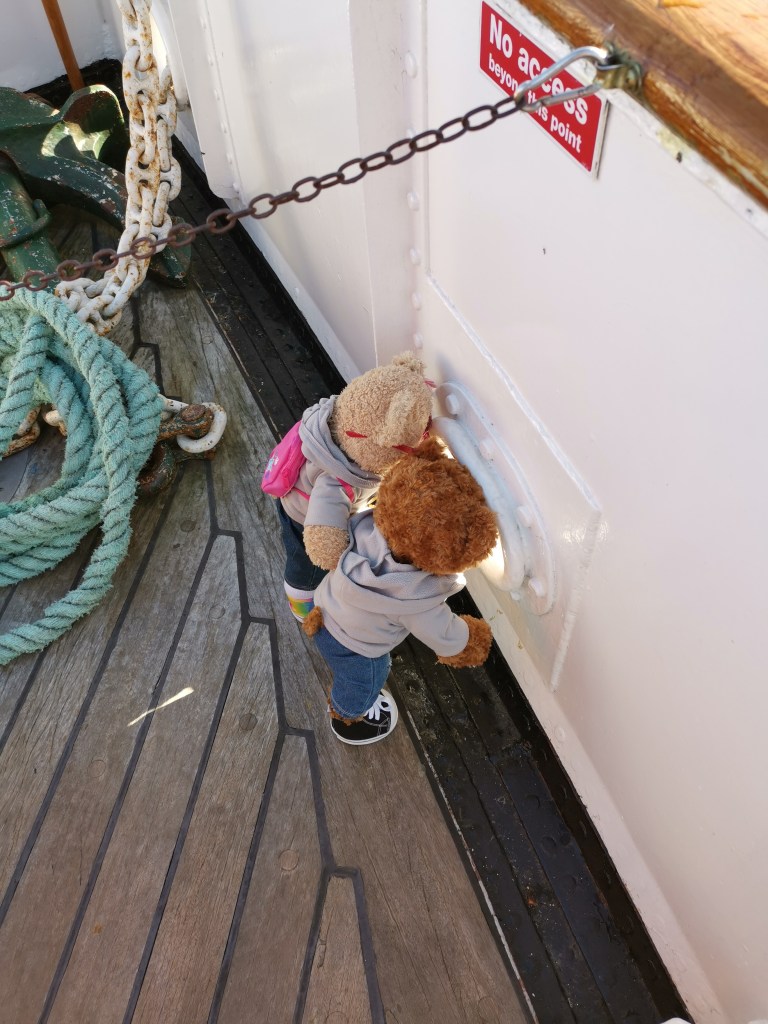
“What’s in the hole?” asks Snow
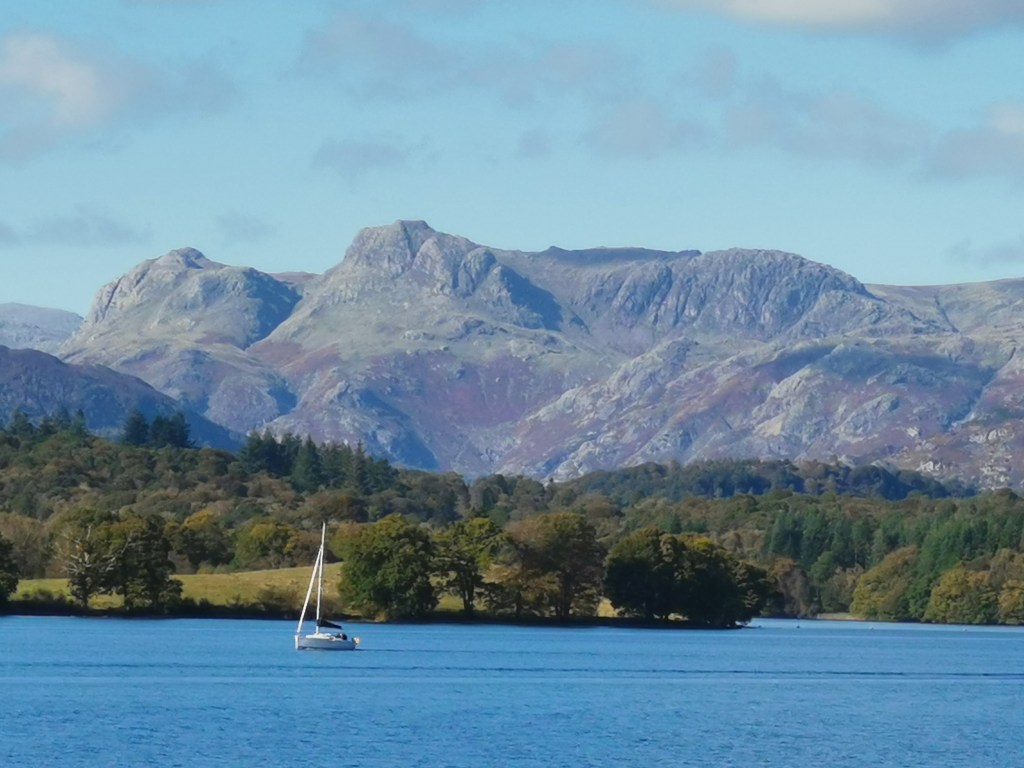
The scenery started to change as we continued the journey and we started to see the Fells, the rugged mountains that challenge climbers to scale their slopes. They are so beautiful.
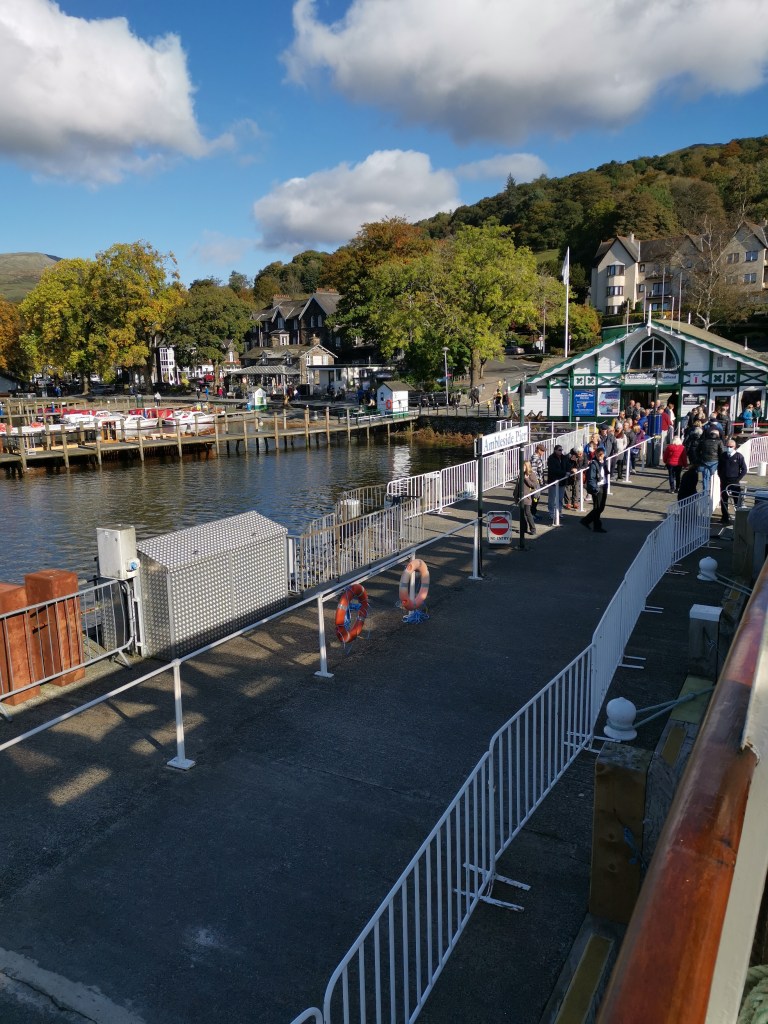
Snow and Fin got to meet one of the crew when we docked at Ambleside. He was really happy to have his photo taken with them and asked if he could also get a photo taken on his phone so that he could show his 13-year-old daughter, who also has a family of bears, like us.
If you would like to see the journey set to music, please check out my video here.
Once we had finished having fun with the crew, we joined Mike and Lulu to go head off and have lunch. Lulu the Cockapoo was very happy to see her mum.
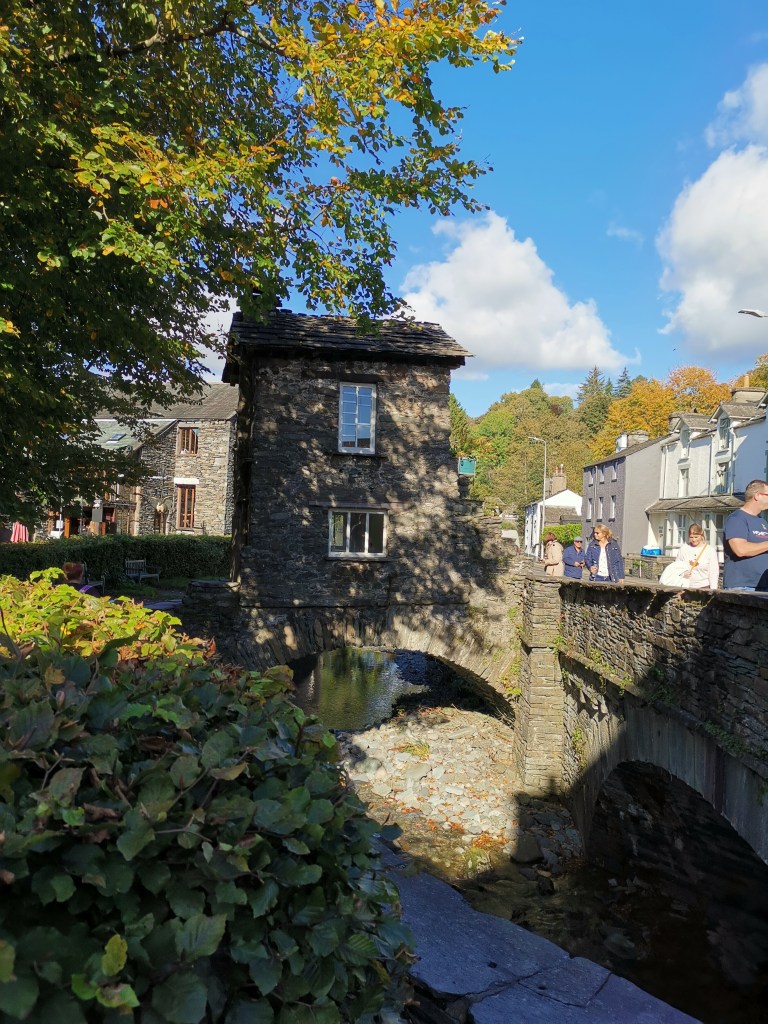
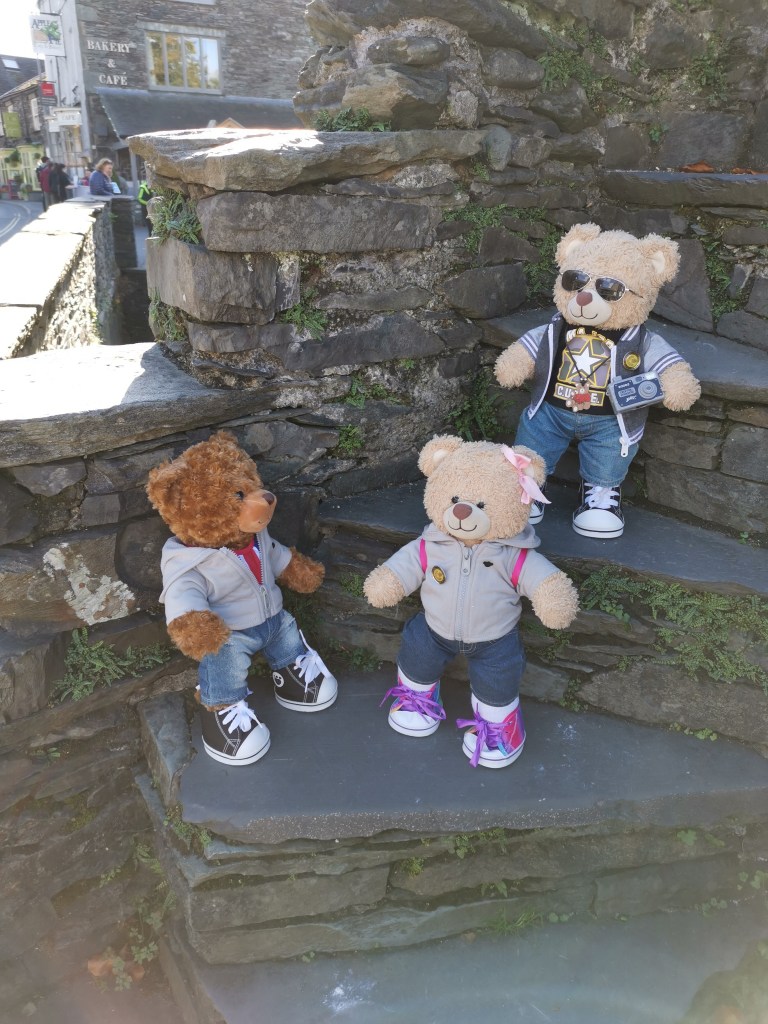
Mike found a park in the town centre and we walked through to the Flying Fleece cafe for our lunch. It is alongside an amazing tiny house that is built over a stream. It is The Bridge House and it was built in the 1600s. For me, who has just returned from living in a country where civilisation only started in 1788, it is wonderful to just be able to walk up next to an incredible building like this and mind-boggling to think that a family of 8 lived here at one stage. Now it is looked after by the National Trust. My Bear kids loved climbing up the narrow steps to the front door.
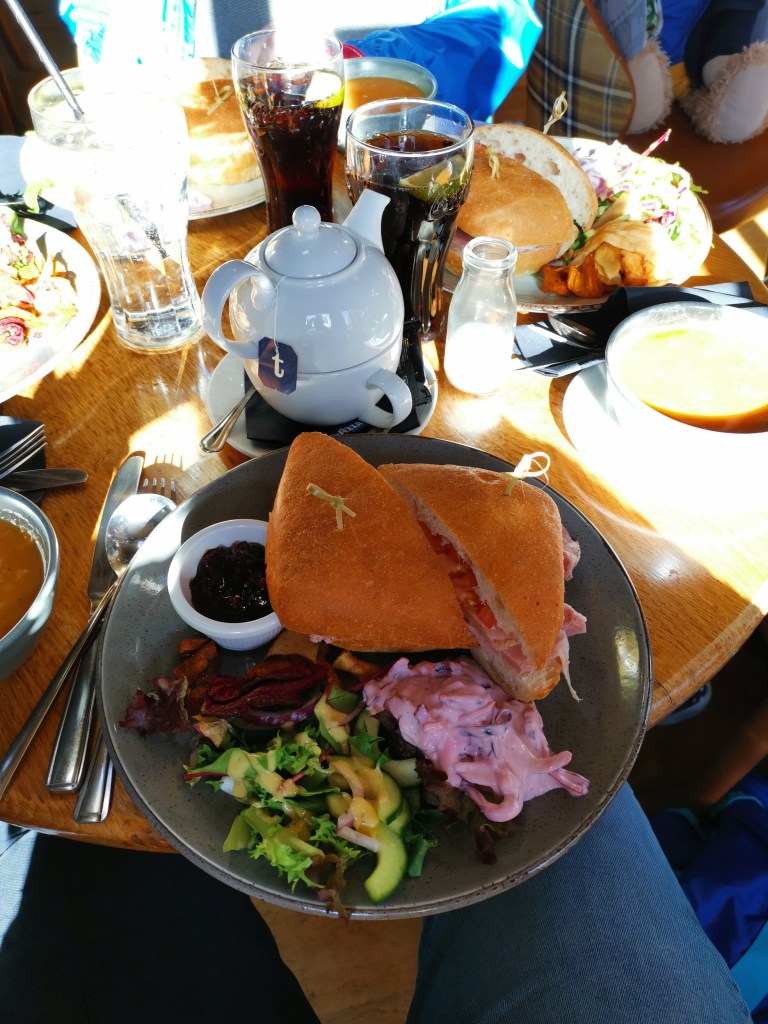
Lunch was lovely. we sat inside next to a fireplace so we were toasty warm and I enjoyed nice hot soup and a lovely ham sandwich. The amount of ham inside was very generous. This was the first time I have been to Ambleside, having only driven through it on other occasions on holidays with John.
Jack, Fin and Snow
Vegetable soup
Ham sandwich and crisps
After lunch, we drove up to Grasmere, another lovely little village in the Lake District, although this one isn’t on the shores of any of the lakes. Grasmere is well known as the home of the poet William Wordsworth. On previous visits here, we have ventured into the tiny church of St Oswald’s and seen the resting place of William Wordsworth and his family in its graveyard. It is also where his home, Dover Cottage, which is open to the public along with his garden.
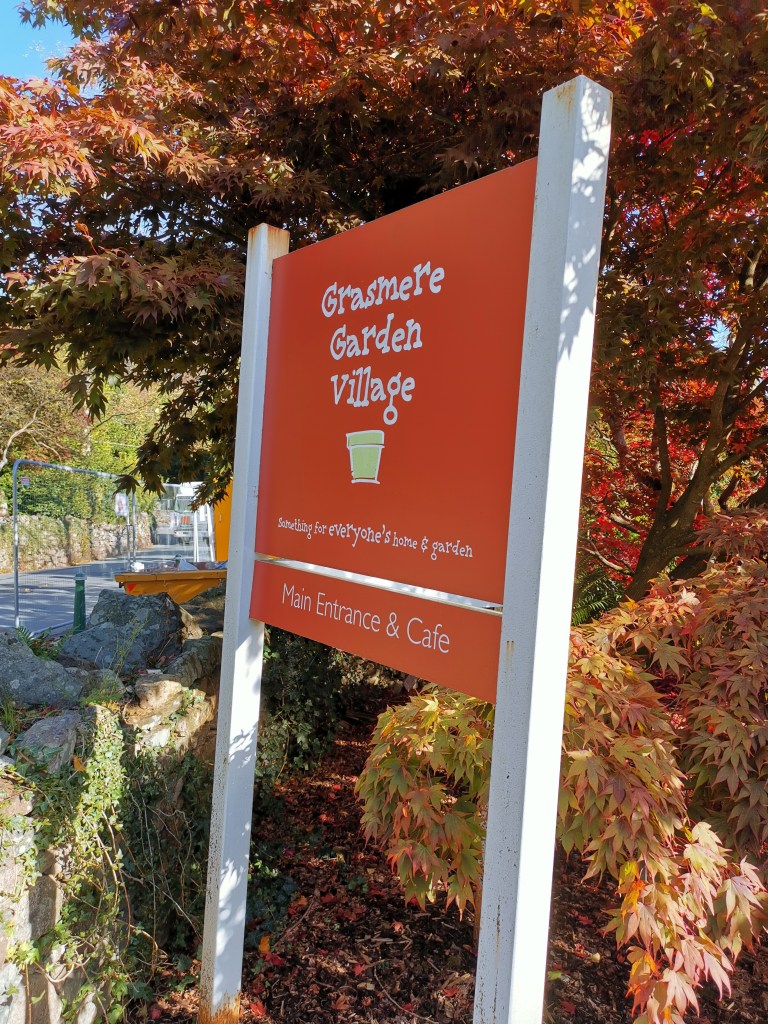
Mike parked us very close to the garden centre in the town and we walked through their front area. What I think is lovely about the garden centres I have been to here is that they all have had cafes in them, which makes for a nice experience when coming to browse through the plants and other things they sell that you can call in for a cup of tea. Where Janice and Mike live, the garden centre has two cafes and has a view of the sea
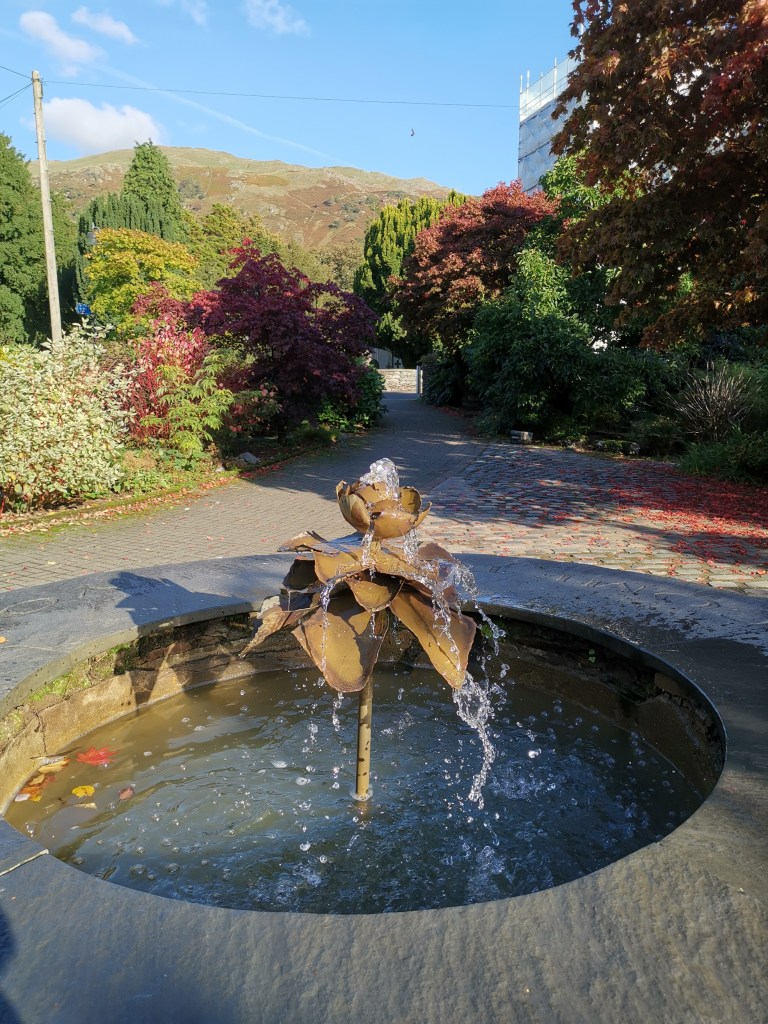
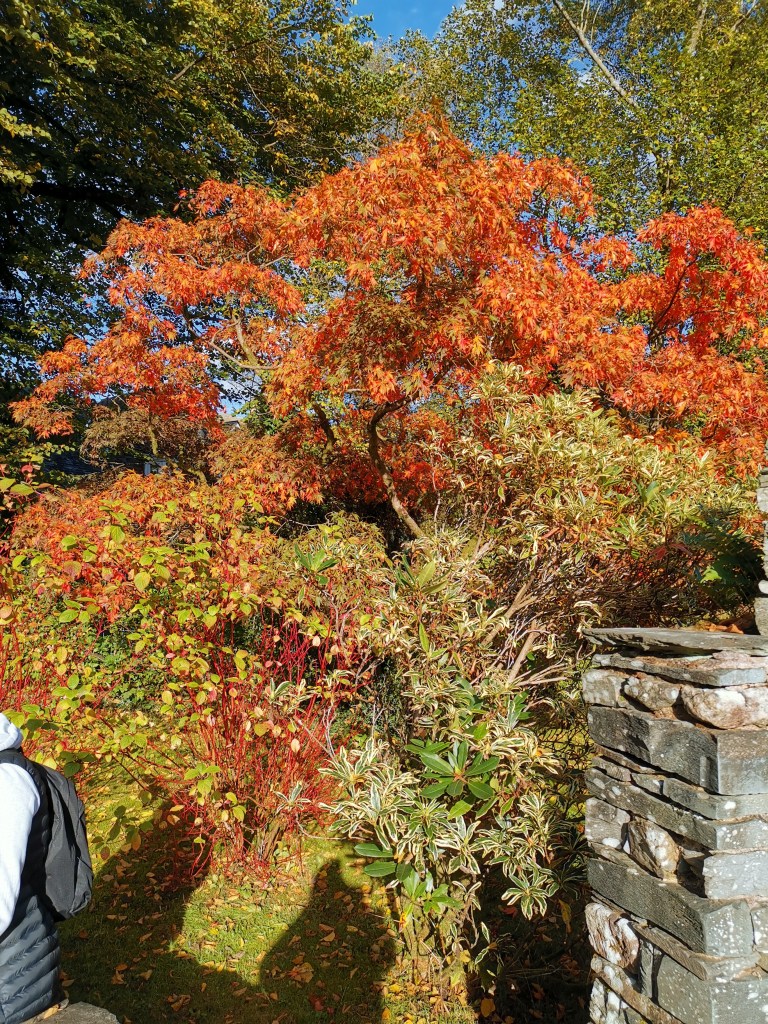
The Autumn colours are stunning
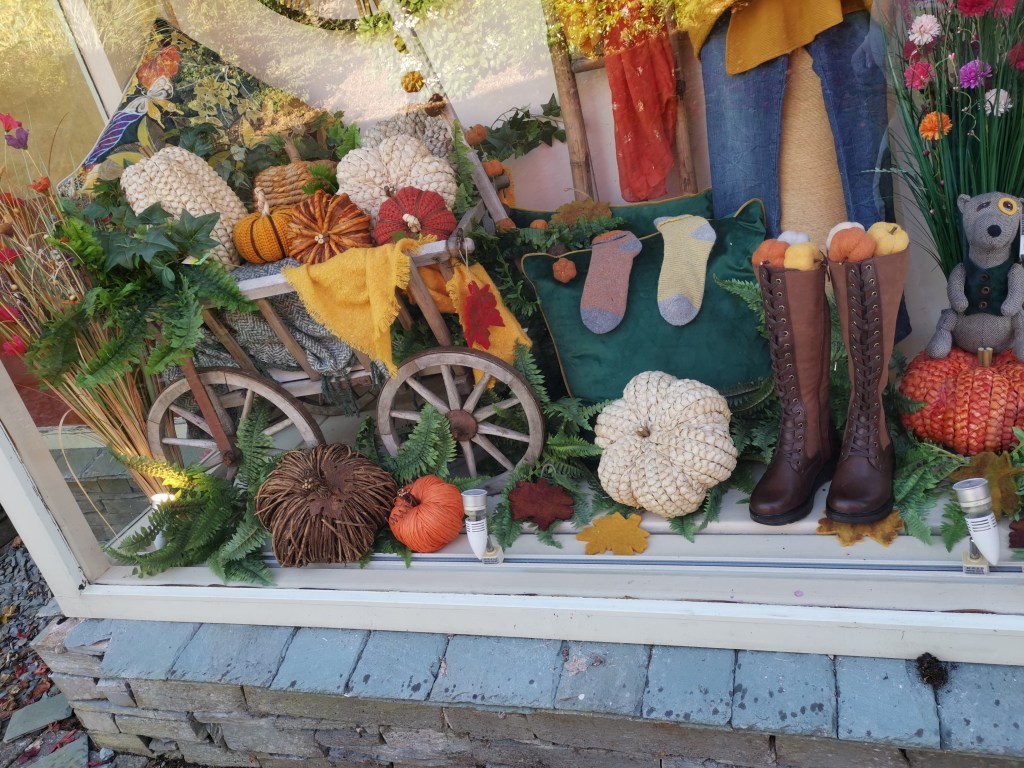
Halloween window display
Beautifully carved tree
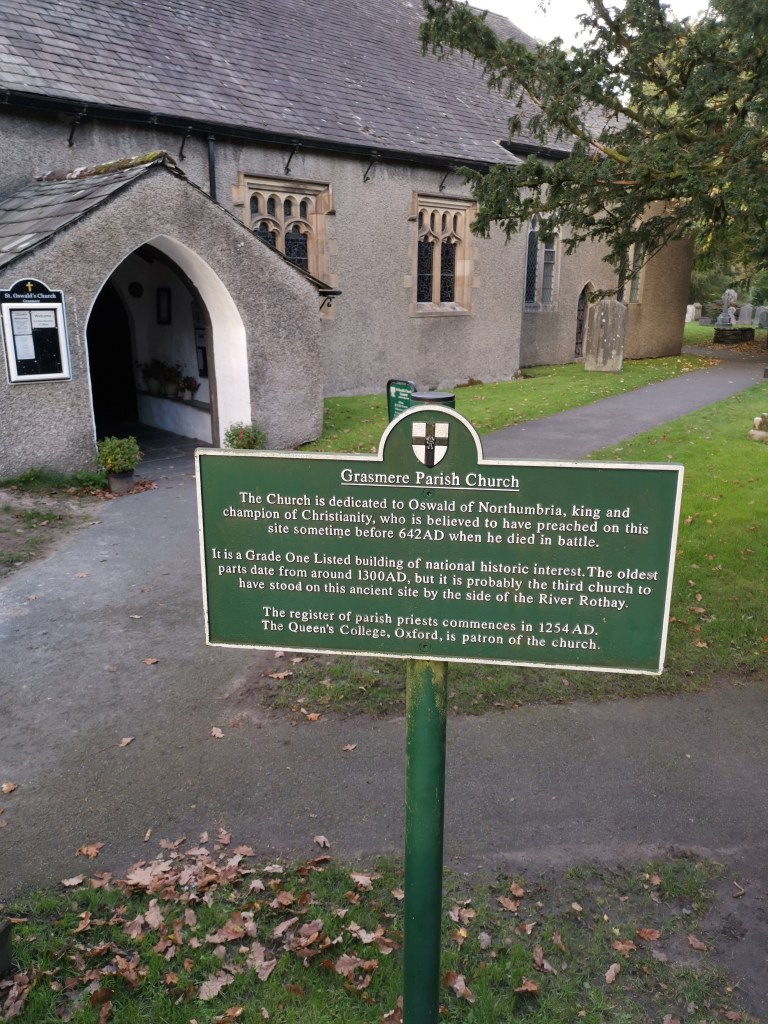
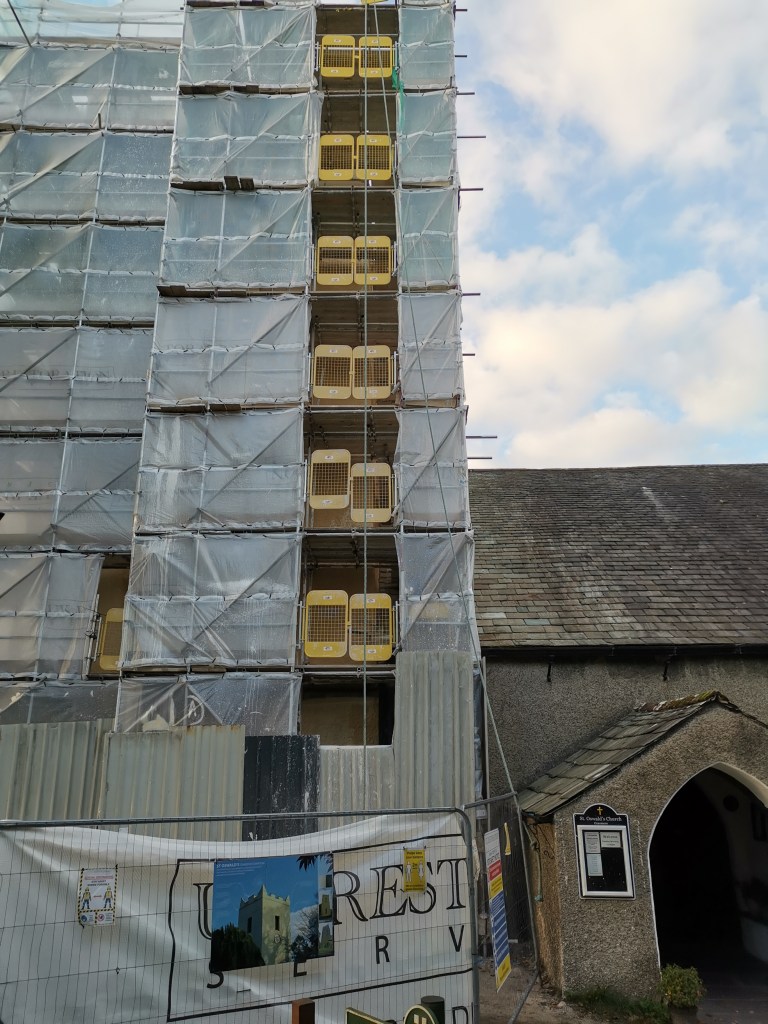
As we passed by St Oswald’s, the bell tower was covered in protective scaffolding as it is undergoing restoration work. It is good that they are looking after the church. Parts of it were built in 1250AD and the site dates back to 642AD.
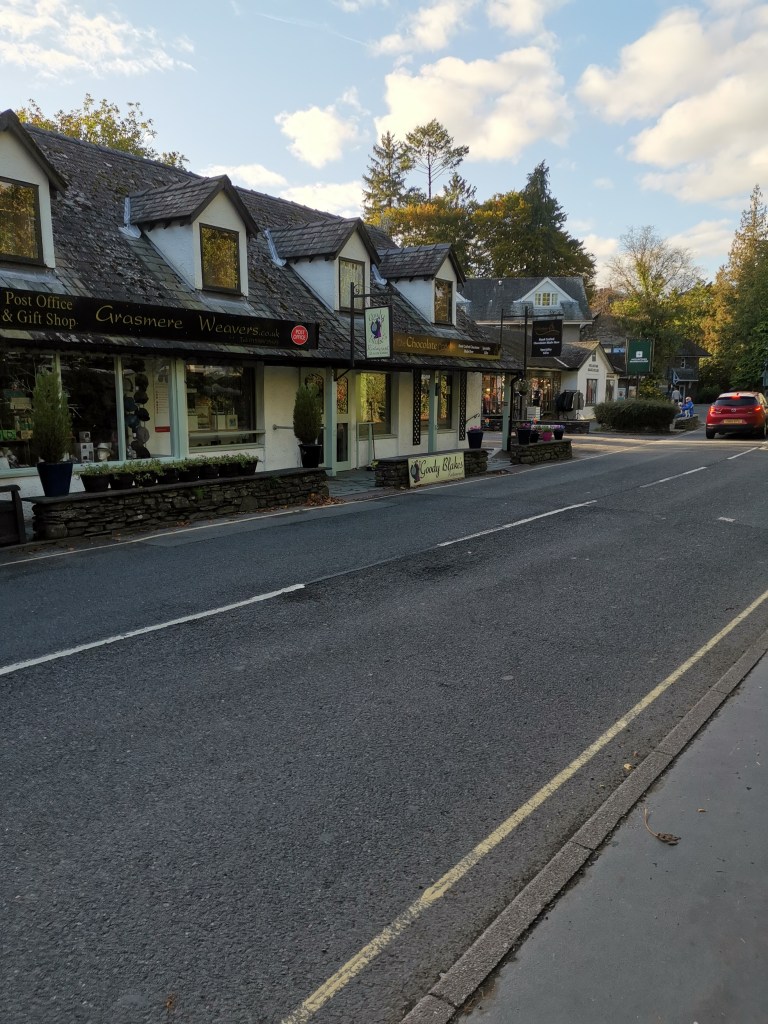
We wandered through the village, crossing over the River Rothay, surrounded by the little old shops and houses. We then walked along a track that took us for a scenic walk to the entrance road into the village where we stopped at their Wishing Well and then the Hawkshead outdoor clothing shop, where I treated myself to two outdoor warmth tops from their 2 for £20 sale.
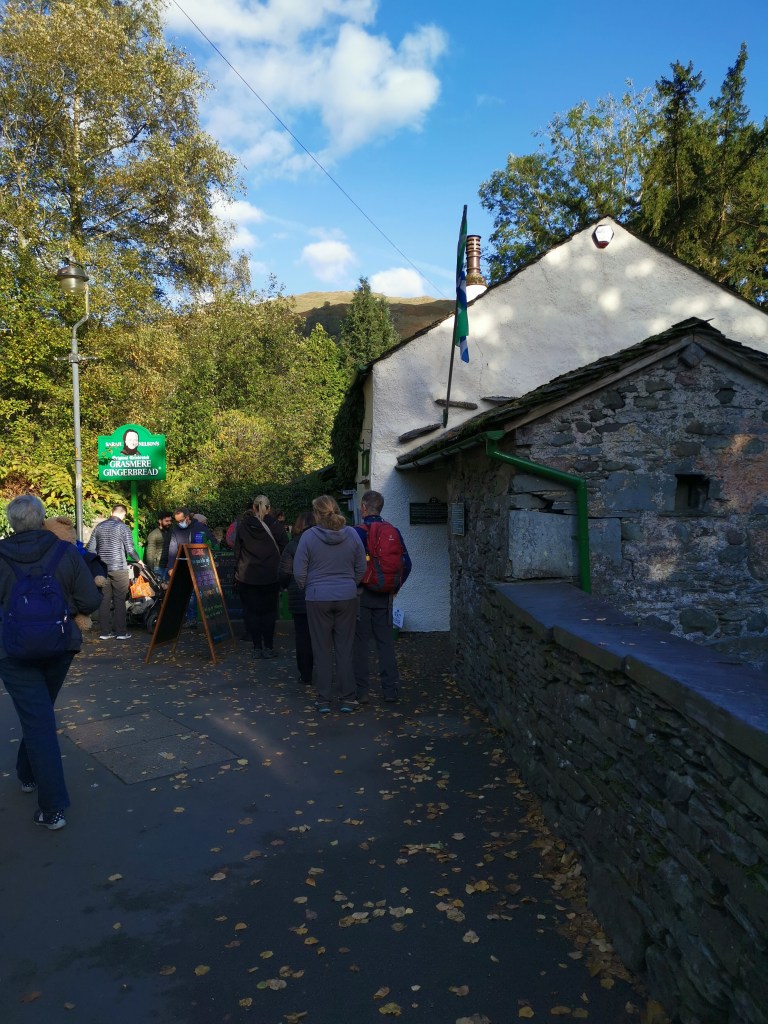
The line up to buy gingerbread from Sarah Nelson’s Gingerbread Shop
I love the Autumn colours
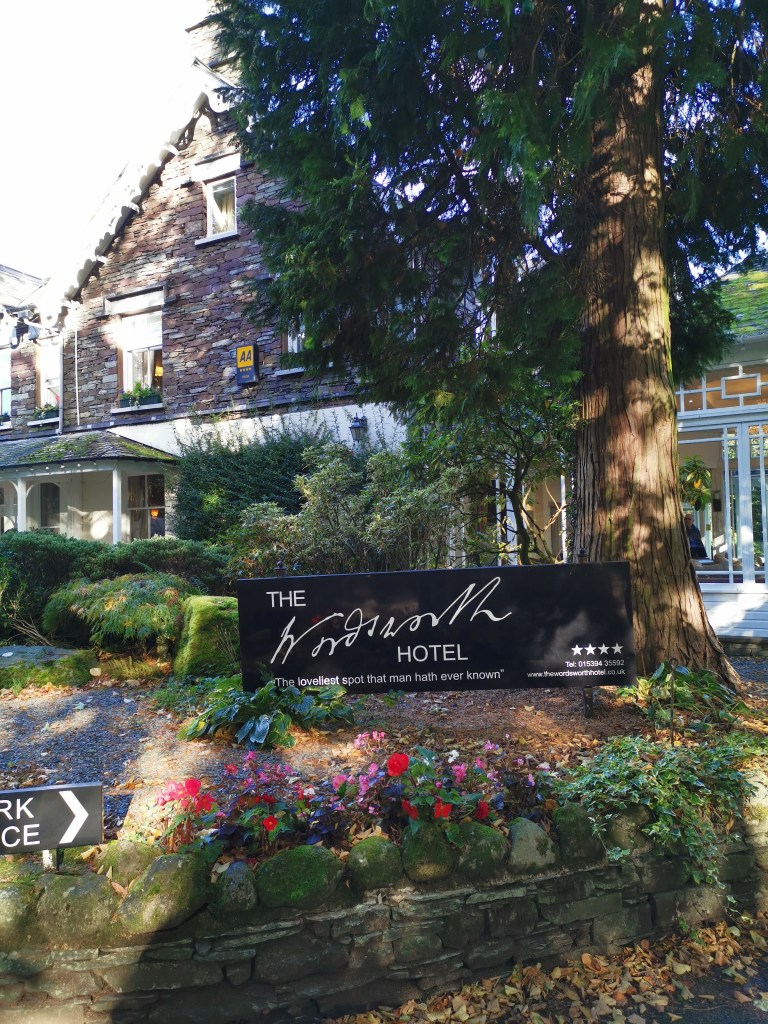
The Wordsworth Hotel
A wooden horse
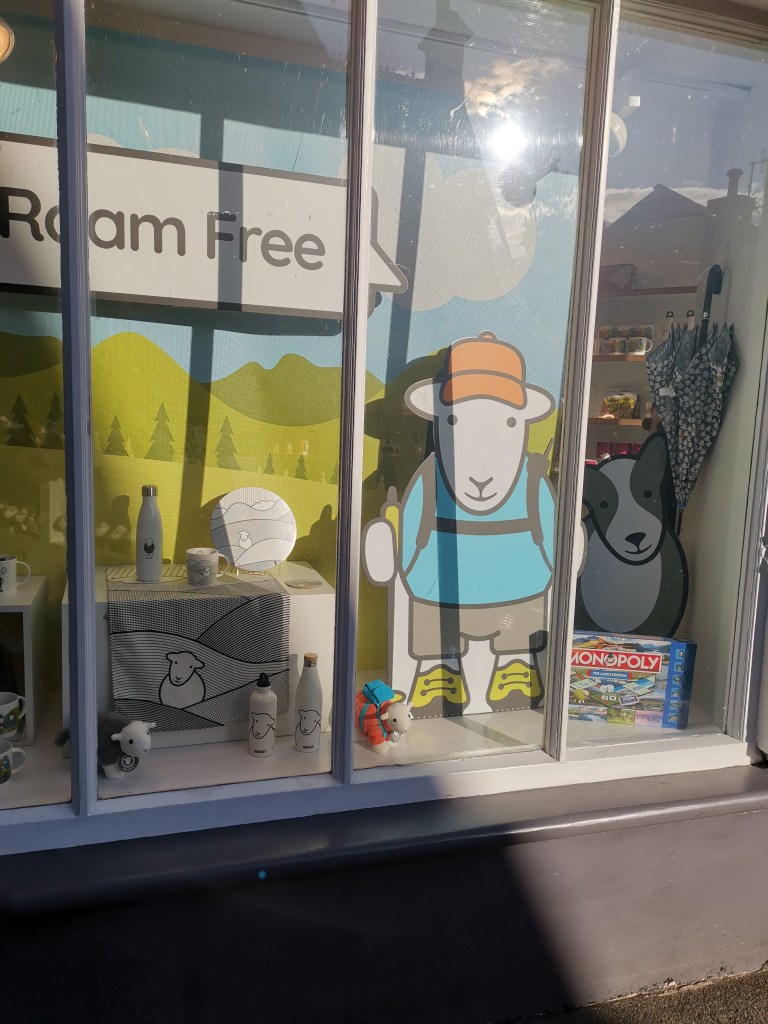
The Herdy Shop
The walk through the village away from the roads
The side of the Wordsworth Hotel
The river Rothay meanders through Grasmere
The fells nearby
What did you wish for Fin?
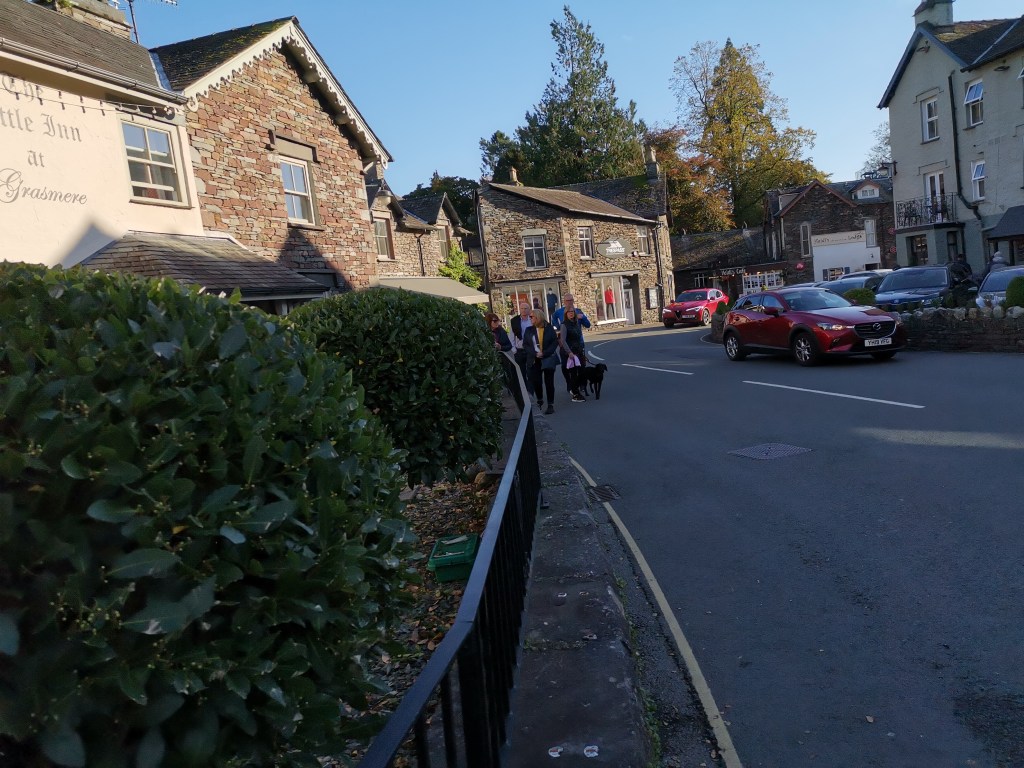
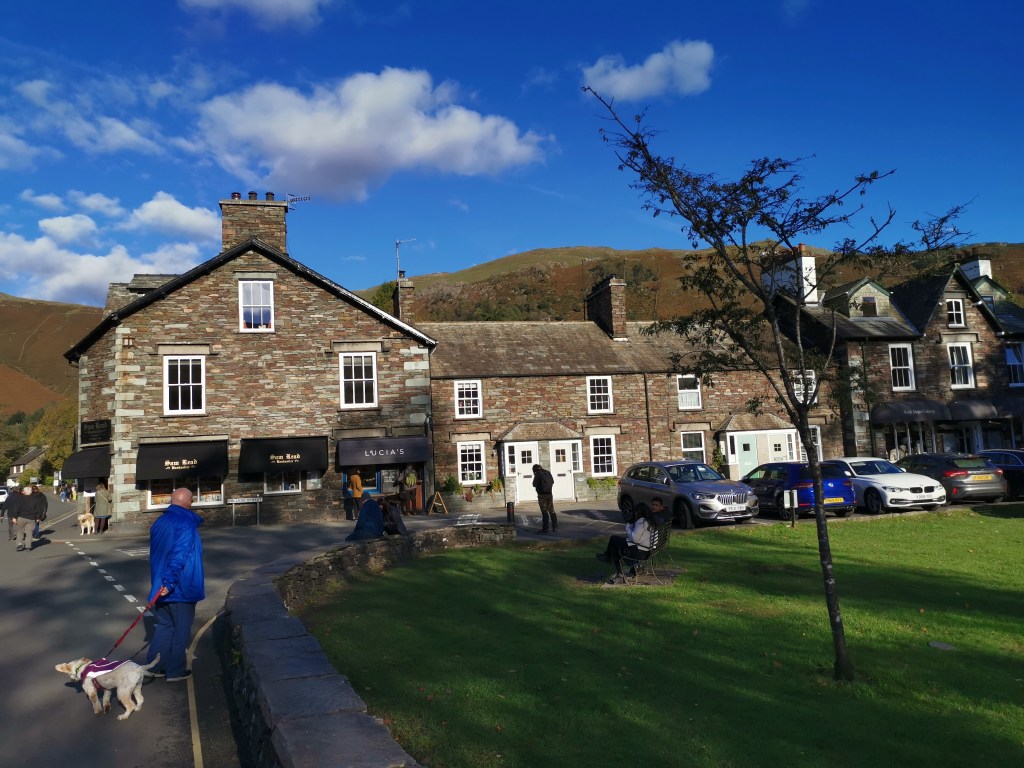
Some of the shops along the main street
It had been a lovely afternoon, but the late afternoon chill had started to come in, so we decided it was time to venture back to the car and make our way to Bowness where Mike and Janice planned for us to have dinner.
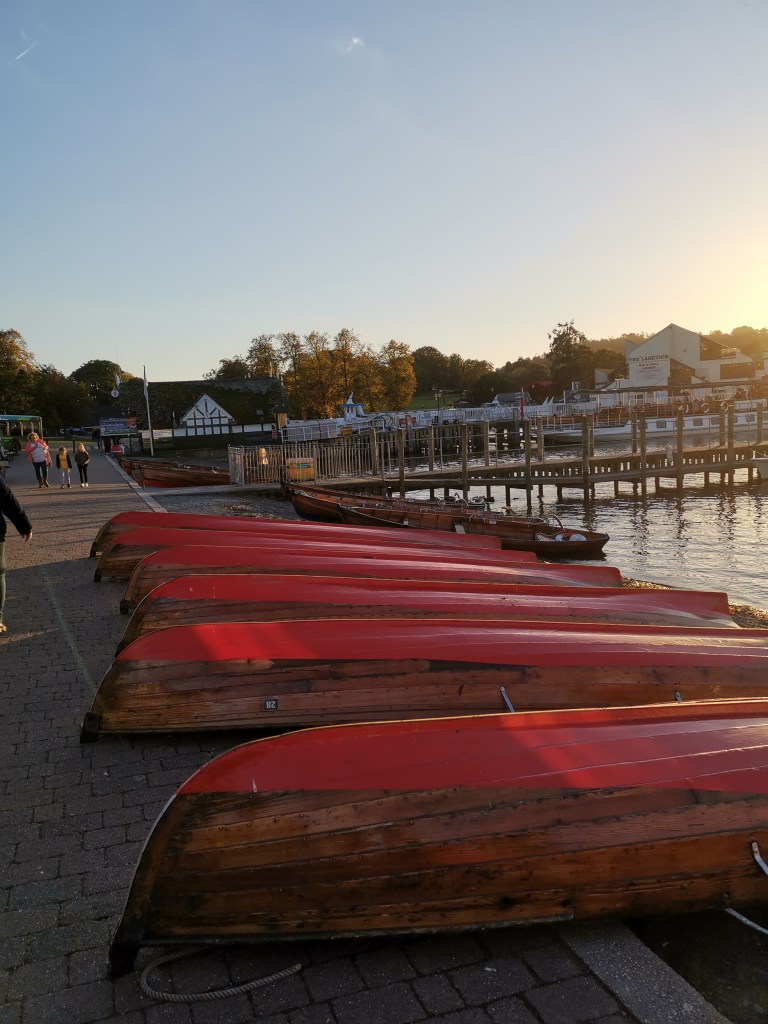
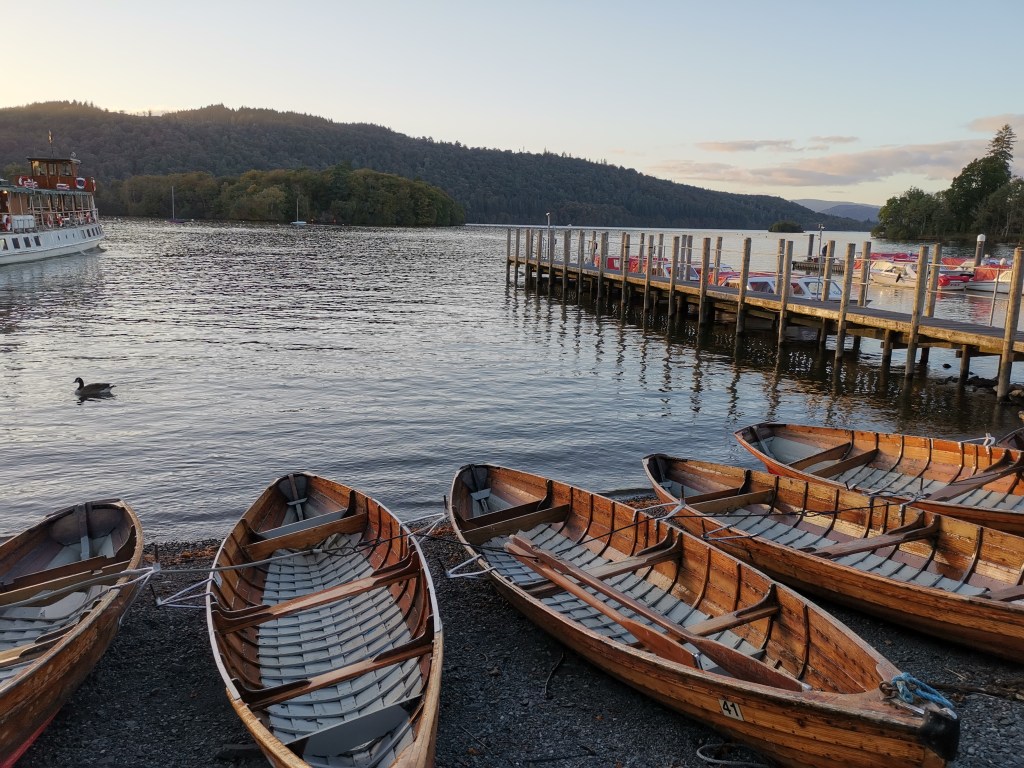
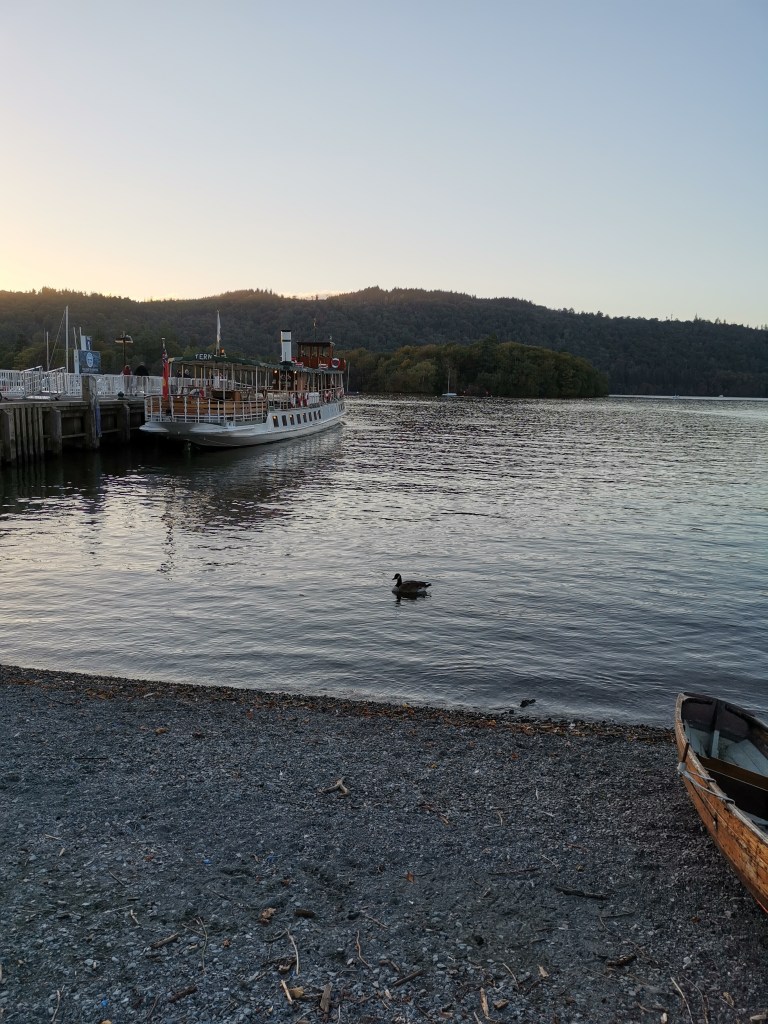
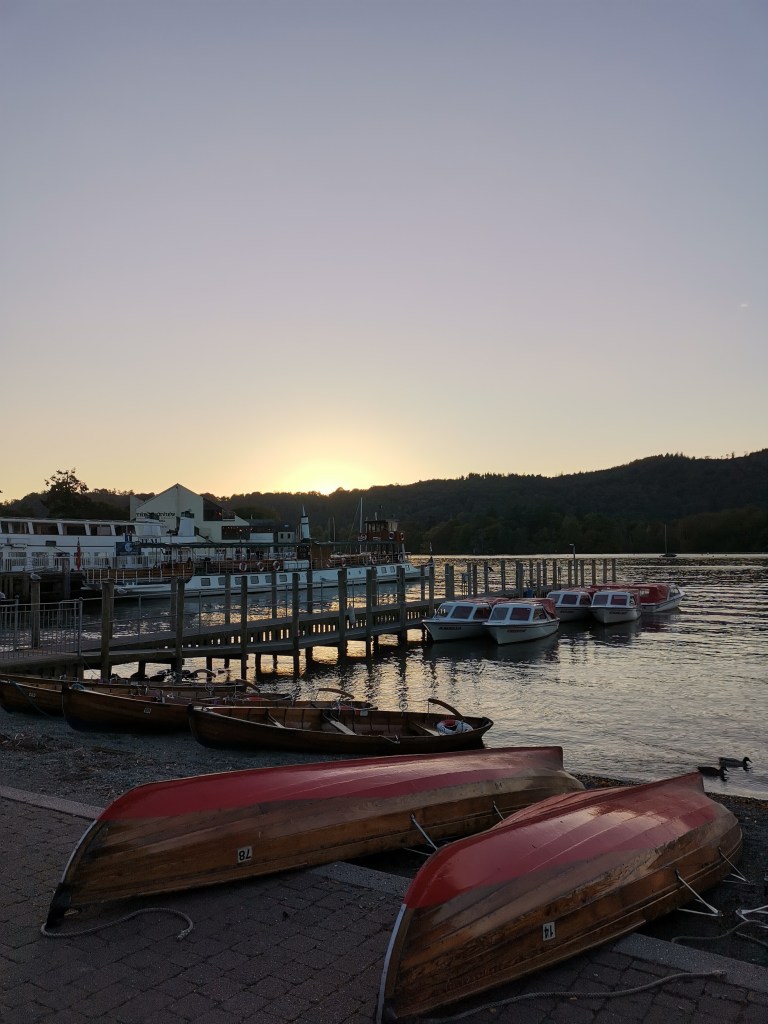
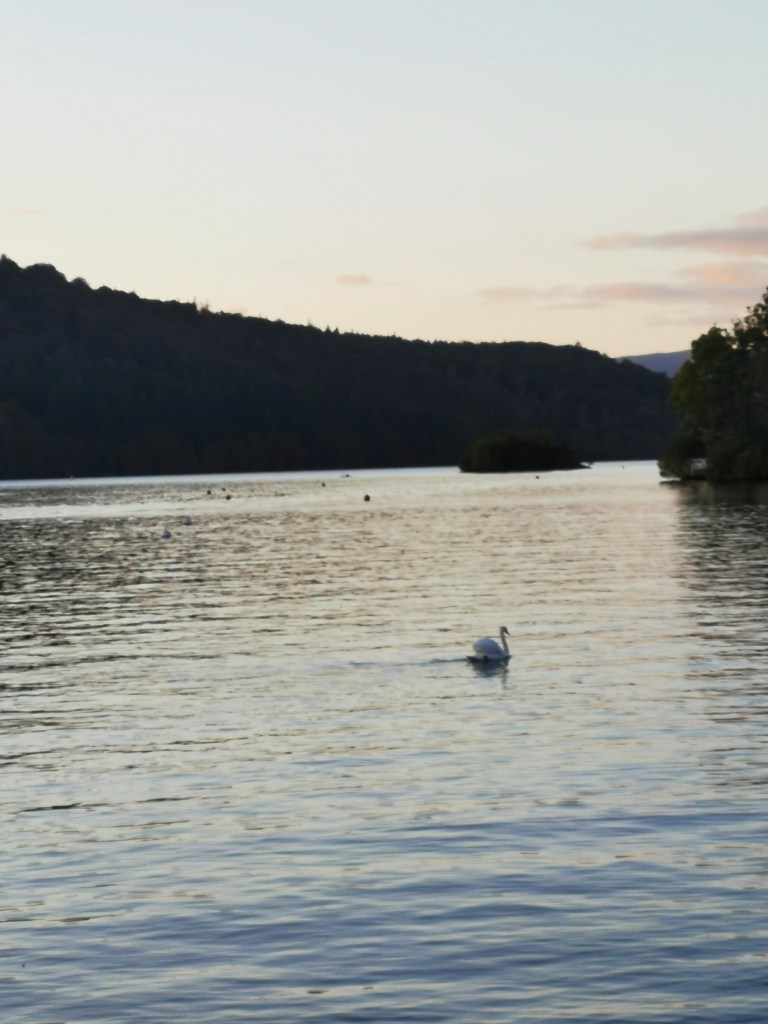
We walked down to where the Swan had come into the Bowness pier, while we were on our cruise, just in time to enjoy the late afternoon fading light which was so beautiful as it touched everything. It was a photographer’s delight.
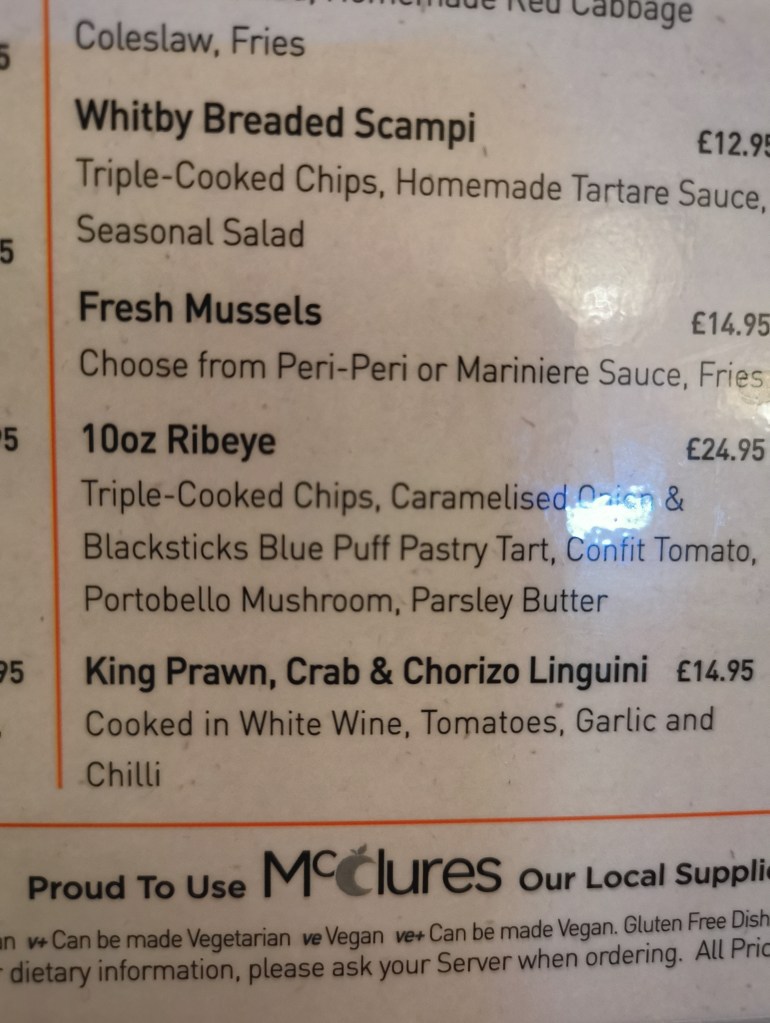
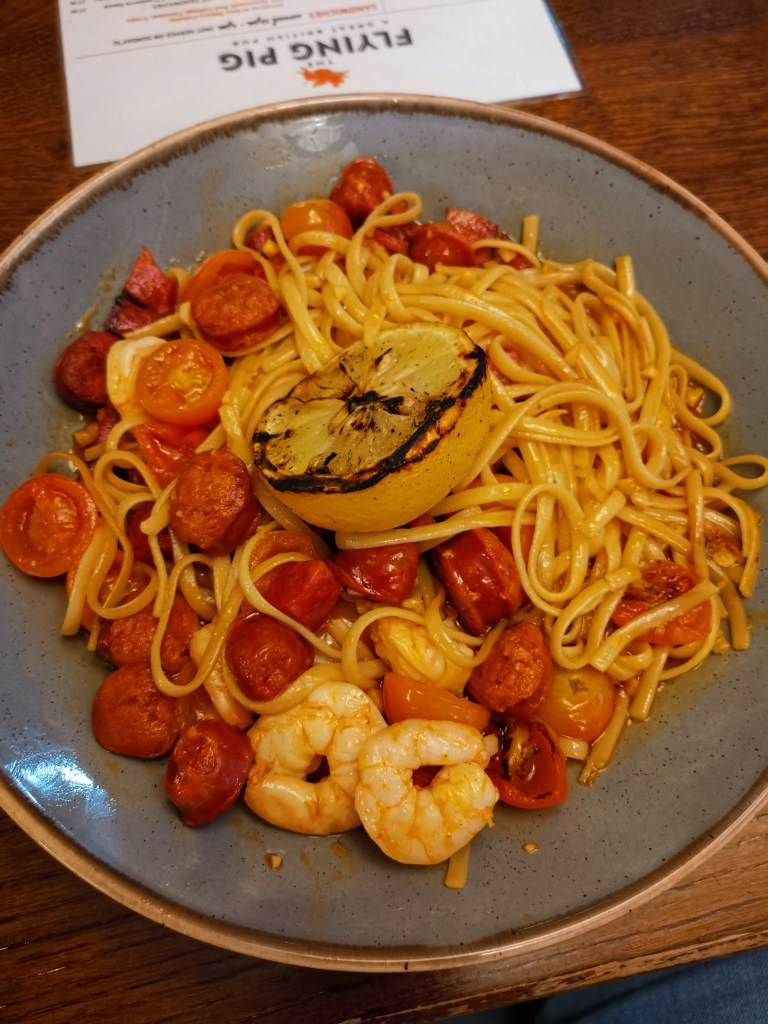
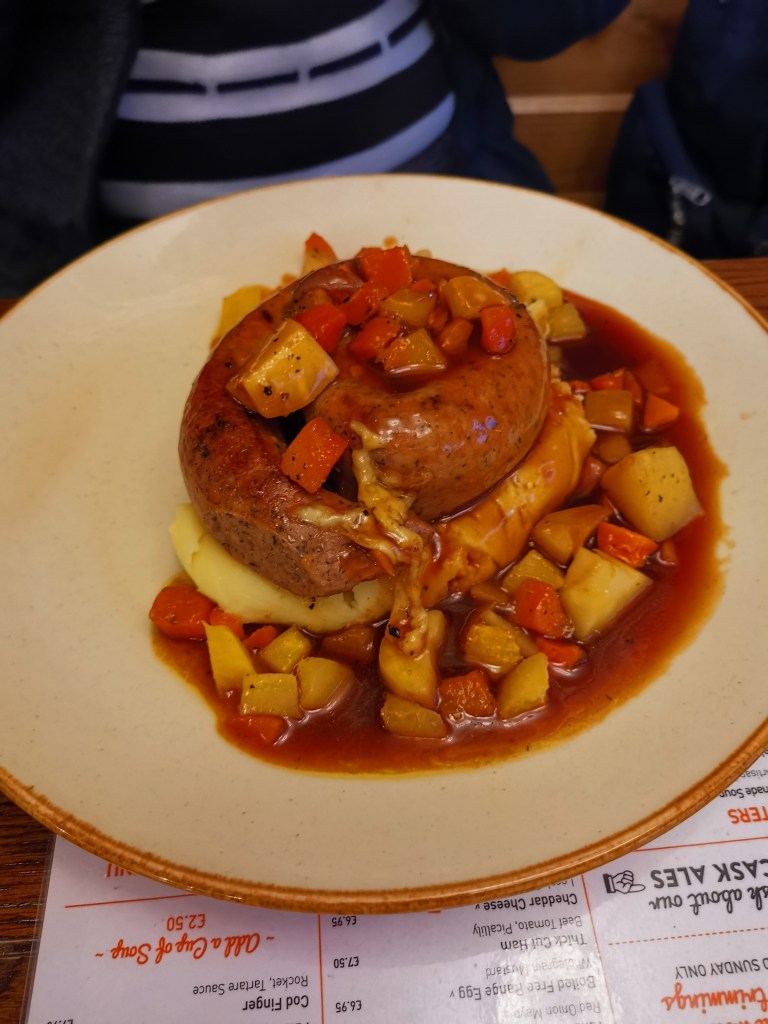
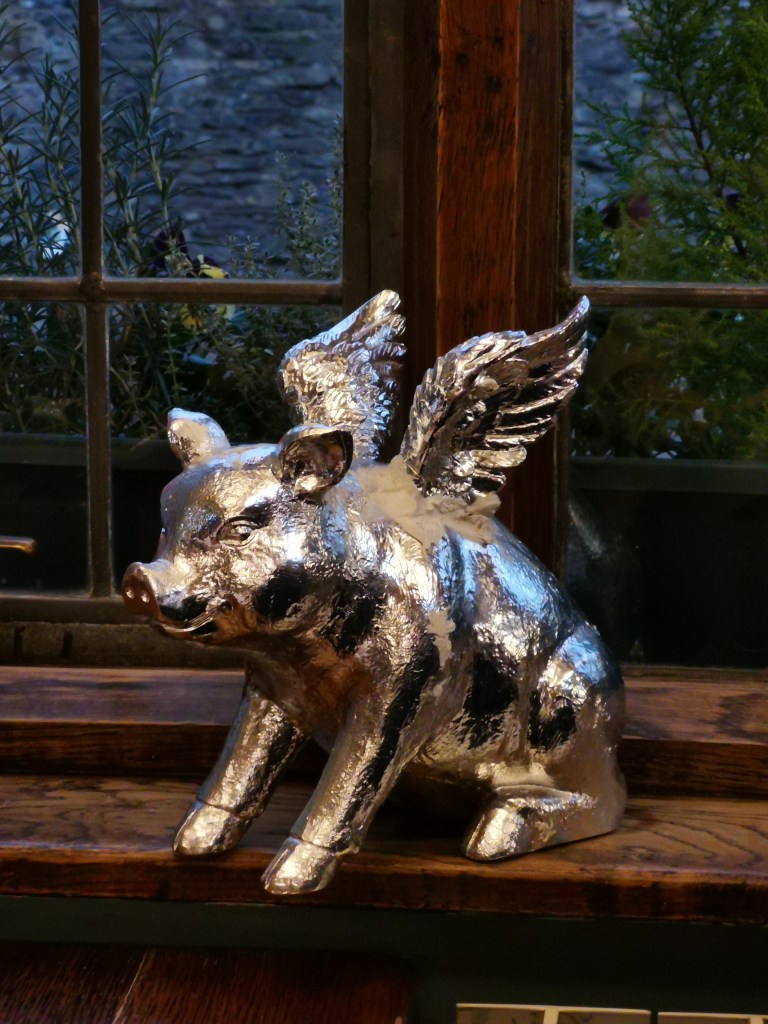
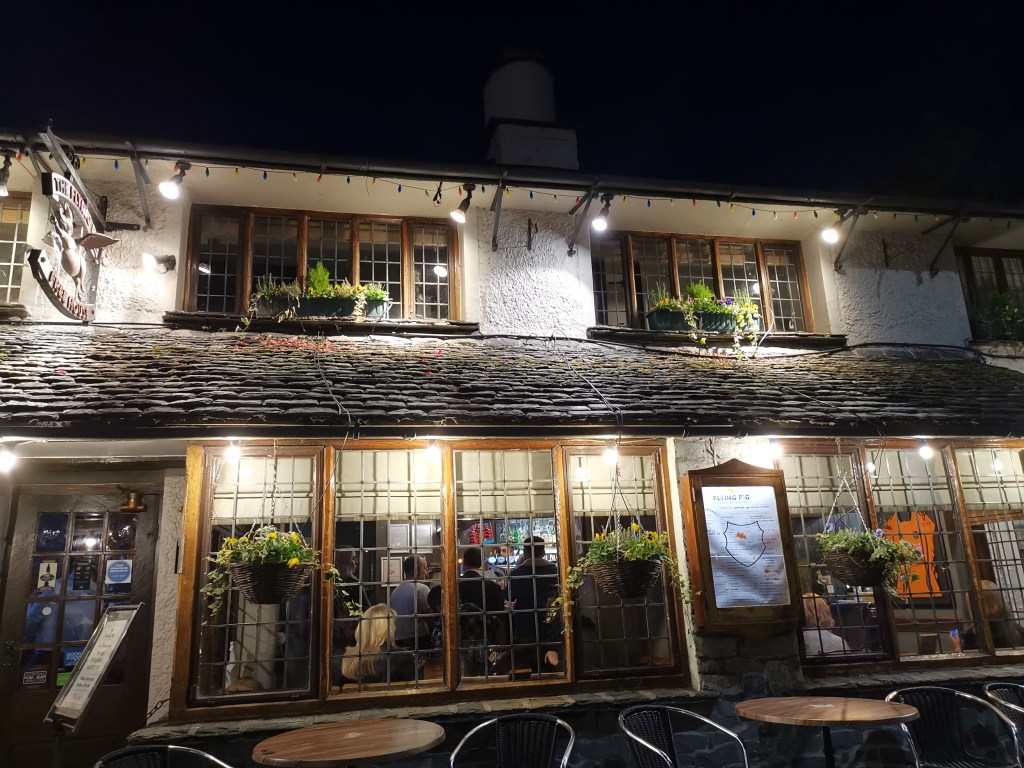
We wandered back up to the Flying Pig pub, which is associated with the Flying Fleece where we ate at lunchtime. It was a similar menu, but that was ok. We knew the food would be good and judging by the number of other diners, the reputation was pretty good. Again we were able to get a table close to the fire. My dinner was the King Prawn, Crab & Chorio Linguini. I didn’t find very many prawns, but there was no shortage of tomatoes and chorizo. Mike and Janice had the Cartmel Valley Cumberland Sausage, which they enjoyed and Karen had the Whitby Breaded Scampi.
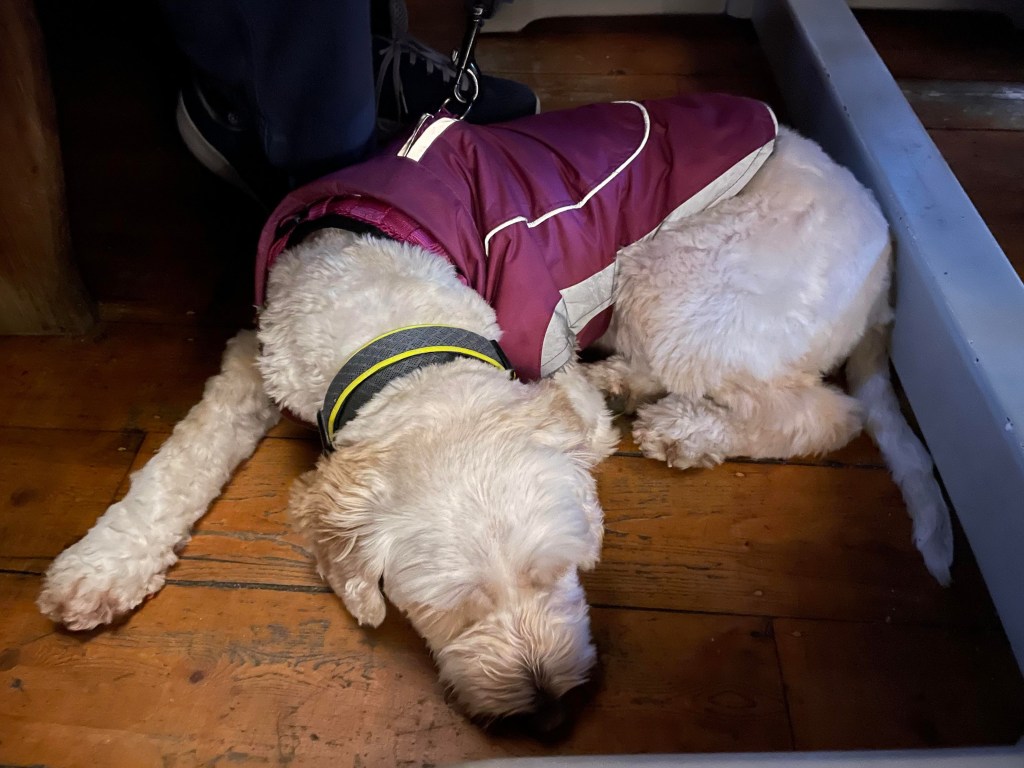
What is lovely is that for Mike and Janice, Lulu can join them. It appears that a lot of cafes/pubs happily let you bring your dog in. Lulu was content to lay down on the floor and fall asleep. I expect the floor was warm thanks to the fire.
By the time dinner was over, it was dark. The little town still had a lovely atmosphere and there were plenty of people around enjoying the atmosphere.
It had been a lovely day in the company of Janice, Karen, Mike and Lulu. I feel very blessed to have their friendship. Mike safely drove us back to Morecambe and The Broadwater Guest House. Tomorrow would be time to say goodbye in the afternoon to Karen as she headed home to Cheltenham. But there would be time for another adventure for the five of us.
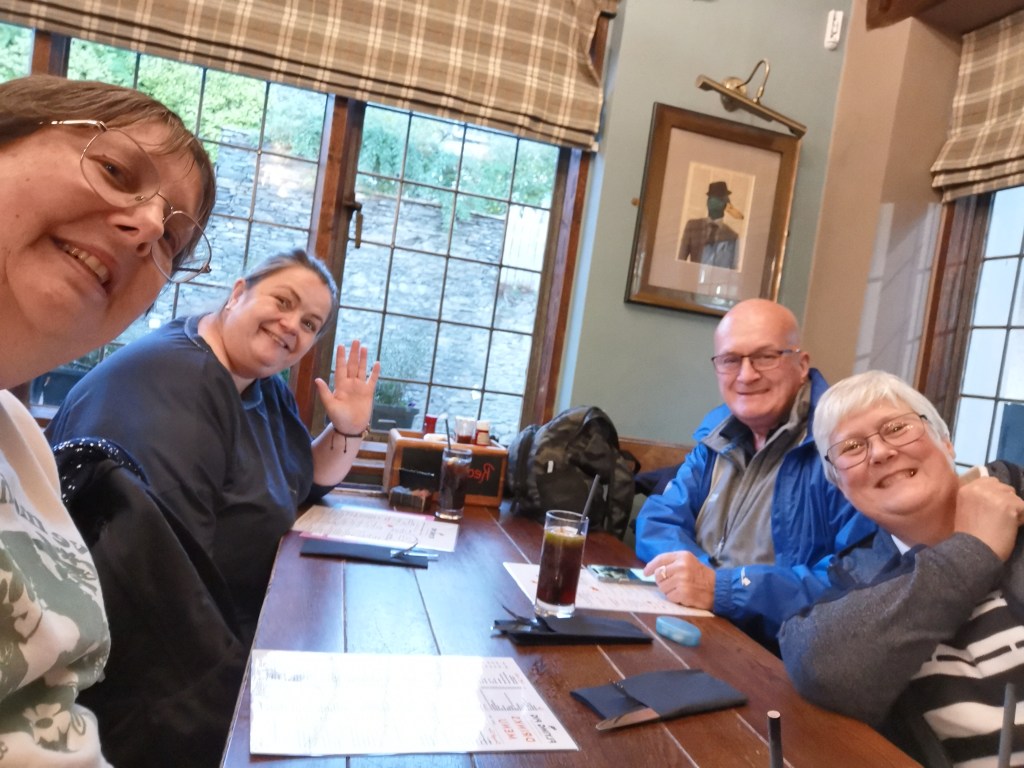
Lovely friends, me, Karen, Mike and Janice. Lulu is under the table.
While Nat and I were in Chester to purchase material from my new favourite store, Abakhan Fabric, Hobby and Home, we wandered the streets amazed at the black and white facades of the shops and the historic Roman built walls and amphitheatre, eating at an historic pub and enjoying each other’s company.
However, there is one building that stands back from the main thoroughfare street and it was definitely worth visiting, The Chester Cathedral.
View of the Cathedral from outside the visitor centre.
The Cathedral belongs to The Church of England and since 1541 the Bishop of Chester has been attached to this Cathedral. It was originally an abbey church for a Benedictine monastery. It was built over a very long period of time, starting somewhere around 1093 and most recently had a bell tower added in 1900s. Services are still held here, but it is open to anyone who wishes to go in and explore, which is exactly what we did.
We came down off the Roman city wall, which we had been walking along and walked around the the Cathedral entrance. It is a beautiful old building and luckily it has is listed as a Grade 1 building, meaning it is protected for the future.
There are a lot of different architectural styles incorporated into this magnificent building, I guess that would be because it has been updated so many times over its history.
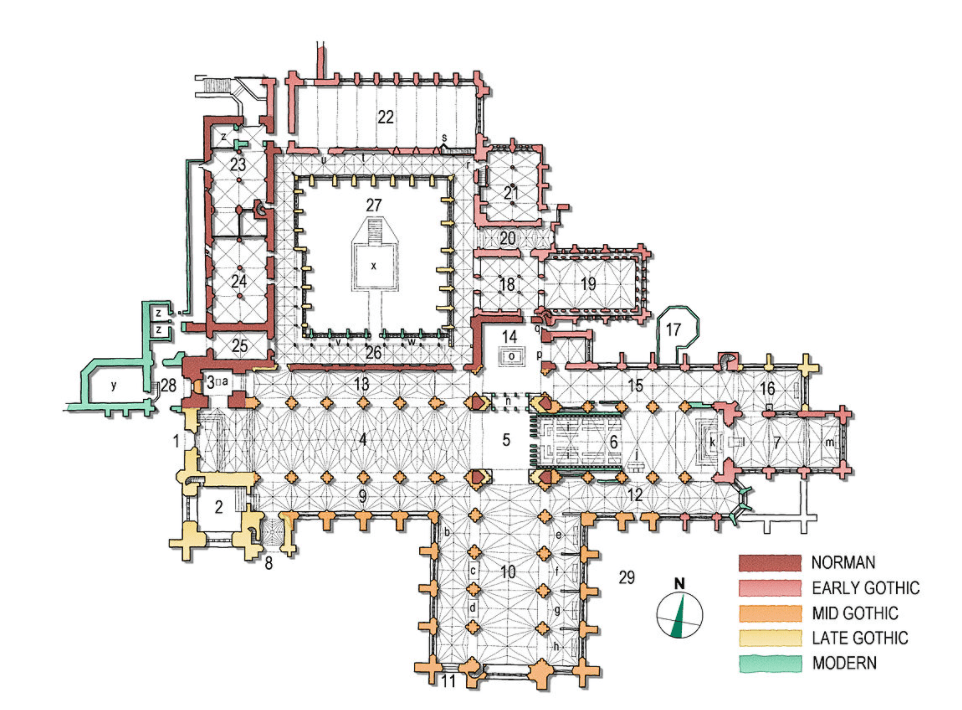
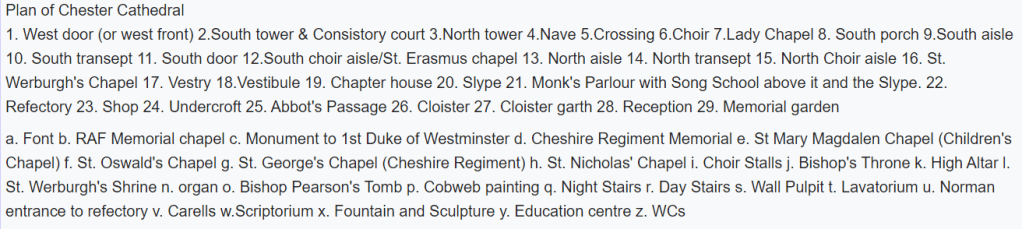
The layout of the Cathedral with architectural styles
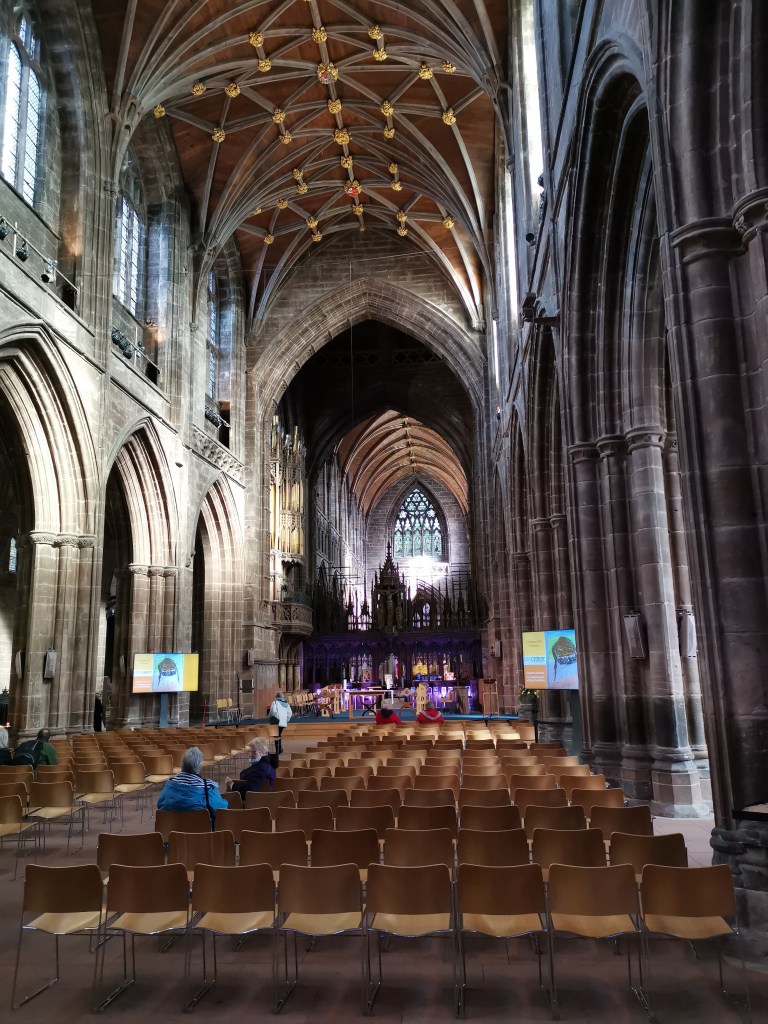
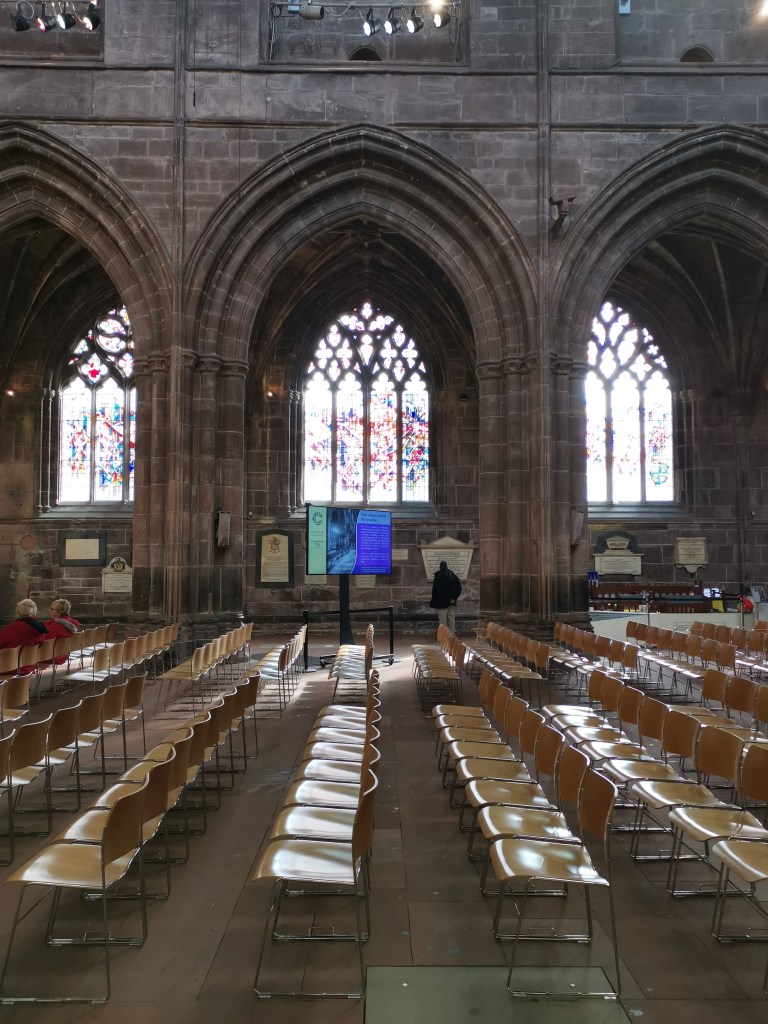
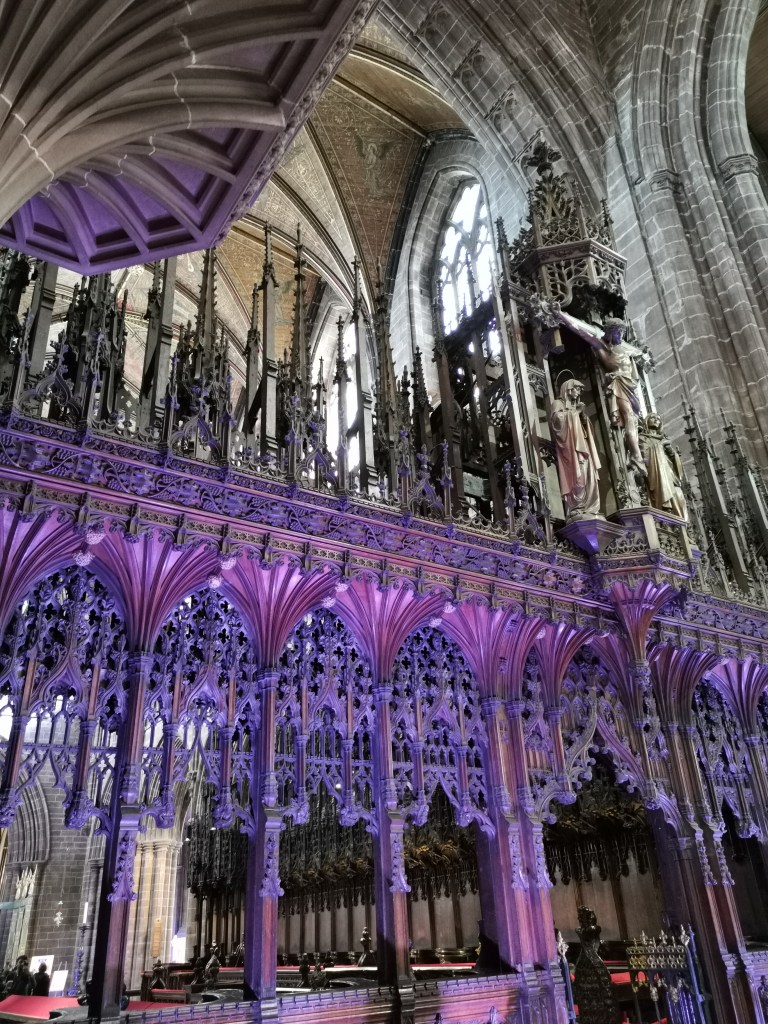
We entered via the South porch (8) and made our way into the middle of the Nave (4), looking towards the magnificent carved woodwork that separates where the congregation sit and the section for the choir (6) and the High Alter (k).. It is a towering space.
The Nave
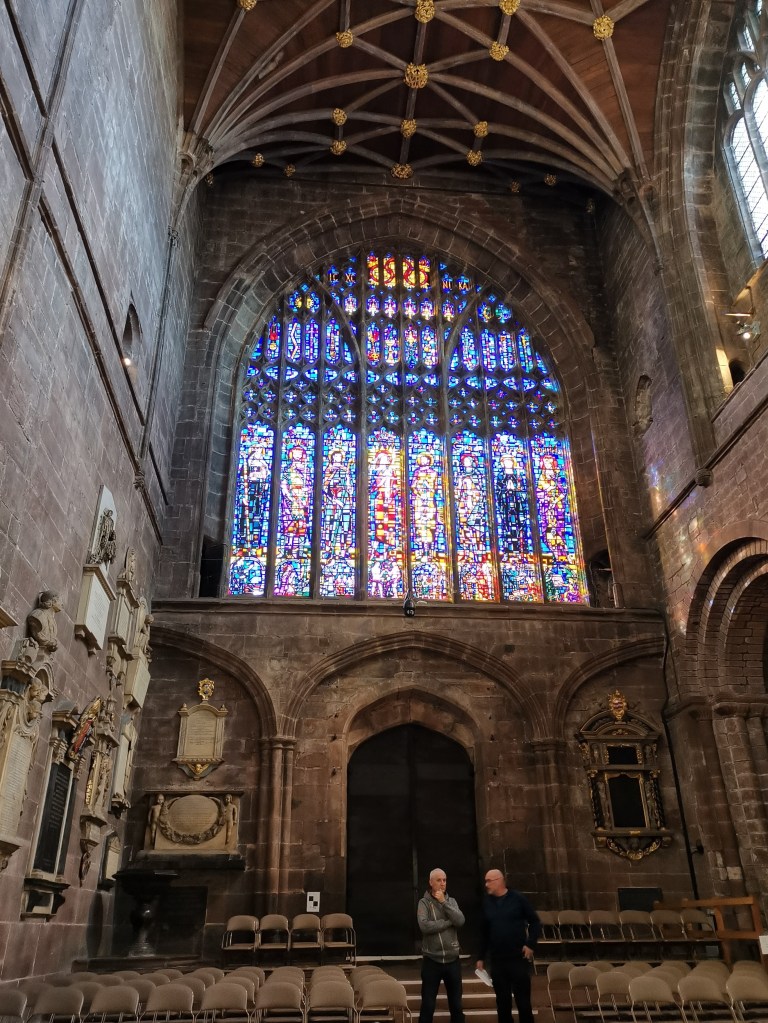
Behind us was the West Door(1) and above that, beautiful stained glass windows to catch the afternoon sunlight.
The West Door and Windows
It is unfortunate that many of the windows were destroyed by civil unrest in the 1600s and replaced many times. These windows above the door date from the 1900s to replace what was damaged during WWII. They depict the Holy family.
Along the northern wall (13) of the Nave were scenes from Biblical stories, tiny mosaic stone work representing many hours of labour. Anyone who has made a mosaic table top will know just how long it takes to cover a small area with pattern. These are massive detailed pictures.
On the Southern side (9) of the Nave are more stain glass windows, these date from 1860. They are beautiful. I don’t think that I have ever seen abstract patterns in windows before, but these are striking.
We walked down the Northern wall and then took a closer look at beautiful carved wood (5)that separates the Choir from the Nave.
The soft purple lighting hides the darkness of the wood
We ventured into the Choir. I asked Nat if she had ever attended an Evensong, where it is possible to hear the choie sing during the evening service. She said she hadn’t. John and I attended one in Salisbury Cathedral and also The Southwell Minster near Nottingham on previous trips to the UK. They are a very unique experience, even if you aren’t particularly religious. Just to sit in the Choir area and listen to the beautiful voices and the service. I would like to give this opportunity to Nat.
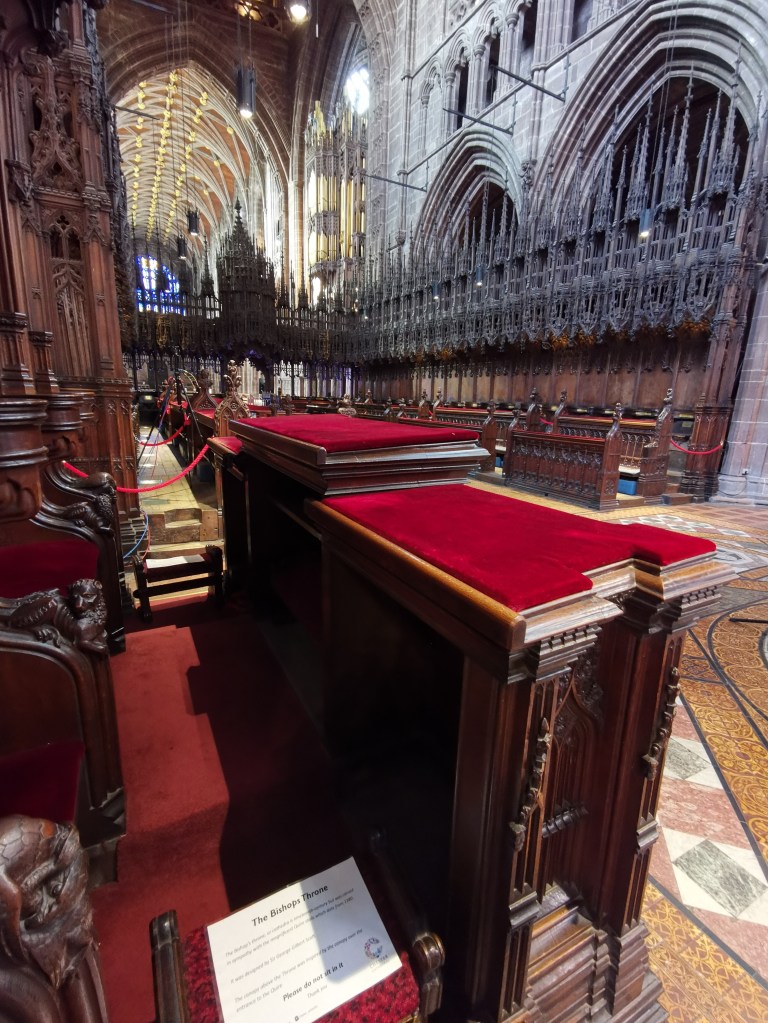
We walk through the entrance into the Choir and spotted the throne like seat up close to the alter. It turns out this is the Bishop’s Seat.
The Bishop’s Seat
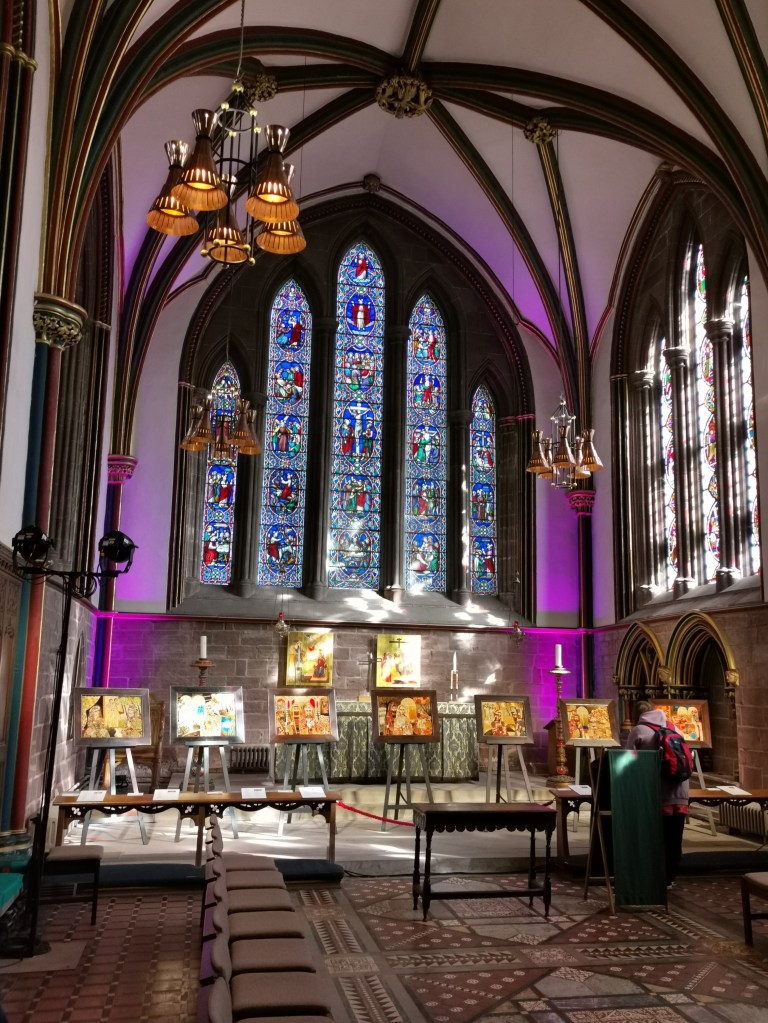
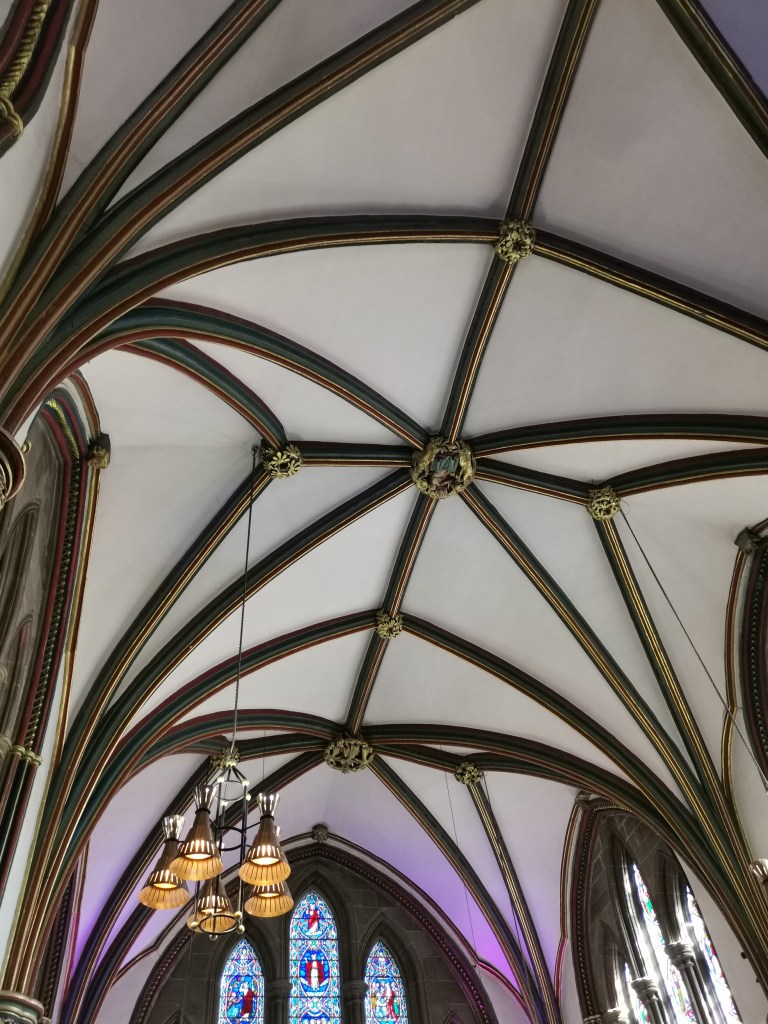
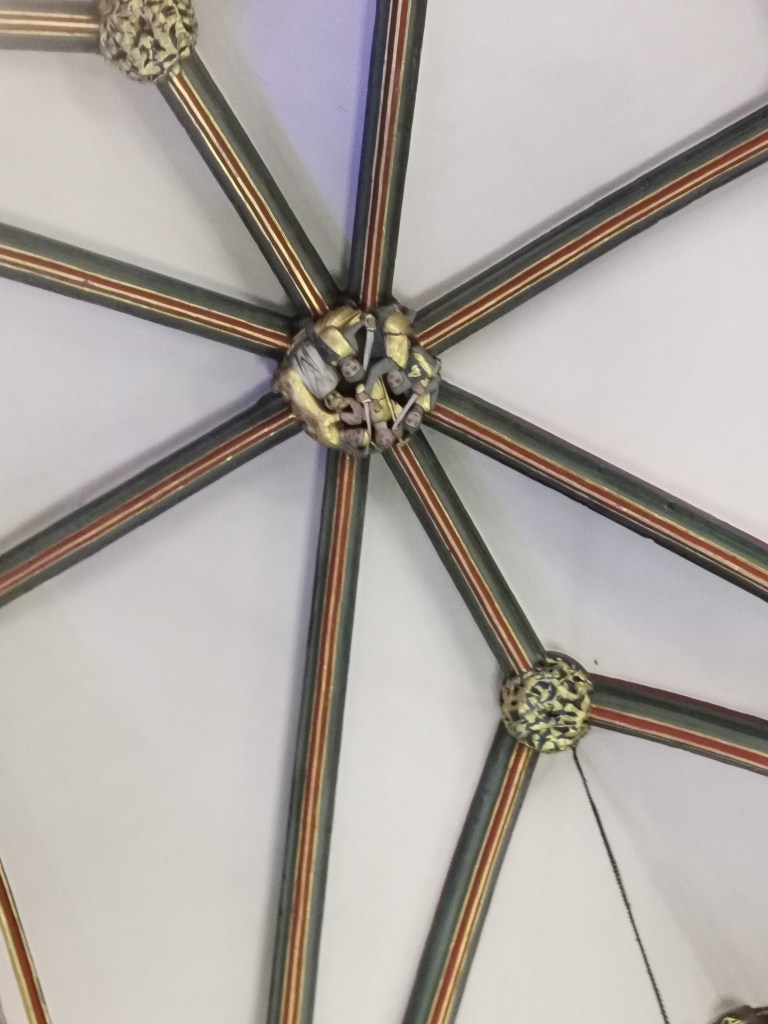
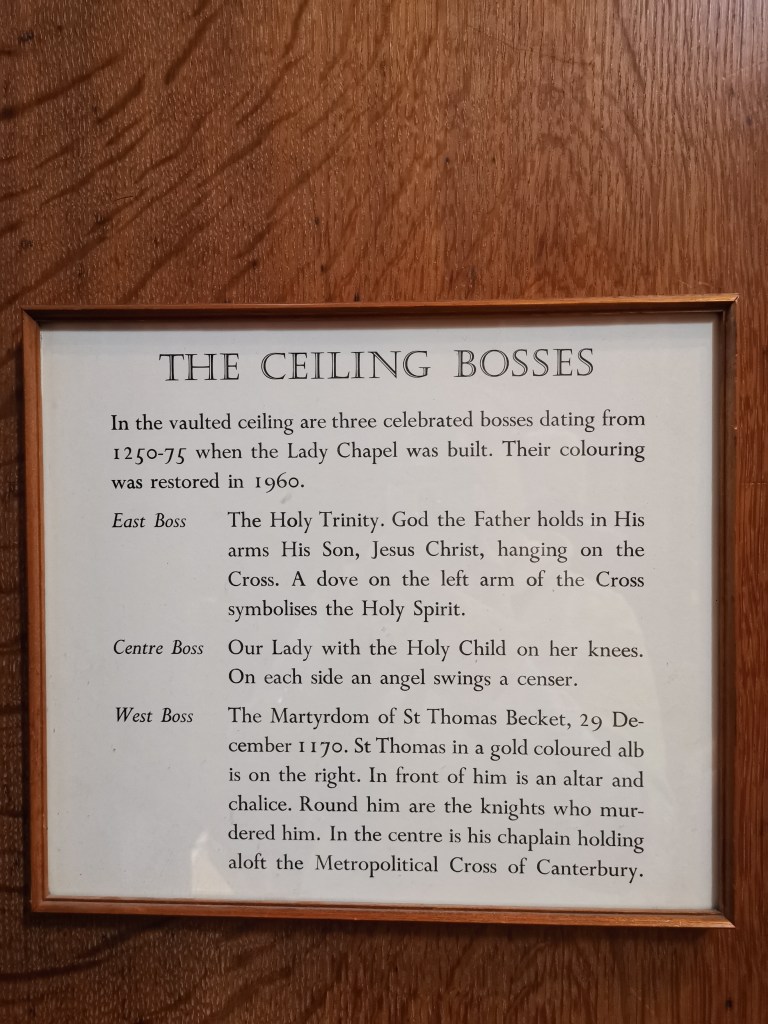
Behind the High Alter, is The Lady Chapel, where again there were beautiful windows and also decorations on the ceilings that they wanted to drawn our attention to. In the peace of the Lady Chapel, was part of an exhibition of Images of Christ from various artists.
Along side the Lady Chapel, in the Northern Aisle was a very old book in a glass case. It was quite hard to photograph it because of the reflection and the lack of natural light. It wasn’t until I read the information alongside the case about the age of the book – written in 1280, that is 741 years ago, that they don’t want photographs taken of it. Not sure why, but perhaps flashes from cameras can damage it. It is an encyclopedia of the world history. The cover is wooden board covered in deer skin.
We left the main part of the Cathedral and walked through to the Vestibule and Chapter House. There was a tour going on in the Vestibule (the left picture with the ornate ceiling). The guide was pointing out the wires that are strung up between different parts of the ceiling and said that they are tension wires. If there is significant movement in the building, the wires will snap and point the to where there could be potential damage. In the bottom of the picture you can see a dark panel alongside what looks like a window. That indicated it was the size of a secret tunnel and if you were small enough to fit through that space, you would be able to go through a secret door and into the tunnel.
It is rumored that under parts of Chester there are many tunnels that lead around between buildings. It is suggested that they could be part of the Roman built sewerage system, rather than a secret way of getting around the city underground.
We decided to finish up our exploring of the Cathedral with a visit to the Refectory for a drink. We walked down the corridor alongside the garden. The windows are dated with events that happened over time.
Once we had had a drink in the refectory, we said our farewell to the Cathedral. It was worth the visit and if I visit Chester for longer than an afternoon, I would definitely visit again. If Nat is with me, I would take her to Evensong too, as I imagine it would be wonderful here.
With the plan of getting back into my creative arts, I wanted to go to a fabric and craft supply shop called Abakhan Fabrics, Hobby & Home.
Previously, Nat and I had gone to the one in Manchester City. Today, we chose their store in Chester.
Chester is about an hour’s drive from home and a place that John and I briefly visited in 2008 when we went on our whirlwind bus tour of the UK. We only got to walk down one of the roads, walk past the cathedral and then get back on the bus. It was a brief stop before we headed into Wales for the afternoon. So I was keen to visit Chester, spending time with Nat, see a bit more of the city, as well as picking up the things I wanted from Abakhan.
We set off from home and arrived at lunch time. We parked outside of the city walls and then walked through to the main streets, making a stop for lunch first.
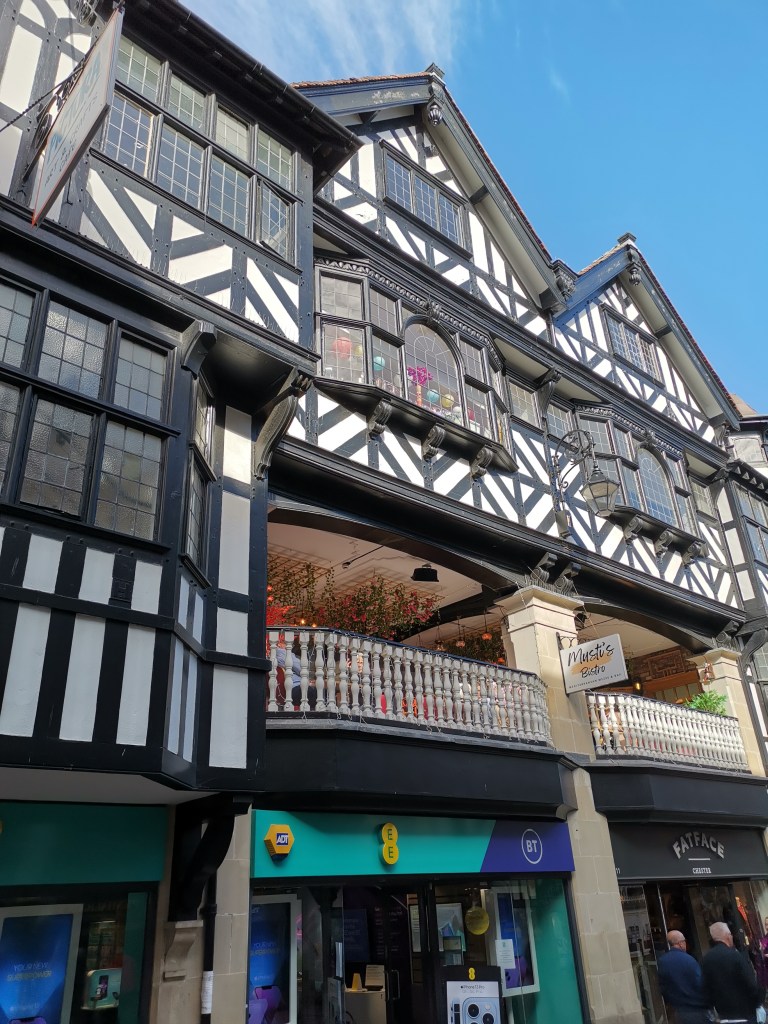
These are some of the sights on our way to our lunch stop. It is quite hard to tell which of the black and white buildings are genuinely very old, from the 13th century (1200s AD) and which are replicas built in the Victorian (1800s) era. It is a uniquely beautiful place with such a range of architecture.
First glimpse of Tudor Style Architecture
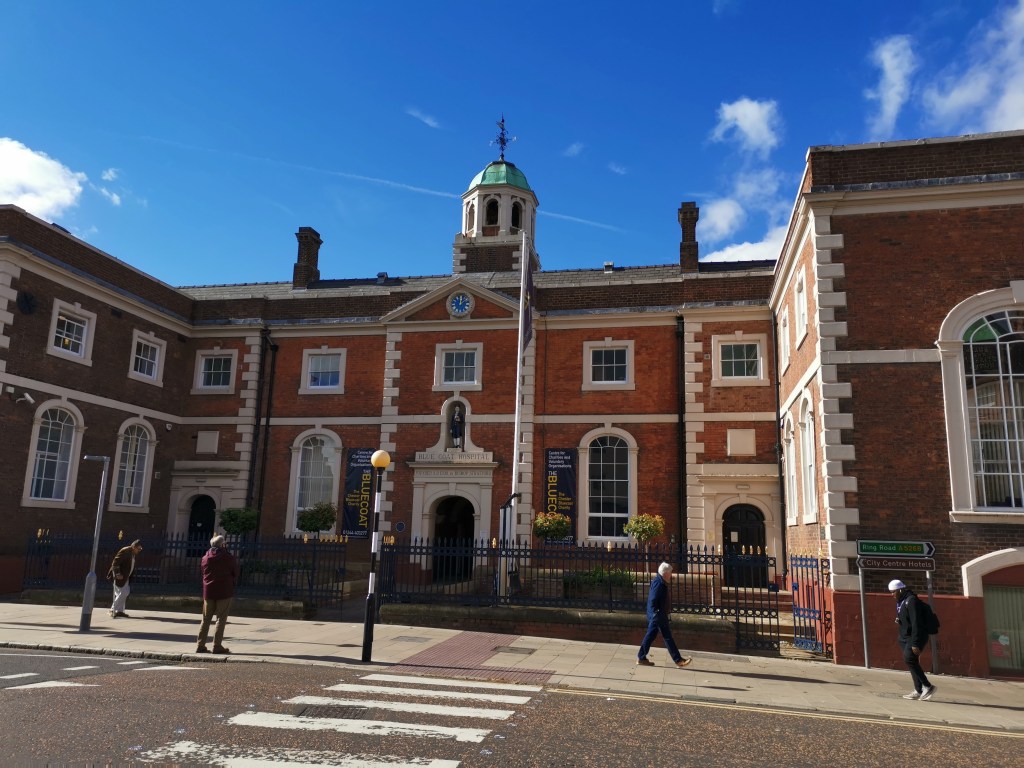
The Bluecoat Hospital built 1700
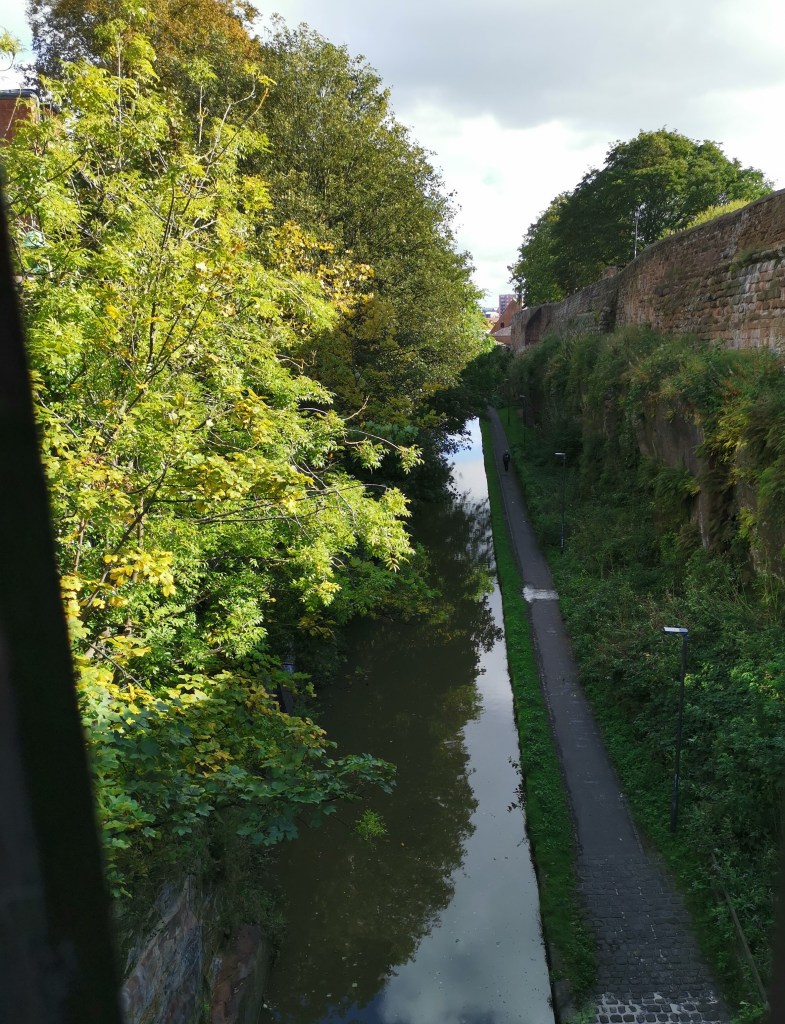
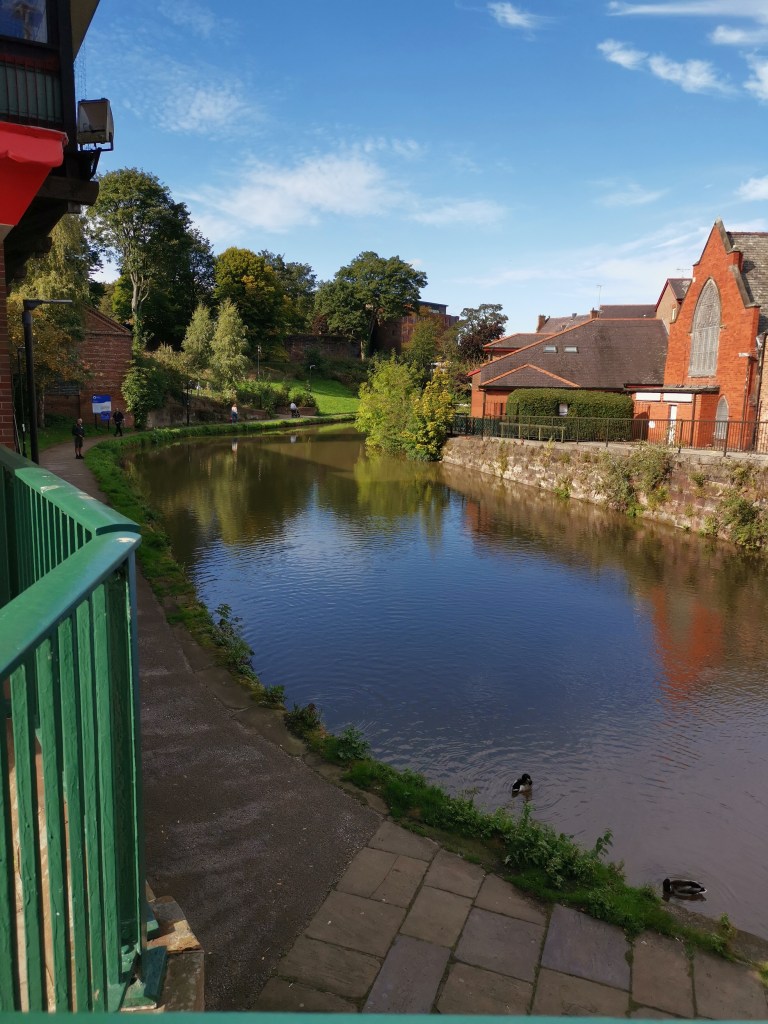
The canal
The Roman Wall Gate
The amazing gateway entrance to within the city walls
Walking through the Roman built gate within the walls of the city, we walked down Northgate Street, which is right through the middle of Chester, where we encountered The Blue Bell, now a Tapas restaurant. Their archway to walk along the front of the restaurant was very low. Luckily Nat and I aren’t too tall, but we still felt the need to duck as we went through.
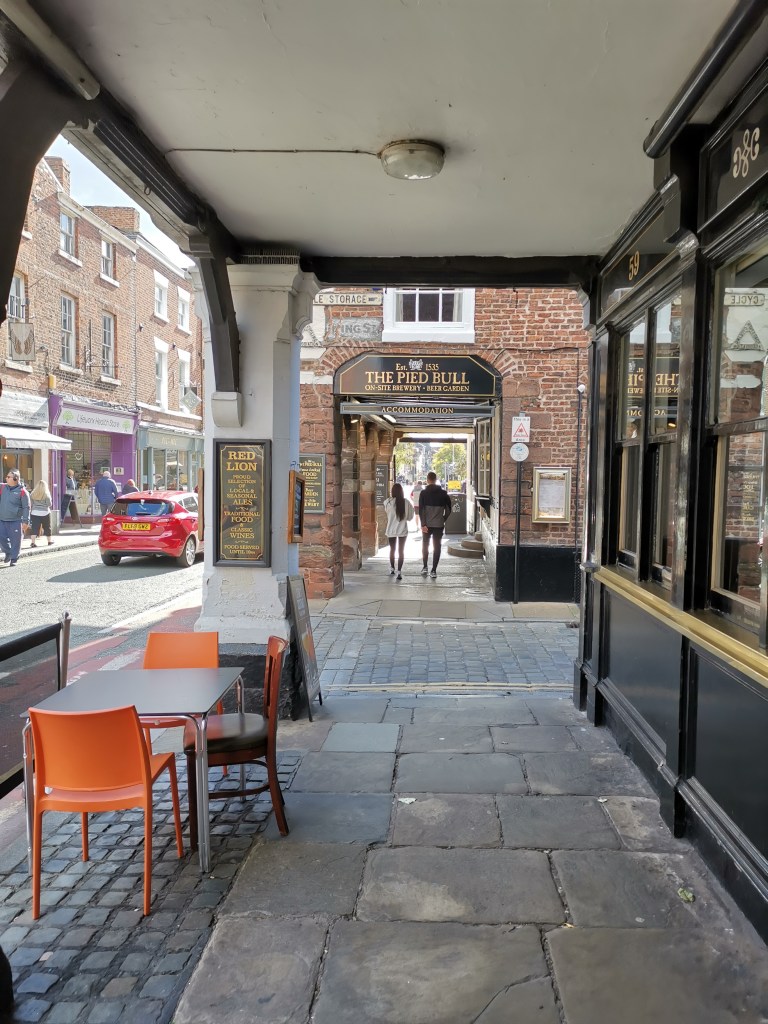
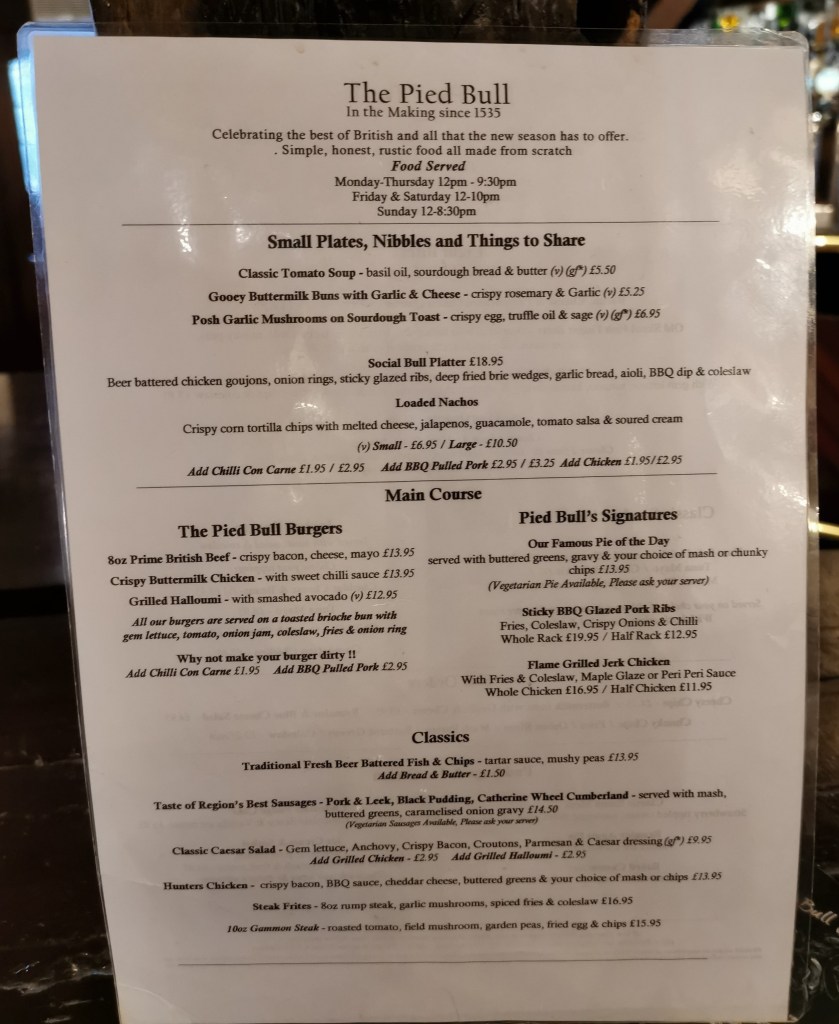
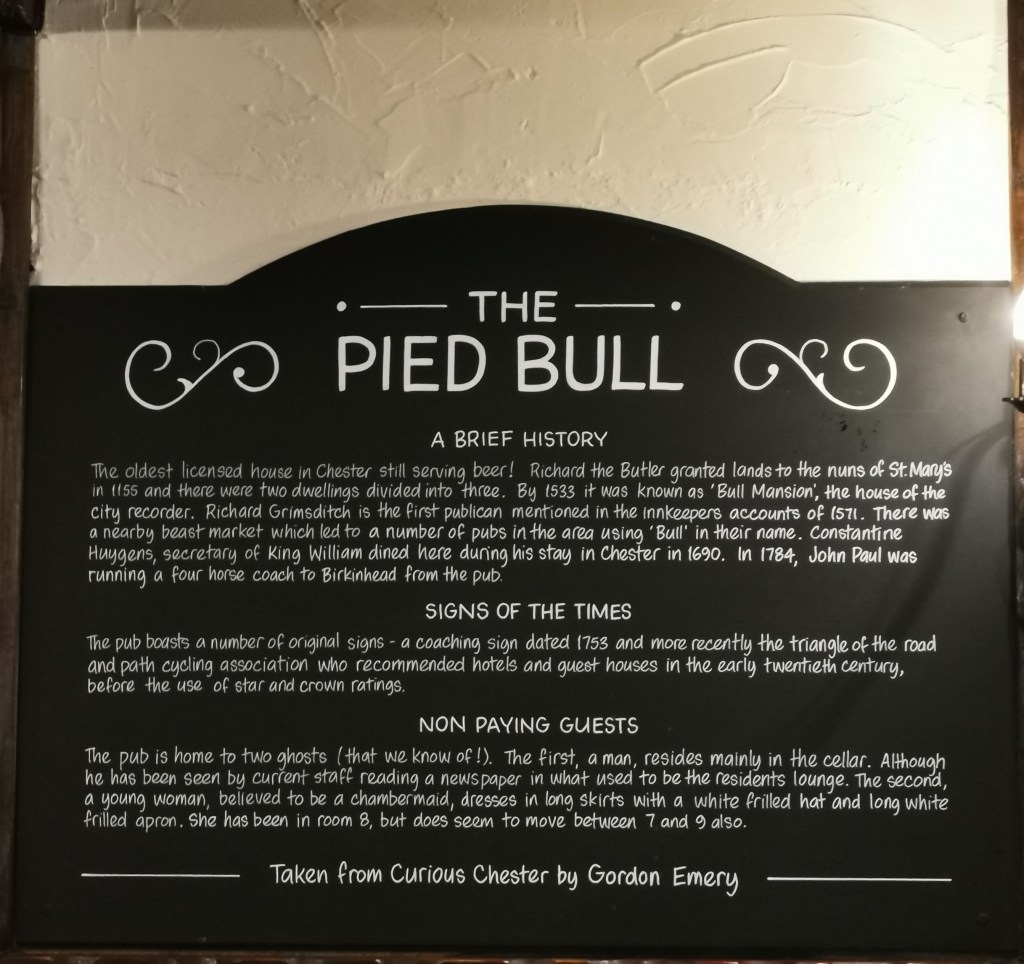
Continuing along we reached The Pied Bull Brewery Pub and decided that it was worth calling in for lunch. We weren’t disappointed by what we found through the door. I love how they had kept so much of the original timber considering it was built in 1473 which is 548 years ago and it is still trading.
Amazing timber, some of which was recovered from sailing ships
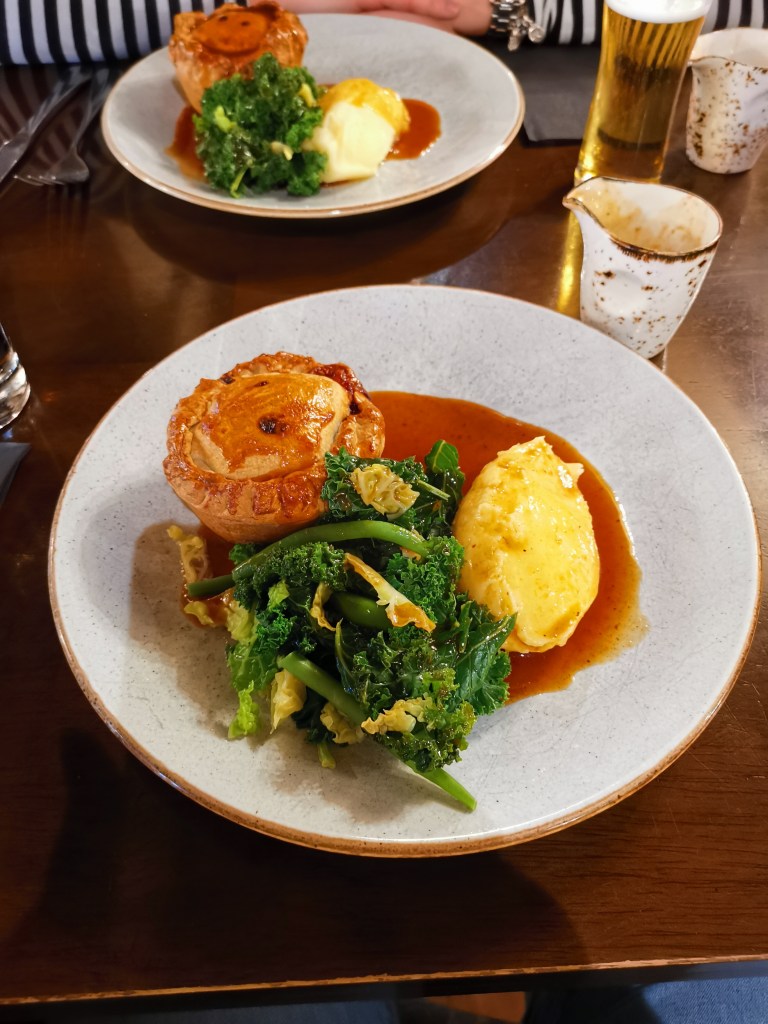
The pub is still producing their own beer, being the only micro brewery within the city walls. Their beer is available on tap, but we didn’t try it However, we did have their steak and ale pie and it was very, very nice. Though, I must say, I could pass on the kale. that accompanied it.
The Pied Bull is also a hotel and it was interesting to see the history sign that said there are two resident ghosts. Nat was not sure she would be keen to stay in a hotel where she might wake up to see a ghost standing at the bottom of her bed.
After the lovely meal, it was time to go exploring. We called into the information centre where we picked up a map of the city which included the self paced walk. Because we were on a whirl wind visit, we wouldn’t have time to take the walk, but we picked a couple of things that we did want to see, such as the walls, The Rows and the Chester Cathedral (separate blog).
The streets where a combination of modern everyday retail outlets nestled under the amazing black and white of the Tudor styled architecture.
The Rows are a so different to see too. These buildings have a walkway that links the neighboring shops together, up above the ground level of shops.
In this section of the rows, you can see above the Ernest Jones store that there is a Lakeland Store. Some of them have restaurants on the upper level too.
There is very little noise from traffic as many of the streets were for pedestrian traffic only. It made for a lovely atmosphere, especially as there were several buskers playing beautiful guitar music. We wandered the streets, some of which were still cobblestones, allowing me to take plenty of happy snaps.
One of the shops I had been told about is the York Roast Company, where they wrap roast meat into a Yorkshire pudding wrap – The Yorky Pud Wrap. We were very tempted to pick up take away for dinner as the roast pork crackling looked amazing. But we thought that the pudding would probably be very soggy from the gravy if we made it travel from Chester back to Manchester in the car. So, we only got to drool at the window.
Oh, if only we hadn’t already eaten lunch!
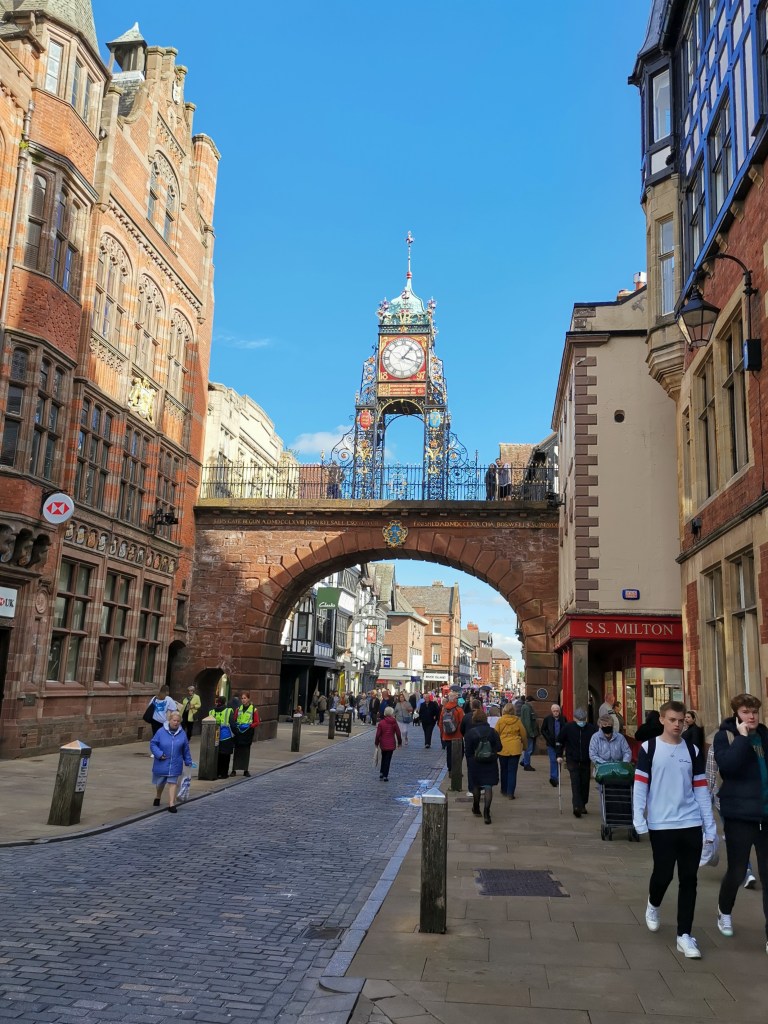
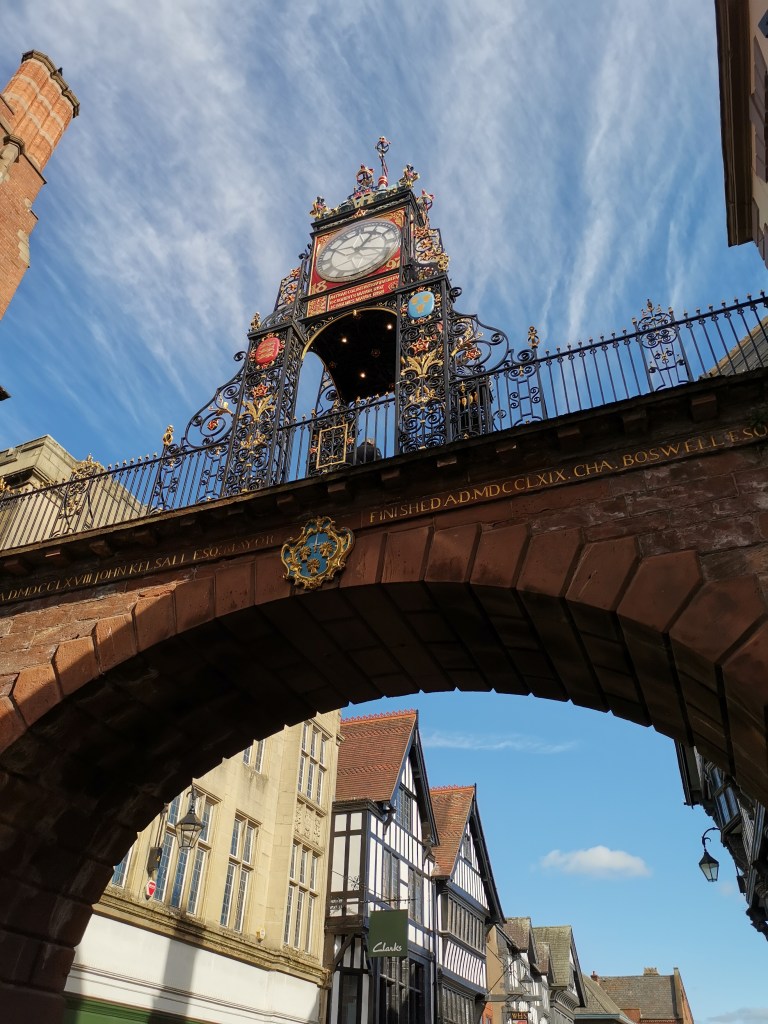
To reach the Abakhan fabric store, we had to exit the city walls and that took us through another gate, The East Gate with the clock on top. Along the top of the gate was the information about when the gate was built. The information was in Roman numerals, which neither Nat or I could read and mentally convert into a year. Thankfully, Google can help with that. AD MDCCLXVIII is 1768 and AD MDCCLXIX is 1769. Not a Roman era, we were a little disappointed. Then we saw the blue badge that explained things, including that the clock on the top wasn’t ancient, being from the 1890s. We also crossed over the canal again. Our destination shop was beside the canal.
Not from Roman time
The Canal
Once we had completed our shopping at the Abakhan fabric store, buying beautiful material for me to create with, we returned to my car to off-load the shopping. Then, as it was still quite early in the afternoon, we decided to go up onto the city wall for a walk.
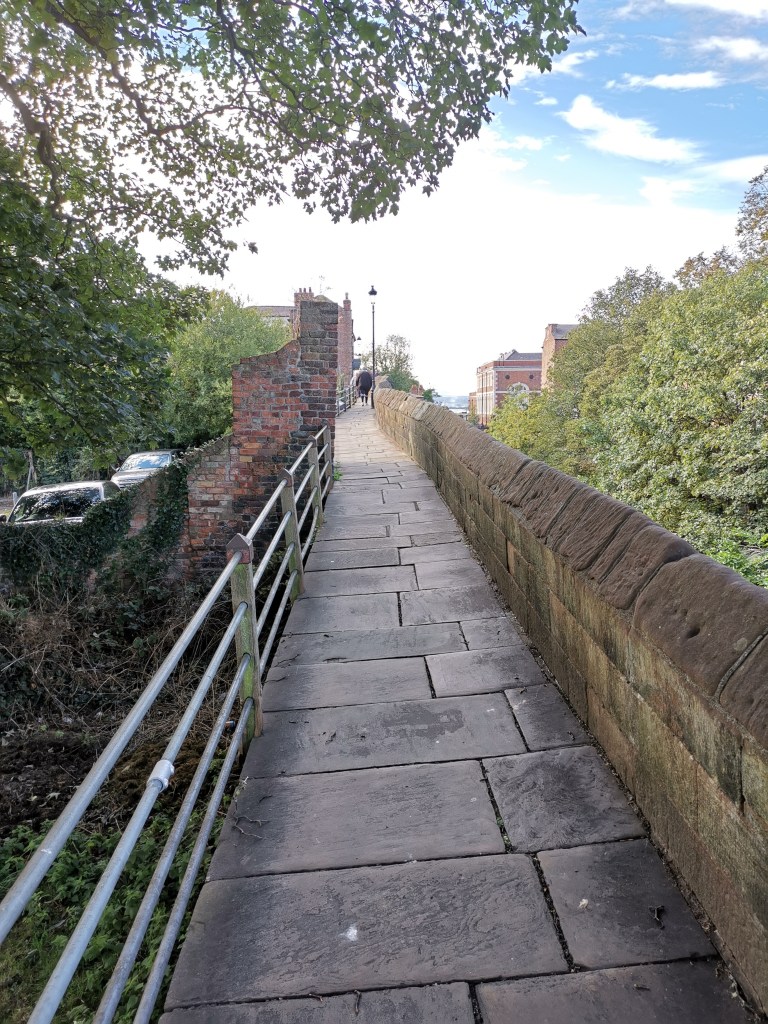
Parts of the wall are 2000 years old and Chester is the only place in Britain that has a completely encircling wall. Luckily, it wasn’t too busy as is quite narrow and the paving stones slope towards the inside of the wall.
A lovely open space below the wall
Up on the wall
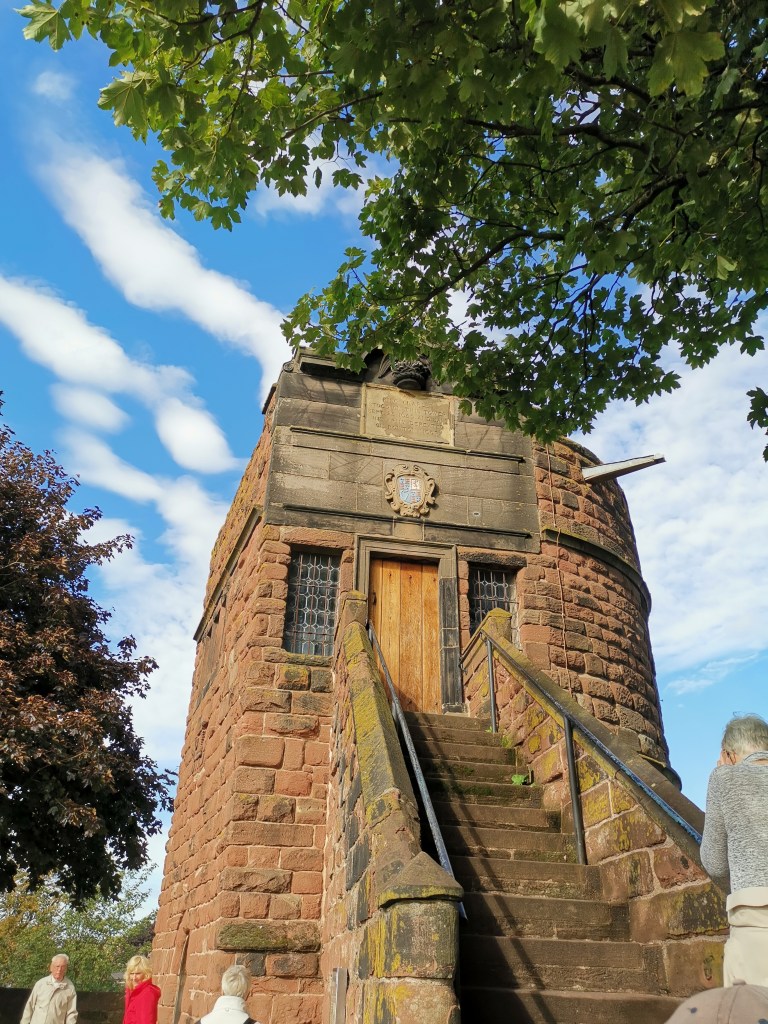
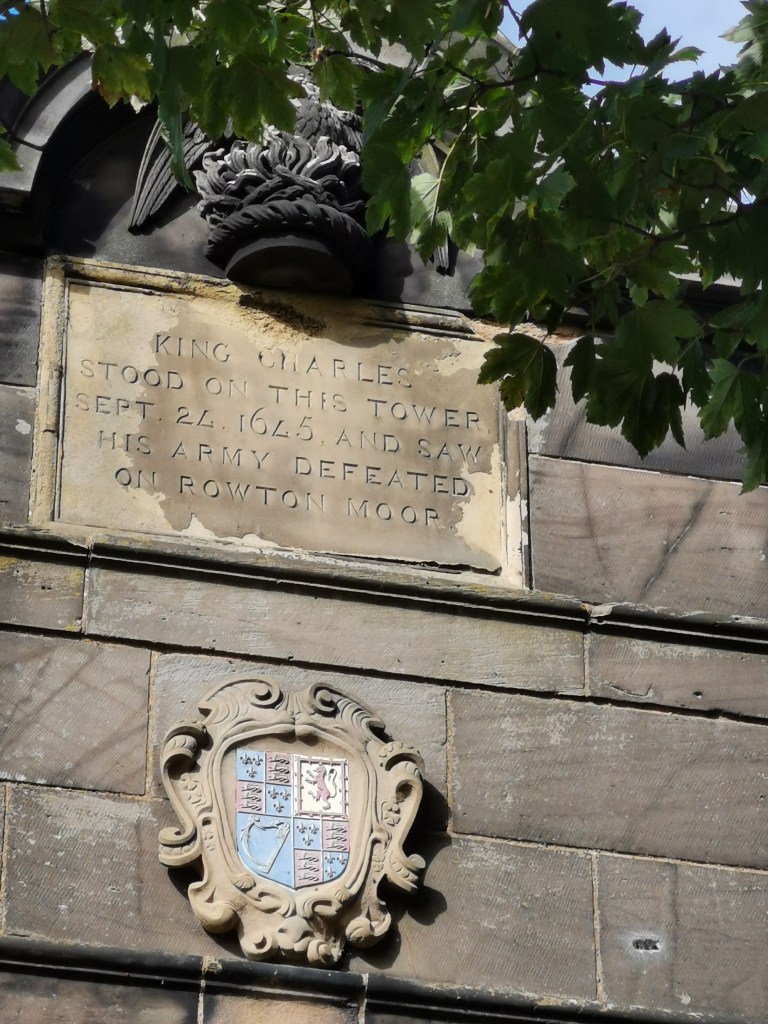
King Charles Tower
Plaque on King Charles Tower
Looking down on the park within the wall, we spotted several squirrels, including this one who we watched dig a hole and bury the nut it was carrying. For an Aussie, it is so cute to see these little pests scampering around. They are very cute.
Once we reached the sign indicating that we were close to the entrance to the Chester Cathedral, we came down from the wall to visit. We had a feeling that it was going to be beautiful inside. We weren’t disappointed. If you would like to see the highlights of the Chester Cathedral, please visit the Blog Post about this magnificent building.
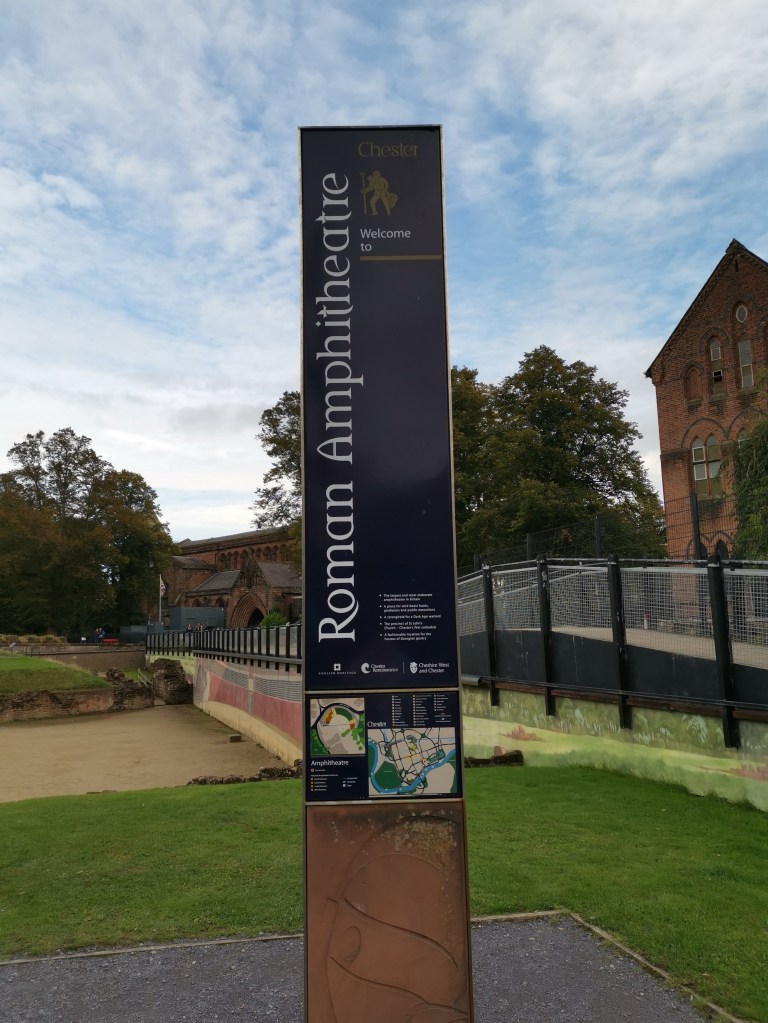
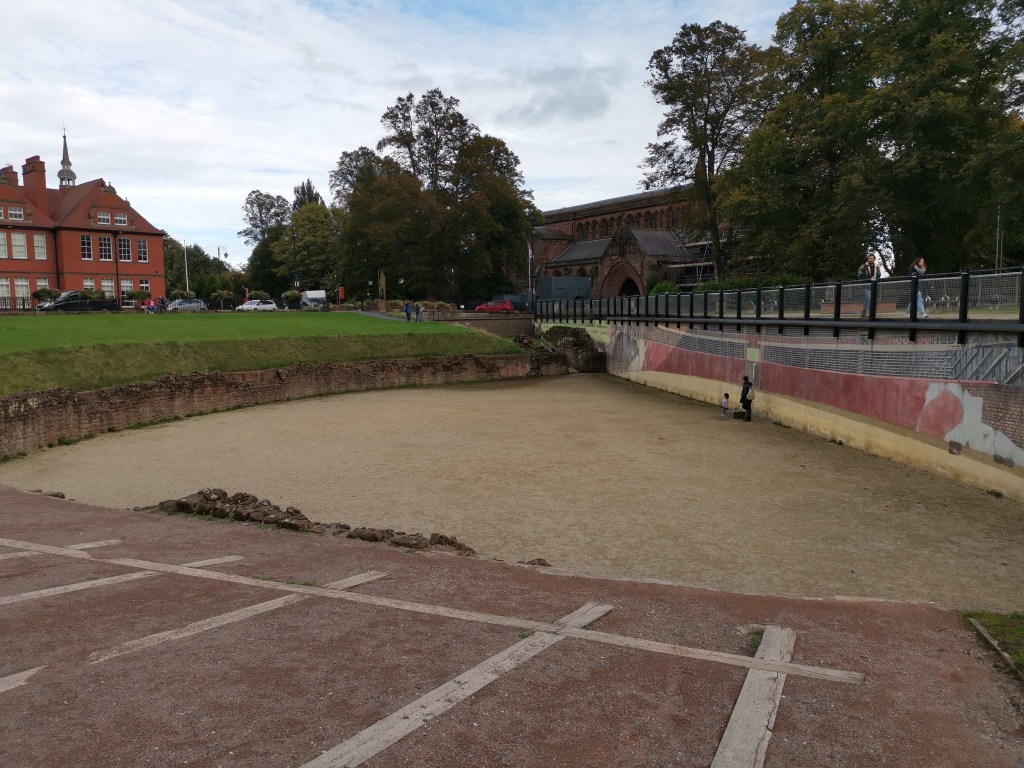
After our visit to the Cathedral, we went in search of the remains of the Roman Amphitheatre. It is possible to see the brick work that would have been under the raised seating. I expect that they used to be higher, but the stones were removed for other buildings, so not much was left. It is the biggest Roman Amphitheatre in Britain and could seat 7000 spectators.
The walls under the stands
The Amphitheatre
After all the walking we had done, both of us had tired legs. So, as the afternoon had slipped away, it was time to make our way back to the car park. This had been a fantastic visit to Chester.
There is a lot more to explore in Chester, but it was time to now drive back to Manchester before the peak afternoon traffic started to build. Next time, an overnight stay would allow more time to take the guided walking tour and other sights. Maybe a stay with the ghosts? And next time we are there, I will definitely have to have a Yorky Wrap.
The Weather App on my phone said that it was going to rain all day with the afternoon being the heaviest. So it looked like an inside Sunday afternoon rather than being able to take my car out for a drive.
However, Mother Nature decided to play nice. When Nat let us know that swimming had been cancelled because of a heating issue with the pool used for toddler lessons, I rechecked the Weather App and it now said that it was only going to rain at 3pm. So that meant we could go out for a drive.
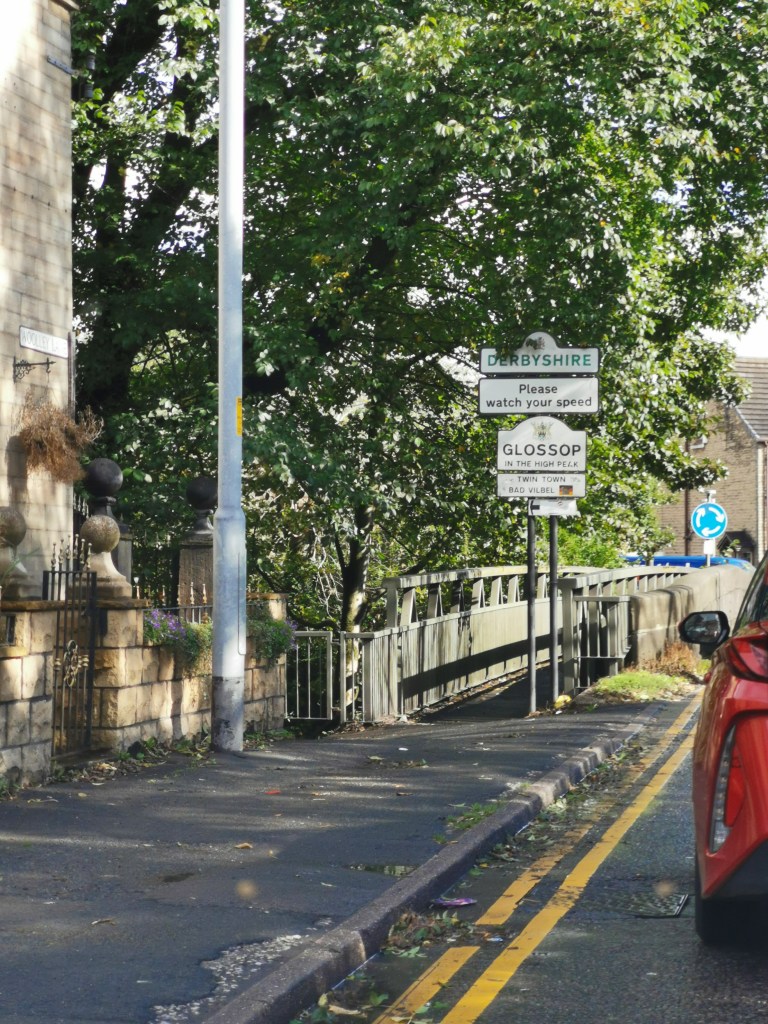
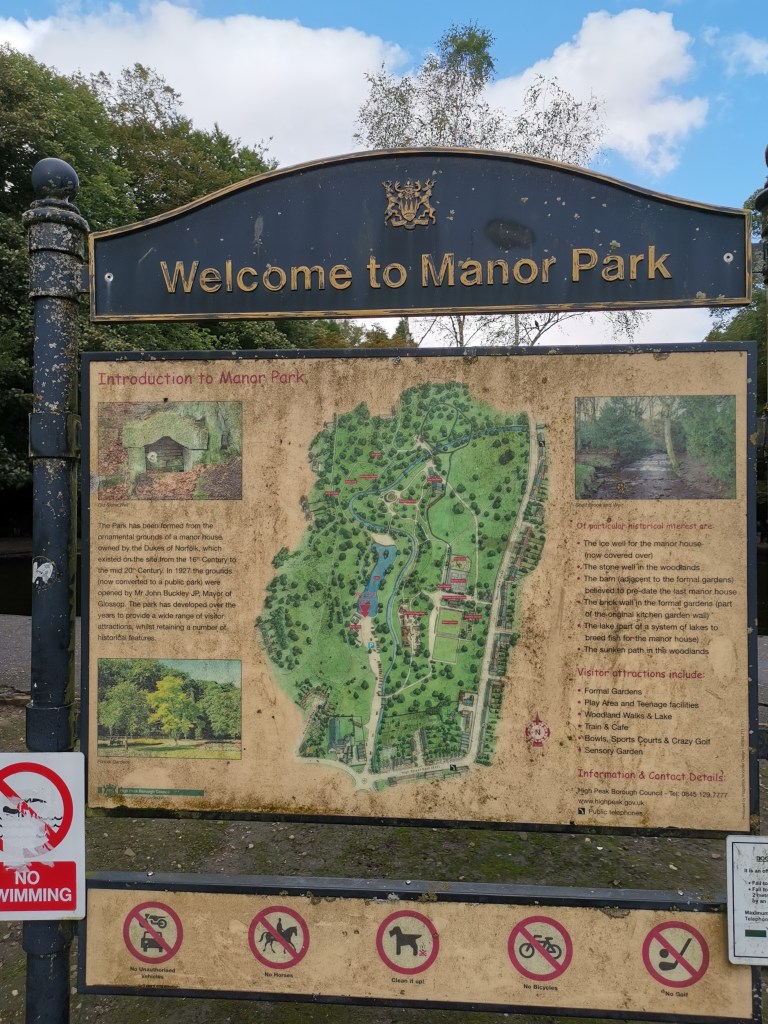
Glossop is a town on the edge of the Peak District, a beautiful area of countryside about 40 minutes from where we live. There is a park, which includes a playground, called Manor Park which had a recommendation from another Nanna I met. That sounded like a nice place to check out. Nat and Mark where ok with that as somewhere to go for the afternoon.
Although Alex hadn’t had his usual afternoon nap, we thought if he wanted to have a sleep, he could in the car. Nat wanted to drive, which was fine, as it gave me a chance to see the pretty countryside coming into view as we travelled along the motorway.
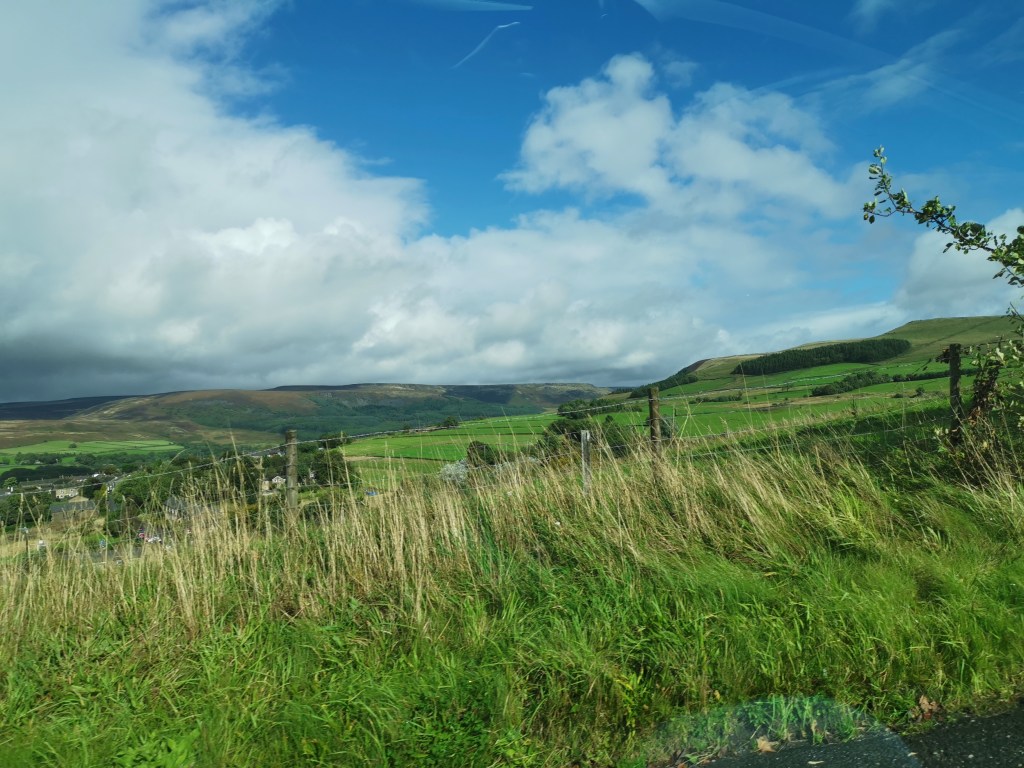
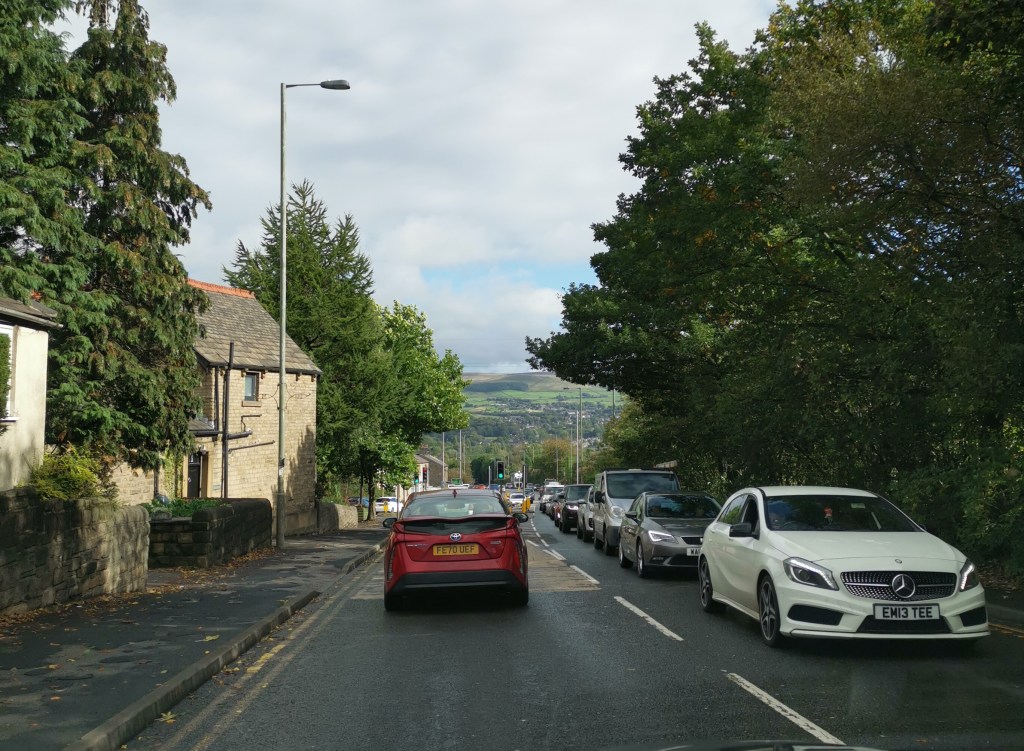
The traffic was very heavy. It seems that a Saturday, when it isn’t going to rain until later in the afternoon, is a very good time for a lot of people to head into the Peak District. So there was quite a delay getting off the motorway onto the road to head towards Glossop. This is a beautiful part of England and it is very close to major cities like Manchester. Plenty of moors, pretty historic towns and a much more relaxed pace.
It was a bit tricky following the Skoda’s GPS/Sat Nav directions, as it wasn’t very precise about how to get to the car park for Manor Park. Luckily Google Maps is readily available on our mobile phones, so we were able to find the car park with more detailed instructions. As we drove around to the car park, we passed tiny streets and historic buildings. A photographer’s delight! I’ll add it my list of places to go wandering for my blogging.
The rain that had happened over night make everywhere a little muddy. Puddles are a delight to Alex and there were a few, along with soggy autumn leaves. I am waiting for my belongings to arrive at the end of this month, so I can be reunited with my hiking shoes. Currently, I am wearing runners which get muddy really easily, so I have to avoid joining Alex and jumping in puddles.
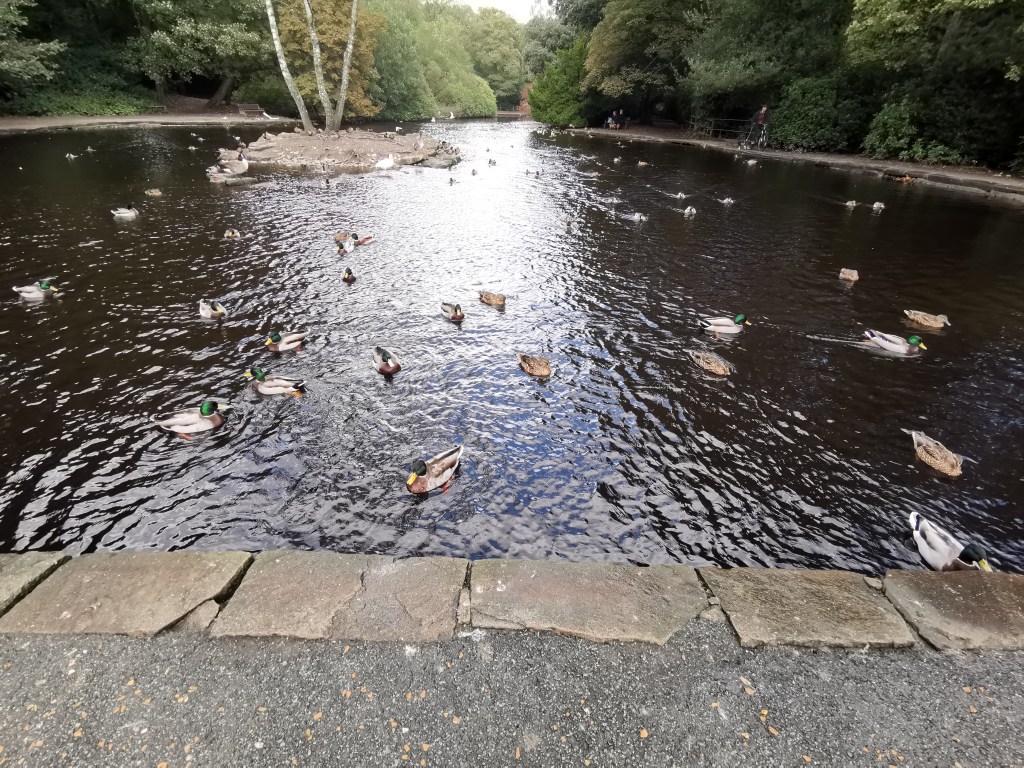
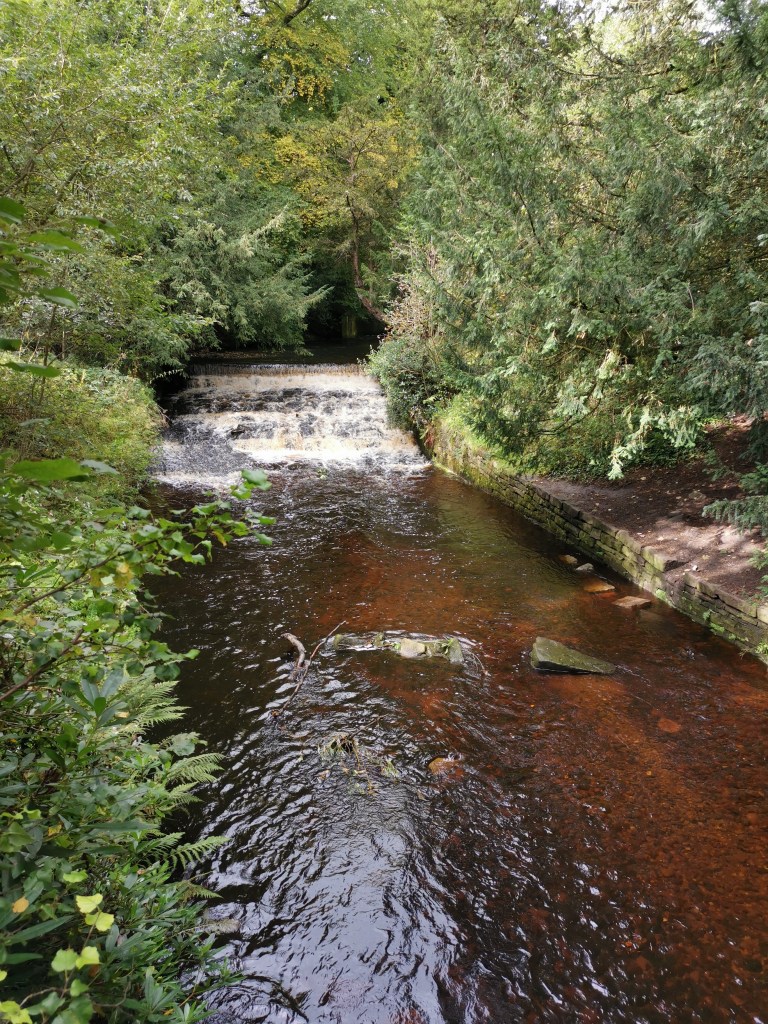
The sound of running water welcomed us into the park, with a fast flowing stream passing through it and a lake with very hungry ducks on it. As we walked towards the lake, we had a following of ducks who were hoping we had brought food with us. Sorry ducks, not this time, but if we come again, we will bring our bread scraps for you.
Unlike the other parks we have visited, this one isn’t part of a historic home, it is a park that was set out as part of a hall in the 1700s. When the hall was demolished the land was kept by Glossop to be a public park.
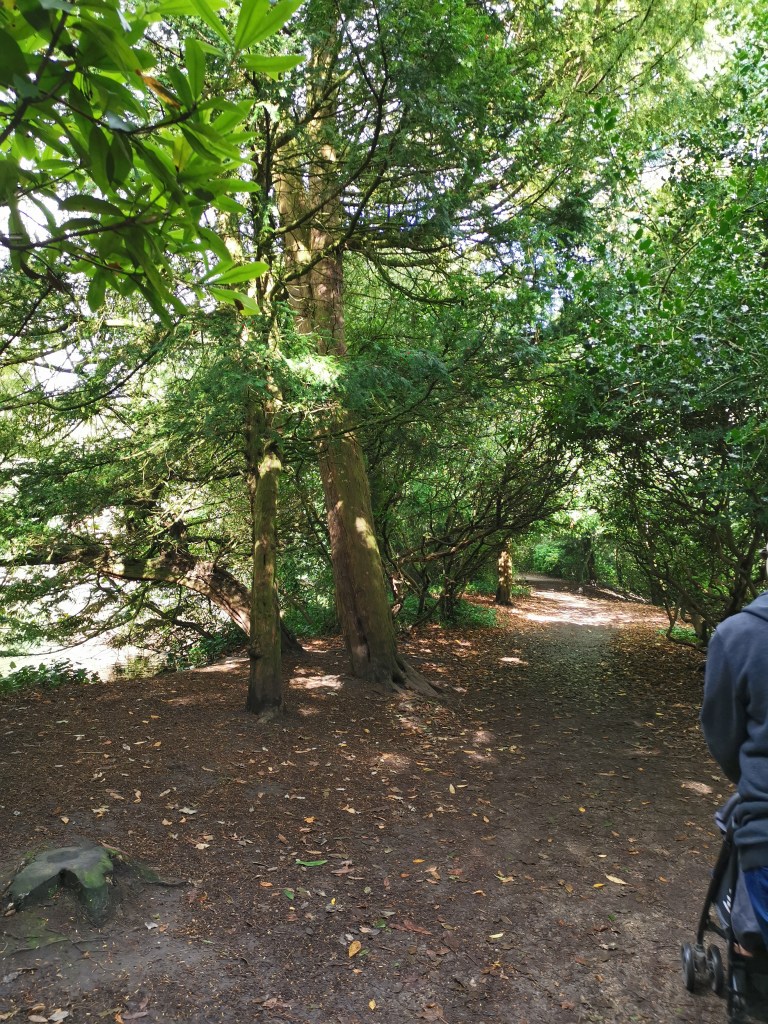
Once we crossed over the stream and walked through the woodland area, we reached the pretty gardens on the other side.
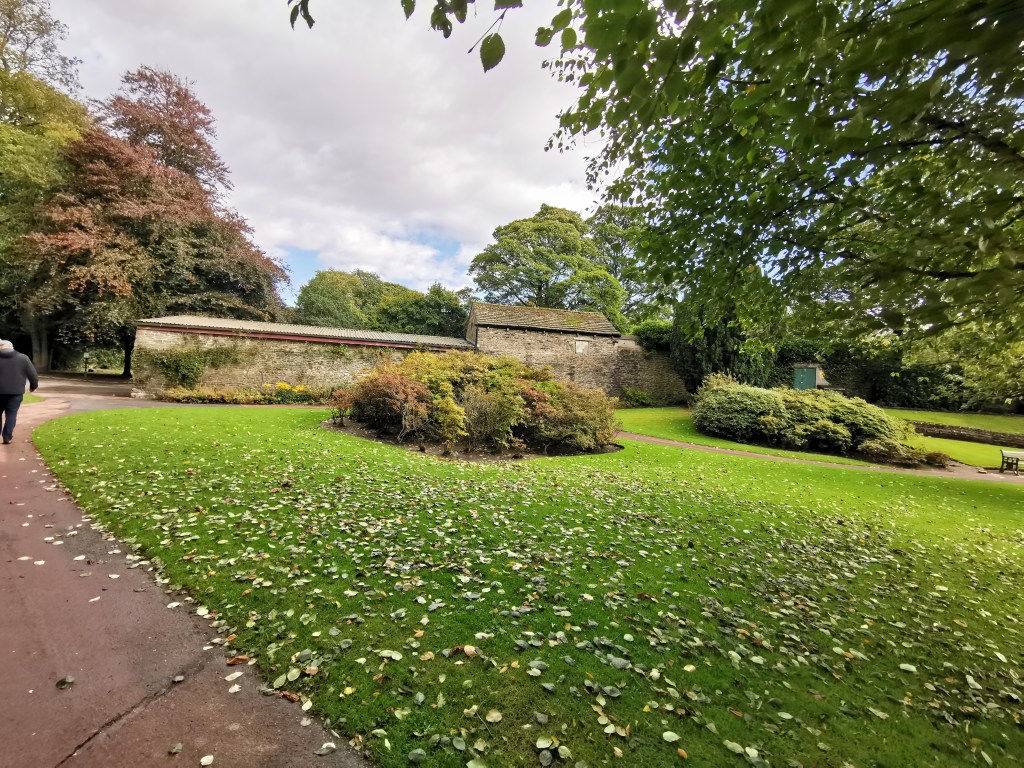
One of the things I like about the gardens that I have seen so far over here, is that they combine the woodland areas with the manicured gardens. This one also has several different sporting areas, as well as a kids playground that are all linked by quite good paths and trails. We found that this park also has a mini-golf course. That could be fun once Alex is a bit bigger.
Mini Golf course
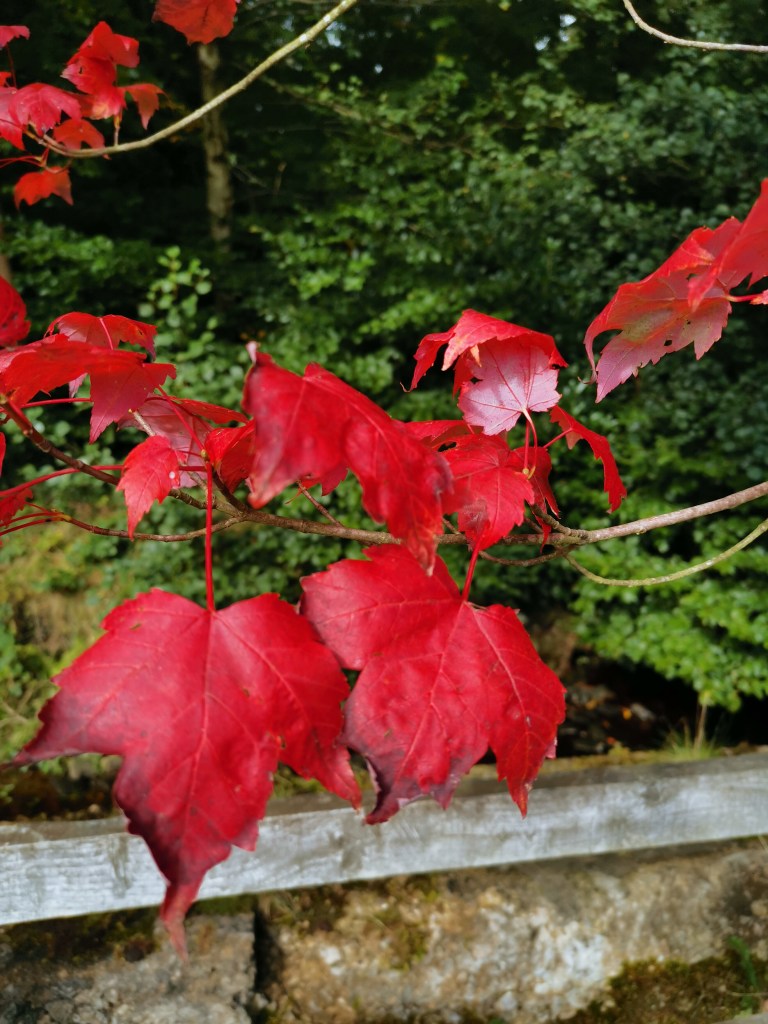
It was lovely to see that a few of the trees in the park were just beginning to turn to their autumn colours. This one had beautiful red leaves.
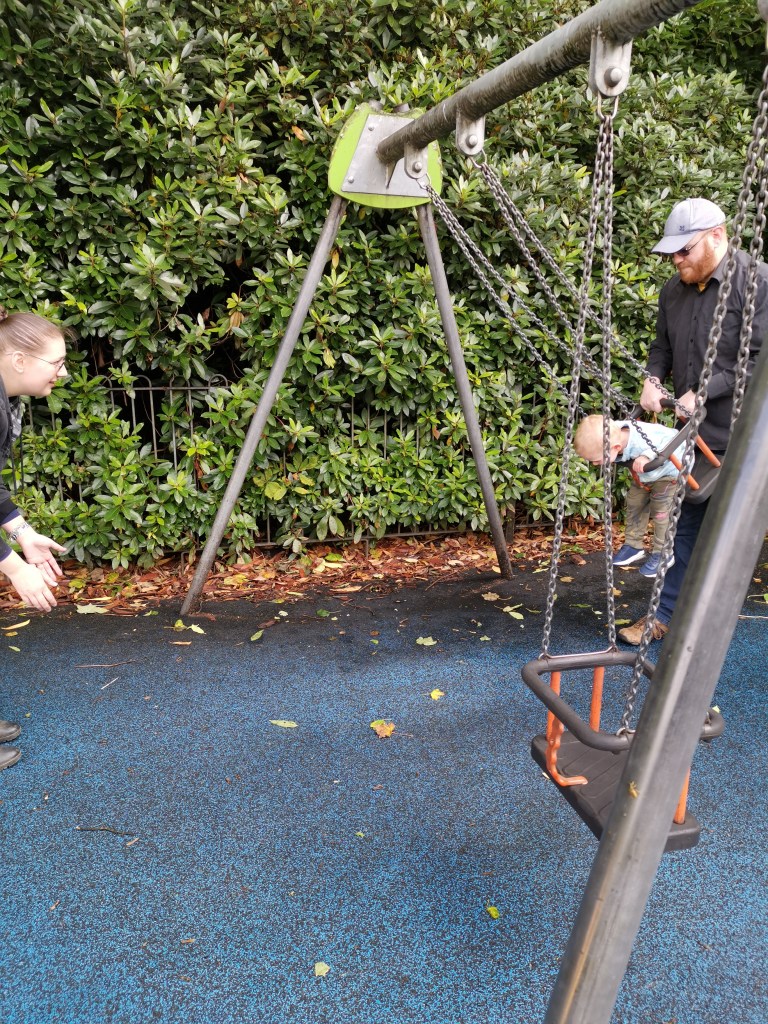
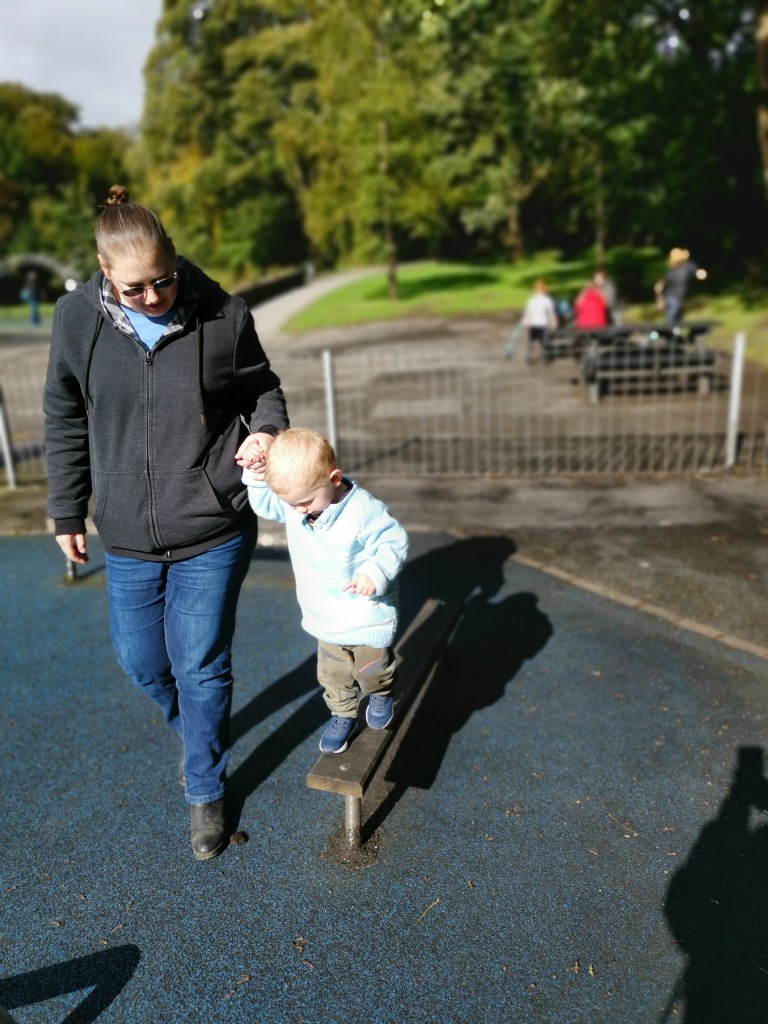
We had seen the playground area from the carpark and as we reached it, we could see that it was nicely set up with a gated area for the little ones and a larger equipment play area for the bigger kids. Alex loved exploring the different pieces of equipment and we had fun joining in with him.
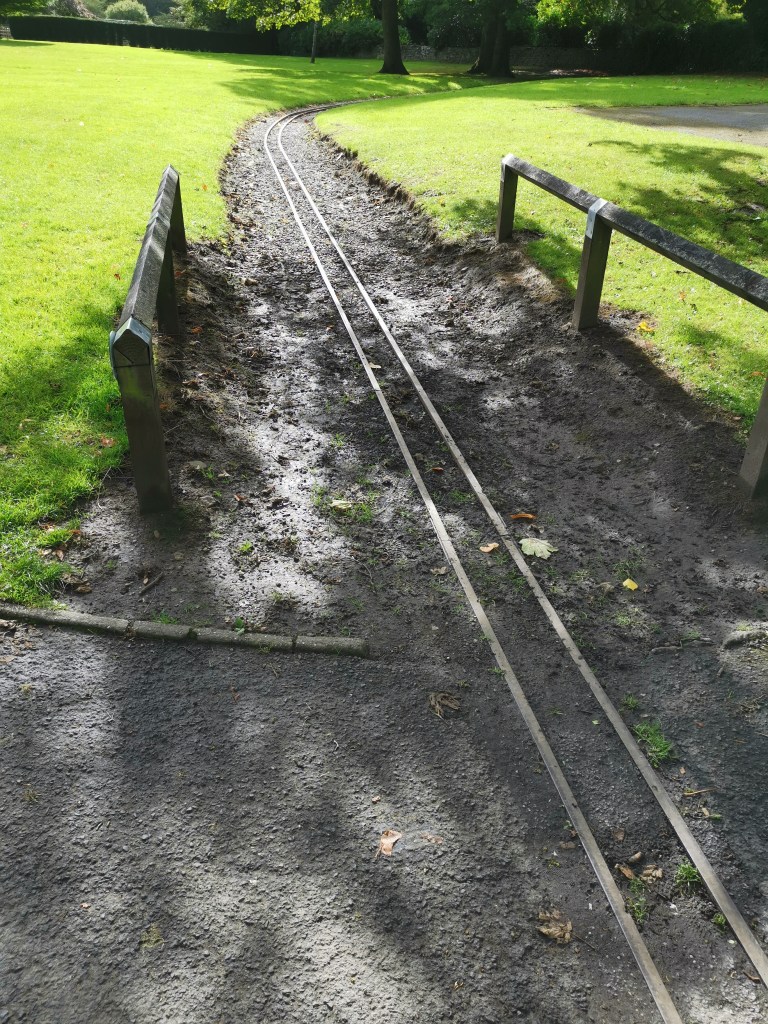
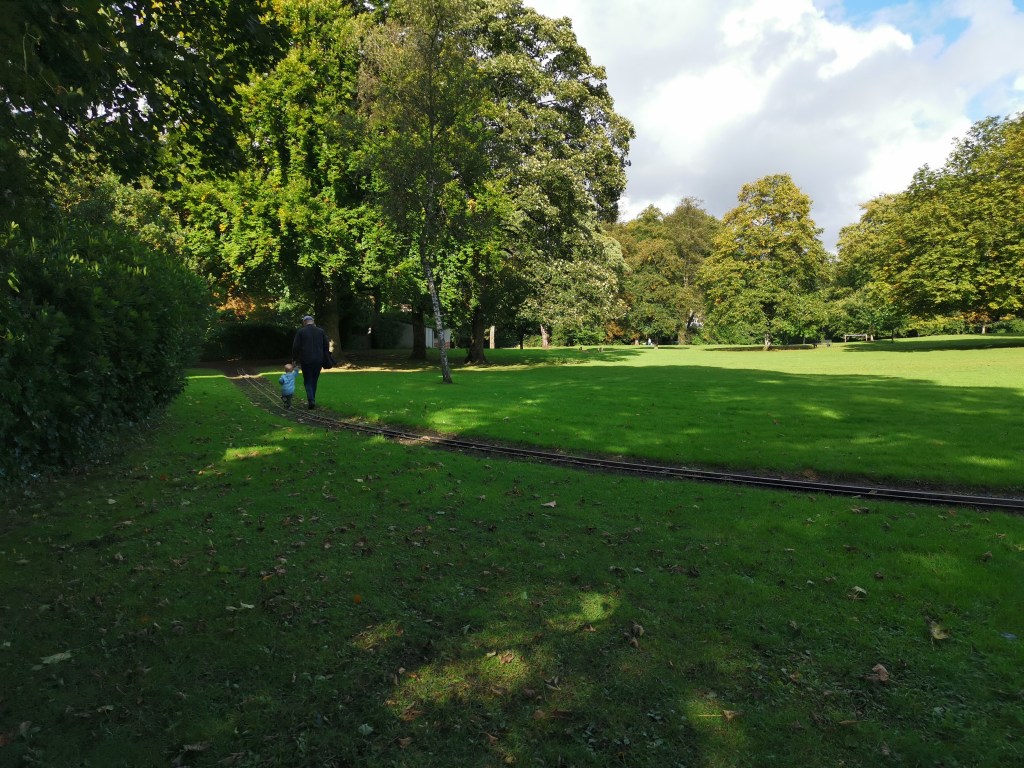
This park also has a minute railway circling around it, which would have been lovely to have seen, but it had stopped running due to the cooler weather. When we come again, it is something to look forward to for when it is running again, as I think Alex would love it. In the mean time, he pretended to be a train on the tracks.
After a nice walk in the sunshine, we decided, that as the rain was supposed to happen soon, we would go to find somewhere to have afternoon tea. Mark said the Glossop Cafeteria had very good reviews on Google, so we picked there. The park does have a small cafe, but it was only taking cash today and none of us had enough cash on us. We are all now “pay by card” people, because that’s been recommended with COVID.
We walked back to the car, following one of the woodland trails and as we were loading Alex and his pusher into the car, the showers started. It wasn’t quite 3pm, so they were a couple of minutes early. Perfect timing though, to wait until we were at the car, rather than out in the park.
By the time we reached into the town of Glossop and the carpark across the road from the cafeteria, the showers had stopped. Again, perfect timing for crossing the road.
The cafeteria wasn’t very big inside, but they had hanging clear table dividers so that they were trying to be COVID responsible. The menu options were quite good, so we could all find something that we fancied and the staff were keen to help, although a bit slow.
While we waited, Alex had lessons in how to play simple games. He had a “Thumb War” with his Dad, played “Rock, Paper, Scissors” and then we all played “Hand Stacks”. It was fun and passed the time until our food arrived.
Mark and I had BLT (bacon, lettuce and tomato toasted sandwiches), Alex had nuggets and chips and Nat had a chicken burger. While we were nice and dry in the cafeteria, down came the rain and this time it rained very heavily. But after a nice meal and us being ready to leave to go home, the rain stopped.
It was a great afternoon and thanks to Mother Nature, we managed to avoid getting wet.
On Sunday 19th September, my Marshmallow insurance policy commenced on my car, so it was time for me to take her out for a drive and start exploring my new homeland. The weather forecast had changed and the rain we were expecting was pretty much done by dawn with the sun now expected to make a show. As my family had another commitment in the afternoon, I went alone.
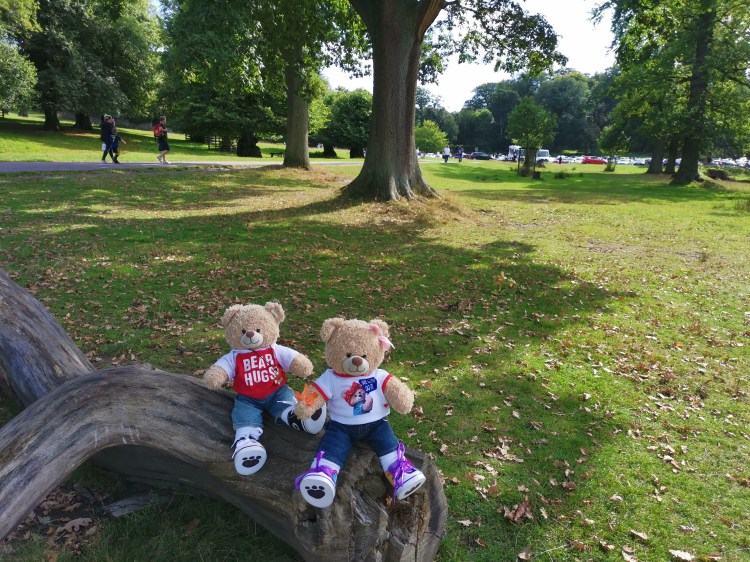
I chose the National Trust owned Lyme Park, House and Gardens in Cheshire as my first outing, because it isn’t too far from home. Nat and Mark have been there before and enjoyed it. So, I decided to bring Snow and Fin to enjoy the adventure with me.
I arrived just before 11am, very pleased with my efforts at driving down the narrow roads to get there. They were the type of roads where it is almost too narrow for two cars to pass each other. So, I decided to be patient and move as close as I could to the edge of the road and let other cars coming towards me, pass. I didn’t mind, it wasn’t busy and all of them acknowledged my efforts. My car has built in GPS/Sat Nav, which looked for the quickest way to get to Lyme Park, selecting mostly back roads rather than the main arterial roads.
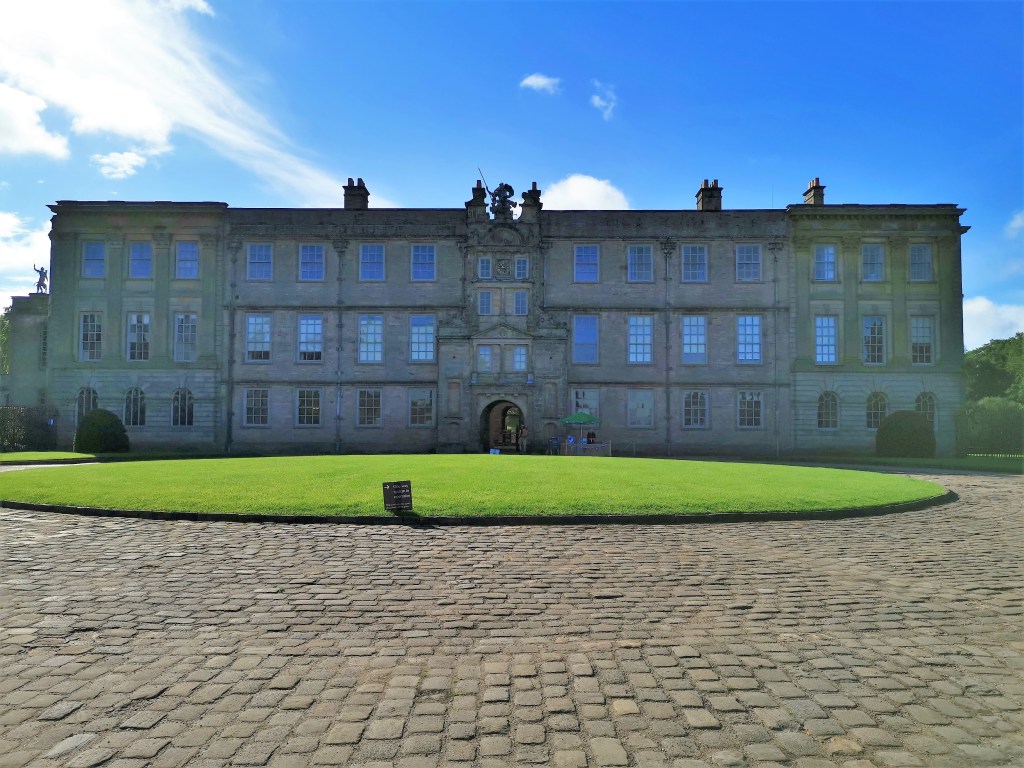
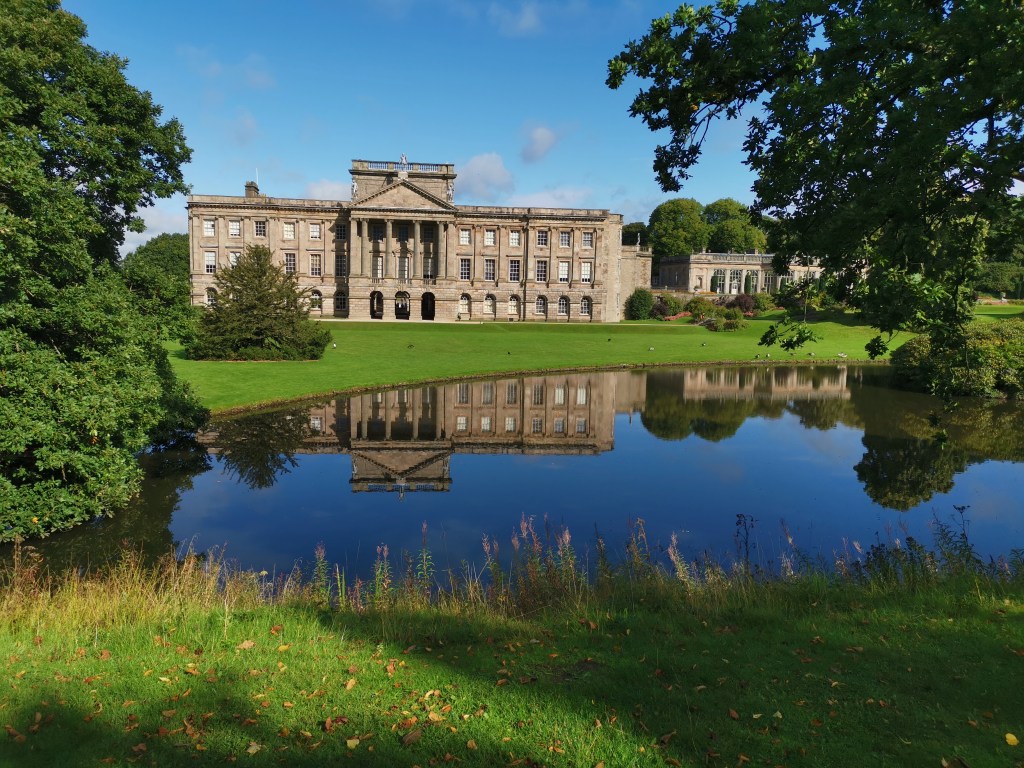
It seemed that before 11am was a good time to arrive, as it was just before the house opened for visitors, although the gardens opened from 9.30am. The carpark was not too busy, so it was easy to find a park. From there I got my first view of the house.
The walk up to the house from the carpark is quite a steep path. So I took advantage of the free shuttle buggy cart ride up to the gates, as I didn’t want to upset my knee with walking up hill. Anne, the driver, seemed very happy to have Snow, Fin and I as passengers. She said if I needed a ride back down from the house to let a staff member know and they would radio her to come and get me. That was nice of her.
Welcome to Lyme Park House.
Snow and Fin looked forward to seeing inside
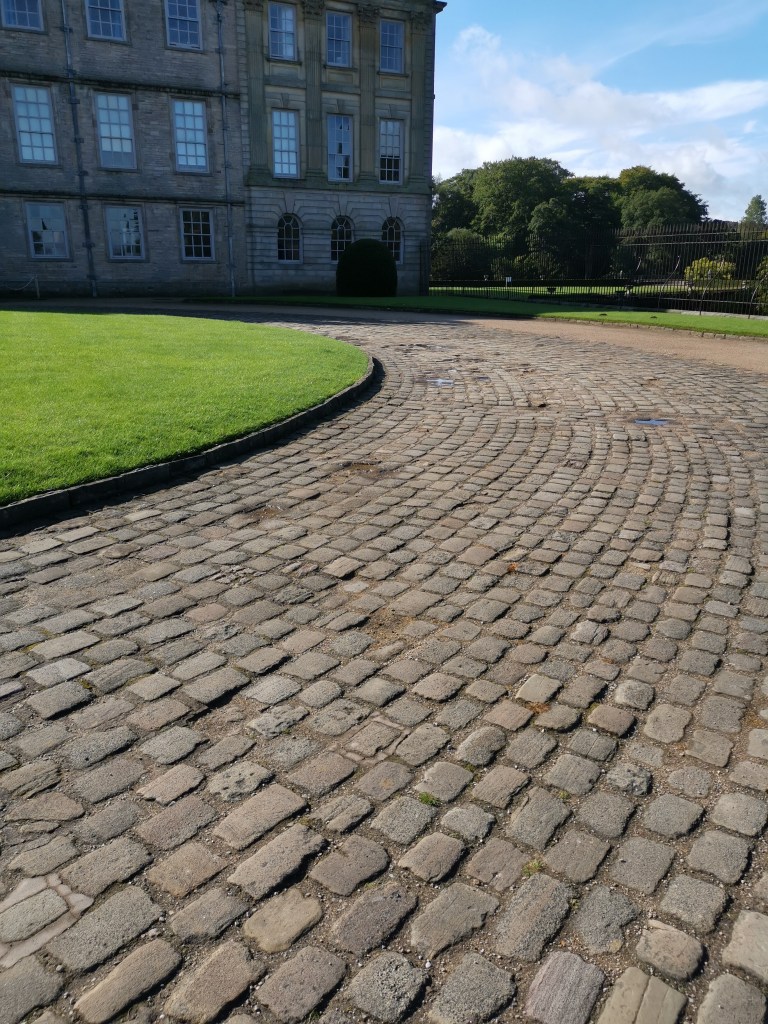
I could just imagine the horses and carriages entering the gates and driving around the cobblestone drive to the entrance. This is the house that was used in the 1995 film “Pride and Prejudice” as the exterior of Mr Darcy’s Estate of Pemberley.
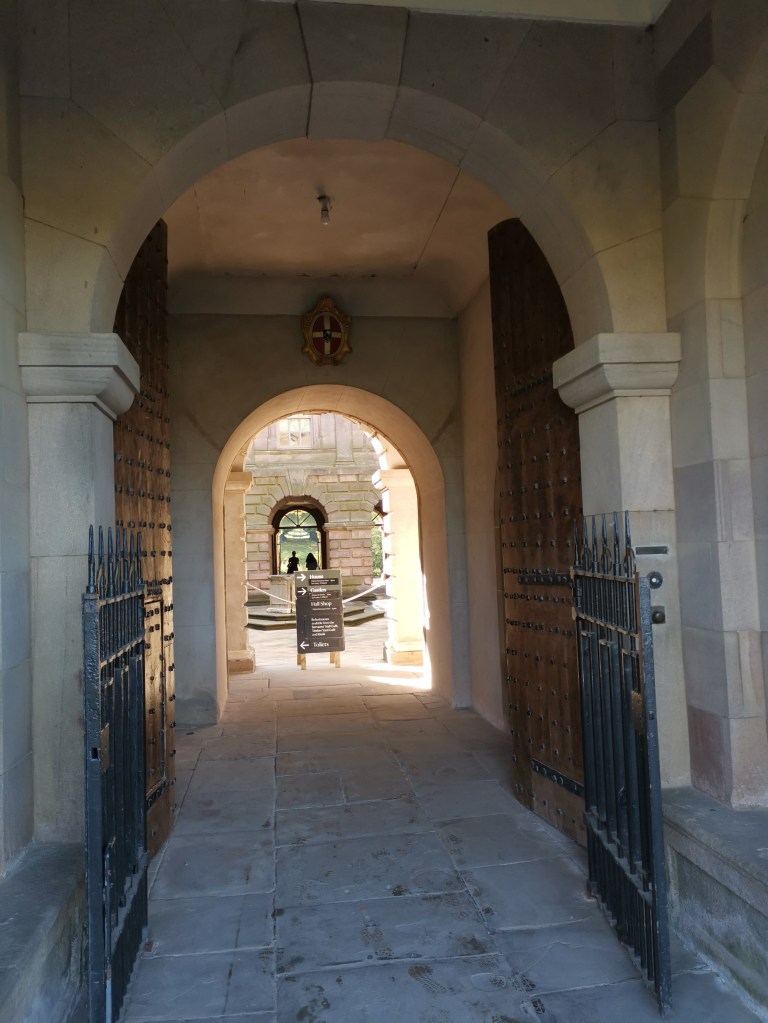
I borrowed Nat’s National Trust membership card to be allowed to go in through the entrance archway. I am waiting to be able to sign up for a membership of my own. It will give me a good excuse to explore. Tickets to get into Lyme Park House and gardens is £8 for an adult who doesn’t have a membership, but walking in the mooreland hills and forests around the house is free.
Time to venture through the entrance.
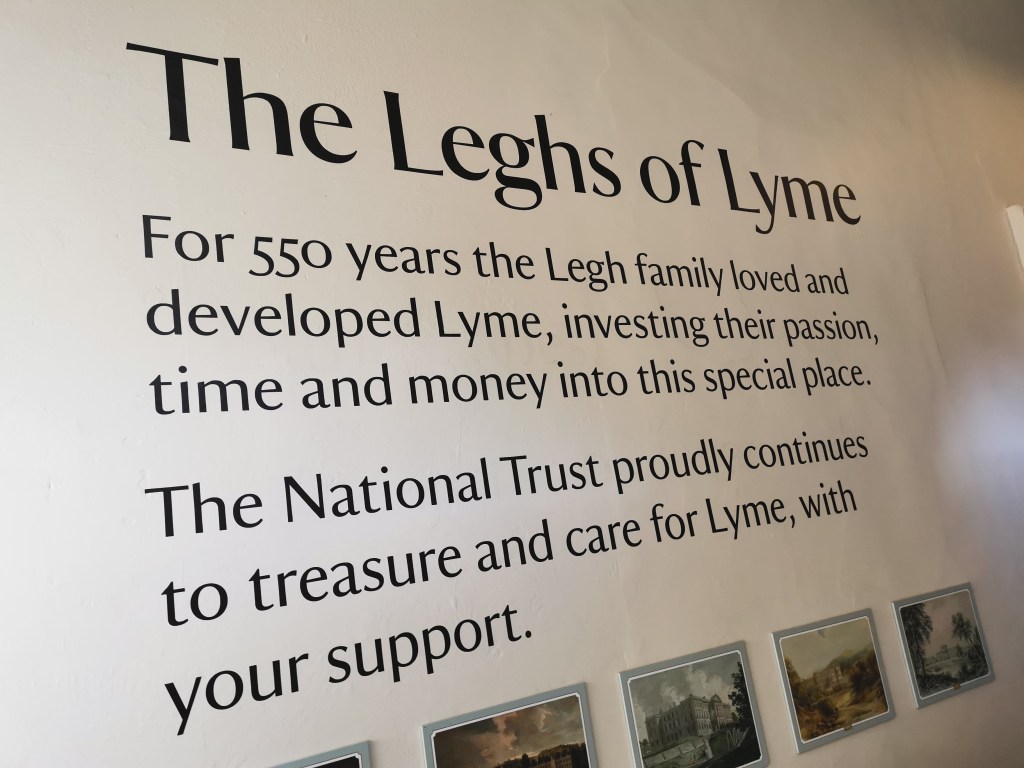
Welcome to the ancestral home of the Legh Family
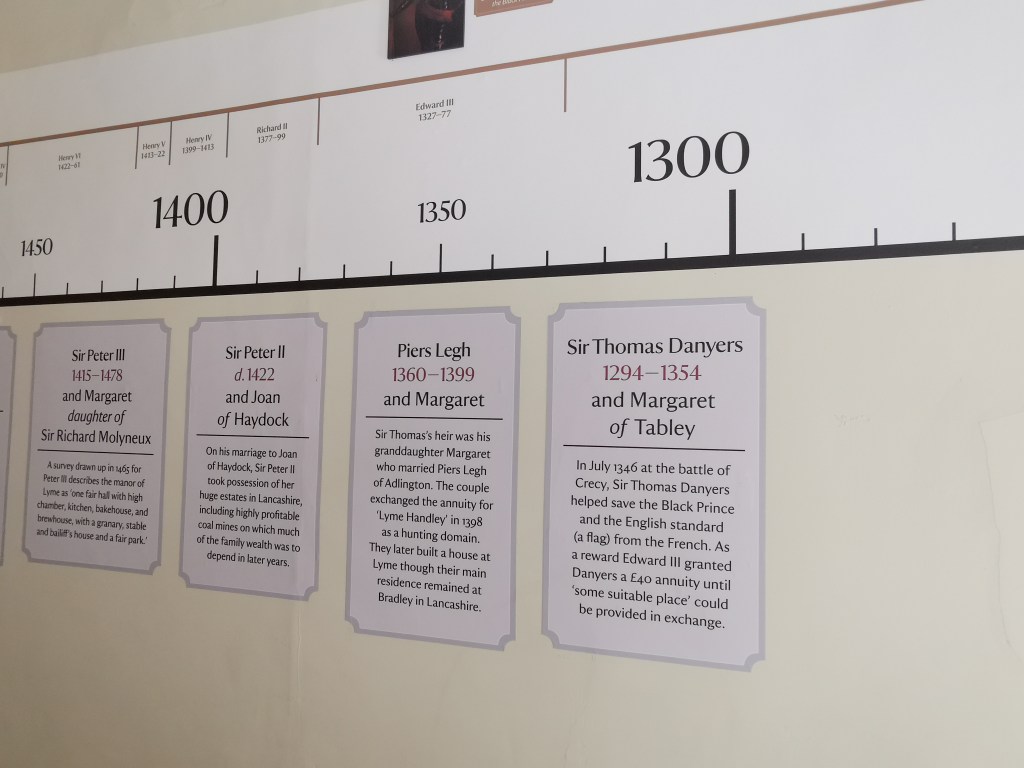
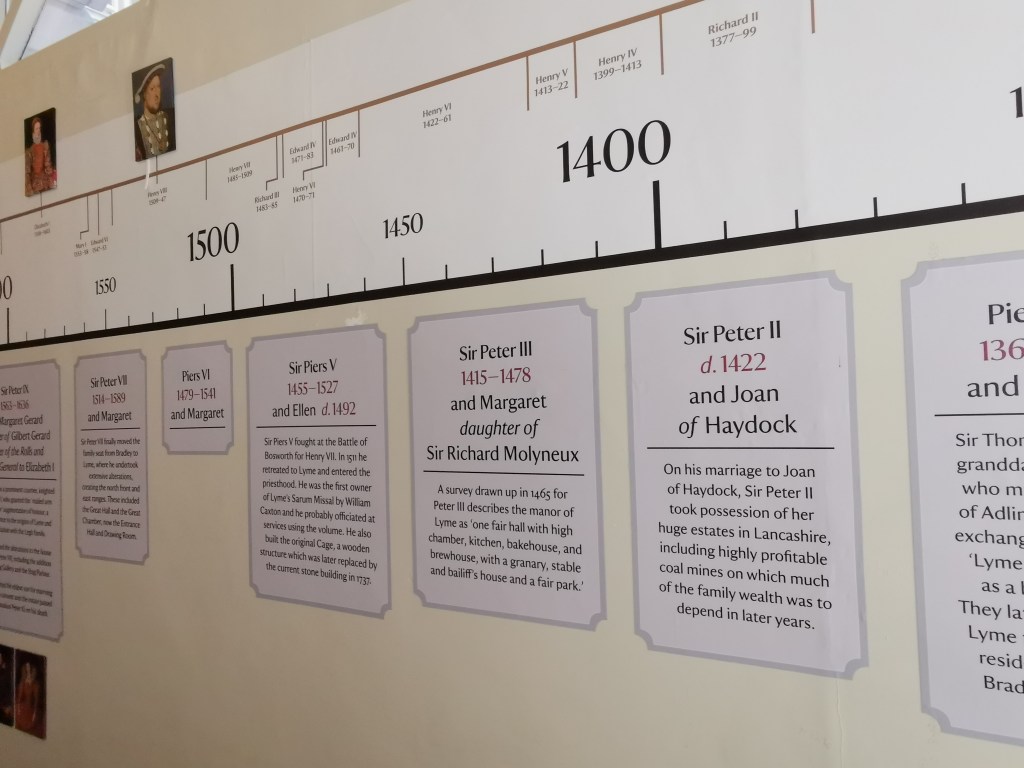
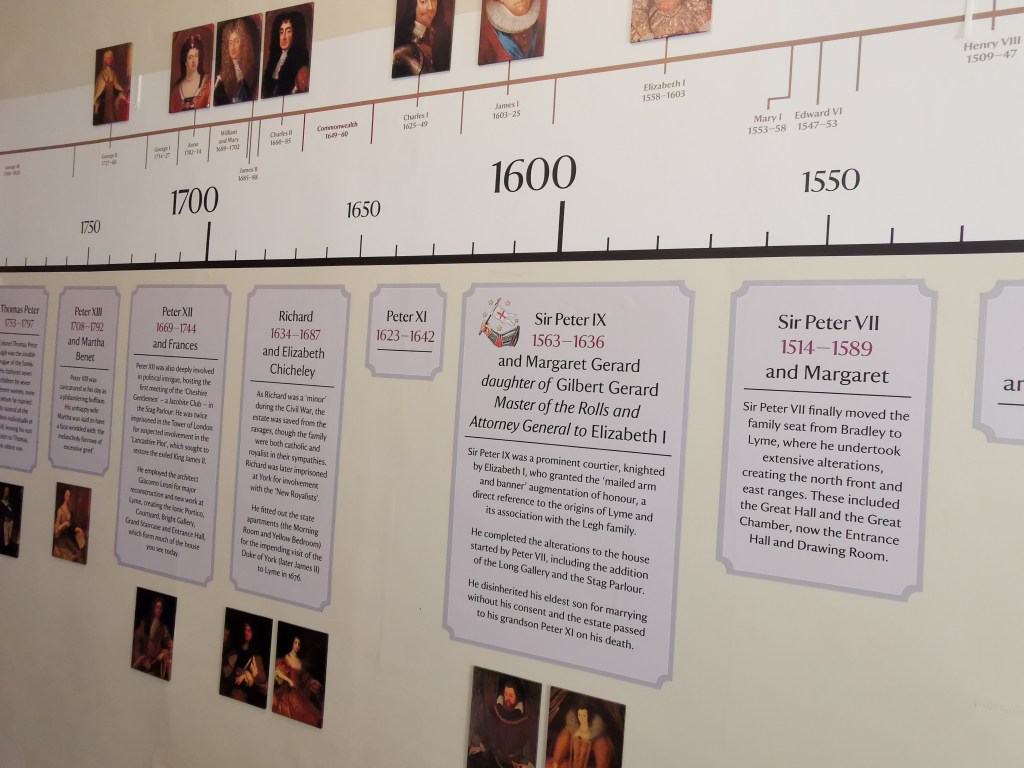
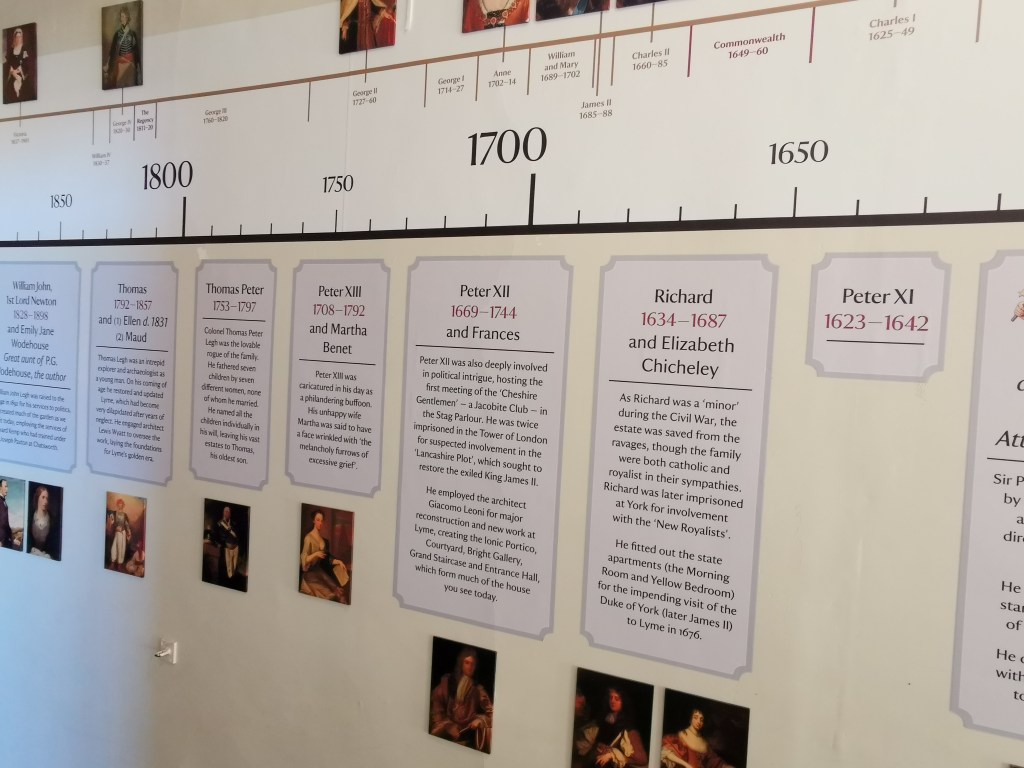
Through the archway is the dedication that explains that the Estate has been in the Legh family for 600 years before it was presented to the National Trust in 1946 for the Health, Education and Delight of the People.
One of the walls set out the time line for the history of the family and the house.
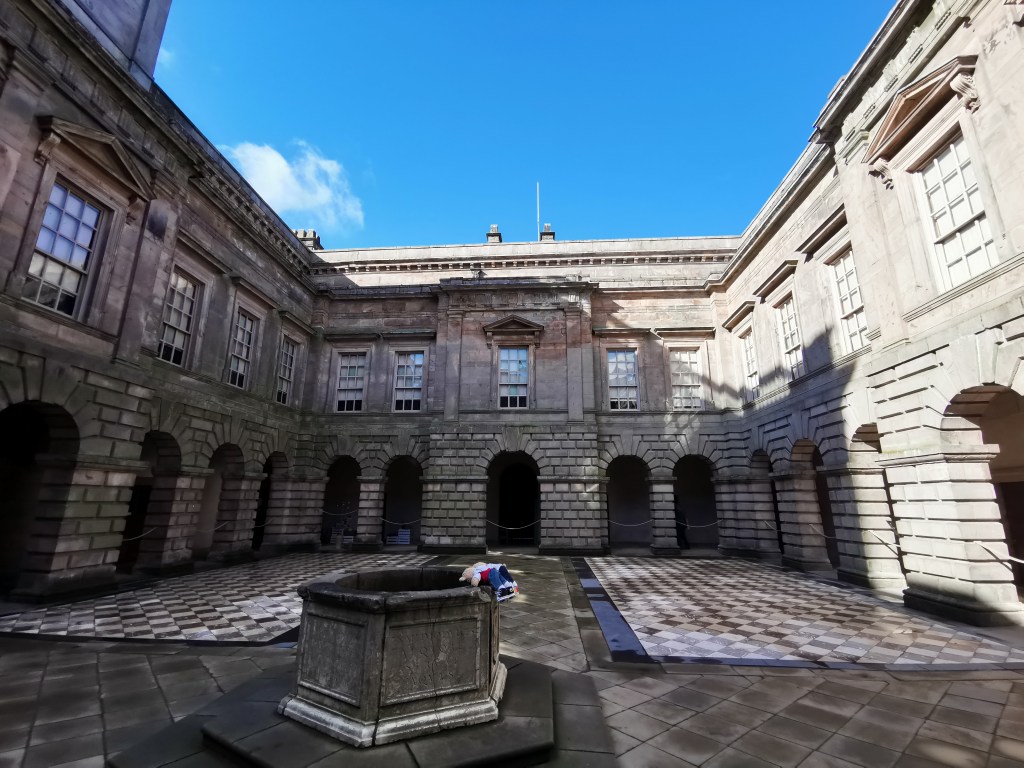
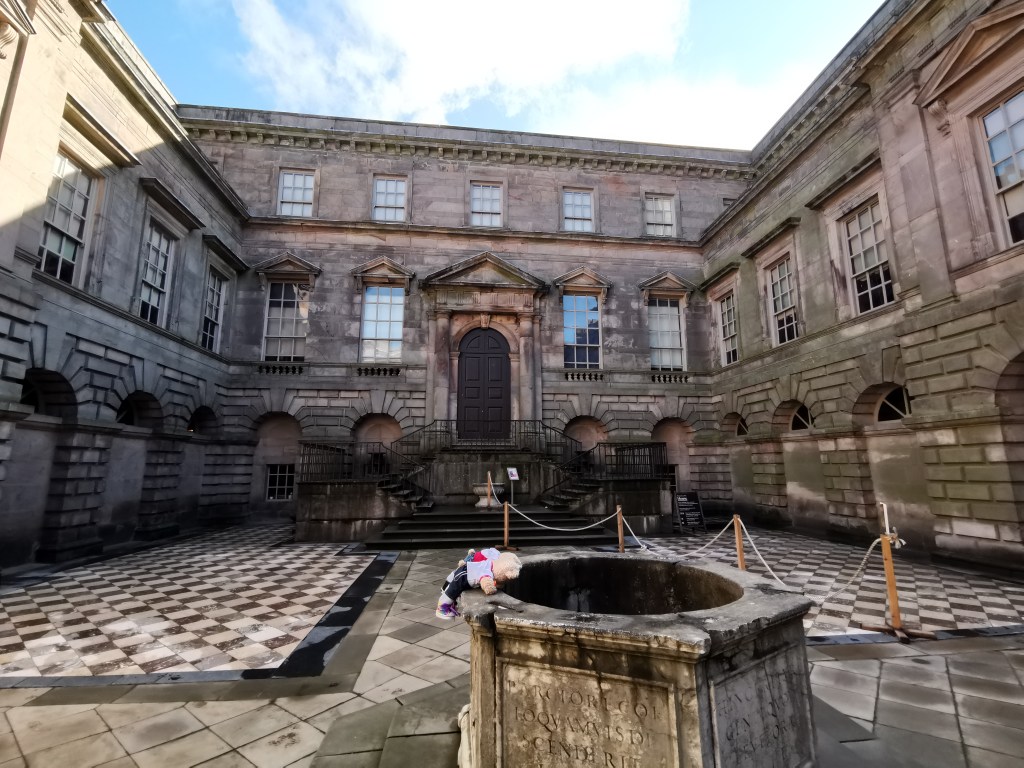
Through the archway, I reached the central courtyard and my first close look at this imposing house from the inside. Fin and Snow liked the wishing well in the middle. I was glad that it was sealed at the bottom, so if they got too adventurous, they wouldn’t have fallen far.
The steps lead up to the entrance for the house tour.
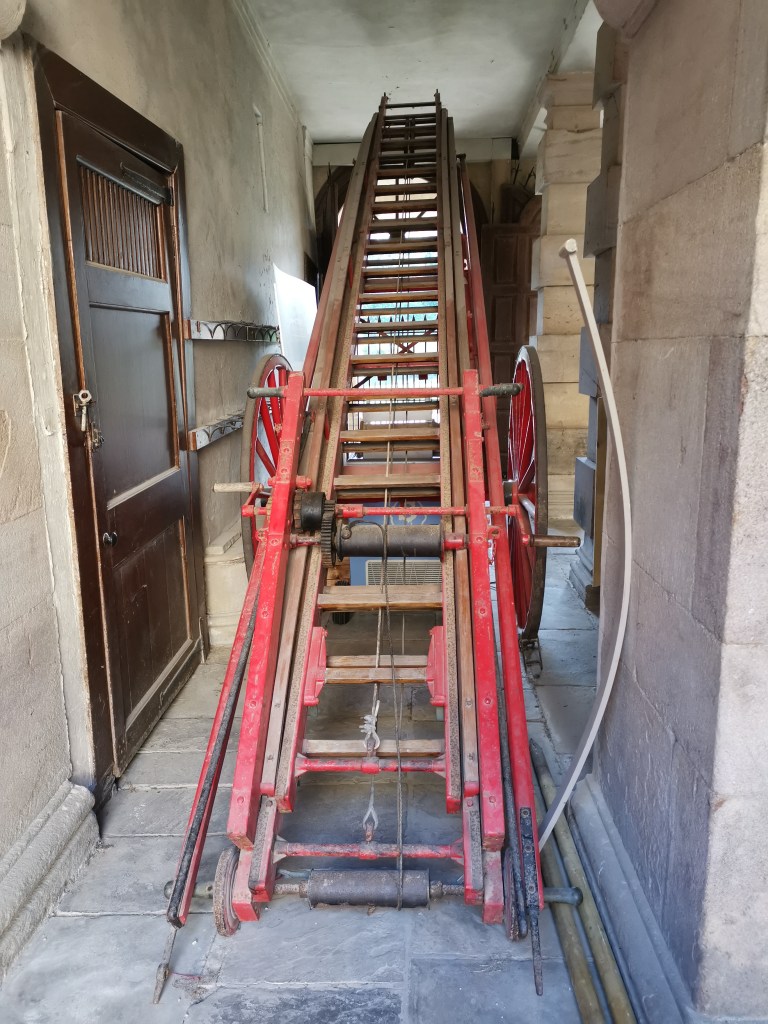
The house didn’t open until 11am for touring, so I crossed the courtyard and took time to visit the gardens. On the way through there was a ladder which was a fire escape, designed to be able to reach each of the windows in the courtyard. Because the kitchens are on the lower level, William John Legh (1800s) was worried about the risk of fires and had the ladder made, as well as placing fire buckets around the house and building a pump to bring water up from the lake to the house for fire fighting.
Through the archway, the garden beckoned to be explored. The weather was perfect for it, with the sun shining, a light breeze and fluffy white clouds. The National Trust was taking very good care of the grounds as you can see from the impressive lawn.
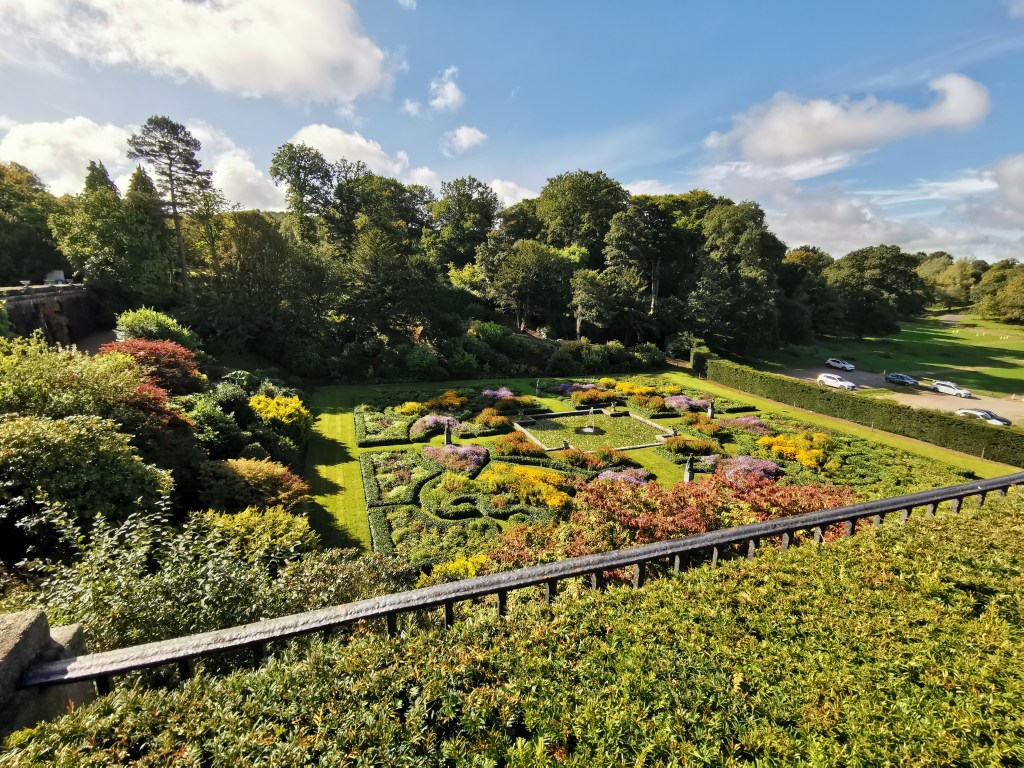
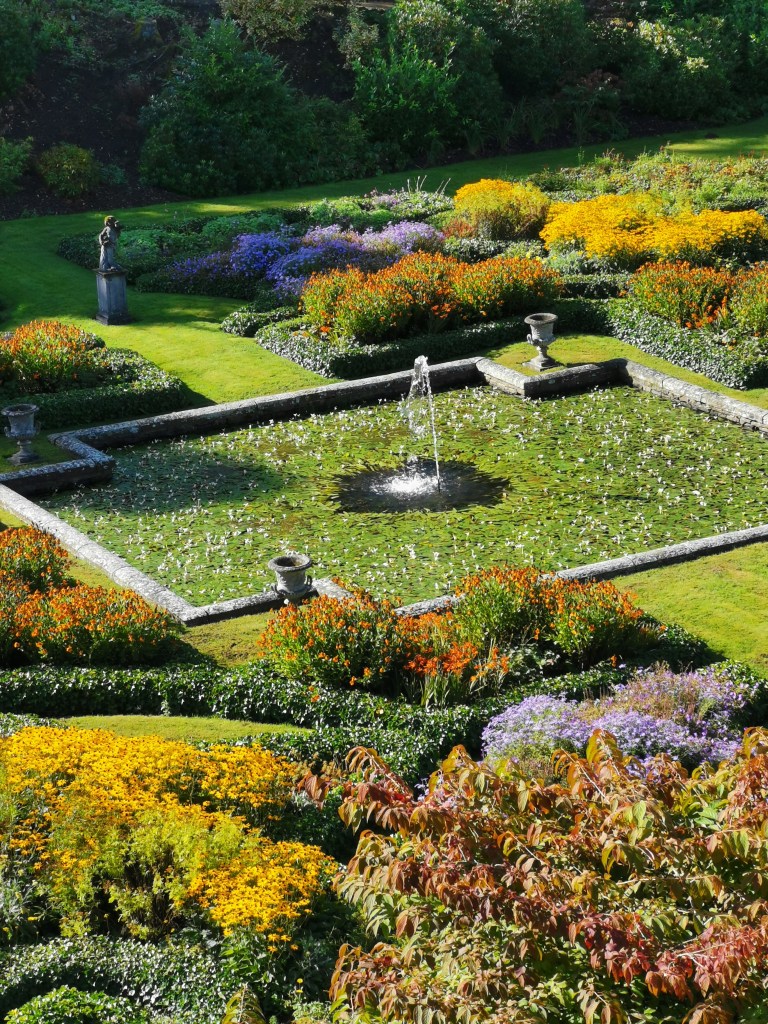
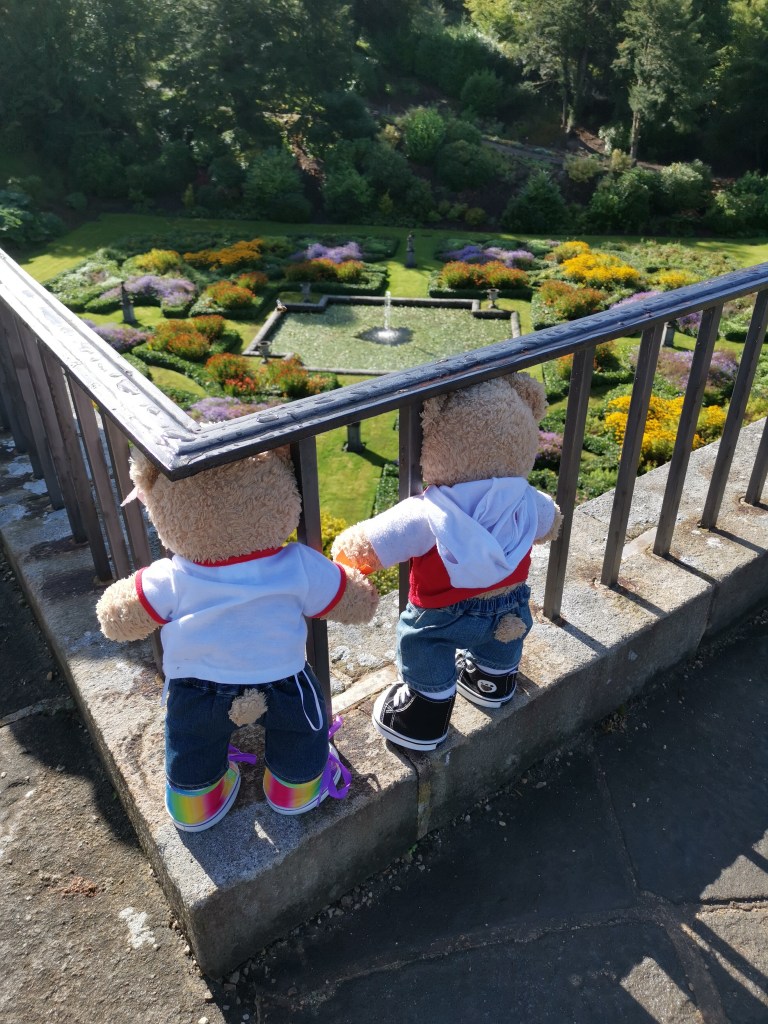
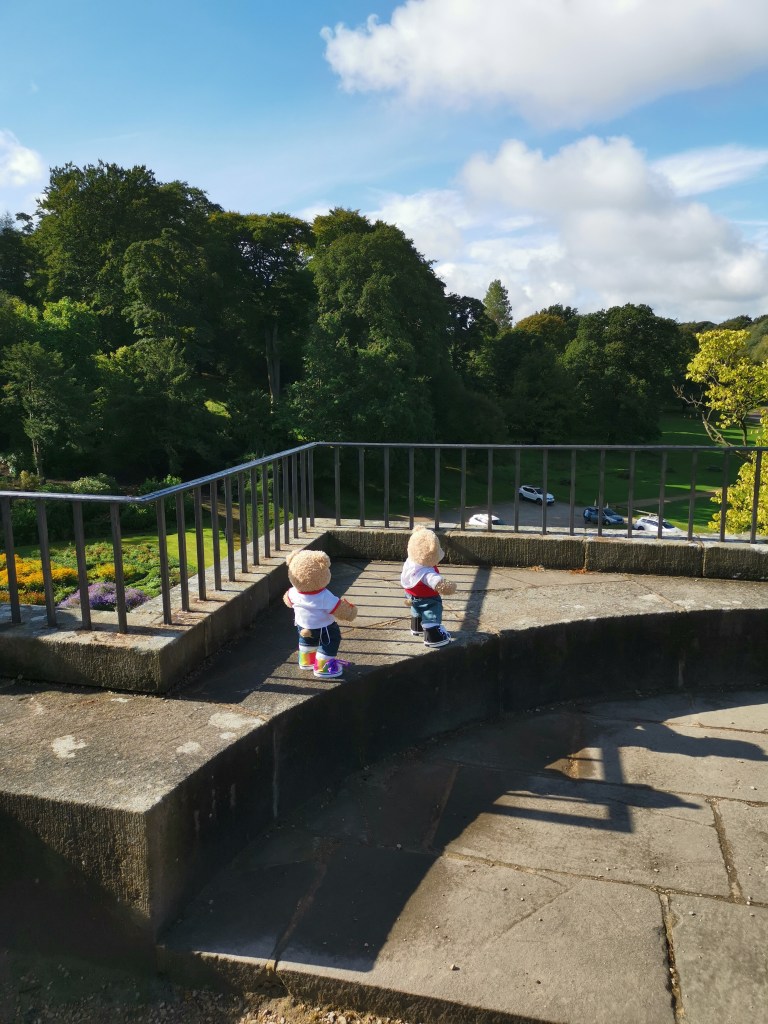
We discovered there was a beautiful garden laid out to be viewed from above. Fin and Snow enjoyed having a look at it and so did I. This was situated to the side of the house and the wall I had seen from the carpark was the wall of this garden.
The paved area needed a table and chairs for sitting outside and admiring the view
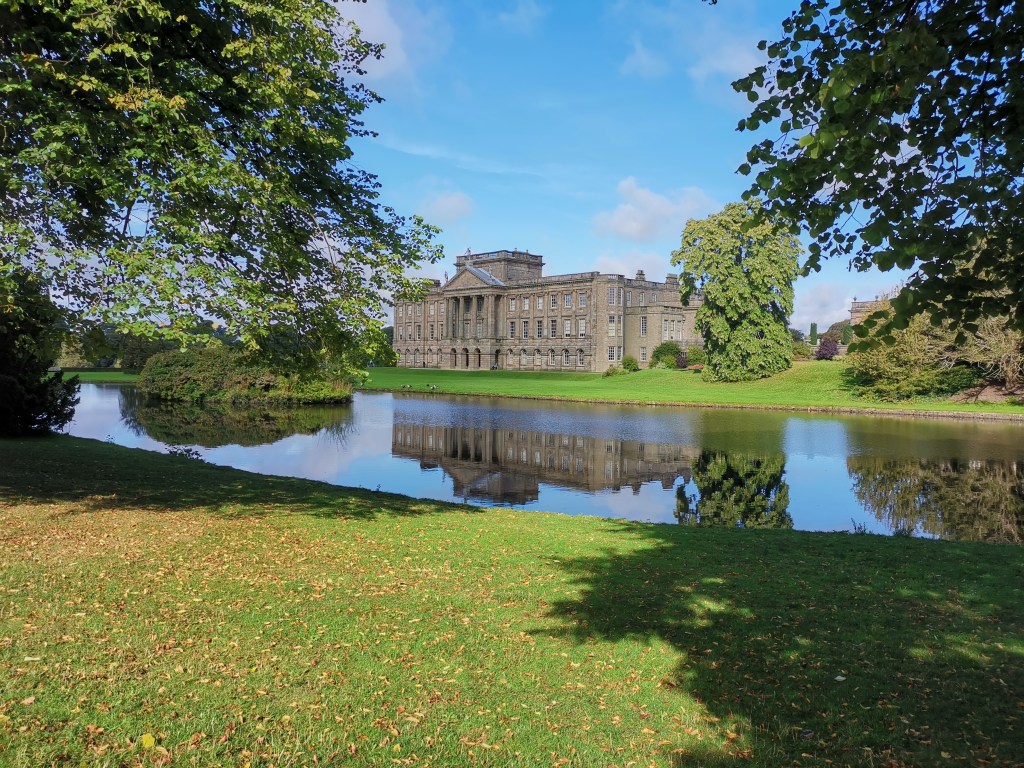
At the back of the house is The Reflection Lake. A beautiful lake would have been visible from all the rooms on that side of the house. I walk around to the lake and was treated to a sight that was lovely to photograph.
It was very peaceful on this side of the lake under the canopy of the trees.
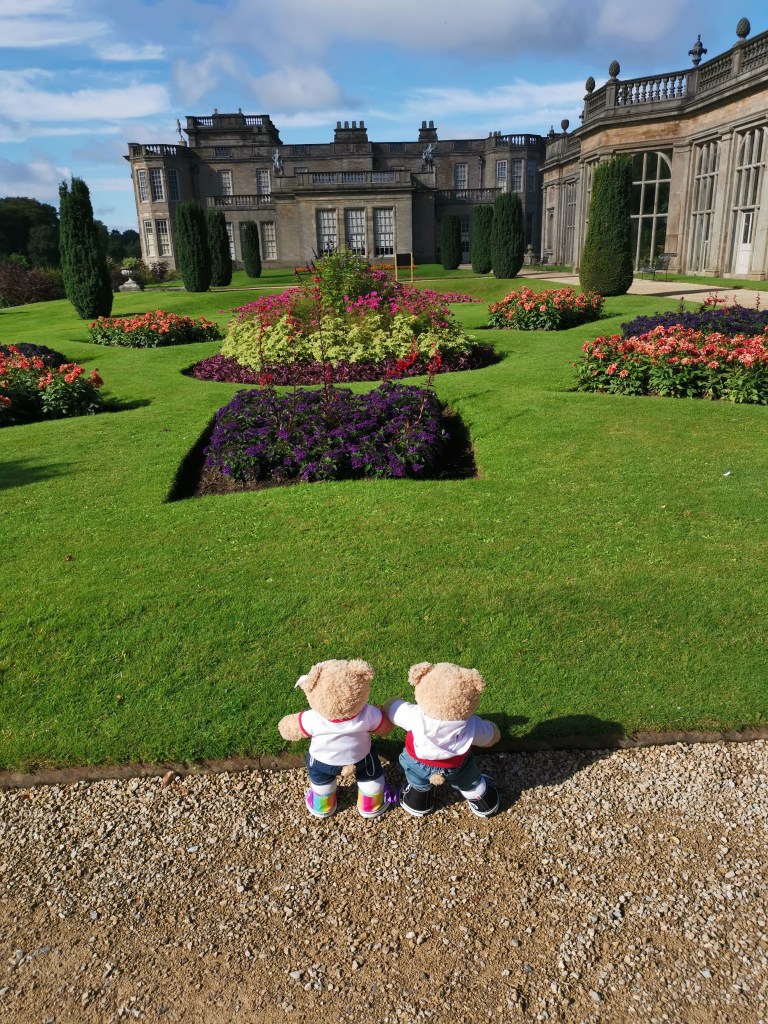
After I had walked around the lake back to the side with the house, I reached more of the created gardens, including a rose garden and the garden in front of the Orangery. An orangery is a building designed to grow plants that need the warmth. The Lyme Park one used to house camellias. I could imagine that would have been stunning and also very fragrant when they were all in flower.
The Orangery has the windows across the front of it.
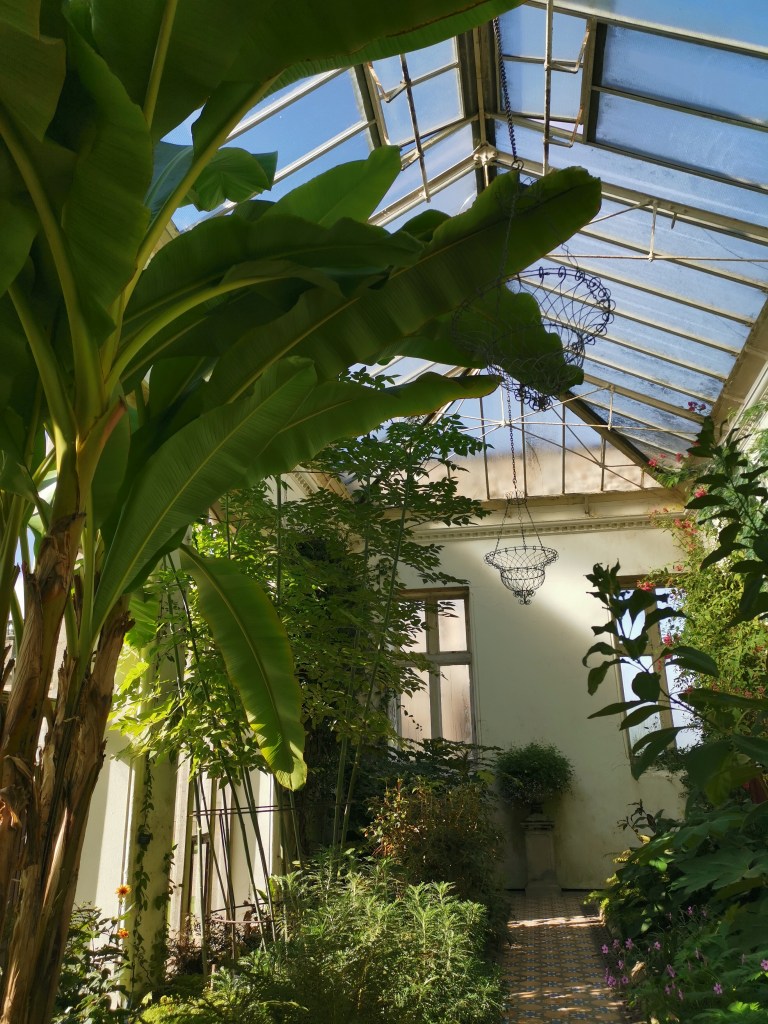
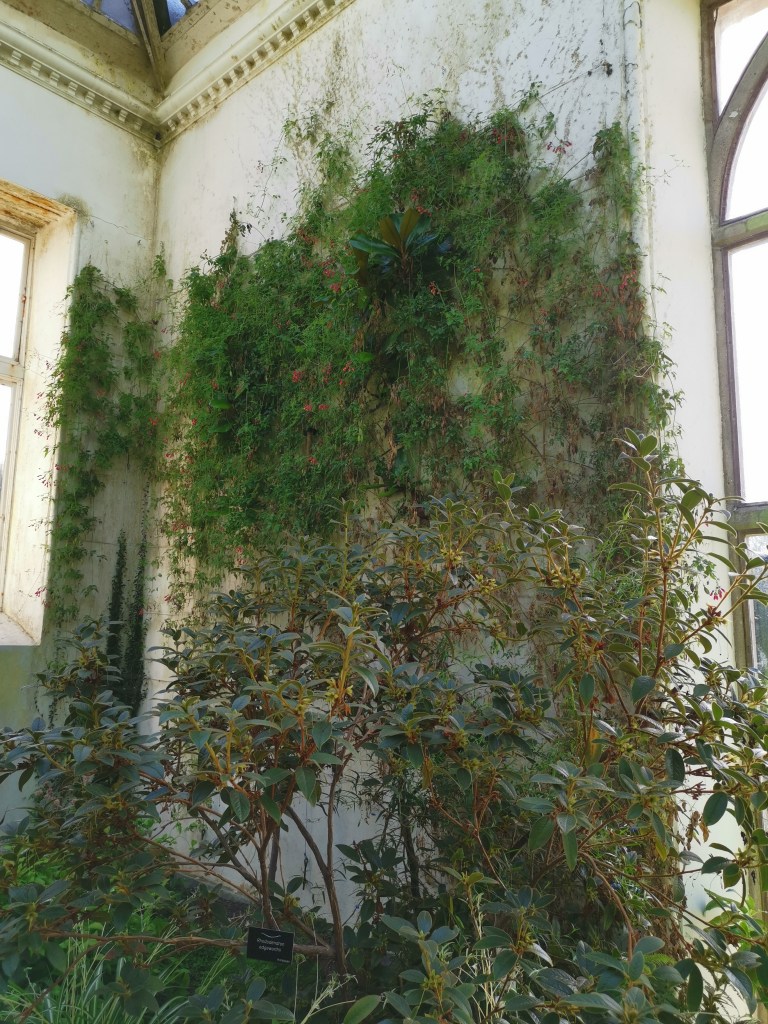
We went inside the Orangery and it was warm in there. The camellias had been replaced with a tropical plant collection. It reminded me of the exotic plants we had in our pergola back in Adelaide. I had hoped it would be bigger inside. I suspect that there was more of the building, but it was blocked off to visitors.
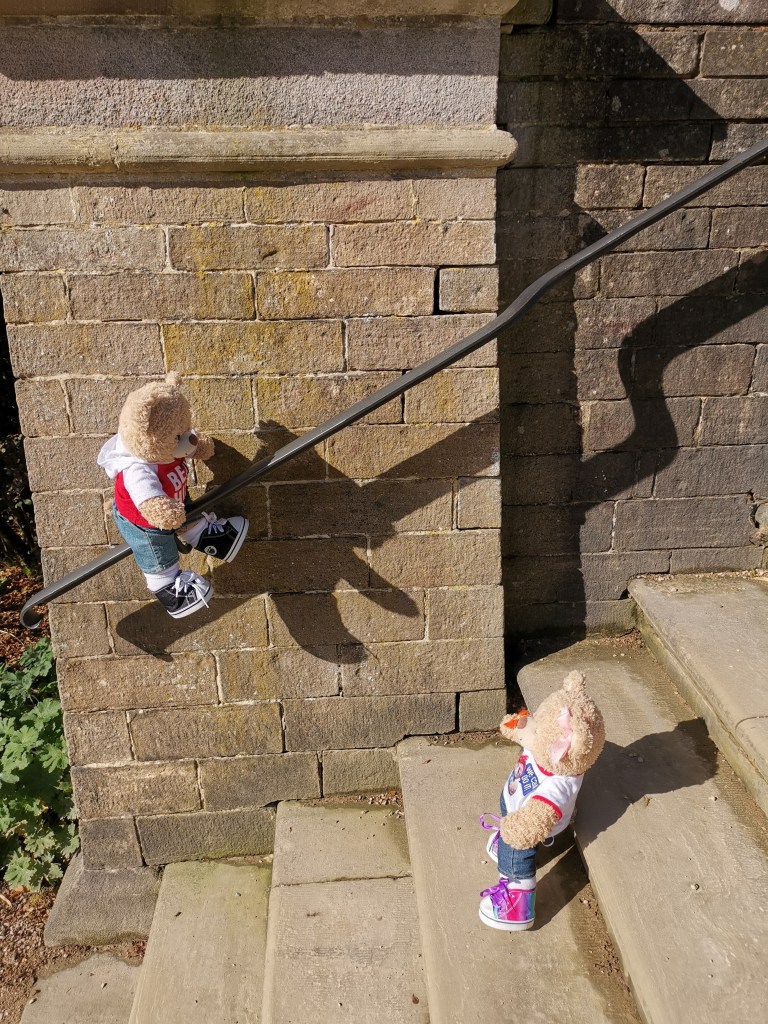
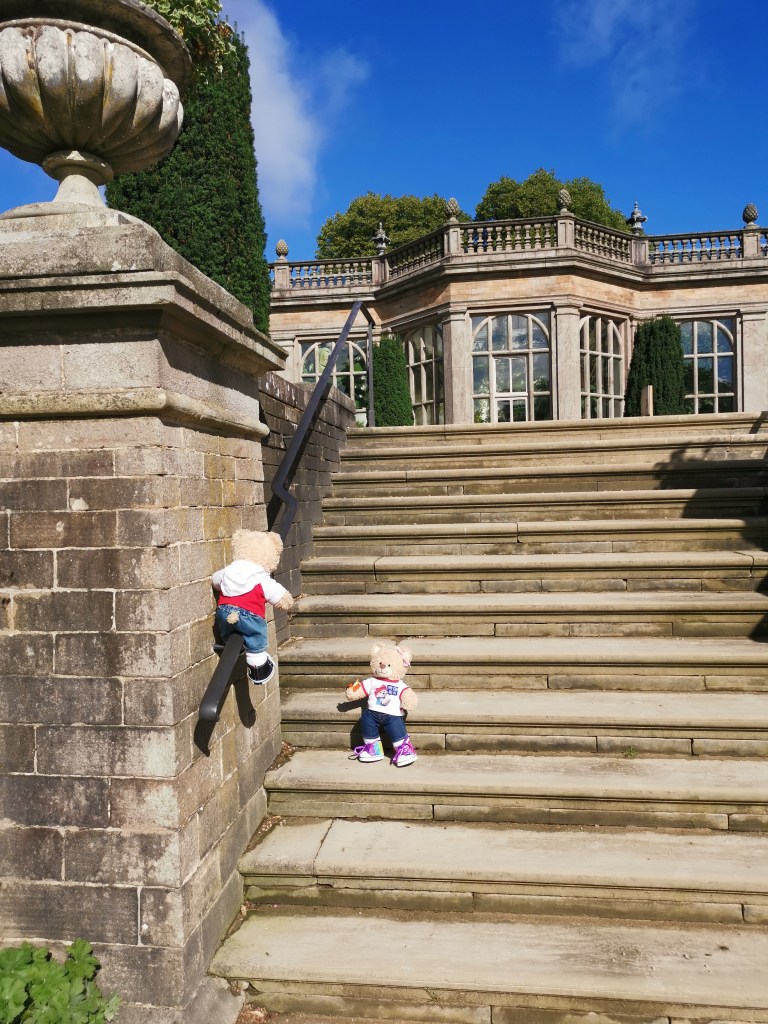
After a wander amongst the hot house plants, I suggested to Fin and Snow that it was getting close to lunch time. They asked if they could slide down the handrail on the way back to the house. Of course I let them.
We went back into the courtyard and across to the café, which was situated in the Servant’s Hall. Time for a wrap and cup of tea before going to join the line for a tour inside the house.
Due to COVID-19, groups going into the house were restricted to a maximum of 15 at a time. In my group, there were less than that, as it was still early. We entered via the steps into a large room. This was the Entrance hall, where guests would have been welcomed. There we watched a film about the history of the estate and the Legh family. The hall certainly was grand with its tapestries (created between 1623 and 1636).
If you look carefully at the painting on the wall in the photo below, you can see it stands out from the wall. I didn’t notice this at the time, but later on the tour, we saw the reason for it being like that. It is called a Squint and it allows the goings on in the Entrance Hall to be seen from the Drawing Room on the upper floor.
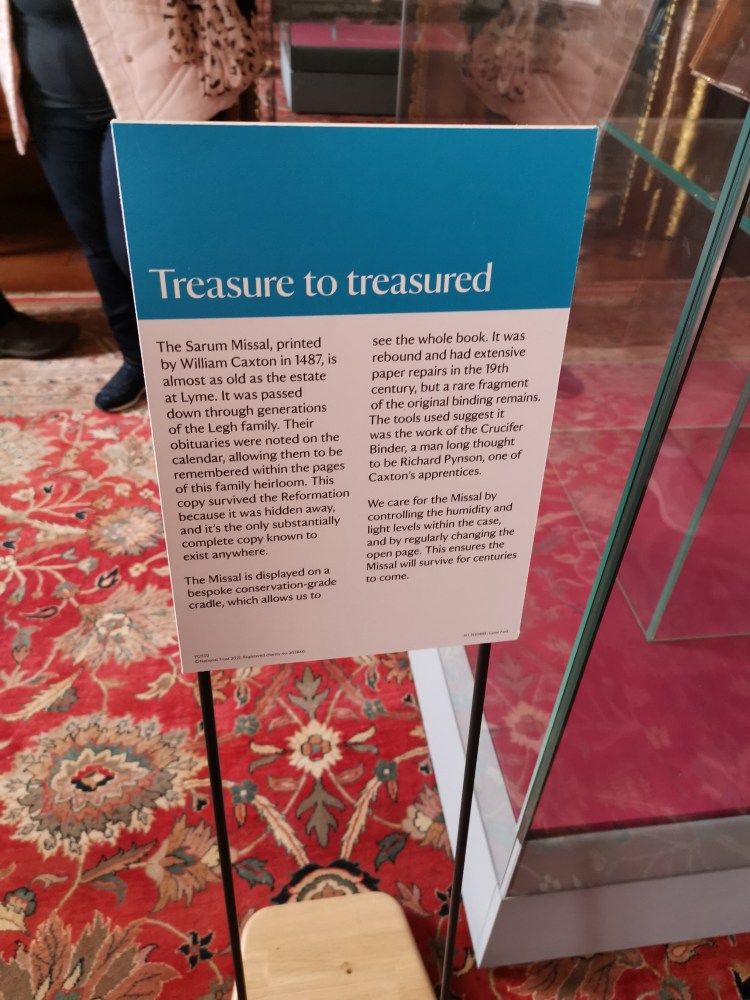
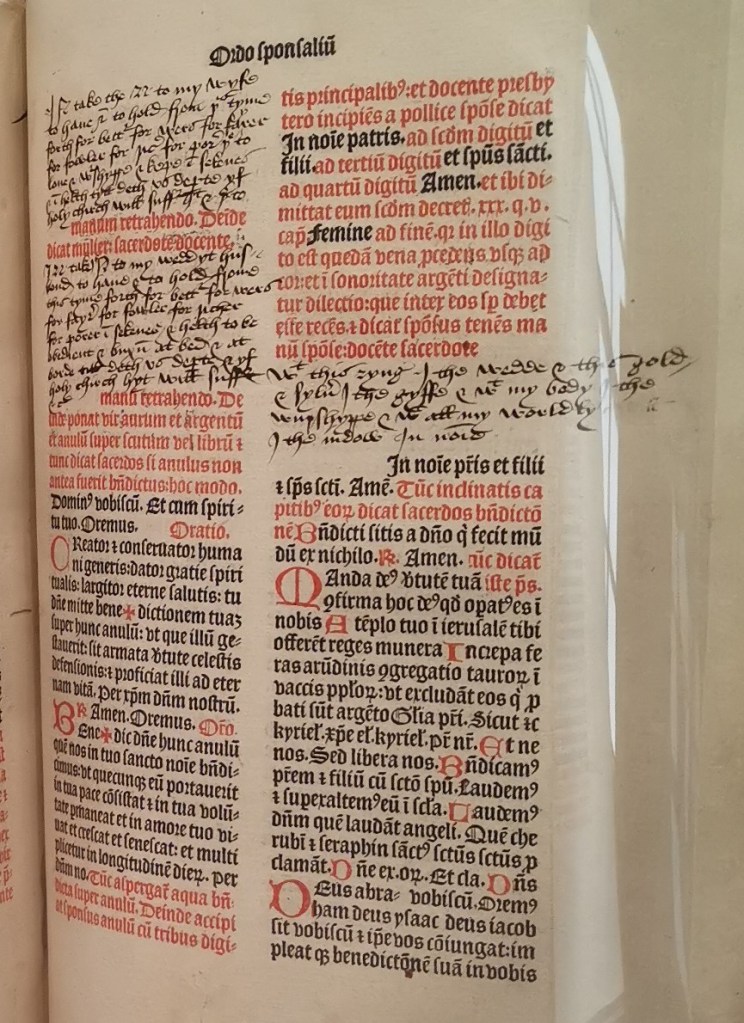
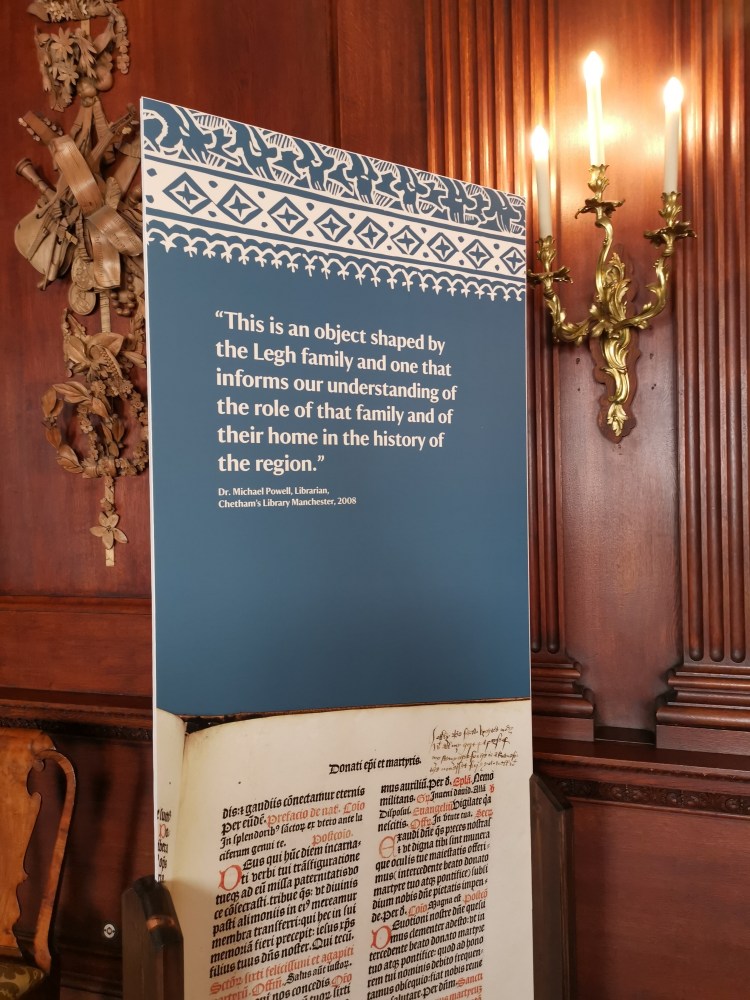
We left the grand Entrance Hall and went upstairs to access other rooms within the house. We turned off into a room, which could have been a ball room, and inside a sealed glass cabinet was a very old book, The Caxton Missal, that had been with the family since at least 1508. This copy has been altered by the family over the years and their markings can be seen on the pages. It is a book containing the liturgy of Mass (religious service). I thought it was fascinating to be looking at a book that is so old. The carvings on the walls were amazing too.
The next room we went into was the Library. The walls were filled with books. Unfortunately, I wasn’t allowed to touch them or take one out of the shelves to have a closer look at it, as there is too much risk that it could be damaged. That was a shame, as I have always been fascinated by books in historic libraries.
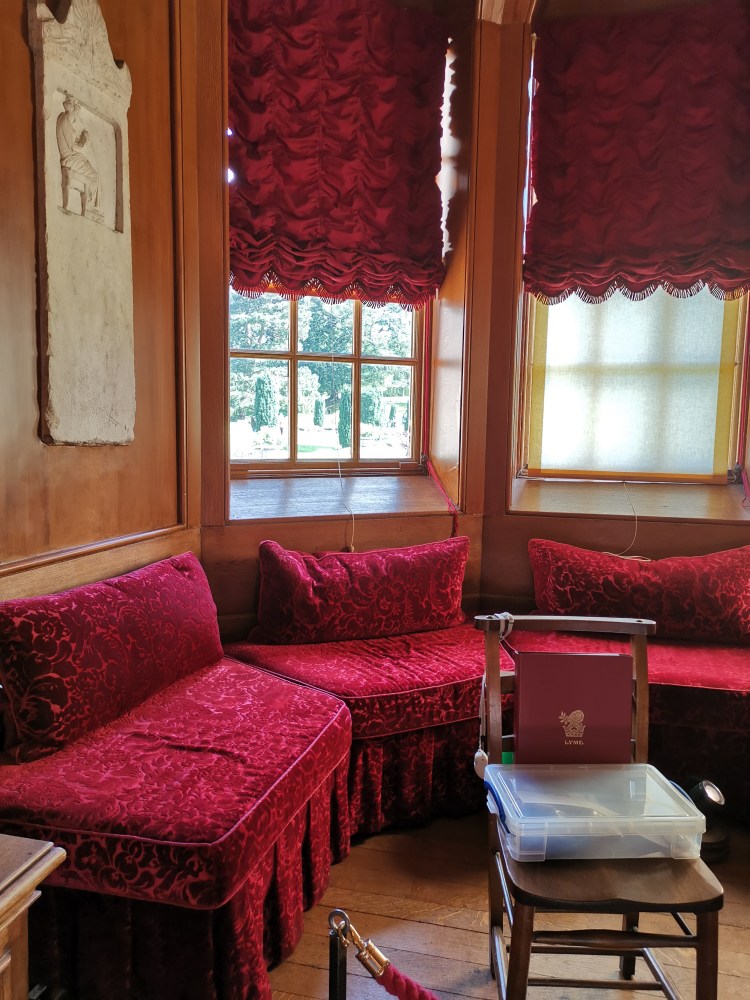
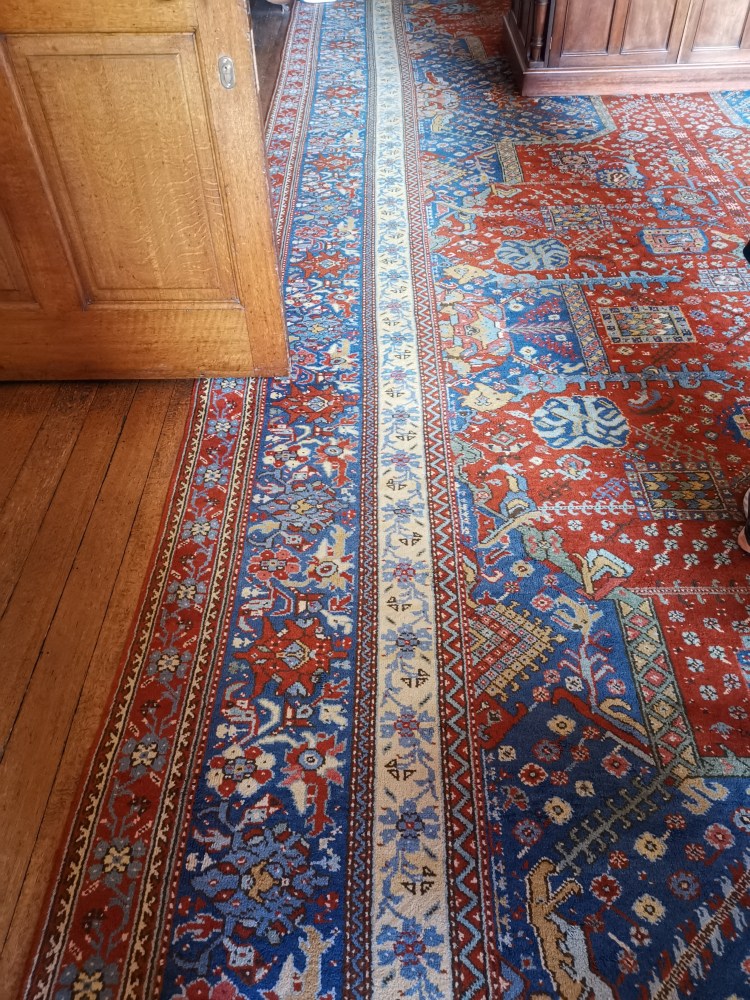
The Library has been carefully restored, with an exact copy of the original wall paper being obtained for renovating the walls. The wall paper was manufactured especially for the house and the pattern is now known as Lyme Park. The velvet upholstery on the seats was reproduced and even the carpet was replicated. It is hand woven and amazing that we were allowed to walk on it. The renovations have returned this room back to how it looked during the 1800s and were timed to fit in the returning of the Caxton Missal back into the house after it had spent time in a museum.
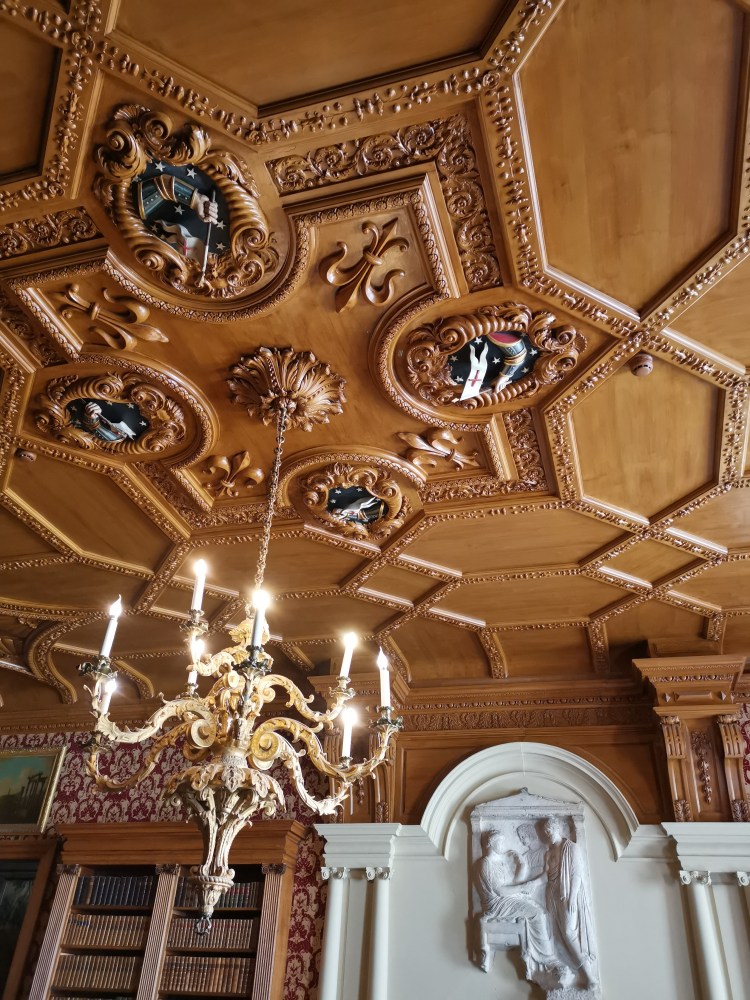
The renovations had been done really carefully and they bring the room back to life. However, it was the ceiling that really caught my eye. It thought it was carved wood. The guide explained that it wasn’t , it was painted plaster. So much timber had been used during the war (not sure which one during the 500 years), it was not readily available and plaster was much cheaper to use. The painting work really made it look like wood.
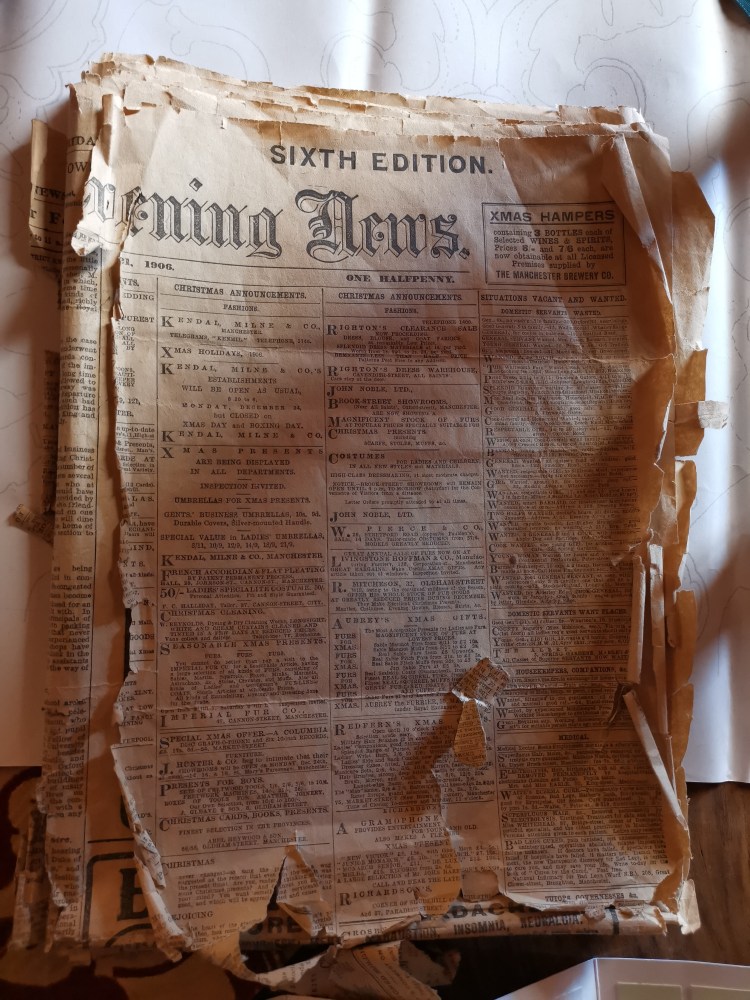
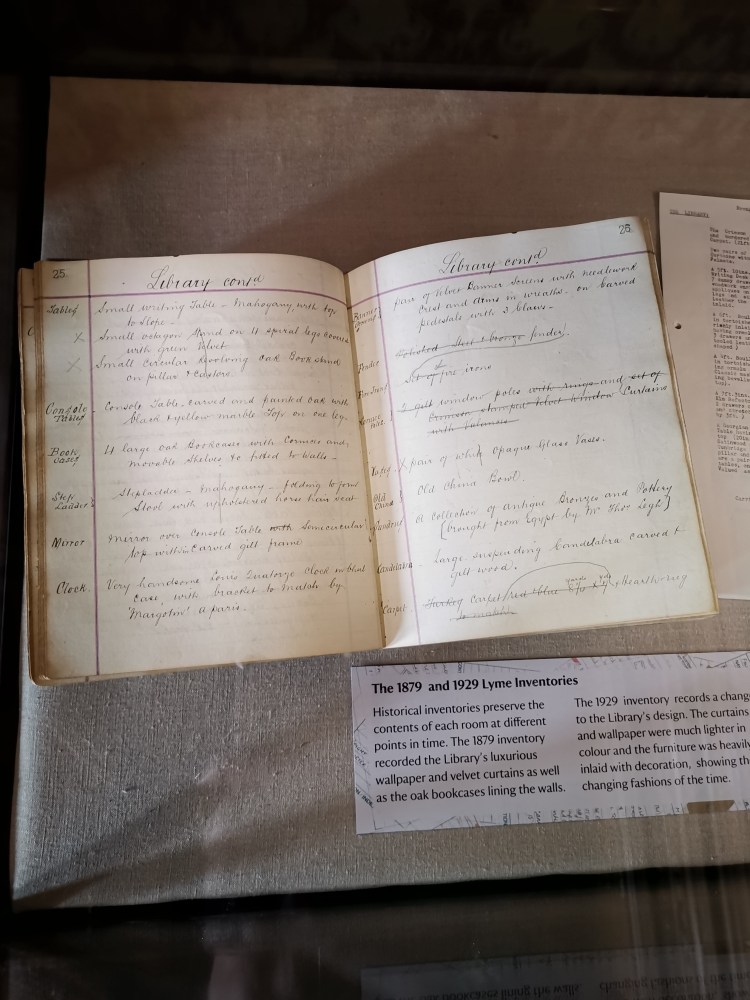
Other interesting things in the Library were a newspaper from 1906 and an Inventory book with a hand written listing of all the items in each room of the house.
Two of the books I discovered on one of the shelves (I didn’t touch them) were written by one of the ladies of the house, Lady Newton. To protect the books (and probably to make them easier to dust), a cover was placed over the top of them. It was a shame that there wasn’t the chance to spend longer in the house exploring and taking a closer look at the things in each room.
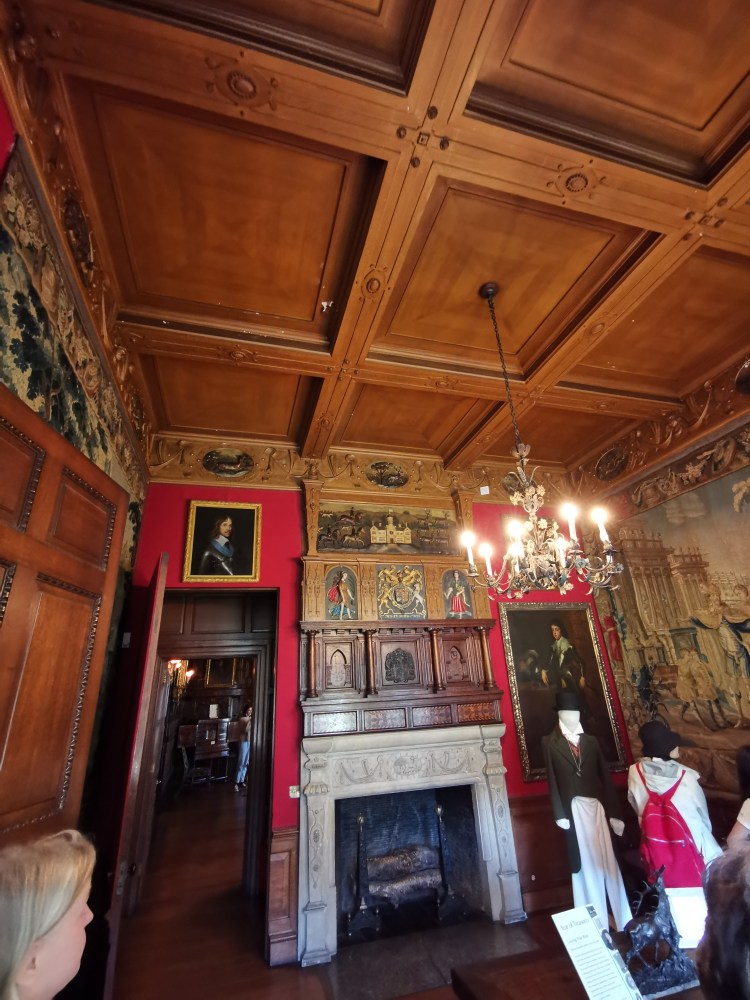
The next room on the tour was the Wyatt’s Dining Room. They had the table set up as it would have looked for a Christmas feast. The table could seat 20 around it, although there were less chairs at the table now, the rest of the chairs were stacked along the walls. There is so much intricate carving into the ceiling and walls, stemming from the 1600s. It certainly would have been a grand place for dinner.
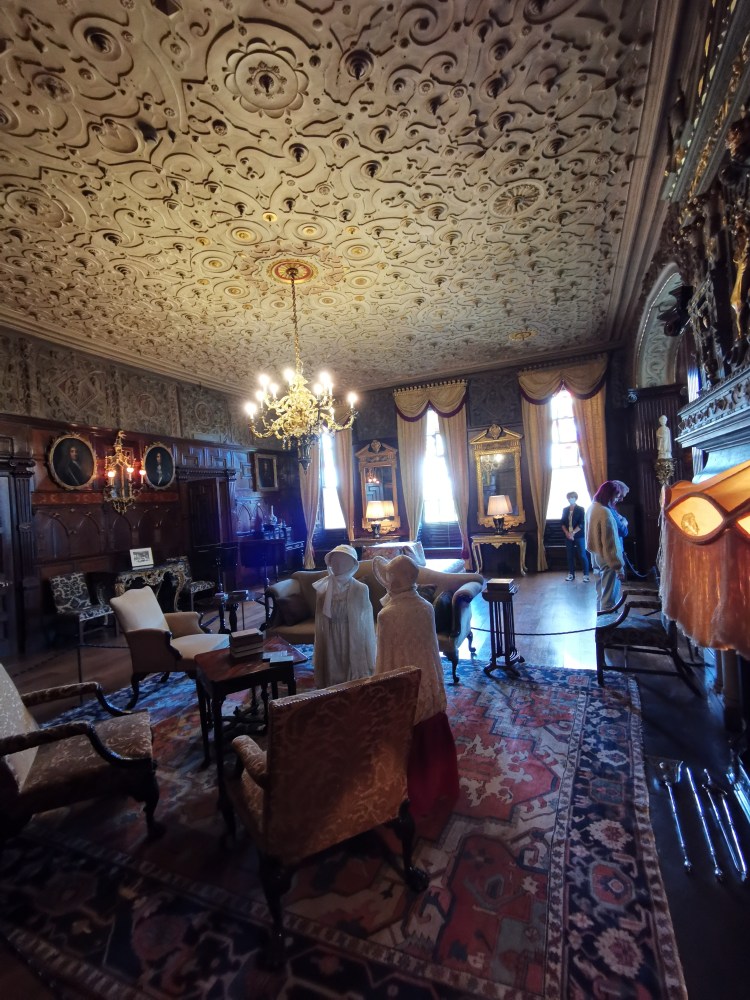
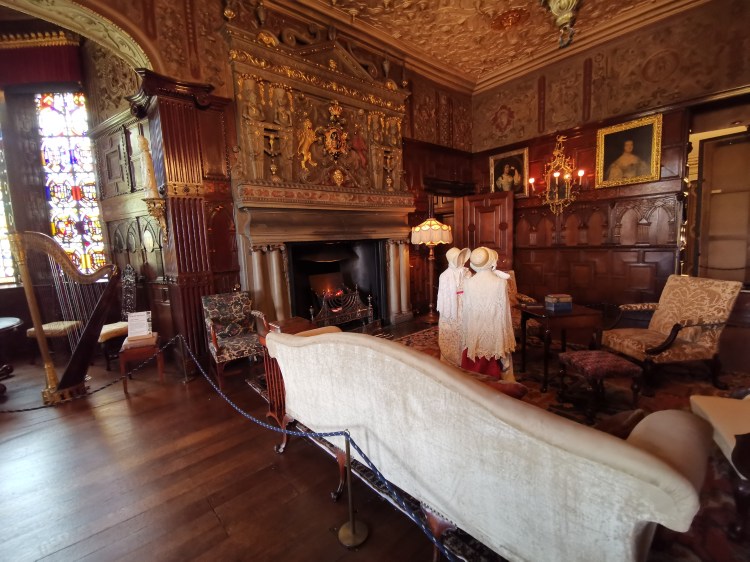
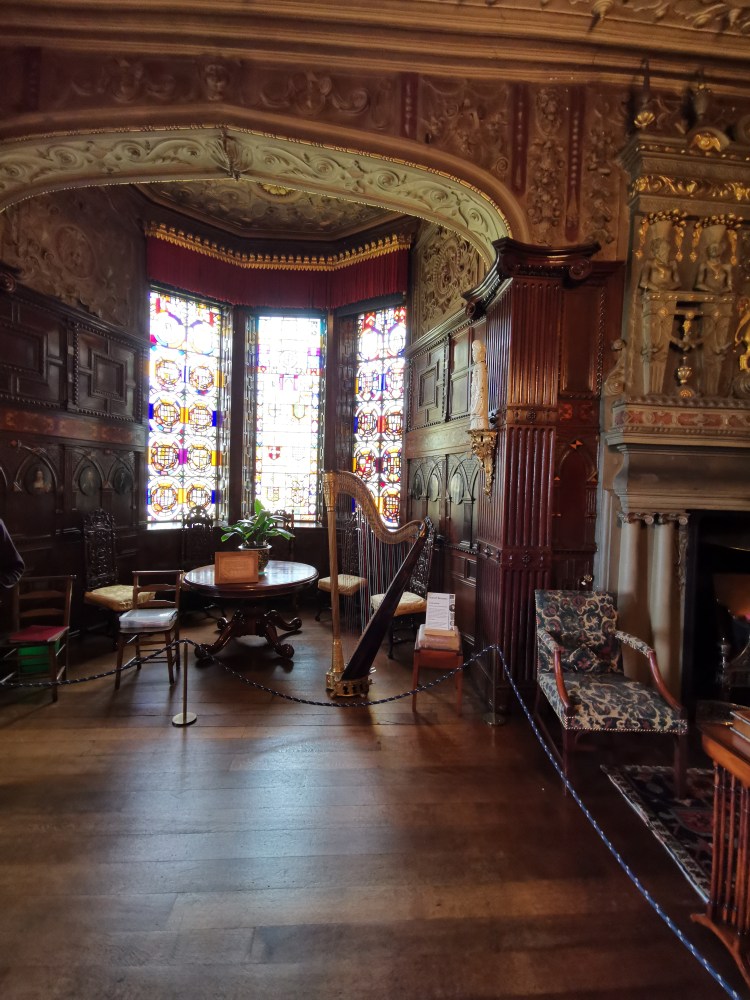
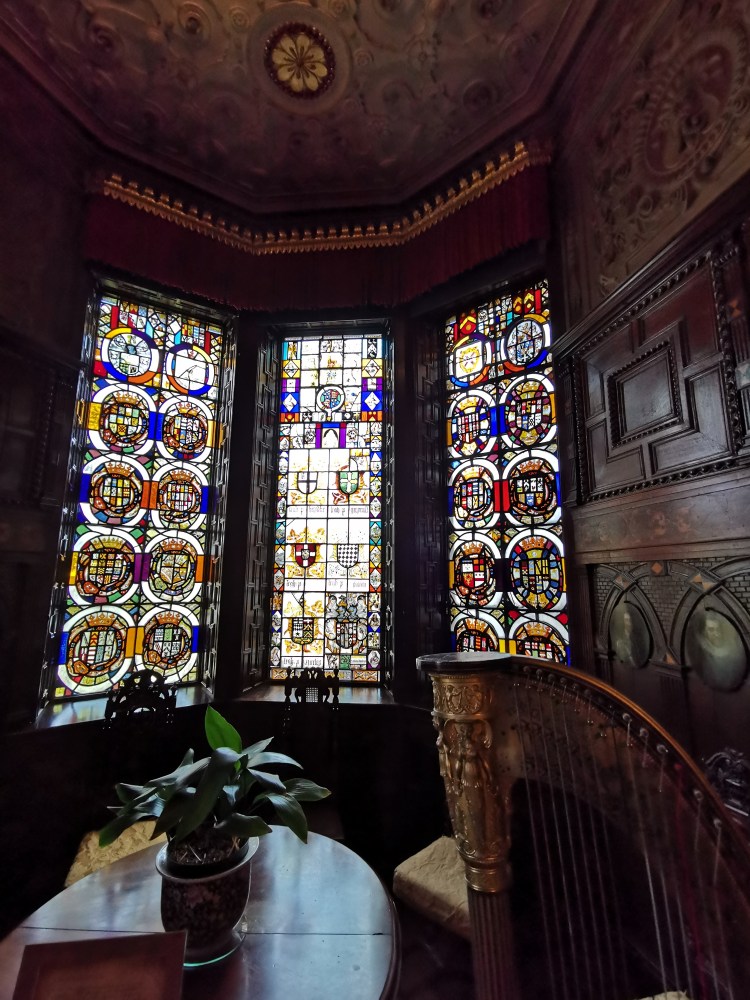
The next room was the Drawing room, where the guests could move to after dinner. It has a very ornate ceiling and fireplace with Elizabeth 1 crest above it. There was a lovely corner with stained glass windows that were originally in a church set up to appear that it was used to play a harp to entertain the guests. From this room, the painting in the Entrance Hall could be moved aside so that the goings on could be seen. I missed getting a photo of that.
This is the Stag Parlour with deer hunting scenes depicted and more of the painted ceiling to look like wood.
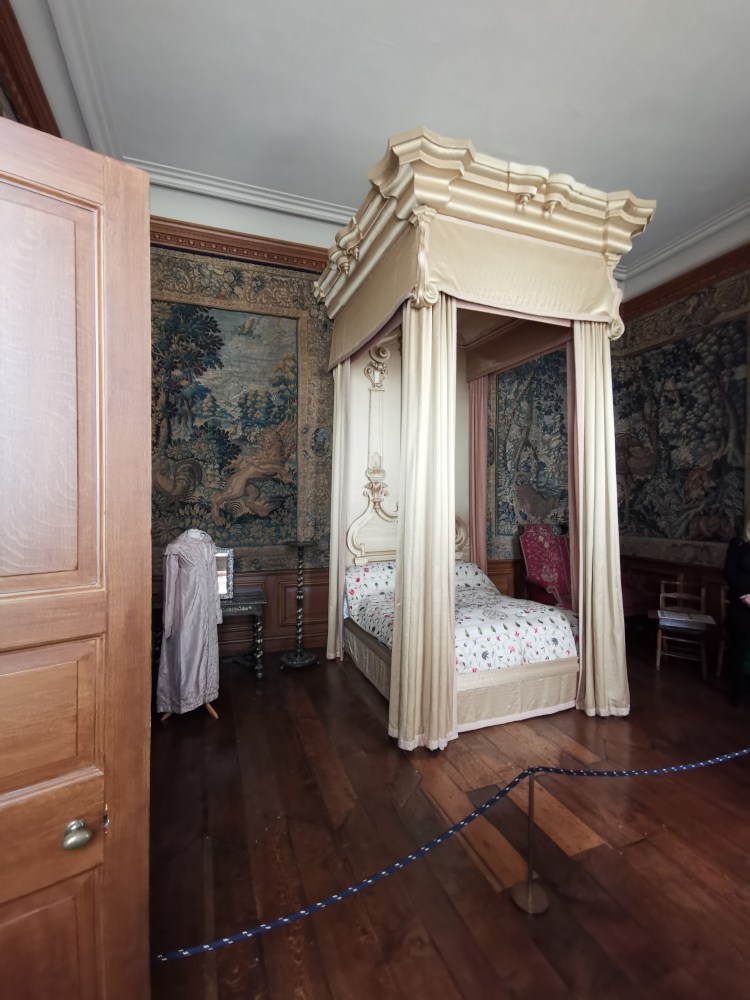
The last room we were allowed to go into was the “Yellow Room”, with its four post bed. The guide said that this could have been a guest room, as it was close to the Drawing and Dining room and there was also a smaller room next to it which they believed could have been a dressing room. The walls again were covered in tapestries.
Although there were a lot more rooms above this floor, we weren’t permitted to go upstairs and see them. But I think it was easy to see that this would have been a beautiful house for the family. The Trust had tried to keep each room as authentic as they could and having the handwritten inventory, stored in the library would have helped.
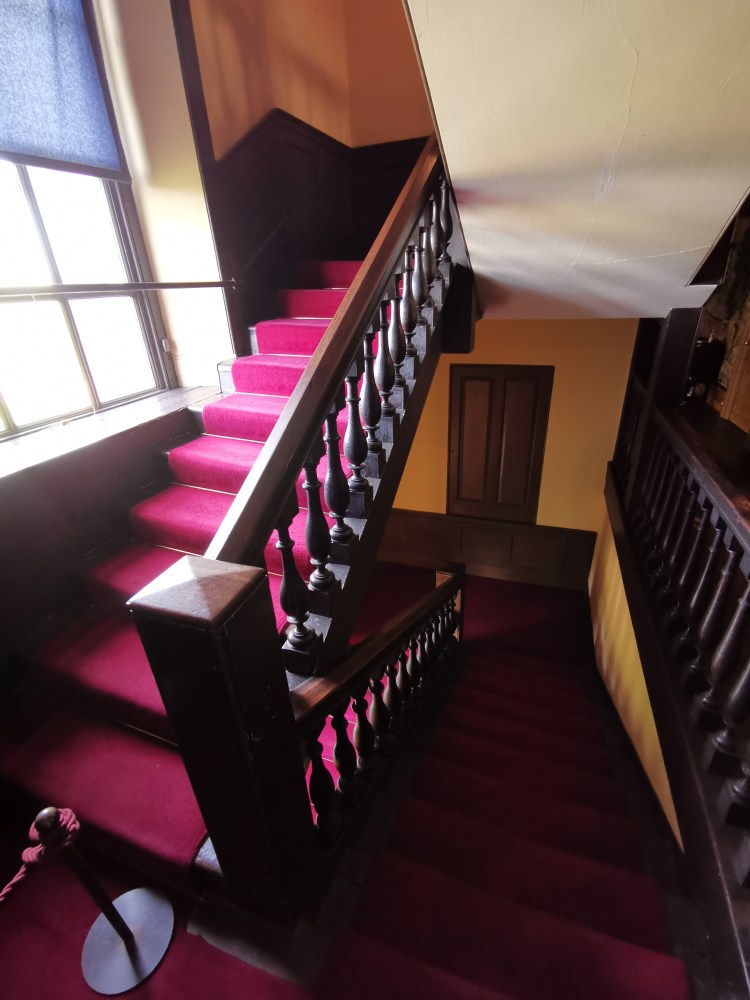
Time to go back downstairs. These stairs were pretty narrow, so I expect they were probably a back entrance/exit and returned us back down into the courtyard area.
There are a few buildings around the property, so it was time for Snow, Fin and I to stretch our legs and enjoy the fresh air as we went exploring. So we left the house behind and started climbing the hill.
We walked up to the Stables, but unfortunately we weren’t able to go in for a look as it is a working part of the estate.
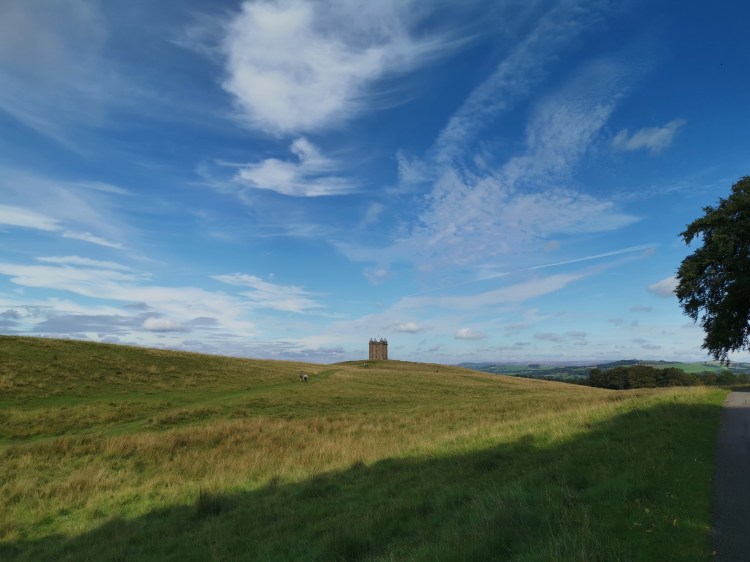
We continued up the hill and could see the Cage in the distance. I wasn’t sure if I could walk directly up to it, as the way was quite steep, so we side tracked along the Stables wall, which gave Fin and Snow time to have a play on old gate.
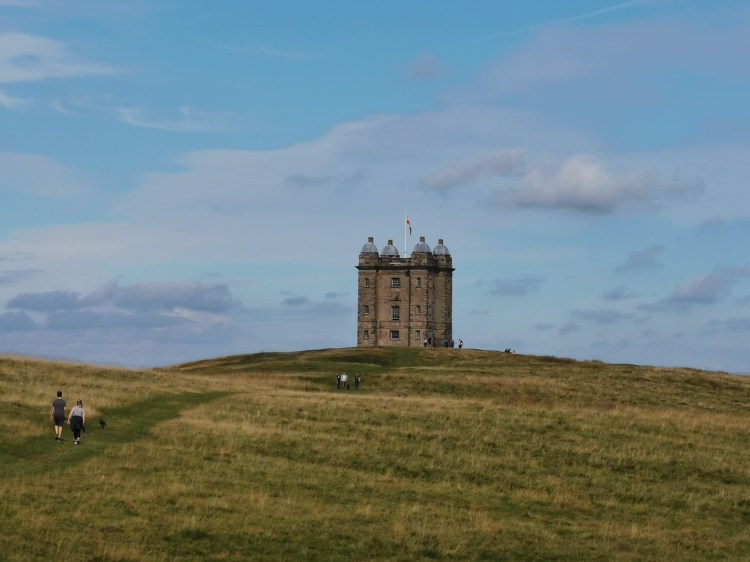
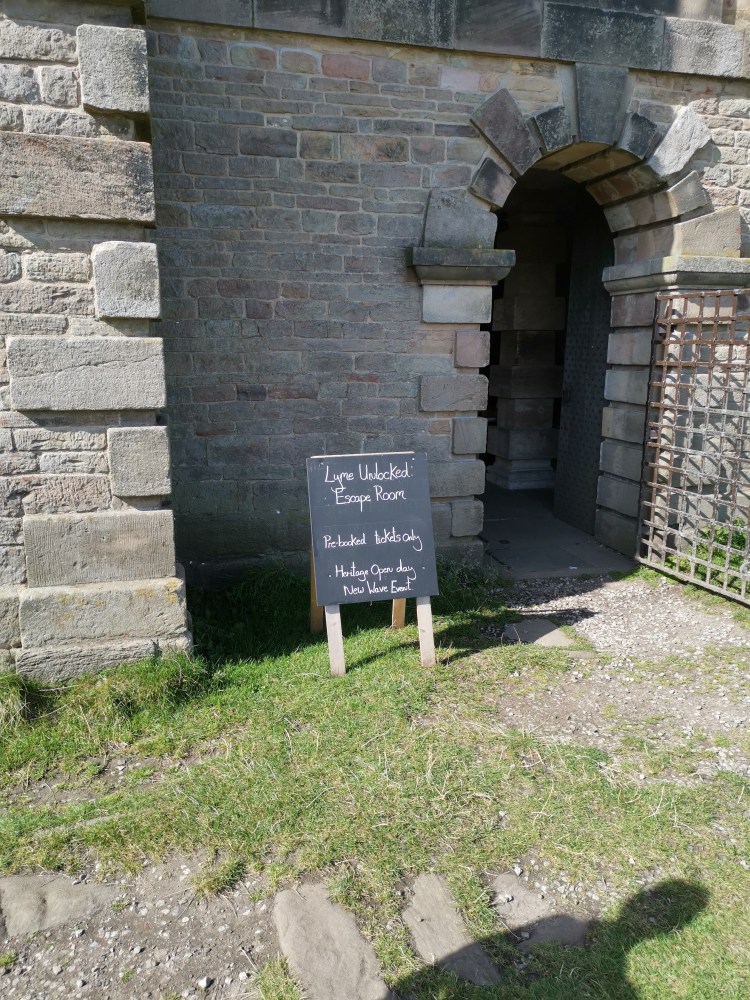
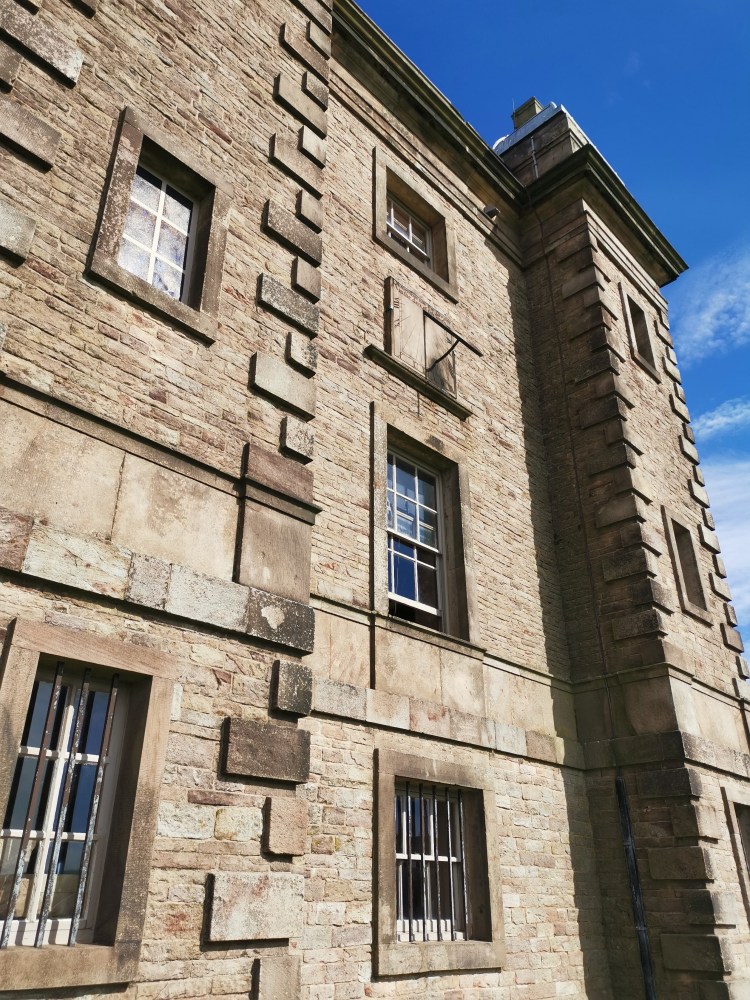
Time to tackle the walk to the building in the distance and I managed it ok. Unfortunately we weren’t able to go inside The Cage, as it was being used for an Escape Room experience. It seems The Cage was used as a hunting lodge, a place for the ladies to watch the hunt and may also have been used as a prison to hold poachers who were caught with the estate’s deer. There are red deer on the estate, but I didn’t go in the right direction to see them as they are up beyond the house.
The view from up on the hill is of Manchester. So I sat on the grass alongside the tower to see if I could pick any landmarks. I think it is a bit soon to recognize any, but it nice being up high. There were quite a few family groups up by The Cage also sitting on the grass and others setting off on to hike further afield.
I decided it was time to walk down hill and beyond the house and the carpark to see The Timber Yard, which is tucked down in the valley. The map indicated there was a café there in what was the carpenters workshop. Walking down hill was much easier than up hill. I didn’t need Anne and her buggy to help.
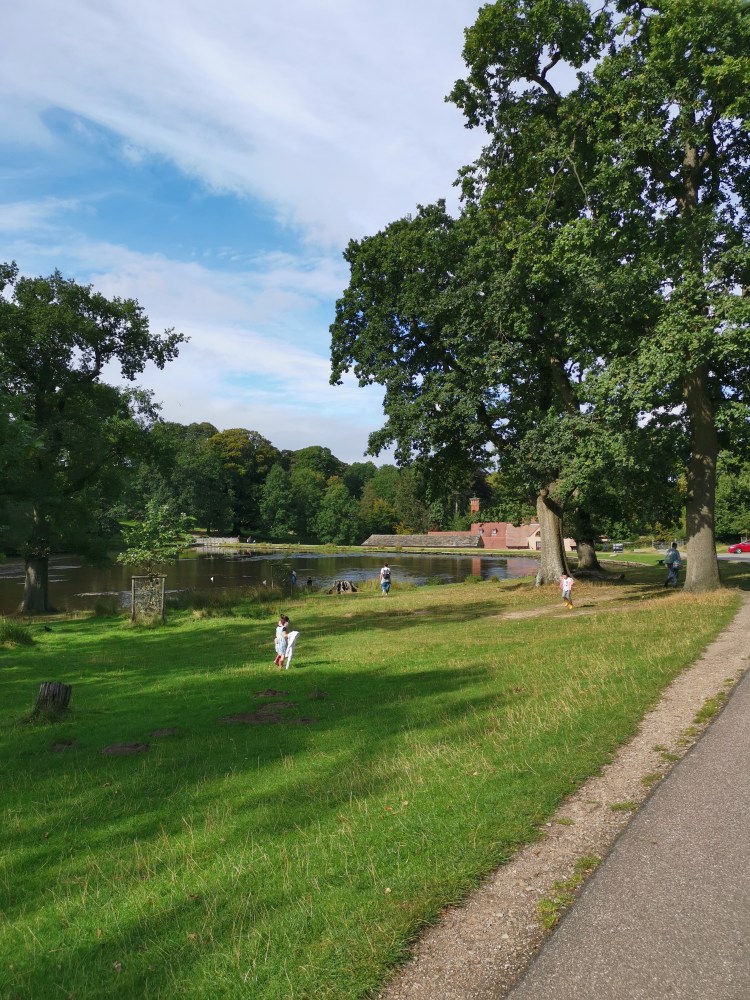
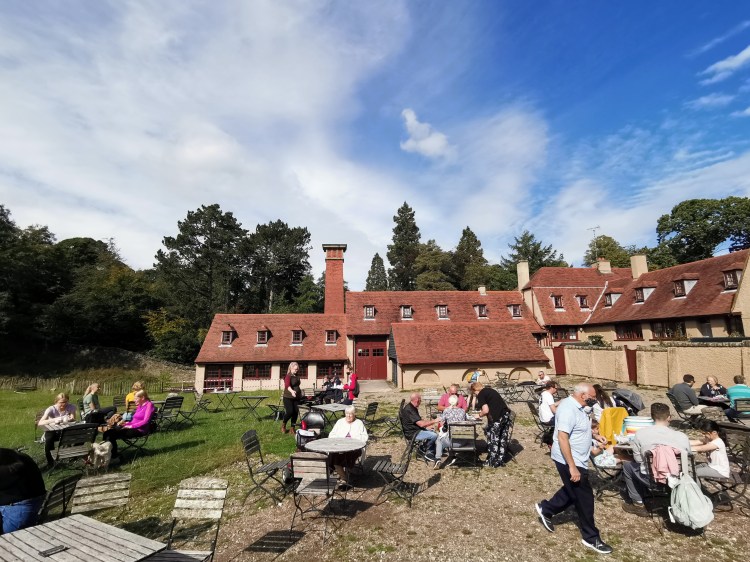
Beyond the carpark was the area alongside The Timber Yard, which was a nice setting for a picnic.
The Timber Yard was quite busy, especially the café, so I didn’t stay long in the courtyard and headed back to the carpark.
It was a lovely outing. A nice drive in my car to a lovely historic location to see so much history that is close to where I now live. I am looking forward to being able to discover more gems with the National Trust. I have signed up and my welcome pack will hopefully arrive in the next few days. I am going to try to get my £72 worth of entrances and car parking over the next 12 months (the membership).





























































































































































 Life is a Journey