16 October 2021
There are some places in England that you can sense that if they had a life, they would feel lonely. On another lovely time out with my friends Janice, Karen, Mike and Cockapoo Lulu, we visited two locations that to me fit that description.
Half Moon Bay is my first experience of the ‘Sea-side’ since returning to the UK from Australia. It was a very different experience from a visit to the beach back in Adelaide, South Australia.
Where I lived in Huntfield Heights in South Australia, the sea could be seen from my back garden. The garden faced west, which meant that every night the sun melted into the sea producing a unique sunset.

Home was also a short drive, about 10 minutes to our local beaches of Christies Beach and Port Noarlunga in South Australia.
Christies Beach was a lovely beach to walk along and in summer would be filled with families.
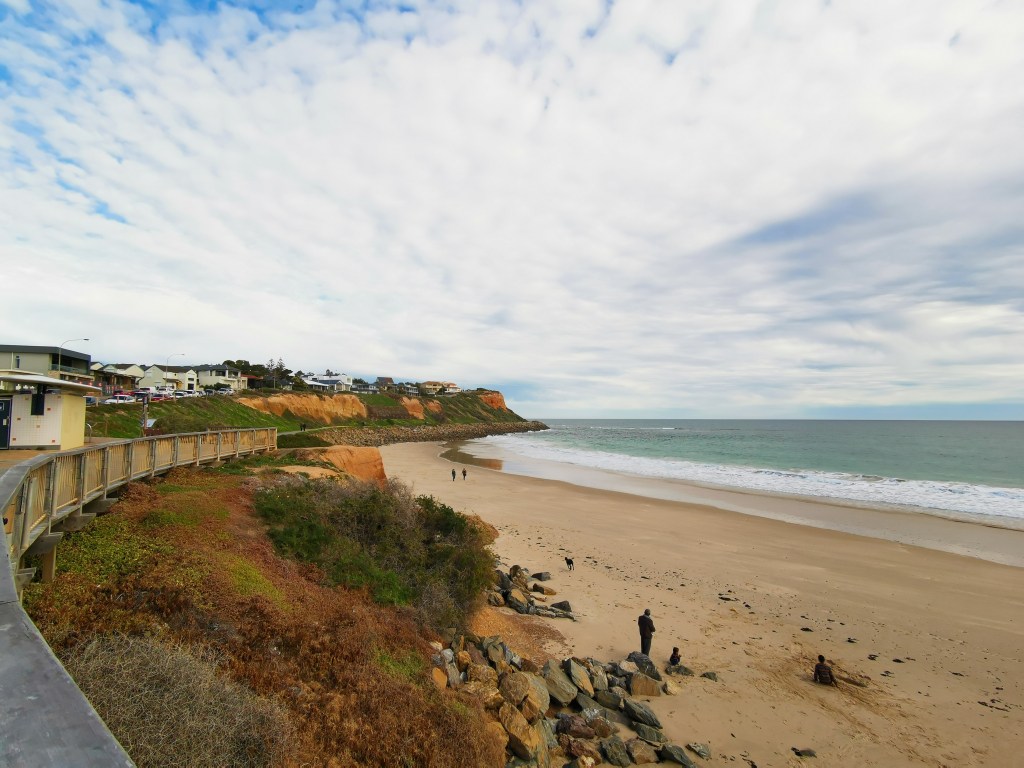
Port Noarlunga has a jetty (or pier in the UK) and a natural reef full of fish. Many afternoons and evenings were spent enjoying the beaches. I wasn’t much into swimming, but I did love walking along with John on warm evenings, looking for shells or pretty, smooth stones.
Although both beaches could be wild places during bad weather, with the wind whipping up the waves, they never felt lonely to me, just wild and beautiful.

Now I live in Manchester, the beach is further away and not something that my family have visited often.
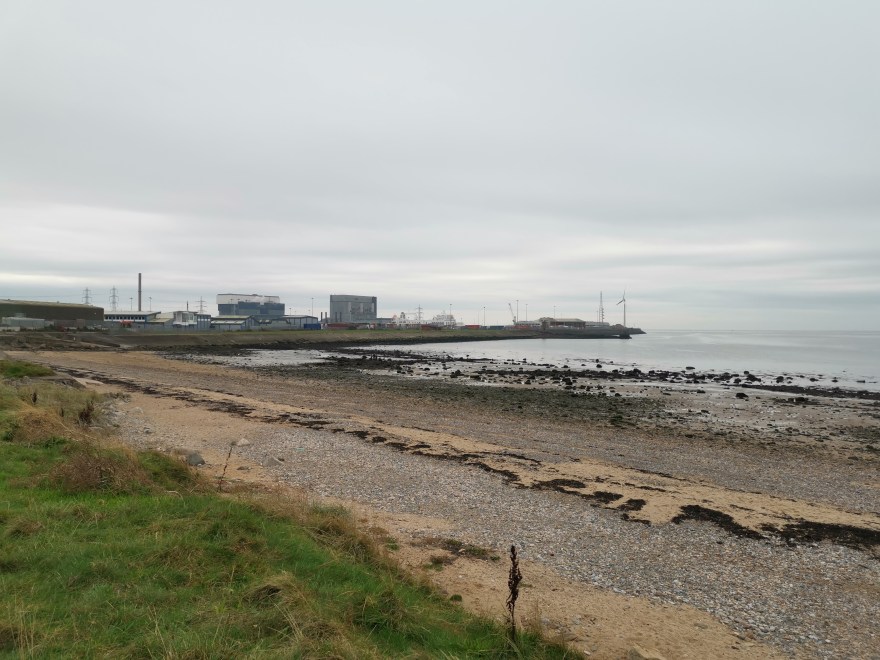
When Mike and Janice said we were off to visit Half Moon Bay, which is very close to a nuclear power plant and where the Ferry to the Isle of Mann leaves from, it sounded like a perfect opportunity to renew my association with the sea. As a teenager, I wanted to be a marine biologist as I loved the water and hoped to be able to work towards caring for the precious wildlife under the waves on the warm waters of The Great Barrier Reef.
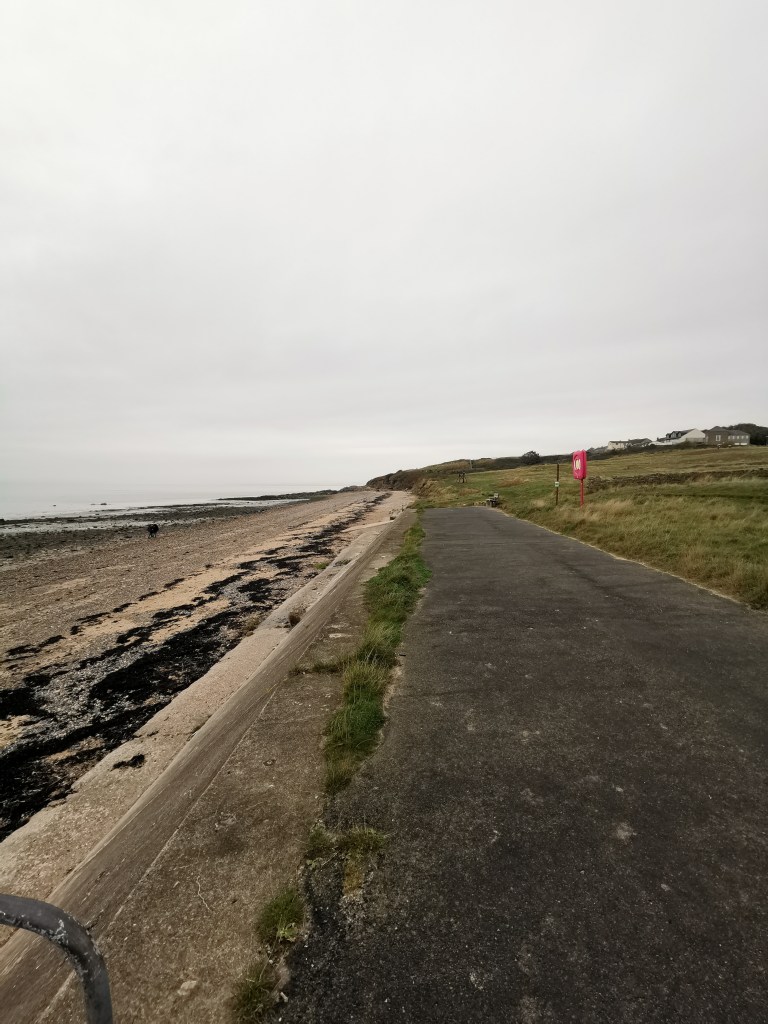
After driving past where the Isle of Mann ferry left from, we reached the tiny car park at the head of Half Moon Bay with its tiny café, toilets in a shipping container, slipway for boat launches and the empty, lonely beach to Morecambe Bay.


The weather today could only be described as grey. There was no horizon as the sky and sea merged into each other.
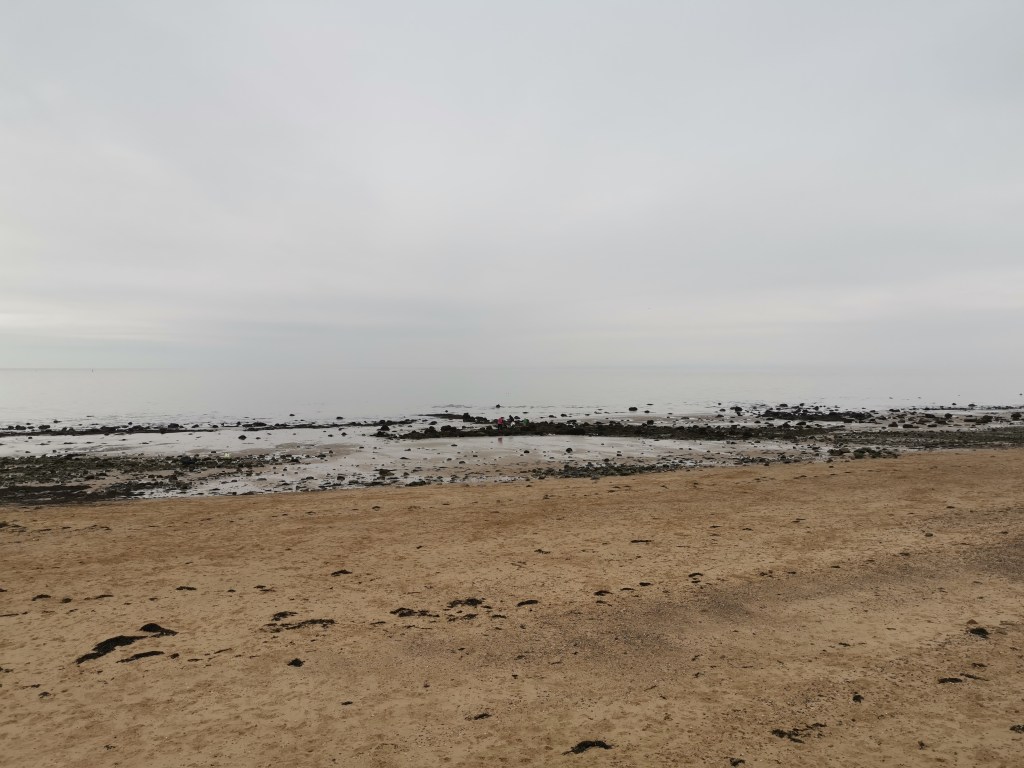
There was a family down in the rock pools, as the tide had gone out. There were a couple of people walking their dogs and there were the sculptures. However, the beach still looked lonely. I think if you came down to take a walk along this beach to find a happy place, I don’t think you would find it here.
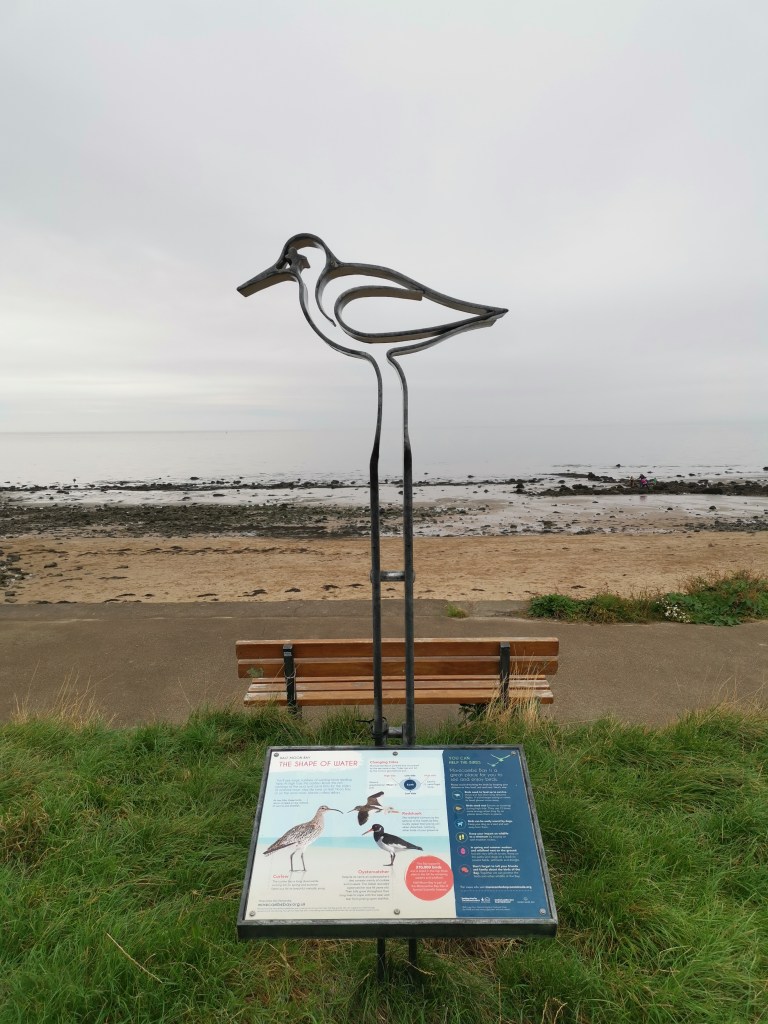
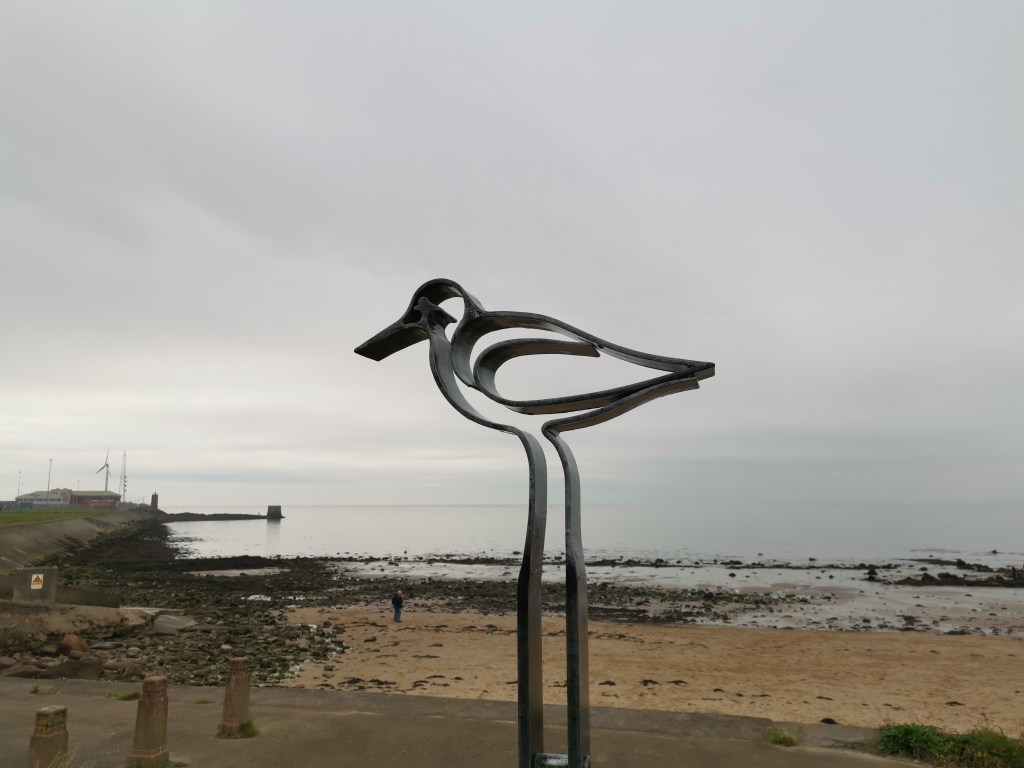
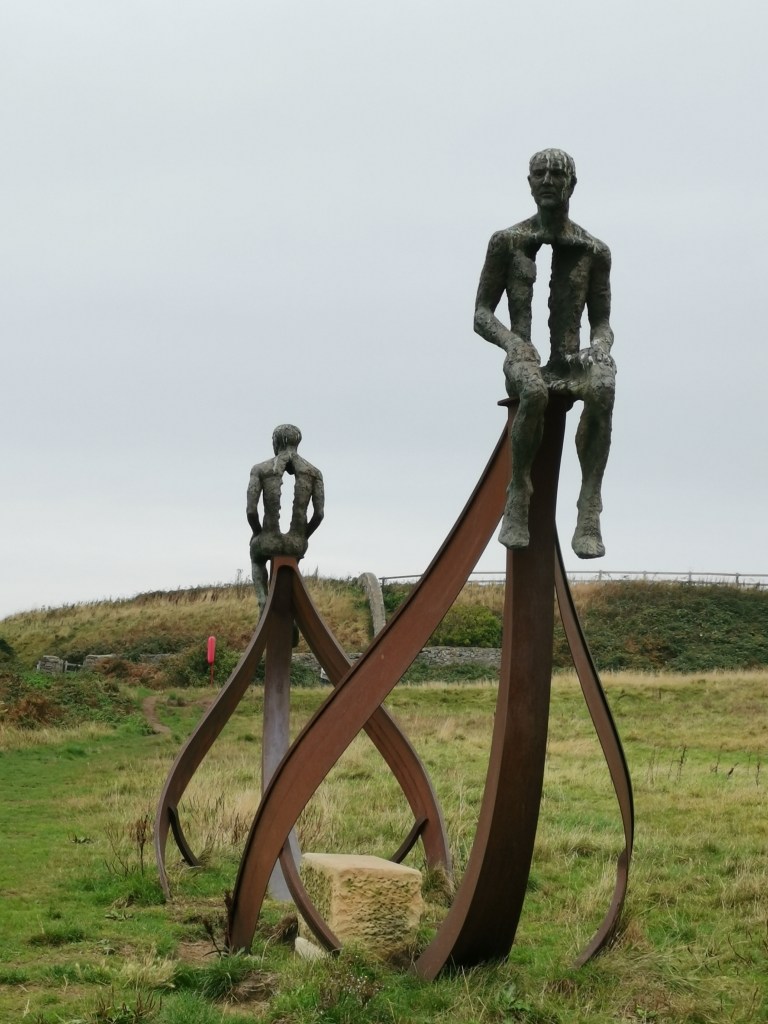
There were a couple of pieces of sculpture work facing the weather. The wading bird, placed on the break wall tricked my eye and camera into thinking it looked like it was walking in the tidal pools. Very cleverly placed.
The other sculpture is called ‘Ship’. It was an abstract piece that leaves it with the viewer as to how they want to interpret what she has been created. The spine of the ship and two figures without spines. The sculptor website indicates she wanted to capture the figures looking to the future, the ferries and nuclear powerplant and to the past of the historic church called St Patrick’s Chapel.

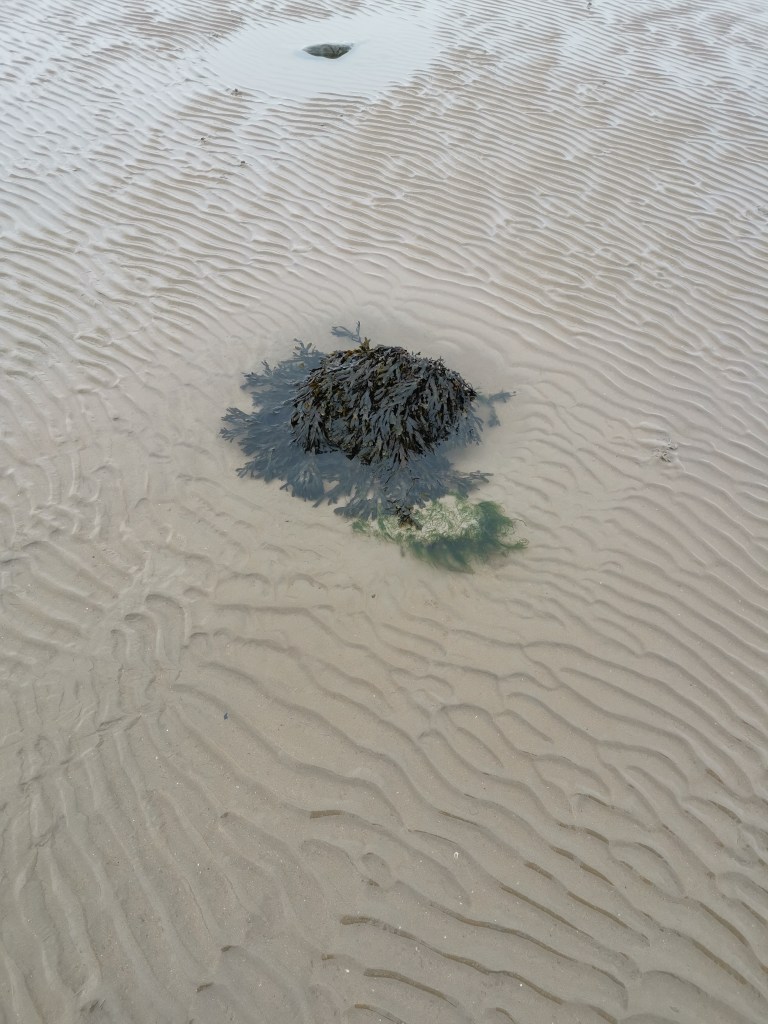
The combination of the empty beach and the grey sky evoked a feeling of loneliness. As the others wandered back to the little café for a coffee, I went down onto the beach, a combination of stones, seaweed and tidal pools to see if perhaps there was life here. Maybe a crab or other sea creature could change this from a desolate beach to home to life. But there was nothing.

I joined the others in the café for a coffee and quickly was drawn away from the sense of sadness brought on by this lonely place.
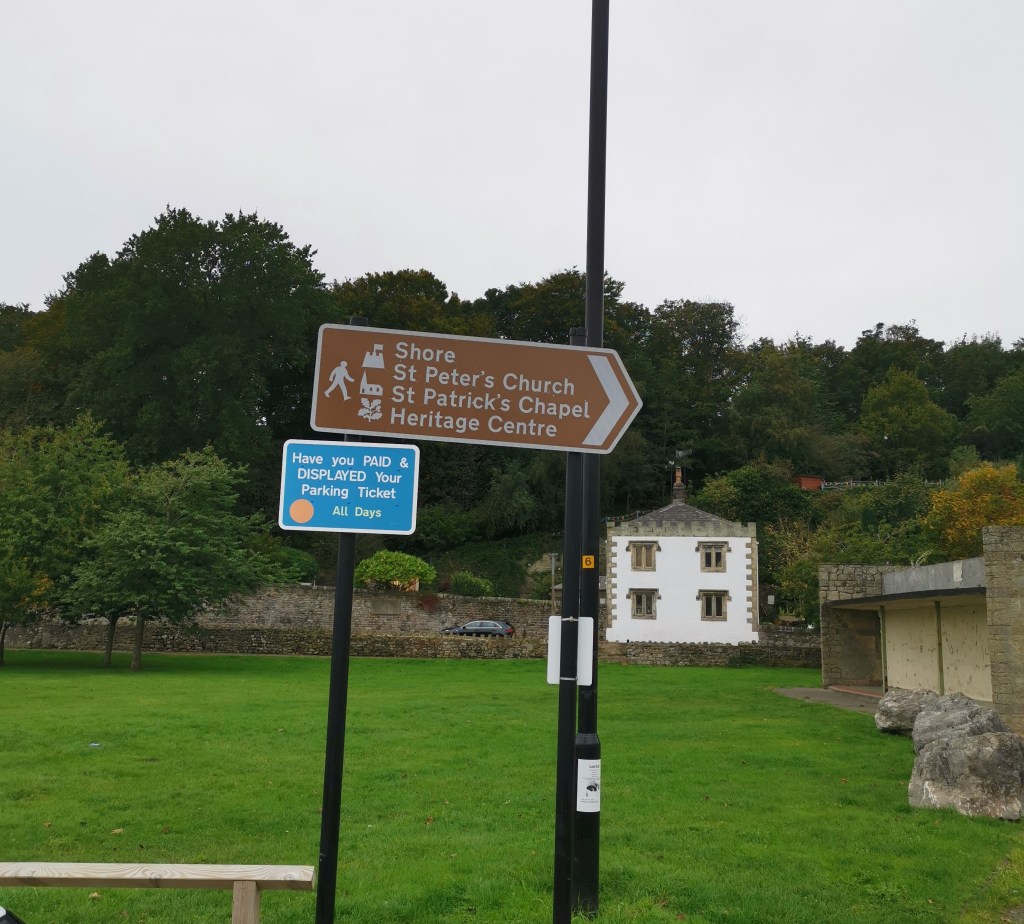
With Mike at the wheel, we left Half Moon Bay and set off to find the historic St Patrick’s Chapel, in the village of Heysham, which I felt again personified the sense of loneliness. Although the little historic village Main Street was busy with people coming and going, and a wedding ceremony was in progress at St Peter’s Church, it was the layout of the graveyard and the remains of St Patrick’s that left me with a feeling that this was a lonely place.
We parked next to the Heysham Cricket Ground and walked through to the historic Main Street. It isn’t the main street anymore but is now is part of a Heritage Trail.




The Spirit of Heysham
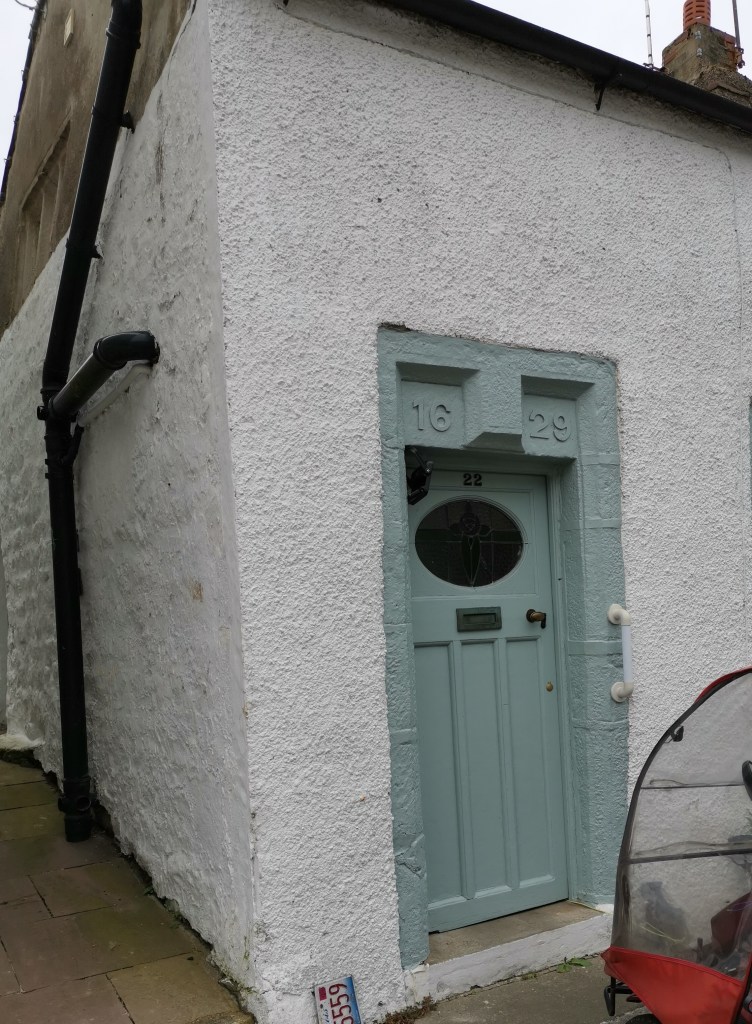
Main Street is very narrow, only really one car’s width and there are a variety of different cottages. There is a date above one of the doors that indicates it was built in 1633 as a fisherman’s cottage.
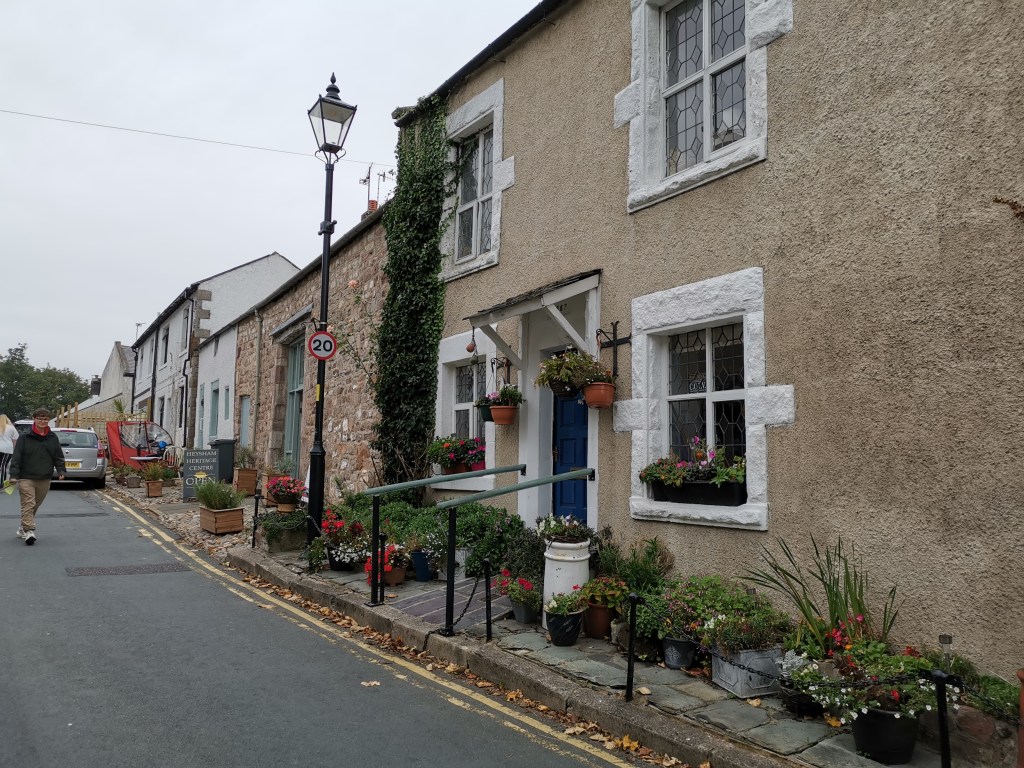

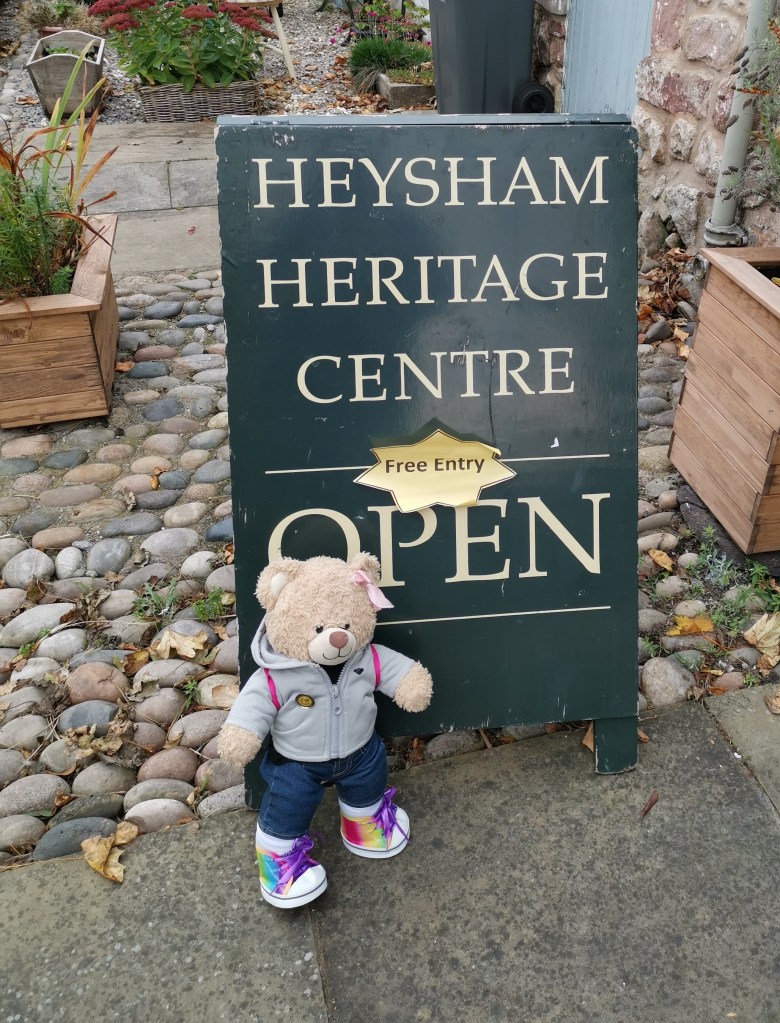
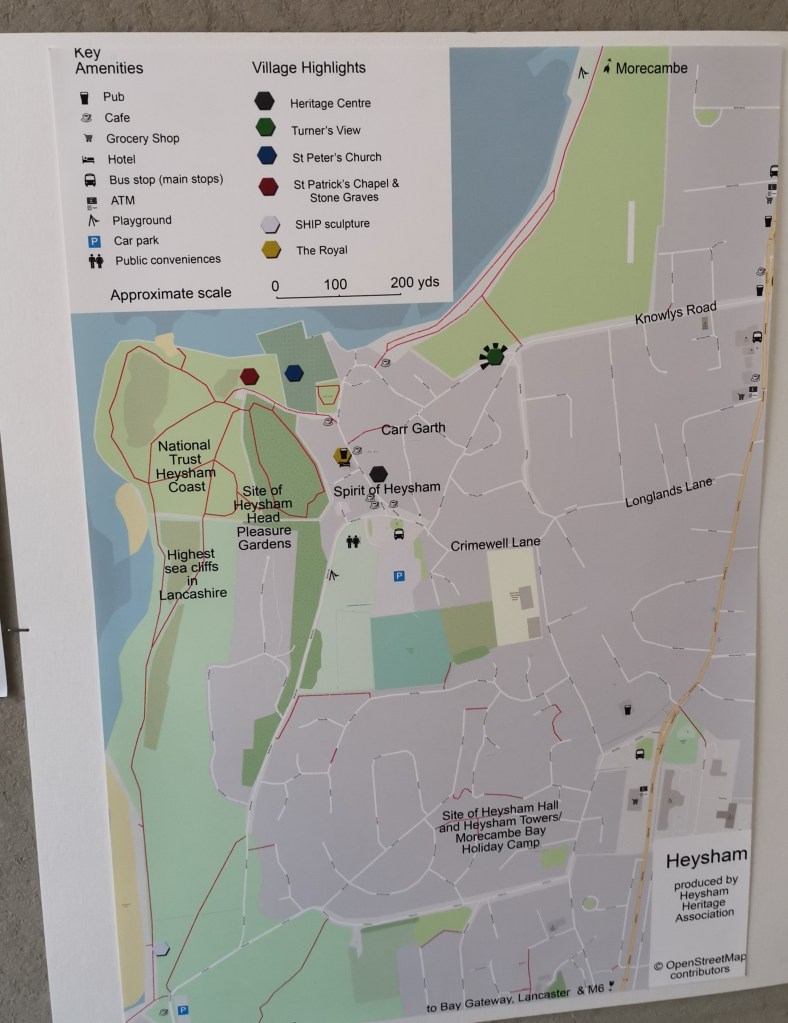
There is a Heritage Centre where you can pick up information about the village and the local community.

The National Trust helps look after the area to protect it.
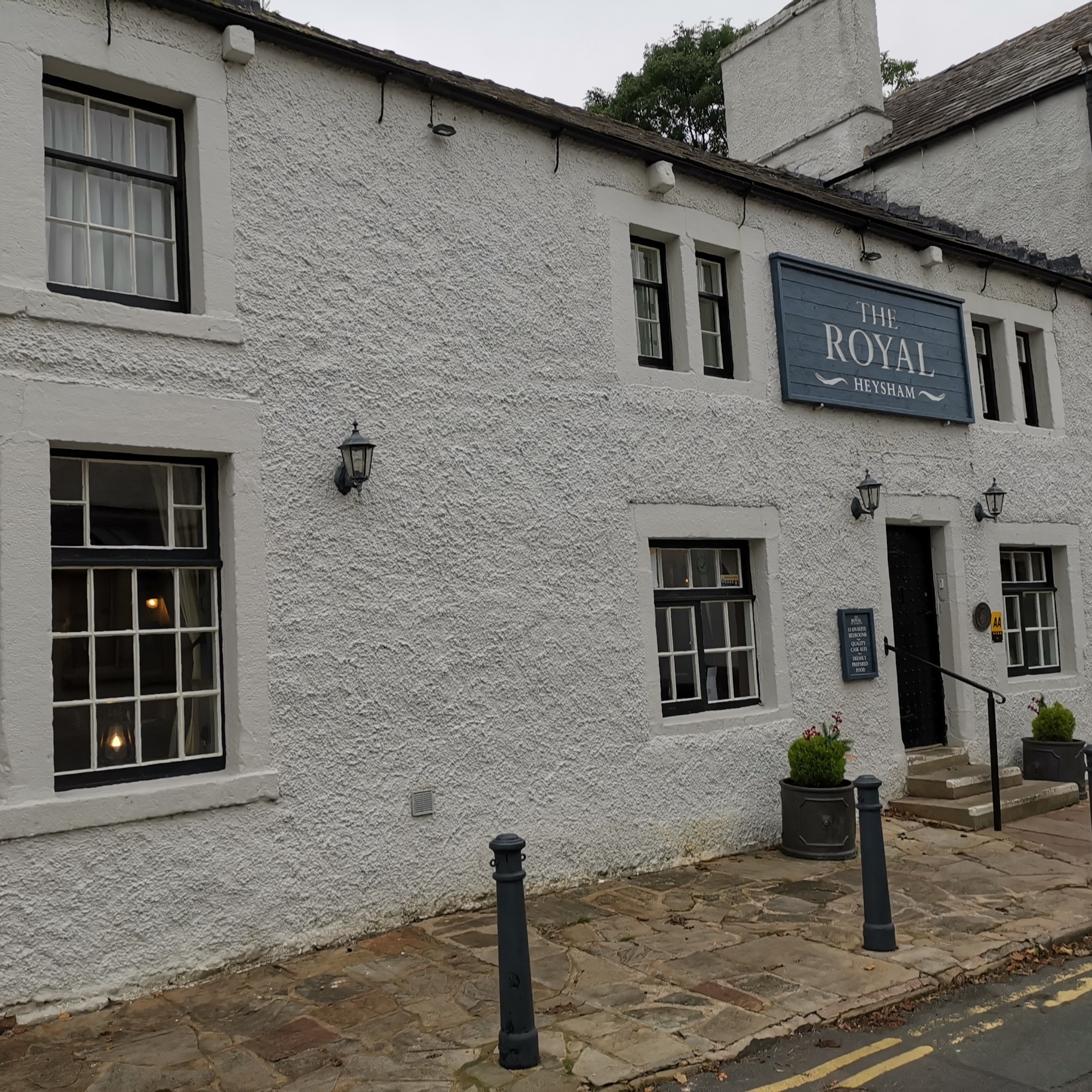
We strolled past the little cottages, reaching The Royal Hotel, which doesn’t look old, but a sign indicated c1502 and that there are deeds to confirm that date, making it the oldest building in the village.
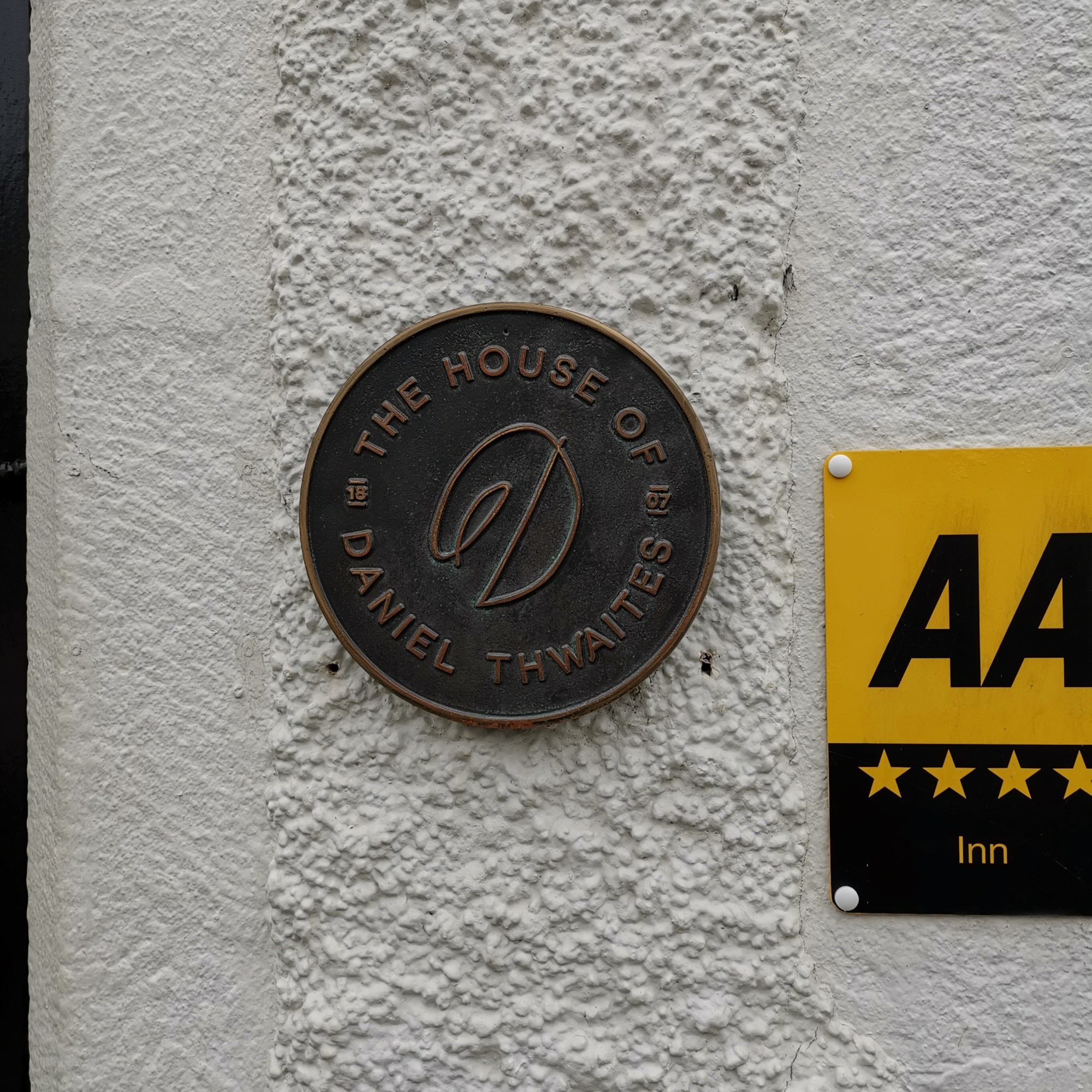

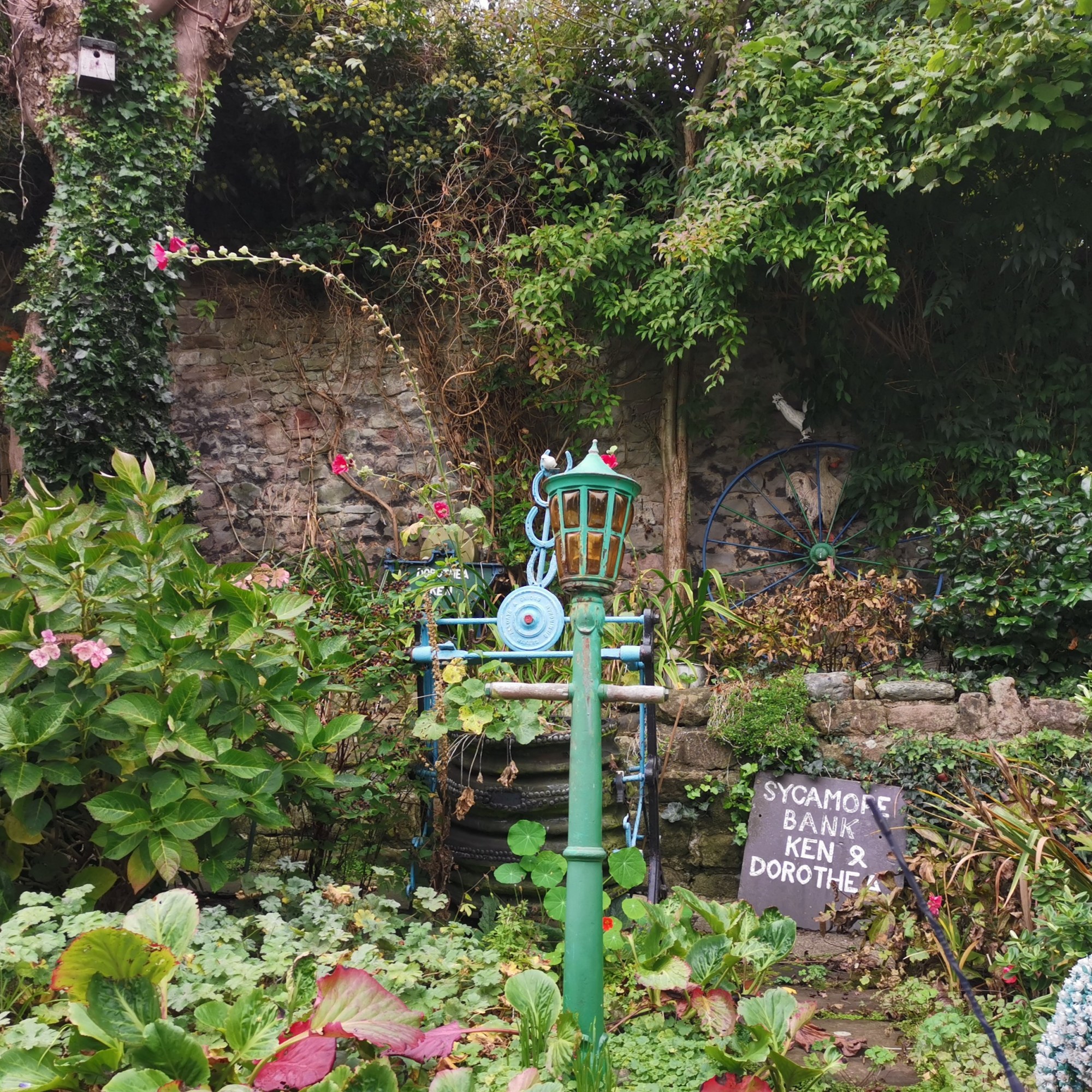
When a luxury car passed us with wedding ribbons on the front, we guested that there was a wedding happening at St Peter’s Church and presumed that the reason the shops seemed to be shut in the newer section of Heysham, that it was very likely a local was getting married and everyone was invited to the wedding. When we enquired about lunch at The Royal Hotel and was advised we could only sit outside, but it wasn’t the type of weather for outdoor eating. We presumed the reception was going to be in their dining room.
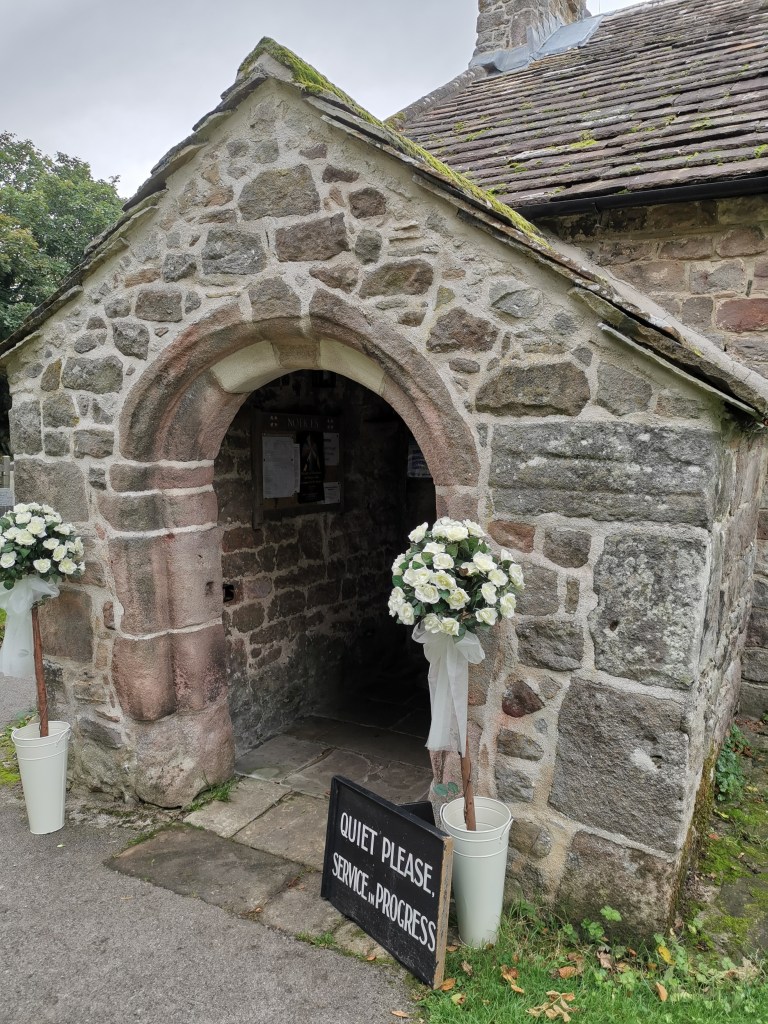
When we walked up to the churchyard of St Peter’s, a sign asked us to be quiet while the service was happening. We didn’t get to have a look in the church, which dates back to 962AD. That is crazy to think that in 1967, the church was 1000 years old – a millennium.



Many of the graves in the church yeard are on the same level as the church, but there is also a field of them at a lower level. These overlooked the grey of Morecambe Bay and the sky. If it would have been raining and windy, this would be a setting out of a movie. Karen suggested that she could write a historic crime novel with Heysham giving her inspiration for the story.

After we had had a brief look around the graveyard, Janice and I decided to walk up to the ruins of St Patrick’s Chapel. This church is believed to have been built in the 8th Century, so 700 to 800 AD.

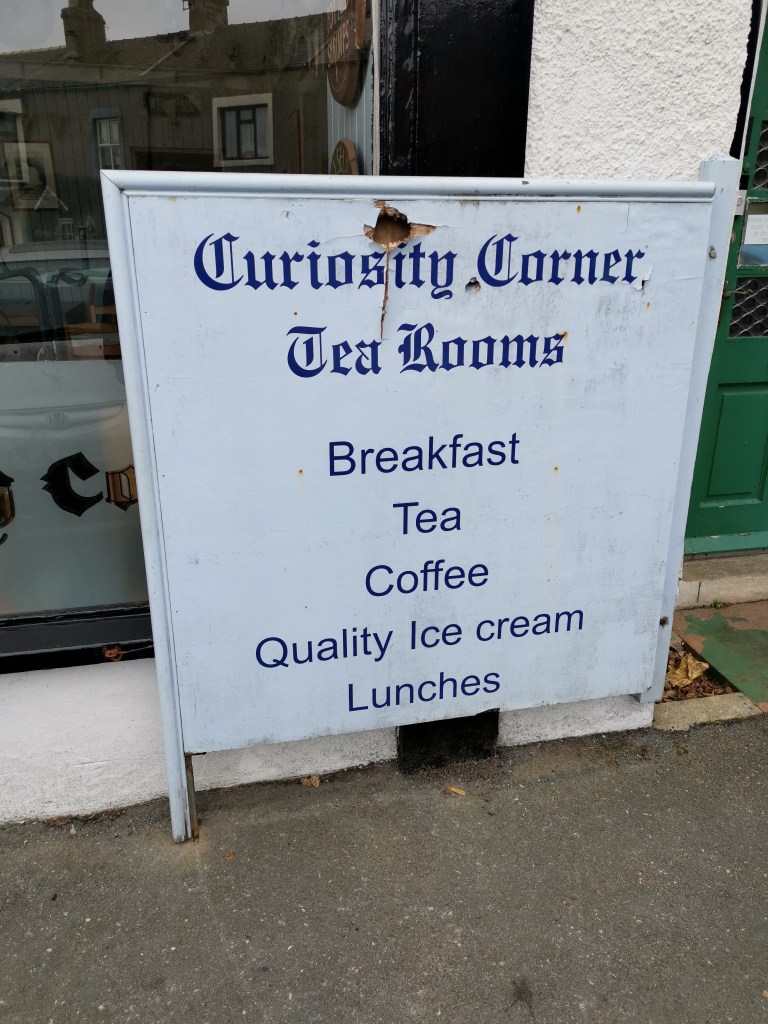
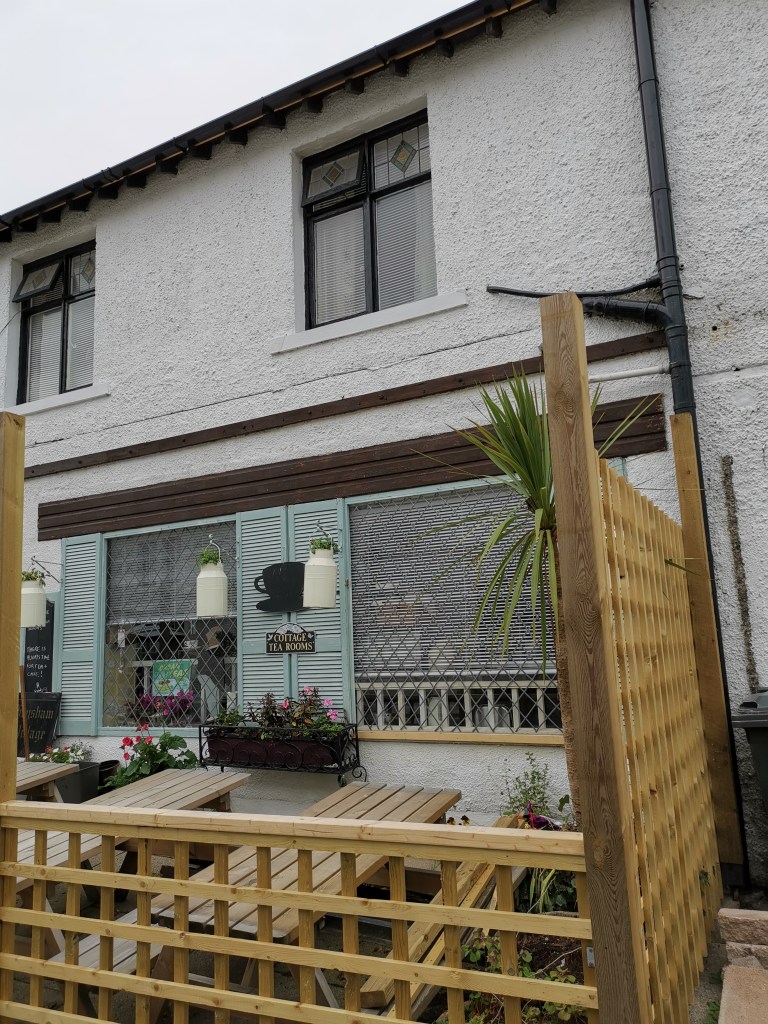
Outside the tea room 
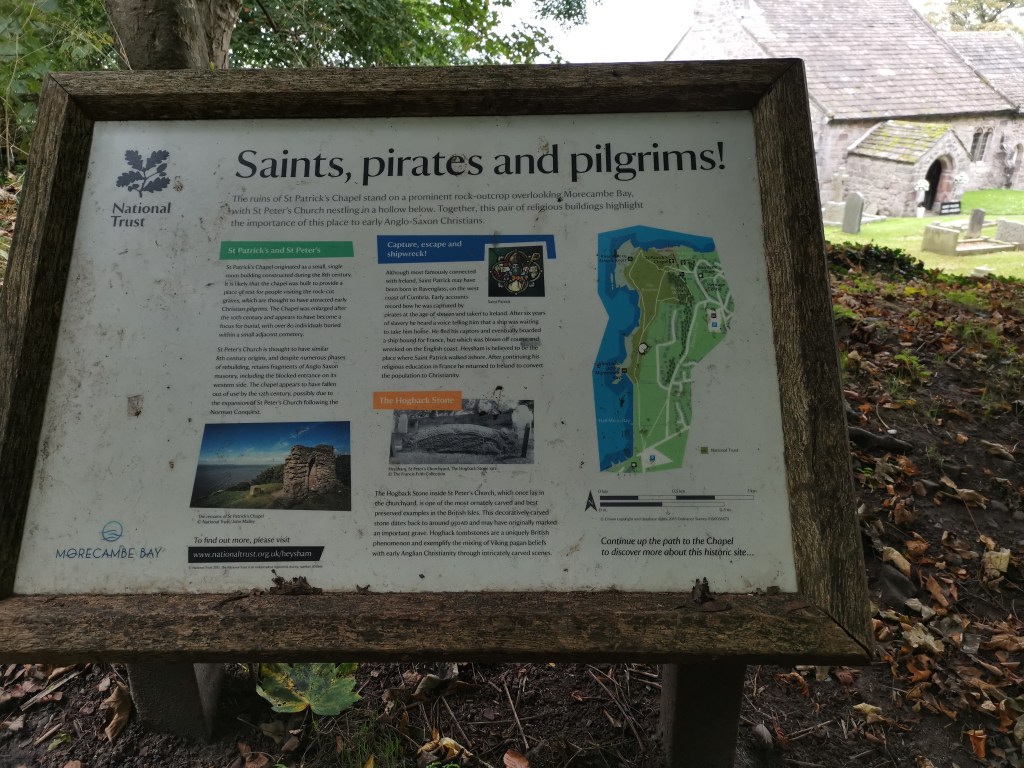
See the end of this Blog for details about what this board says 
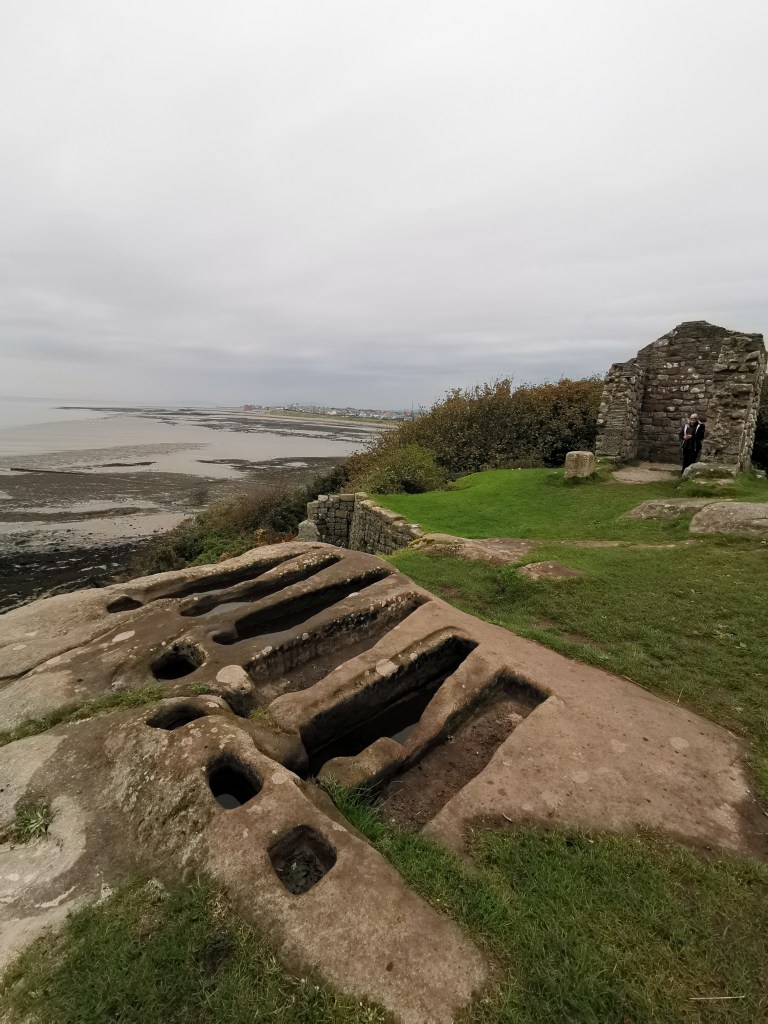
There wasn’t much of the church left which is understandable considering its position on the headland and the weather that it would have had to endure over 1200 years.
It was very unusual to see the rock-hewn graves. It struck me that with the land around the church being more like dirt or sand that it was probably the only way to make them last. I’ve never seen graves carved out of the rocks. One of them is small, like for a child. How sad would that be if it was?

See the end of the blog for details of what this says about the Chapel 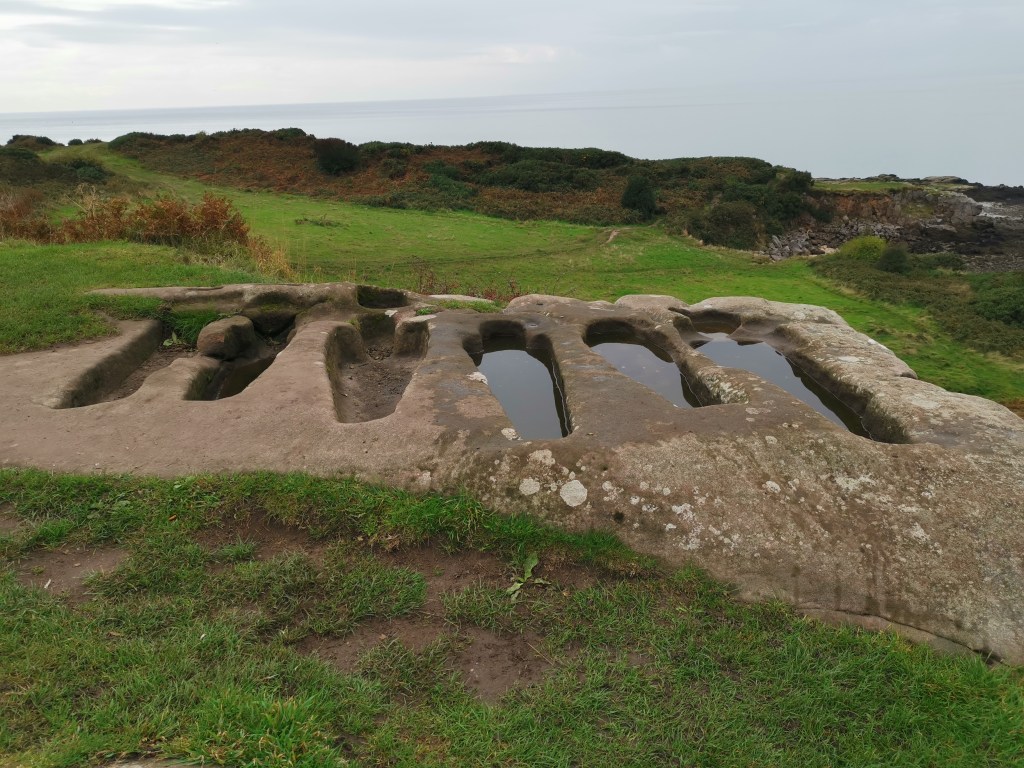
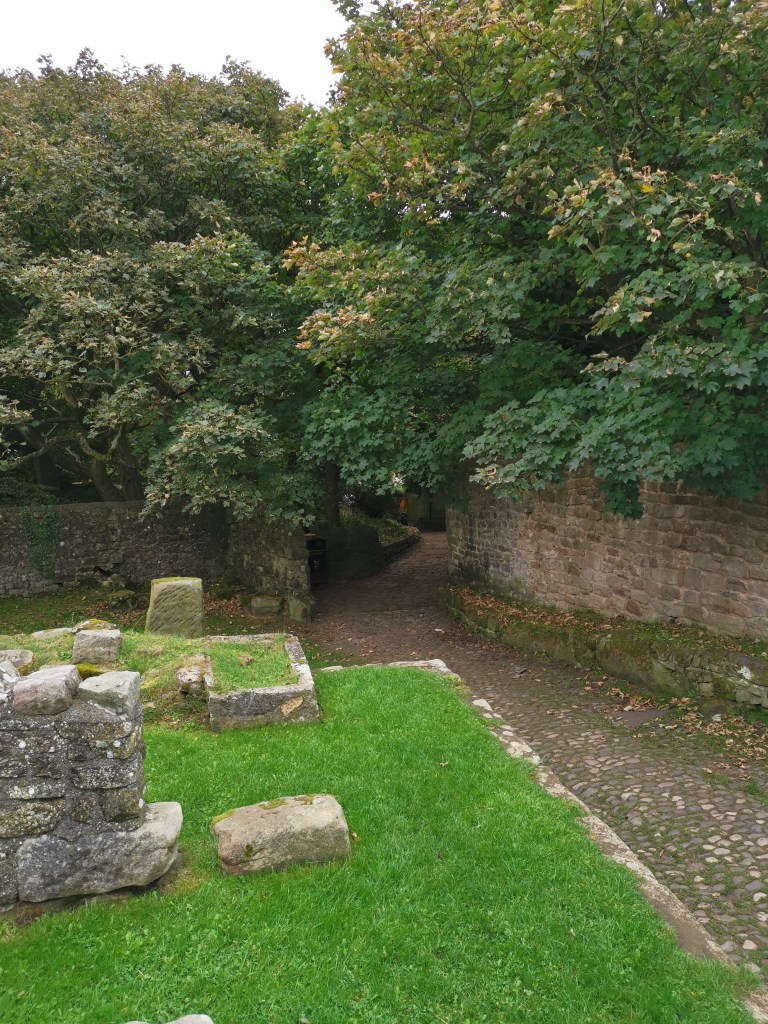

After having a look around St Patrick’s church, Janice and I wandered back to where Karen, Mike and Lulu were waiting by the tea room. Time for lunch.
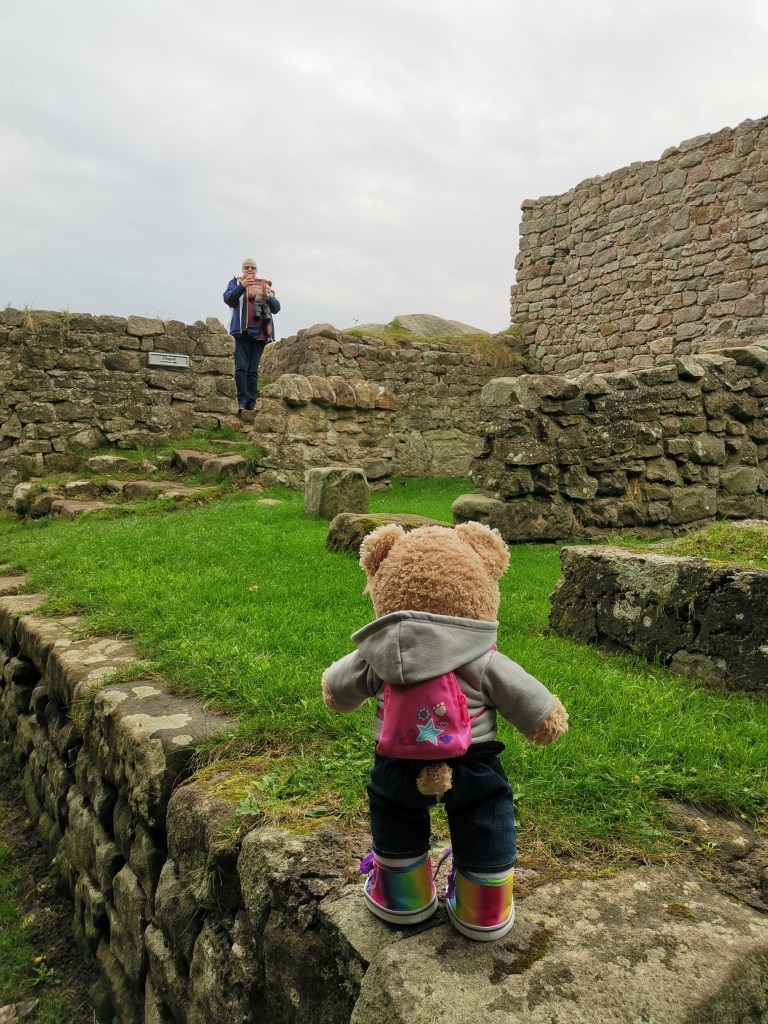
After trying a pub for lunch (not sure of the name) and finding that they didn’t allow dogs in the dining room and the only area to sit was at picnic tables where the smokers watch the soccer, we headed back to The Duke of Rothesay pub near the ferry terminal to the Isle of Mann. Here our furry friend was welcome and we got a great booth table next to the window.
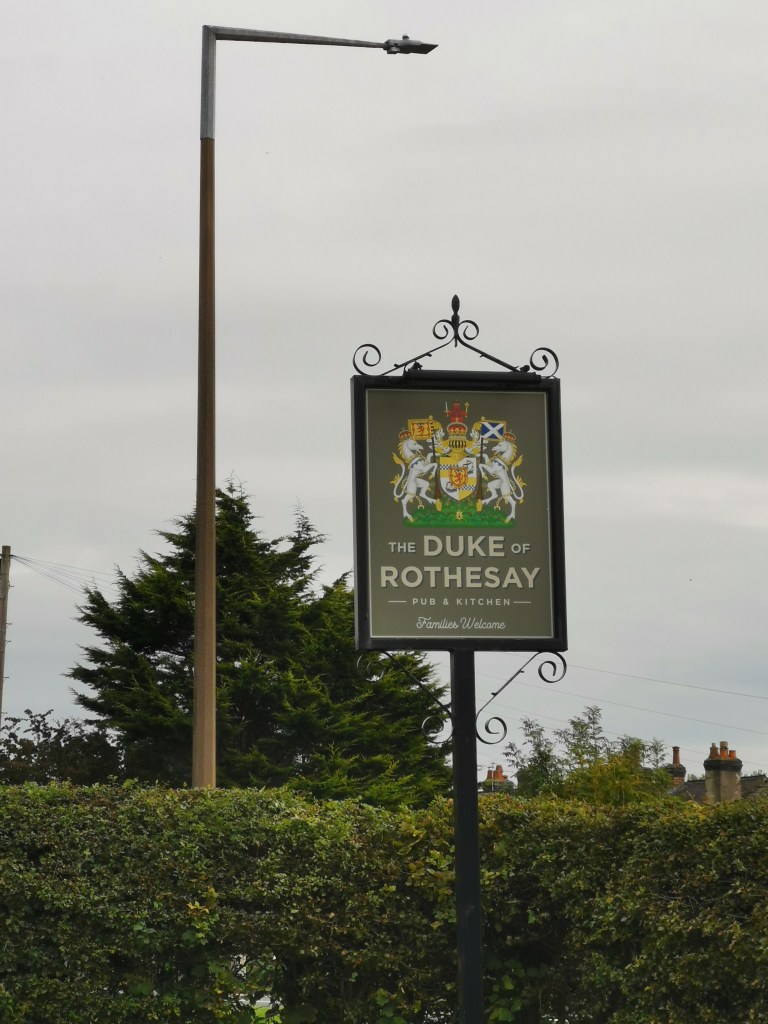


We enjoyed a lovely lunch together and Lulu enjoyed having a comfy bed to snooze on while we ate and talked.
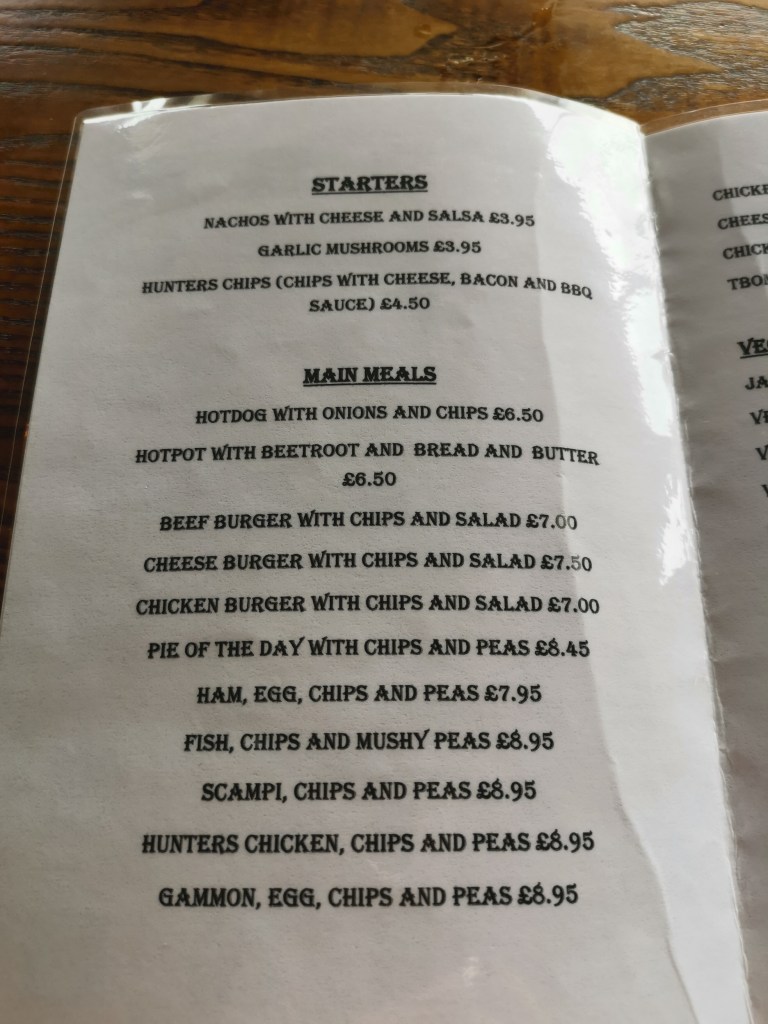
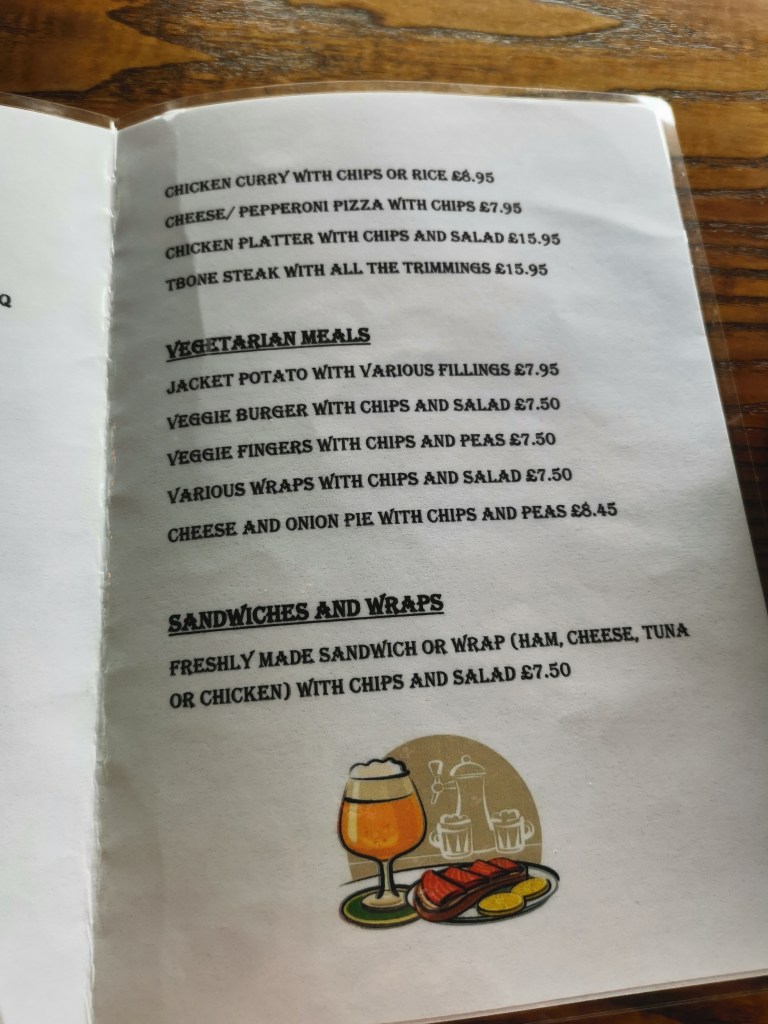


Any sense of sadness over the lonely places we had visited this morning faded in the company of wonderful friends.
All around the walls of The Duke of Rothesay pub were references to the Isle of Mann TT Races. I asked Mike what these were and he explained that it is a crazy motorbike race around the Isle of Mann held each year in Summer.
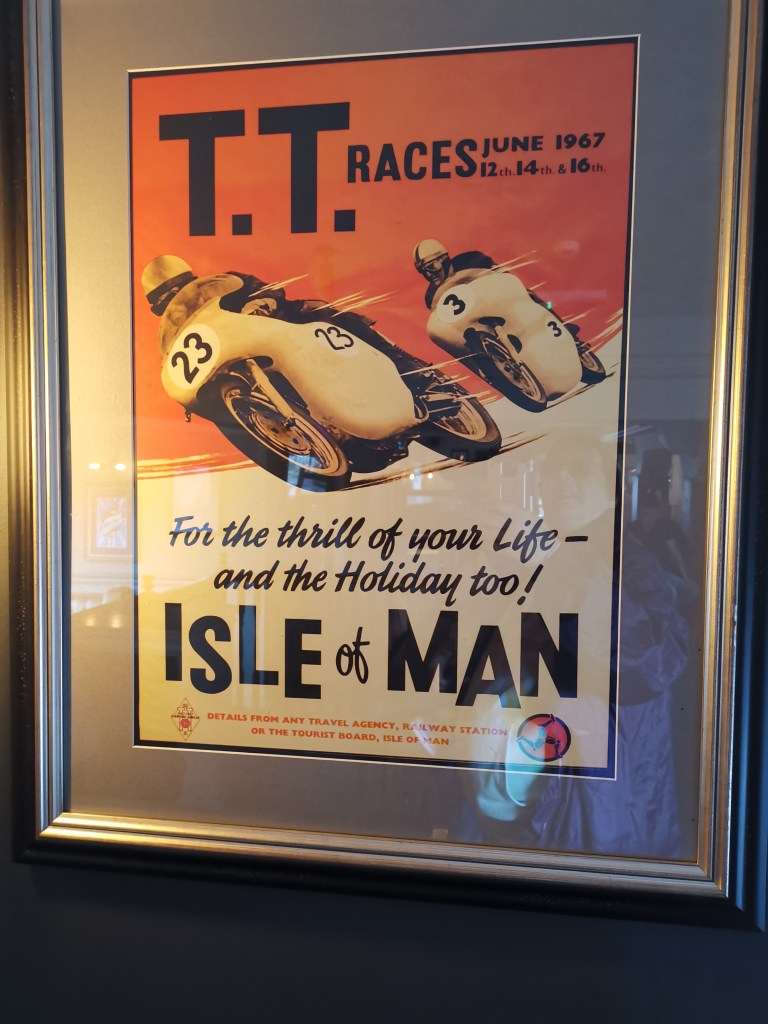
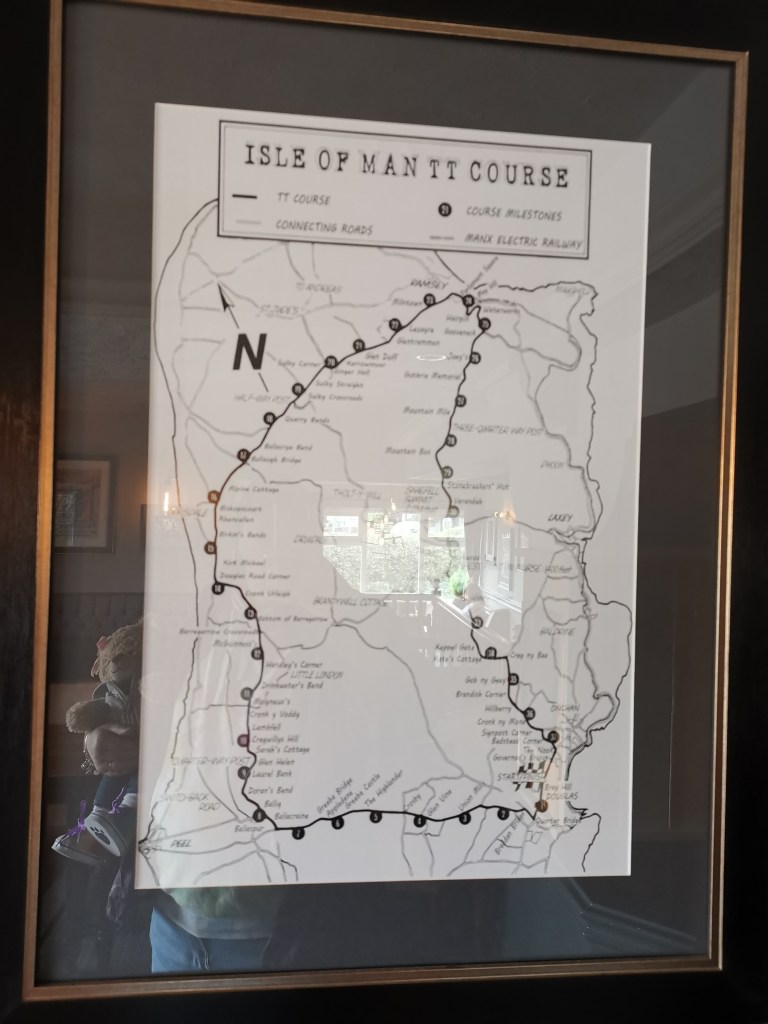
When I looked up information about the race around the island it is known as the most dangerous race. More than 250 riders have died since 1907. The record for riding the 60km course is just over 16 minutes at a crazy speed of 218kph in 2018 (Wikipedia).
I have never been to the Isle of Mann. Mike and Janice went there recently, but very unfortunately Mike contracted COVID-19 and had to spend time in the island hospital. Certainly not the holiday they had expected. Mike believed he contracted the virus onboard the ferry boat to the island and now will wait until they launch the new ferry there in the next couple of years, before going again. Sounds like a wise idea. I will wait too.
Time to head off to our next destination back in Lancaster, the tower on the hill.

The Information from the National Trust Boards
The original Anglo Saxon chapel at this site is thought to have been established a short distance from the rock-cut graves during the 8tth century, around 1300 years ago.
What was it like?
Remanents of plaster and paint have been found at the site, indicating that the early chapel had decorated walls, suggesting a wealthy patron. The chapel would have been too small to accommodate a congregation, so preaching is likely to have taken place outside, an idea supported by the discovery of a large rock-cut socket for supporting a free-standing cross under the eastern wall of the later chapel.
The chape was rebuilt and extended in the 10th century, possibly due to the increasing popularity of St Patrick as a patron saint. Following this, the existing walled enclosure developed as a cemetery. Burial of at least eighty men, women and children have been recorded in the area around the chapel dating from the 10th and 11th centuries. Remarkably, the remains of 10 individuals were recovered from within the chapel itself.
Rock-Cut Graves
It is likely the graves would have been originally covered with heavy stone slabs and the sockets at the head of the graves indicate that each one would have been marked with a cross.
It is thought that the graves contained disarticulated bones, rather than complete skeletons and that they may have functioned as ‘reliquaries’ to hold the remains of saints and other important Christians. Perhaps even those of St Patrick himself. As such they may have acted as an important focus for veneration and pilgrimage, with St Patrick’s chapel being established here to draw upon their significance and association.
The Saints, Pirates and Pilgrims board gives a history of Saint Patrick
Although most famously connected with Ireland, Saint Patrick may have been born in Ravenglass, on the west coast of Cumbria. Early accounts record how he was captured by pirates at the age of sixteen and was taken to Ireland. After six years of slavery, he heard a voice telling him that a ship was waiting to take him home. He fled his captors and eventually boarded a ship bound for France, but which was blown off course and wrecked o the English coast. Heysham is believed to be the place where St Patrick walked ashore. After continuing his religious education in France he returned to Ireland to convert the population to Christianity.


Thanks again for sharing Jo. Isn’t it amazing how particular places can bring forth emotions in us? I found this so strongly with certain places in Scotland, – like you can just about feel the history! And now feels like I am travelling with you!
LikeLike
wonderful post, very informative. I wonder why the other experts of this sector don’t notice this. You must continue your writing. I am confident, you have a huge readers’ base already!
LikeLike